Get Premium
Dark mode theme is available exclusively for premium users. Learn more about the benefits of subscribing.
No fees, cancel anytime.

 Dark Mode Ad-Free Browsing Unlimited Content
 Ad-Free Browsing Unlimited Content Dark Mode
Join 1.2 million Panda readers who get the best art, memes, and fun stories every week!
Paracas National Reserve and The Ballestas Islands
The Paracas National Reserve was established in 1975 and is important for the protection of both birdlife on the Paracas Peninsula and marine life in the sea.
This area consists of the Paracas Peninsula, some coastal areas, and a desert.
This desert extends to the south of Peru, past Punta Caiman. It includes independence bay and several more miles of coastal waters within the area.
While you are in Lima, The Paracas national reserve is definitely one of the destinations you should visit. It will be a great addition to your Machu Picchu Hike.
Source: https://en.wikipedia.org/wiki/Paracas_(municipality)
Table of Contents
Where is the Paracas National Reserve?
The Reserve is about 15km south of Pisco in the Ica Region, on the south coast of Peru. You will need to travel around 3-4 hours outside of Lima to reach this beautiful nature reserve.
Once you arrive in Paracas a visit to the local museum is in order. You will learn about the Paracas and Nazca cultures that roamed this region.
A short walk down from the museum to the edge of Paracas Bay allows you to see several types of birds including flamingos feeding by the waterside.
Continuing on you will see Ballestas Islands. These spectacular islands eroded into many caves and arches.
They now provide shelter for thousands of seabirds and hundreds of sea-lions. Although the islands fall just outside the Paracas National Reserve they are also protected but by separate legislation.
Paracas National Reserve Fauna
The islands are home to over 150 species of marine bird including the Humboldt penguin, cormorants, boobies, and pelicans.
Even condors have been known to visit. On the shores can be seen large numbers of sea-lions and in the sea, it is possible to encounter dolphins and even whales.
Although you can get close enough to the wildlife for a good look, some species, especially the penguins, are more visible with binoculars.
On your return trip, ask to see the Chilean flamingos, which are usually found in the southern part of the bay and not on the direct boat route. The flamingos aren’t always there, however – the best time is June to August.
Birds in The Paracas National Reserve
Below are some of the Bird species you will encounter at the Paracas National Reserve and Ballestas Islands.
Grey Gull (Larus modestus)
Grey Gulls are also known as the Garuma gull. They are a medium size bird native to the continent of South America. This gull is particular among it’s kind, they will breed inland in the Atacama desert in northern Chile as opposed to most seagulls breeding near the coast. You can find them feeding in drives near the Ballestas islands.
Scientific name: Leucophaeus modestus
Conservation status: Least Concern (Population decreasing
Higher classification: Leucophaeus
Rank: Species
Order: Charadriiformes
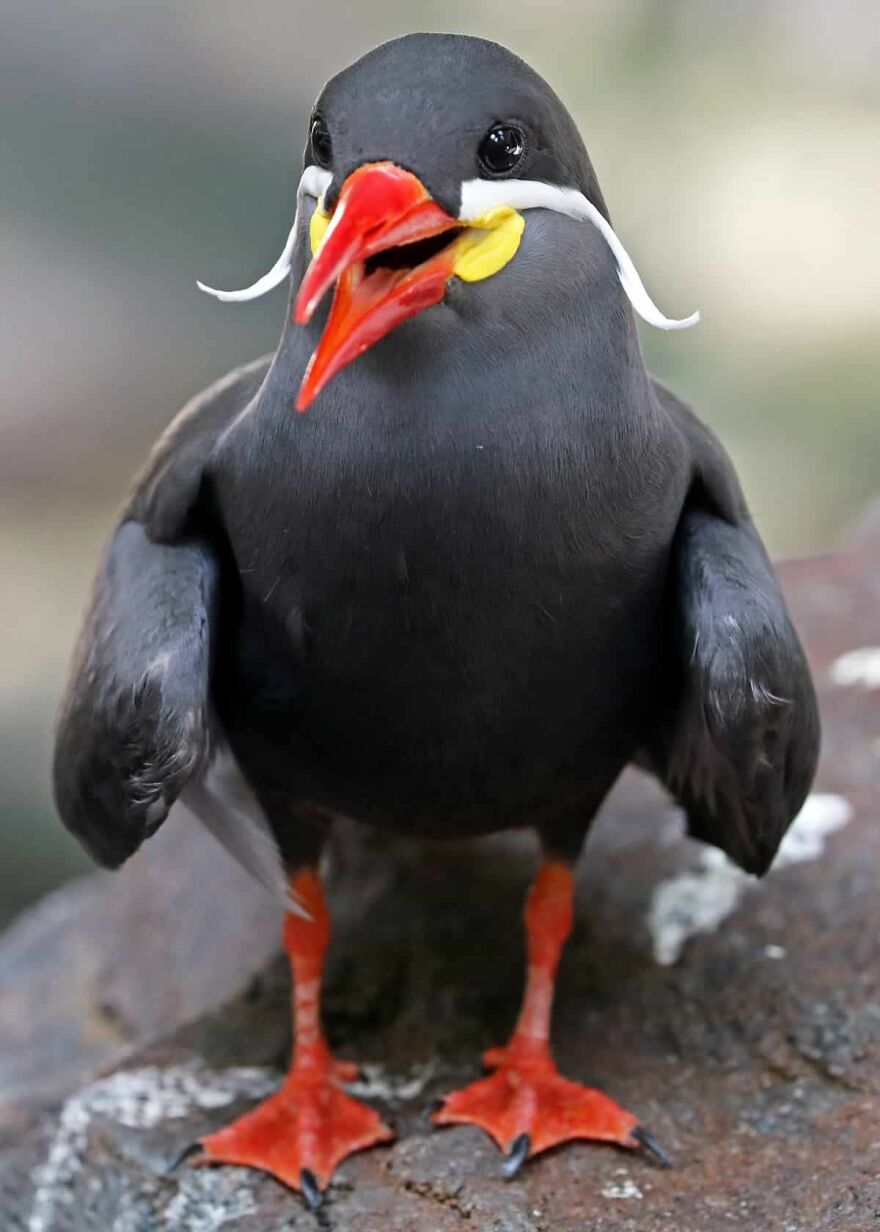
Inca tern (Larosterna inca)
The Inca Tern in Paracas
The Inca tern comes from the Laridae family and is the only member of the genus Larosterna. You can find this interestingly plumaged bird near the Coasts of Peru and Chile where it breeds. It will sometimes go as far North as Ecuador to breed or for food.
Conservation status: Near Threatened
Scientific name: Larosterna Inca
Family: Laridae
Higher classification: Larosterna
Class: Aves
Black Skimmer (Rynchops niger)
This sea bird is called a black skimmer, they are similar in terms and belong to the skimmer genus Rynchops in the gull family Laridae.
Conservation status: Least Concern
Scientific name: Rynchops niger
Higher classification: Skimmers
Rank: Species
Snowy Plover (Charadrius nivosus)
Snowy Prover in Paracas Peru cautery of Peter de Haas
Snowy Prover in Paracas Peru cautery of Peter de Haas
This tiny bird is called a snowy plover that typically measures 5-7 inches (12- 17 centimeters) in length. The Snowy Plovers breeding grounds include Peru, Ecuador, Chile, and parts of the western United States as well as the Caribbean.
Conservation status: Near Threatened
Scientific name: Charadrius nivosus
Class: Aves
Higher classification: Typical plovers
Order: Shorebirds
Family: Charadriidae
Lower classifications: Western Snowy Plover, Cuban Snowy Plover
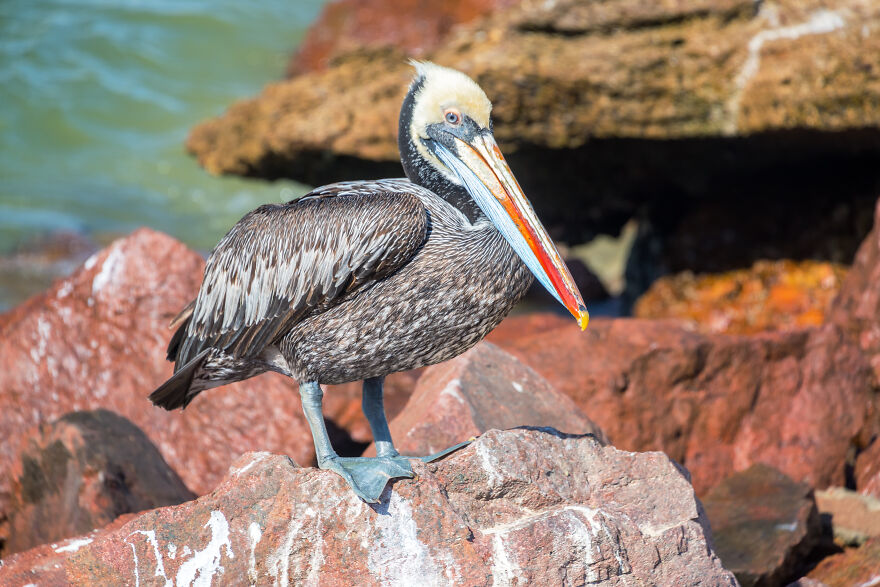
Peruvian Pelican (Pelecanus thagus)
Sea Birds Ballestas Islands
Sea Birds in Ballestas Islands
This large sea earring bid is a member of the pelican family. It makes its home on the west coast of South America, colonies range from central Chile to all of Peru up to the warm water of Piura.
In Paracas you will see plenty of the Peruvian Pelican, they are quite bold and will regularly come in contact with humans to see if they can steal a piece of food.
Conservation status: Near Threatened
Scientific name: Pelecanus thagus
Higher classification: Pelican
Order: Pelecaniformes
Phylum: Chordata
Rank: Species
Peruvian Turkey Vulture (Cathartes aura)
Red Headed Turkey Vulture in Paracas
Red Headed Turkey Vulture in Paracas
The Turkey vulture is a common occurrence in regions of North, Central, and South America, in some cases they are referred to as a “turkey buzzard”. The red headed turkey vulture also makes its home in the Paracas national reserve and will regularly scavenge for fish, eggs, and dead birds.
Conservation status: Least Concern
Scientific name: Cathartes aura
Higher classification: Cathartes
Rank: Species
Humboldt Penguin (Spheniscus humboldti)
Humboldt Penguins in The Paracas National Reserve
Humboldt Penguins in The Paracas National Reserve
Have you ever seen a penguin enjoy warmer weather? Well, there is always the Humboldt Penguin. This South American native lives all throughout the western coast between the Pingüino de Humboldt National Reserve in the North of Chile and all of the Peruvian coastline.
The Humboldt Penguin’s nearest relatives would be the Galapagos penguin in the Galapagos islands, the Magnellanic penguin and the African penguin.
Scientific name: Spheniscus humboldti
Conservation status: Vulnerable
Lifespan: 15 – 20 years (In captivity)
Rank: Species
Blackish Oystercatcher (Haematopus ater)
Blackish Oystercatcher in Paracas
Blackish Oystercatcher in Paracas
This small species of bird is the blackish oystercatcher from the family haematopodidae. They can be found in Argentina, Chile, and Peru as well as Uruguay on occasions.
As its name describes, this bird feeds mostly on oysters. The total population is rather small, ranging from 15,000 – 80,000 in total. You will be able to see several of these birds feeding on the Paracas coast with recently caught oysters.
Scientific name: Haematopus ater
Conservation status: Least Concern Encyclopedia of Life
Higher classification: Haematopus
Phylum: Chordata
Order: Shorebirds
Rank: Species
Andean flamingo (Phoenicoparrus andinus)
Andean Flamingo in Paracas
Andean Flamingo in Paracas
The Andean Flamingo is one of the rarest members of the flamingo family. It resides high in the Andes Mountains of South America. They travel down to the Paracas national reserve to feed. These are a rare bird to spot even in Paracas so if you do make sure to take a picture.
Scientific name: Phoenicoparrus andinus
Higher classification: Phoenicoparrus
Order: Flamingos
Phylum: Chordata
Rank: Species
Guanay Cormorant (Leucocarbo bougainvillii)
Guanay Cormorant in Peru
You can find the Guanay all over the Peruvian coastline however there are particularly large populations at the Paracas national reserve and Ballestas Islands.
The Guanay shag is a member of the cormorant family found in Peru and Chile. You will see large populations of these birds flying as well as swimming along the water, catching their favorite meal “the sardine”.
Scientific name: Leucocarbo bougainvillii
Higher classification: Cormorant
Rank: Species
Family: Phalacrocoracidae
Grey plover (Pluvialis squatarola)
The Grey Plover Peru
The Grey Plover Peru
This plover is known as the “grey plover” and the” black-bellied plover”. They are a medium-sized type of plover that likes to breed in the cold Arctic regions. This bird travels far lengths across the world when it is not breeding.
Scientific name: Pluvialis squatarola
Conservation status: Least Concern
Higher classification: Golden plovers
Rank: Species
Class: Aves
Mammals in The Paracas National Reserve
Below are some of the Mammal species you will see at the Paracas National Reserve and Ballestas Islands tour.
South American Sea Lion (Otaria flavescens)
Peruvian Sea Lion in Paracas
Peruvian Sea Lion in Paracas
One of the most common species we see in Paracas and the Ballestas Islands is the South American sea lion. This species of sea lion can be seen in Ecuador, Chile, Argentina, Uruguay, The Falkland Islands, Brazil, and of course in Peru.
Scientific name: Otaria flavescens
Mass: 190 kg
Length: 2.1 m
Higher classification: Otaria
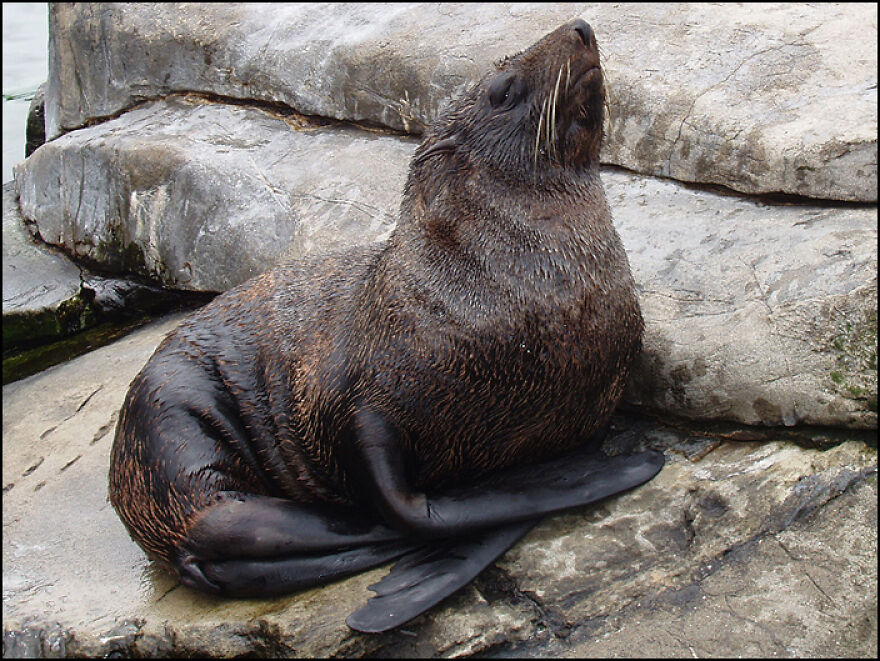
South American Fur Seal (Arctophoca australis)
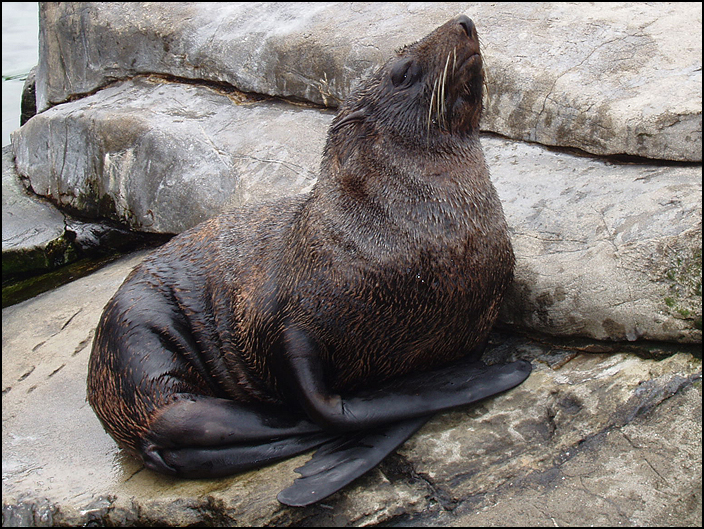
Fur Seal in Paracas National Reserve
Fur Seal in Paracas National Reserve
Next, we have the South American fur seal which likes to breed off the coasts of Peru. They are a bit smaller than the Sealion, they also have smaller populations (Around 250,000 in total). You can find them fishing and swimming around the boats in the Ballestas Islands
Mass: 68 kg
Scientific name: Arctocephalus australis
Conservation status: Least Concern
Length: 1.6 m
Marine otter (Lontra felina)
Marine Otter or “Gato Marino”
This little mammal comes from the continent of South America. Much is unknown about the Marine otter, they are a relatively unstudied species due to their rarity.
It belongs to the weasel family and has the scientific name of “Otter Cat”. In fact, the name in Spanish is “Gato Marino” which translates to the marine cat. They are considered an endangered species.
Conservation status: Endangered
Scientific name: Lontra felina
Mass: 3 – 5.8 kg
Length: 83 – 110 cm (Without Tail)
Islas Ballestas Boat Tour
Ballestas Islands
The Balllestas Islands
The only way to get to the islands is by taking an organized tour leaving the docks in Paracas early in the morning. This is a great time to go on this tour so we can photograph the birds, seals, dolphins, and sea lions feeding in the mornings.
Tours are fairly inexpensive costing between US$10 – $15 and a speedboat trip accompanied by a guide for about 2 hours in total. Visitors are not allowed onto the islands but views of the wildlife from the boat are usually excellent.
We get very close to the wildlife or they sometimes come right up to the boats. Either way, the experience is excellent and recommend for everyone, family trips in particular.
On the way to the islands, on the Paracas Peninsula, visitors will also pass the ‘Candelabro’ – a large scale 164 foot (50m) candelabra-shaped geoglyph. It is traced in the desert hillside overlooking the sea that may have served as a beacon for mariners.
Candelabro Paracas
Candelabro Paracas
There are numerous theories as to its origin and is the topic of ongoing speculation. Surely the guides will have some interesting answers.
Paracas National Reserve and the Islas Ballestas are best visited as part of an organized tour, either from Pisco (The largest town nearby) or the small village of Paracas.
Pisco is 240km south of Lima (3hrs 30mins by bus) and 210km north of Nazca (3hrs by bus). Several buses run in both directions daily.
There are plenty of accommodation options in Pisco which can be arranged upon arrival. Tours ranging from 3 – 4 can also be arranged with one of several tour operators in Lima.
We like to combine a visit to Paracas with a stop in Ica to taste the Pisco varieties and then move onto Nazca with a short but incredible flight over the Nazca Lines.
Conclusion
The Paracas National Reserve and Ballestas Islands tour can be a great stop during your time in Lima. In a few days, you can visit the reserve, Ica, and the Nazca Lines and add them to your Machu Picchu Travel package. This would make your trip one of the most activity-packed on our package list.
Frequently Asked Questions About The Paracas National Reserve
Where is Paracas?
Paracas is located to the South of Lima. The drive takes approximately 4 hours down the Panamerica Sur and then onto inner roads.
Are there accommodation options in Paracas?
Yes. In Paracas, you will have the option of hostels as well as 3,4, and even 5-star hotels right by the beach.
What wildlife will I see at the Paracas National Reserve?
In Paracas, you will mostly see ocean birds as well as sea lions and seals that like to come to shore to see if they can steal some fish from the local fishermen.
What will I see at the Ballestas Islands Tour?
At the Ballestas Islands, you will be able to see sea lions, fur seals, dolphins, several species of birds, marine otters, and several more.
How long is the Ballestas Islands tour?
The Ballesta Islands tour will take approximately 2 hours to complete. We leave the docks in Paracas and take a boat to the islands.
Can we touch the sea lions during the Ballestas Islands tour?
This is a national wildlife reserve so no we are not allowed to touch the local wildlife. There are cases when seals and sea lions will come up to the boat and they are close enough to touch but it is still not recommended.
More info: journeymachupicchu.com
Image credits: www.journeymachupicchu.com
Sea Lion Sun bathing
Image credits: www.journeymachupicchu.com
The Inca Tern in the Paracas Region of Peru
Image credits: www.journeymachupicchu.com
The Peruvian Pelican looking for a snack.





































 No fees, cancel anytime






2
0