Get Premium
Dark mode theme is available exclusively for premium users. Learn more about the benefits of subscribing.
No fees, cancel anytime.

 Dark Mode Ad-Free Browsing Unlimited Content
 Ad-Free Browsing Unlimited Content Dark Mode
Join 1.2 million Panda readers who get the best art, memes, and fun stories every week!
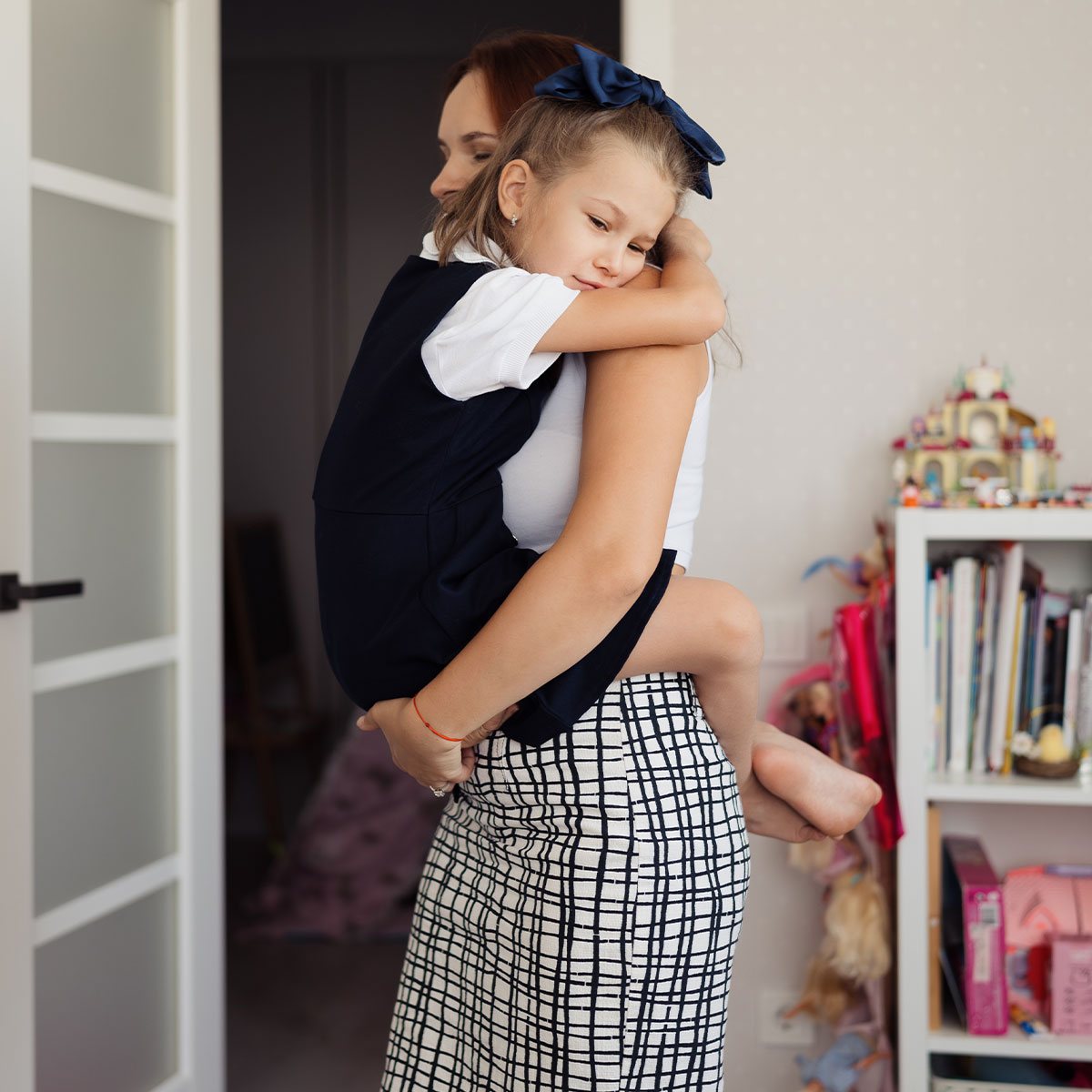
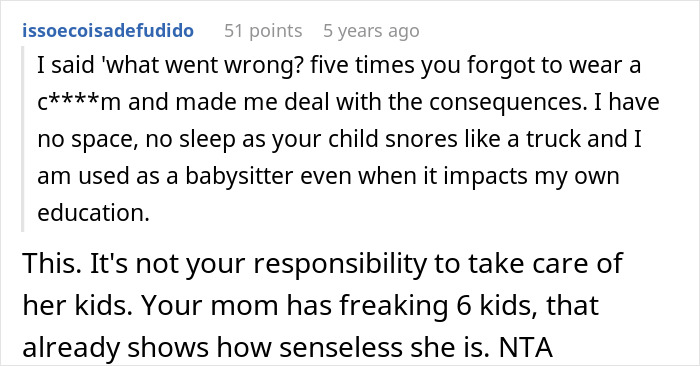
There’s a difference between being asked for help and being used, and one teenager says that line slowly disappeared in her family.
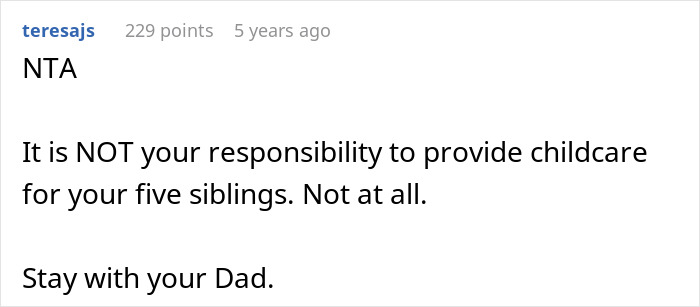
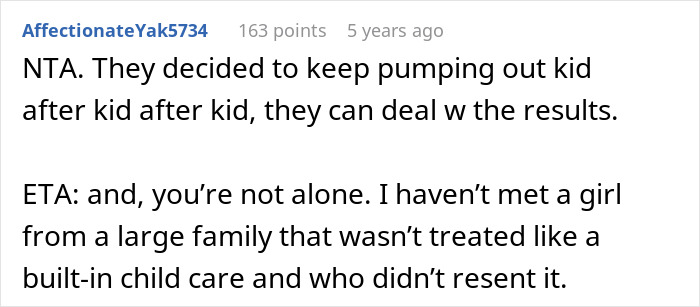
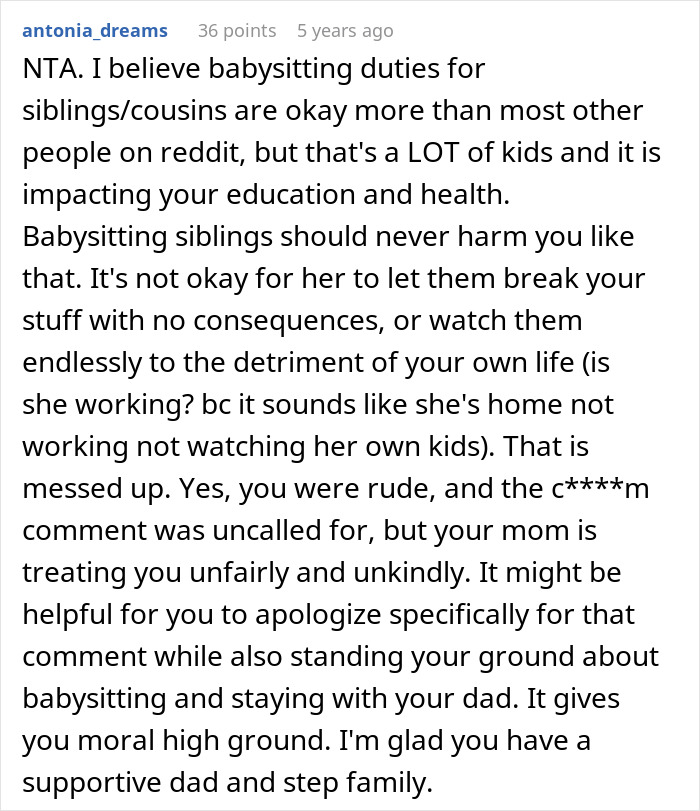
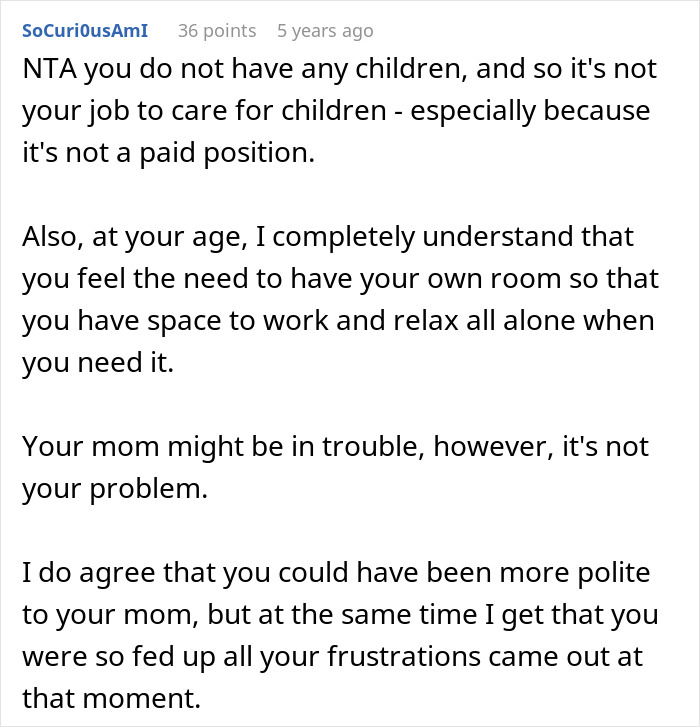
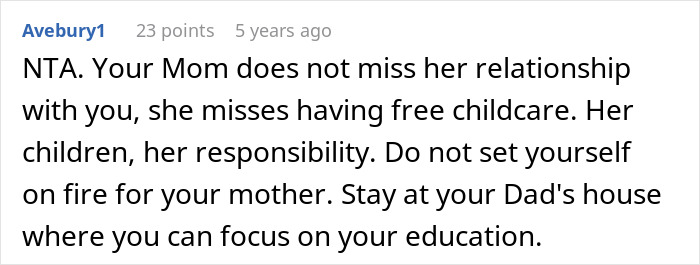
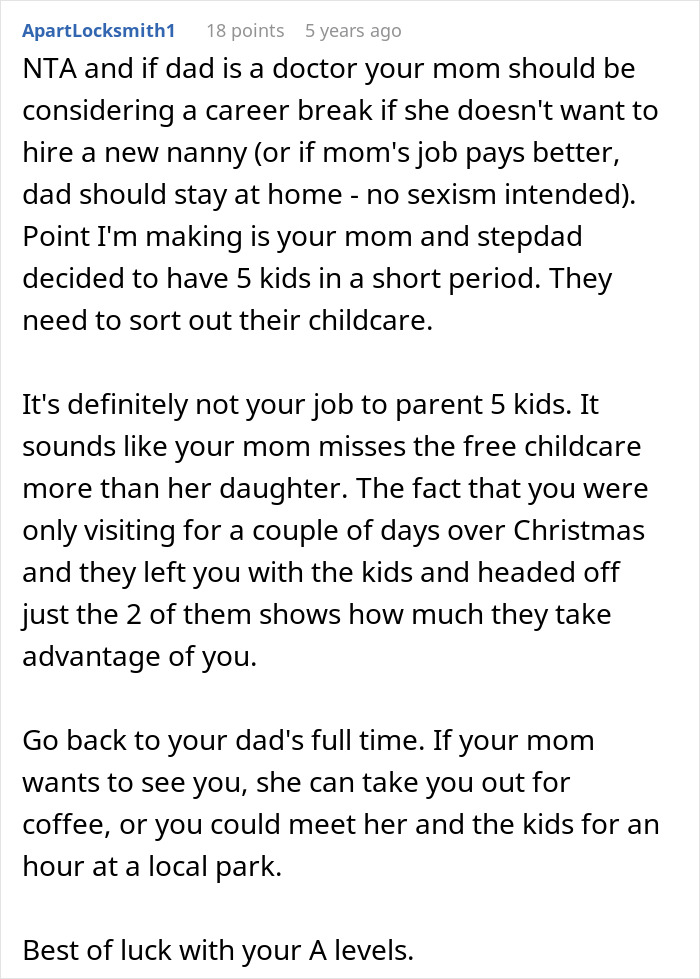
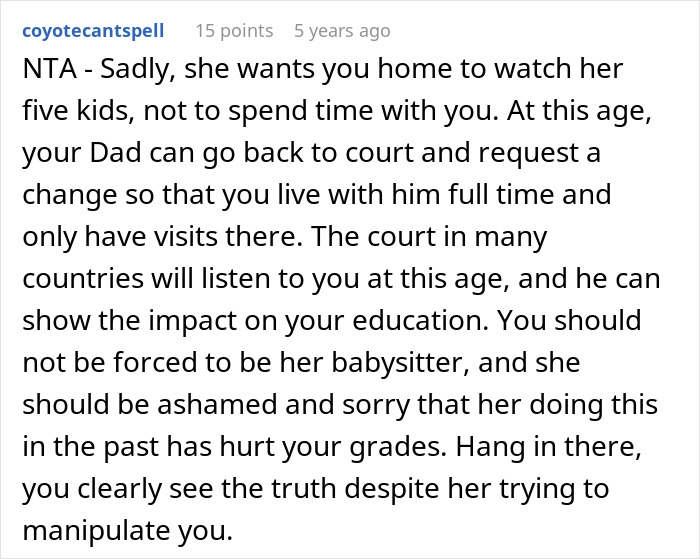
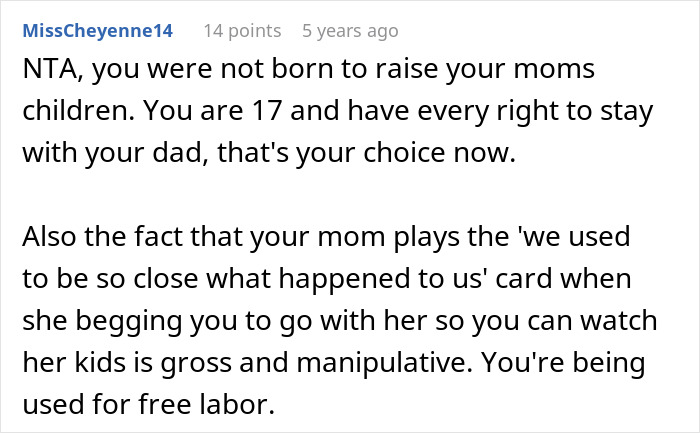
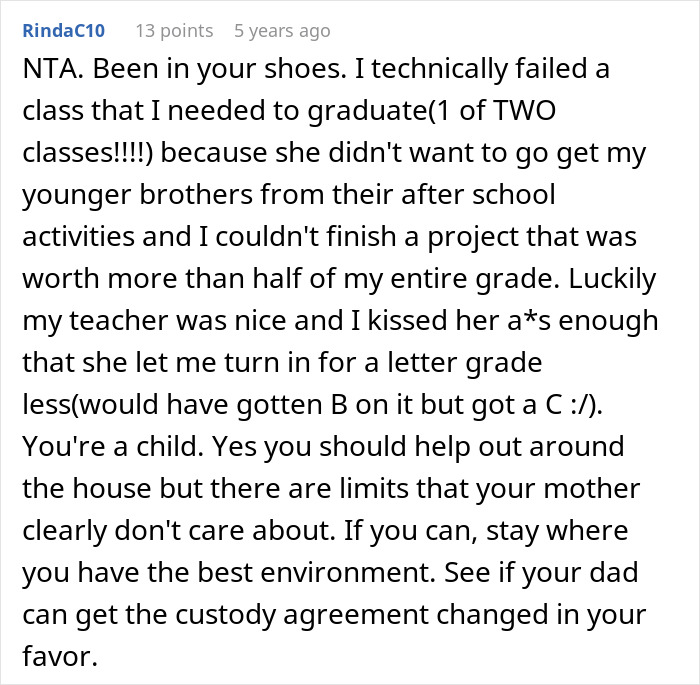
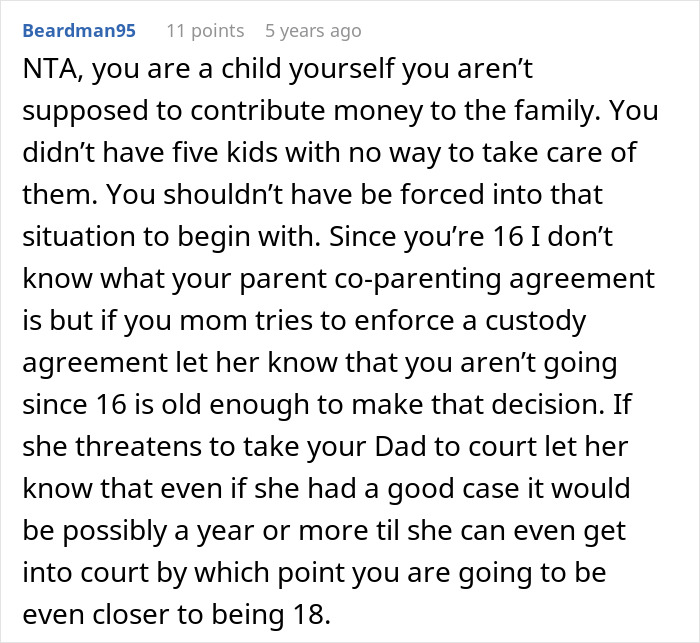
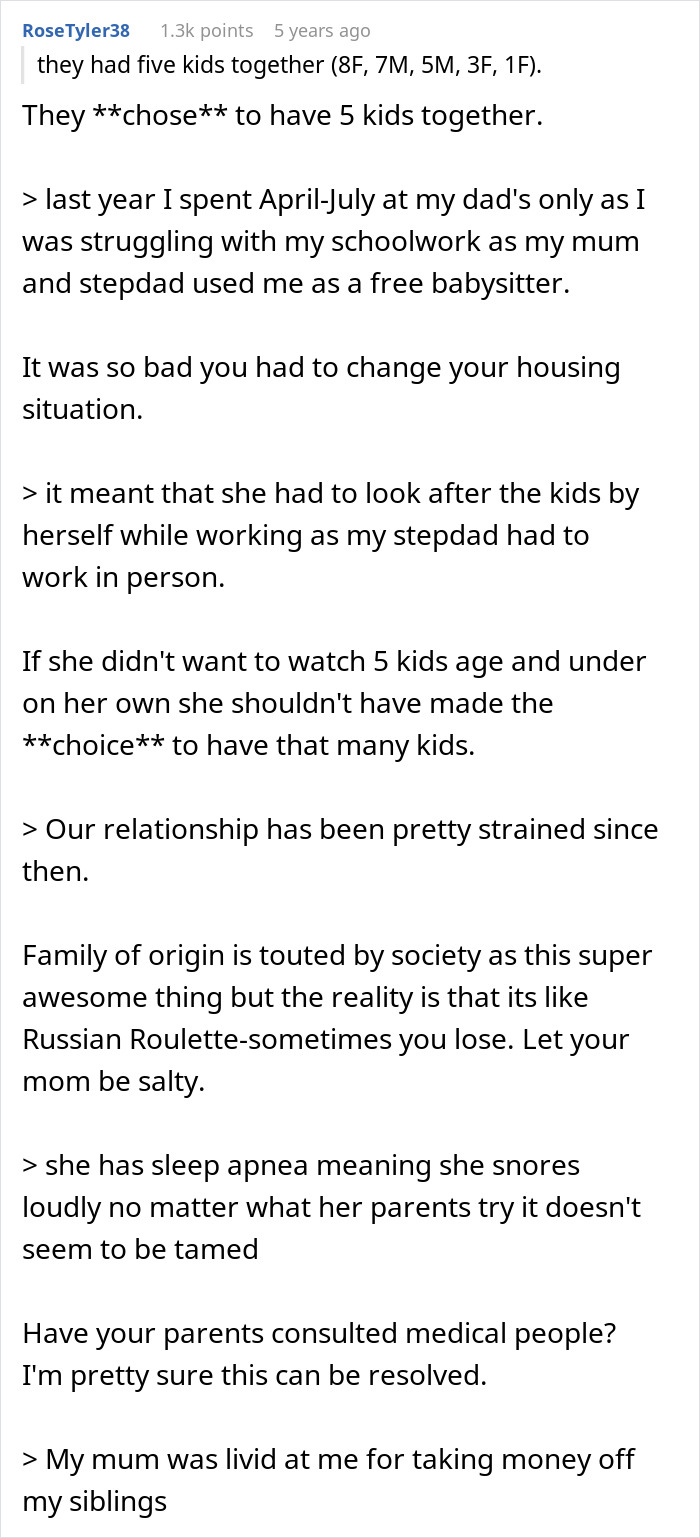
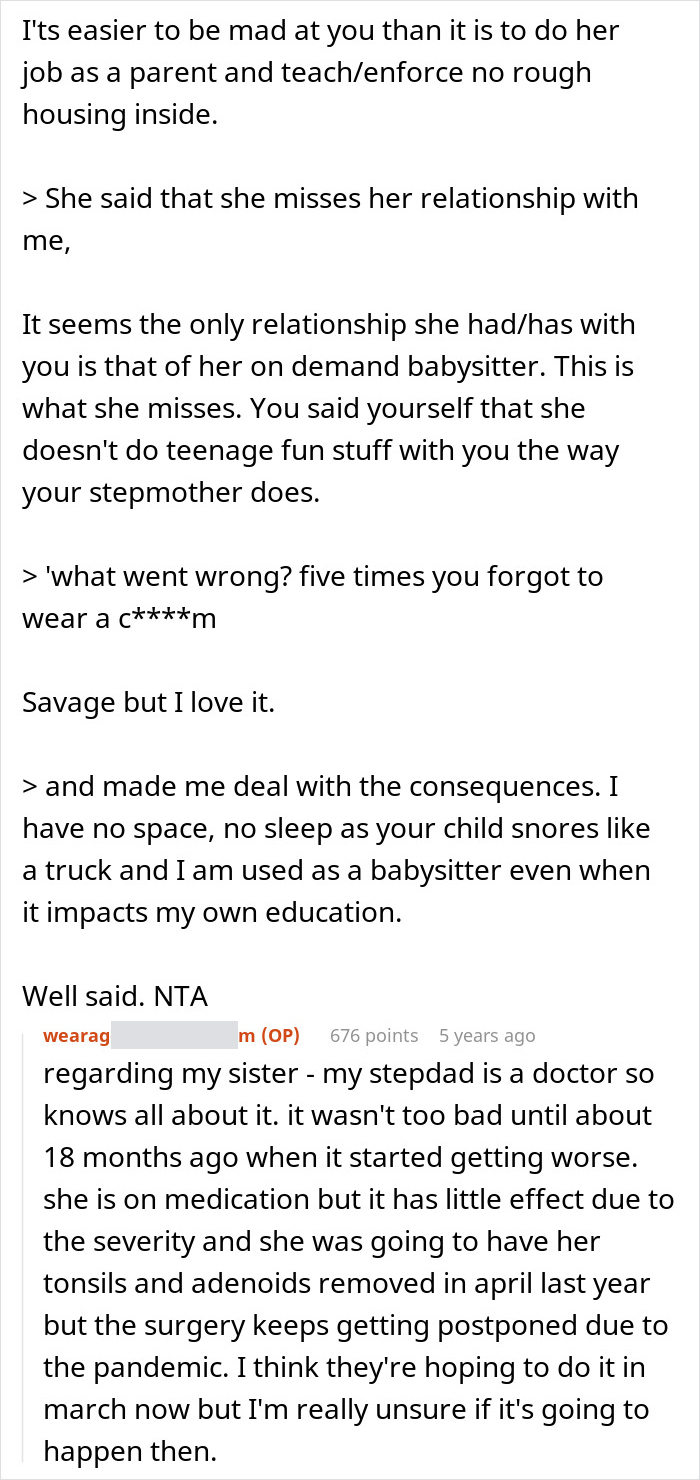
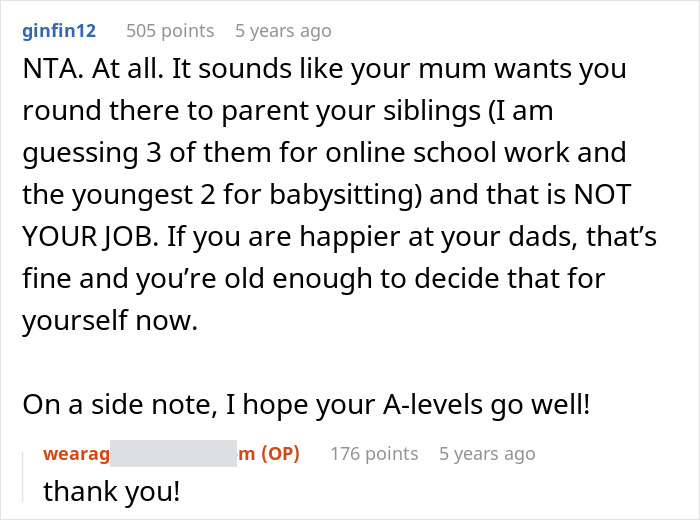
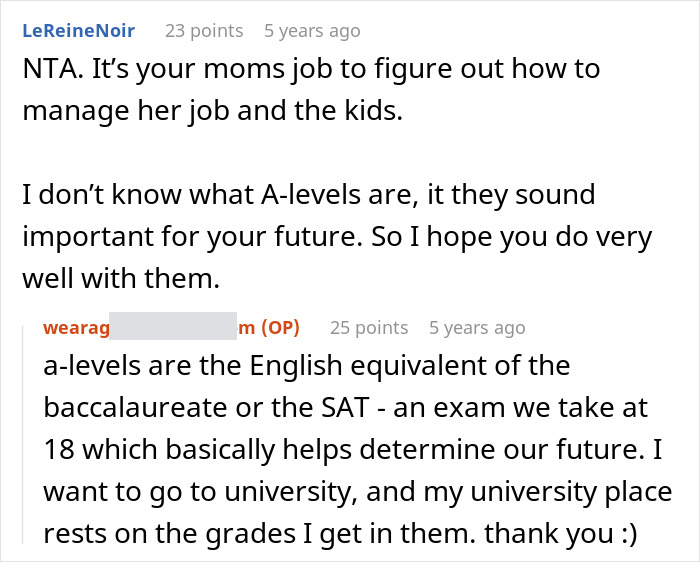
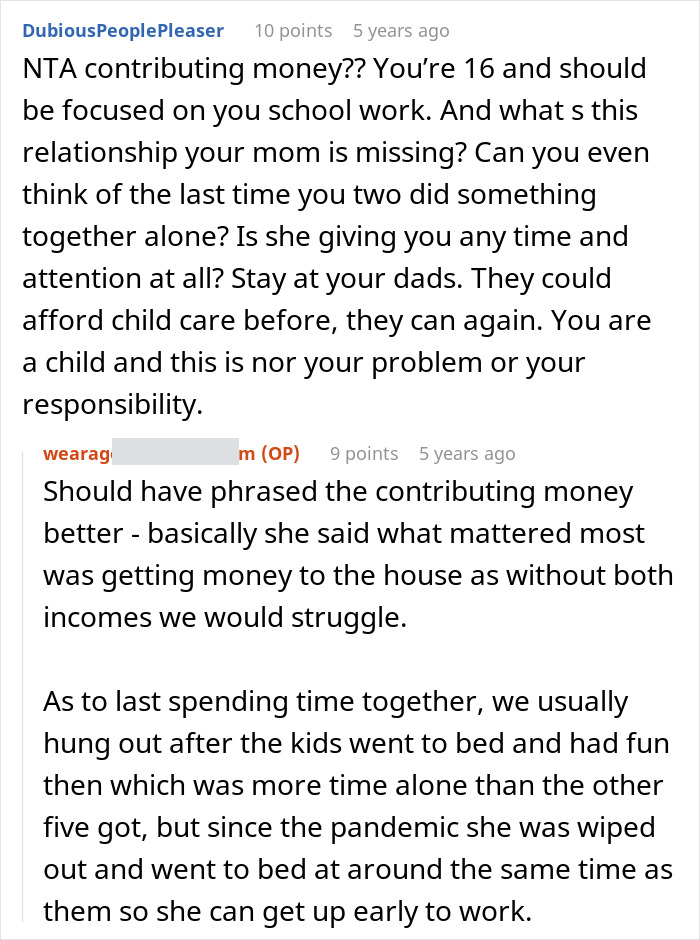
The 16-year-old, whose parents divorced when she was young, says life changed after her mother remarried and had five more children. She claims that over time, she became the designated carer for her younger half-siblings, and a much bigger part of the household than she would’ve liked.
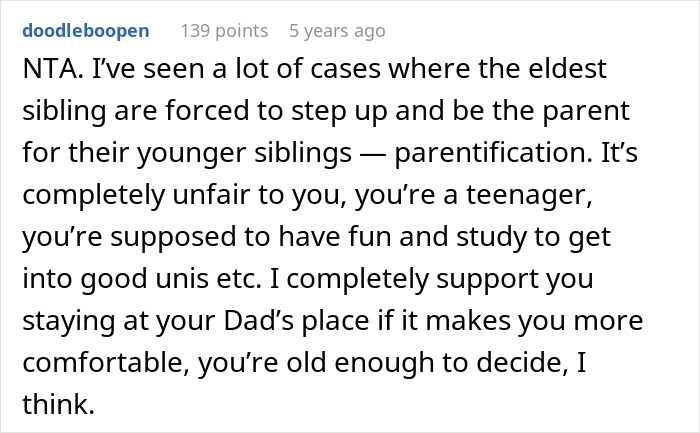
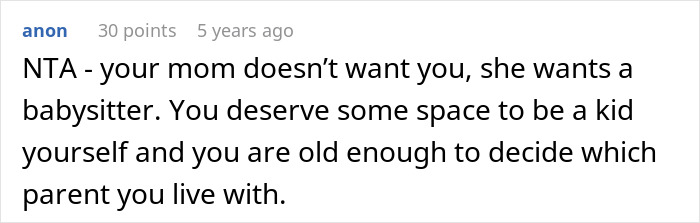
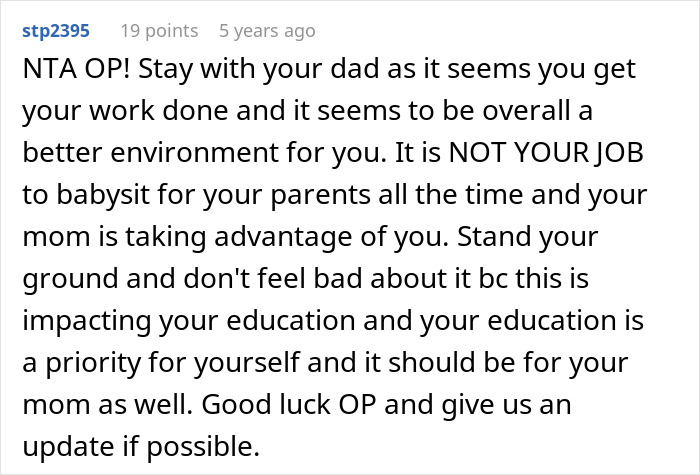
Eventually, the pressure pushed her to visit her dad. A short stay at his home during a difficult period gradually turned into something more permanent, and now her mother isn’t happy about it at all.
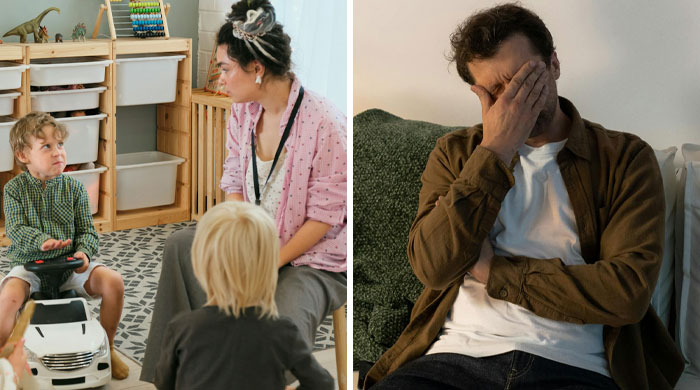
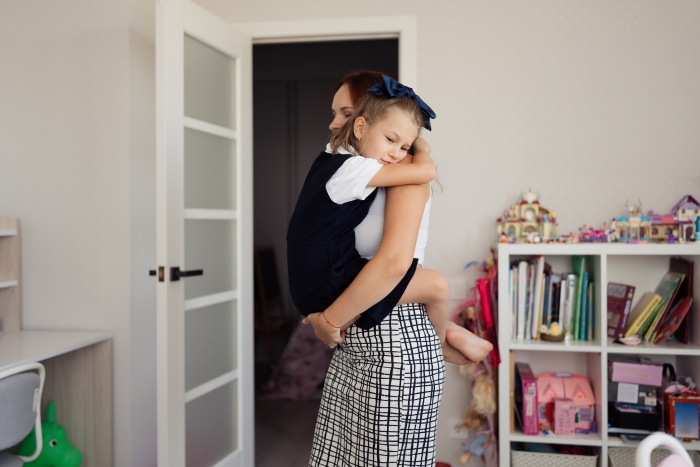
Image credits: arthurhidden / envato (not the actual photo)
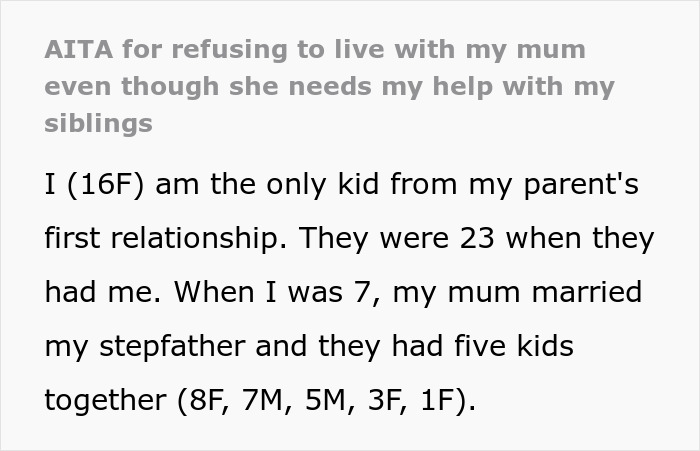
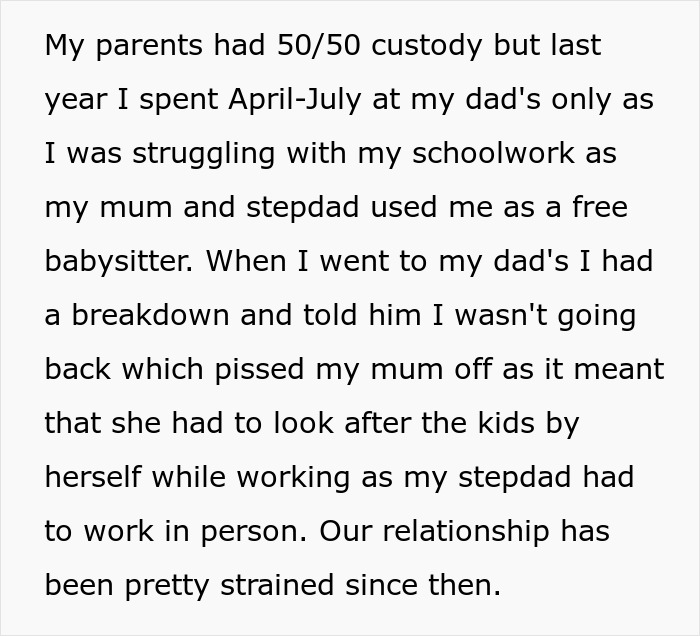
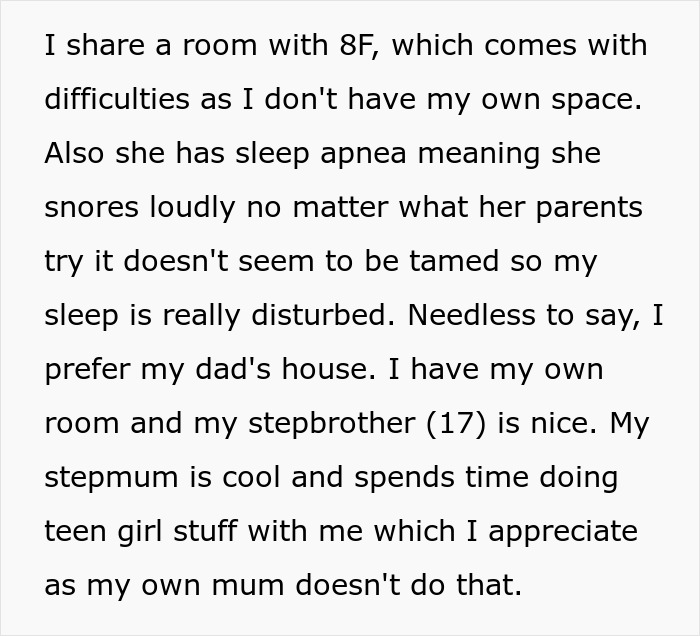
Image credits: faststocklv / freepik (not the actual photo)
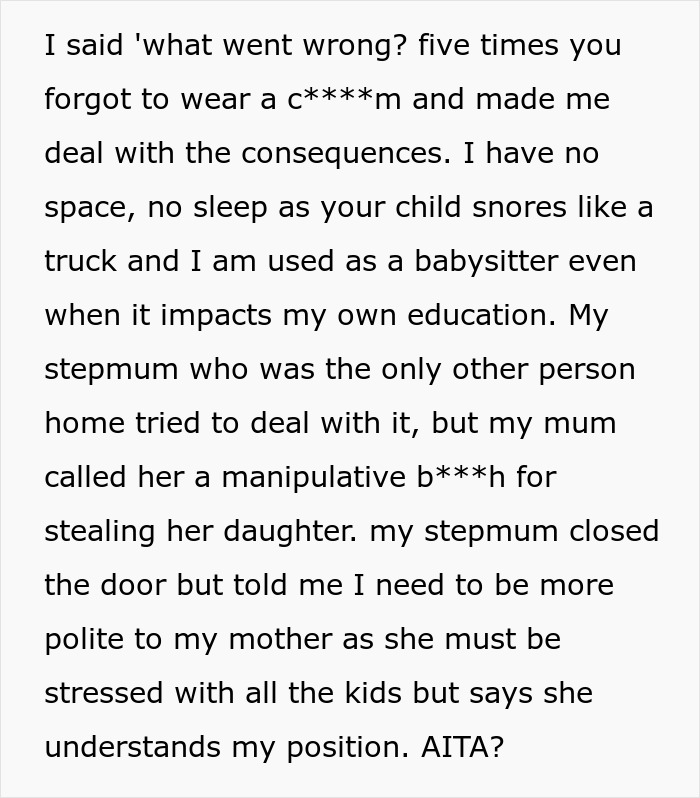
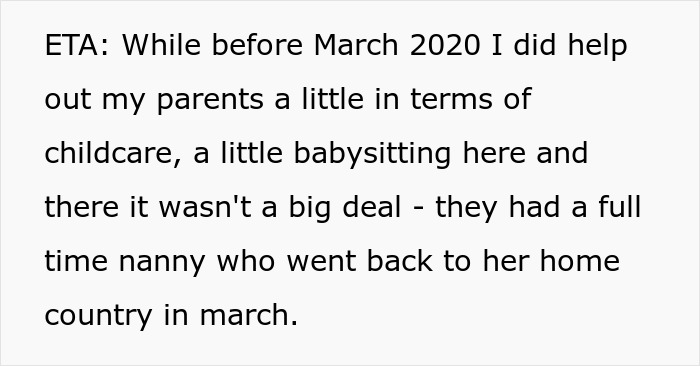
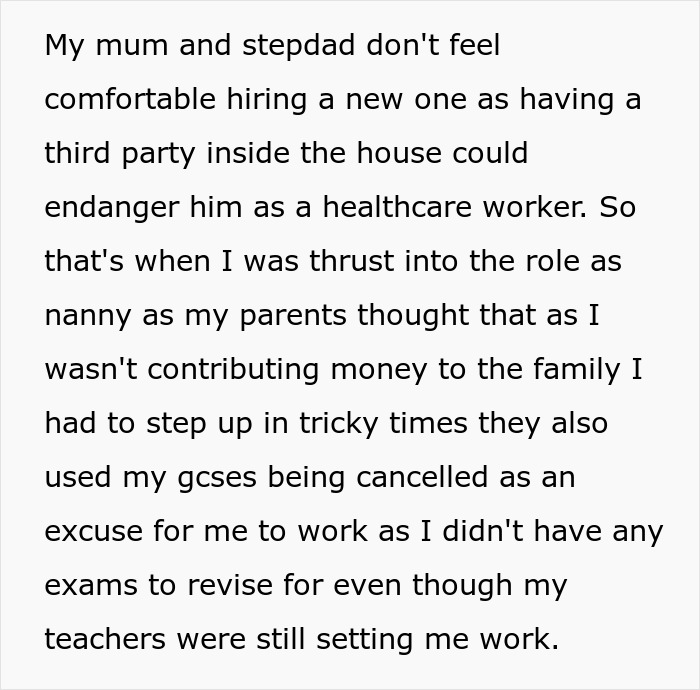
Image credits: wearagodd**nc****m
Raising kids is not easy. A survey of 2,000 Americans with young children, 11 and under, uncovered that, on average, moms and dads feel like a “bad” parent three times per week, which is roughly 156 times per year.
The study also found that, although kids make their parents laugh 12 times per day, respondents admitted to needing a break from their parenting duties twice a week.
Parents shared some of their signs for knowing when they need a break from their kids, citing things like “[it’s] when I begin to feel unnecessarily angry” and “when the stress makes me cry.”
Looking at the many sides of parenting, respondents said that financial pressures (42%), the lack of personal time or self-care (34%), and balancing work and family responsibilities (34%) are what overwhelms them the most.
They also shared that it’s hard to manage parenting advice and expectations from others (16%) and their kids meeting developmental milestones (13%).
Additionally, the average parent comes across two situations with their kids per week that they have no clue how to handle, and 45% confessed that parenthood has been more demanding than they expected.
Examining generational differences, 48% of Gen X and 46% of Millennials surveyed find parenthood to be a bigger task than they thought it would be, compared to only 36% of Gen Z parents.
More than four in ten parents of young kids (41%) keep their frustrations about parenting all to themselves, and of those who have shared about their struggles in the past, many felt judged by their own parents (24%), partner (23%), and friends (15%) when opening up.
Because of this, the majority of those (60%) said the feeling of being judged has made them think twice before sharing again in the future.
However, respondents said they know they need to ask for extra support for their child when they’re feeling overwhelmed and frustrated (33%), they’ve tried everything they could on their own (27%), and when it’s recommended by a professional, like a doctor or teacher (12%).
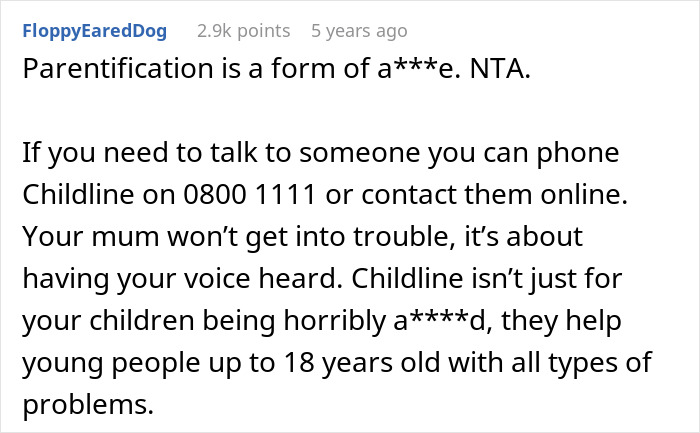
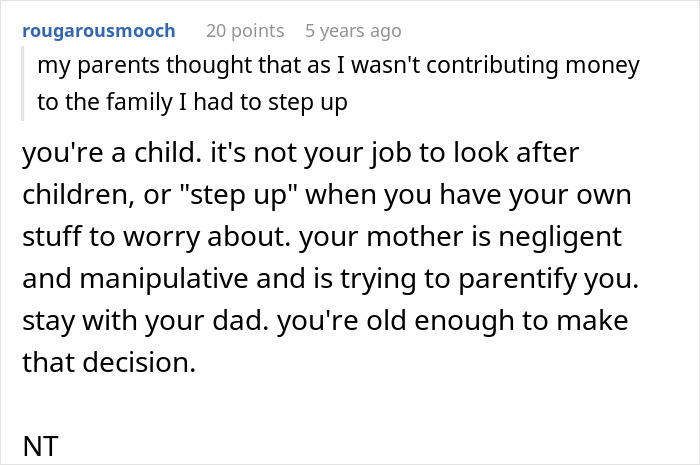
In psychology, this kind of relationship where a child takes on a more supportive, adult role in the family than what’s developmentally appropriate for them, is called parentification.
It can take many forms, not just as a child having to take care of their younger siblings, but also playing mediator for their parents’ arguments, acting as a parent’s therapist, or even being in the know about their parents’ issues, such as a single parent’s dating life or financial problems.
In extreme cases, a child may be fully running the household due to a physically or emotionally absent parent.
Though this parent-child relationship can be damaging, it’s not necessarily a malicious action and tends to stem from unstable upbringings and blurred boundaries.
Some parents may turn to parentification because they never learned to deal with their feelings on their own or had a similar relationship with their parents, so they believed that it’s the child’s job to “step up.”
Others might be working multiple jobs and preoccupied so much that the child feels like there’s no other option but to help.
But overall, parentification can be extremely difficult for the child. “It doesn’t always allow kids to go through developmental phases if they’re having to provide either logistical, tangible or emotional support to a parent or to others,” says psychologist Kate Eshleman, PsyD.
“If a child is having to take care of things within the home, then they’re not spending time with friends. They may not be focused on their studies. They may not be doing the things that are typical and expected for their age,” she adds.
A parentified child may also experience physical symptoms such as headaches, stomach aches, trouble sleeping and lack of appetite.
“When a child has physical complaints, there is evidence that it can be related to their emotional health,” Eshleman explains. “For a young child or adolescent who may not have the ability to recognize their own emotions and stresses, it may manifest as physical symptoms.”



By entering your email and clicking Subscribe, you're agreeing to let us send you customized marketing messages about us and our advertising partners. You are also agreeing to our Privacy Policy.
Thank you! You've successfully subscribed to newsletters!


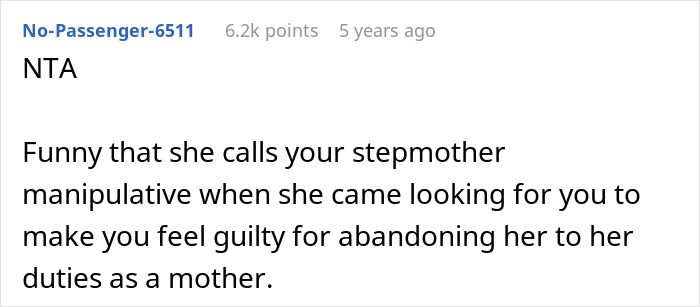
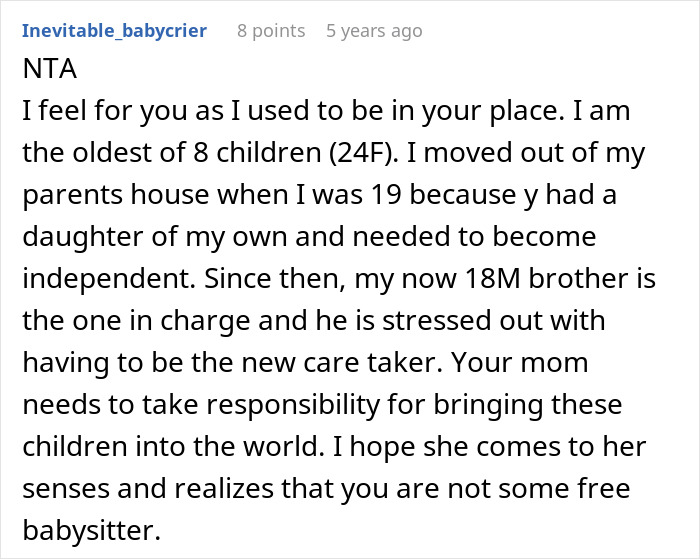
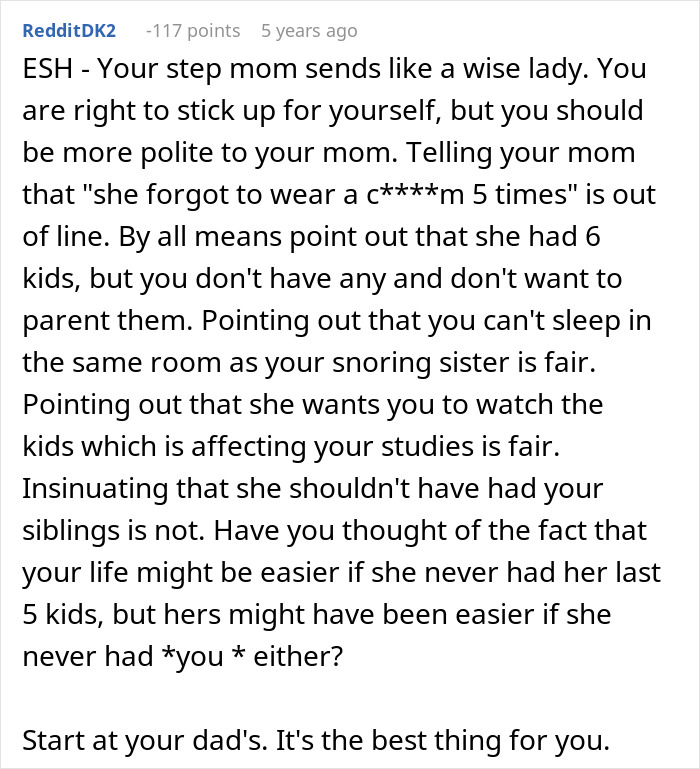
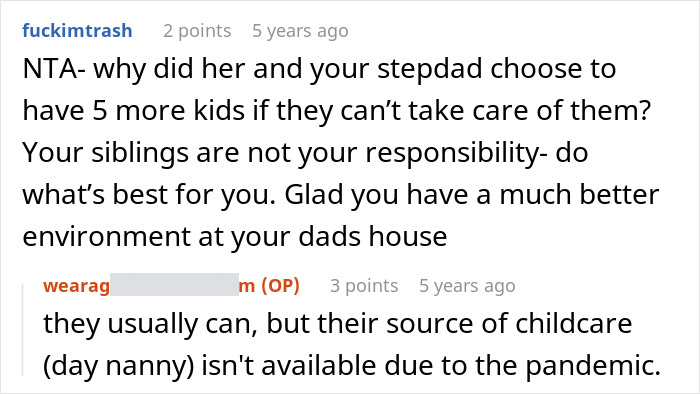
This just illustrates my point that people should not have kids if they are not able to care for them , financially and socially. OP's mum never should have kids she can't look after. Too many people have kids they can't care for and the result of that is children who didn't stand a chance from the get-go. That's unconscionable.
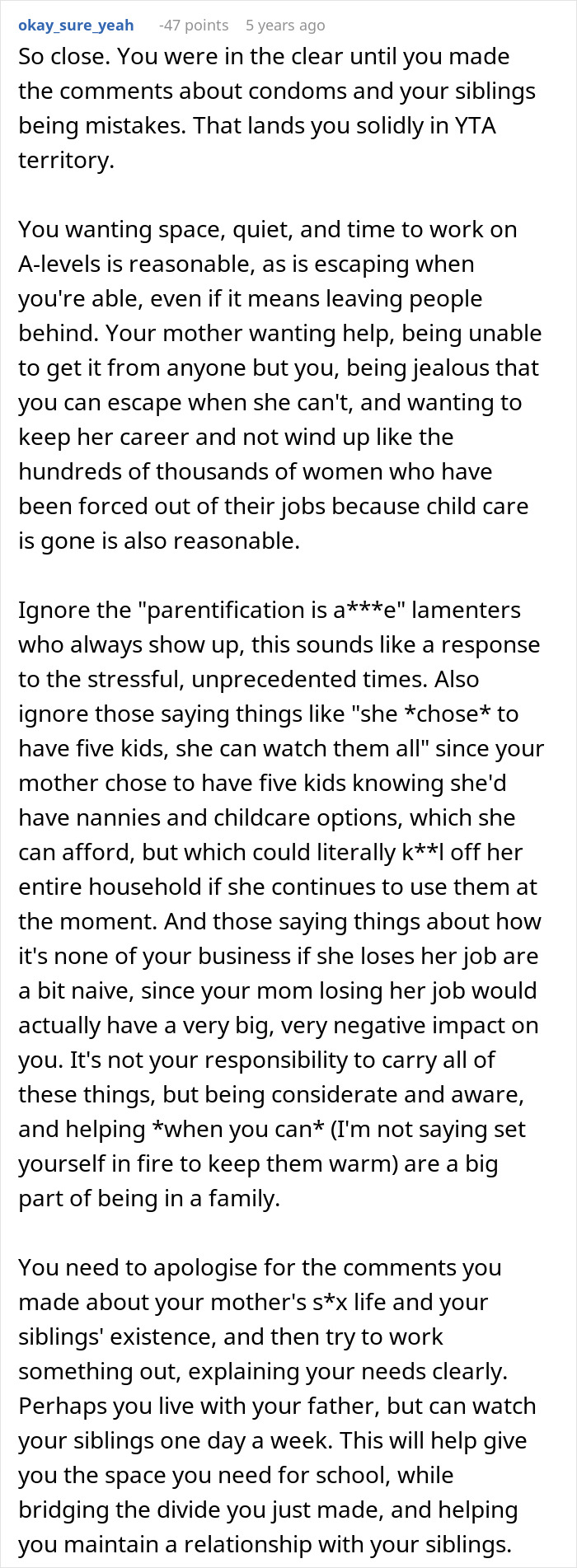
It seems you missed a few paragraphs. OP’s mom had five children and a *nanny*, but with COVID and the loss of the nanny she’s not in a bind because she’s scared to bring a nanny in who could potentially bring COVID with her. She did t have all the kids with the intentioned making OP help. It was COVID that threw a wrench into the works.
Load More Replies...
At16 legally you can decide where to live and if you want to stop visits with a parent. Based on vocab I'm assuming this is UK.
This just illustrates my point that people should not have kids if they are not able to care for them , financially and socially. OP's mum never should have kids she can't look after. Too many people have kids they can't care for and the result of that is children who didn't stand a chance from the get-go. That's unconscionable.
It seems you missed a few paragraphs. OP’s mom had five children and a *nanny*, but with COVID and the loss of the nanny she’s not in a bind because she’s scared to bring a nanny in who could potentially bring COVID with her. She did t have all the kids with the intentioned making OP help. It was COVID that threw a wrench into the works.
Load More Replies... At16 legally you can decide where to live and if you want to stop visits with a parent. Based on vocab I'm assuming this is UK.






















 No fees, cancel anytime





37
16