Get Premium
Dark mode theme is available exclusively for premium users. Learn more about the benefits of subscribing.
No fees, cancel anytime.

 Dark Mode Ad-Free Browsing Unlimited Content
 Ad-Free Browsing Unlimited Content Dark Mode
Join 1.2 million Panda readers who get the best art, memes, and fun stories every week!

Ever since childhood, family roles are often spoken about as if they naturally come with emotional meaning and responsibility. Terms like “big brother” or “new sibling” are frequently assumed to automatically create connection, even when real-life relationships are far more complicated.
Today’s Original Poster’s (OP) story explores what happens when those expectations are placed on a teenager who has grown up largely detached from his father’s side of the family. When he then refused to accept to be a “big brother” to anyone, he was left wondering if he was wrong.
More info: Reddit
Image credits: Freepik / Magnific (not the actual photo)
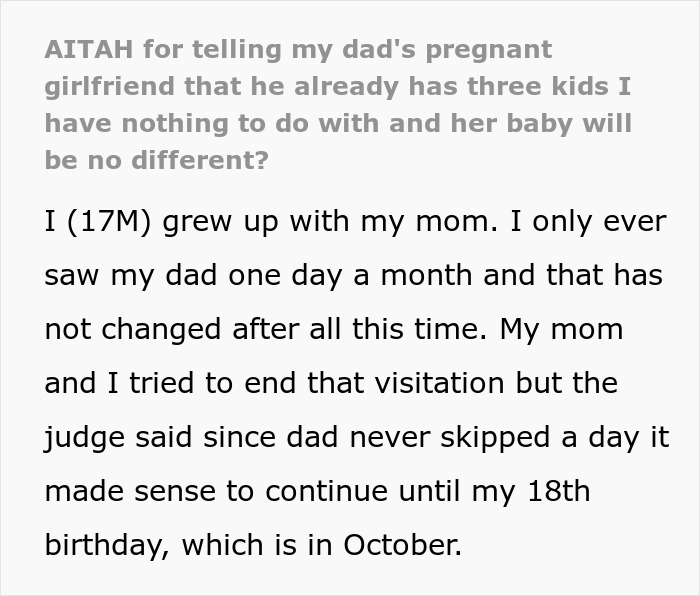

Image credits: lookstudio / Magnific (not the actual photo)
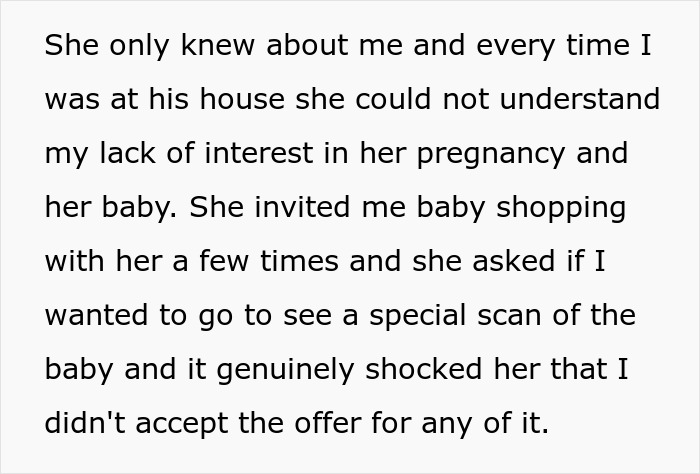
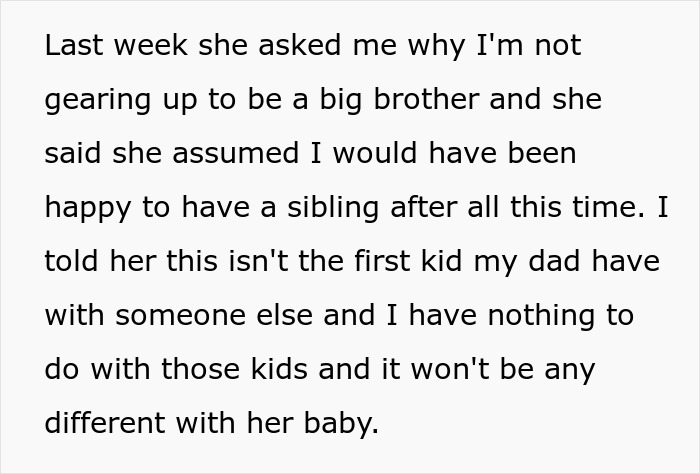
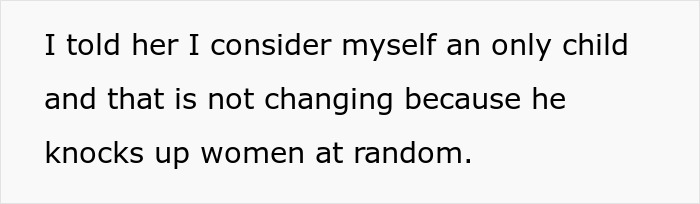
Image credits: pvproductions / Magnific (not the actual photo)
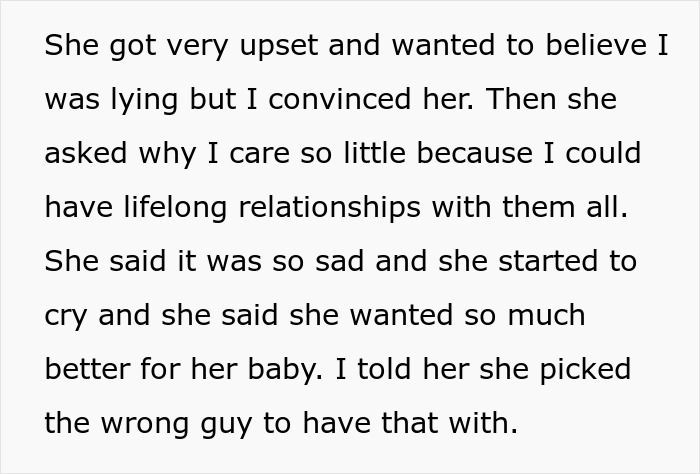
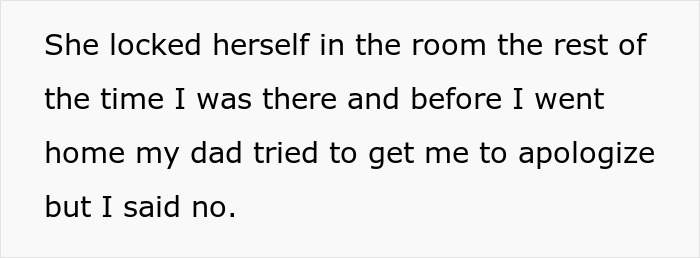
Image credits: Natural-Bat7423
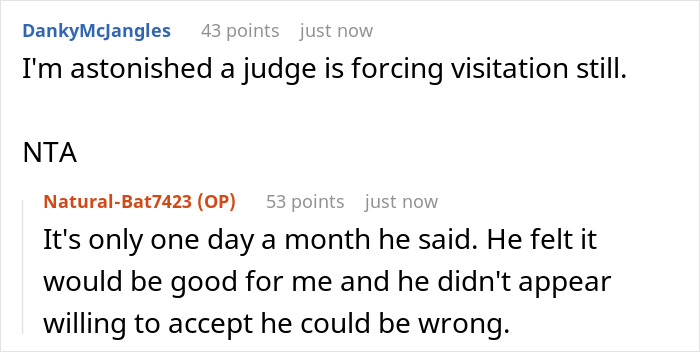
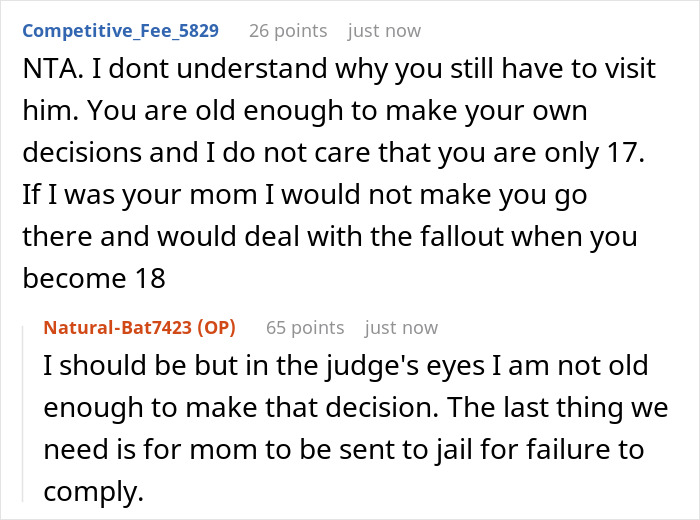
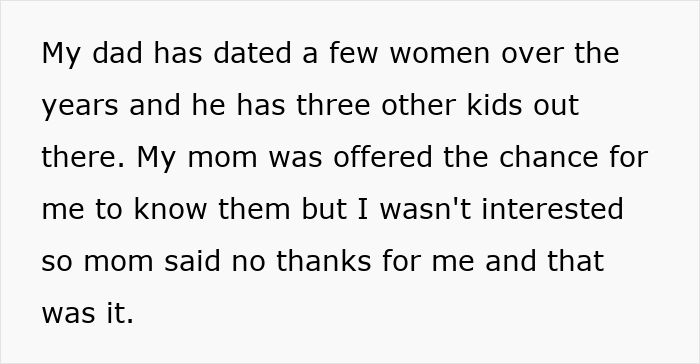
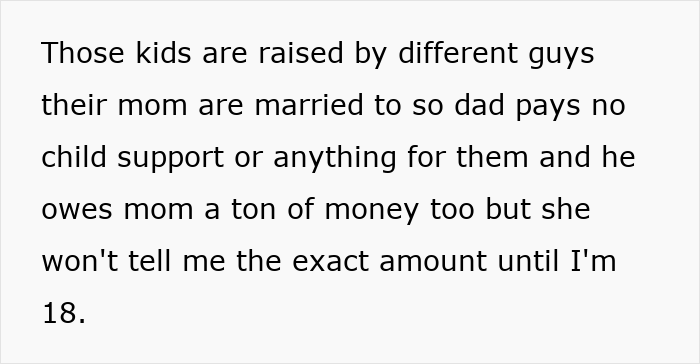
The OP explains that he grew up almost entirely with his mom, seeing his dad only once a month. Despite attempts to reduce or end his visitation, a judge ruled it should continue until he turns 18 largely because the dad technically fulfilled his minimal obligation. Over time, though, the dad had multiple relationships and children with other women, but none of them were ever integrated into the OP’s life.
In fact, he actively chose not to meet his half-siblings, and his mom respected that boundary. However, things took a turn when the dad’s current girlfriend became pregnant. Unlike previous partners, she seems genuinely invested in building a relationship with the OP, and assumes he will be excited about becoming a big brother.
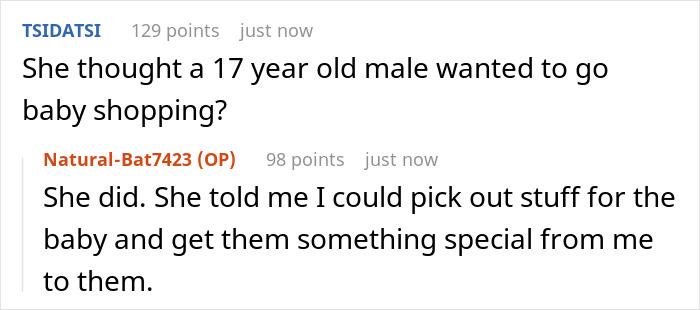
She invites him to baby-related events like shopping trips, scans, bonding moments, but he repeatedly shows his disinterest. Eventually, the girlfriend confronted him, asking why he isn’t “gearing up” for his new role. He told her he doesn’t see himself as a brother, and doesn’t intend to start now. He points out that this isn’t the first time his dad has had another child, and none of those relationships exist either.
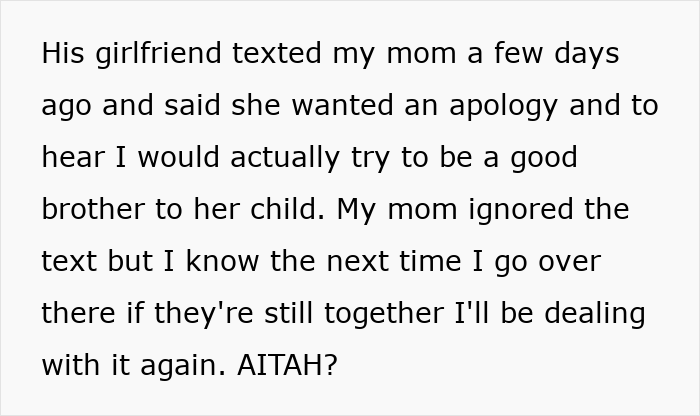
When she retorted that she wanted better for her baby, the OP told her she picked the wrong guy for that. She then isolated herself, while his dad demanded an apology. The girlfriend also demanded an apology and asked him to promise that he’ll try to be a better brother.
Image credits: barriolo / Magnific (not the actual photo)
In situations like the one described in the story, psychology research helps explain why that expectation can feel unnatural or even overwhelming. According to Psychology Today, long-term emotional detachment, especially when it develops during adolescence, can create deep psychological barriers that are not easily reshaped simply because new family roles are introduced.
This becomes even more relevant in increasingly common blended or fragmented family systems. Choosing Therapy highlights that emotional closeness between half-siblings depends far more on sustained shared experiences than on biological ties alone. Without growing up in the same household or having consistent interaction during childhood, these relationships may remain more distant.
According to Raising Children, teenage identity development relies on stable emotional and social environments that allow young people to explore relationships and build a sense of self. Drawing on Erikson’s theory of identity versus role confusion, psychologists emphasize that roles such as “brother” are not simply assigned through biology, but emerge through consistent experiences of trust and emotional involvement.
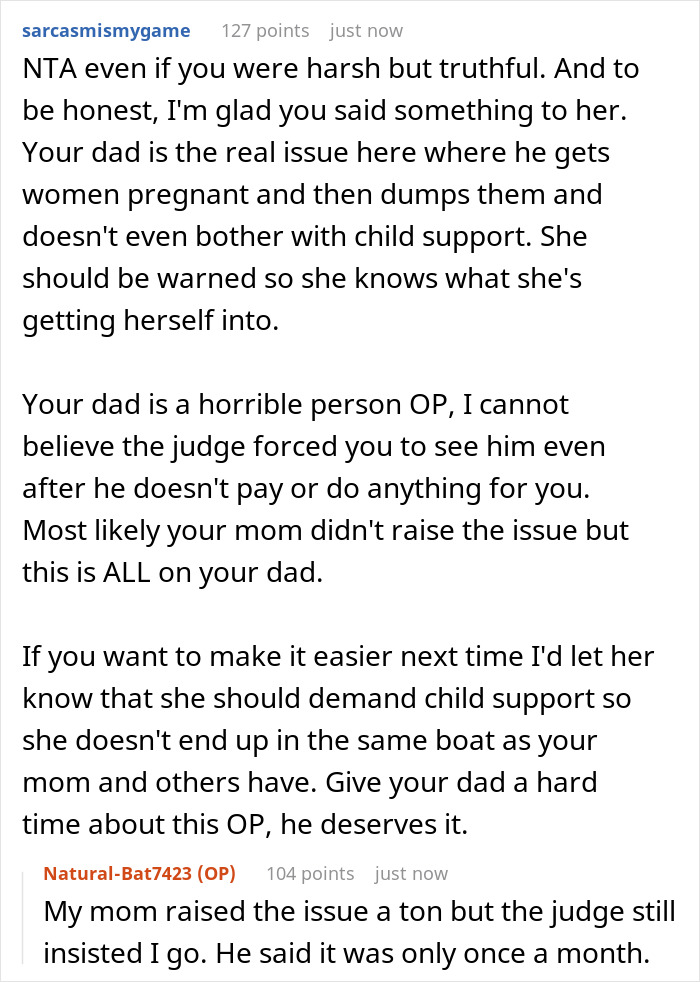
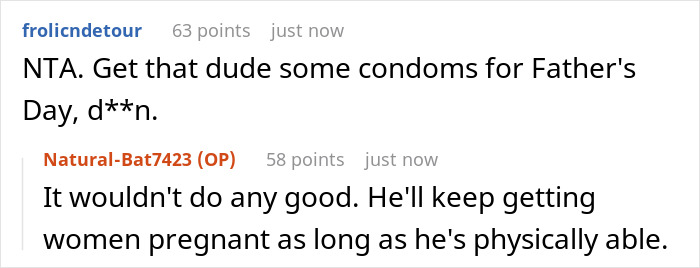
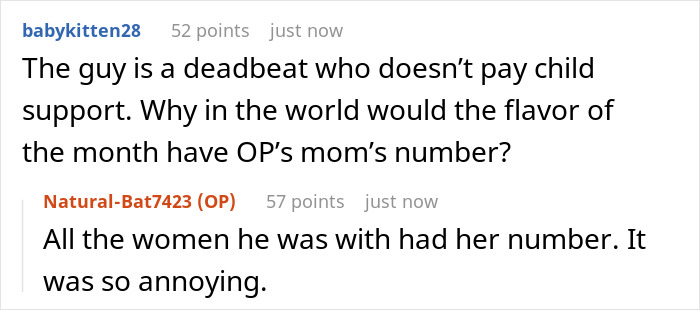
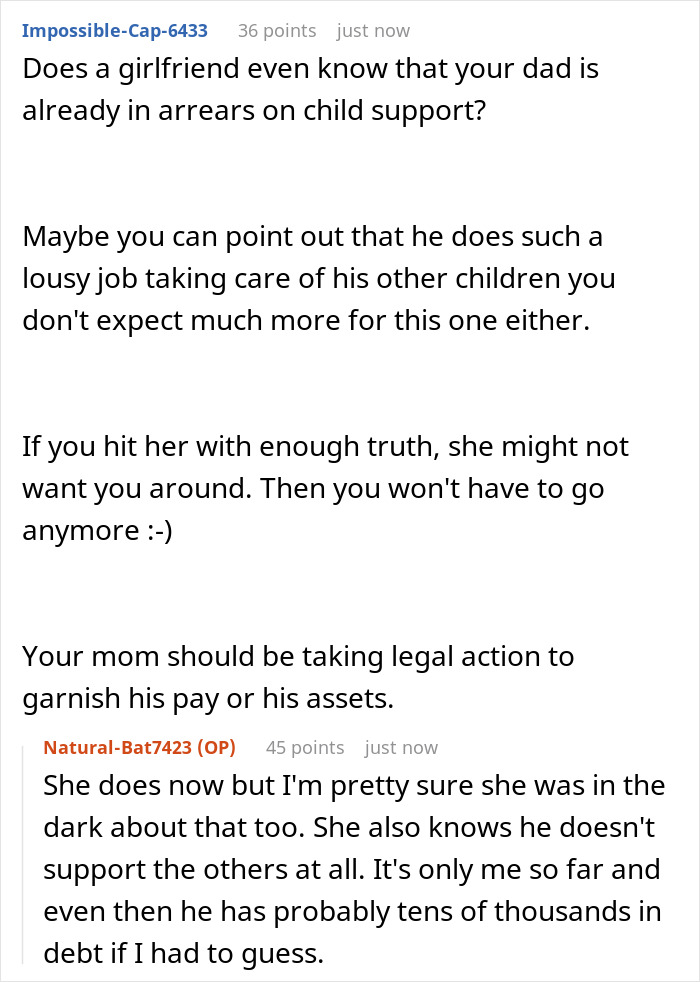
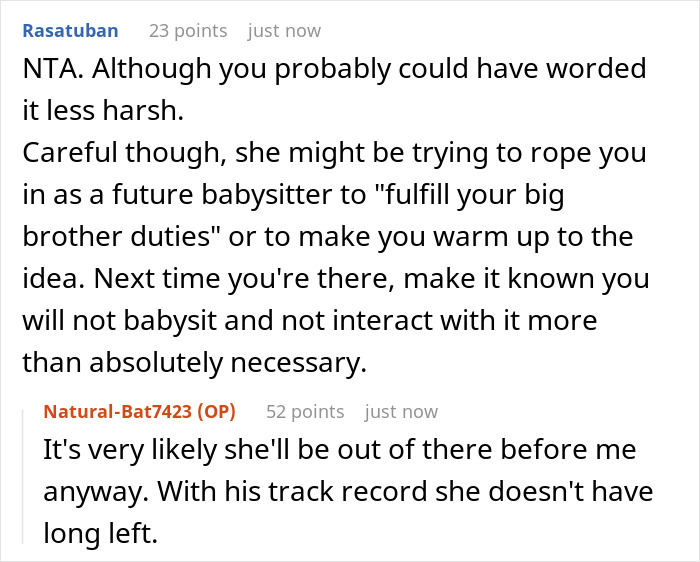
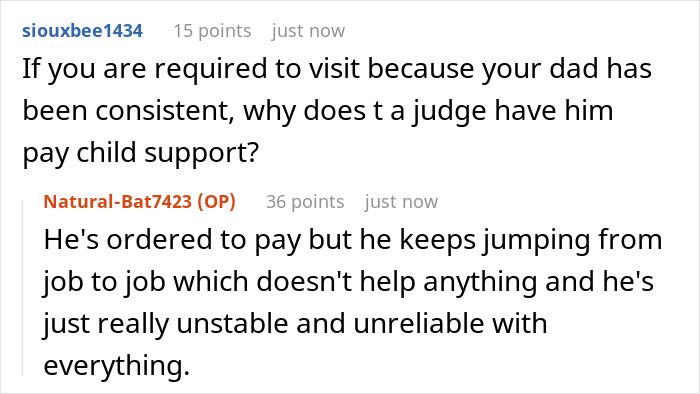
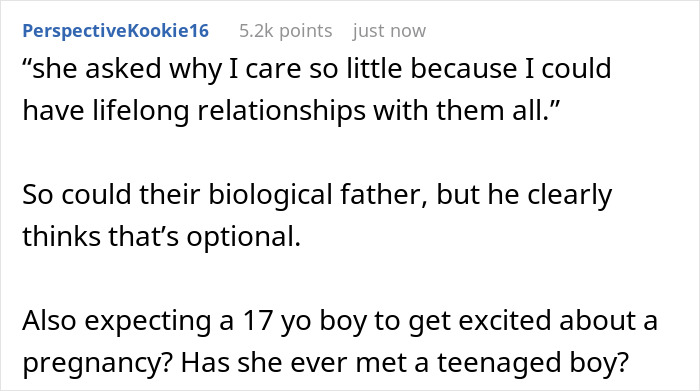
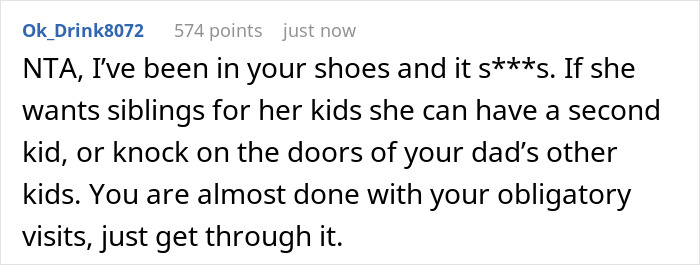
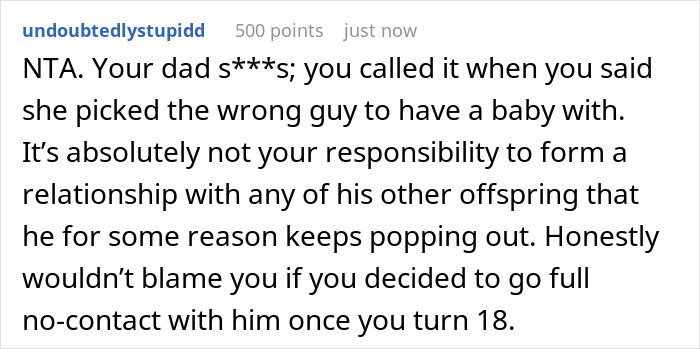
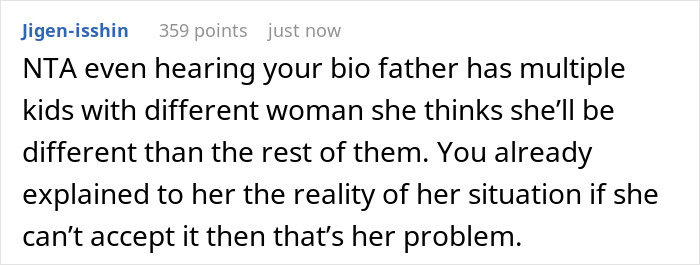
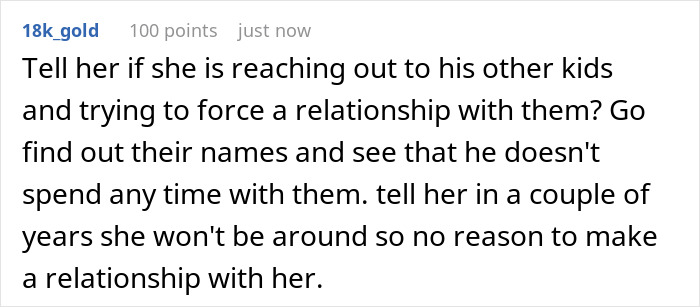
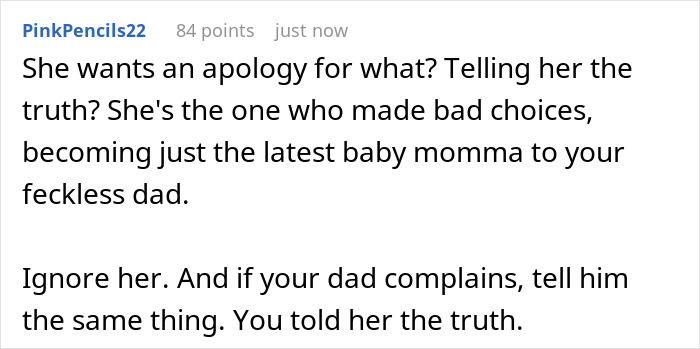
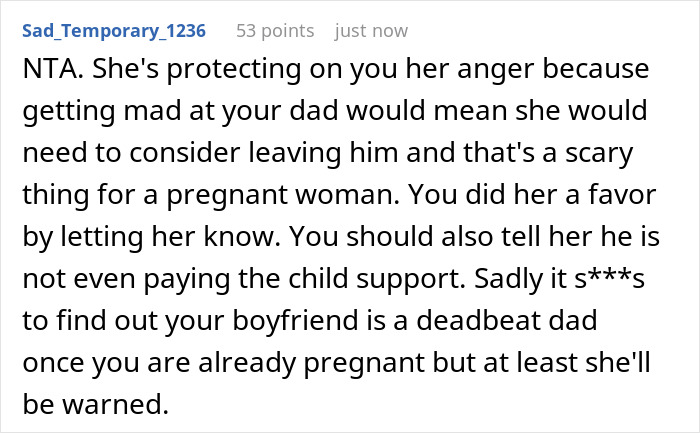
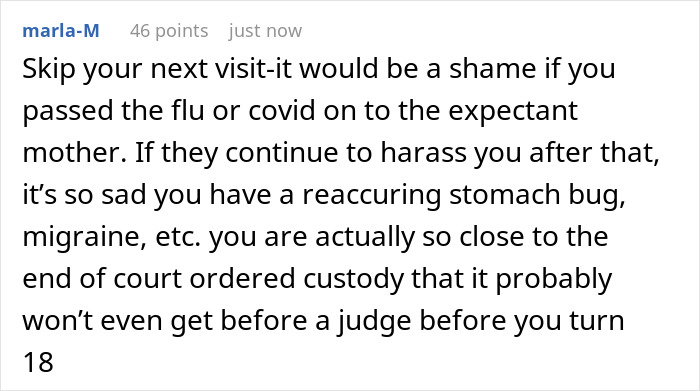
Netizens agreed that the OP is not at fault for refusing a forced sibling relationship. They also criticized the father’s behavior and emphasized that the girlfriend should have been aware of his history before expecting a different outcome. What do you think about this situation? Was the girlfriend out of line for expecting him to bond with the baby, or was she just being hopeful? We would love to know your thoughts!








By entering your email and clicking Subscribe, you're agreeing to let us send you customized marketing messages about us and our advertising partners. You are also agreeing to our Privacy Policy.
Thank you! You've successfully subscribed to newsletters!


OMG! Who does his dad think he is? Elon Musk? Has to repopulate the world by himself? OP told dad's-latest-pregnant-GF the truth + she doesn't like it. Too bad!

A teenage boy would not care about his dad's latest baby with his latest squeeze. Why should he? Hi dad has made a habit of this. Poor kid.

Some teenage boys do like babies and children and would be happy to be involved with a newborn half-sibling. It sounds like the girlfriend only knew about him and not the other half-siblings out there, and so this would be something reasonable for her to at least ask him about. Once she found out about all the others, though, the correct response would have been to leave this kid alone. Heck, even if there were no others, she should have left him alone if he asked her to. But it was not wrong to invite him to be a brother to his new half-sibling.
Load More Replies...
Can we please just geld the father of OP? Society is loud about 'single women' but has little to say about obsessive breeder men. One relationship can end that way, another might be bad luck. Three is a pattern. Also: how can men who don't pay child support walk free? If there's ONE use for prisons that use the inmates as workers, this is it.
OMG! Who does his dad think he is? Elon Musk? Has to repopulate the world by himself? OP told dad's-latest-pregnant-GF the truth + she doesn't like it. Too bad!
A teenage boy would not care about his dad's latest baby with his latest squeeze. Why should he? Hi dad has made a habit of this. Poor kid.
Some teenage boys do like babies and children and would be happy to be involved with a newborn half-sibling. It sounds like the girlfriend only knew about him and not the other half-siblings out there, and so this would be something reasonable for her to at least ask him about. Once she found out about all the others, though, the correct response would have been to leave this kid alone. Heck, even if there were no others, she should have left him alone if he asked her to. But it was not wrong to invite him to be a brother to his new half-sibling.
Load More Replies... Can we please just geld the father of OP? Society is loud about 'single women' but has little to say about obsessive breeder men. One relationship can end that way, another might be bad luck. Three is a pattern. Also: how can men who don't pay child support walk free? If there's ONE use for prisons that use the inmates as workers, this is it.









 No fees, cancel anytime







29
17