Get Premium
Dark mode theme is available exclusively for premium users. Learn more about the benefits of subscribing.
No fees, cancel anytime.

 Dark Mode Ad-Free Browsing Unlimited Content
 Ad-Free Browsing Unlimited Content Dark Mode
Join 1.2 million Panda readers who get the best art, memes, and fun stories every week!

Family members take care of each other, and sometimes they sacrifice their own lives to take care of those who can’t take care of themselves. In the U.S., almost one in five family members provide care to an adult or a child who has a medical condition or a disability.
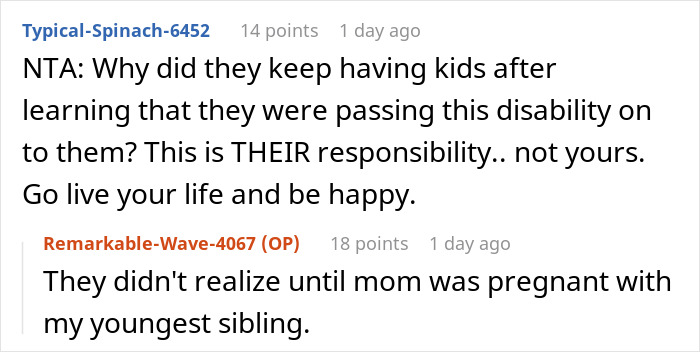
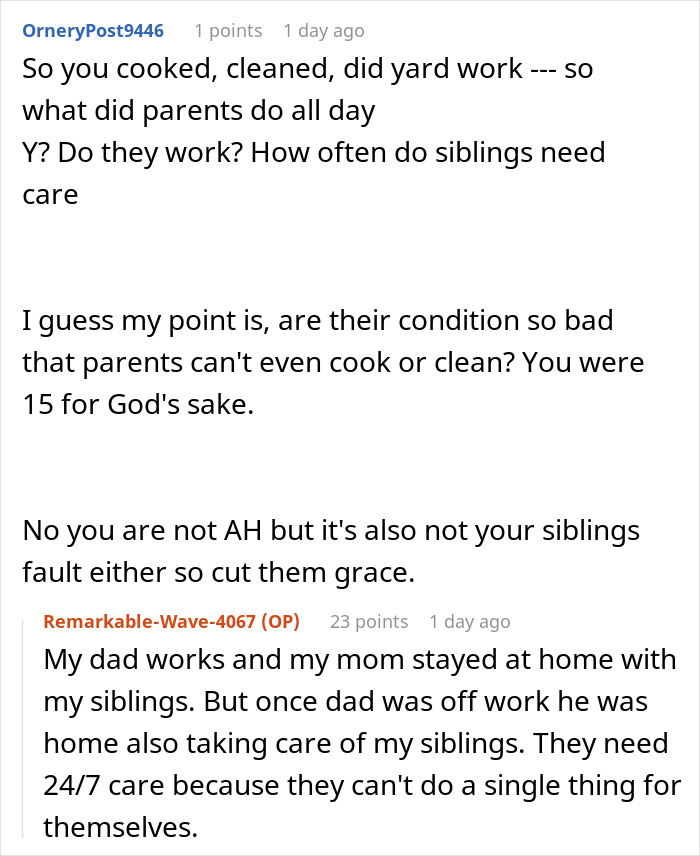
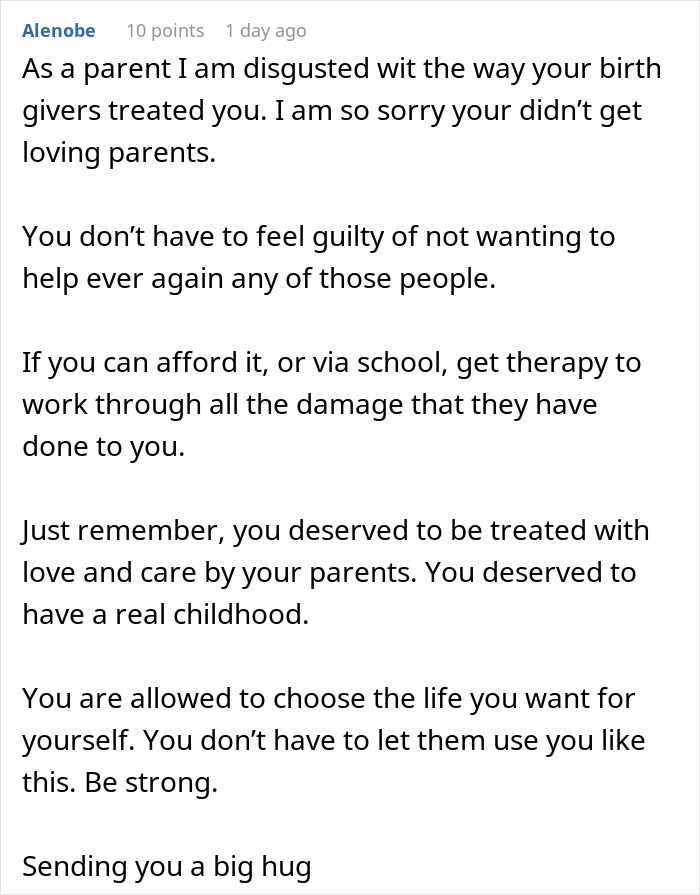
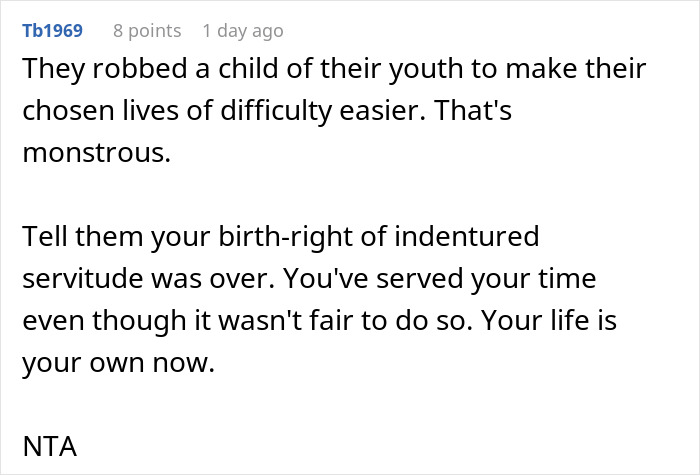
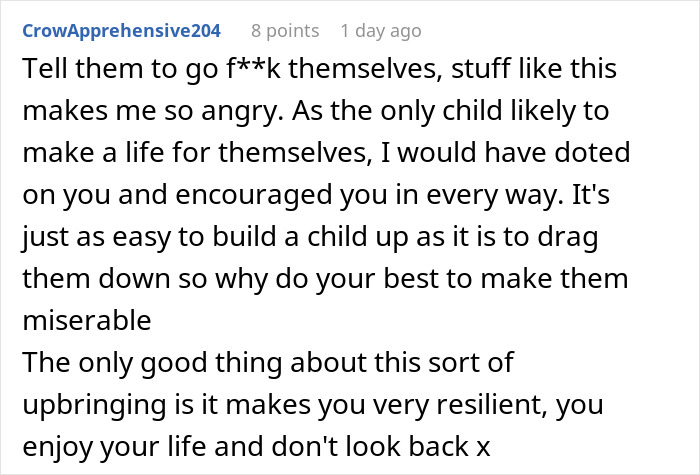
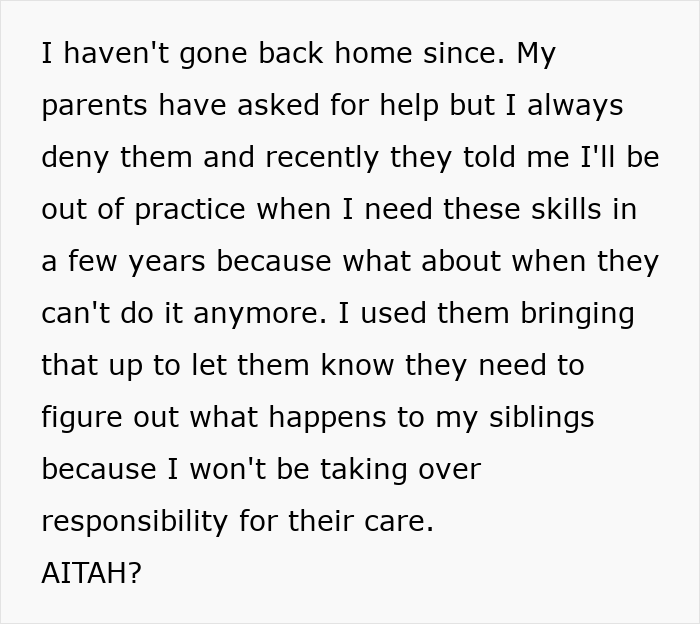
This 19-year-old spent his life caring for his three siblings and was denied his childhood. When he was finally 18, he put his foot down and moved out. Still, his parents expected him to come back and take care of his siblings later in life. Instead, he asked them to figure it out for themselves, but wondered whether he was being a jerk for refusing to sacrifice his life.
Image credits: africaimages (not the actual photo)

Image credits: Queenmoonlite35 (not the actual photo)
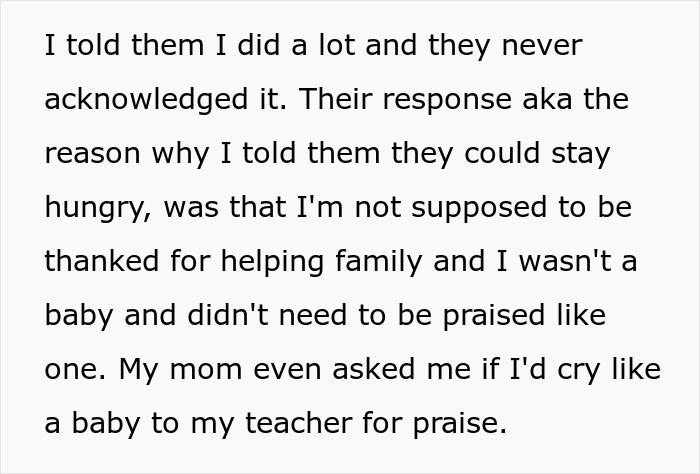
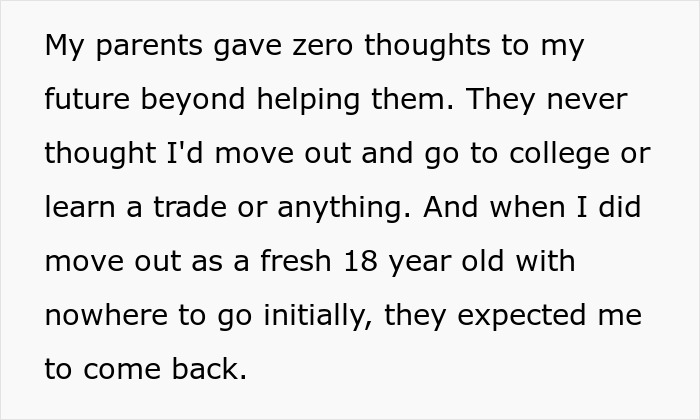

Image credits: Remarkable-Wave-4067
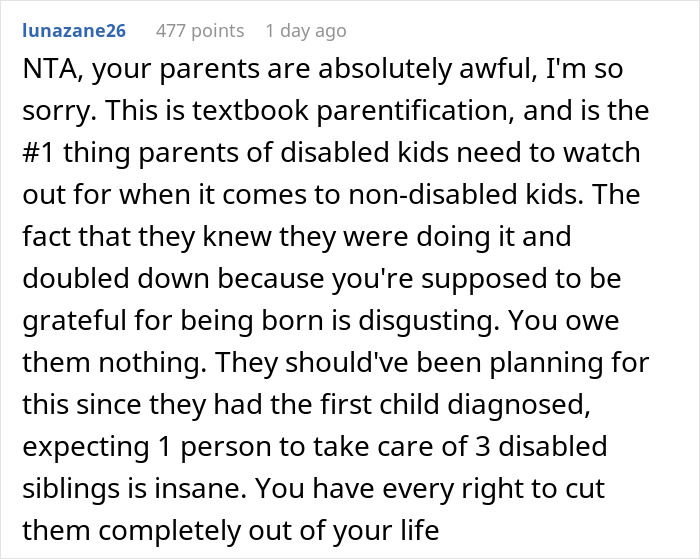
Growing up with a sibling (or, as is the case here, multiple siblings) with a disability can be tough on a child. They might feel like parents never gave them much attention, always treated the differently abled sibling as “the favorite,” and, like in this story, even parentified them and expected them to aid in caregiving.
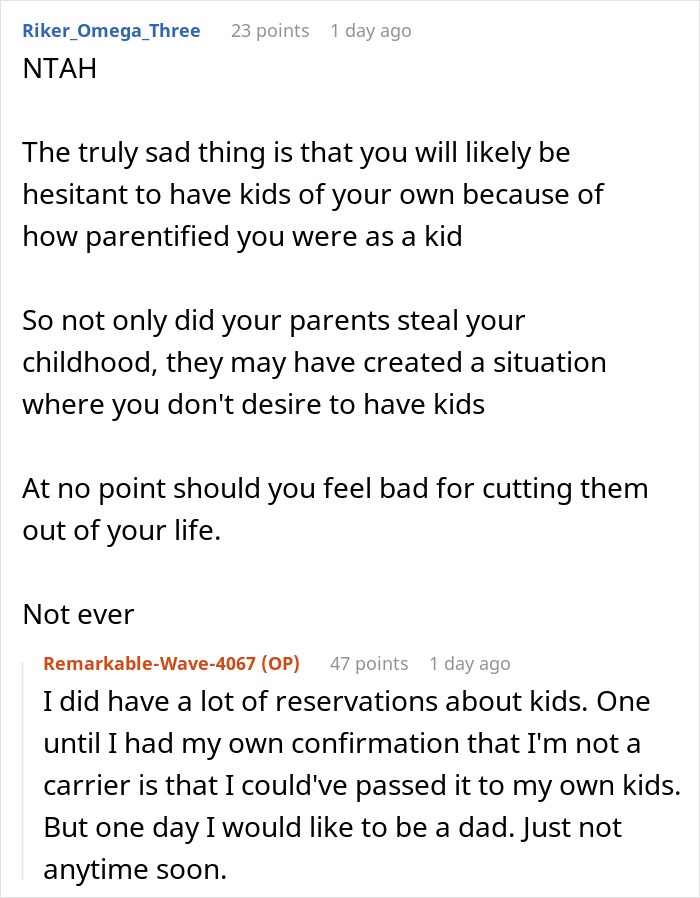
Children who have a sibling with a disability often worry about their future. Some research suggests that kids as young as 12 start thinking about their role in their disabled sibling’s life. Many wonder if they will ever be able to live independently and build a life of their own.
Data also shows that families often fail to discuss this with their children. Experts say that kids need to know the action plan for the disabled sibling. Children also shouldn’t take too much responsibility for the care of their disabled sibling.
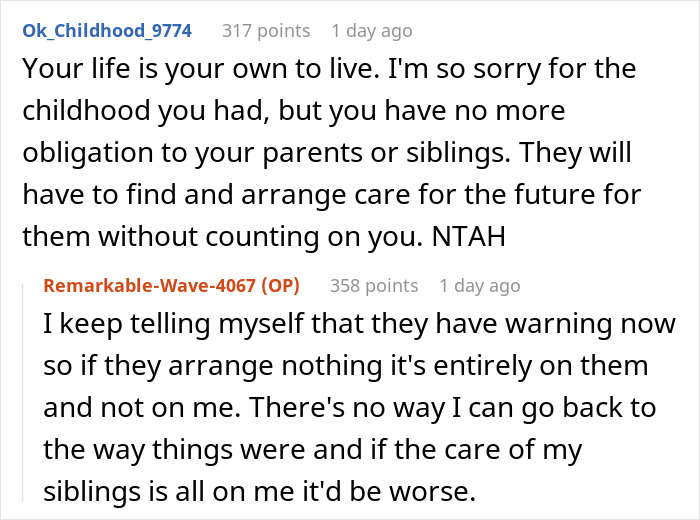
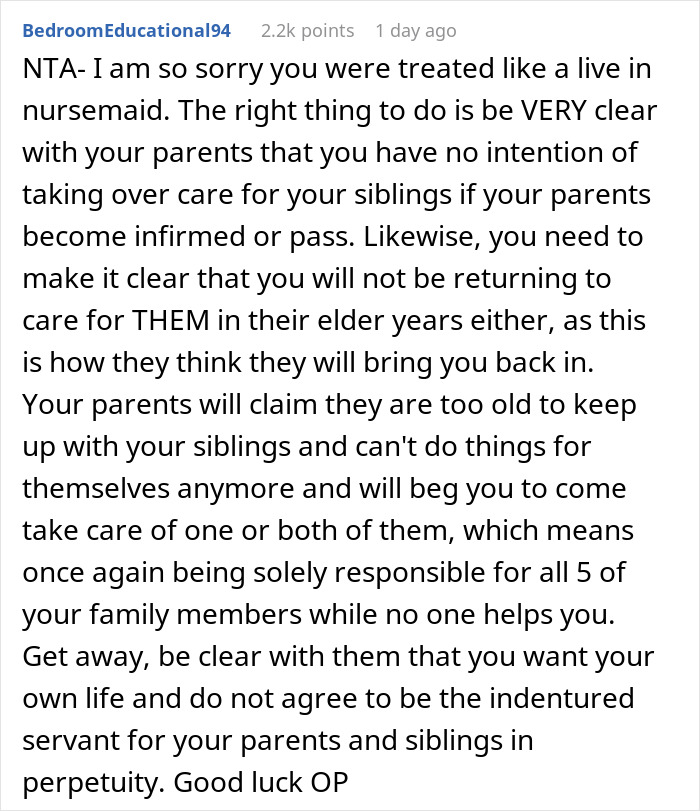
There’s no law that states a sibling is obligated to be the default carer of their family member. It’s an individual choice whether or not a person will be the caregiver. Even if a teen has expressed a wish to be a carer for their disabled sibling in the past, that doesn’t mean they want to do so now. People are allowed to change their minds, especially as they get older and become adults.
At the end of the day, it’s the parents’ job to figure out a plan that works for everyone in the family. It’s unfair to expect the “healthy” sibling to take care of the other children only because “they’re family.” The sibling has a right to independence and to experience life as he wants it. The parents already made a wrong choice by robbing him of his childhood. The least they can do is include him in the plan for the siblings’ future.
Image credits: freepik (not the actual photo)
Children need to experience childhood and should never be burdened with the responsibilities of a parent. Childhood is all about a lack of responsibilities, playfulness, and enjoying life. Unfortunately, experts notice that more and more young people are being tasked with being caregivers.
In 2005 alone, the number of caregivers under the age of 24 was an estimated 14 million in the U.S. More recent data from 2017 shows that there are about a million young caregivers who are aged 8-18. It’s hard to determine exact statistics because adults are hesitant to say that children provide care.
In many cases, children are taking care of adults: their parents, guardians, or other grown-up family members. It’s usually the case when the adults have conditions like diabetes, cancer, chronic illnesses, or have a dependence on substances.
In surveys and studies of young caregivers, they rarely identify themselves as caregivers. That’s why many of them might go unnoticed. The authors of a 2025 EU research report state that “Many unpaid carers – especially young carers and those outside the workforce – do not identify as carers and lack external recognition.”
Experts call that “hidden caring” and estimate that about one in five teens aged 15-17 years old provide unpaid childcare. What’s more, between 8% and 24% provide long-term care. It’s also estimated that teens spend about 18 hours a week being unpaid carers.
Image credits: New Africa (not the actual photo)
















By entering your email and clicking Subscribe, you're agreeing to let us send you customized marketing messages about us and our advertising partners. You are also agreeing to our Privacy Policy.
Thank you! You've successfully subscribed to newsletters!


He should've responded with "What, are you gonna cry like a baby about it?"


I don't believe this one. OP says his siblings all have an autosomal recessive disorder that manifests by early childhood and leaves them basically unable to care for themselves at all while still having a relatively long life span. From what I can tell there is no such autosomal recessive disorder. Most of them have treatments that allow for a reasonably normal life. The only one that might fit this story is Tay-Sachs but the most common form shows symptoms by 6 months of age and d***h around 2-4 years.

Recessive spastic ataxia of Charlevoix-Saguenay. Life expectancy of 60 "spasticity (stiffness) of the legs (worsens over time); lack of balance when learning to walk, loss of balance, falls, poor coordination of arm and hand movements; deformities of the hands and feet; speech problems (e.g., difficulty producing sounds clearly, speaking fluently or pronouncing correctly)." Presents within the first few years of life.
Load More Replies... He should've responded with "What, are you gonna cry like a baby about it?"
I don't believe this one. OP says his siblings all have an autosomal recessive disorder that manifests by early childhood and leaves them basically unable to care for themselves at all while still having a relatively long life span. From what I can tell there is no such autosomal recessive disorder. Most of them have treatments that allow for a reasonably normal life. The only one that might fit this story is Tay-Sachs but the most common form shows symptoms by 6 months of age and d***h around 2-4 years.
Recessive spastic ataxia of Charlevoix-Saguenay. Life expectancy of 60 "spasticity (stiffness) of the legs (worsens over time); lack of balance when learning to walk, loss of balance, falls, poor coordination of arm and hand movements; deformities of the hands and feet; speech problems (e.g., difficulty producing sounds clearly, speaking fluently or pronouncing correctly)." Presents within the first few years of life.
Load More Replies...





























 No fees, cancel anytime







36
5