Get Premium
Dark mode theme is available exclusively for premium users. Learn more about the benefits of subscribing.
No fees, cancel anytime.

 Dark Mode Ad-Free Browsing Unlimited Content
 Ad-Free Browsing Unlimited Content Dark Mode
Join 1.2 million Panda readers who get the best art, memes, and fun stories every week!

It’s not that kids “inherit” entitlement, but if they see their parents act a certain way, they naturally tend to imitate it. It’s quite a vicious cycle that can pass on for generations if there’s no end to it. Unfortunately, some people never really grow out of it.
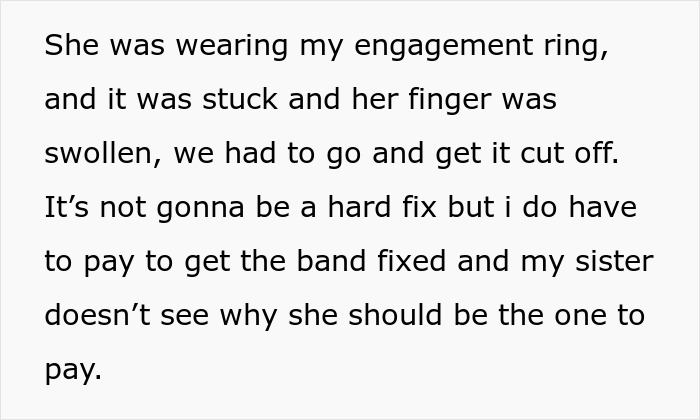
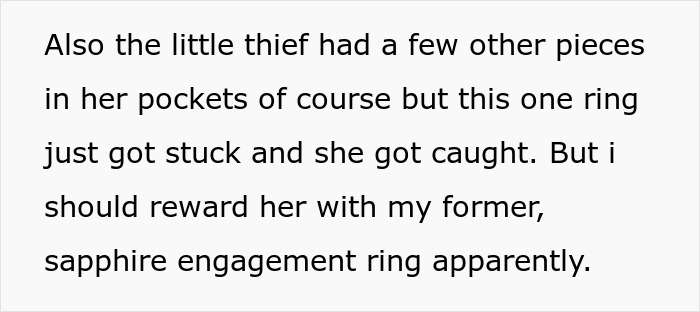
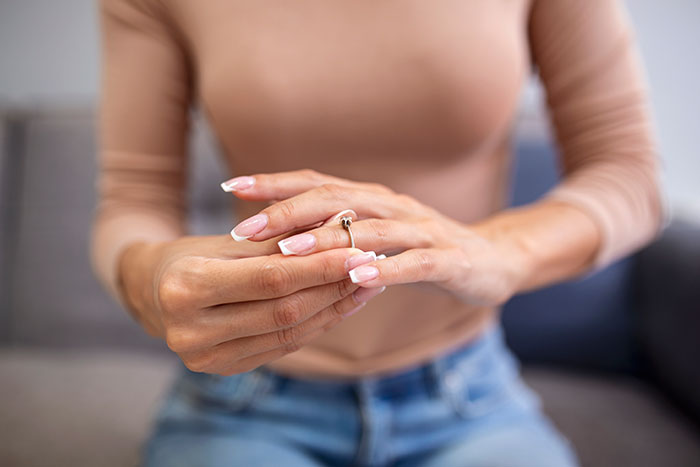
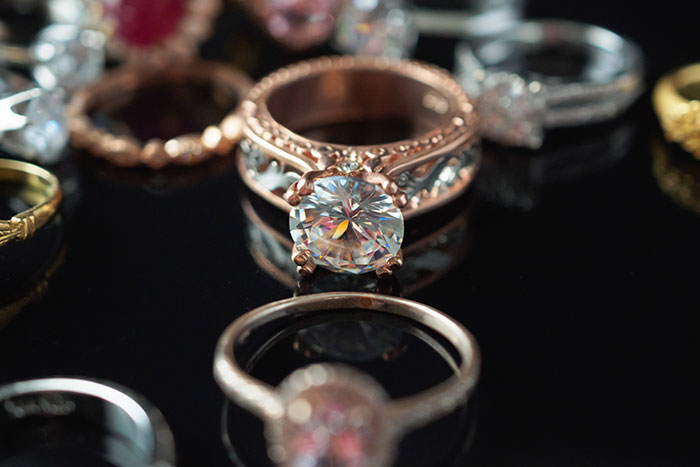
This woman shared how she had such a sister who passed down her entitlement to her daughter. This teen tried to steal her aunt’s jewelry, but instead of reprimanding her, the mom jumped to her defense and even wanted to reward her. Here’s what the shocked aunt did instead…



Children learn new things at lightning speed and love to imitate whatever their parents or caregivers do. That means they take in the good, the bad, and also the ugly. Research highlights that entitled people have a self-absorbed view of the world and lack empathy to understand their impact on others.
They also act melodramatically and play the victim if their needs are not met. Besides, such people can also be very possessive when it comes to material goods. If children are constantly exposed to such behavior, they will obviously imbibe it and even start practicing it. However, when they are not disciplined, their actions can cause them more trouble.
Strangely, some people still believe that disciplining children means yelling or hitting them. But it’s actually about rewarding them for appropriate behavior and discouraging their inappropriate acts. Educators stress that it’s important for children and teens. “Discipline also extends to the way teenagers interact with their peers and family members.”
“Additionally, discipline helps teenagers constructively manage conflicts and disagreements, reducing the likelihood of strained relationships,” they add. However, when they are not taught right from wrong, they might struggle to develop a moral compass. Studies indicate that the relationship between brain development and the risk of making poor choices, particularly during hot situations, is referred to as psychosocial maturity.
Overall, teenagers’ psychosocial immaturity makes them more likely to seek excitement, engage in risk-taking behavior, make impulsive choices, and fail to anticipate the consequences of their choices. That’s why adults should step in and teach them the importance of good decision-making.
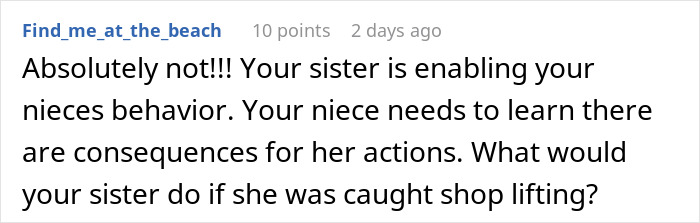
Unfortunately, the teenager in the story had an extremely entitled mom. Far from teaching her right from wrong, this woman actually enabled her inappropriate behavior. In fact, she even wanted to “reward her for stealing” by giving her the ring. Mental health professionals point out that if you enable your teen repeatedly, it prevents them from developing essential life skills.
Their confidence shrinks, their anxiety grows, and their tolerance for frustration weakens. Their world gets smaller, even when you are trying to help them. Rather than enabling, it’s a parent’s job to understand why their teen is behaving inappropriately.
According to the experts at Newport Academy, “The causes of destructive behavior in teens are multifaceted, often rooted in family dynamics, trauma, mental health issues, and unmet emotional needs. Factors such as high parental conflict, unresolved trauma, and exposure to substance use can increase the likelihood of a teen engaging in harmful behaviors.”
“Mental health challenges, including anxiety and depression, further complicate the situation, making it essential for parents to recognize these underlying issues,” they add. Netizens were really concerned about how the teen in the story was being brought up. I mean, with a mom like that, anyone would be worried.
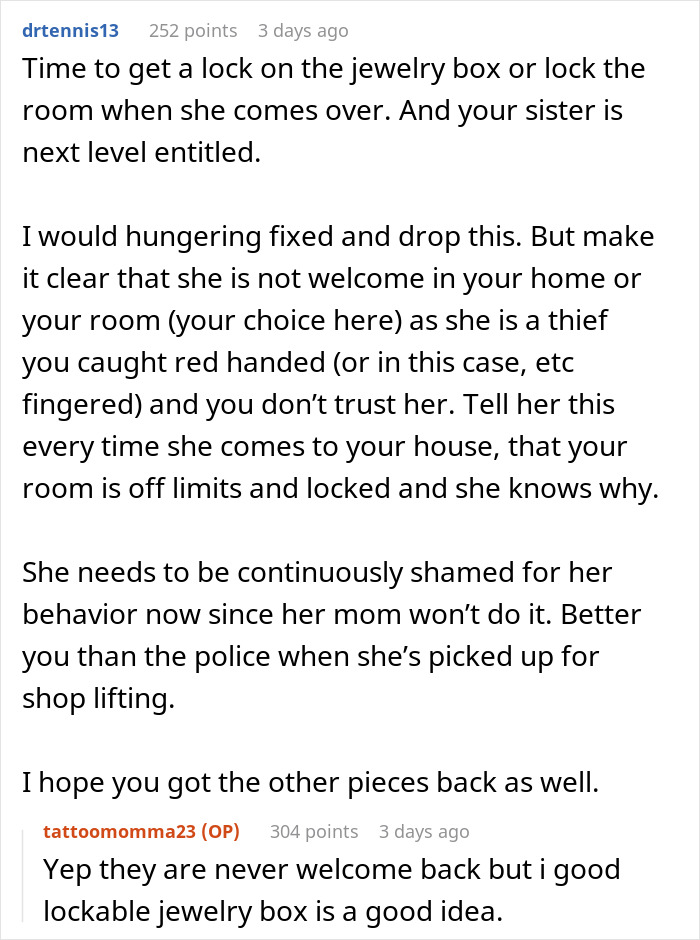
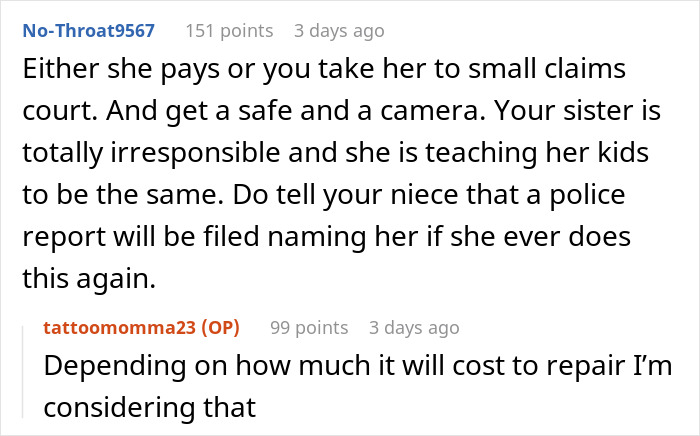
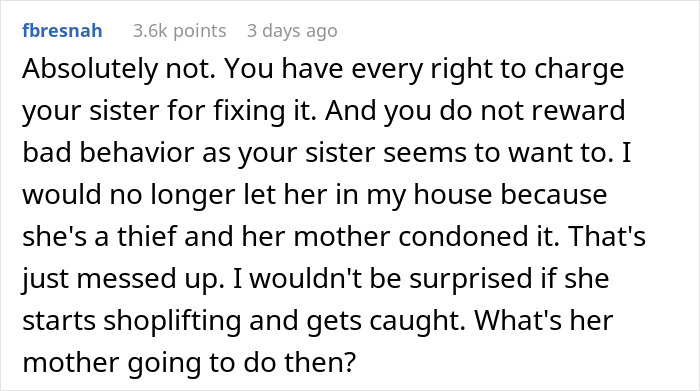
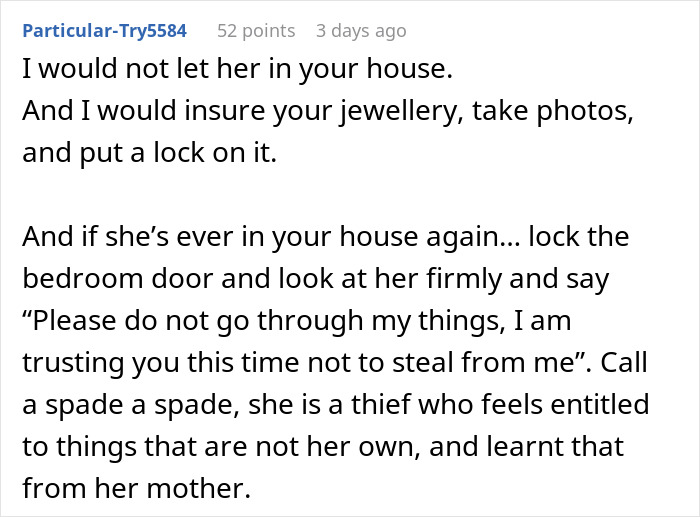
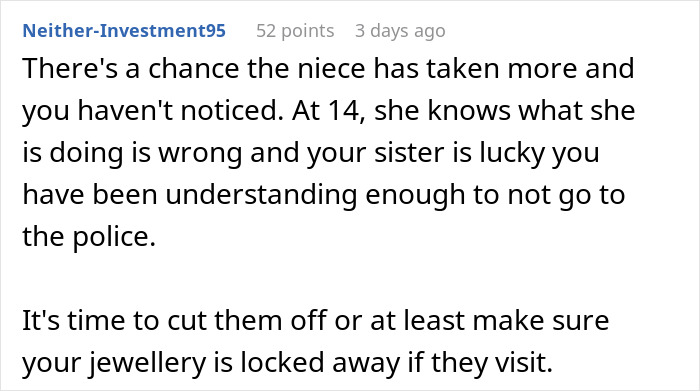
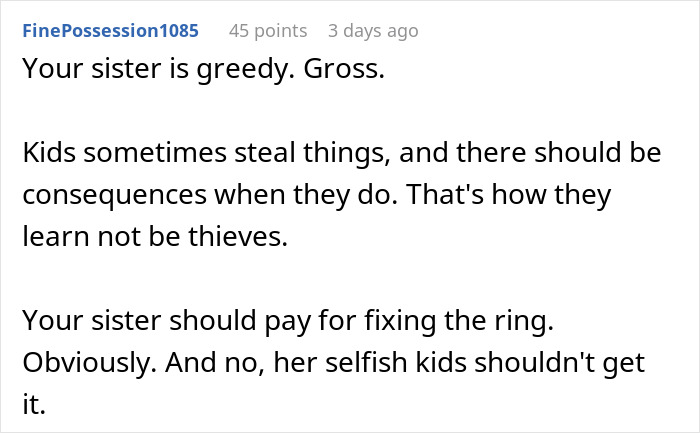
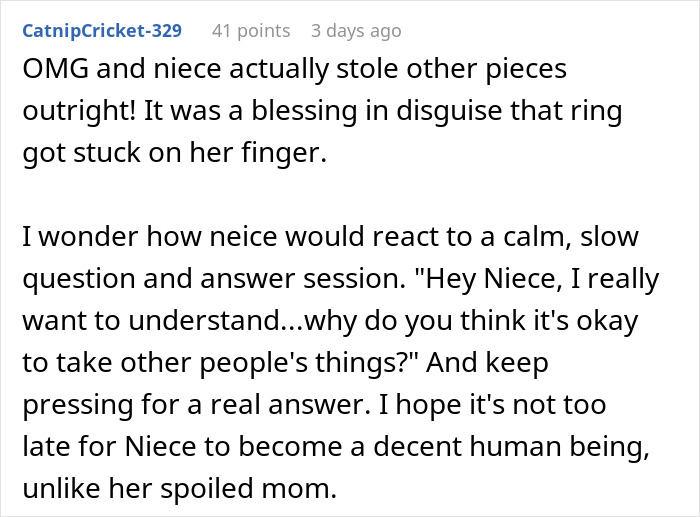
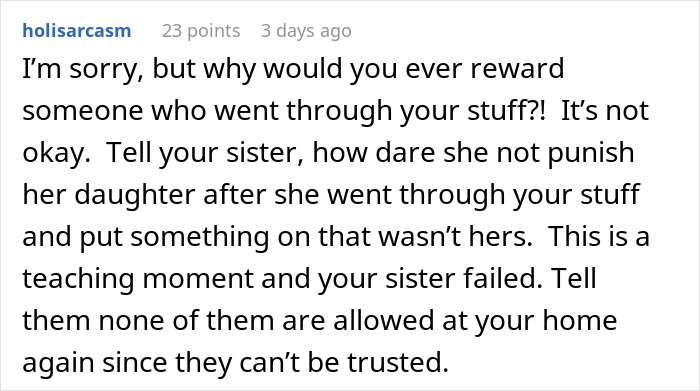
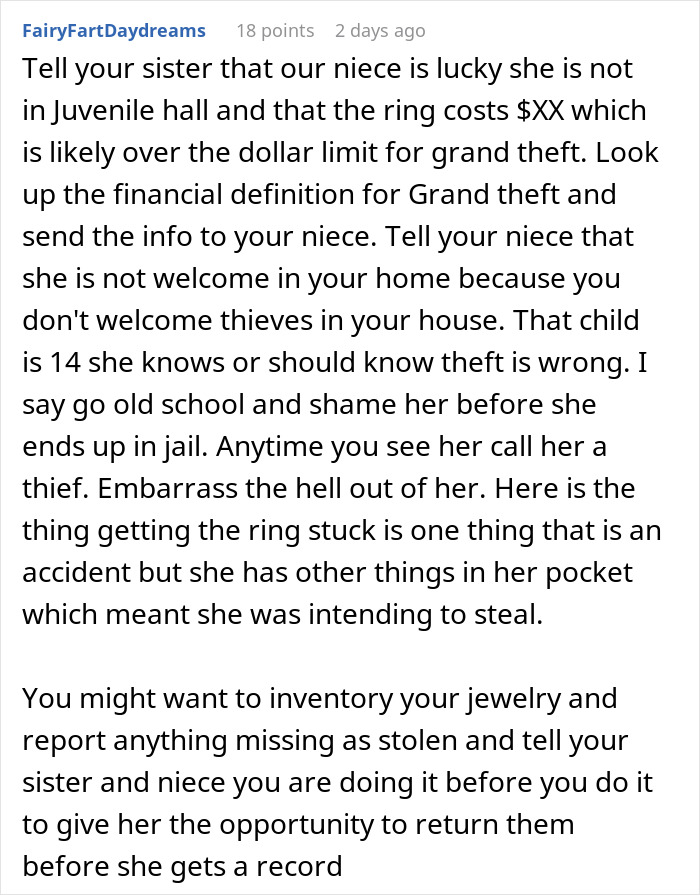
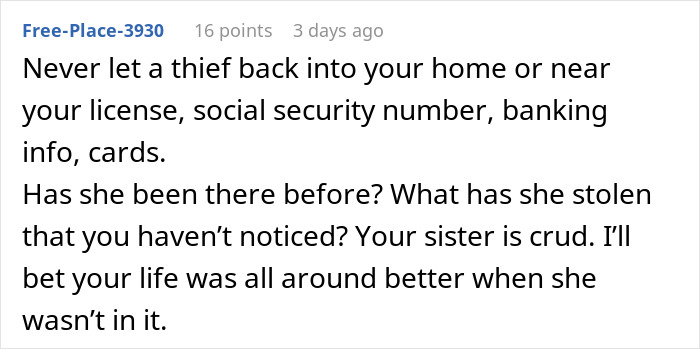
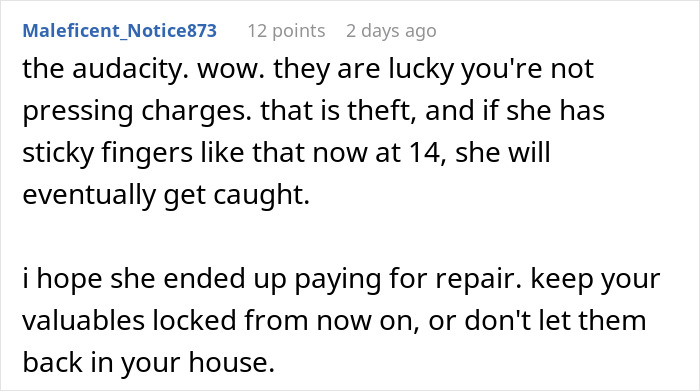
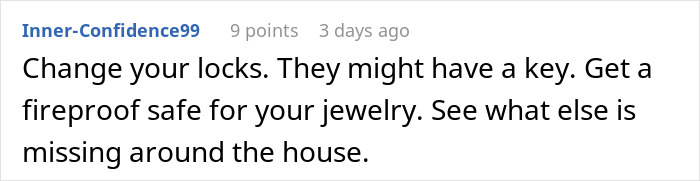
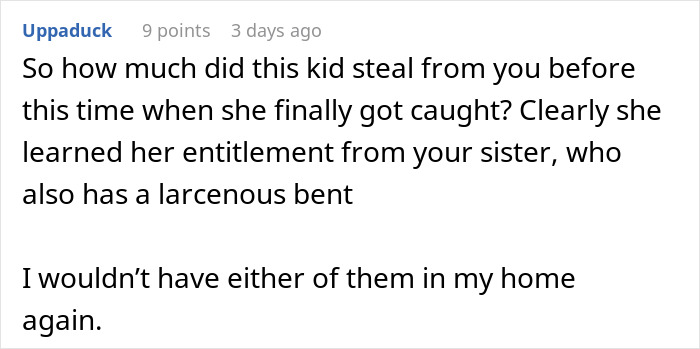
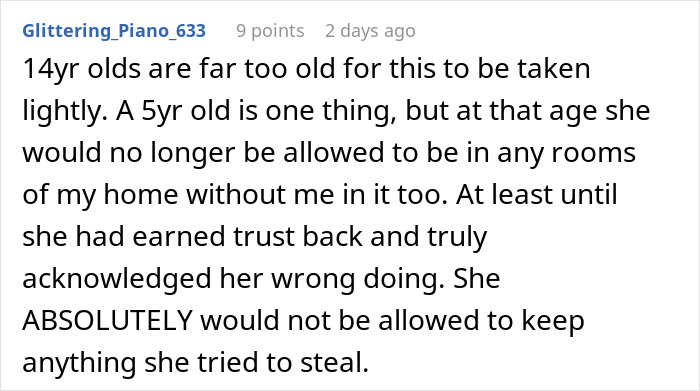
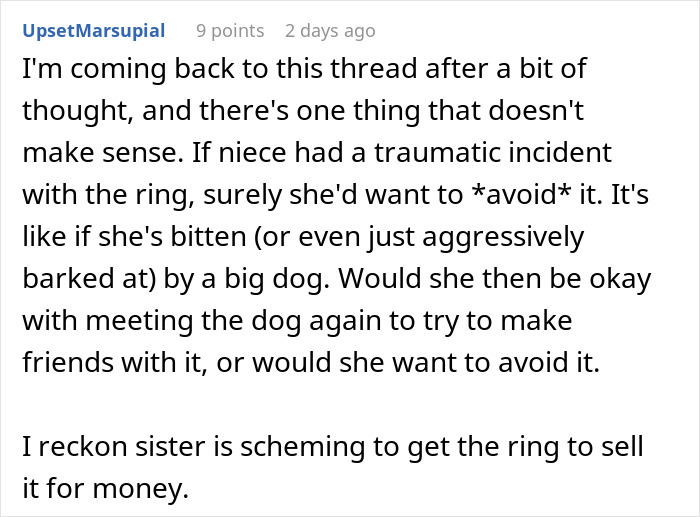
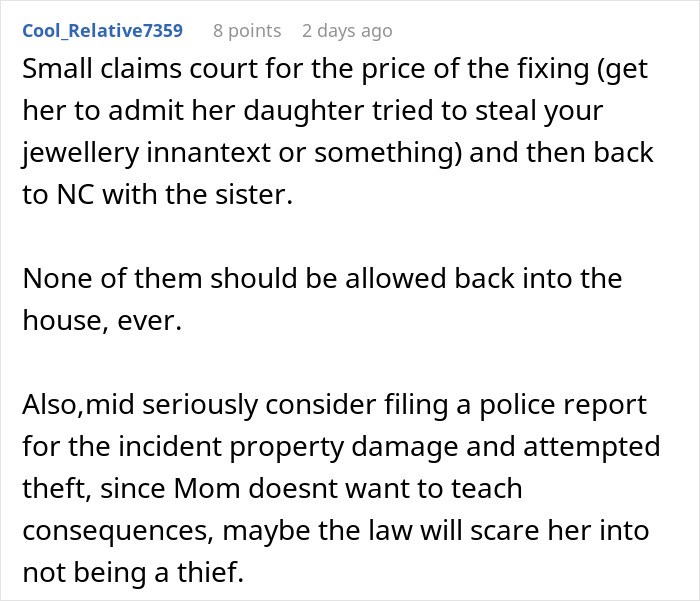
Peeps advised the author to hold the teen accountable by telling her that she can call the cops. Also, she could take her sister to small-claims court if the entitled woman refused to pay. It’s totally fair, and even the narrator commented that she might consider this if repairing the ring costs a lot of money. What are your thoughts about it? Feel free to jot them down in the comments!









By entering your email and clicking Subscribe, you're agreeing to let us send you customized marketing messages about us and our advertising partners. You are also agreeing to our Privacy Policy.
Thank you! You've successfully subscribed to newsletters!

actually insane behavior. either the daughter is being taught her terrible behavior is okay or (and this seems likely) the sister was jealous of the ring and told her daughter to take it

When I was about seven, a relative I love very much came to visit, and when she was out of the house, I went snooping in her suitcase. I found a pretty round jar and opened it, and it turned out to be loose powder that EXPLODED all over her things! I shook out her clothes and did my best to clean it up, but I heard the car in the driveway and had to throw everything in her suitcase and zip it up. The rest of her visit, I waited for the hammer to come down (that’s code for “beating from my mother”), and it never happened, and after she left I thought how a beating woulda been preferable to the worry which kept my insomniac self up at night. I always wondered why she never said anything to my mom; it dawns on me now that she was trying to save me from a beating. But she never said anything to me! Not a word, and I never apologized because I thought I’d gotten way with it, but as an adult, I know now how stupid that was. I’m feeling sick just typing this. She’s in her early 80s now; I’m gonna see whether I can get her address and write to her to apologize. At least I wasn’t SO awful that I felt entitled to have made that mess, and I had the decency to worry about having hurt her. I have no clue how people think they can raise useful human beings when there are no consequences when they do bad things. I guess that’s why “entitlement” is mentioned in sooo many posts these days. 😞
Load More Replies...

It appears some folks do, which seems to be at least half the problem these days.
Load More Replies... actually insane behavior. either the daughter is being taught her terrible behavior is okay or (and this seems likely) the sister was jealous of the ring and told her daughter to take it
When I was about seven, a relative I love very much came to visit, and when she was out of the house, I went snooping in her suitcase. I found a pretty round jar and opened it, and it turned out to be loose powder that EXPLODED all over her things! I shook out her clothes and did my best to clean it up, but I heard the car in the driveway and had to throw everything in her suitcase and zip it up. The rest of her visit, I waited for the hammer to come down (that’s code for “beating from my mother”), and it never happened, and after she left I thought how a beating woulda been preferable to the worry which kept my insomniac self up at night. I always wondered why she never said anything to my mom; it dawns on me now that she was trying to save me from a beating. But she never said anything to me! Not a word, and I never apologized because I thought I’d gotten way with it, but as an adult, I know now how stupid that was. I’m feeling sick just typing this. She’s in her early 80s now; I’m gonna see whether I can get her address and write to her to apologize. At least I wasn’t SO awful that I felt entitled to have made that mess, and I had the decency to worry about having hurt her. I have no clue how people think they can raise useful human beings when there are no consequences when they do bad things. I guess that’s why “entitlement” is mentioned in sooo many posts these days. 😞
Load More Replies... It appears some folks do, which seems to be at least half the problem these days.
Load More Replies...




























 No fees, cancel anytime









40
19