Get Premium
Dark mode theme is available exclusively for premium users. Learn more about the benefits of subscribing.
No fees, cancel anytime.

 Dark Mode Ad-Free Browsing Unlimited Content
 Ad-Free Browsing Unlimited Content Dark Mode
Join 1.2 million Panda readers who get the best art, memes, and fun stories every week!

Navigating a male-dominated workplace often requires a thick skin, yet there is a distinct line between harmless banter and genuine disrespect. While much of the world has embraced gender equality, some professional environments still harbor archaic views about a woman’s role in society.
It becomes particularly complicated when people hide behind “cultural differences” to justify misogynistic behavior, forcing women to choose between maintaining peace or reporting the harassment. These situations can leave employees questioning their own reactions and wondering if they are being too sensitive. This is precisely the conflict one woman faced after a shocking interaction with a male coworker.
More info: Reddit
Image credits: freepik / Freepik (not the actual photo)
Image credits: pvproductions / Freepik (not the actual photo)
Image credits: DC Studio / Freepik (not the actual photo)
Image credits: freepik / Freepik (not the actual photo)
Image credits: r_dcherrycola
Working in a male-dominated field is tough enough without a trip to the staff kitchen turning into a lecture on gender roles. While emptying the dishwasher, a young coworker decided to call OP “wifey,” seemingly unaware that doing basic chores isn’t a genetic trait found strictly in women.
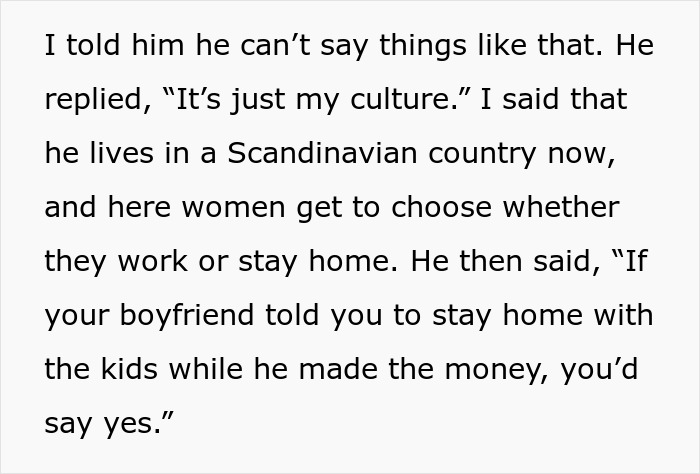
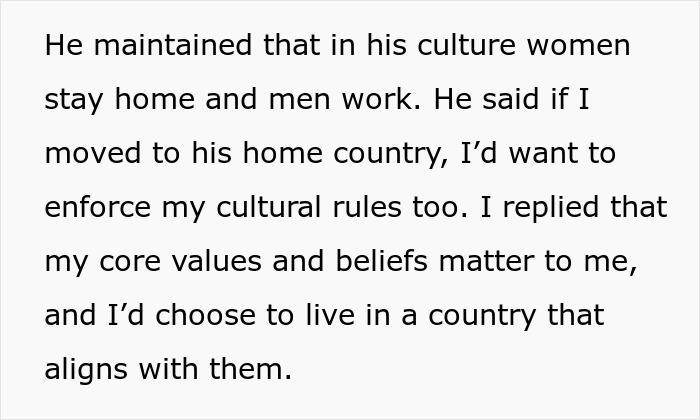
It got worse when he declared women are only good for “birthing children and washing,” while men are meant for work. When OP pushed back against this archaic mindset, he shrugged it off as “just his culture,” claiming she would happily quit her job if a boyfriend told her to stay home.
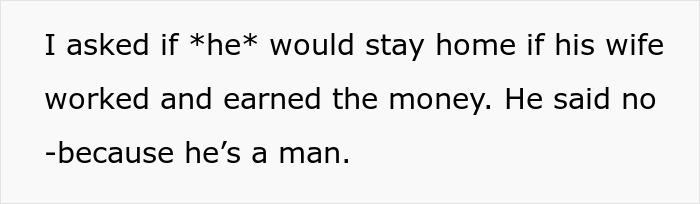
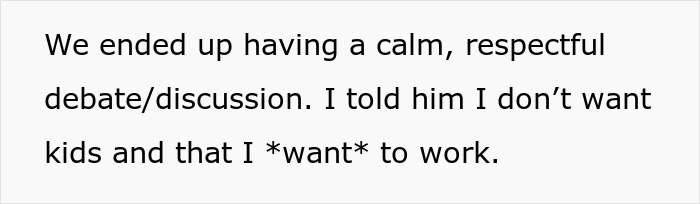
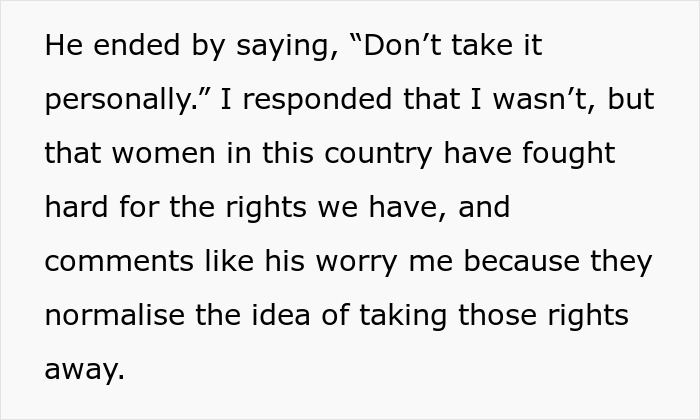
The logic crumbled when he admitted he’d never be a stay-at-home dad because he’s a man, yet insisted OP was wrong for valuing her career. Despite a calm debate where she defended her rights, he ended the chat by telling her not to take his dismissal of her entire existence “personally.”
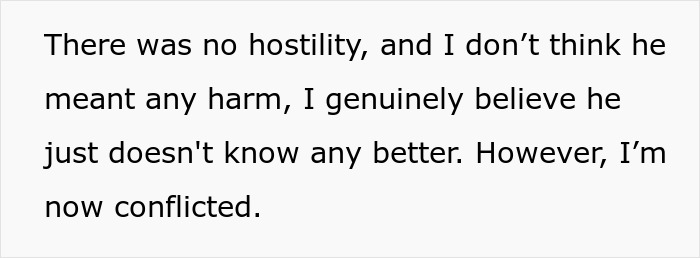
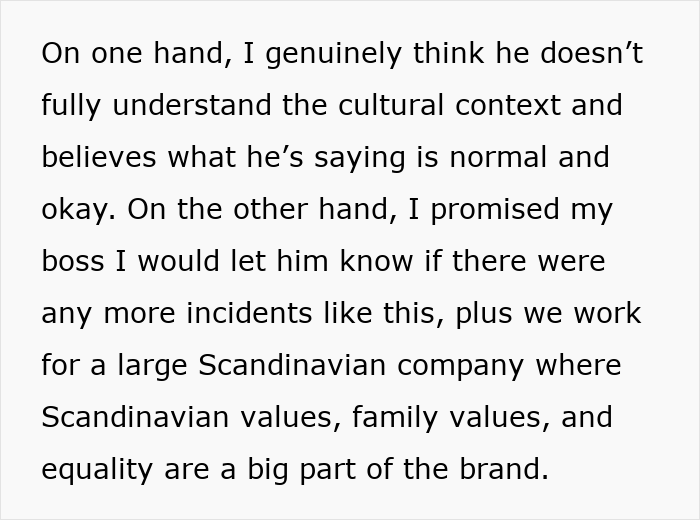
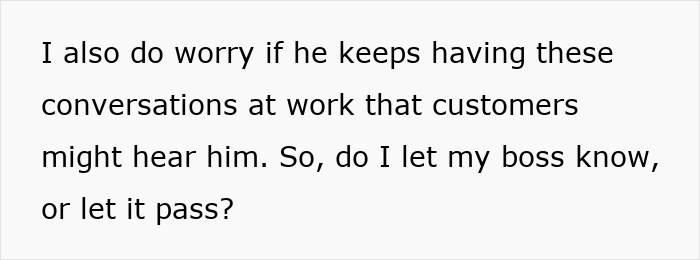
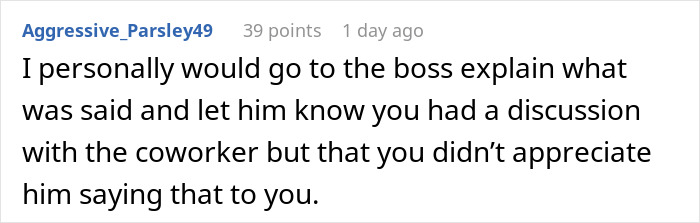
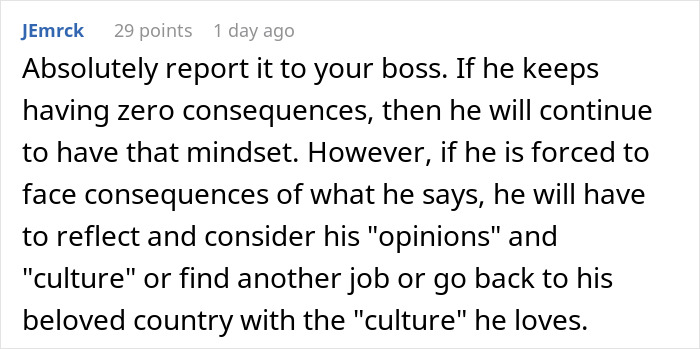
Now she’s stuck in a bind: report him to her boss, who previously promised to crush any sexism, or let it slide because the guy is young and new to the country? She worries customers might hear his hot takes, but she’s conflicted about getting him in trouble for his worldview.
Image credits: karlyukav / Freepik (not the actual photo)
While the coworker’s comments about women belonging in the kitchen might sound like something out of a 1950s sitcom, they point to a very modern workplace issue known as “benevolent sexism.” Research by Sian Beilock highlights that this type of sexism often flies under the radar because it can be disguised as “friendly” or “cultural.”
However, Beilock warns that this “subtle” sexism can be just as damaging as overt hostility. She notes that comments framing women as “delicate” or “better suited” for domestic roles can zap a woman’s enthusiasm and cause her to disengage altogether. The OP’s instinct to feel conflicted is backed by science: ignoring these comments can lead to “rumination” that drains mental energy better spent on actual work.
Beilock advises that the best approach is exactly what the OP began to do: keep the tone calm and professional, but call it out. She suggests explaining why the comment is troubling and how it reinforces harmful stereotypes, rather than just letting it slide to “keep the peace.”
The coworker’s defense that “it’s just my culture” crashes headfirst into the specific history of the country he now calls home. According to Dr. Alice Evans’ research, Scandinavia didn’t become a bastion of equality by accident. It was a deliberate century-long project driven by “weak ideals of seclusion” and a massive push for women to seize all types of jobs, not just domestic ones.
Evans notes that Scandinavian equality is built on a cultural rejection of hierarchy. In these societies, the idea that a boss is “just two steps up from the janitor” creates an environment where everyone is respected equally. When a coworker insists on a hierarchy, he is challenging the fundamental economic and social contract of the region.
How have you dealt with office sexism before? Share some tips in the comments!

By entering your email and clicking Subscribe, you're agreeing to let us send you customized marketing messages about us and our advertising partners. You are also agreeing to our Privacy Policy.
Thank you! You've successfully subscribed to newsletters!

Does he expect it to stop snowing in Sweden because there's no snow in his home country? Management needs to help him - ah - acclimate to his new environment. He may be even reasonable enough to get it.

Exactly this. 'Here' is not 'there'. Here, we do things our way. If you want to do things their way, go back there.
Load More Replies...
Even though it's a holy grail for the centrists, I no longer believe that "polite and respectful debate" is a viable option when things like women's rights or minority rights are debated. If someone debates against that, they need to be shut down harshly and face consequences. IMO this notion that "all opinions are equally valid and they all need equal representation in the public discourse" is one of the main reasons why the world looks like it currently does. If your bar welcomes both Jews and naz!s equally, you'll have a naz! bar in no time.


This is *not* about cultural differences. I know that because I'm an immigrant, too, and when people explain British cultural details to me that I didn't observe because things were handled differently in Germany, I *thank* them and do my best not to forget. NEVER would I discuss with them why they should adhere to my standards.

Yes, the whole, "it's my culture to do and say what I want in another country" is incredibly entitled. If you cant or won't adapt to another's cultural norms, then dont emigrate. In fact dont travel at all.
Load More Replies... Does he expect it to stop snowing in Sweden because there's no snow in his home country? Management needs to help him - ah - acclimate to his new environment. He may be even reasonable enough to get it.
Exactly this. 'Here' is not 'there'. Here, we do things our way. If you want to do things their way, go back there.
Load More Replies... Even though it's a holy grail for the centrists, I no longer believe that "polite and respectful debate" is a viable option when things like women's rights or minority rights are debated. If someone debates against that, they need to be shut down harshly and face consequences. IMO this notion that "all opinions are equally valid and they all need equal representation in the public discourse" is one of the main reasons why the world looks like it currently does. If your bar welcomes both Jews and naz!s equally, you'll have a naz! bar in no time.
This is *not* about cultural differences. I know that because I'm an immigrant, too, and when people explain British cultural details to me that I didn't observe because things were handled differently in Germany, I *thank* them and do my best not to forget. NEVER would I discuss with them why they should adhere to my standards.
Yes, the whole, "it's my culture to do and say what I want in another country" is incredibly entitled. If you cant or won't adapt to another's cultural norms, then dont emigrate. In fact dont travel at all.
Load More Replies...






























 No fees, cancel anytime













42
34