Get Premium
Dark mode theme is available exclusively for premium users. Learn more about the benefits of subscribing.
No fees, cancel anytime.

 Dark Mode Ad-Free Browsing Unlimited Content
 Ad-Free Browsing Unlimited Content Dark Mode
Join 1.2 million Panda readers who get the best art, memes, and fun stories every week!

You know that random, nagging ache in your lower back? Or that weird, persistent bloat after eating a sandwich? Most of us pull out the classic play: we brush it off. We tell ourselves we’re just stressed, getting older, or probably need to drink more water. It’s easy to play it cool because nobody wants to be that person — the one rushing to urgent care over a simple case of gas.
Recently, when asked what medical symptoms people generally tend to ignore — and shouldn’t — doctors and nurses online responded with a list of major red flags.
Among them were unexplained night sweats, weight loss, and even subtle warning signs that could point to cancer.
Bored Panda has gathered the most critical insights that might just save someone's life.
This post may include affiliate links.
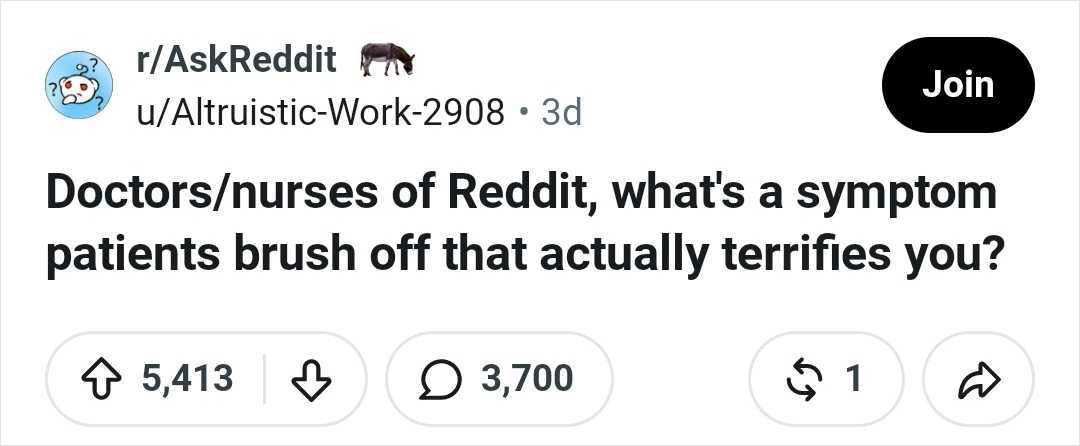
 Reporting a feeling of impending doom. “I just don’t feel right, like, something is off”.
Something is usually off.
Edit: unless you’re a woman of course. Then it’s *clearly* emotions or pregnancy.
W1ldy0uth:
Anytime one of my patients says “ i don’t know something just doesn’t feel right,” I get nervous. I’ve had way too many patients cardiac arrest on me after saying that.
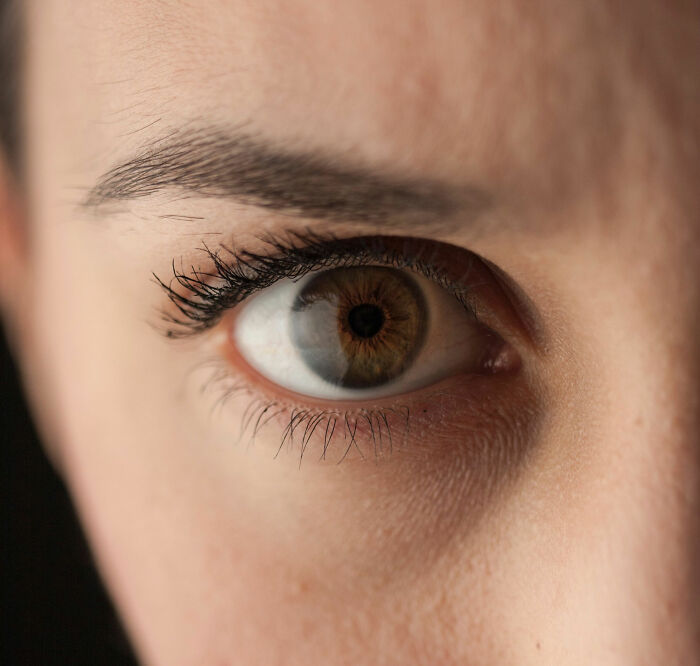 “Vision went black for a few seconds” in one eye.
PurpleConversation36:
Yeah you know I tried taking that seriously and reporting it and I got told it was anxiety so eventually I stopped going in when it happened until this one time where I suddenly couldn’t talk as well.
Turns out it was actually a series of TIAs followed by a stroke.
 Unexplained weight loss.
muddycrash:
Yes. I thought Ozempic was working, turns out I also had leukemia. Oops. Completely in remission now. All good. Gained all the weight back. I'm fine with it. As my doctor said "Be kind to yourself and your body, it carried you through this illness and into recovery. If you were thin at the beginning of it all, your chances of survival would have been less."
Conscious_Citron1746:
Definitely this! A friend of mine suddenly started to look a little thinner over the months and she jokingly said to me, “I probably have cancer or something.” fast forward a few months later she went to her doctor who diagnosed her with liver cancer. She got toothpick skinny, used a wheelchair, had to use a catheter, then couple weeks before she passed she started to lose her voice. Oh and she smoked like a chimney her whole life even with cancer.
Sitting in a hospital waiting room can be a giant hassle that nobody looks forward to. But even healthcare pros agree that an apple a day isn’t going to fix a problem you’ve been actively sweeping under the rug.
The real problem is that severe illnesses don’t start out looking like a full-blown emergency. They show up in sneaky ways — a little extra fatigue, a dull headache that won’t go away, or a minor stomach bug that lingers a week too long.
Symptoms often overlap, mask themselves, or feel completely minor — right up until they aren’t.
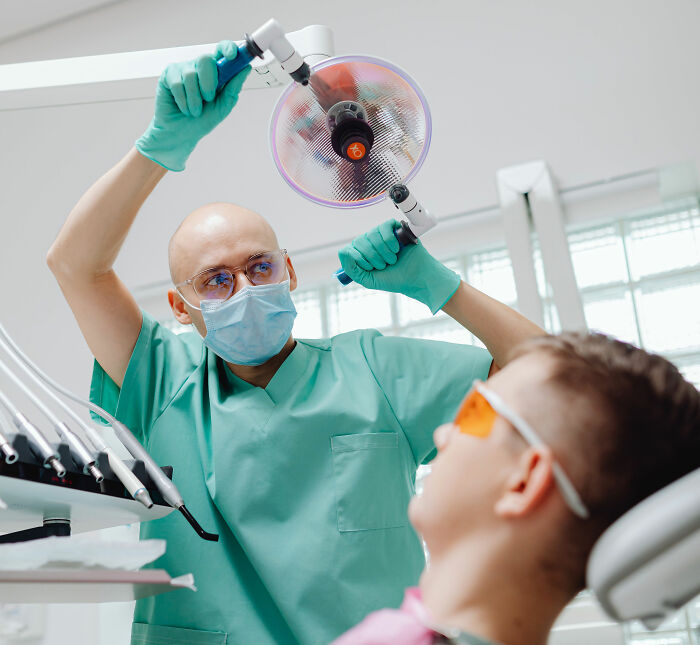 I’m a dentist. The number of people that don’t want to do treatment because it doesn’t hurt is disheartening.
Generally cavities don’t hurt until the tooth needs a root canal or is close to needing a root canal.
Periodontal disease is even worse. It might never hurt and then one day a couple of your teeth are wiggly and you have to go to the dentist and maybe it’s way too late and we have to pull all your teeth.
If you don’t trust your dentist then find a new dentist.

Medical professionals always make it sound so easy. Just find a new dentist! So either you're paying privately, in which case you need the money to go to someone new, or you have to persuade whoever is paying for your treatment (insuance, government service) that you need another checkup before you're due. In the UK, 10% of dentists that were accepting NHS patients have withdrawn from the service in just a few years.
 Sweating for no identifiable reason.
“If your patient is sweating, you should be too”
Edit: to be more informative, could be a sign of very many bad things. Severe hypoglycemia, acute leukemias/lymphomas, tuberculosis, shock, heart attacks. All of which could [end] you. Could also be menopause as someone suggested
But in the context of hospitalized people (which is a sicker subset than the general population), there’s a significant chance it’s something bad in the correct context.
 Leg or arm weakness.
So many patients show up weeks or months after it starts, with severe weakness or paralysis and are subsequently diagnosed with spinal tumors or stenosis. Then have to have major surgery and are practically bedbound after from the weakness.

Can confirm. Spinal tumor that took years to diagnose and treat. I haven't felt the toes in my left foot since 2008/9.
The consequences of playing the waiting game are very real. Studies from the National Cancer Institute show that even a few months’ delay in getting checked out for seemingly minor issues — like an unexpected lump or unusual bleeding — can dramatically shift a diagnosis from “easily treatable” to “stage four.”
It gets even crazier when you look at how often we actually do this to ourselves. A Cancer Research UK study looking at nearly 7,000 adults found that roughly one in three people waited over six whole months to call their doctor after spotting a potential cancer red flag.
Think about that for a second… half a year of just sitting on a major warning sign. Why? Mostly because booking an appointment felt like a total hassle, or people figured they could just tough it out and deal with the symptoms on their own.
As a result, critical alarm bells — like unexplained weight loss, weird new bumps, changing moles, or even coughing up blood — were routinely swept right under the rug.
 Women with radiating shoulder, jaw, or back pain. Indigestion, feeling tired, or like they can’t “catch their breath”.
I had a patient that ignored her dull pain radiating from her shoulder to upper back/ shoulder blade for 3-4 days. She ended up with a heart attack.
30-45% of women have no chest pain during a heart attack.
How many times can we stomach being seen by a bored, impatient doctor who dismisses our symptoms before we lose patience? How many times have we read on this very site from doctors who complain about patients presenting with 'just indigestion'? We just can't win.
 Nausea or reflux that's associated with sweating or worse than usual. Been the first presenting symptoms for a heart attack for a few 40-50 year olds I've encountered.
 I had seemingly gained weight and started looking pregnant, yes I was not pregnant nor was I eating more. Turns out I had a 7.6 lbs tumor on my ovary.
A recent survey of 2,000 Americans found that six in ten people actively ignore health issues simply because they don’t feel “serious” enough. About 58% of women admitted they’d rather ignore a minor symptom than deal with it.
The whole issue comes down to a massive knowledge gap. Most of us just don’t realize that mild-looking issues — like a sudden skin rash, weird sleep habits, or ongoing stomach troubles — can actually be early warnings.
Out of everyone who ignores these minor signs, 43% said they brush them off for one simple reason: they just assume it’s no big deal.
 Vaginal bleeding after menopause. It’s cancer until proven otherwise.

Had that happen after trying a glp-1. Got a whole round of tests to rule out lady parts cancer. All clear. No clue why I had a period after being in full menopause fir 4 years.
 Non-healing skin lesions or oral mucosal lesions present for years. Farmers, man.
One of my first patients came in with an ulcerated skin lesion the size and shape of a big button mushroom AND a cervical lymph node approaching the size of a baseball. Unrelated oral and skin cancers. He was treating with hydrogen peroxide, obviously.
Still my patient 14 years later!
 Confusion. Could be a skipped meal, too hot and dehydrated; could be a UTI, could be a stroke.
SplatDragon00:
Oml I care for my grandma and every time she has a UTI I go to her doctor. "she has a UTI" "what are her symptoms" "she's acting really confused exactly like the other times she's had a UTI" "no, that's her alzheimers. You need to educate yourself you can't be running her up every time she acts funny" then, shocker, I finally get them to test her pee and UTI! And after the antibiotics she stops seeing people in the yard that aren't there and thinking movies are real
What’s wild is how we talk ourselves out of seeking help, depending on who we are.
A survey by Talked Research in the US found that men tend to play the tough guy, with 46% saying they ignore symptoms because they reckon they can just muscle through the pain. Women, on the other hand, take a different route — 44% hold back simply because they don’t want to make a scene or overreact.
 GI doc here…unexplained weight loss, change in bowel habits, or even stool caliber. Go get a colonoscopy.
Edit: Another more obvious sign would be rectal bleeding. Lot's of questions on how to get a colonoscopy when you're under the screening threshold. If you have any of the above symptoms the procedure gets coded as "diagnostic". So this likely will be more expensive than the "screening" colonoscopy. Don't get me started on the American insurance system. But these symptoms could be a sign of colon cancer or inflammatory bowel disease (UC or Crohns). I'm also seeing polyps more and more younger patients to the point that I myself got a diagnostic colonoscopy (I'm in my 30s).
 From the mouth of my mother “I thought me losing the feeling of the entire right side of my body was normal, like I usually get dizzy often.” She’s now had two ischemic strokes.
 Pay attention to your skin.
It can tell you more than you think.
Dermatomyositis
Systemic sclerosis (scleroderma)
Systemic lupus erythematosus
Sarcoidosis
Celiac disease
Addison disease
Vasculitis
Antiphospholipid syndrome
Cryoglobulinemia
Mastocytosis
Porphyria cutanea tarda
HIV
Even things like diabetes or PCOS the skin can be effected before you feel some of the other things
All have skin symptoms that show up early but are easy to brush off, but the skin is also an organ and shows symptoms in lots of systemic conditions.
We can’t keep blaming patients for staying home, though. When someone decides to skip the doctor’s office, it’s rarely because of pure stubbornness or simple denial. Systemic roadblocks stand in the way — and for millions of people, the hesitation is entirely justified.
For instance, nearly all Americans carry health insurance today, but having a card in your wallet no longer guarantees you can actually afford to get sick. Healthcare debt has officially ballooned into a national crisis, with Americans collectively owing an estimated $220 billion in medical bills.
 “Worst headache of my life.”
People will say it casually like they’re describing a bad migraine, but that phrase makes medical people sit up very fast. Especially if it came on suddenly, like a switch flipped.
Could be nothing. Could also be the kind of thing where you really, really don’t want to “sleep it off.”
 Abdominal pain cause it’s so vague.
One patient I came across had a AAA that was close to rupturing while my cousin thought it was bad food, only to learn he had stage 4 colon cancer.

I had a volvulus (my large intestine twisted itself shut. That, I don't need to say, is not a good thing). So of course the doctors blamed my period. It took causing an absolute scene to get an ultrasound done. Then they wouldn't operate because this shouldn't happen at my age (my intestine was still actively twisted as they said I couldn't have it). Cue another ruckus and I was admitted. I'm just so annoyed I had to kick up a scene as that is so not my style, but I was also dying.
More than 100 million people in America — 41% of adults — are saddled with medical bills they cannot pay, according to a KFF Health News investigation.
“Millions of Americans are avoiding medical care, putting off needed surgeries, skipping essential treatments. This isn’t just a health care issue. It’s an economic crisis that’s keeping families from building wealth and fully participating in the economy. When credit scores are dinged by medical bills, everyone loses,” said Allison Sesso, president and chief executive of Undue Medical Debt.
A survey by JG Wentworth found that 92% of US adults have delayed or skipped healthcare because of cost concerns. Even worse, 95% of those surveyed admitted that an unexpected hospital trip would push them straight into serious debt — even with an active insurance plan.
When choosing between an expensive checkup and paying next month’s rent, it’s easy to see why people talk themselves into believing that a lingering cough is nothing.
 Any guy ever ‘my wife dragged me here, I feel fine’……haven’t seen one wife be wrong yet, don’t always get to have a good ending but often enough something turns out to be reversible.
 Emergency Physician -
“I’m having anxiety” or “I’m constipated”
These are the chief complaints that turn into M&Ms.
Financial barriers sit right on top of a medical system stretched past its breaking point. Even when a patient finally decides to stop ignoring their body and reach out, the clock keeps ticking against them.
Finding an available doctor covered by your insurance can take weeks, pushing critical diagnostic appointments months down the road.
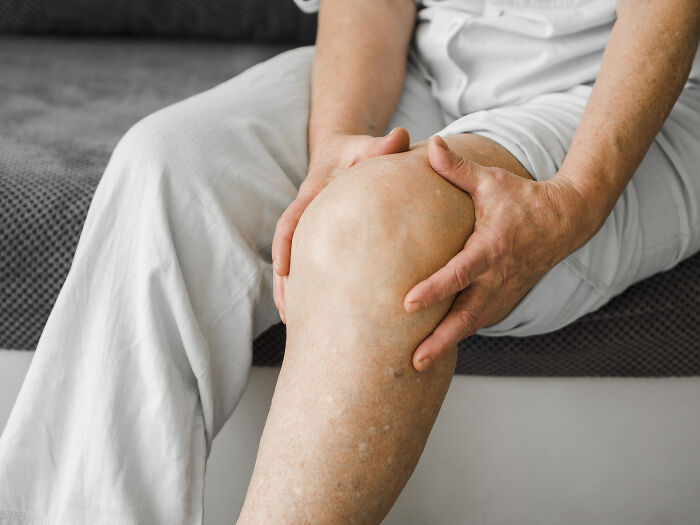 Leg swelling.
I work in ICU stepdown which is mainly a cardiac floor. Recently had a lady who ended up cardiac arresting and going into flash pulmonary edema, she actually survived, she told me her legs were puffy and swollen for months beforehand and were getting progressively worse. Never sought help. Well she ended up having like 10L of fluid diuresed out once we got to her.
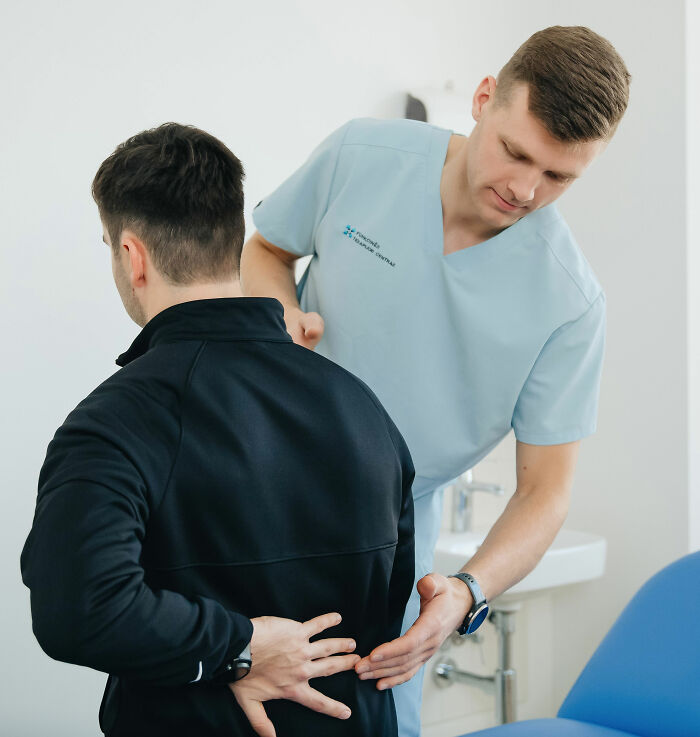 Sudden unexplained lower back pain. Not the kind that starts after heavy gardening or a gym workout where you didn't get the position right. I'm not including gynaecological pain. This back pain that comes on suddenly is sometimes a "harbinger of doom". Emergency department staff internally panic when an older person presents with back pain that just won't go away even with rest. It's an emergency. If it's a leaking AAA (Abdominal Aortic Aneurism), immediate, lifesaving intervention is crucial to keep the person alive.
Got sudden back pain and you're over, say, 50 years old? Head straight to the Emergency department and have it checked out. It could be a trapped fart, it could be constipation, it could be a kidney stone ... but it could also be the grim reaper knocking on that AAA.
The wait times in our local hospital emergency department regularly top 12 hours. Then, even if you're admitted, it can be 24 hours on a trolley in a corridor or side room before a ward space is found. During all of which time you are being exposed to every germ and virus that is being brough in by the general public.
There is an even more insidious driver of medical delay: patients stopping themselves from seeking help because past experiences taught them that they won’t be taken seriously anyway.
This phenomenon, known as medical gaslighting, happens when healthcare providers minimize, invalidate, or completely brush off a patient’s real physical symptoms. It creates a toxic feedback loop — if you spend an hour in an exam room just to be told your excruciating pain is “just anxiety”, you aren’t going to rush back the next time something feels off.
“The vast majority of diagnoses can be made by getting to know the patient’s story really well, asking follow-up questions, examining the patient, and ordering basic tests. When talking to people who’ve been misdiagnosed, one of the things we hear over and over is, ‘The doctor didn’t listen to me’,” said Hardeep Singh, a professor at Baylor College of Medicine who studies ways to improve diagnosis.
NAD but a while ago my friend got in a car crash on a Friday and told me about it on Tuesday. She said "I went to the hospital yesterday and-" so I cut her off and asked why she waited 3 days to see a Dr. She explained that she had an intense pain in her head but it was too unbearable by Monday.
I told her "You know if you had a braid bleed you would-"
She cut me off to say *"I knowwww, I would have felt ittttt"* while rolling her eyes
I couldn't help but raise my voice at her saying "NO YOU WOULDNT HAVE FELT IT BEYOND MAYBE THE HEAD PAIN YOU HAD" then did my best to explain that she could have died and is lucky.
She had whiplash and a concussion btw. Still thinks I was being dramatic in thinking that she should have seen a doctor asap. She was t-boned at 30mph.
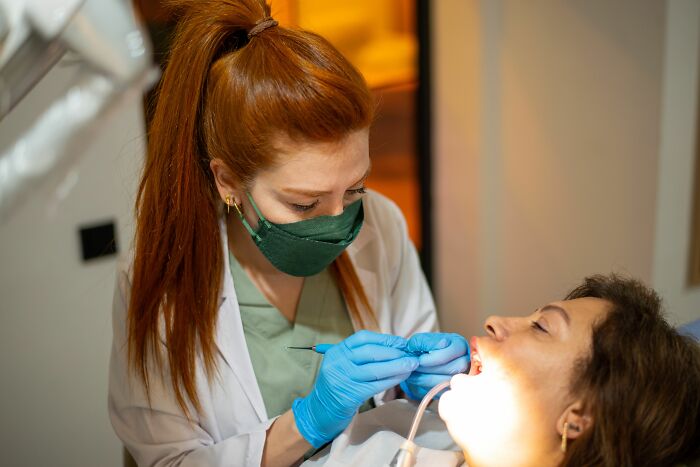 I always find cancers on the face, especially the nose. I have found melanomas. I don’t even work in dermatology. I just asked them to go see their doctor.
CrosbyAteHeathcliff:
I’m a dental hygienist, and I send people to the dermatologist frequently for things I see on their face, lips, head. I had a bald patient that had something that looked like a small mole or freckle on the back of his head, he never would have saw it. It turned out to be cancer. I have many grateful patients when I talk to them about these things.
The fix isn’t one-sided. You catching the warning signs early takes pressure off a system that’s already stretched thin. But that system still owes you shorter waits, fair costs, and doctors who actually listen instead of brushing you off.
Both sides have work to do. Yours starts today, the moment you stop ignoring what your body is telling you.
Just a medical student now, but recently learned that a persistent hoarse voice could be caused by a quite a few bad things (due to how your left recurrent laryngeal nerve runs under your aortic arch before heading back toward your voice box).
Fun fact about this, despite only really “needing” to travel from the brain stem to your vocal box (which is by the top of your neck), because of how we evolved this nerve takes an unneeded detour around your aortic arch. This is because fish (specifically lobe-finned fish, which gave rise to all land vertebrates) essentially have no neck, so the pathway the left recurrent laryngeal nerve needs to take to get to the gills is a pretty straightforward line. However as we evolved necks and our hearts lowered, it was much easier for the nerve to just slightly lengthen each generation than completely reroute to skip the unnecessary trip around the heart. Because of this, despite only needing to travel ~6in in giraffes, the nerve travels down and up the entire neck length (~15ft) instead. Quite an inefficient design, but just goes to show that evolution doesn’t bother fixing things that aren’t broken.
 I had extreme back and shoulder pain that I was trying to brush off as a muscle spasm and refused to go to the er and instead went to see my pcp. She was like WTH and had them wheel me immediately to the er. Bilateral pulmonary embolism… note to self (and others) if the pain is making you scream, probably go to the er.
 Probably chest pain that people brush off as “just stress” or “indigestion.” Not every case is something serious, but that’s exactly what makes it scary—you can’t really know from the symptom alone. If something feels unusually severe, sudden, or different from normal, it’s better to get checked than assume it’ll go away.
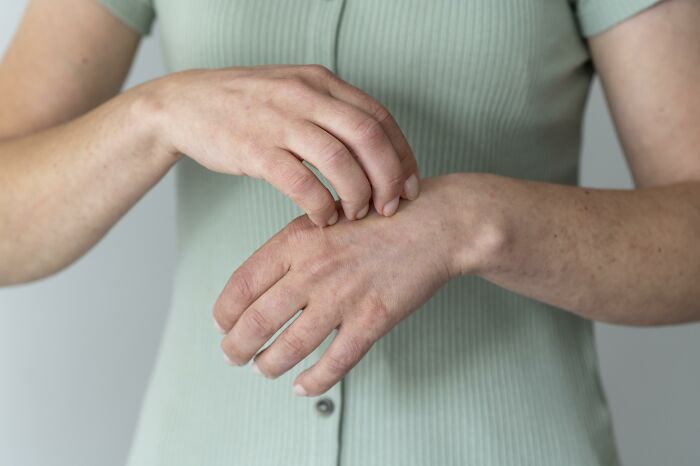 Itchy palms when youre pregnant! Means your liver is angry.

Itchy everything when pregnant - to the point of causing skin damage due to scratching so much. I was diagnosed with obstetric cholestasis with both of mine - needed to be induced 3 weeks early. My sister had it with all 3 of hers. It is linked to a higher risk of stillbirth so doctors prefer to whip them out early. As soon as baby is delivered = no more itching.
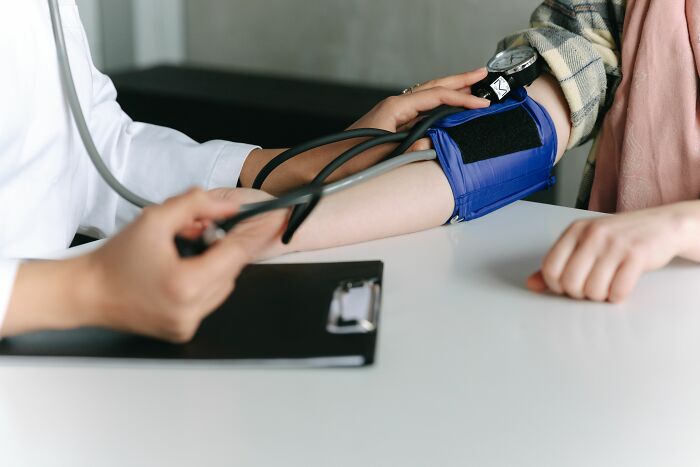 Low blood pressure, even if you're not dizzy. If not reversed, all sorts of catastrophic things can happen, and extremely quickly.
Edit: another one is sudden hearing loss in one ear. Need immediate steroids and be seen by an ear nose throat doctor to prevent permanent hearing loss.
 I was a nurse at Planned Parenthood, and women ignore pretty clear symptoms of pregnancy when they are on birth control. There is a reason they tell you that no birth control method is 100% effective. Now we have a fetus that is too far along for abortion and unplanned; as an adoptee, I really fear for those children.
Gingivitis - The plaques driving your heart attacks and strokes are from bacteria coming in through your unbrushed/unflossed gums.
40 lb weight gain over a couple of weeks.
"Well, I wouldn't have brought 'em if it hadn't been for the dizziness and shortness of breath when he gets up. Cause, you know, he's already a big boy. Oh, and his heartrate has always been high...All this must be from that new medicine he got put in for being overweight."
New (as far as we know) onset CHF and A-Flutter/Fib 2:1 rate.
Good times.
ER Nurse here. For us, at least, chest pain, abdominal pain, and shortness of breath are the top three complaints. Anybody who comes through the door with chest pain, regardless of how long it's been going on, will get an immediate EKG. A lot of times, though, this chest pain has been going on for a while, whether it's been a few days or weeks. Once we hear that it's been ongoing for a while, it's not going to be "the big one". That is called an MI (myocardial infarction) or STEMI.
Those types of heart attacks generally happen within a short timeframe. I've found that people who make a big show of their chest pain or drama with it aren't having an MI. Now, there are some, and I have seen them. But I've found people having a true heart attack just don't "feel right". Starts off like mild discomfort, diaphoresis, and nausea. They try to brush it off as nothing or just heartburn. Those are the times when I focus more on them getting an EKG as fast as possible.
I work in a small, rural ER. But we serve about five counties. We are bigger than most hospitals in the area, but we still don't have a dedicated cardiologist on site or a cath lab. Once we identify a STEMI, we will rush them back to a room. Activate a STEMI alert overhead, and call our transfer line to the bigger hospital down the road, which is the main hospital in our health system. We will load them up with medications that help mitigate the STEMI. The county has a dedicated STEMI truck, and they will scoop them up and transfer them lights and sirens to the cath lab at the bigger hospital. Our door-to-EKG to cath lab times are amazing. We generally shoot for from the time the patient registers to the cath lab 60 minutes.
I love STEMIs; I love cardiology, so I won't say a patient saying they "don't feel well" with associated symptoms scares me. But I certainly take way more notice than the usual patients who should've gone to urgent care.
There are so many. Each specialty has their own version of this. I’ll go with one that I haven’t seen yet. People who boast about how they can drink large amounts of alcohol and still feel fine. That’s not impressive, it means you’re an alcoholic.
I want to just add something that many doctors think is normal and it is NOT.
When women report heavy periods please take this seriously! The body does a pretty amazing job at trying to keep itself in homeostasis and this can be an early sign that they actually have a blood condition/disease. We have gotten so used to telling women that it's normal, when it actually isn't. The textbooks say that you will lose "tablespoons" of blood daily during normal menses, but then when a woman reports large amounts of blood and passing blood clots as big as the palm of their hand, the doctors ignore it.
When a woman reports such heavy bleeding it is the body trying to remedy whatever the underlying cause is, and it very well could be something wrong with their blood. Especially if you find that they have normal or high hemoglobin and hematocrit along with low iron, there are a ton of blood conditions/diseases that can cause these exact symptoms and lab results so PLEASE refer them to a hematologist for further eval.
This is from personal experience. My mother had polycythemia vera and had terrible, heavy periods all of her life. Only after she went through menopause did it become an issue because she no longer had that helping keep her counts in the normal range. I also have it and it has only become a bigger issue since having a hysterectomy (for heavy, unexplained bleeding btw).
I also want to point out that the research on this polycythemia vera is misleading in one important way: they say it affects men more than women until the age of 60-ish and then the rates become close to the same. That's not by coincidence, what happens around that age for women? Menopause. Ceasing to have that "natural bloodletting" is what causes them to finally get diagnosed with it because their counts are no longer in control.
So by their own statistics related to age, we know they are missing it in younger, menstruating women just because our bodies are pretty amazing at adapting in any way possible, but this doesn't make the disease any less risky for them in the blood clot department. And putting them on birth control pills to "help with heavy periods" might actually be the connection between hormonal increase risk of clots in some women. So please, if a woman is having these issues don't ignore it, explore it.
Night sweats.
Floppy children/quiet children.
A sudden debilitating headache that won’t go away.
Grey skin. And I mean GREY.

18-year emergency nurse - quiet kids terrify me. Especially when parents are comment on how calm they are… no they’re dying.
Sharp, ongoing abdominal pain located between the belly button and oblique that suddenly goes away.
Means your appendix burst and is leaking its contents into your abdominal cavity.
When a patient’s heart rate jumps up abnormally high with light activity, had so many instances where it ended up being a pulmonary embolism.
Testicular pain.
If you’re young and have testicular pain, with or without abdominal pain and nausea, get it evaluated right away and in an ED. Could be torsion, which means the testicle will d*e soon if not operated on. Many urgent care centers can’t escalate quickly if an ultrasound shows torsion, because they don’t have an in-house anesthesia and urological team hidden in the back office.
Had a guy in a fib w/ RVR go into cardiogenic shock. Right before he told me it makes sense now that his watch kept telling him is HR was high for a long time.
The chest pains that wait a day and then drive themselves to the hospital when they are literally having a heart attack.
There’s just so many.
I see way too many patients who say they have had blood in their urine *for months to years*.
I work labor and delivery. “I just don’t feel right” accompanied by visual changes, swelling and/or headache.
Writing off visual changes. I always tell my patients that any change in vision warrants being looked at.
Persistent mild chest tightness or weird jaw pain, people think its just stress or gas but it can be a silent heart attack.
If you start to have weird sensations on your arms and legs, like the feeling of dripping water but nothings there, consult a neurologist.

Hmm. I just told my husband the other day that, for the last few days, I keep having the feeling that a long hair is lying across my finger. I keep brushing it off, but nothing is there. I might have to get that checked.






























 No fees, cancel anytime