Get Premium
Dark mode theme is available exclusively for premium users. Learn more about the benefits of subscribing.
No fees, cancel anytime.

 Dark Mode Ad-Free Browsing Unlimited Content
 Ad-Free Browsing Unlimited Content Dark Mode
Join 1.2 million Panda readers who get the best art, memes, and fun stories every week!
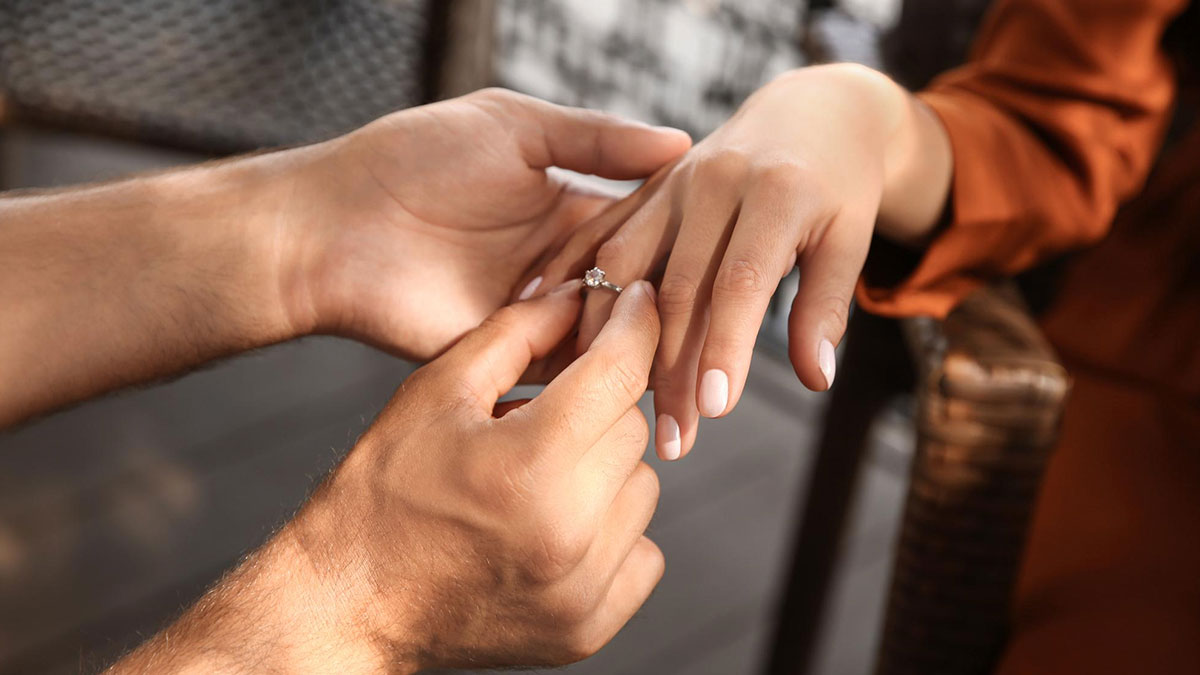
Marilyn Monroe famously sang that diamonds are a girl’s best friend. Apparently, for some, that friendship is a conditional, short-term contract with a very generous upgrade clause. You’d think a glitzy engagement ring chosen by two doting lovebirds would have a little more staying power, but love, like diamonds, can have its flaws.
One man recently learned this lesson the hard way. The ring his fiancée adored just one month ago suddenly wasn’t good enough. Her solution wasn’t the normal route of therapy or a heartfelt conversation. Instead, she opted for the more pricey option of retail therapy.
More info: Reddit
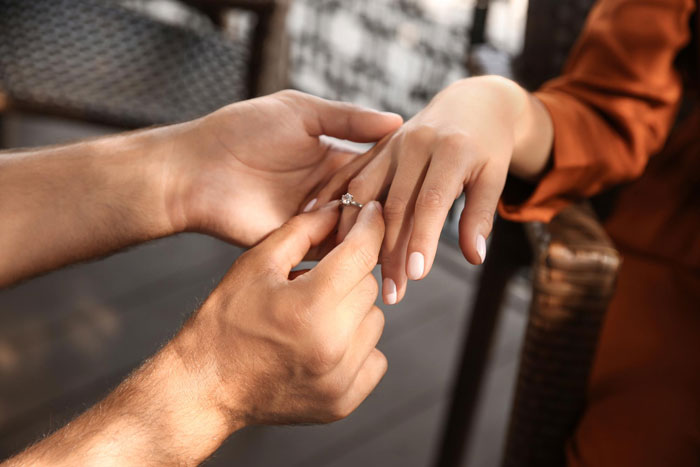
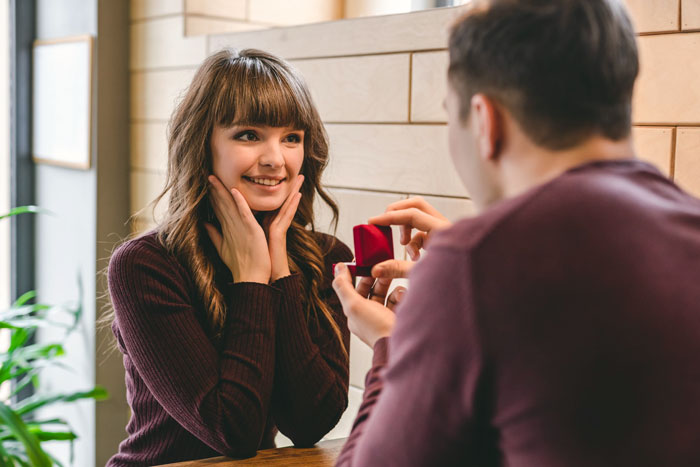
Image credits: New Africa / Freepik (not the actual photo)
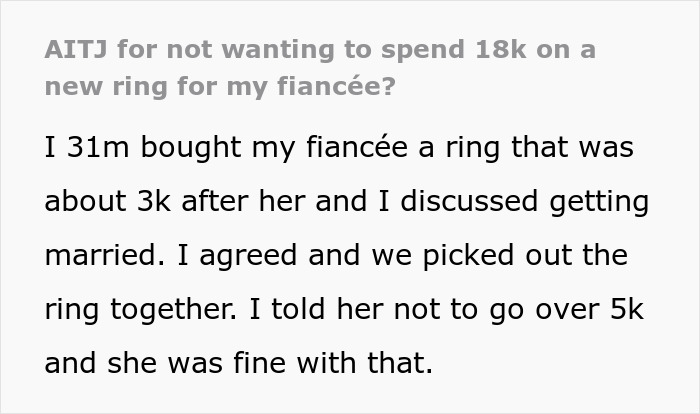
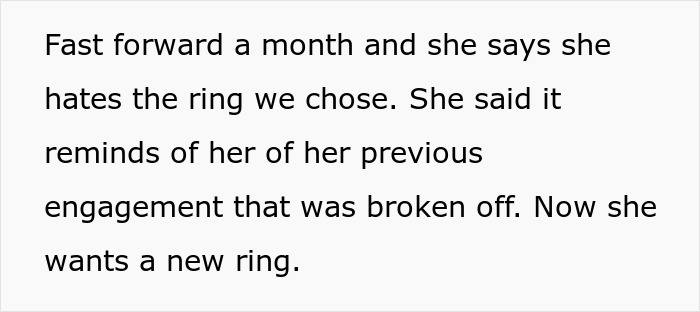
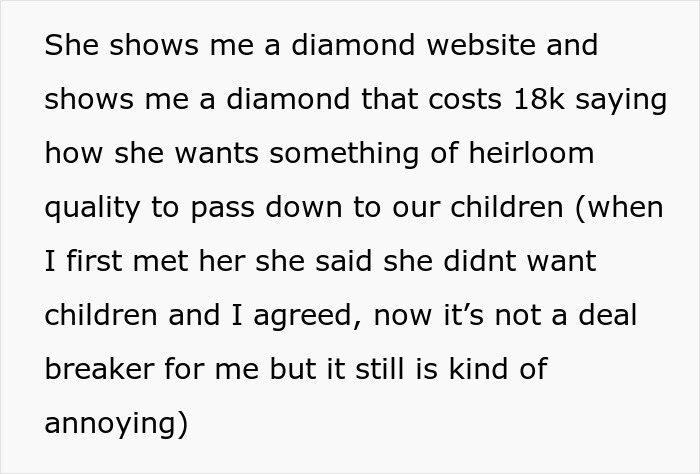
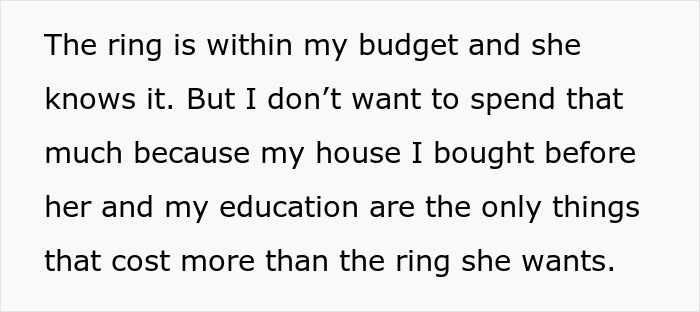
Image credits: eugeneshemyakin9 / Freepik (not the actual photo)
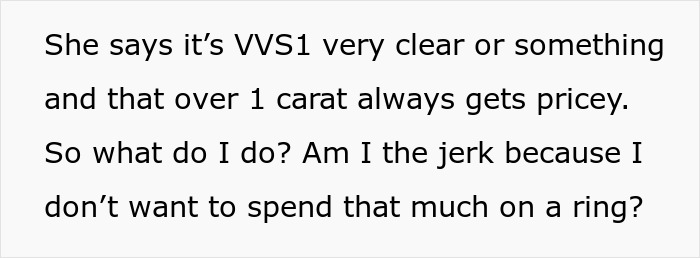
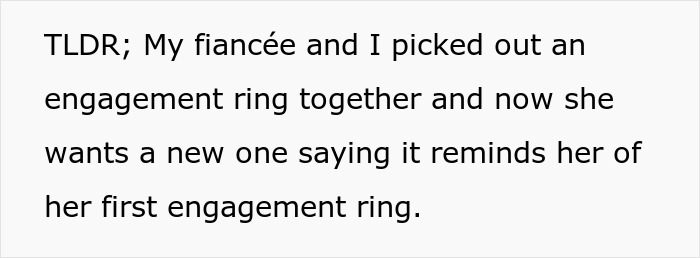


Image credits: frimages / Freepik (not the actual photo)
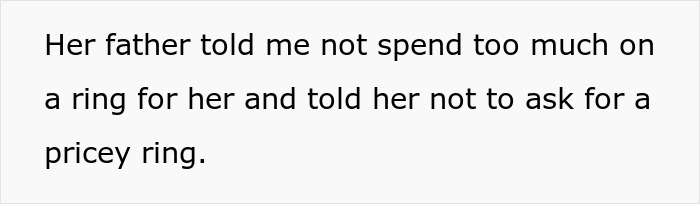
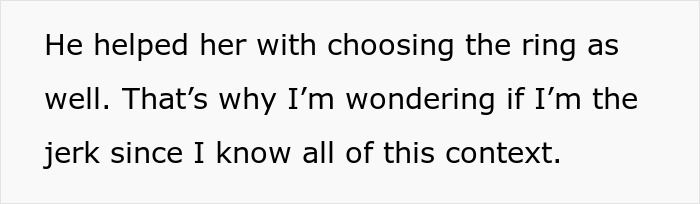
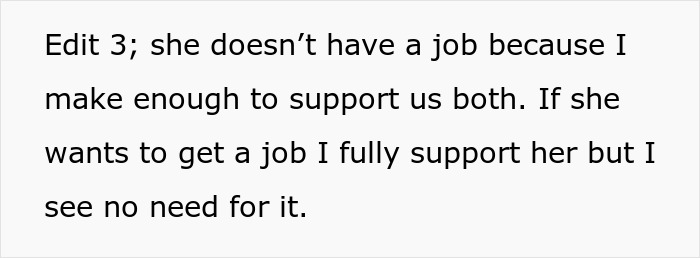
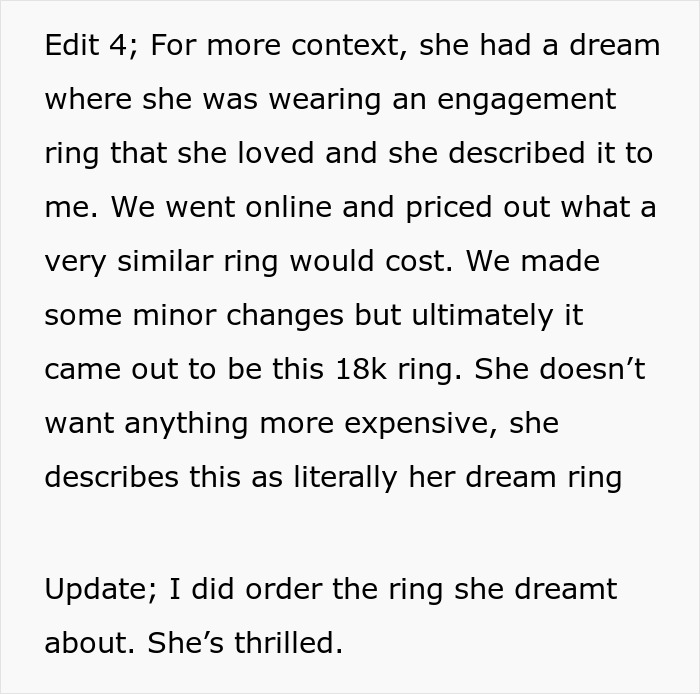
Image credits: Leivyxtbsubto
A man and his fiancée were happily engaged, having chosen a beautiful $3,000 ring together, a price they both agreed on. Even her father had given a word of warning against anything too pricey. It was a sweet, sensible, and seemingly perfect start to their new life. But that sensible perfection had an expiration date of approximately one month.
Suddenly, the ring she loved was a source of great pain, a terrible reminder of a previous engagement that was broken off, a detail she had apparently forgotten to mention until now. But her solution wasn’t a trip to the therapist’s office; it was a trip to a high-end diamond website. She now wanted an $18,000 “heirloom quality” ring, a detail that was also new, considering she had previously said she never wanted children.
The man, understandably, balked. While the ring was technically “within his budget,” he wasn’t thrilled about spending more on it than he had on his entire education. He was now caught in a bizarre negotiation he had never agreed to, a one-sided “upgrade” that felt less like a request and more like a demand from his stay-at-home fiancée.
But it seems this OP had an arm made of rubber, completely twisted to her bidding. After all his hesitation and a public plea to the internet, he caved and ordered the ring she had dreamed about. His fiancée is now “thrilled,” leaving the internet to wonder if this was a story of a man being a good partner or a man who had just failed a very expensive test of his own boundaries.
Image credits: gpointstudio / Freepik (not the actual photo)
Do people even buy rings of this caliber anymore? The old “two-to-three-month salary” rule is largely seen as an outdated marketing ploy, a relic of a bygone era. The man’s initial budget of $5k was already incredibly generous, and the $3k ring they chose together was a perfectly reasonable and respectable choice that they both agreed upon.
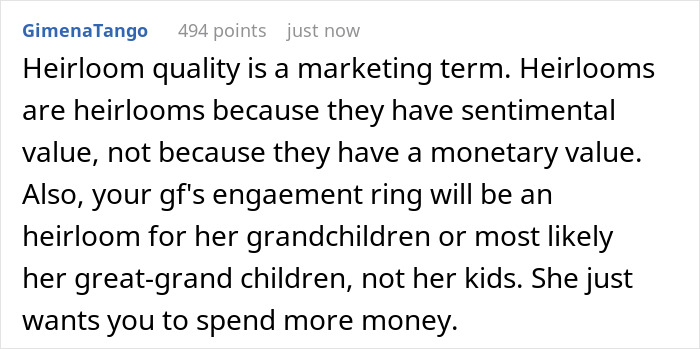
Her excuse that she wants an “heirloom quality” diamond is also based on a popular myth. As jewelry experts explain, diamonds are generally a terrible investment, with a resale value that is often a fraction of the initial purchase price. An heirloom is about sentimental value, not a price tag, a fact her “dream” seems to conveniently ignore. This is simply a splurge with a cheap excuse tagged on.
But it is impressive that this century-old marketing ploy is still hanging around. The idea that a diamond ring is a necessary symbol of love was a brilliant marketing ploy invented by De Beers in the 1930s. The fiancée is demanding her partner participate in a “sham” that has convinced generations of people to spend fortunes on a shiny piece of carbon.
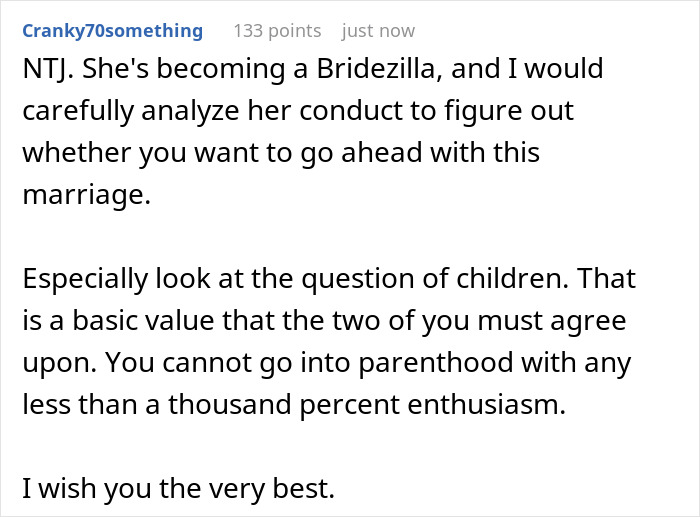
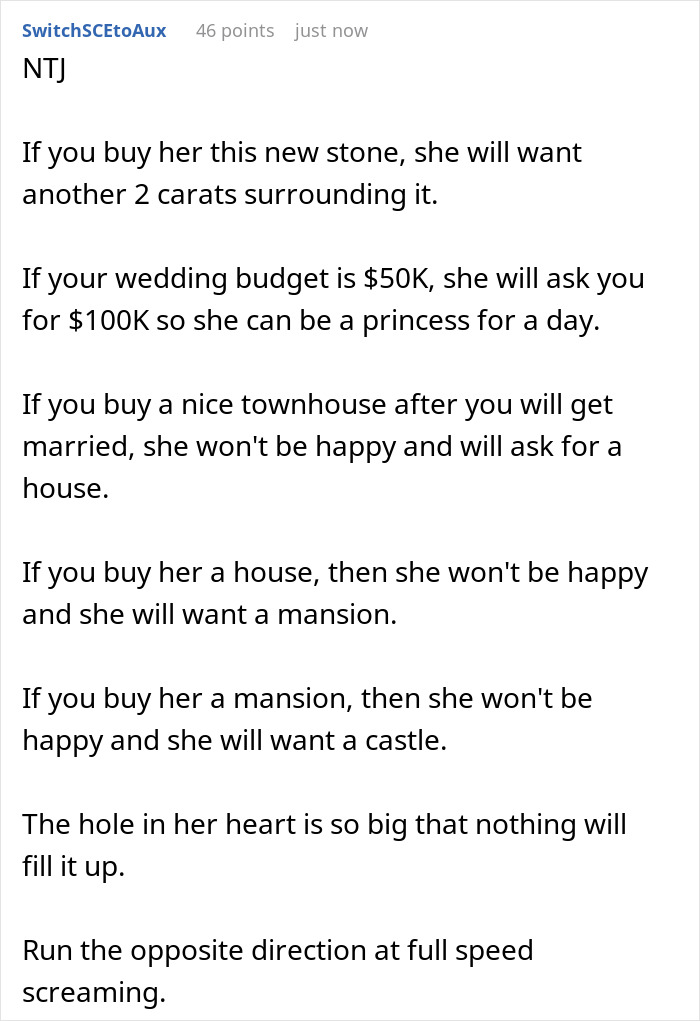
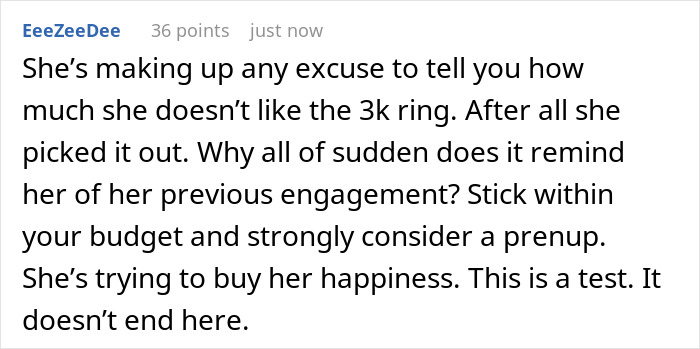
But what grinds our gears the most is the bait-and-switch tactic. A month after agreeing to a budget and choosing a ring together, she completely changed the terms of their engagement. This is a massive red flag about her respect for their agreements, her financial priorities, and her willingness to use emotional manipulation to get what she wants. Shame on you! Shame on both of you!
Do you think he should have caved like he did? Tell us what you would have done in the comments!






To those who are shopping for engagement rings: I strongly urge you to shop used, vintage, and antique. There are some truly amazing deals in those markets, and you bypass the monopoly that keeps diamond prices high. It’s also kinder to the environment. There’s an argument that it’s better for human rights as well.

I second this (and 3rd and 4th it). Diamonds are a marketing scam anyway. If you need flashy you can get a 10 carat coloured stone (there are dozens to chose from) for a fraction of the cost of a 1 carat diamond. Why pay for bs bragging rights? Edit spelling.
Load More Replies...
To those who are shopping for engagement rings: I strongly urge you to shop used, vintage, and antique. There are some truly amazing deals in those markets, and you bypass the monopoly that keeps diamond prices high. It’s also kinder to the environment. There’s an argument that it’s better for human rights as well.
I second this (and 3rd and 4th it). Diamonds are a marketing scam anyway. If you need flashy you can get a 10 carat coloured stone (there are dozens to chose from) for a fraction of the cost of a 1 carat diamond. Why pay for bs bragging rights? Edit spelling.
Load More Replies... 
















 No fees, cancel anytime









21
7