Get Premium
Dark mode theme is available exclusively for premium users. Learn more about the benefits of subscribing.
No fees, cancel anytime.

 Dark Mode Ad-Free Browsing Unlimited Content
 Ad-Free Browsing Unlimited Content Dark Mode
Join 1.2 million Panda readers who get the best art, memes, and fun stories every week!

Not every teenager has a peaceful home life. In fact, some parents kick their teens out of home over some kind of family conflict. The National Alliance To End Homelessness reports that over 38k young people are homeless in the U.S. on any given night.
Some, like the teen in this story, find shelter with extended family members. And their parents may never come around. In fact, they might pack their child’s things in garbage bags and dump them at said aunt’s house. Yet karma may still find them, perhaps in the form of another mother on the PTA.
Image credits: westend61/Envato (not the actual photo)
Image credits: Pressmaster/Envato (not the actual photo)
Image credits: equally_daft
Image credits: engin akyurt/Unsplash (not the actual photo)
Estrangement with one’s mother isn’t common, yet it can be incredibly painful. In 2017, Statista asked Americans how they would describe their relationship with their mother. 56% claimed it’s “very good,” with only 1% saying it’s “very bad” and 2% stating that they maintain no contact with their mothers.
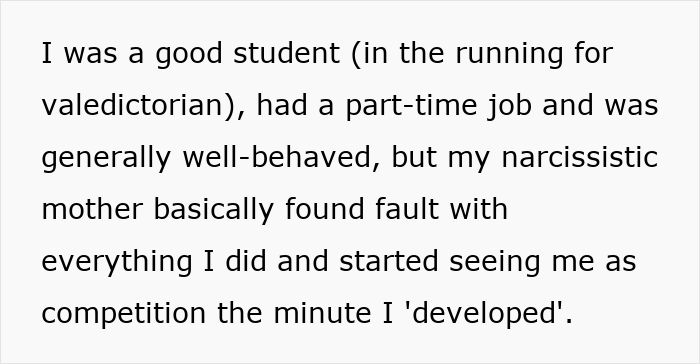
It can be hard to recognize the signs of a toxic mother. Clinical psychologist Emily Guarnotta, PsyD defines toxic mothers as those who harm their children emotionally, mentally, and even physically. They might do it through manipulation, control, belittling, or neglect. Some toxic mothers also use guilt and shame so their children feel responsible for their emotional needs.
The experts at Lotus Therapy write that the most common characteristic of a toxic mother is narcissistic tendencies. Toxic mothers prioritize their well-being over that of their children, sometimes even competing with them for attention and validation.
When you have a toxic mother, it’s difficult to distance yourself from them, even when you know keeping low contact is the best solution. A relationship with a mother affects all other relationships, Dr. Linda Mintle writes. “Our relationship with mom is one of the closest bonds two people can share,” she claims.
Image credits: Valeriia Miller/Unsplash (not the actual photo)
Psychologists now theorize that we carry the trauma from the mother-child relationship into our other relationships. When a mother fails to give her child the proper emotional love and care, experts refer to it as the “Mother Wound.”
Psychologist Bethany Webster was the first to use this term. She describes the Mother Wound as “the pain rooted in our relationship with our mothers that is passed down from generation to generation.”
While Webster’s definition is more about the role of women in a patriarchal society and the complicated relationship between mothers and daughters, other psychologists have since expanded the concept of the Mother Wound. Sherry Gaba, LCSW, writes that the Mother Wound “is a loss or a lack of mothering.”
Children get the Mother Wound if their mother took care of their physical needs but failed to give love, care, and security. These types of mothers also show little to no empathy for their children, are extra critical, or had unresolved childhood trauma. Many children with a Mother Wound have mothers with substance abuse issues or an untreated mental health condition.
Gaba explains that a mother doesn’t have to be negative, abusive, or neglectful for the child to carry the Mother Wound. But mothers who are “always distant and less tuned-into the emotional needs of their children” still have a profound effect on our future relationships. This type of relationship fosters codependency: the child always strives for the mother’s approval and feels like they have to shelter and protect her.
So, what are the best ways to heal a Mother Wound? Psychotherapist Duygu Balan, LPCC recommends getting in touch with your feelings and your inner child. She claims we have to find ways to nurture ourselves: whether that’s practicing self-care like taking walks or having coffee with friends, or engaging in creative expression.
Another crucial step is to start “parenting” or “mothering” yourself. Essentially, it involves looking back to your childhood and identifying what was missing. “Recognizing that the ruptures in your early attachments weren’t your fault will heal the damage that led to feeling unworthy of love, self-denying, and deprecating,” Balan explains.

By entering your email and clicking Subscribe, you're agreeing to let us send you customized marketing messages about us and our advertising partners. You are also agreeing to our Privacy Policy.
Thank you! You've successfully subscribed to newsletters!

I've heard a lot of BS reasons to get kicked out, but this is the first time I've heard for growing tits.
My mom and all her sisters were slender and flat-chested. My dad’s side of the family was fat. I got the thinness gene, but also a single fat gene: the one for my (・人・). (I didn’t just get mams; they’re elevens. They are as perfect as bооbs can get, as I seem to have won the genetic lottery with them.) My mom and two of her sisters all usta side-eye me when I wore a bathing suit or anything that clung to me and showed my chest. I can remember entering a room in a new outfit, feeling pretty, and my mom’s mouth twisting in disapproval while she made a face, and the same happened when I went to live with one of her sisters. Many people feel bad about their bodies because they think there’s something “wrong” with ‘em, but I was made to feel awful because I had a chest. Back then, I simply thought it sucked and tried to hide ‘em when I was around them, but looking back, I think it’s a supremely shіtty thing to have done to a kid, being jealous of what Mother Nature gave her.
Load More Replies...
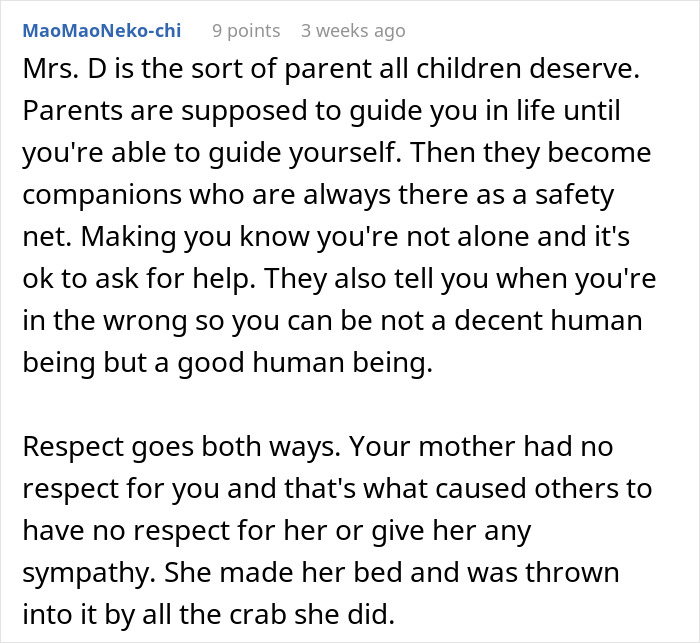
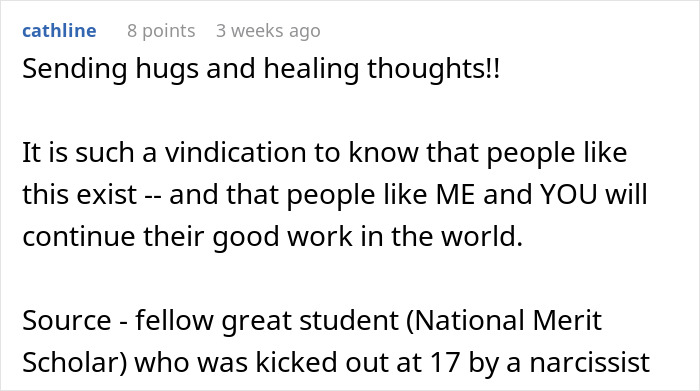
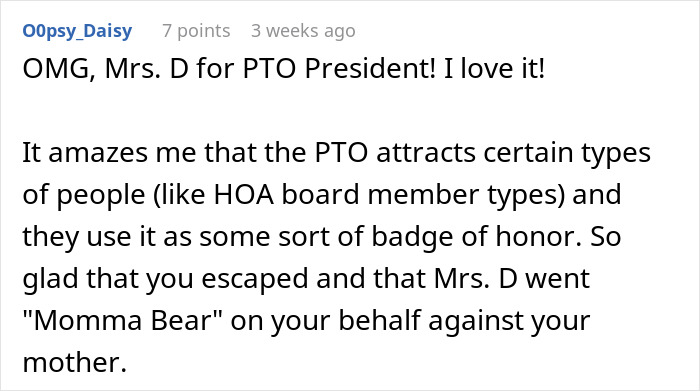
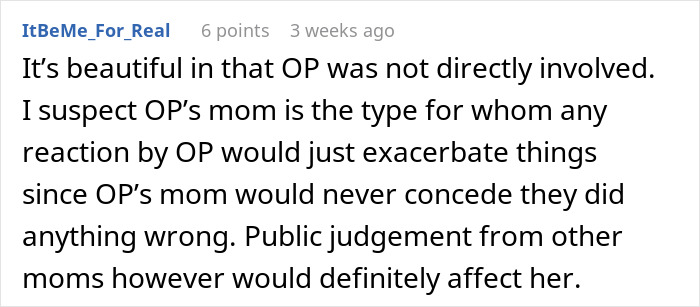
Very sad OP got kicked out but glad she had a place to stay. And a million thumbs up for Mrs. D!

1% said the mother had her reasons. You're the mother in this story, aren't you? For shame...

I've heard a lot of BS reasons to get kicked out, but this is the first time I've heard for growing tits.
My mom and all her sisters were slender and flat-chested. My dad’s side of the family was fat. I got the thinness gene, but also a single fat gene: the one for my (・人・). (I didn’t just get mams; they’re elevens. They are as perfect as bооbs can get, as I seem to have won the genetic lottery with them.) My mom and two of her sisters all usta side-eye me when I wore a bathing suit or anything that clung to me and showed my chest. I can remember entering a room in a new outfit, feeling pretty, and my mom’s mouth twisting in disapproval while she made a face, and the same happened when I went to live with one of her sisters. Many people feel bad about their bodies because they think there’s something “wrong” with ‘em, but I was made to feel awful because I had a chest. Back then, I simply thought it sucked and tried to hide ‘em when I was around them, but looking back, I think it’s a supremely shіtty thing to have done to a kid, being jealous of what Mother Nature gave her.
Load More Replies... Very sad OP got kicked out but glad she had a place to stay. And a million thumbs up for Mrs. D!
1% said the mother had her reasons. You're the mother in this story, aren't you? For shame...



















 No fees, cancel anytime































71
46