Get Premium
Dark mode theme is available exclusively for premium users. Learn more about the benefits of subscribing.
No fees, cancel anytime.

 Dark Mode Ad-Free Browsing Unlimited Content
 Ad-Free Browsing Unlimited Content Dark Mode
Join 1.2 million Panda readers who get the best art, memes, and fun stories every week!
Cultural context matters. And it might take us just a five-minute walk through a foreign city to realize how different its norms are from the ones we grew up with.
One curious Redditor made a post on r/AskTheWorld, asking people to share pictures from their countries that outsiders often misunderstand, and they were immediately flooded with hundreds of replies.
As a reminder that first impressions don’t always tell the full story, we’ve put together some of the most confusing local images and the explanations behind them.
This post may include affiliate links.
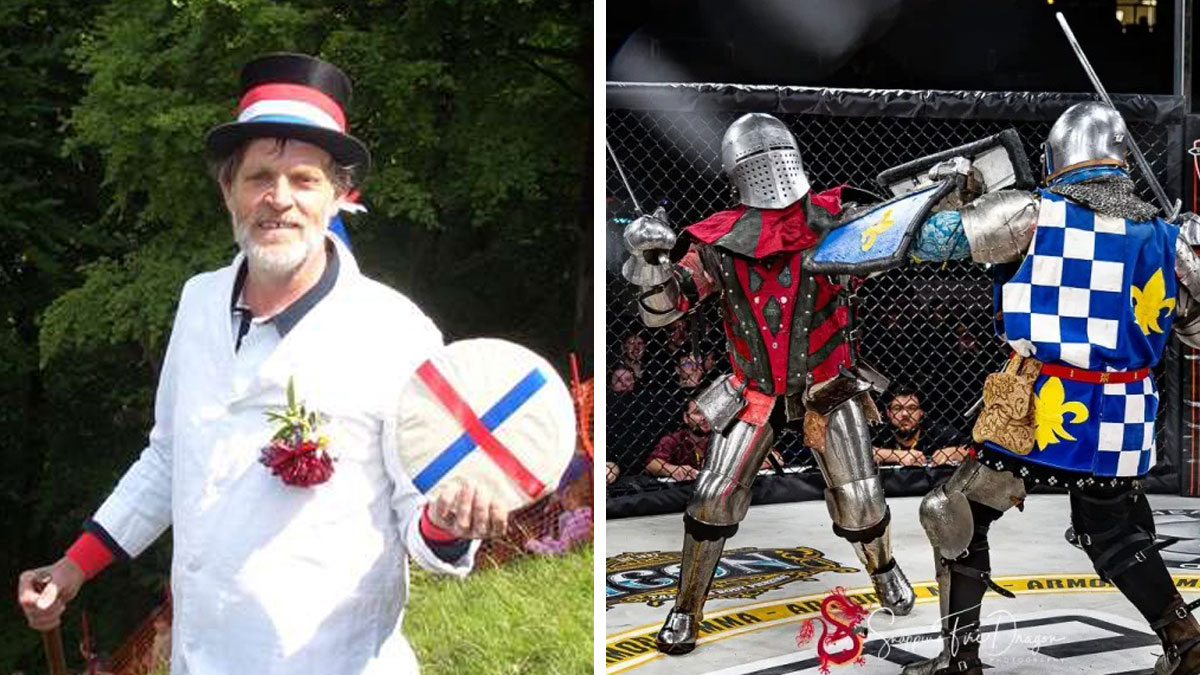
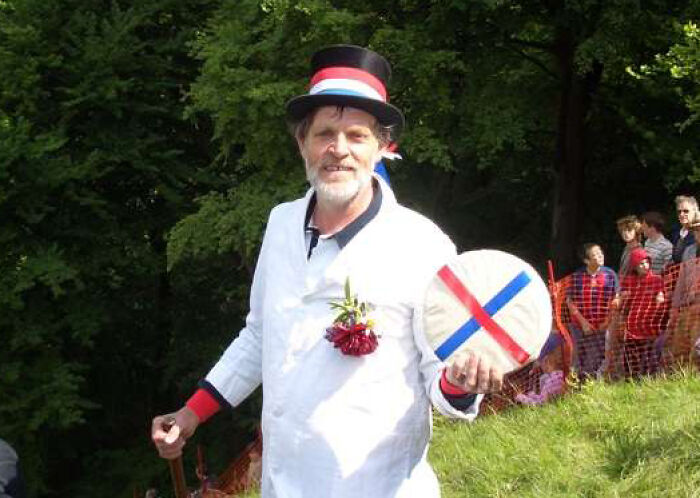 Chasing a block of cheese down a hill.
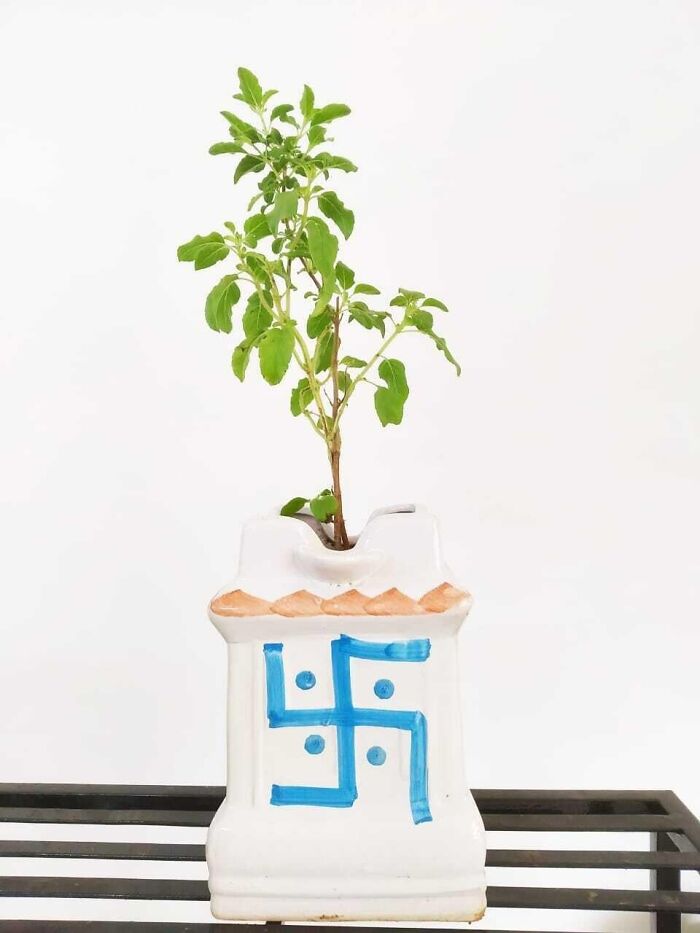 That jerk ruined it. We still do use it by the way. Just not out of the country or temple.
 This is posted to r/UrbanHell every week. In Dubai we won't even blink since this style of house is very common, most communities built in the last 20 years have identical houses. I do agree tho its ugly.
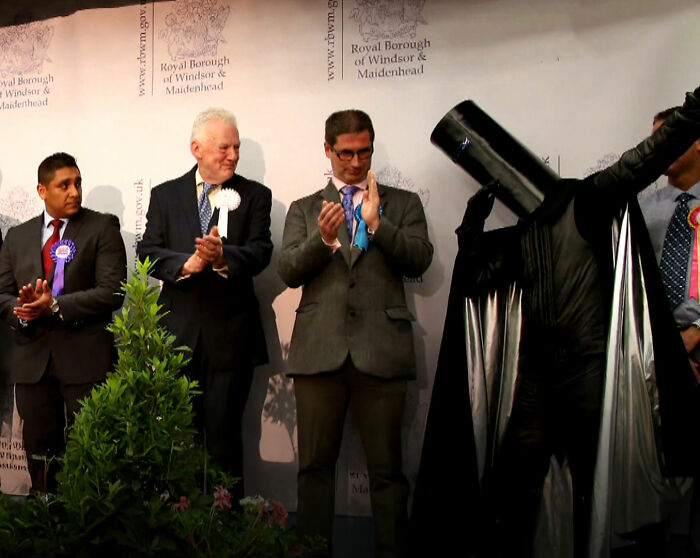 Lord Buckethead during the 2017 UK general election declaration in Maidenhead.
Lord Buckethead is a novelty candidate who has stood in four British general elections since 1987, portrayed by several individuals. He poses as an intergalactic villain resembling the Star Wars character Darth Vader.

I was going to post about NZ's McGillicuddy Serious Party and accidentally discovered the reason why NZ is left off so many maps. One of their policies was to send out intelligence agents around the world to wipe New Zealand off published maps, thus ensuring that no-one could invade the country.[5] :-)
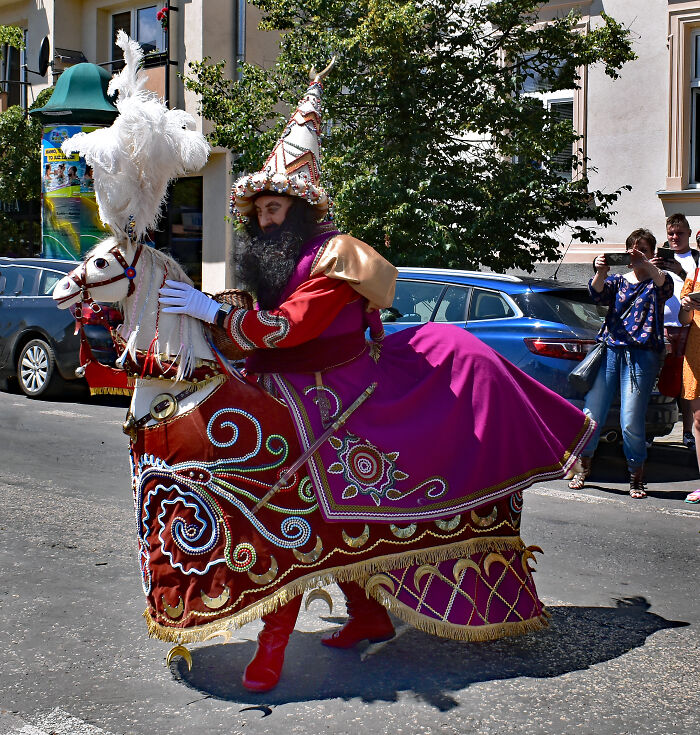 These guys running around Kraków for some reason. Allegedly its origins are people dressing up as Tatars once.
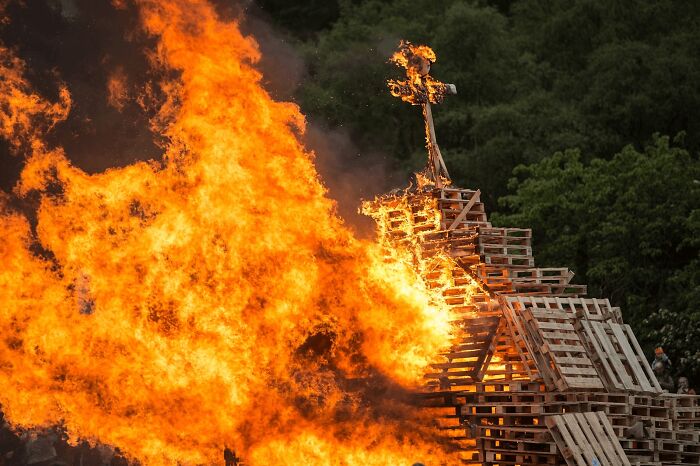 Gotta burn once a year, people.
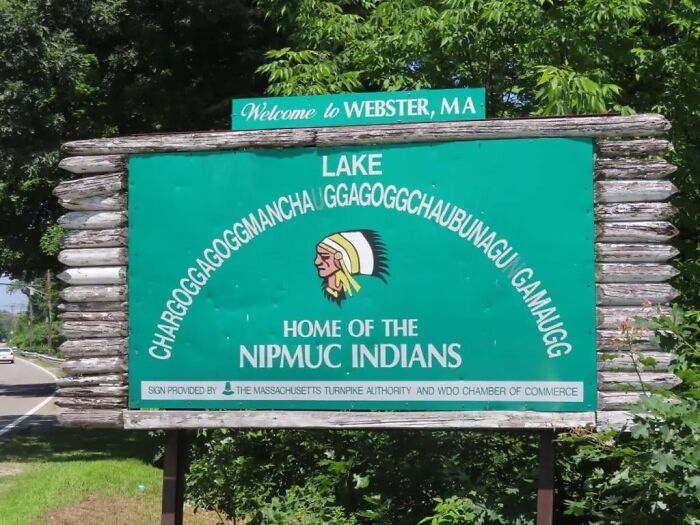 The name means “you fish on your side, I fish on my side, and no one fishes in the middle”.
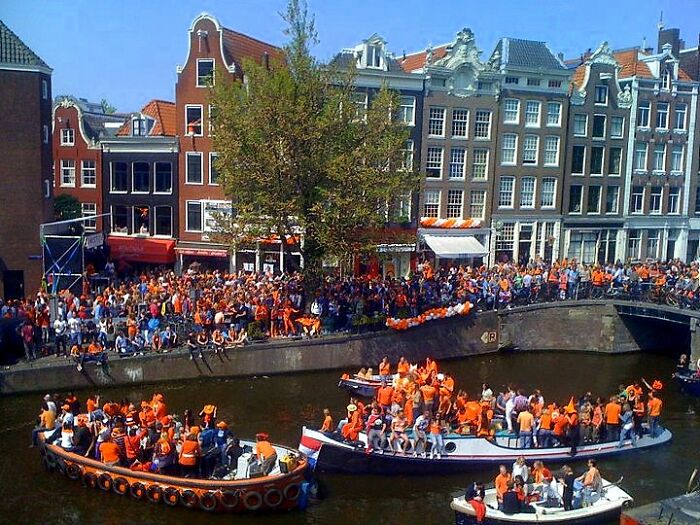 In the Netherlands we celebrate King's Day ‘koningsdag’ and then everyone wears orange and there is orange everywhere.

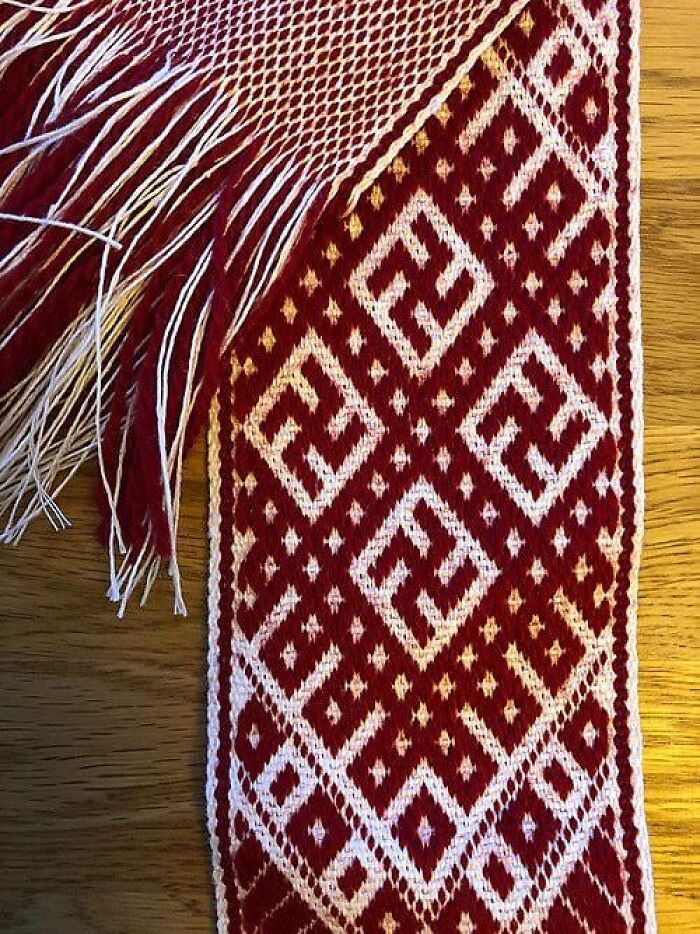
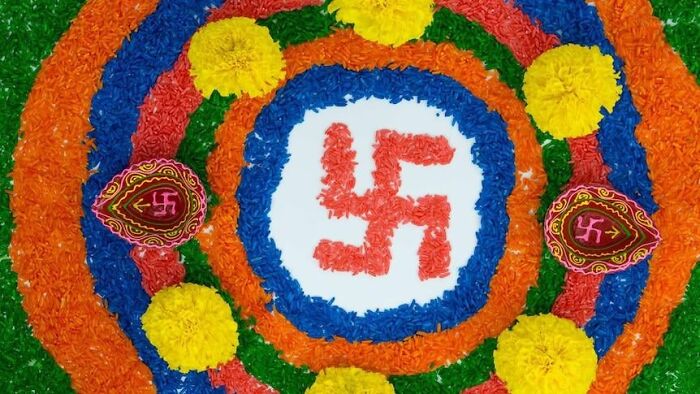 JaiBaba108: It and symbols like it have been used by cultures all over the world for millennia. For tons of them it’s used as a solar symbol, maybe to call upon the blessings of the sun god (Surya for the Hindus). For Jains it’s represents one of their “Tirthankars” or fully enlightened masters that belonged to the Solar dynasty of kings before he renounced the world.
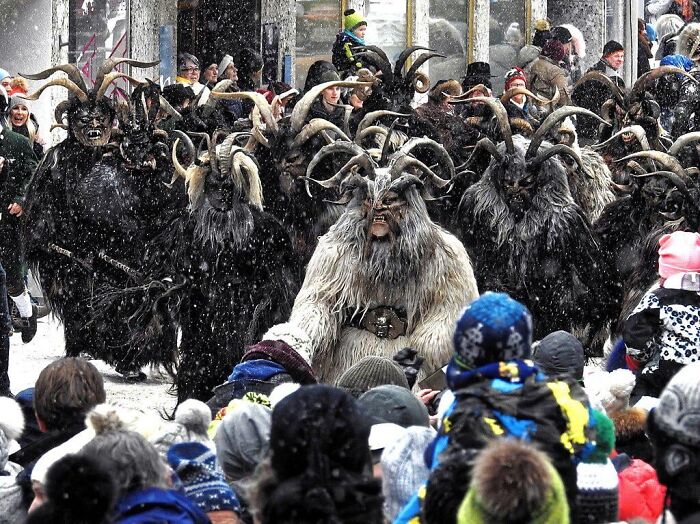
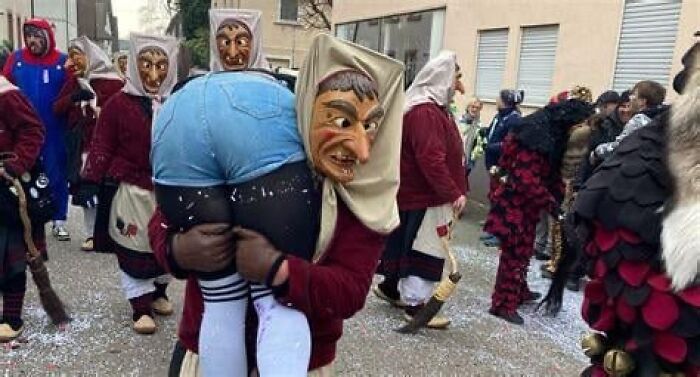 It’s only specific to some regions but where I grew up people dressed like that would go around on fasnacht and ‘kidnap’ the kids in attendance, put them in a barrel/wagon and drive them along the street with them. I imagine seeing parents laughing as they watch their kids be carried away by creepily dressed masked strangers is probably quite odd for people unfamiliar with the practice (the witches only very rarely eat the kids tho so it’s all fine).
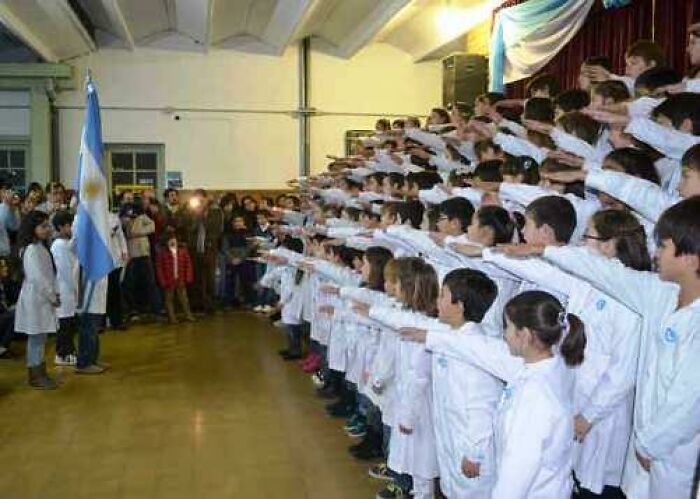 This is the oath to the flag that Argentinians take in elementary school. I always think that if someone from another country saw it, they wouldn't understand it.
Considering where many N**i's fled to, I'm not surprised to see Argentina doing this.
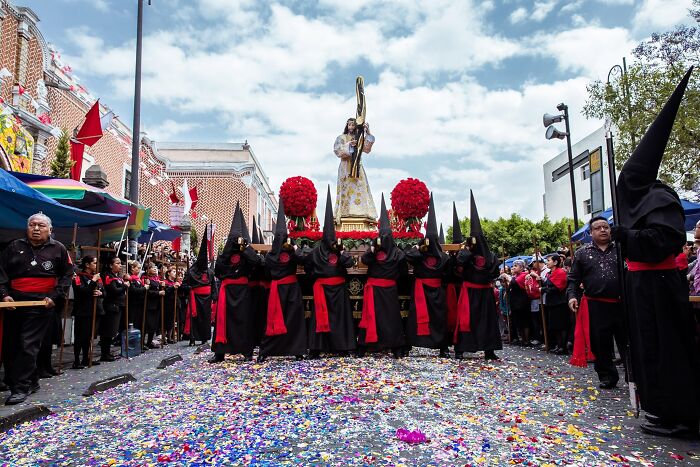
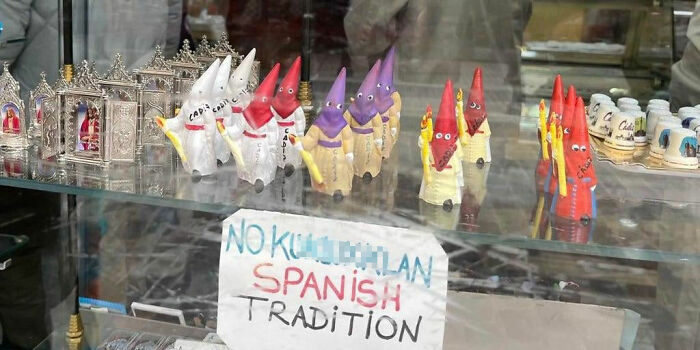 Capirotes, during Holy Week

I'm guessing that they had so many American tourists freaking out that they had to put up a sign
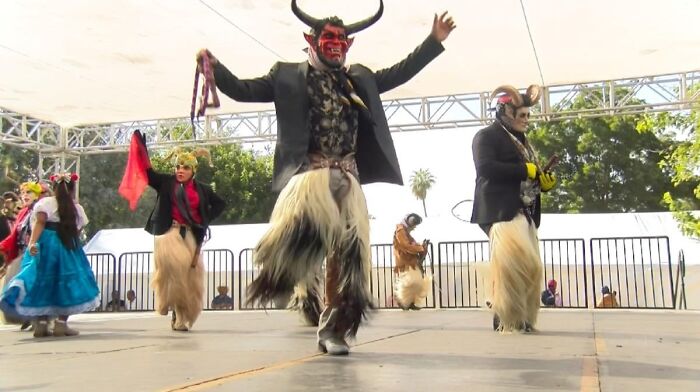 It’s the dance of the devils. It’s a traditional Afro-Mexican, syncretic ritual originating in the Costa Chica region. Symbolizes the taking of the souls of the defeated Moors. Those unfamiliar with it might mistake it for something satanic.
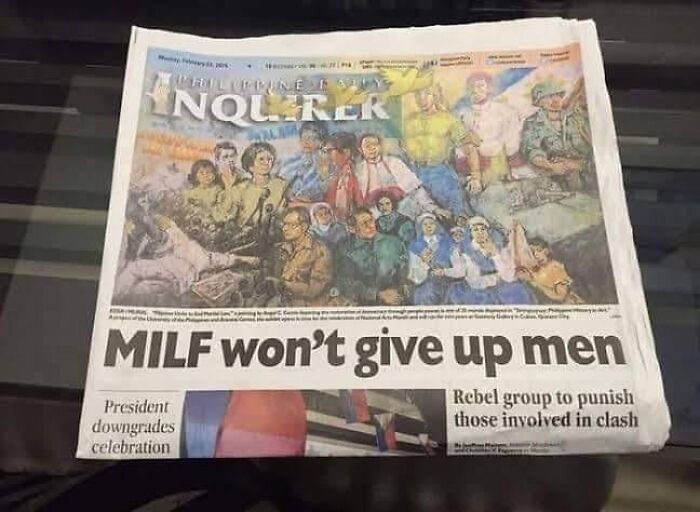 Moro Islamic Liberation Front, an Islamic armed group in the south of the Philippines.
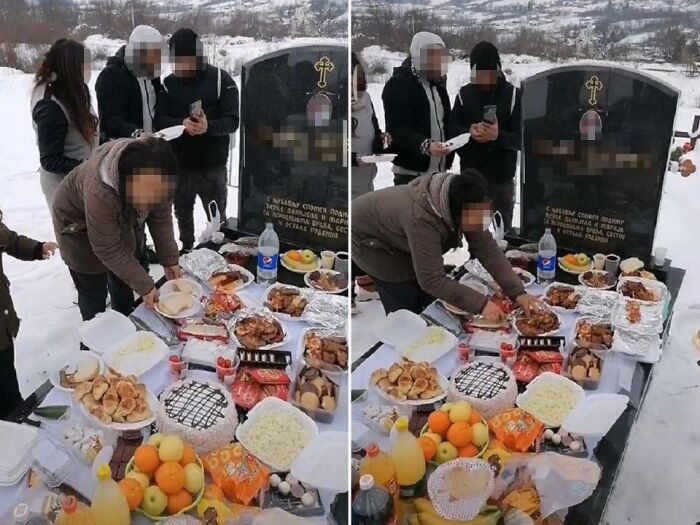 A traditional Balkan custom known as Zadušnice (All Souls' Day)
In India we have something similar. After someone’s died, many Hindus lay out a spread of food for crows to eat, as it is believed that d**d ancestors come back in the form of crows. People wait patiently for crows to come and if they don’t come, it is believed that the d**d person had some unfulfilled wish.
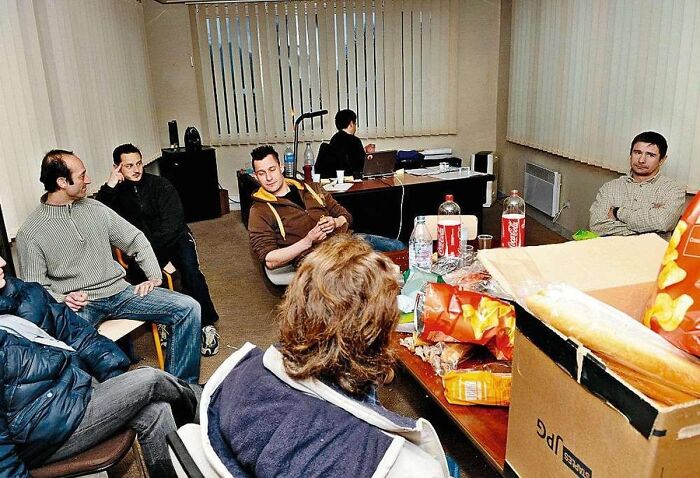 Most French people know this image. A boss sequestered by his employees. (article)
The sit in by the employees was an action against the company president who threatened sanctions against a union member.
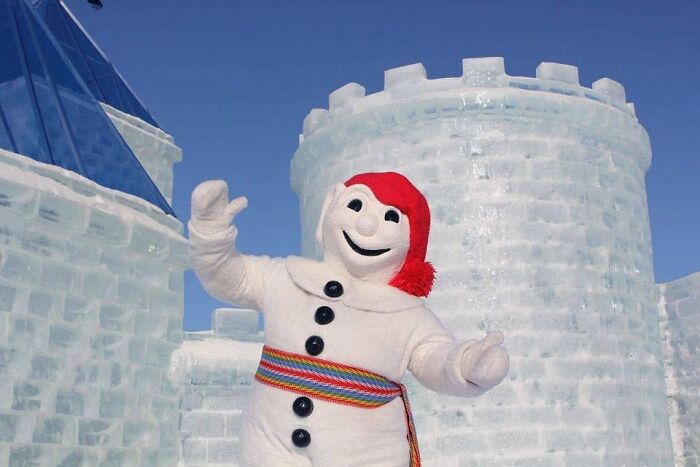 Its not THAT weird I guess. Quebec Winter Carnival
No no, Bonhomme Carnaval is plenty weird, and I'm Canadian (albeit a couple of generations removed from my centuries of Québecois ancestry). Pretty much anything created in Québec or by French Canadians is weird, and we like it that way.
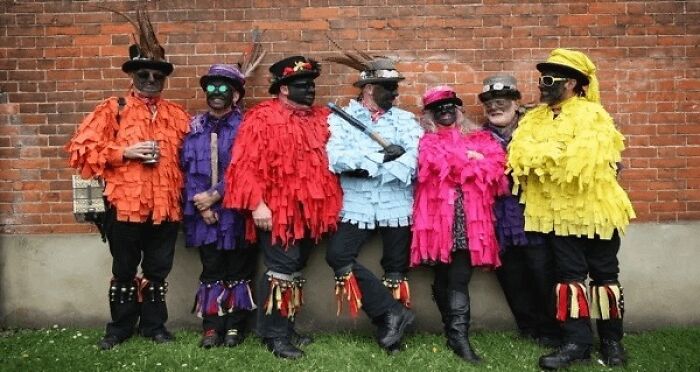
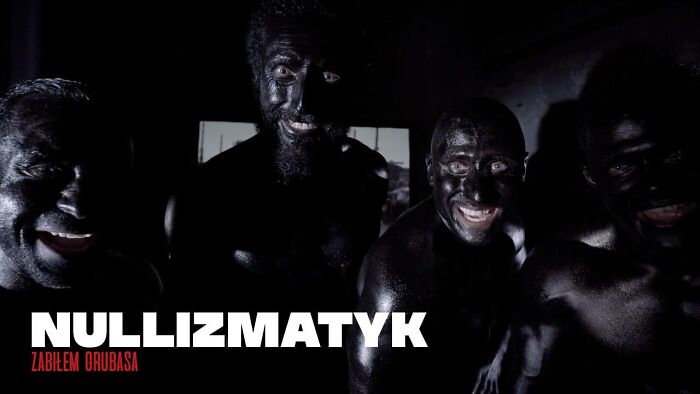 I'm guessing some people may take it as a black face but this rapper (2nd from left) is from Silesia, a full of coal region and it's a reference to miners covered in coal dust.
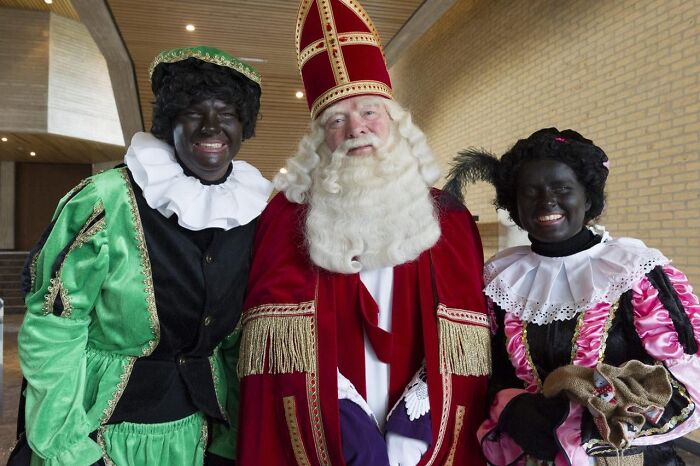 Sinterklaas, our version of Santa. Instead of elves he got black people working for him. It is a big thing here and in the Netherlands. Every year there is a big ceremony where we paint white people black to play the helpers. Great fun.
Edit: This was written to sound as bad as possible. For an actual context:
The tradition stems from celebrating saint Nicholas from around 300 AC. He is a saint who stands for taking care of the poor and less fortunate. The tradition changed a lot throughout the centuries. When the dutch settlers went to America, they took the tradition with them and it became Santa. The raindeer, elves, sled, northpole etc were all added later on by that American branch of saint Nicholas. In the original dutch (belgium and Netherlands) version, he was a tale to frighten children who will kidnap you if you don't behave. This evolved into giving you presents if you do behave. Around 1850, the tale was evolving and the addition of a poor black kid bullied by white kids was added. Sinterklaas took him under his protection and they formed a team to do the duties Sinterklaas did solo in the start. This helper was not even alway depicted black. Throughout the years, at some point this became an army of helpers. The helpers got the status of kindervriend, "friend of children". During this time, it also became canon that sinterklaas lived in spain, traveled by horse troughout belgium and Netherlands and by steam boat to spain. A lot of children songs exist about both sinterklaas and his helper. The tradition grew so much that every year There is an entire ceremony, with the steamboat arriving in Antwerp, the saint greeting all the children and declaring everyone has been good that year. All schools organize officially sinterklaas visits, a bit like mall santas. The helpers throw candy at the kids. On the eve of December 5th, every childs puts down their shoe at the chimney with a carrot for the horse, and the next day they wake up to presents and candy.
About 15 years ago, this whole tradition started being questioned. The giant ceremony and school visits all had helpers that were painted black (we are quite a white country) which is essentially blackface. This opened a huge debate. A lot of people knew this all their lives. It was a big part of their childhood, their parents childhood and their grandparents childhoods and so on. A lot of people never really thought about the racial connotations before it became questioned and really felt like the only reason it got that bad connotation was the fact that people questioned it in the first place. The time it originated from it was quite progressive even, but obviously not any more at this point. The blackface is now being replaced by some black smears which supposedly come from the white helpers going trough chimneys, but a lot of people are still not happy with this, feeling like they are losing a part of their identity over a manufactured problem.
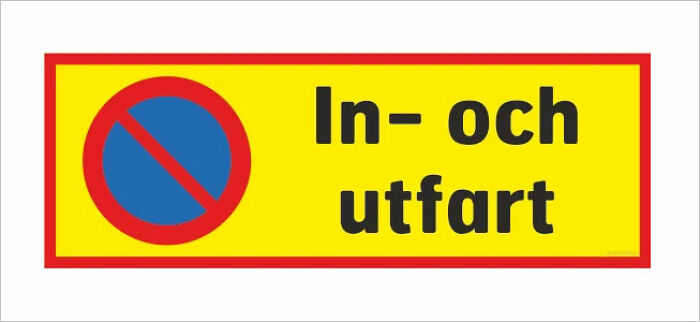 Swedish road sign indicating an entrance / exit (usually for garages). Honourable mention is s**t, which in Swedish means end or stop.
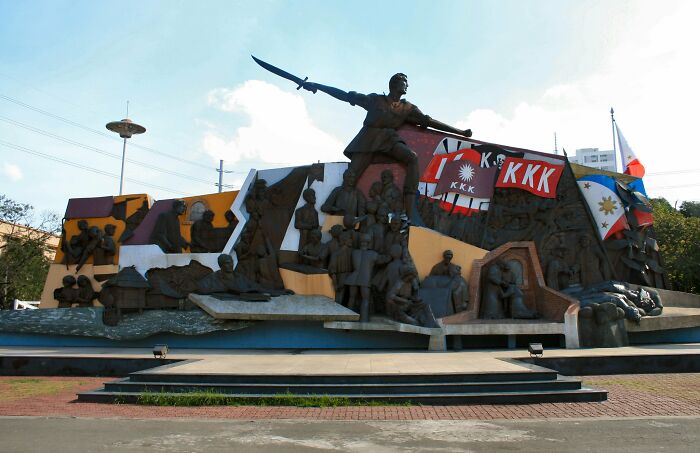 Philippines. The letters stand for: Kataastaasan, Kagalanggalangang Katipunan ng mga Anak ng Bayan or in English: Supreme and Venerable Association of the Children of the Nation.
Basically the nationalist group in the 1890s who aimed to achieve independence from Spain via armed guerilla.
It was original done in secret but when authorities discovered them, open warfare broke out against the Spanish.
Basically now a symbol of historical national pride and unity.

The fact that 'mirkins gets their knickers in a twist upon seeing the letters should not stop any other nation from using them as an abbreviation. Nor are any explanations viz. the attire necessary. The world needs to stop pandering to the nonsensical sensitivities of a nasty third world country
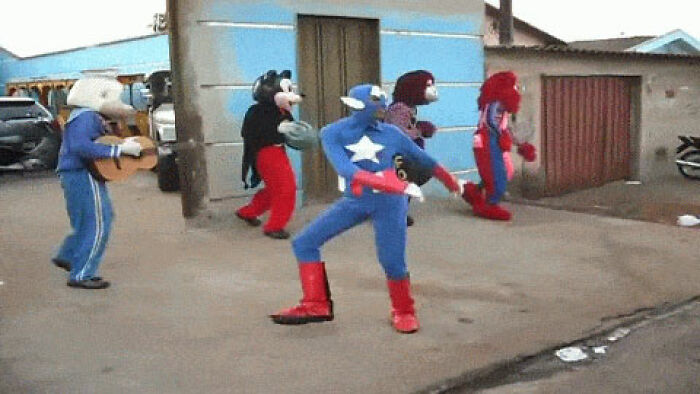 Carreta Furacão.
You pay to go on a party bus and these guys go running around the bus and doing acrobatics.
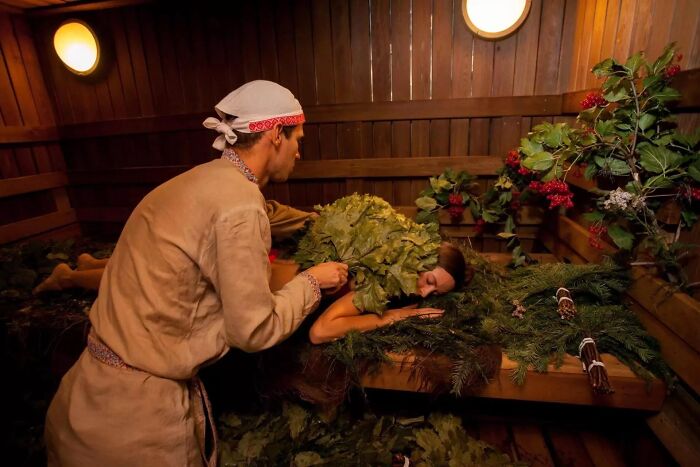 I mean… I didn’t get it first either. But this is a some weird variation of sauna rituals when a woman is surrounded by various plants for aromatic purposes besides the main. Naked people beating each other with oak branches is an honourable mention.
I thought it was more often birch twigs? Oak's not noted for its flexibility. Well, what do I know?
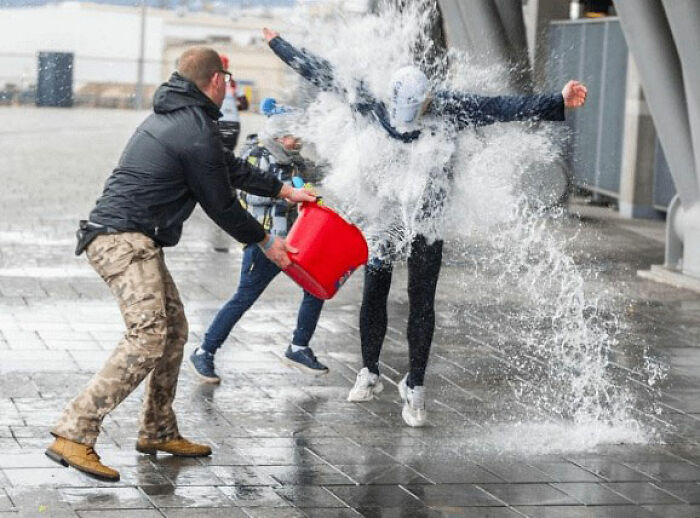 It's "lany poniedziałek" (watery Monday). Part of Easter. All people pour water on each other as a sign of purification.
 In our culture, it's a positive gesture. But in some countries, it's considered an insult.
Hot-Scheme4289:
Countries where a thumbs-up is a serious insult:
Only in a traditional context.
• IRAN & AFGHANISTAN: Known as "Bilakh," it is a severe offensive gesture.
• IRAQ: A rude sign of hostility and rejection.
• GREECE: An aggressive gesture of disrespect.
• SARDINIA (ITALY): Traditionally viewed as a hostile and rude affront.
• WEST AFRICA (e.g., NIGERIA): A heavy sign of disrespect and contempt.
• RUSSIA: An indecent and impolite signal.
• EGYPT: A gesture expressing deep disrespect.
• THAILAND & BANGLADESH: A sign of mockery and looking down on others.
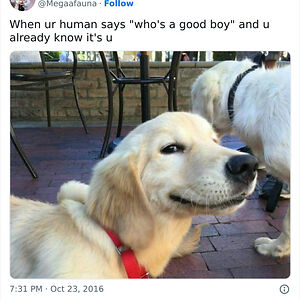
Thailand? Really? That surprises me, seen it many times there by locals and it did not feel like they wanted to insult me
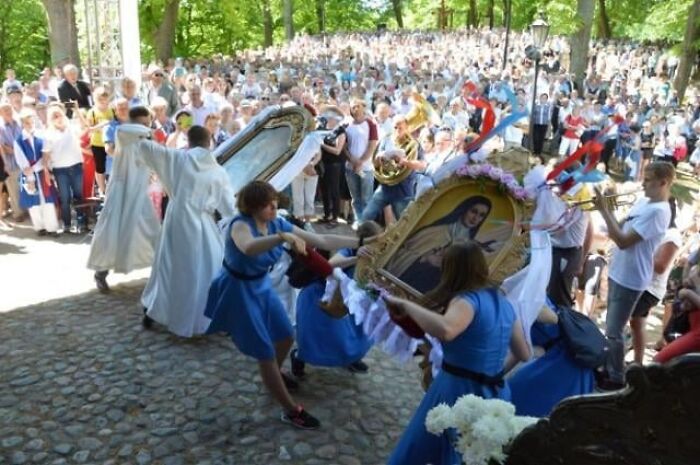 Dancing with paintings of saints. It's a regional tradition in Poland and I've never seen it with my own eyes but when I first watched a video, I thought it was a joke. Turned out, it wasn't.
I strongly recommend watching any video on YouTube, search for "pokłon feretronów". It's absolutely hilarious.

After watching a reel...Idk what i was expecting but it sure as hell wasn't that. Did they practice? Bc some of those folks are being thrown around like this is not choreographed
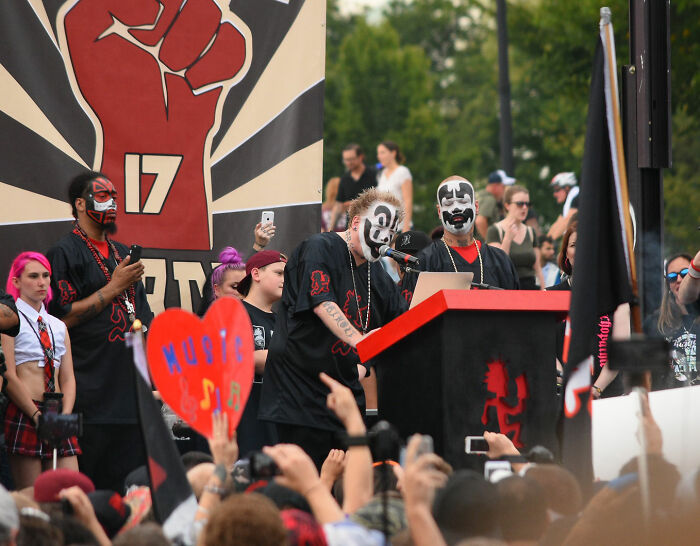 ICP (Insane Clown Posse) wears clown makeup when they perform, and for some reason, were once associated with being in a g*ng.
When I was in high school (late 1990s), you couldn't have their symbol displayed at school because it was considered "g*ng wear." There were certain football teams that were restricted, too.
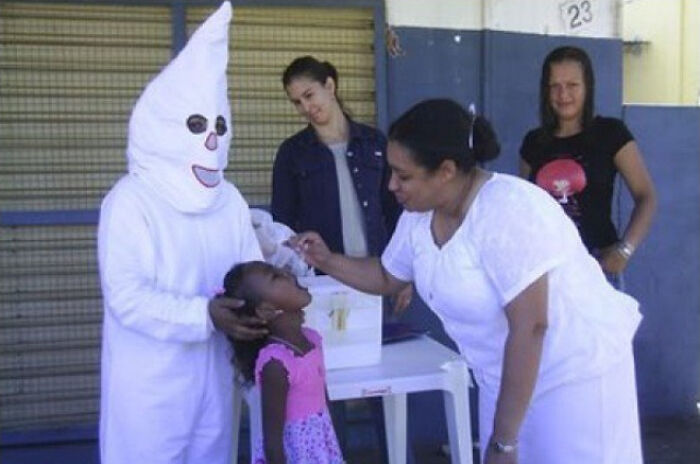 THIS IS ZÉ GOTINHA!
Also he's sort of retired since we (and several other countries) have stopped giving Sabin to kids. Now they get 4 shots of Salk.

Polio vaccination (named after the two scientists who independently developed two different vaccines; in case somebody is as confused as I was).
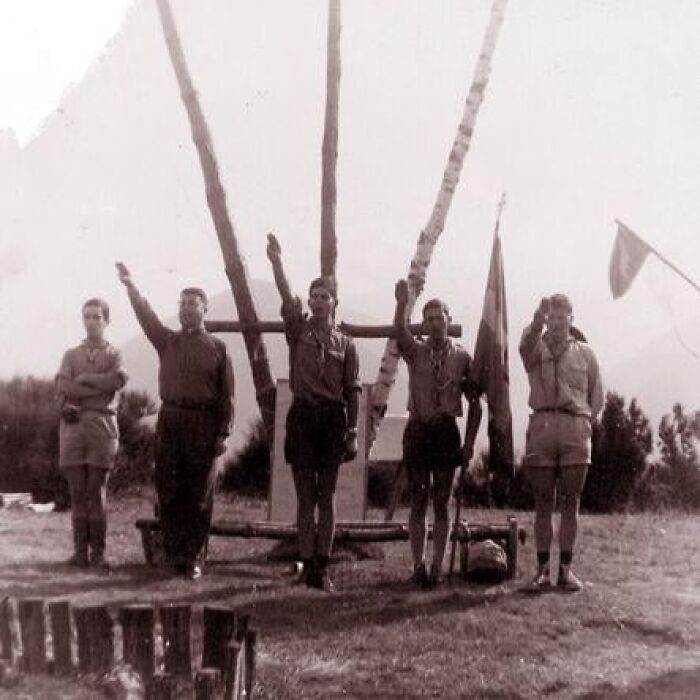 Boy Scouts used to salut like this during special events, like the ceremonial for Scout Oath. Did it this way back in the 90s. It’s banned now, as too many outsiders were still misinterpreting it (that, plus the uniforms).
Some Boys Scouts, maybe. Most held their elbow at their waist at the bottom of the rib cage, upper arm pressed against the body, and raised the hand to shoulder height.
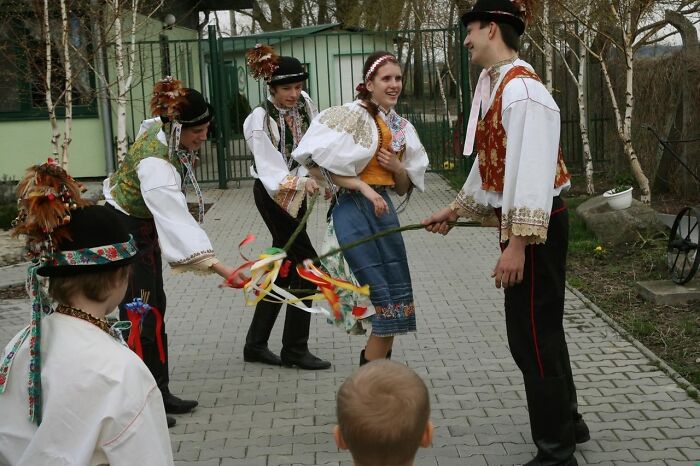 Easter is every Czech woman's favorite holiday. 😅.
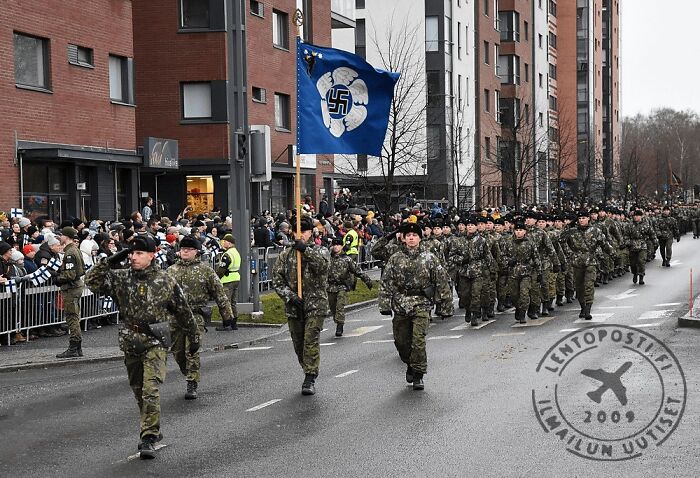 Finnish Air Force flag.
The swastika is something that was actually stolen by cultural appropriation. People need to get over it. It's not a sign to make Hitler respawn
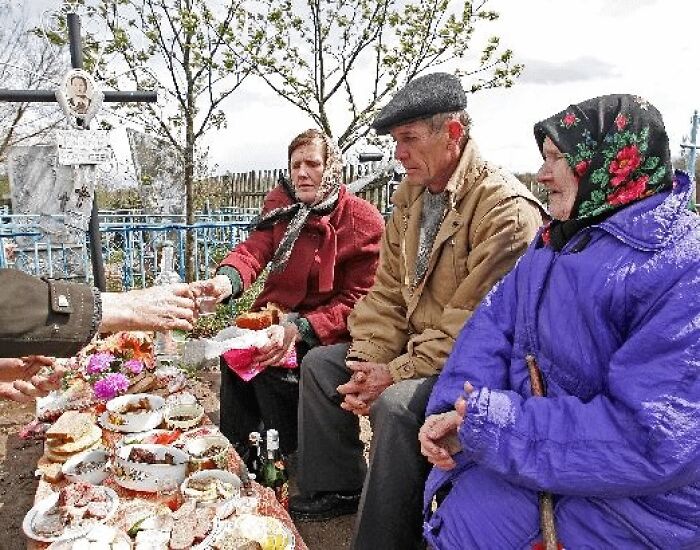 In some regions, on the day of remembrance of the passed, people eat at the cemetery.
Tall-Total-6077:
Some Appalachian communities in the US do this too- they'll host family reunions with food at family plots and then spend time maintaining the family's graves afterward.
Ok_Walk9234:
We do in Poland too, but we mostly have small snacks (pańska skórka for example) instead of full meals.
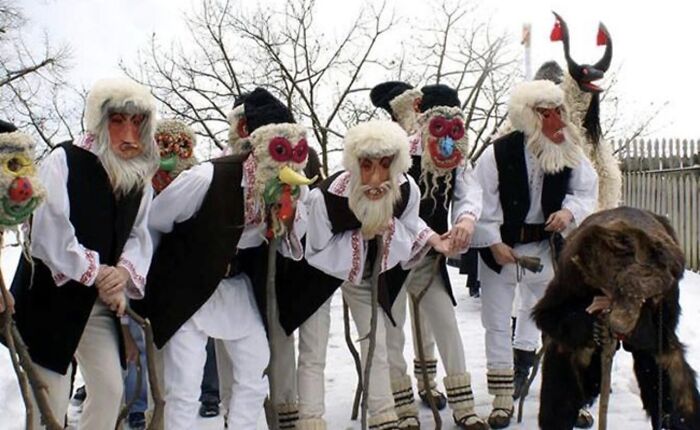 This.
This.
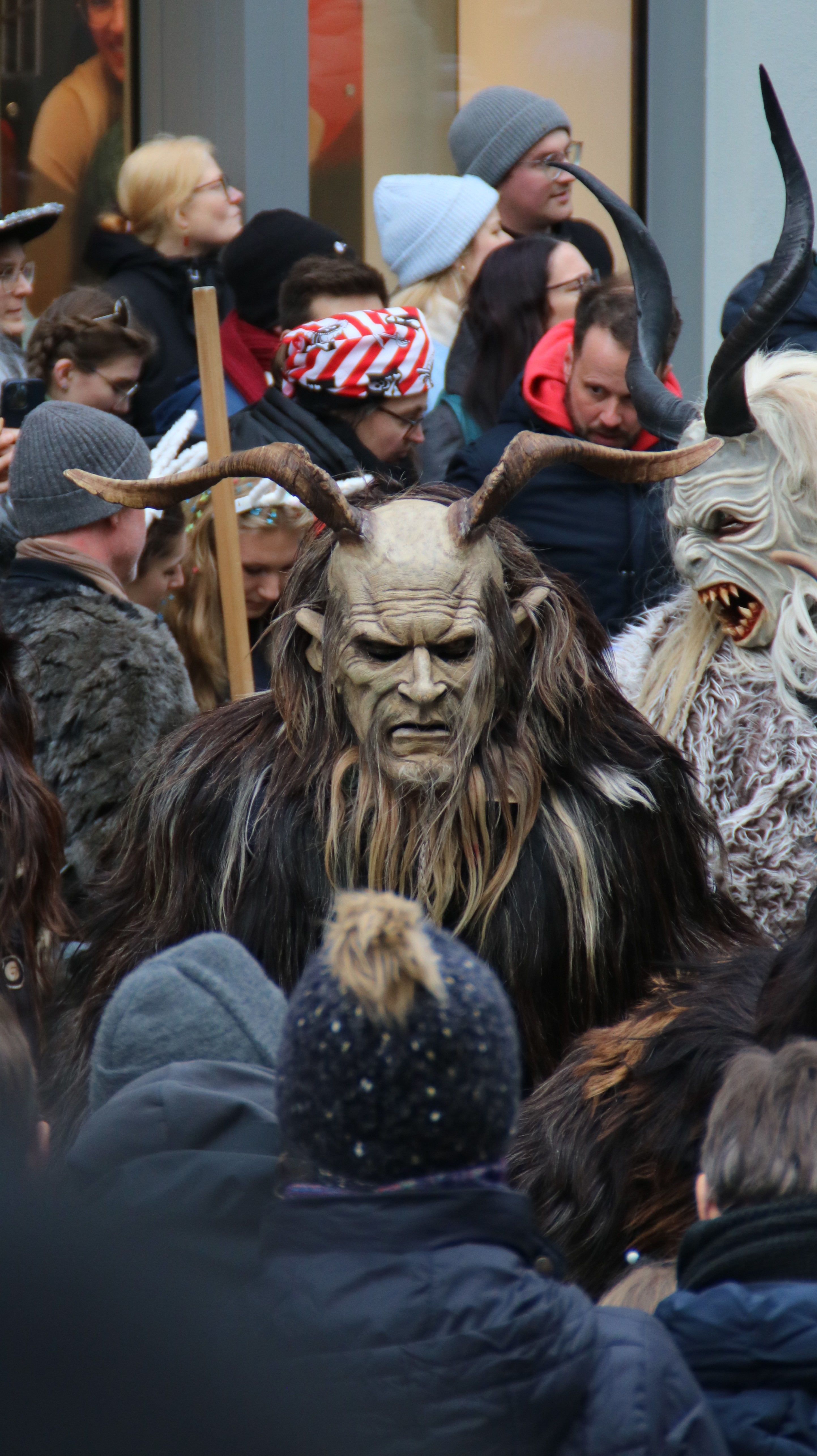
I looked it up. Those are supposed to be goat (Capra) and bear (Ursul) costumes. Some people wear them and go from house to house to perform some sort of dance. Bear and goat symbolise the force of nature and the dance shall welcome the rebirth of nature in the beginning of a new year (which is why it's usually done "between the years" (Christmas and New Year). There also seems to be a big festival in one Romanian city.
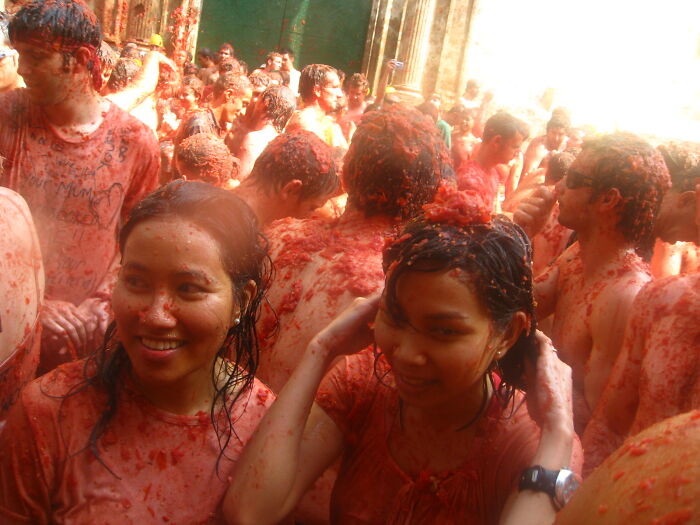 Any from “La Tomatina” party (don’t worry, it’s tomato sauce)
Always felt like this was a sad waste of food. Maybe I'm missing something.
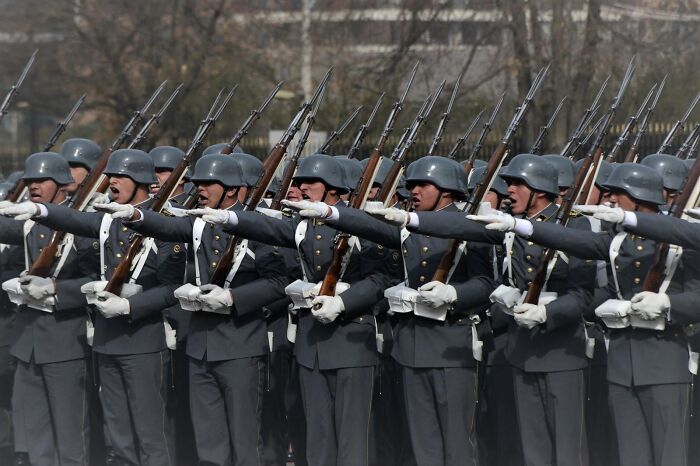 "I (name and rank) pledge, to God and this flag, to serve my country with loyalty, whether in the sea, on land or anywhere else, preparing thus, if needed, to sacrifice my life, to fulfill my military duties and obligations, in accordance with the laws and regulations in force, to obey quickly and punctually the orders of my superior officers, and thus invest my efforts in being a brave and honorable soldier no matter what, for my country's sake!"
Every Chilean soldier from every branch, from conscripts to junior officers must take this oath, sometimes multiple times in their career.
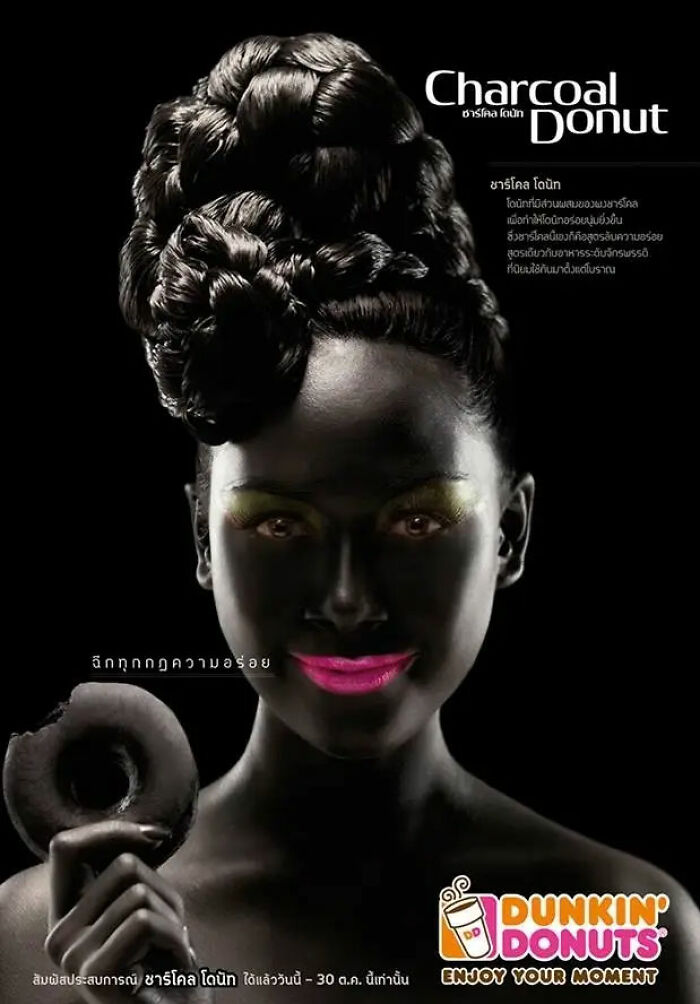 This charcoal donut ad. No one had a problem here, only westerners did.
Hmm. 'The ad, says Thai cultural commentator Kaewmala, may be controversial, but "it's not a comment on black people in general, it's about concepts of beauty and social snobbery in Asia." ' Link follows.
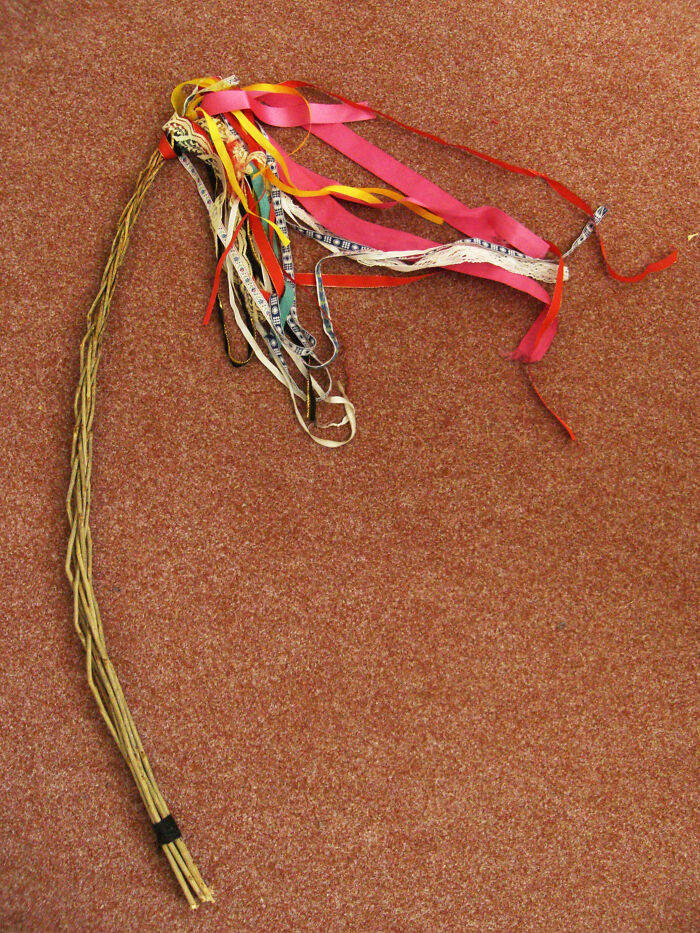 Czechs spank their women on a certain day i forget why.
In the Czech Republic, Slovakia, and some parts of Hungary, the Easter whip is used as part of a tradition in which women are whipped with a decorated willow branch — and/or splashed with water — on Easter Monday.

In return, women provide decorated Easter eggs, chocolate, or shots of alcohol so fair's fair
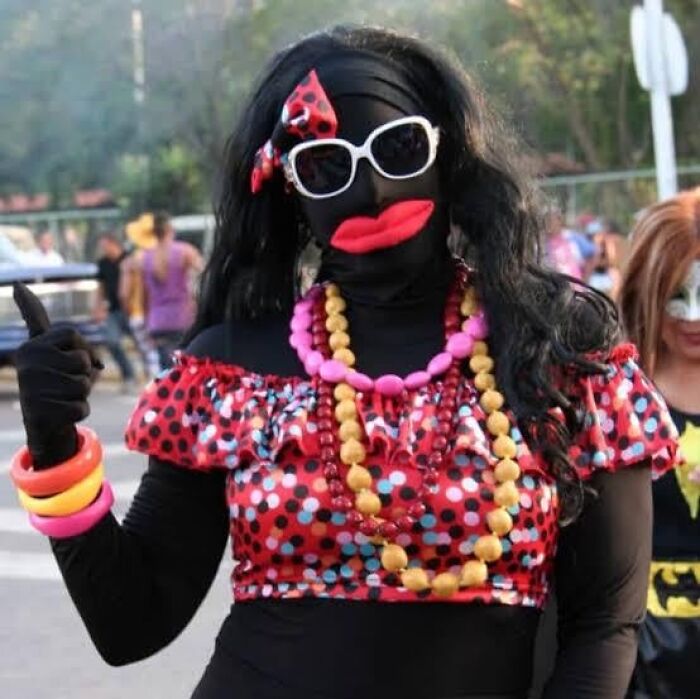 Negritas de Carnaval.
It might be seem as racist, but is more about allowing guys be women for a day or two in a VERY homophobic society.
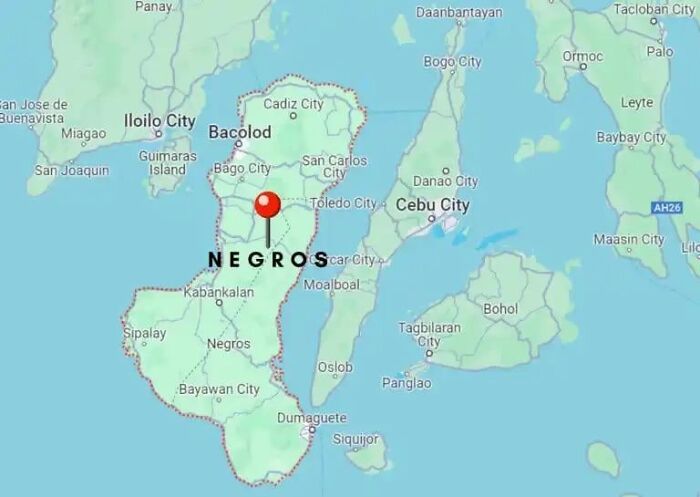 This name.

It's literally the Spanish word for a color. There is nothing offensive about it unless offense is specifically intended.
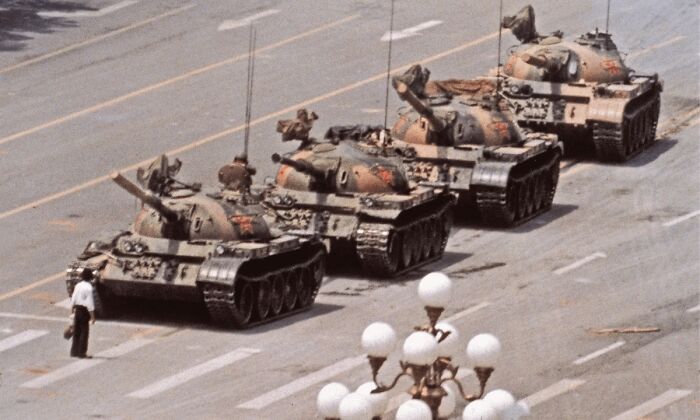 I know it isn't Taiwan but it was a big thing in Taiwan when it happened.
But from what I heard, the actual story is not nearly as bad as the photo depicts.

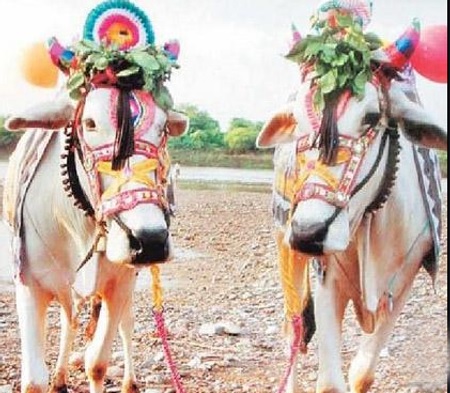
This picture from India (link in the replies). In India, people from Andhra and Telangana (two states) celebrate this festival called Sankranti and one of the days is entirely dedicated to cows.
This picture from India (link in the replies). In India, people from Andhra and Telangana (two states) celebrate this festival called Sankranti and one of the days is entirely dedicated to cows.













 No fees, cancel anytime