Get Premium
Dark mode theme is available exclusively for premium users. Learn more about the benefits of subscribing.
No fees, cancel anytime.

 Dark Mode Ad-Free Browsing Unlimited Content
 Ad-Free Browsing Unlimited Content Dark Mode
Join 1.2 million Panda readers who get the best art, memes, and fun stories every week!
When you see a mirror, you see yourself. This seemingly basic ability demonstrates whether an animal being possesses self-awareness. Humans, great apes, dolphins, elephants, and magpies are also said to pass Gordon Galoup’s famous "mirror test."
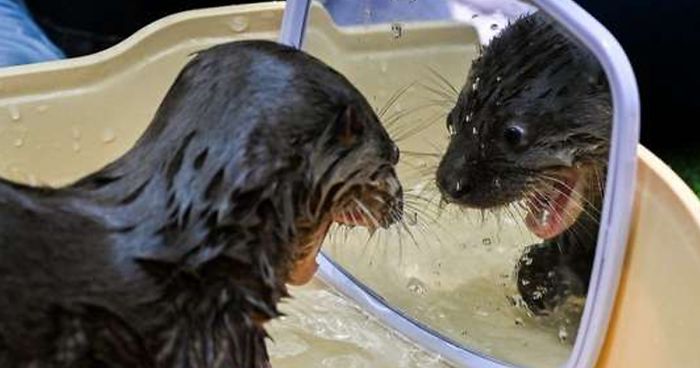
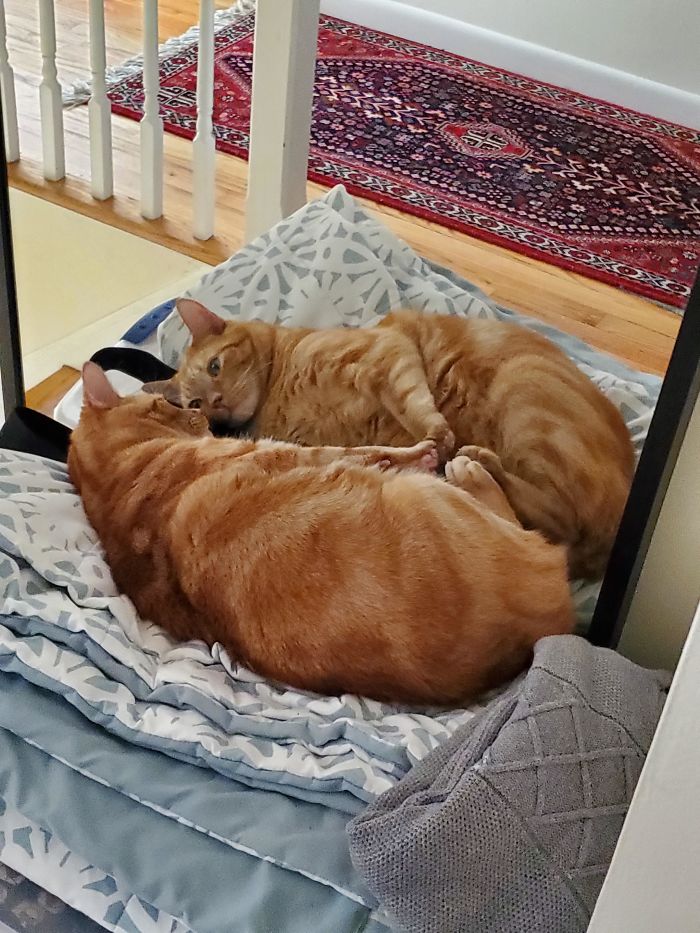
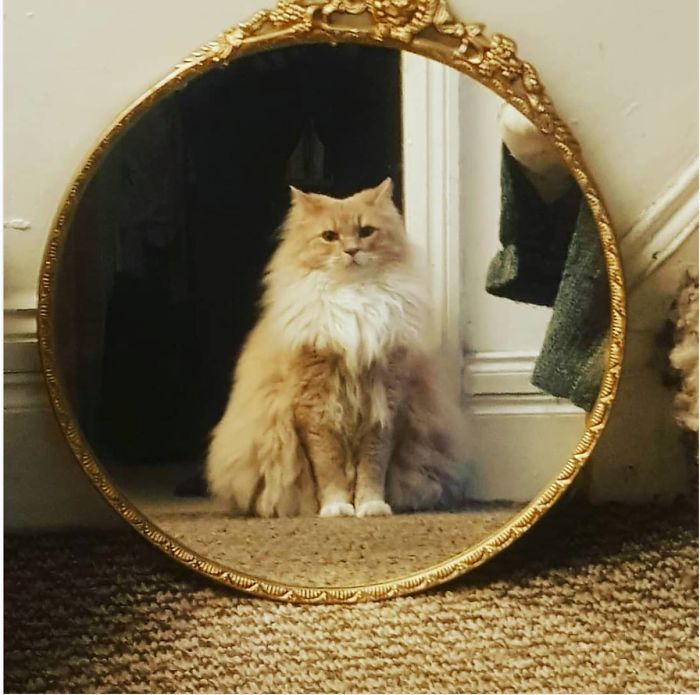
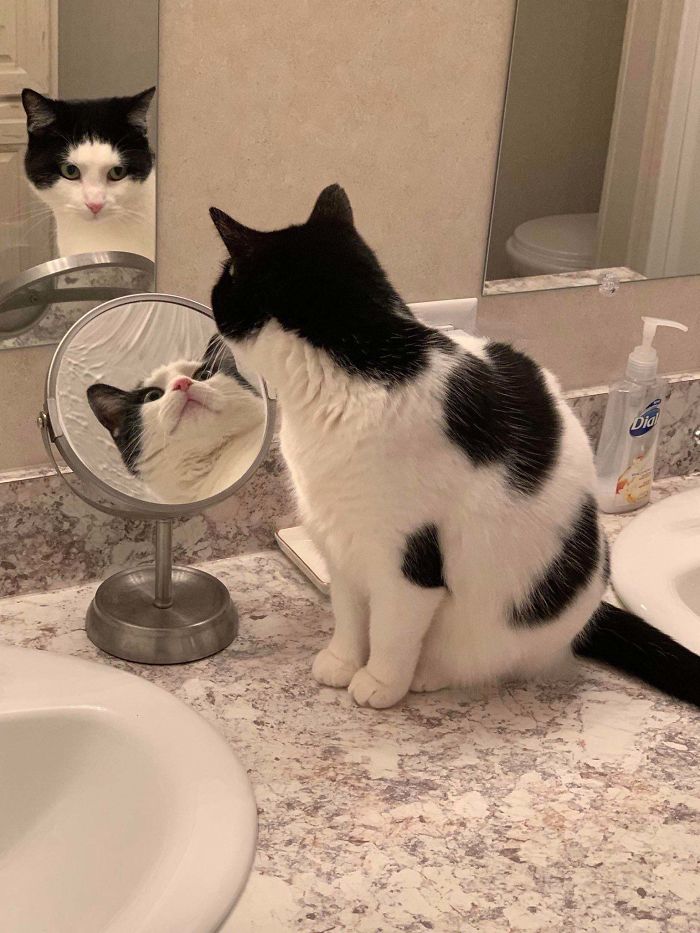
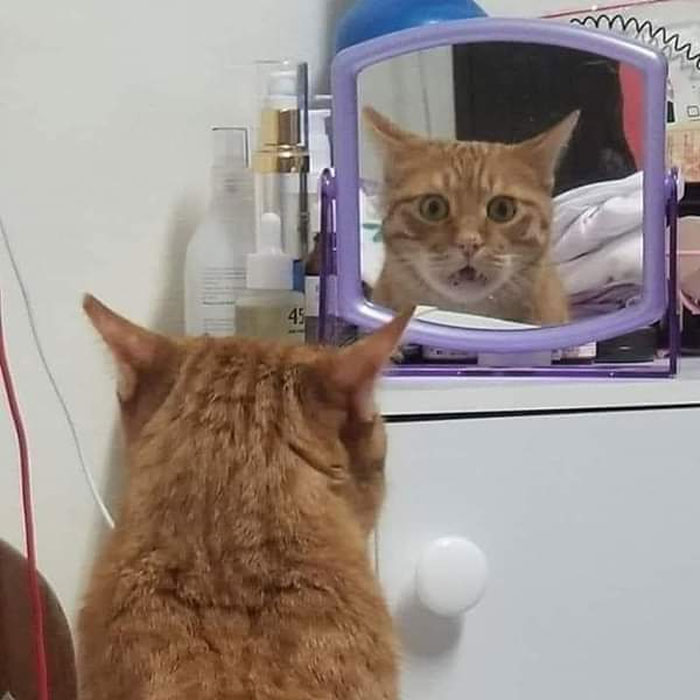
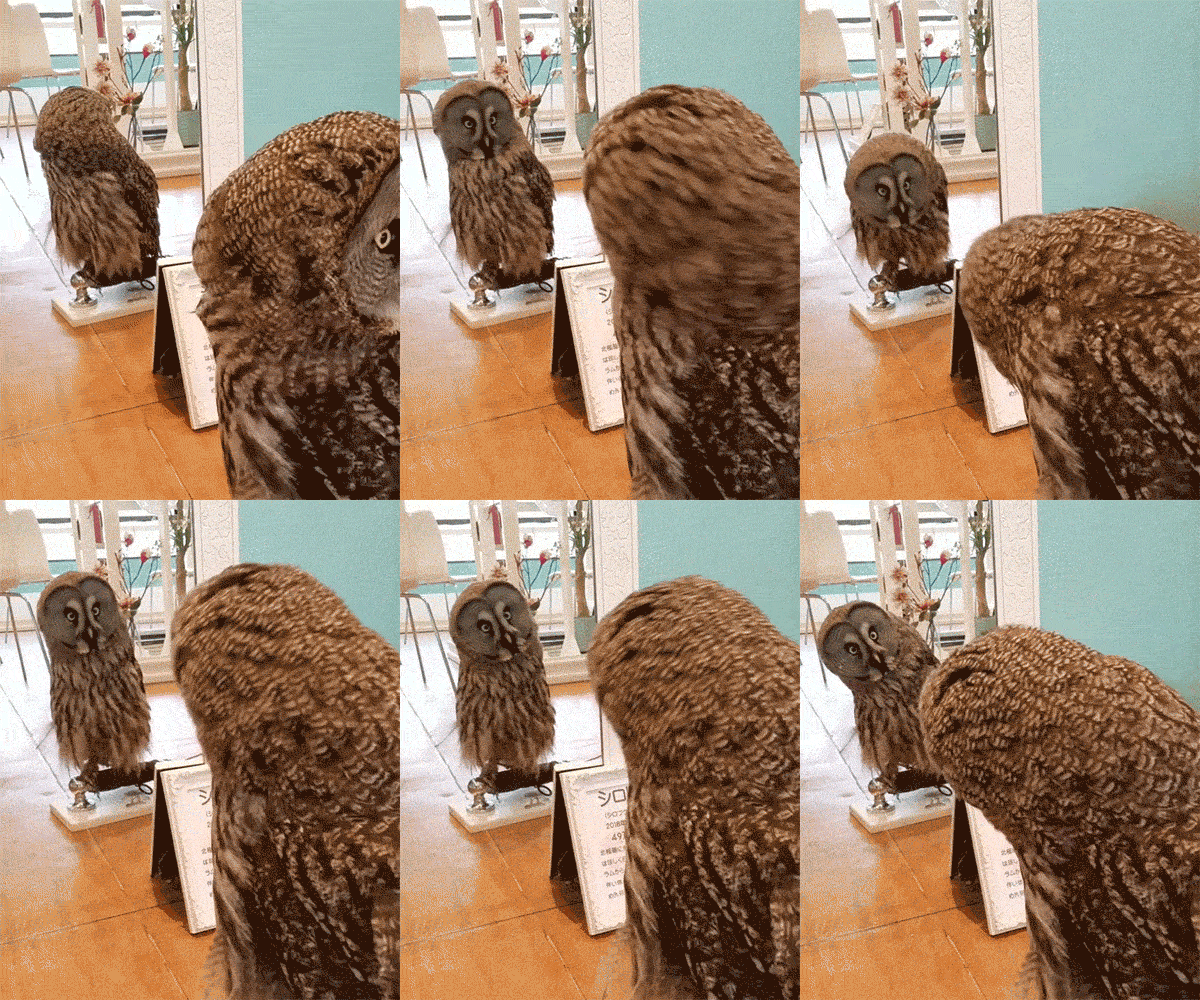
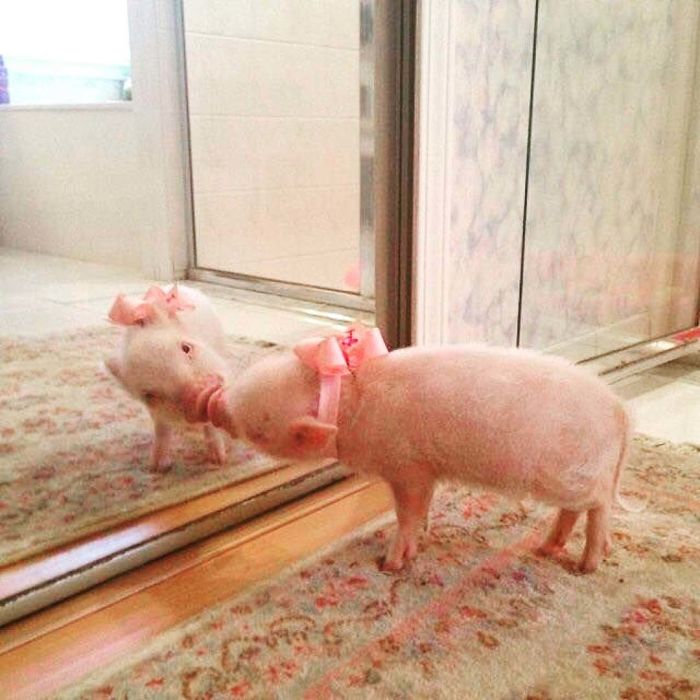
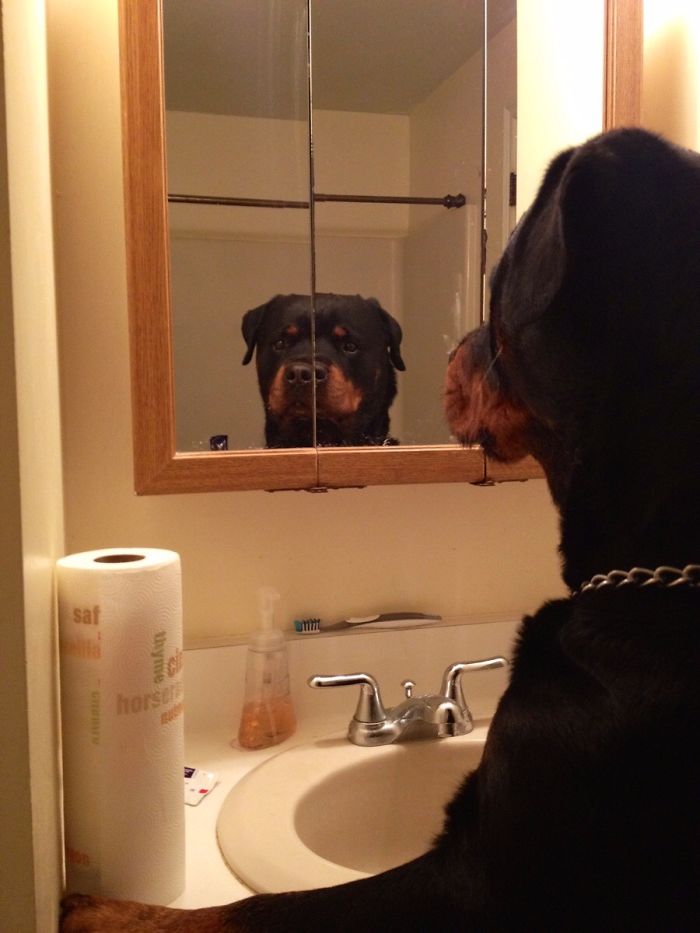
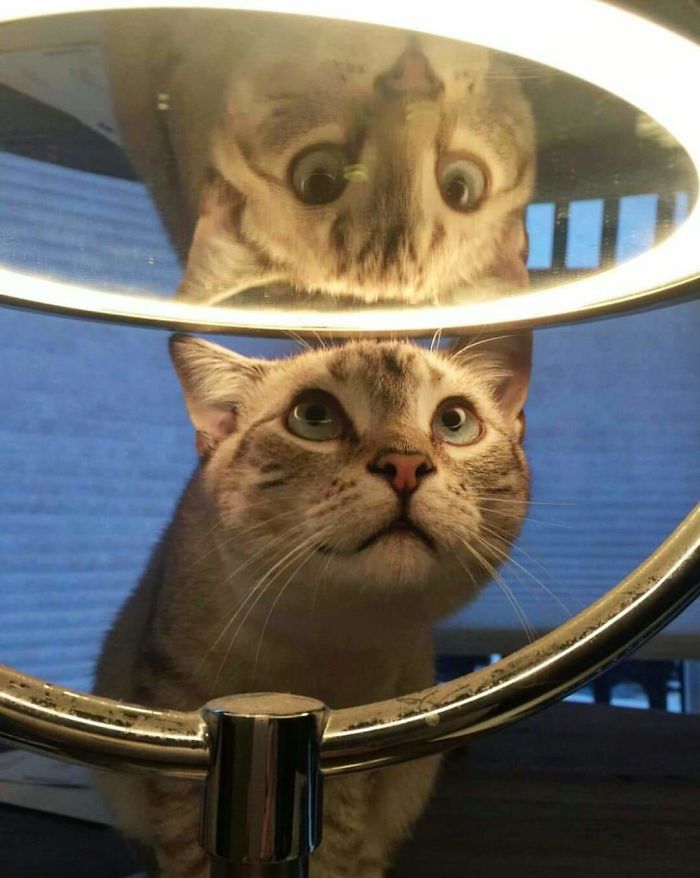
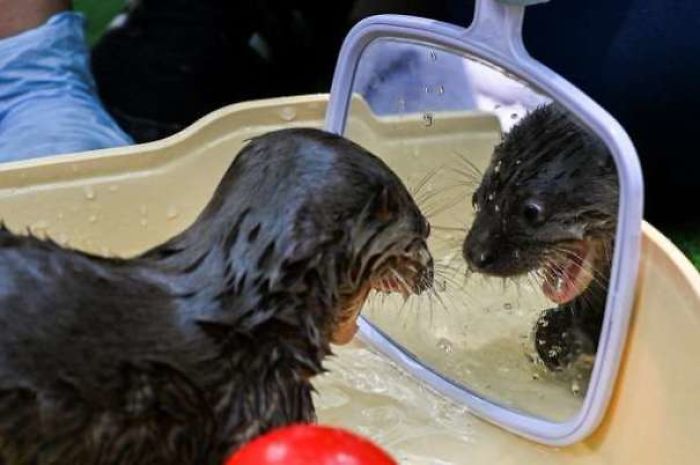
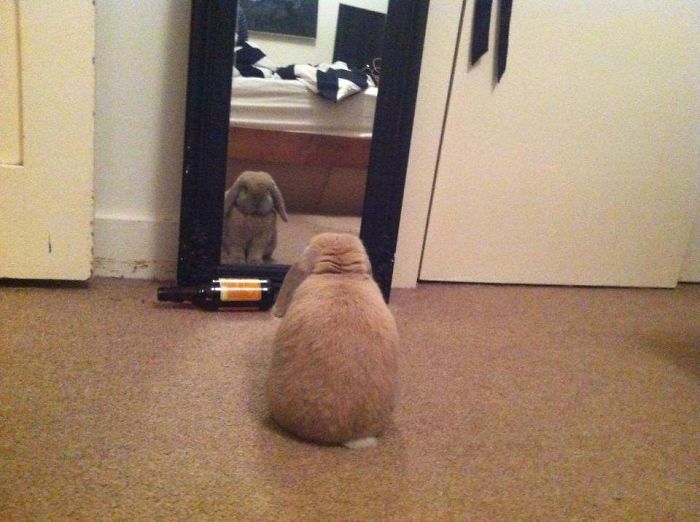
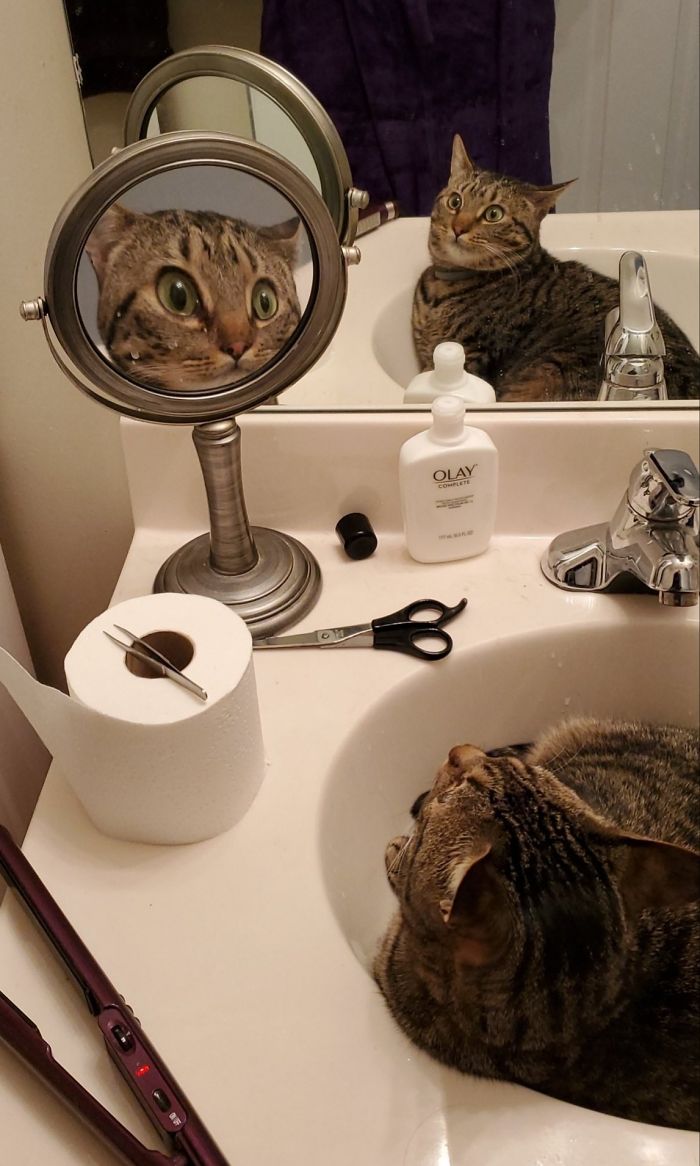
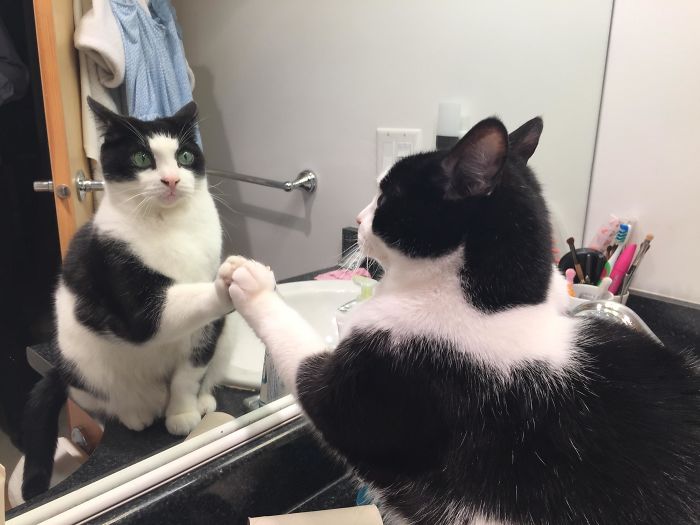
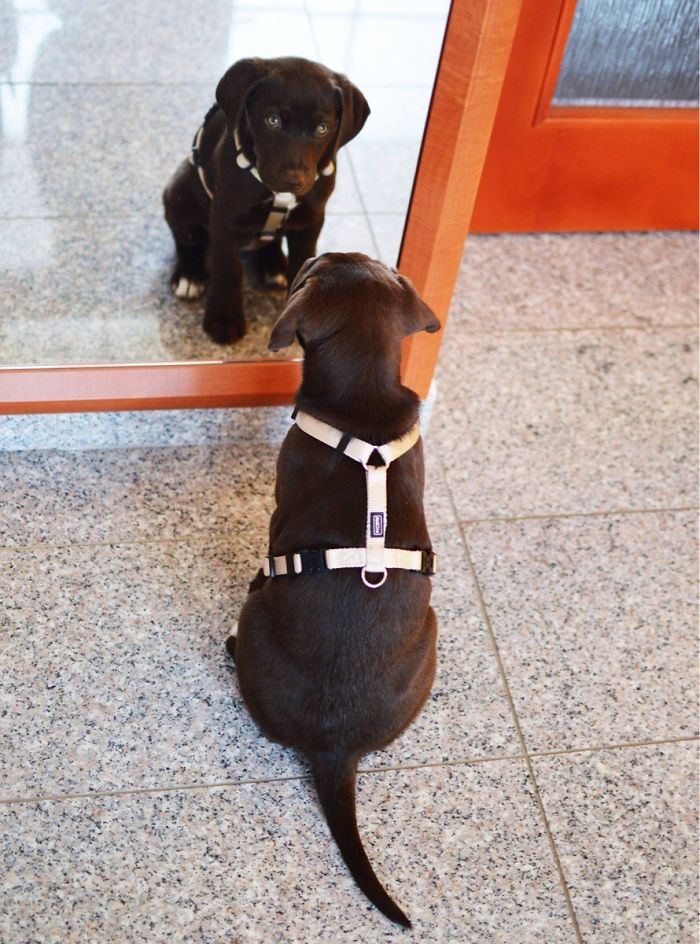
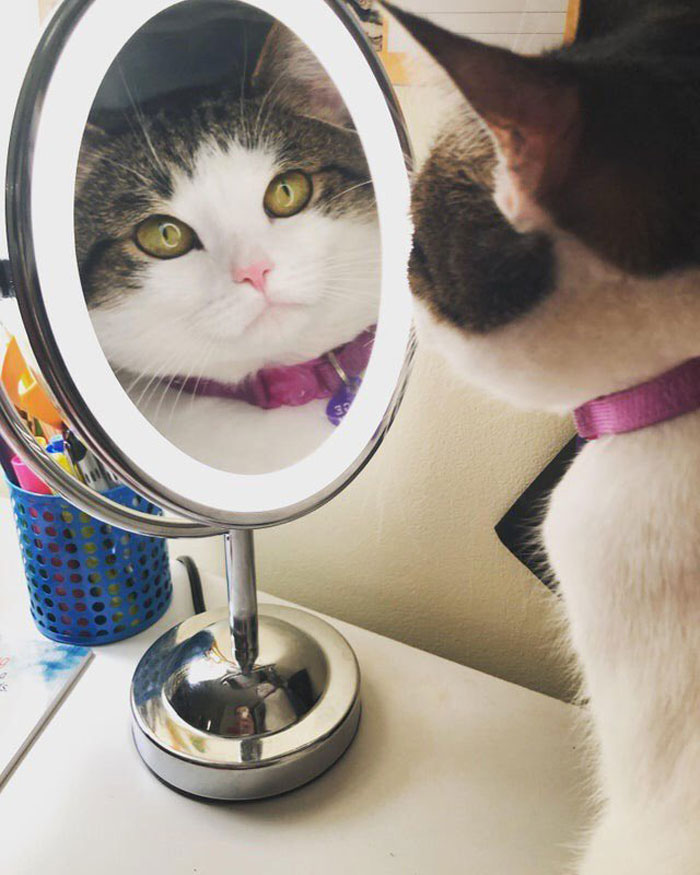
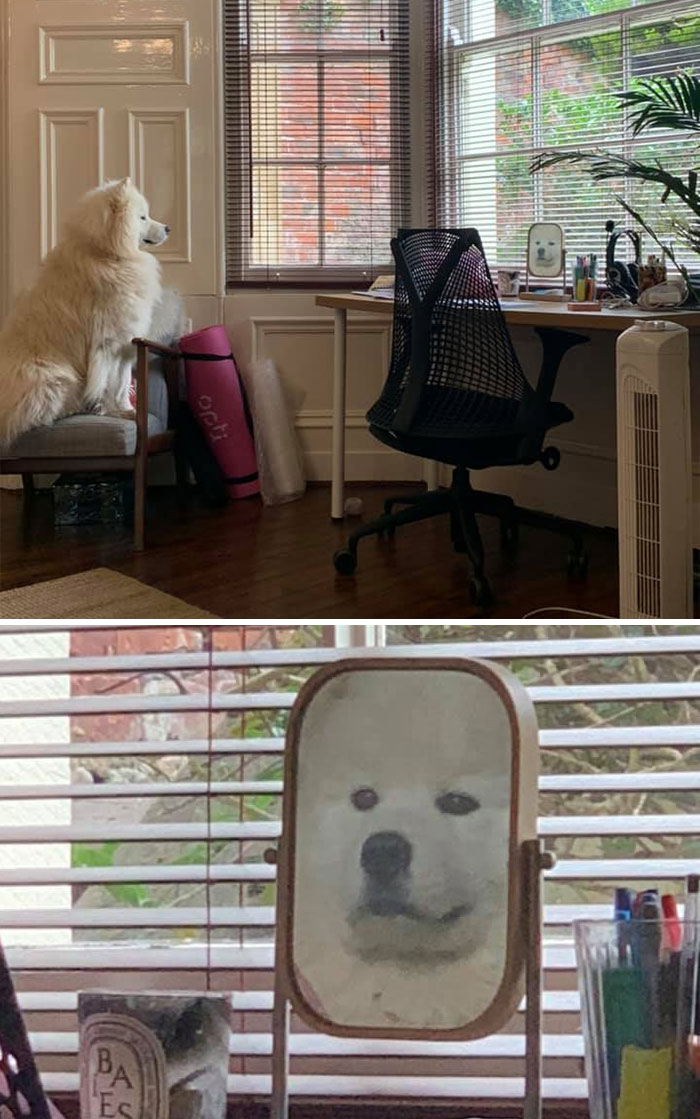
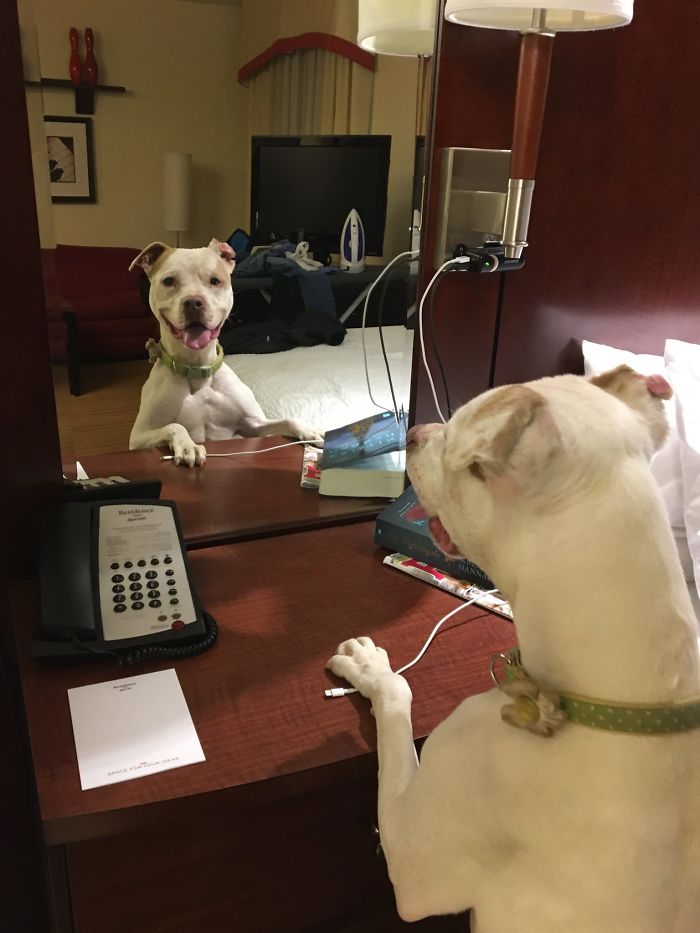
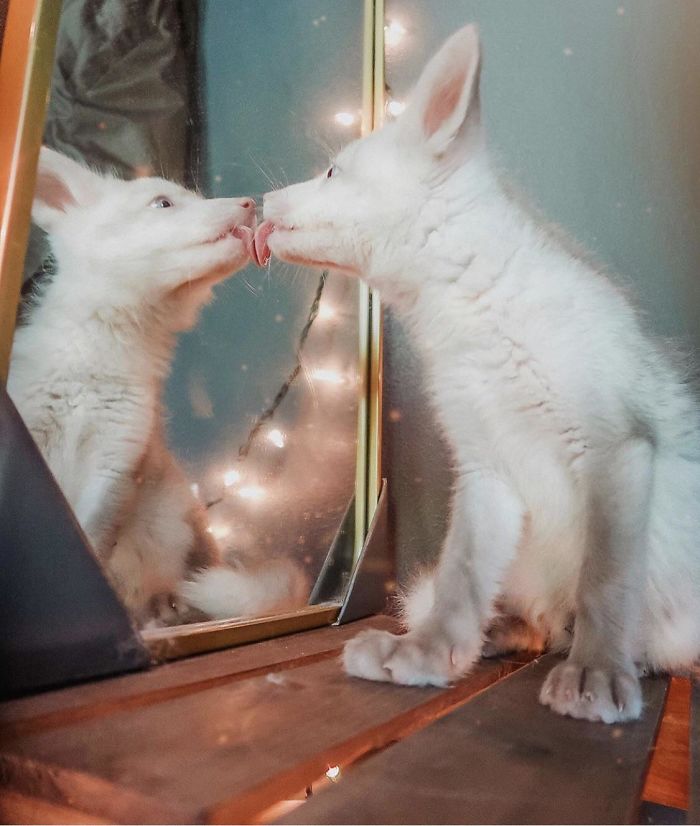
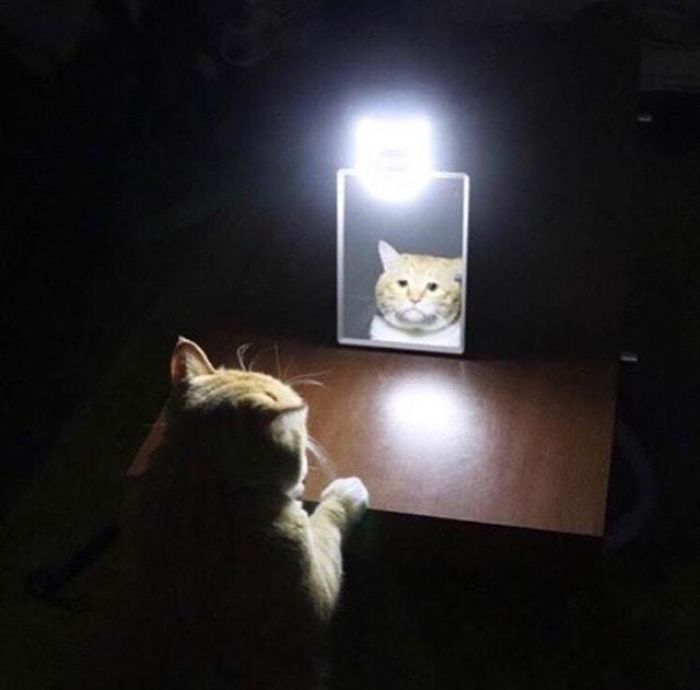
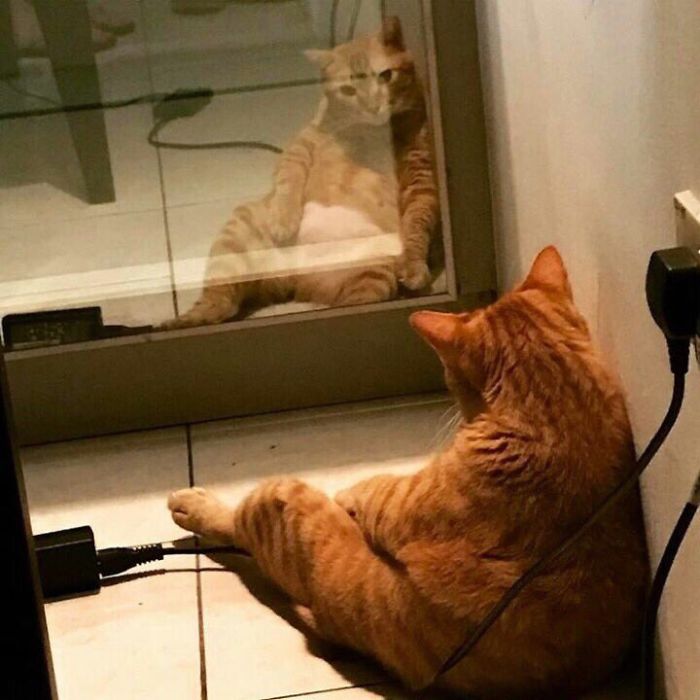
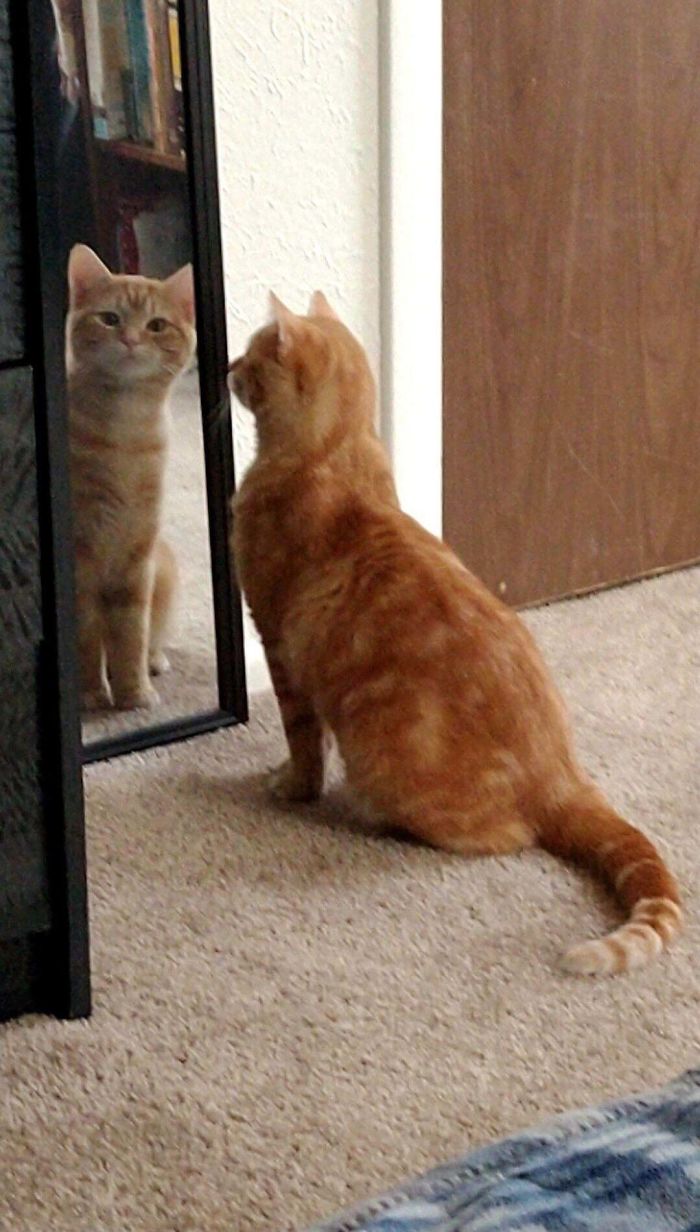
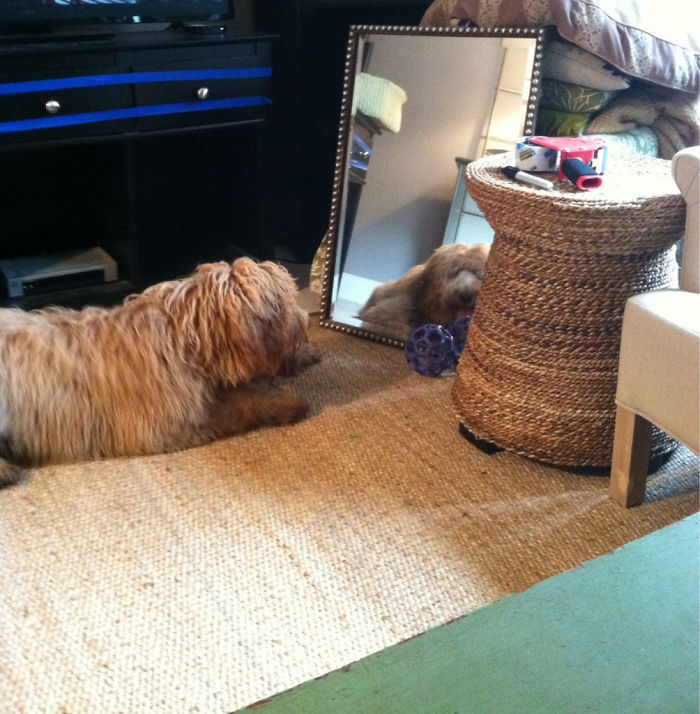
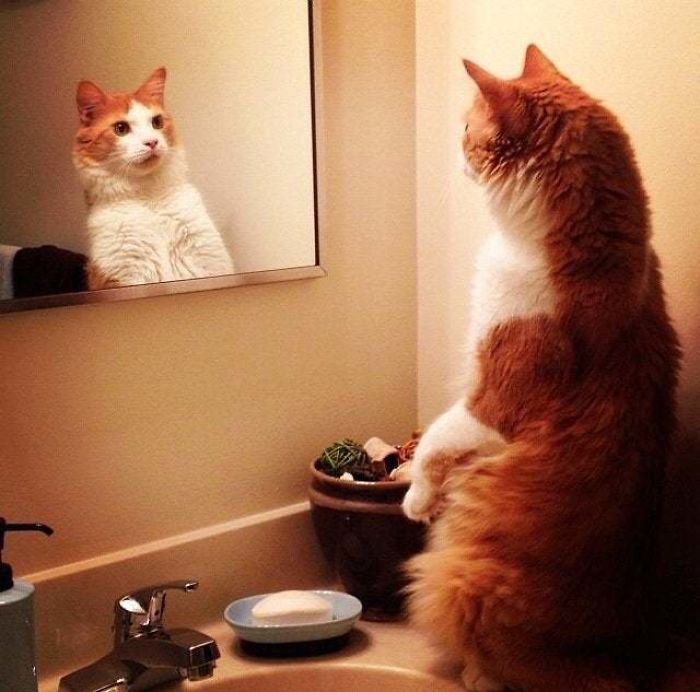
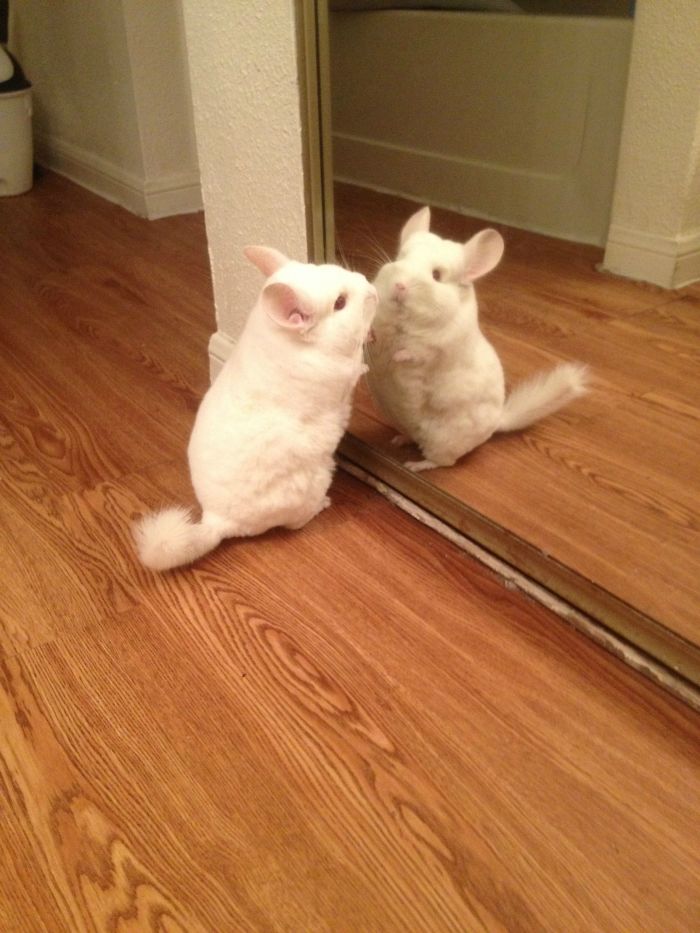
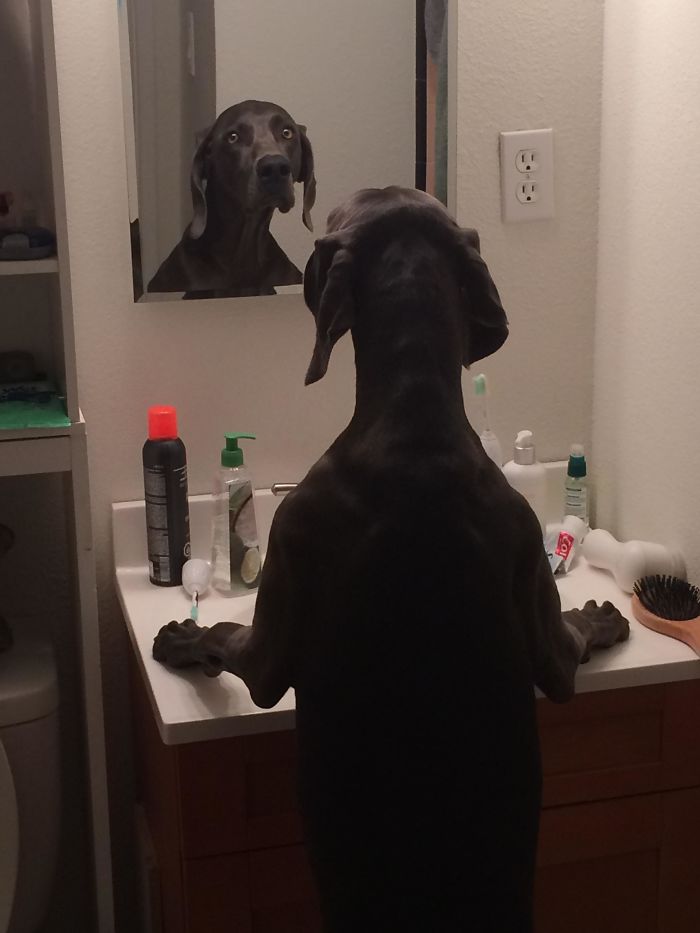
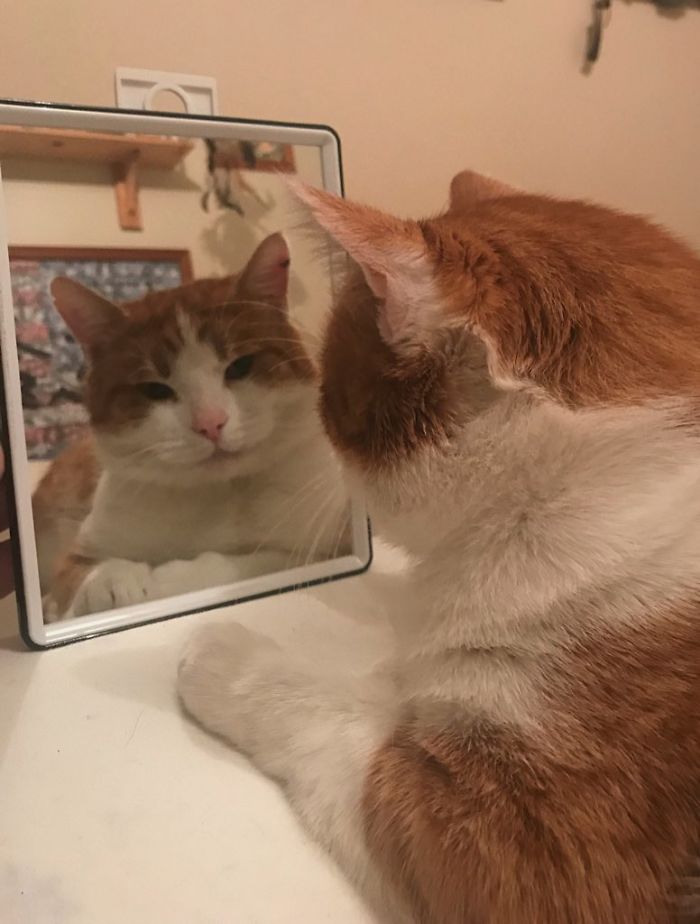
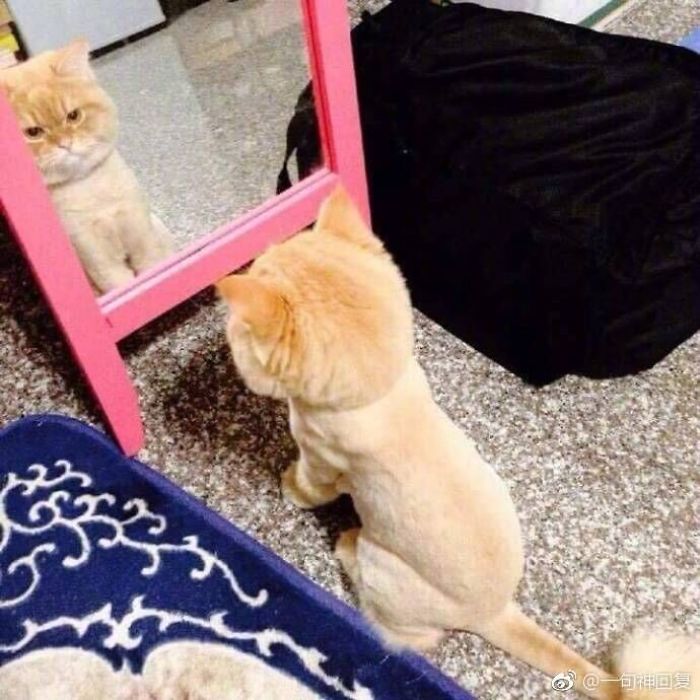
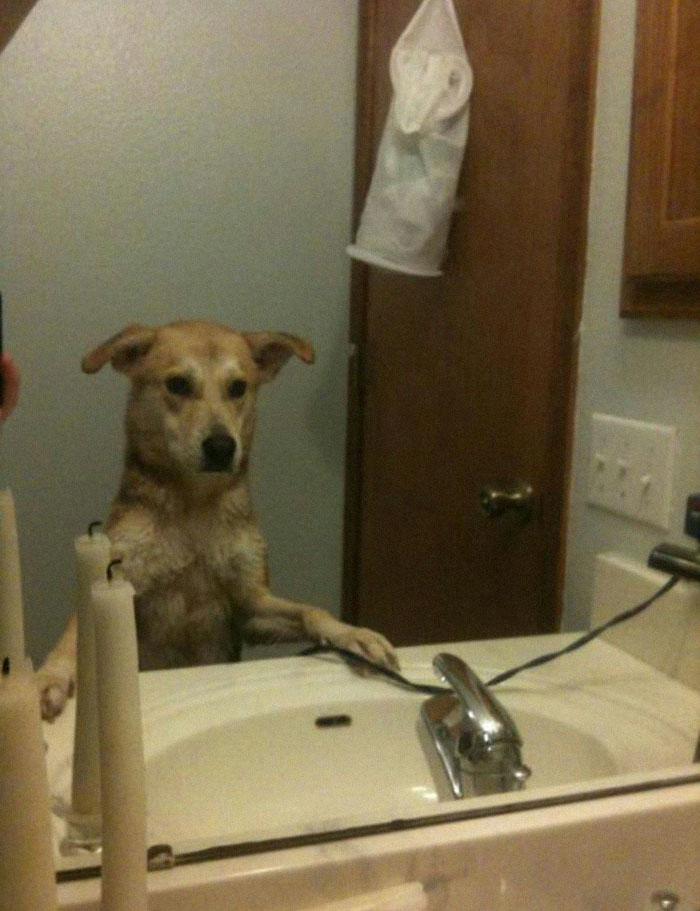
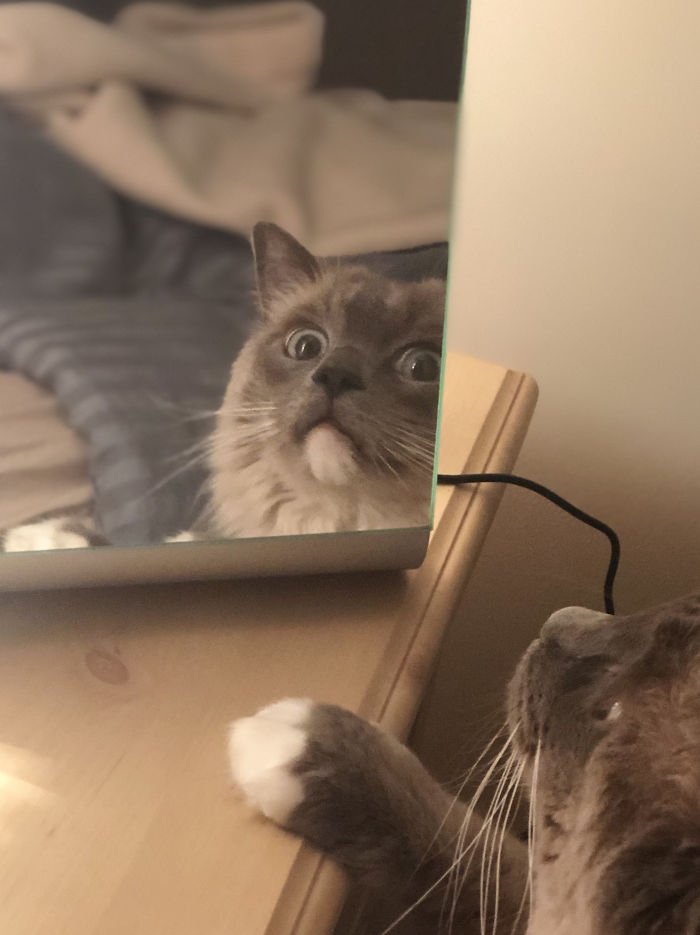
It’s still debatable whether our pets like dogs, cats, or rabbits have that same ability. But from what countless pet owners have seen, gazing at yourself is quite a trend in the house animal kingdom. Bored Panda compiled a list of the most adorable little pets looking at their reflections, as if they were telling them: “Mirror, mirror on the wall, who’s the furriest of them all?” We may not know the reason for such behavior, but at least we know the motif.
Discover more in 30 Pets That Discovered Mirrors
Click here & follow us for more lists, facts, and stories.
This post may include affiliate links.
When we look into a mirror, we recognize that the image we’re looking at is our own. Psychologists see it as a special mental act which requires sophisticated aspects of our consciousness. Interestingly, the ability to be self-aware of one's reflection is not something we’re born with. It’s only between the age of 18 and 24 months that babies begin to understand what it is that they’re seeing in the mirror.
The mirror self-recognition test has been applied to animals since its inception in the 1970s and has been considered to be the gold standard indicating whether a living being is self-aware or not. While very few animals and primates have showed signs of self-awareness and passed mirror tests, our beloved dogs have failed it.
According to The Cut, “They do not seem to know, or perhaps they don’t really care, what is going on with the mirror’s scentless, two-dimensional representation of a dog.”
However, many scientists feel skeptical about whether the mirror test is the right indication of animal consciousness. For example, the primatologist Frans de Waal argues that self-awareness should be understood as a broader concept. “I cannot imagine that a cat or a dog—even though they don’t recognize themselves in the mirror—I find it hard to imagine that they have no awareness of themselves,” he said.
And while in human developmental psychology, the mirror represents a significant threshold in our sense of self, animal minds don’t necessarily work like the human mind. Not every animal is attuned to social intelligence so deeply like us, and not every animal perceives the world in its visual dimension. Dogs, for example, could have failed the mirror test because their primary instrument of perception is smell.



































 No fees, cancel anytime