Get Premium
Dark mode theme is available exclusively for premium users. Learn more about the benefits of subscribing.
No fees, cancel anytime.

 Dark Mode Ad-Free Browsing Unlimited Content
 Ad-Free Browsing Unlimited Content Dark Mode
Join 1.2 million Panda readers who get the best art, memes, and fun stories every week!

Most folks learn at a relatively young age that it’s pretty rude to interrupt someone and that it tends to feel pretty unpleasant when it happens to you. At the same time, it takes slightly more social grace to understand that, rather similarly, no one likes being corrected either.
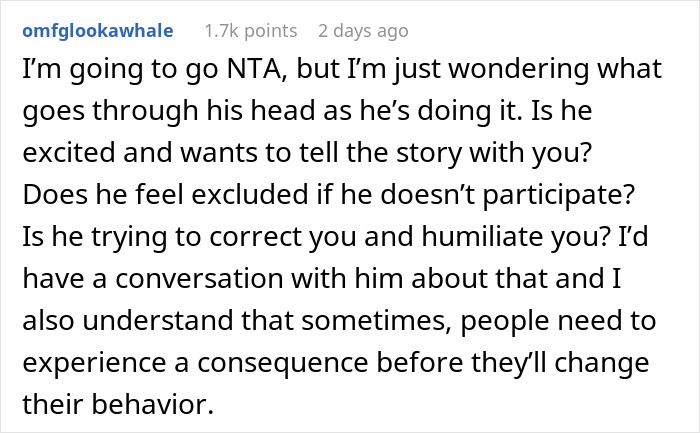
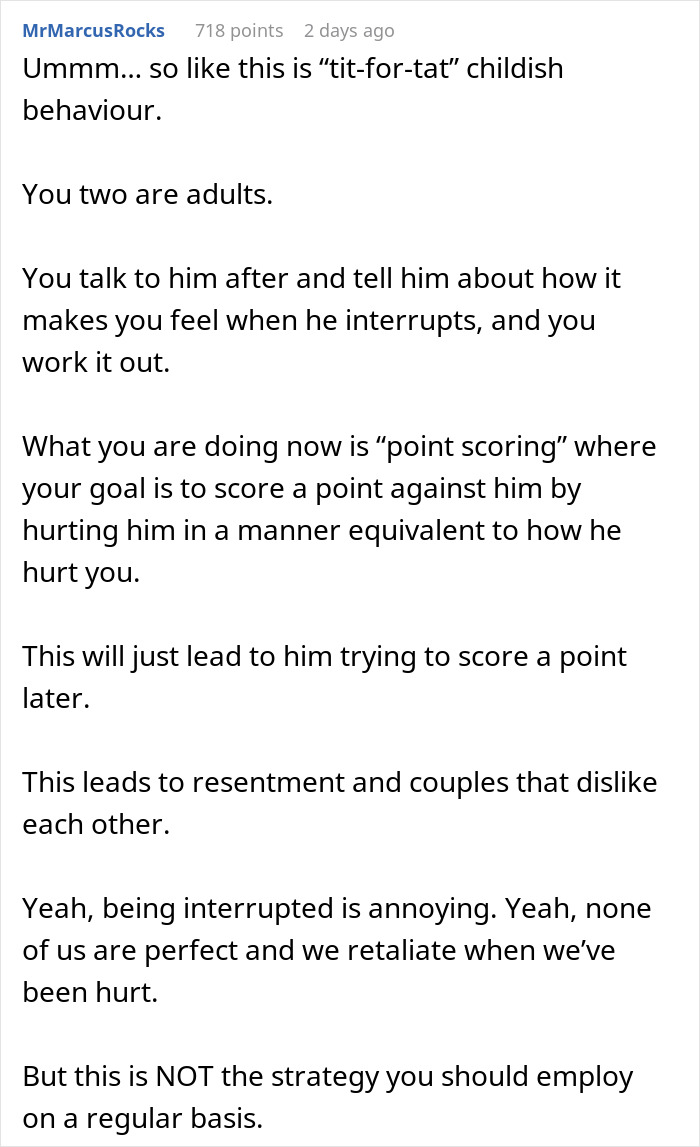
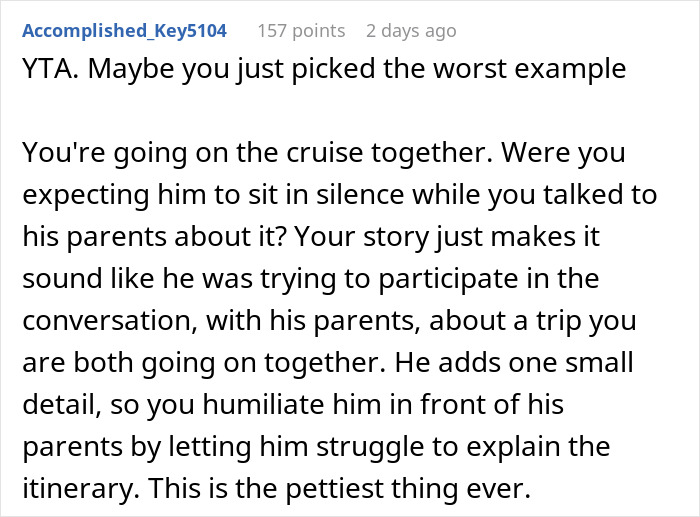
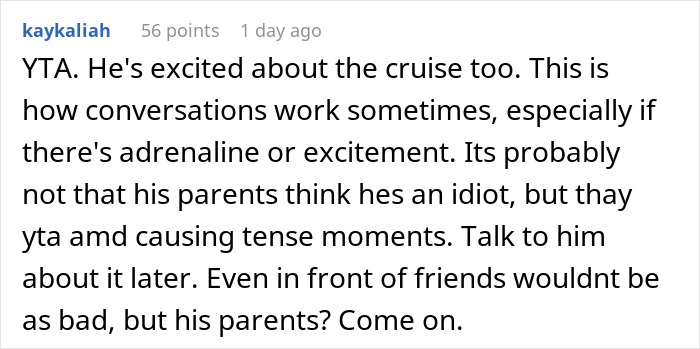
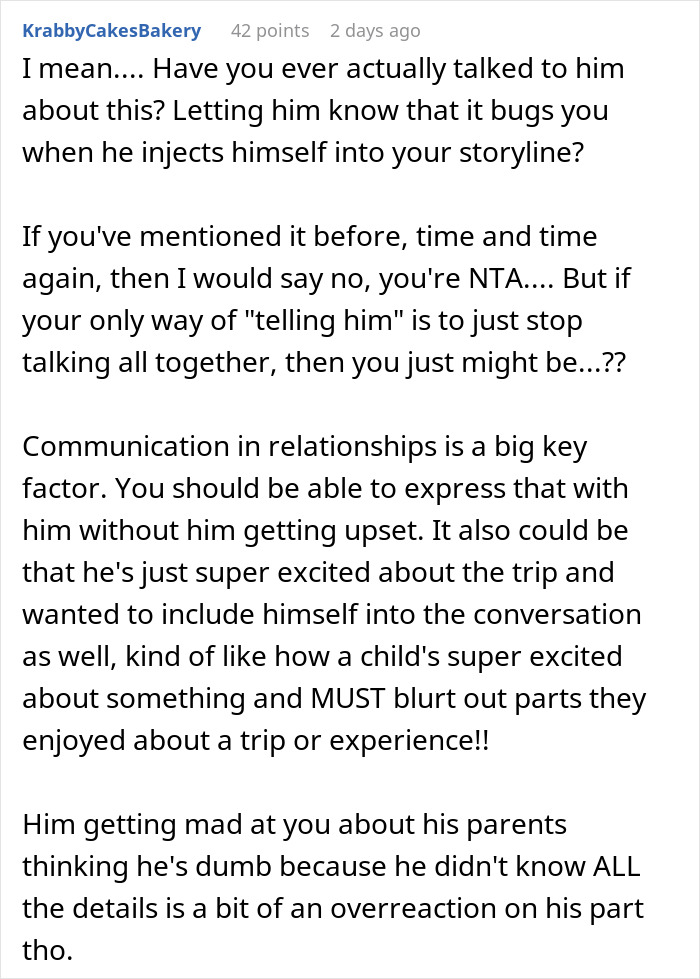
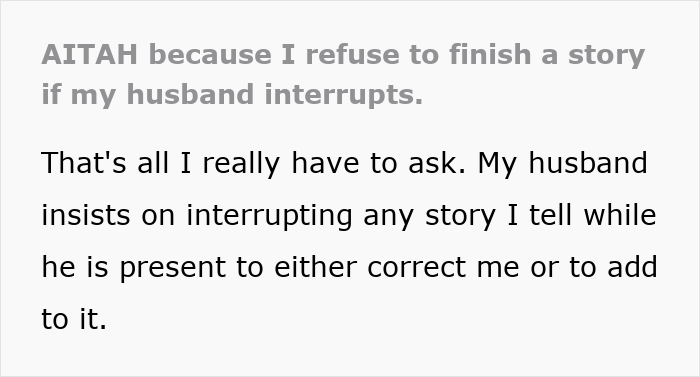
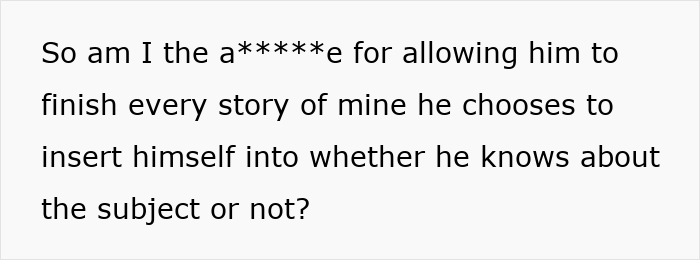
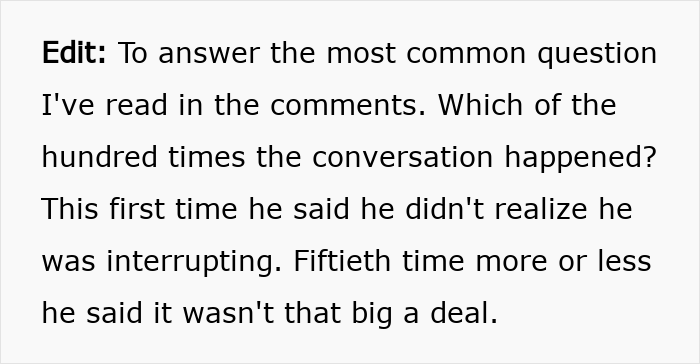
A netizen asked the internet if they were wrong for refusing to keep talking about their travel plans with their husband’s parents after the aforementioned husband would not stop interrupting them. Readers took both sides and an energetic debate ensued about who was ultimately in the wrong.
Image credits: ufabizphoto (not the actual photo)
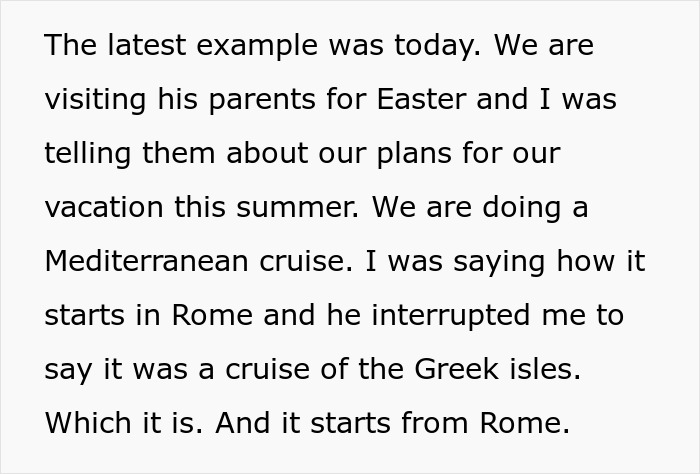
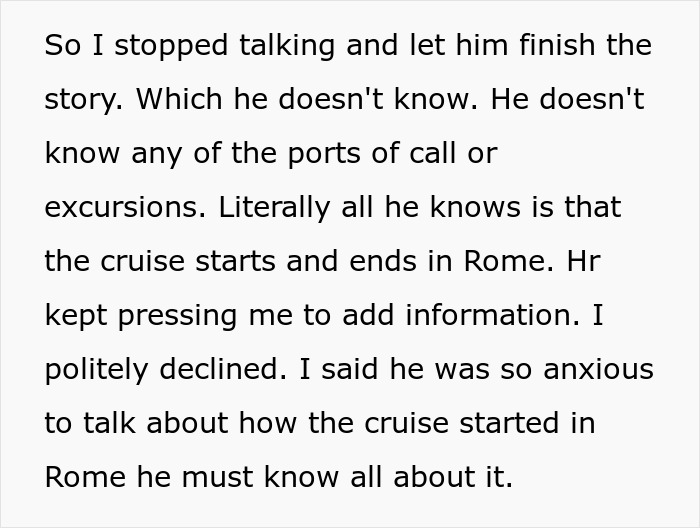
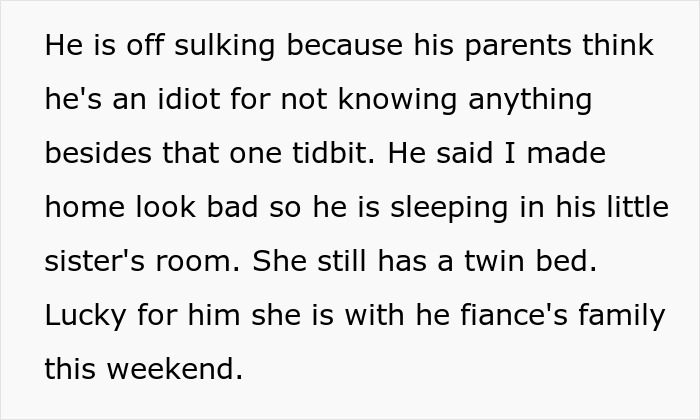
Image credits: Wavebreak Media (not the actual photo)
Image credits: Living-Estate3963
Chronic interruption in a marriage is rarely just about a lack of patience. It often signals a deeper issue with how partners value each other’s contributions and individual agency. In the scenario described, the husband’s habit of inserting himself into every narrative creates an environment where the storyteller feels like a secondary character in their own life. This behavior is a classic example of a communication breakdown where the interrupter prioritizes being right or being heard over the emotional health of the partnership.
By stopping the story entirely, the writer is employing a tactic that highlights the husband’s reliance on their labor and knowledge. It is a powerful way to show him that his interjections are not helpful additions but are actually roadblocks to the very conversation he wants to be part of. The husband’s reaction of sulking and retreating to a different room suggests that he is more concerned with his public image than with the frustration he is causing his partner.
While the frustration is completely justified, the storyteller should still prioritize learning new ways to communicate with their husband for several vital reasons. First, the current strategy of silence is a form of conflict avoidance that might feel satisfying in the short term but leaves the root cause unaddressed. To move forward, it is essential to understand the mechanisms of healthy dialogue and how to assert boundaries without resorting to passive aggressive behavior. If the goal is to sustain the marriage, then the dialogue must move past the point of proving who is right and toward a place of mutual respect.
Image credits: cookie_studio (not the actual photo)
Communication is not just about the words actually spoken, it is about the fundamental agreement that both partners deserve to be heard without being constantly corrected or overshadowed. By continuing to advocate for their voice, the storyteller protects their own sense of self within the marriage. If they stop trying to communicate altogether, they risk losing their identity to the husband’s constant noise.
The husband’s insistence that he cannot change his behavior is a significant red flag that requires a direct and clear response. Change is a cornerstone of any long term commitment, and stating that one is simply unable to stop interrupting is often a way to shift the burden of adjustment onto the other person. This is where effective communication skills become a tool for self preservation. The storyteller needs to communicate that this is not a personality quirk they are willing to accept but a boundary that must be respected for the relationship to remain healthy. Learning to handle these moments with firm and calm language can help the storyteller feel more in control even when the husband refuses to cooperate.
It is also important to recognize that patterns of disrespect can escalate if they are not addressed with clarity and consistency. By staying engaged in the process of communication, the writer ensures that they have done everything possible to set the marriage on a better path. This clarity allows them to make informed decisions about their future rather than just reacting to the latest slight. Ultimately, communication serves as the diagnostic tool for the health of the union. It helps determine if the husband is truly unable to change or if he is simply unwilling to put in the effort required to value his partner’s voice as much as his own.
Image credits: The Yuri Arcurs Collection (not the actual photo)
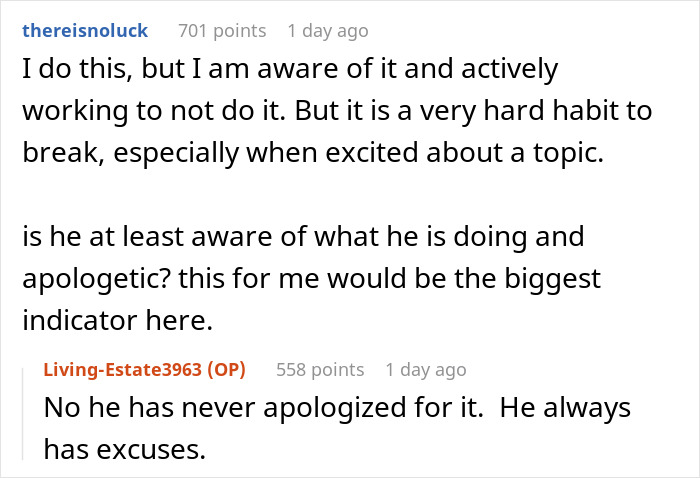







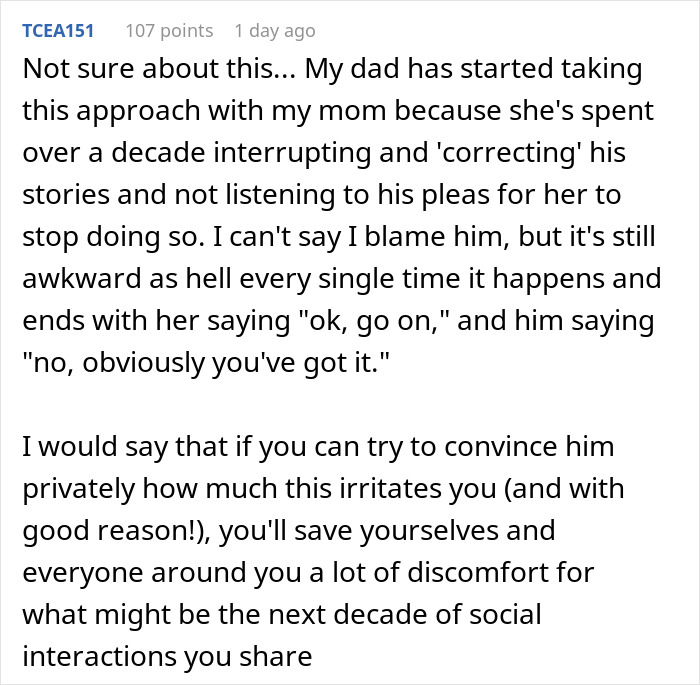

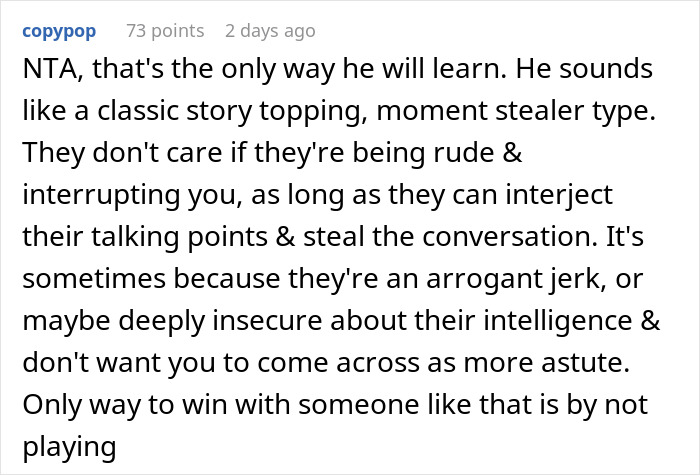
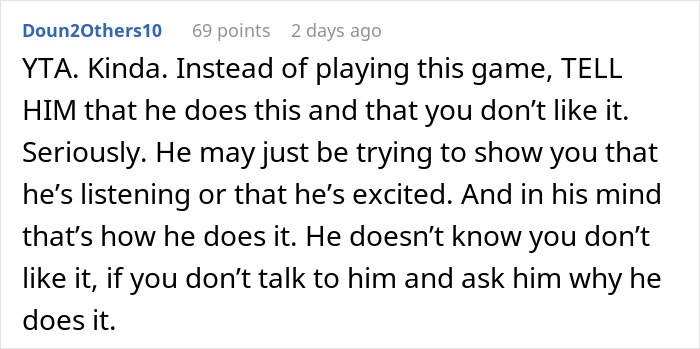

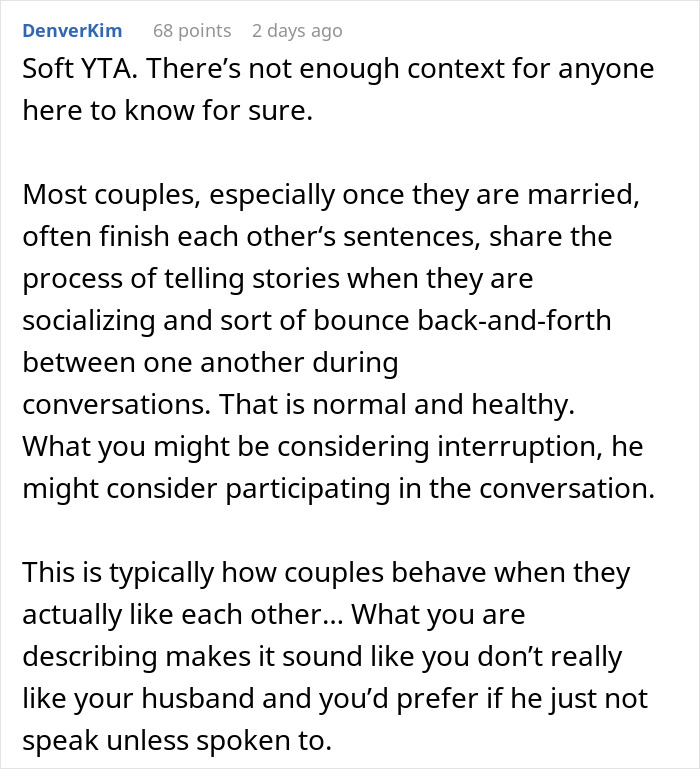





I was raised by an interrupter, although she never allowed me to interrupt her or other adults, as it is disrespectful. With this bias, I'm very much on OP's side. But only because I'm a revengeful, bitter old h*g.

When my partner and I are telling a story, we both chip in with little bits as we go. Isn't that how this sort of thing works? I let her say a bit, she lets me say a bit, etc.

Boy oh boy, you can sure tell which comments are made by chronic interrupters.

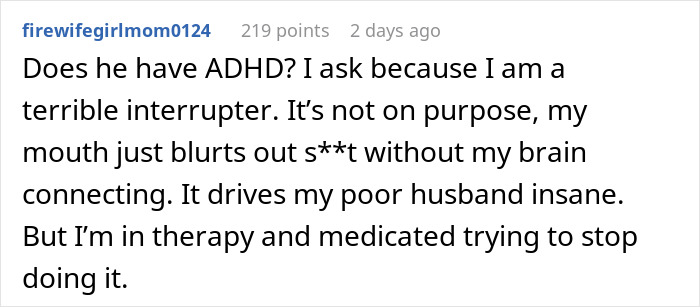
A lot of interrupters have ADHD and they can’t help it, it is a way they connect and relate to the conversation, and shows they are actually listening and taking in a conversation.
Load More Replies... I was raised by an interrupter, although she never allowed me to interrupt her or other adults, as it is disrespectful. With this bias, I'm very much on OP's side. But only because I'm a revengeful, bitter old h*g.
When my partner and I are telling a story, we both chip in with little bits as we go. Isn't that how this sort of thing works? I let her say a bit, she lets me say a bit, etc.
Boy oh boy, you can sure tell which comments are made by chronic interrupters.
A lot of interrupters have ADHD and they can’t help it, it is a way they connect and relate to the conversation, and shows they are actually listening and taking in a conversation.
Load More Replies...




























 No fees, cancel anytime










31
4