Get Premium
Dark mode theme is available exclusively for premium users. Learn more about the benefits of subscribing.
No fees, cancel anytime.

 Dark Mode Ad-Free Browsing Unlimited Content
 Ad-Free Browsing Unlimited Content Dark Mode
Join 1.2 million Panda readers who get the best art, memes, and fun stories every week!
My twin daughters are now eight years old, and they seem to seriously suspect that Santa Claus does not exist. Perhaps it all started on Christmas three years ago when they happened to see me outside the window dressing as Santa to bring them gifts. I had to urgently explain that Santa is incredibly busy right now, so he just asked me to help him, and that this would be our shared little secret.
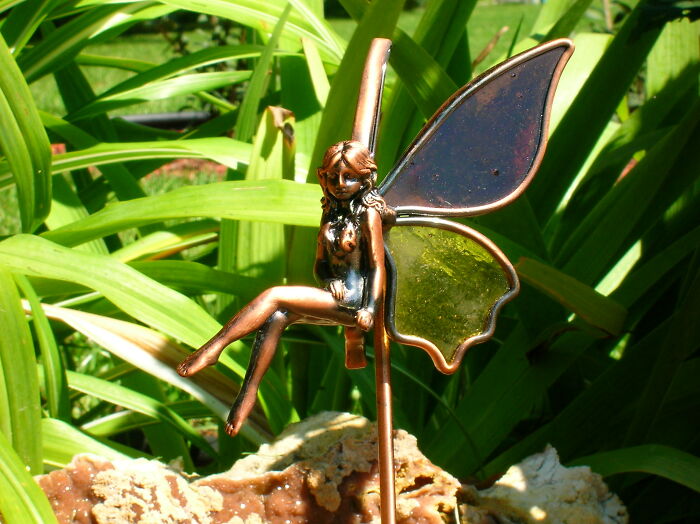
As I said, they are eight, so now the Tooth Fairy is much more relevant. One day, my wife and I forgot to put money under the pillow of one of our daughters, so we said that the Tooth Fairy simply transferred money to dad’s bank card. Well, now we are paying much closer attention to when the girls lose their milk teeth…
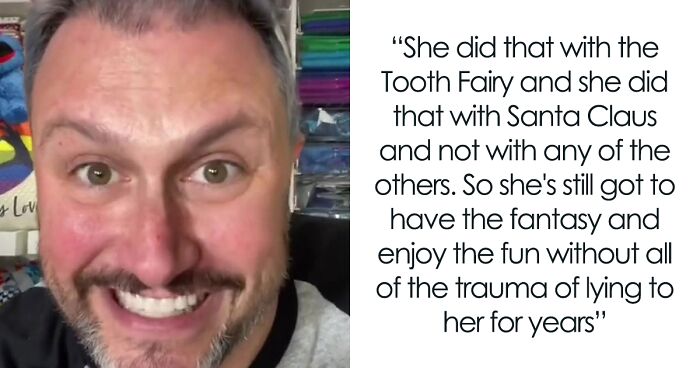
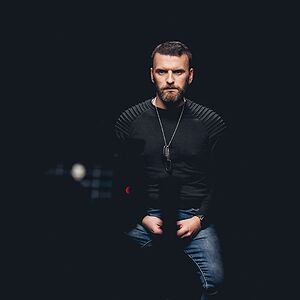
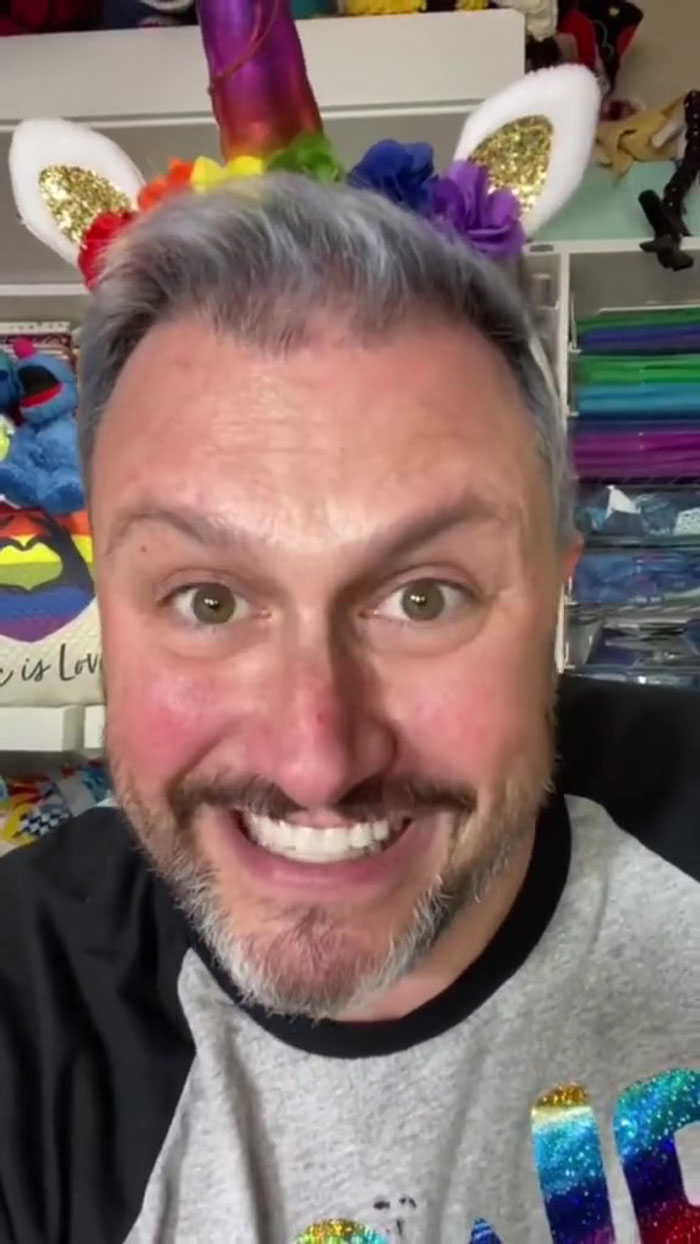
But maybe it’s easier just not to tell these stories to children? To explain that Santa, the Tooth Fairy, the Easter Bunny and others are just fictional characters? Yes, it will be disappointing for the kids, but at least it will be fair. That’s exactly what Matthew Boudreaux and his spouse Aurelian of Camas, Washington believe, and their video has racked up nearly 1.3M views and over 175.5K reactions on TikTok.
More info: TikTok
Image credits: WxMom
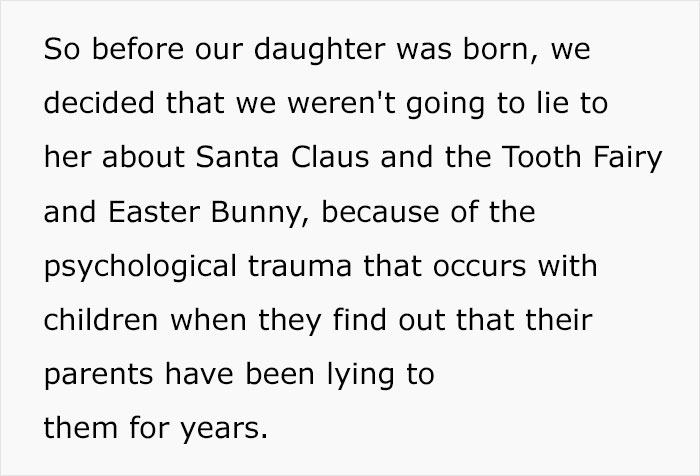
According to Matthew, even before their daughter was born, they decided not to lie to her that Santa Claus, the Tooth Fairy and the Easter Bunny supposedly exist – after all, when a child eventually finds out that her parents have been deceiving her for many years, even for such a completely harmless question, it can cause psychological trauma and a subconscious loss of confidence in them.
Image credits: @mxdomestic
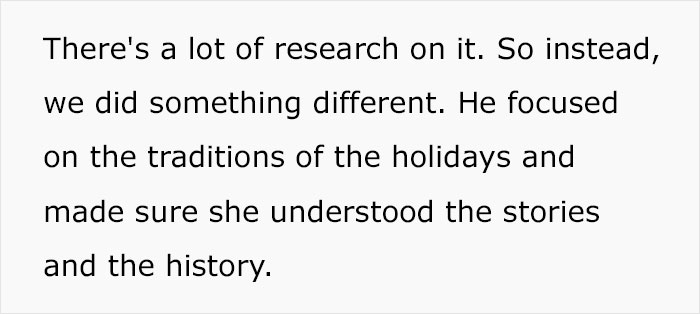
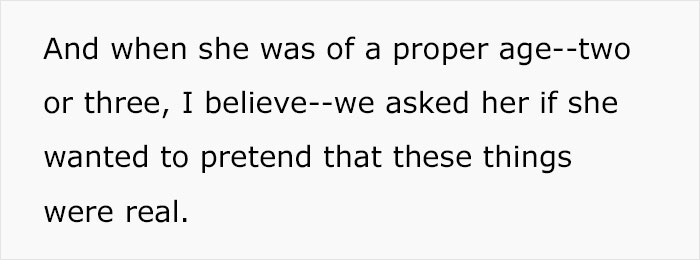
Instead, the parents decided to simply tell the girl about what traditions different nations have, and how people generally came up with Santa and other characters. As a result, when she was two or three years old, the girl was asked if she considered all of them to be real. Yes, she liked to pretend that about Santa and the Tooth Fairy, but now it was her decision and at least she understood that her parents were as honest with her as possible.
Image credits: @mxdomestic
Thus, the child herself may imagine that Santa and other characters exist, but then, probably, the disappointment that this is not so will be way less. At least there is a lot of scientific research on this, says Matthew.
Image credits: @mxdomestic
Now Helena is nine, and her parents are sure that they did absolutely the right thing, but did not “take away the magic” from her childhood world. The parents did not take part in the “global gaslighting of children”, but when the girl grows up, she’ll realize that her elders never deceived her. And this, you see, is worth a lot.
@mxdomestic#stitch with @zariaadabarb2.0 unpopular opinion about parents: the lie of Santa Claus #tistheseasontobejolly#holidaysarecoming♬ Not lying about Santa – Mathew Boudreaux
My daughters are eight and still believe in Santa and the Tooth Fairy. My youngest son recently turned one and a half years old, and for the first time in my life, I seriously thought about whether I should tell him that all these characters really exist.
Image credits: Bart Fields
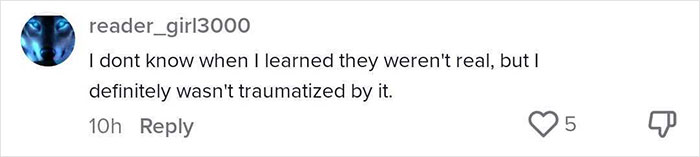
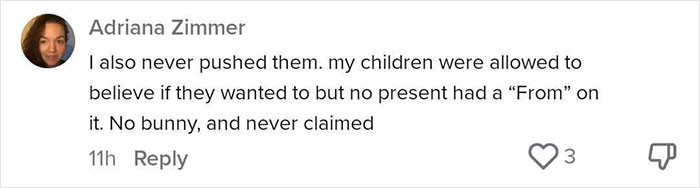
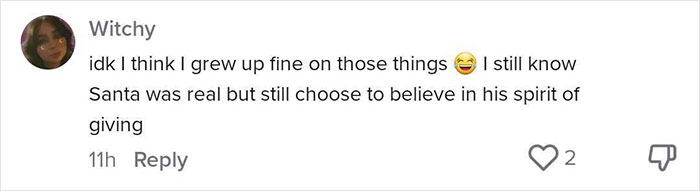
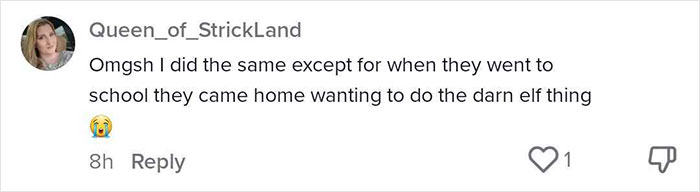
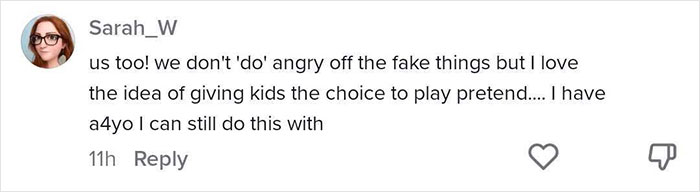
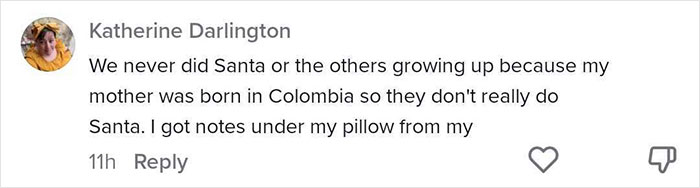
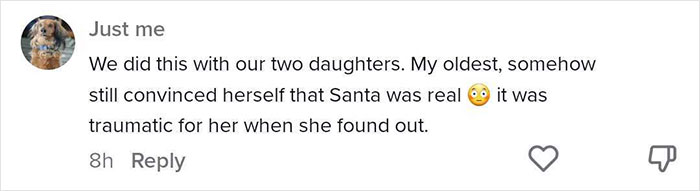
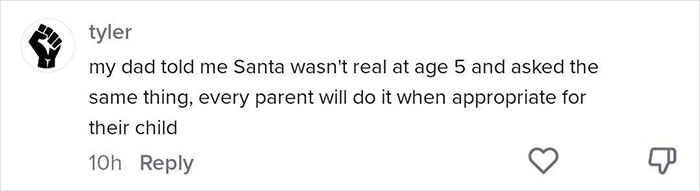
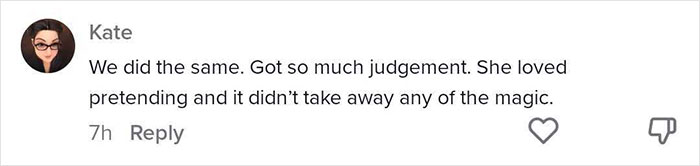
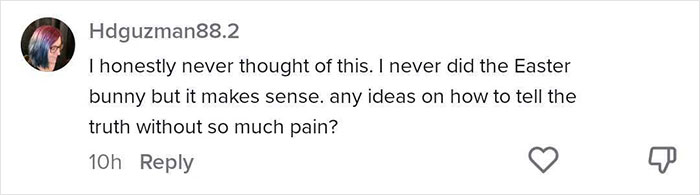
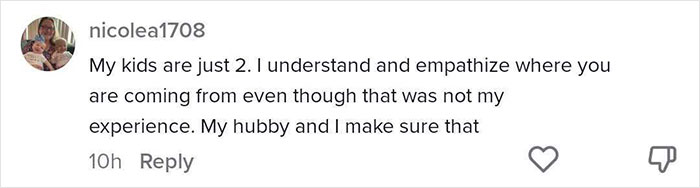
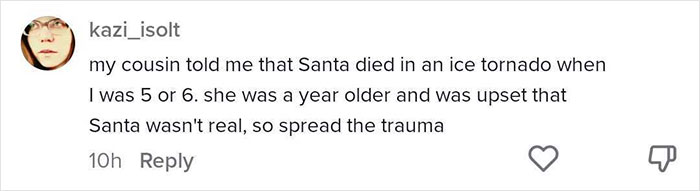
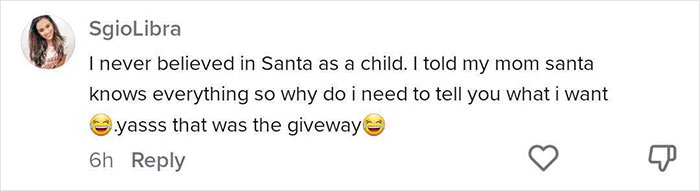
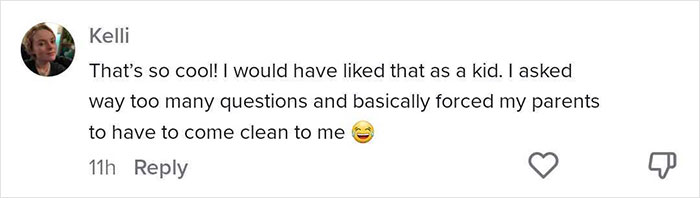
By the way, in the comments to the video, a serious discussion about this has ensued. Some of the commenters recall that they received absolutely no psychological trauma when they learned that Santa did not exist. Someone remembers crying all day after finding out this really shocking fact.
Image credits: @mxdomestic
Image credits: @mxdomestic
In any case, according to people in the comments, it all depends on the parents. Each of them will do what is appropriate for their child, and will try to ensure that magic and fantasy leave the world surrounding the child as late as possible – because this is so important for both kids and parents.
We believe you too have your own story about how you or your children found out that Santa was actually a fictional character, so we look forward to you sharing it in the comments. Or just tell us what you think about Matthew and his spouse’s idea.

I have to disagree. I never thought my parents lied to me when I learned Santa wasn't real. In retrospect, it was pretty awesome of them to support my childlike wonder and joy with "evidence." Life sucks; let your children be imaginative about the world they live in.

I was never traumatised when I found out. Quite amazed that I'd slept through my parents doing all that. Also very touched when I realised that they'd stay up late to make sure I was definitely asleep, then get all of my presents
I have to disagree. I never thought my parents lied to me when I learned Santa wasn't real. In retrospect, it was pretty awesome of them to support my childlike wonder and joy with "evidence." Life sucks; let your children be imaginative about the world they live in.
I was never traumatised when I found out. Quite amazed that I'd slept through my parents doing all that. Also very touched when I realised that they'd stay up late to make sure I was definitely asleep, then get all of my presents




 No fees, cancel anytime






24
34