Get Premium
Dark mode theme is available exclusively for premium users. Learn more about the benefits of subscribing.
No fees, cancel anytime.

 Dark Mode Ad-Free Browsing Unlimited Content
 Ad-Free Browsing Unlimited Content Dark Mode
Join 1.2 million Panda readers who get the best art, memes, and fun stories every week!

“Work smarter, not harder” is an old slogan, but today’s workforce has upgraded it to something even better: work smarter, not longer.
Most people are still trying to figure out how to do either. So when someone actually pulls off the ultimate workplace hack, it’s hard not to feel a tiny bit jealous.
Case in point: one marketing professional recently revealed online that despite making a comfy $75,000 a year, their actual workload is barely three hours a week.
They’re not the CEO’s kid, and they’re not breaking any laws. They just figured out how to get their work done in a fraction of the time.
Read their story to find out exactly how they pulled it off.
Image credits: Mizuno K/Pexels (not the actual photo)
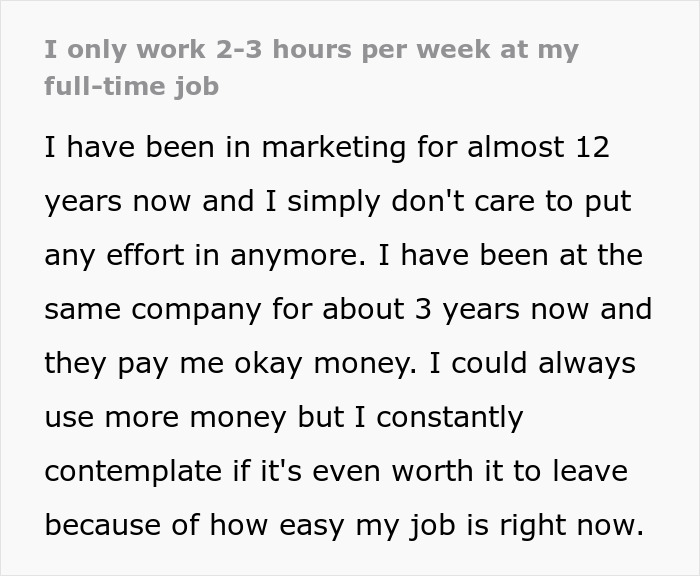
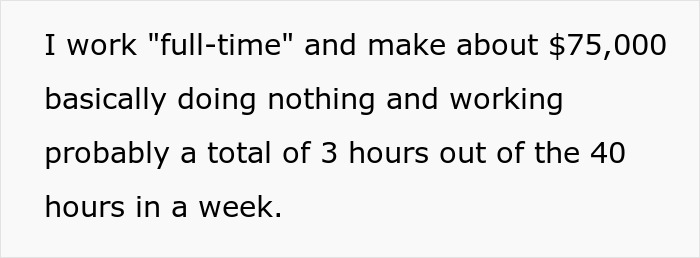
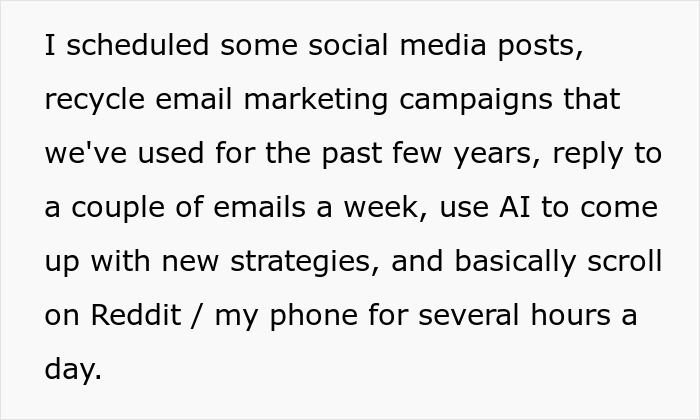
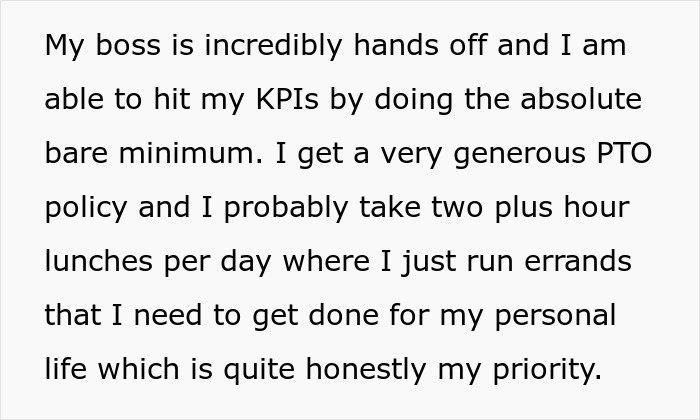
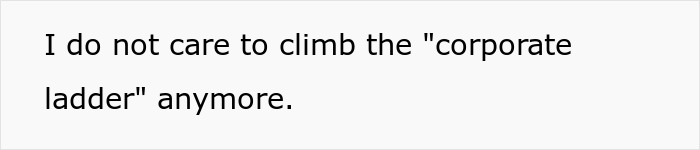
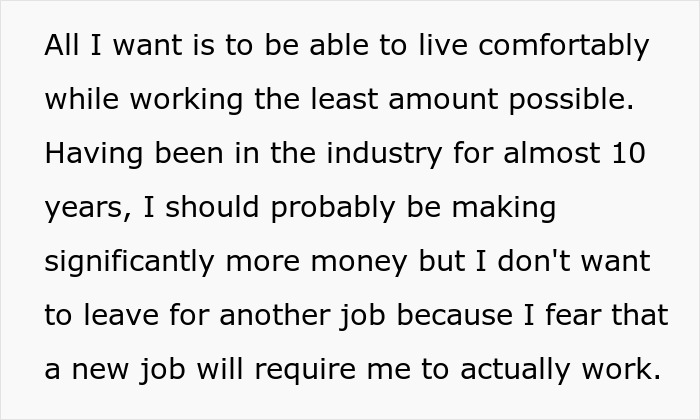
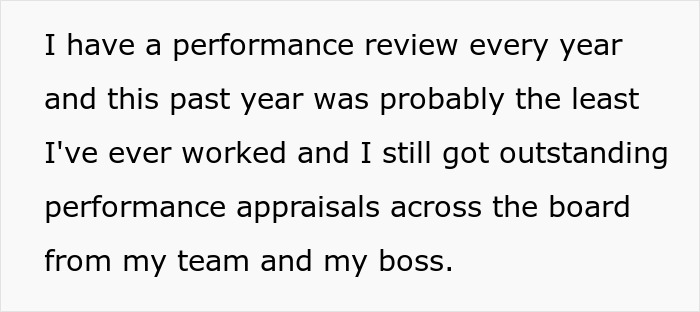
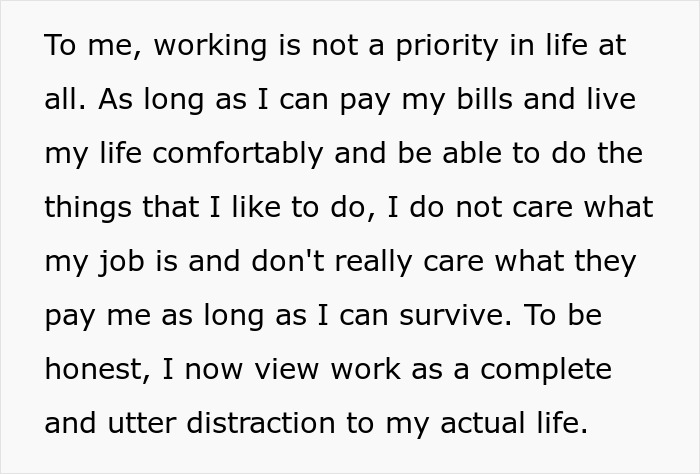
Image credits: Ivan S/Pexels (not the actual photo)
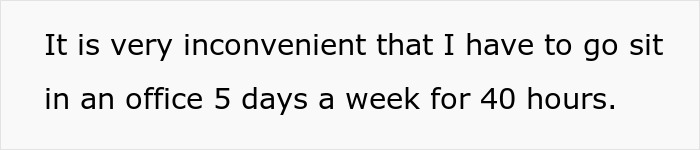
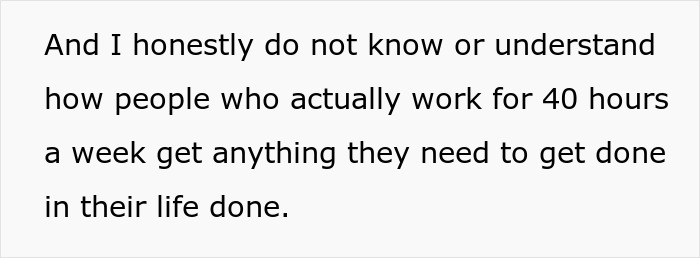
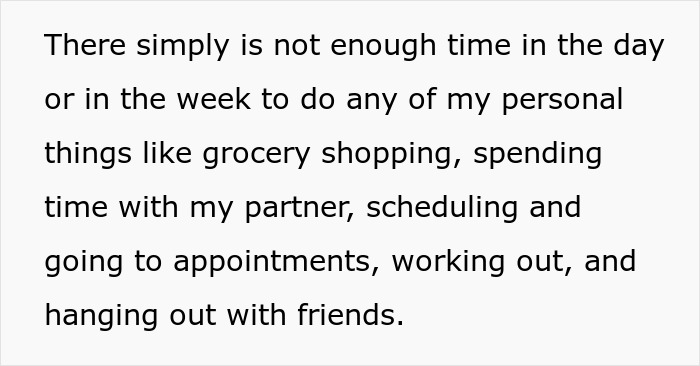
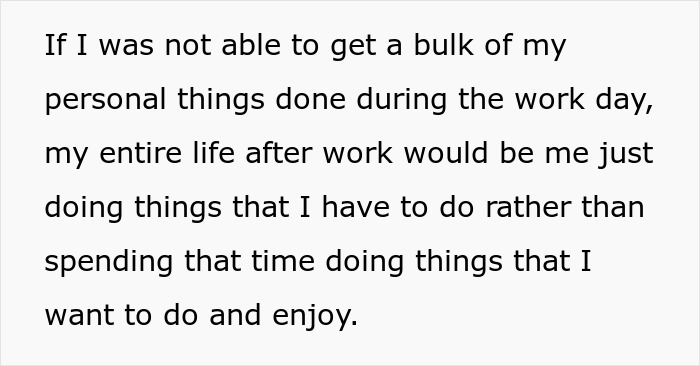
Image credits: Salt-Caterpillar-712
Across corporate offices, millions of employees sit at their desks from 9 to 5, but few are actually putting in eight solid hours of labor.
The standard workday is almost always padded with fillers.
A recent UK survey of nearly 2,000 office workers found that the average employee is genuinely productive for only 2 hours and 53 minutes a day — no matter how long they sit at their desk.
Scrolling social media, reading the news, casual conversations, and procrastination consume the remaining five-plus hours.
It might sound like the fix is simply forcing people to work harder and stop slacking off. But that completely misses the mark. Our brains just aren’t built to focus for such long hours on end.
Research cited by Business Insider shows that most people can only stay locked in on a task for about 20 minutes before their minds drift. In open-office setups, it’s even worse, with many workers losing focus after just 10 seconds.
“A car doesn’t perform optimally when its gas tank is on empty. In the same way, our health becomes compromised when our physical and emotional reserves are tapped out,” says psychologist Adam Borland, PsyD.
Long hours also wear people down. Constant stress weakens the body, making workers get sick more often and drop the ball on important tasks. As frustration builds, morale tanks, and eventually, exhausted employees just walk out the door.
A study by the World Health Organization and the International Labor Organization found that long work hours are the single biggest occupational health risk, significantly increasing the odds of heart disease and stroke.
For decades, the career script was simple: get a degree, land an entry-level job, and climb the corporate ladder toward a big title and a corner office. Success meant moving steadily upward.
Today, this traditional path is gradually fading. A volatile market has made linear promotions obsolete. At the same time, more workers are actively turning down management roles.
Many of them are choosing work-life balance, mental health, and personal freedom over stress and burnout.
“Everybody wants to be the VP or the partner with the corner office. The imaginary is that life will be much better then. But in fact you might be losing out on something that’s very meaningful to you,” says Michel Anteby, a professor of management and organizations at Boston University.
According to talent group Randstad, 72% of workers now view climbing the corporate ladder as outdated. Just 41% plan to follow the traditional career path.
Another survey found that only 38% of employees aspire to become people managers. Many cited increased stress, longer hours, and conflicts with their personal lives as major deterrents.
Following the pandemic, more people are also prioritizing flexibility and autonomy over a fancy job title and higher pay.
That doesn’t mean people have lost their drive. Their definition of ambition has simply changed as the workplace has evolved.
While coasting through the workday and doing the bare minimum isn’t new, the concept has struck a massive chord recently. It even has a catchy name: quiet quitting.
Despite the name, quiet quitting isn’t about actually resigning. It simply means sticking strictly to your job description during official hours — no staying late, taking on extra work, or unpaid hustle.
This trend is not always the result of lazy employees or poor work ethic. It’s a signal that some employees may be feeling stretched too thin or lacking proper recognition.
According to a 2022 Gallup study, “quiet quitters” comprise at least 50% of the workforce, while the proportion of engaged employees remains at 32%. Another 15% to 18% are actively disengaged.
This burnout has only grown as remote and hybrid work blur the lines between personal life and office hours.
“Quiet quitting is effectively redrawing boundaries back to the job description so that people aren’t thinking about work 24/7. Instead, they’re dedicating time and energy to other elements of their lives that are more meaningful, leading to improved wellbeing,” says Anthony Klotz, associate professor at University of College London’s School of Management.
Recognizing that endless office hours don’t equal better output, some companies are rethinking the standard schedule altogether.
Global trials of the 32-hour, four-day workweek have yielded eye-opening results. A global study of 141 companies found that 90% kept the four-day model permanently after their trial ended, citing a 67% drop in employee burnout alongside steady or growing revenue.
A 2025 study published in Nature Human Behavior confirmed significant improvements in mental and physical health, as well as job satisfaction, among employees working four days a week.
Rather than forcing people to fake productivity for 40 hours, these employers are proving that working less often delivers far better results.
Quiet quitting isn’t just a passing trend. It’s a loud, silent call for better work-life balance, real recognition, and meaningful work.






By entering your email and clicking Subscribe, you're agreeing to let us send you customized marketing messages about us and our advertising partners. You are also agreeing to our Privacy Policy.
Thank you! You've successfully subscribed to newsletters!

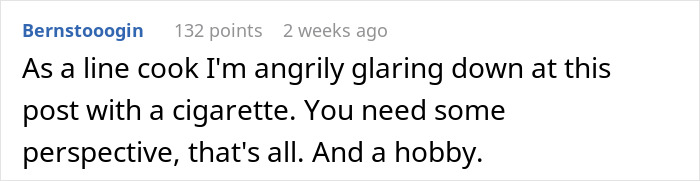
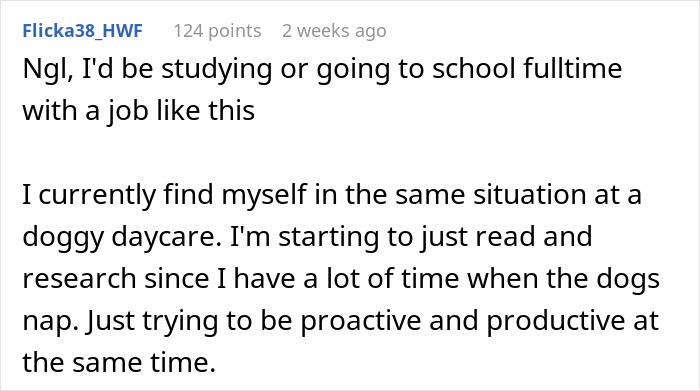
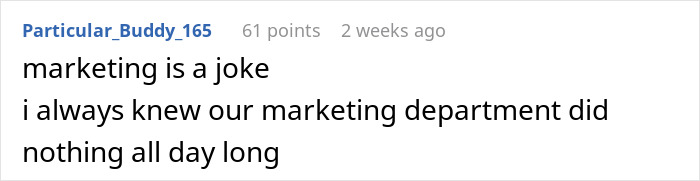
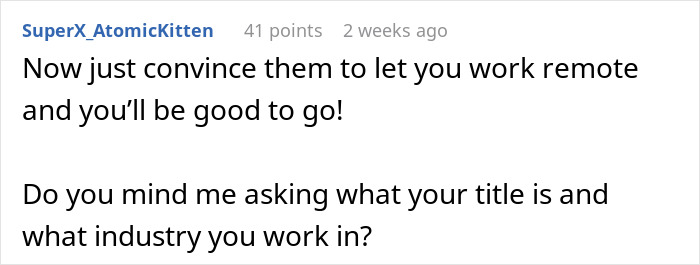
What would concern me if I found myself in this position is long-term security - that comfortable rung will likely not be there forever, and if/when it does disappear for whatever reason, having some alternative (beyond relying on finding a similarly comfortable job) would be useful to have. At least IMO. Personally I'd be using the time to work on some sort of skills, if only for my own sake.

For us older workers, this simply isn't part of our mentality. I work for my birth country abroad and there is no way I could get away with this. I have to produce a certain amount of ******* per day and it is noted. On the other hand, I would go crazy if I had nothing to do all day.
This chick is lazy and delusional. I wish I could be that lazy and make that much a year
What would concern me if I found myself in this position is long-term security - that comfortable rung will likely not be there forever, and if/when it does disappear for whatever reason, having some alternative (beyond relying on finding a similarly comfortable job) would be useful to have. At least IMO. Personally I'd be using the time to work on some sort of skills, if only for my own sake.
For us older workers, this simply isn't part of our mentality. I work for my birth country abroad and there is no way I could get away with this. I have to produce a certain amount of ******* per day and it is noted. On the other hand, I would go crazy if I had nothing to do all day.
This chick is lazy and delusional. I wish I could be that lazy and make that much a year

































 No fees, cancel anytime








28
3