Get Premium
Dark mode theme is available exclusively for premium users. Learn more about the benefits of subscribing.
No fees, cancel anytime.

 Dark Mode Ad-Free Browsing Unlimited Content
 Ad-Free Browsing Unlimited Content Dark Mode
Join 1.2 million Panda readers who get the best art, memes, and fun stories every week!

Obsessive-compulsive disorder (OCD) can make people have intense fears or thoughts that don’t always seem rational to others. It’s tough on the person going through it, but it can also make things difficult for those close to them.
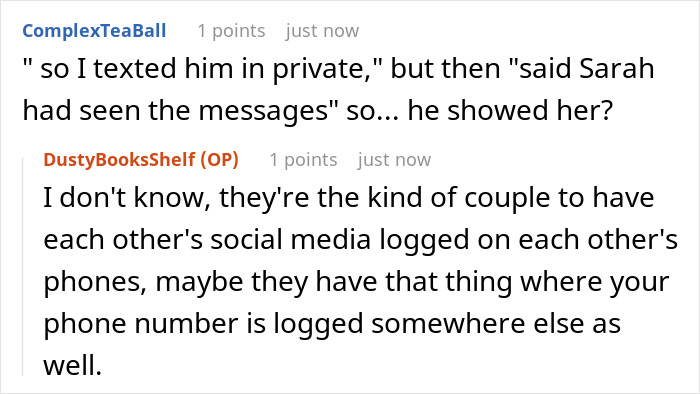
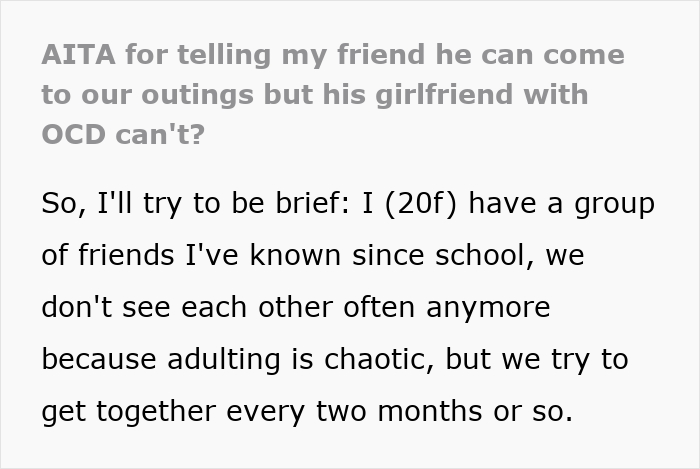
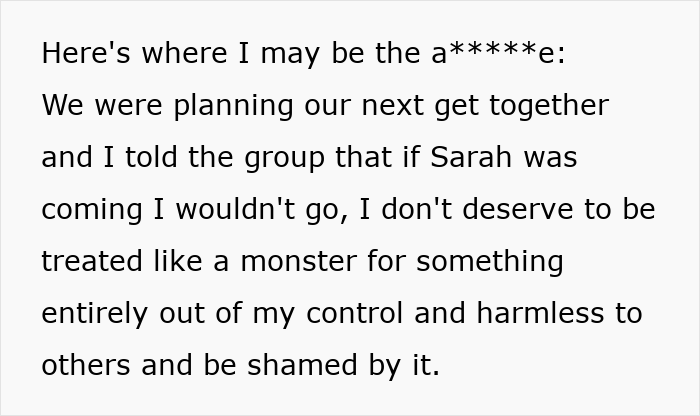
One woman learned that the hard way when a friend with OCD suddenly decided she was “contaminated” and started treating her like a genuine health risk in front of everyone. After a while, the whole friend group reached their limit and told her she was no longer welcome at their hangouts.
Needless to say, it didn’t go over well. Read the full story below.
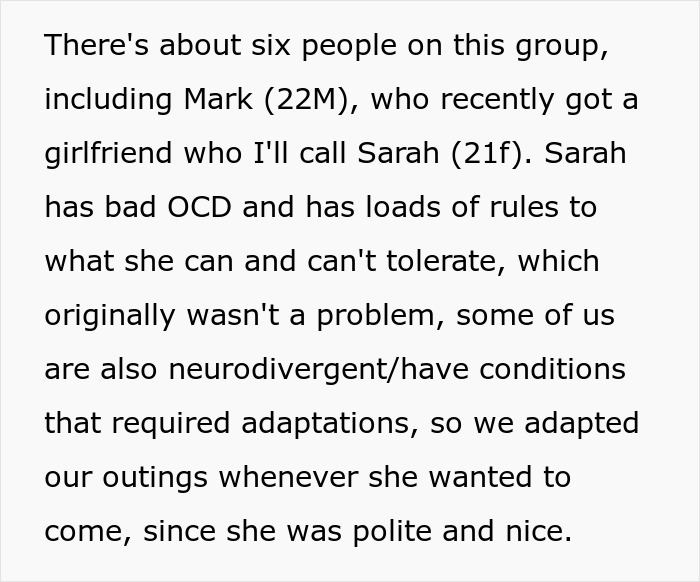
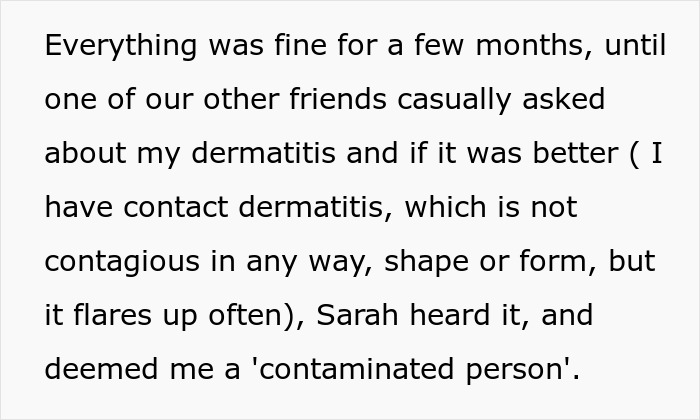
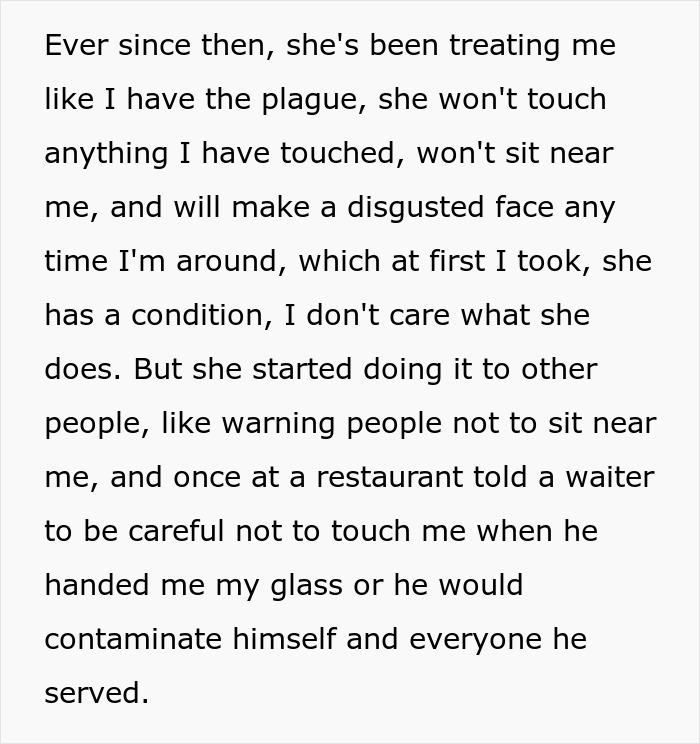




OCD can be an overwhelming condition, and it’s also one that people often misunderstand. Many live with symptoms for years before getting a diagnosis. In fact, estimates suggest it can take around 14 to 17 years from the first signs of OCD for someone to finally get diagnosed. That’s a long time to deal with behaviors that can be difficult to explain.
According to the Mayo Clinic, OCD involves unwanted thoughts or fears, known as obsessions, that can lead to repetitive behaviors called compulsions. Those behaviors are usually done to ease the anxiety caused by the obsession.
The relief may only last for a short time, so the fear comes back and the person feels driven to repeat the behavior. The Mayo Clinic calls this the “vicious cycle of OCD.”
Contamination is one common obsession. Someone may become extremely worried about germs, dirt, or touching something they believe is unsafe. OCD can also show up through repeated checking or strict routines.
The experience varies from person to person, and someone may or may not recognize that their fears or behaviors are unreasonable.
Of course, watching someone you care about struggle with OCD can be difficult as well. Friends and family might want to be understanding while also feeling uncomfortable when the condition starts affecting them directly.
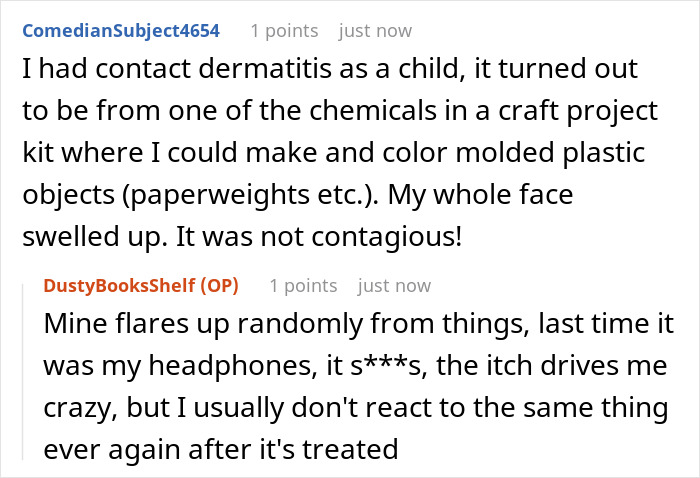
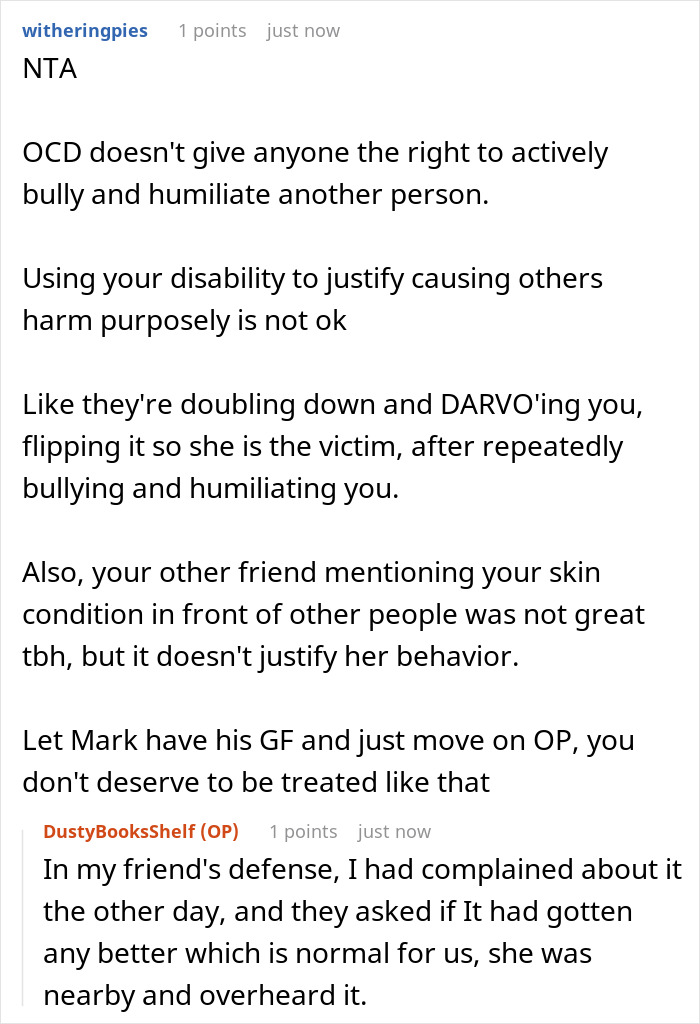
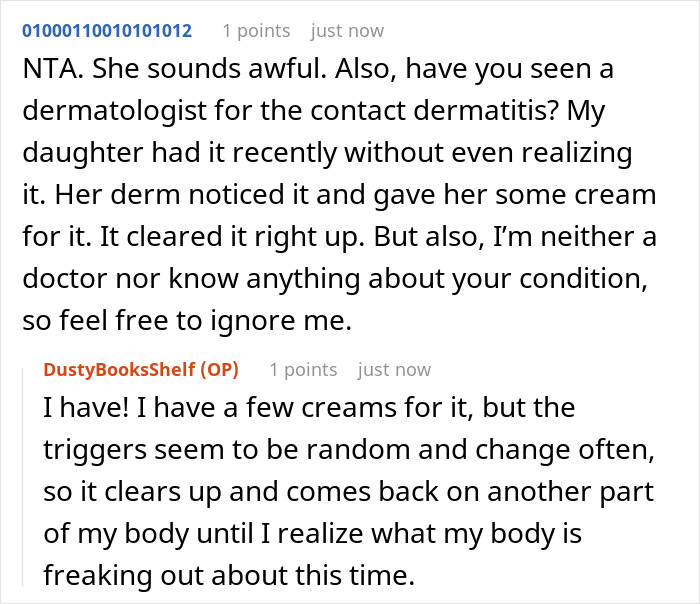
In this story, the woman was upset by being called “contaminated” because of a harmless skin condition. Having people warned against touching her understandably made things even worse, and eventually the friends decided they’d had enough.
So how should loved ones support someone with OCD? Experts say it can take a lot of patience, and simply telling someone to stop thinking a certain way or quit a compulsion usually doesn’t work.
Therapist Alexandra McNulty, who specializes in the condition, told Time that “OCD is not about a lack of willpower.” Someone may want to stop a compulsion and still find it incredibly difficult.
Instead of getting frustrated, McNulty suggests acknowledging that struggle and asking what would actually help in that moment. Something as simple as saying, “I get that it’s hard right now,” can be a much kinder place to start.
As a general rule, mental health charity Mind recommends supporting someone with OCD by helping them gradually reduce their compulsions. That can be tricky, because some things you say or do to help them feel better may actually keep the OCD cycle going.
For example, if someone repeatedly asks whether something is contaminated or dangerous, reassuring them every time may calm them for a moment.
Over time, though, they may start depending on that reassurance whenever the same fear comes back. Checking things for them or helping them avoid what makes them anxious can have a similar effect.
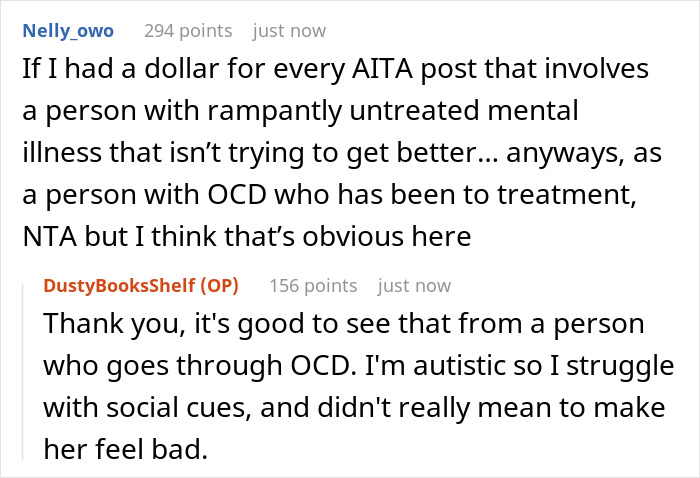
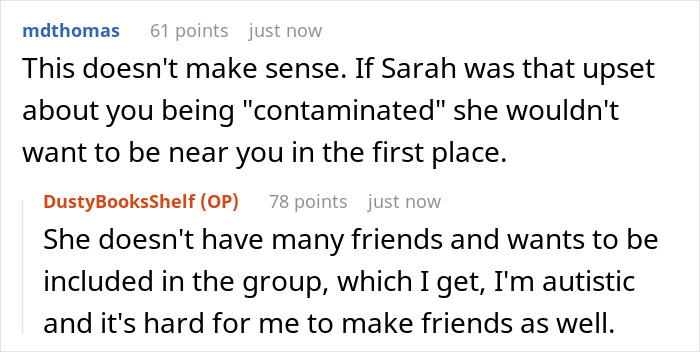
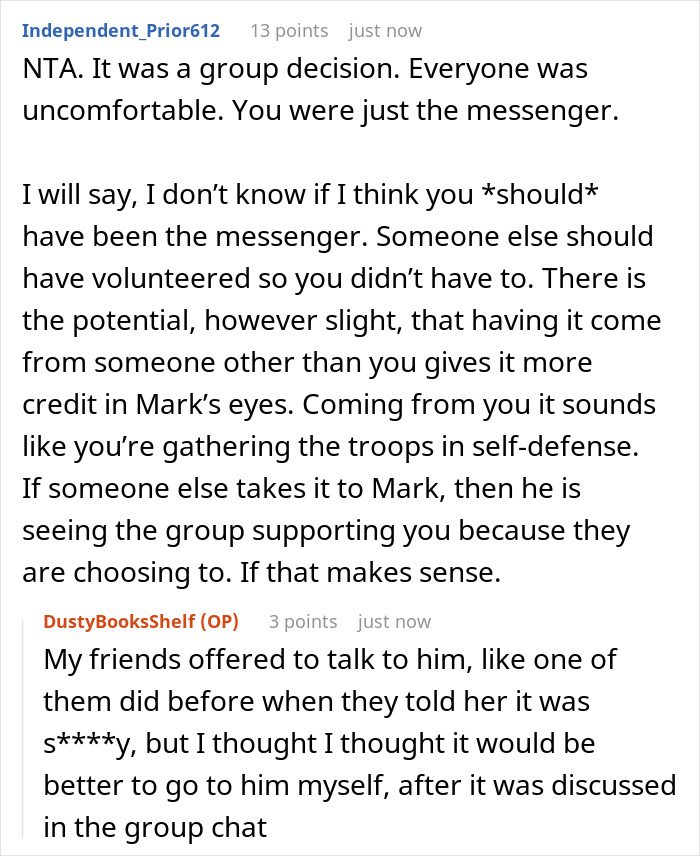
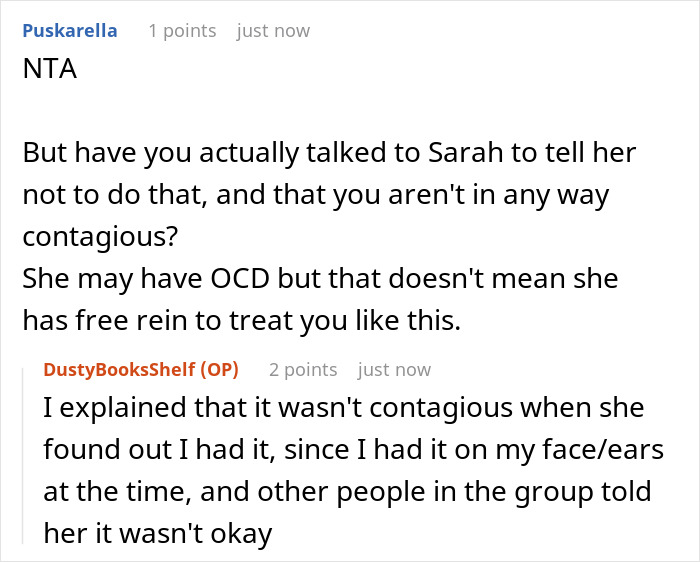
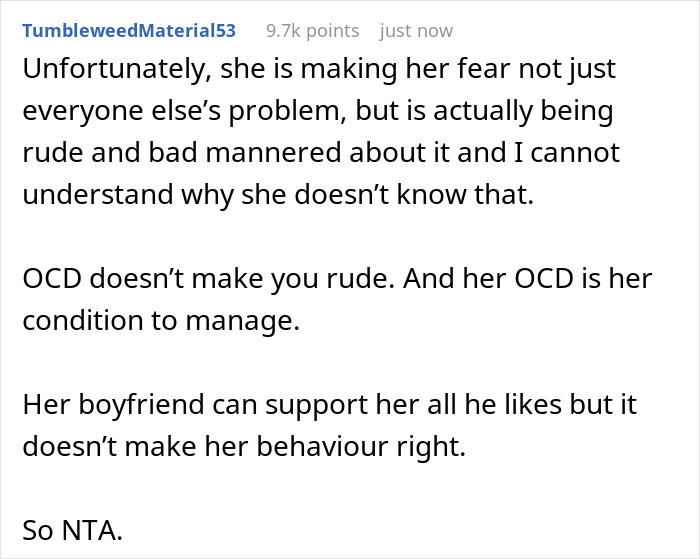
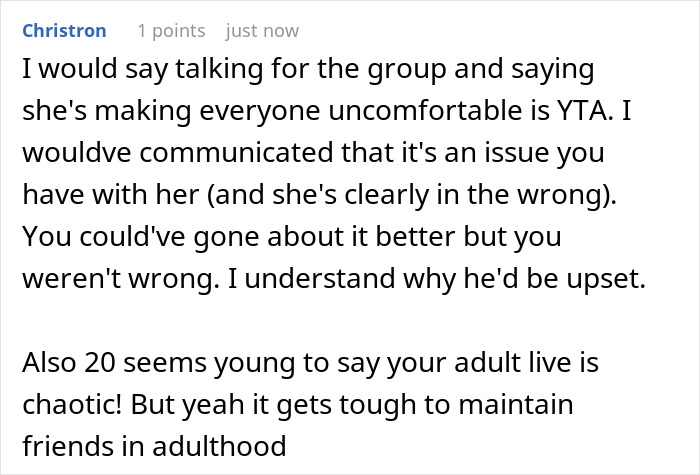
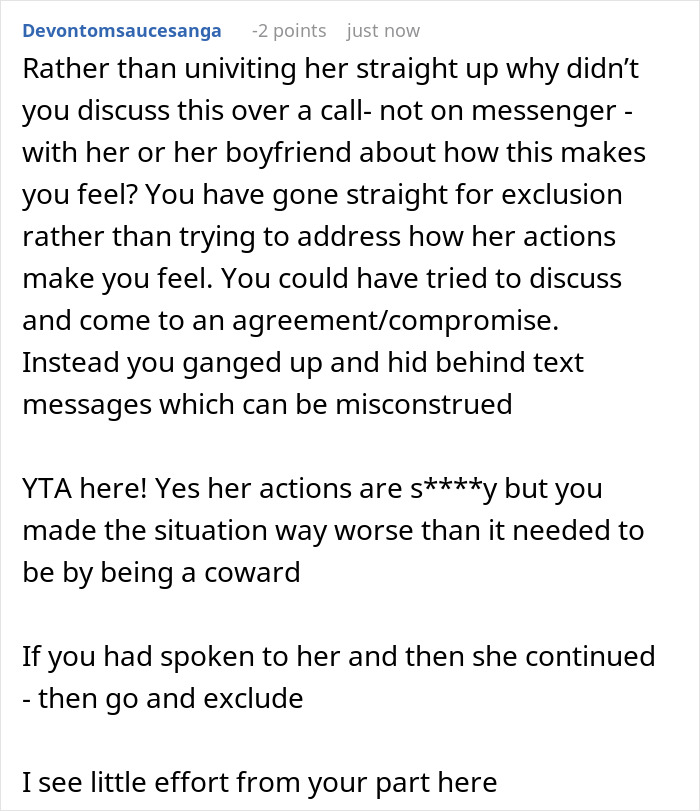
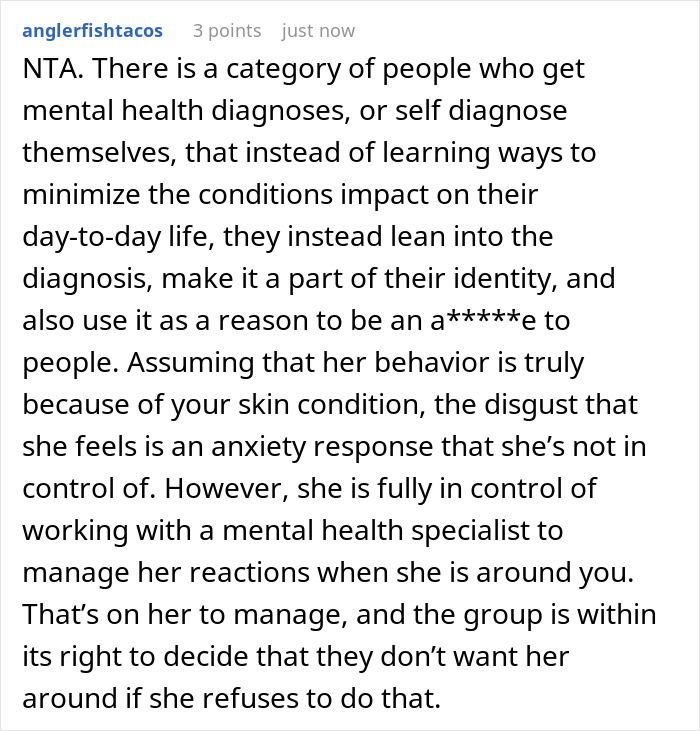
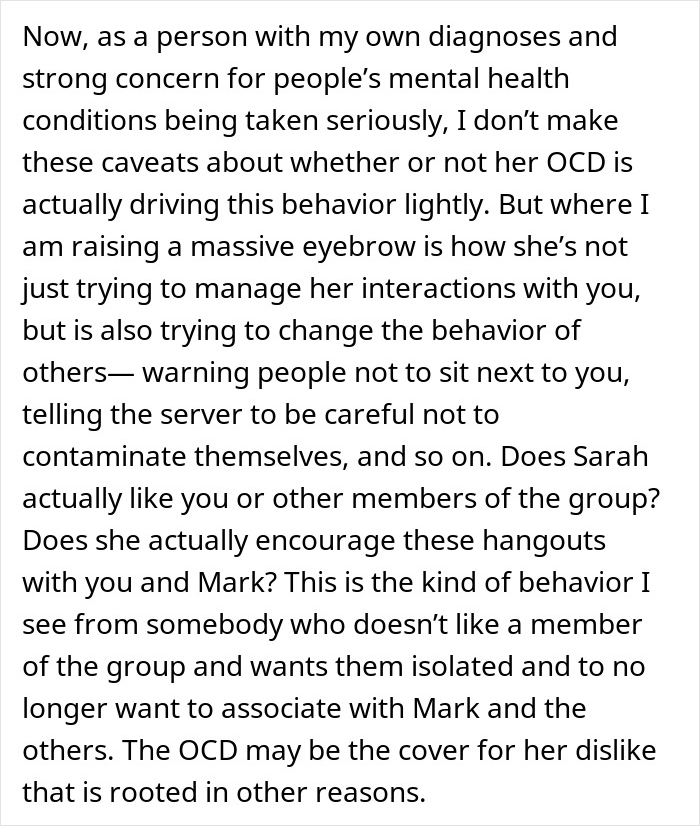
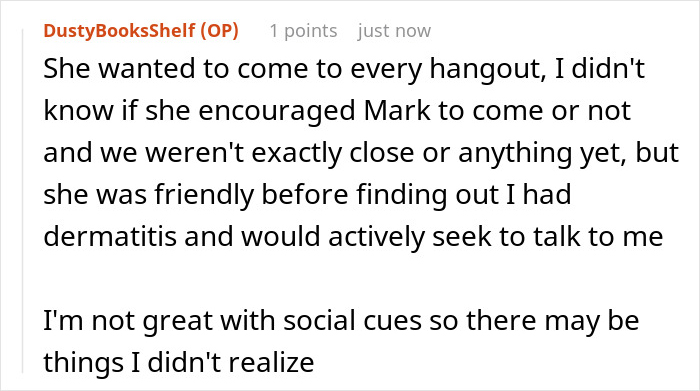
In this case, readers couldn’t agree on whether the friends took the right approach. Some thought they were completely justified in drawing a line once the behavior became hurtful. Others felt they should have communicated with the woman about the problem before making their decision.
What do you think they should have done? Share your thoughts in the comments below.



By entering your email and clicking Subscribe, you're agreeing to let us send you customized marketing messages about us and our advertising partners. You are also agreeing to our Privacy Policy.
Thank you! You've successfully subscribed to newsletters!


I can't agree with the YTAers/ESH. I can imagine her friend group often brought it up in chat BECAUSE they'd witnessed it - which is entirely different re: of deliberately causing trouble. He must have been there when his GF was horrible to his supposed friend. She suffers with OCD, no arguments there, but I've never heard of an OCD sufferer medically diagnosed with 'Arseholeness'. Her being an AH is simply being an AH. OP = NTA. I was born with horrible eczema and left with scars/melanin patches on my arms/joints and back and was painfully aware that it looked horrible/people staring & kids being kids, so I can understand how upset the OP was when dealing with this woman. Fortunately, my eczema flare-ups settled after I reached my 20s, but the scars are still there.

I have OCD and it takes each cell in my body and all my emotional energy to not let my intrusive thoughts affect how I behave with other people, it is so f*****g hard but despite all the challenges, I try to not let others’ life be affected by MY condition. I dont take liberties even with my partner and he is happy to accommodate all my requests, I feel I am Inconveniencing him.
Load More Replies...
I'm sorry if you have OCD, but it's not realistic to think your a***e of another person would be tolerated because of it. If you can't "help" but be nasty to other people, they won't want to be around you.

My neighbour has OCD. One of his "things" is putting out the bins for collection, and then not moving it for days after because the bin people have touched it. It wouldn't be a problem, but it blocks either the pavement or our shared drive space. Offers to bring it in for him have met with blank refusal. Another neighbour lost patience and took the bin in (she couldn't park her car as bin in the way) and the OCD neighbour went round and shouted at her. This and other incidents mean we all live in fear of this neighbour and the inconvenience of his bins. I've every sympathy for him, I think he's been badly let down by the system, but I wish to heck he didn't have OCD!
I can't agree with the YTAers/ESH. I can imagine her friend group often brought it up in chat BECAUSE they'd witnessed it - which is entirely different re: of deliberately causing trouble. He must have been there when his GF was horrible to his supposed friend. She suffers with OCD, no arguments there, but I've never heard of an OCD sufferer medically diagnosed with 'Arseholeness'. Her being an AH is simply being an AH. OP = NTA. I was born with horrible eczema and left with scars/melanin patches on my arms/joints and back and was painfully aware that it looked horrible/people staring & kids being kids, so I can understand how upset the OP was when dealing with this woman. Fortunately, my eczema flare-ups settled after I reached my 20s, but the scars are still there.
I have OCD and it takes each cell in my body and all my emotional energy to not let my intrusive thoughts affect how I behave with other people, it is so f*****g hard but despite all the challenges, I try to not let others’ life be affected by MY condition. I dont take liberties even with my partner and he is happy to accommodate all my requests, I feel I am Inconveniencing him.
Load More Replies... I'm sorry if you have OCD, but it's not realistic to think your a***e of another person would be tolerated because of it. If you can't "help" but be nasty to other people, they won't want to be around you.
My neighbour has OCD. One of his "things" is putting out the bins for collection, and then not moving it for days after because the bin people have touched it. It wouldn't be a problem, but it blocks either the pavement or our shared drive space. Offers to bring it in for him have met with blank refusal. Another neighbour lost patience and took the bin in (she couldn't park her car as bin in the way) and the OCD neighbour went round and shouted at her. This and other incidents mean we all live in fear of this neighbour and the inconvenience of his bins. I've every sympathy for him, I think he's been badly let down by the system, but I wish to heck he didn't have OCD!

































 No fees, cancel anytime















43
34