Get Premium
Dark mode theme is available exclusively for premium users. Learn more about the benefits of subscribing.
No fees, cancel anytime.

 Dark Mode Ad-Free Browsing Unlimited Content
 Ad-Free Browsing Unlimited Content Dark Mode
Join 1.2 million Panda readers who get the best art, memes, and fun stories every week!

Who among us hasn’t had a noisy neighbor test the limits of our patience? Whether it’s a dog that won’t stop barking, parties that last until sunrise, or the unmistakable sound of a drill going through the wall at the crack of dawn, they seem to find their way into everyone’s life sooner or later.
Usually, we try to work things out before things get too messy. But when one Redditor’s polite request to turn the music down only made their neighbors crank it up louder, they decided to get a little petty. Scroll down to see the revenge plan they came up with and how far the whole feud ended up going.
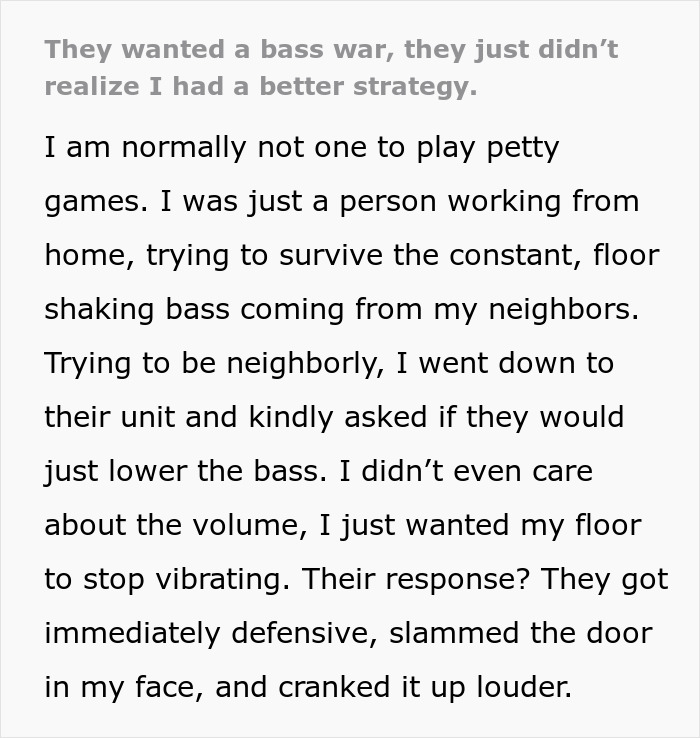
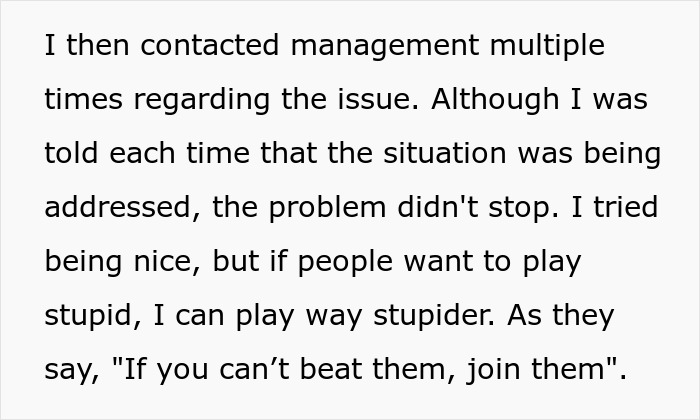
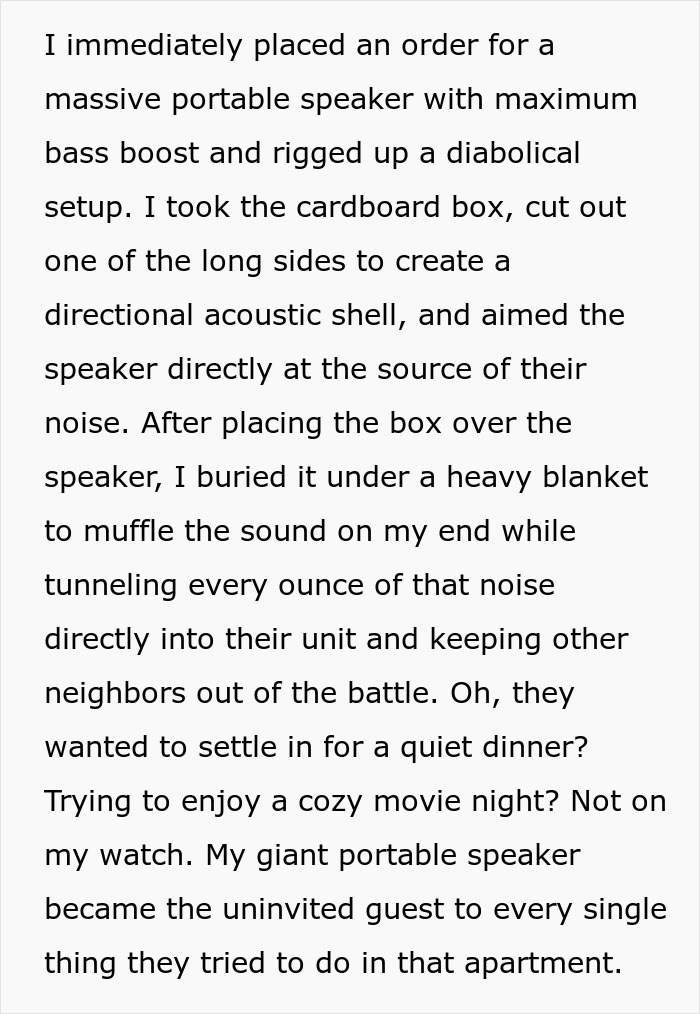
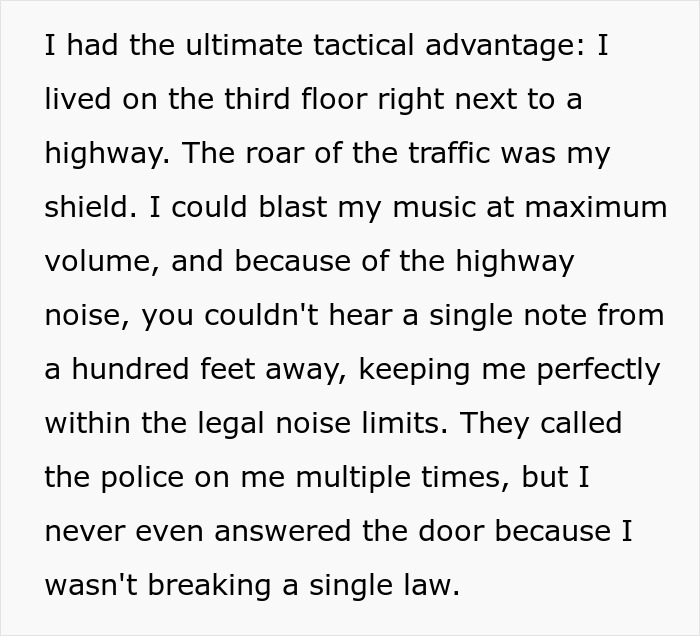
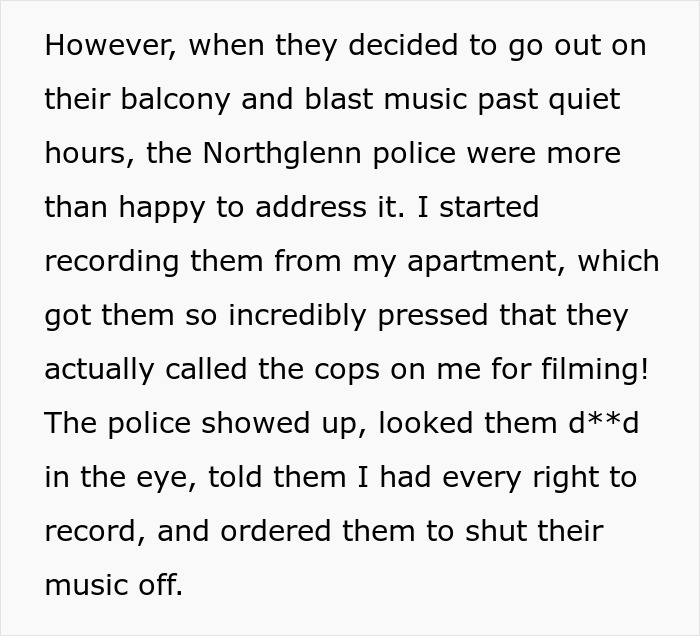
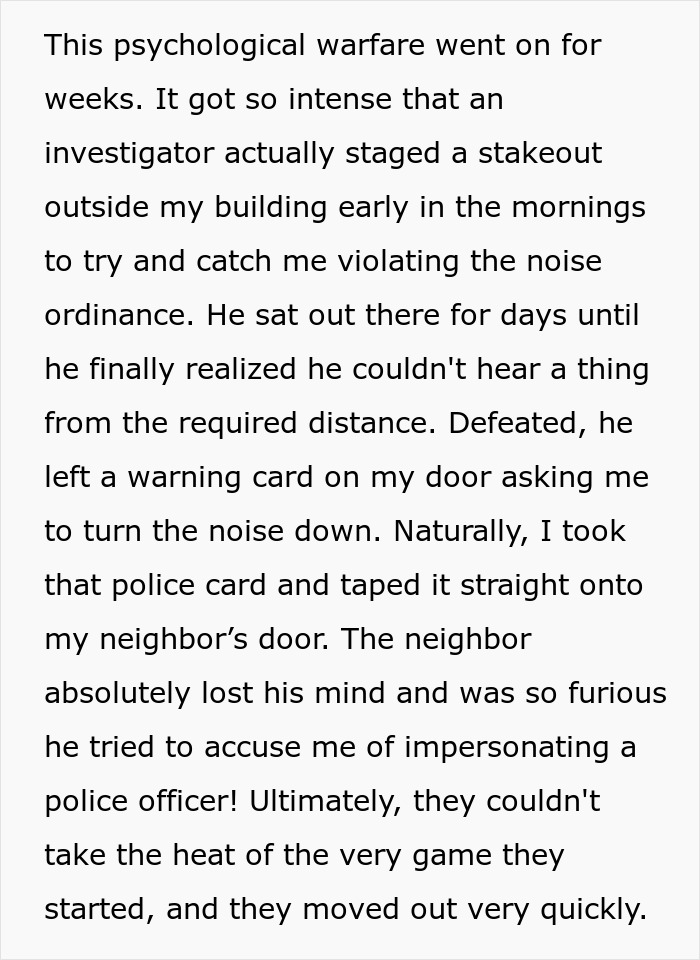
There are few things quite as irritating as trying to relax at home while someone else’s music is vibrating through your walls. Plenty of us will happily spend two hours at a loud concert, yet a neighbor blasting music through the floor can become unbearable surprisingly quickly.
Why exactly does something as simple as noise set us off like that? Well, there’s actually an evolutionary reason for it.
For our ancestors, a sudden sound could have meant that a predator was nearby or that something dangerous was happening, like rocks falling close by. Over time, our brains became wired to pay close attention to unexpected noises because they could point to a threat.
Mathias Basner, a professor of psychiatry and neuroscience at the University of Pennsylvania School of Medicine, told Nautilus that our hearing stays alert even while we sleep. That means unexpected sounds can trigger a physical stress response before we’ve had much chance to think about what caused them.
Our heart rate may rise, while hormones such as adrenaline and cortisol are released to prepare the body to react. Basner explained that blood vessels can tighten and the blood itself can become more likely to clot. “All of these are precursors of cardiovascular disease,” he told Nautilus.
Of course, noise from neighbors is hardly the same as a lion charging toward us. Our brains don’t necessarily make that distinction in the moment, though. They can still react to an unexpected sound as something that needs our attention, which helps explain why it can feel so stressful and difficult to ignore.
So it’s probably no surprise that ongoing noise from neighbors has been linked to a range of mental and physical health problems.
Research has found that repeated exposure can put stress on the nervous system and contribute to anxiety. Some studies have also connected long-term noise exposure with a higher risk of depression, cognitive problems, and neurodegenerative conditions.
With that in mind, it’s easy to see how the feud in this story became so exhausting. It went on for weeks, with both sides making plenty of noise and refusing to back down. Eventually, the neighbors moved out altogether.
Still, deliberately making someone miserable to prove a point raises another question: was all that revenge really the best way to handle it
Houzz recommends trying to deal with noise disputes politely before they reach that stage. After all, being on decent terms with your neighbors can make life a lot more pleasant, and you never know when you might need their help.
When a certain sound is bothering us, the first instinct is often to ask for it to stop completely. That is not always the most realistic or productive approach. Instead, it can help to suggest a compromise. If someone regularly plays loud music, for example, you could ask whether they would be willing to keep it down during work hours or later at night.
Being specific can make the conversation clearer for both sides. Rather than simply saying, “You’re too loud,” it gives the other person a better idea of what is bothering you and what they could reasonably change.
Sometimes, it is also worth asking whether the noise is really something worth starting a feud over. If a newborn baby is crying next door, there is only so much the parents can do about it, and chances are they are having a rough time too. It is also something that will probably pass eventually. Loud music, on the other hand, is much more avoidable and usually leaves more room for compromise.
What do you think about the way this feud played out? Was the petty revenge justified after the polite approach failed, or should they have kept trying to solve the problem another way?
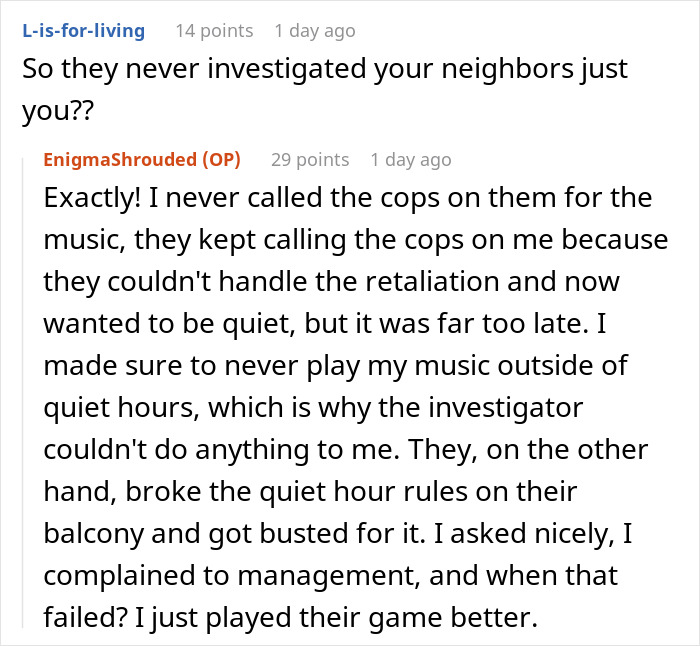

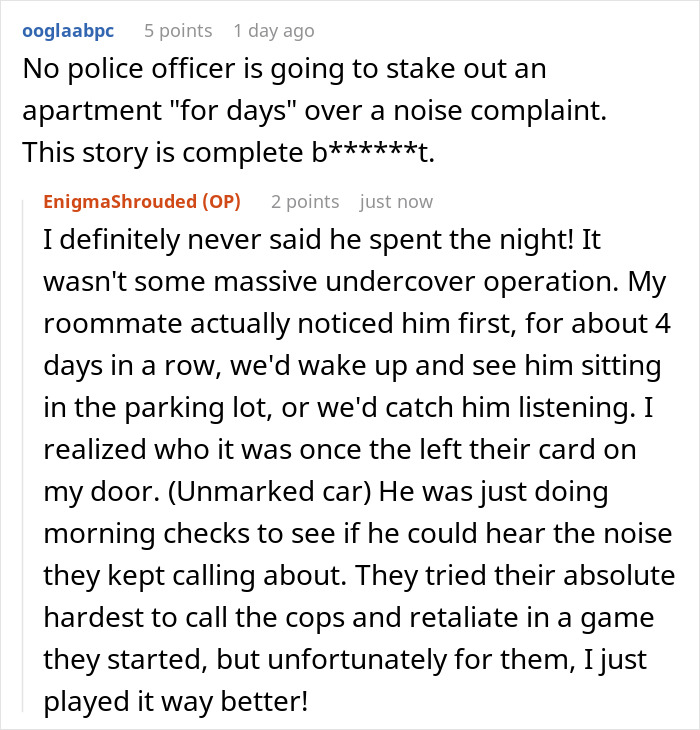


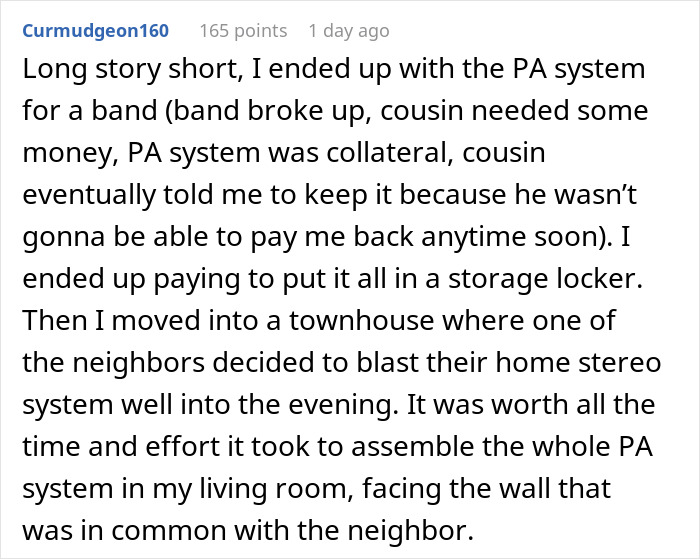





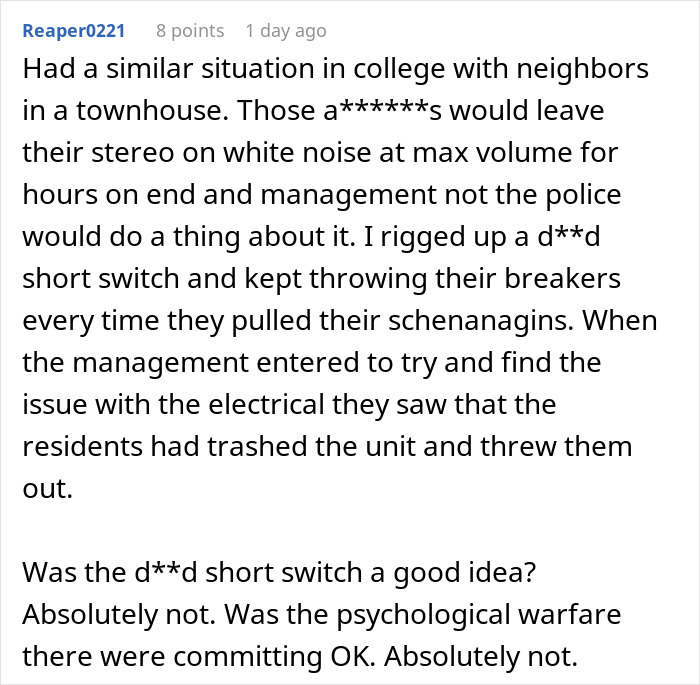




Naah, all too pat. All the signs of an invented story, adding little details as it goes along to try to make it sound believable, like the proximity to a noisy highway that in reality would not drown out his noise unless it also made life completely unliveable, the ignoring of cops knocking on your door - a sure way to antagonise the cops and make them suspect something is going on, which will only escalate their response, no mention of whether the neighbour stopped their noise when they were beaten - and if so then why continue? - the private detective or whatever who for some reason chooses to measure the noise from 100 feet way rather than inside the neighbour apartment, and how they conveniently moved away. All too conveniently packaged. Doubtless if challenged the storyteller could explain all those things as well...


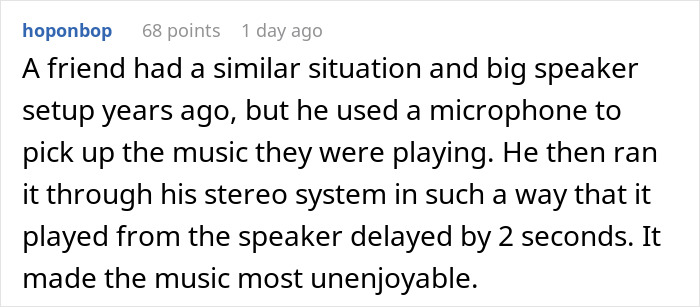
Feeding the sound back on a 2 second delay, as one commenter did, seems like it would be pretty effective
Naah, all too pat. All the signs of an invented story, adding little details as it goes along to try to make it sound believable, like the proximity to a noisy highway that in reality would not drown out his noise unless it also made life completely unliveable, the ignoring of cops knocking on your door - a sure way to antagonise the cops and make them suspect something is going on, which will only escalate their response, no mention of whether the neighbour stopped their noise when they were beaten - and if so then why continue? - the private detective or whatever who for some reason chooses to measure the noise from 100 feet way rather than inside the neighbour apartment, and how they conveniently moved away. All too conveniently packaged. Doubtless if challenged the storyteller could explain all those things as well...
Feeding the sound back on a 2 second delay, as one commenter did, seems like it would be pretty effective
































 No fees, cancel anytime








34
4