Get Premium
Dark mode theme is available exclusively for premium users. Learn more about the benefits of subscribing.
No fees, cancel anytime.

 Dark Mode Ad-Free Browsing Unlimited Content
 Ad-Free Browsing Unlimited Content Dark Mode
Join 1.2 million Panda readers who get the best art, memes, and fun stories every week!
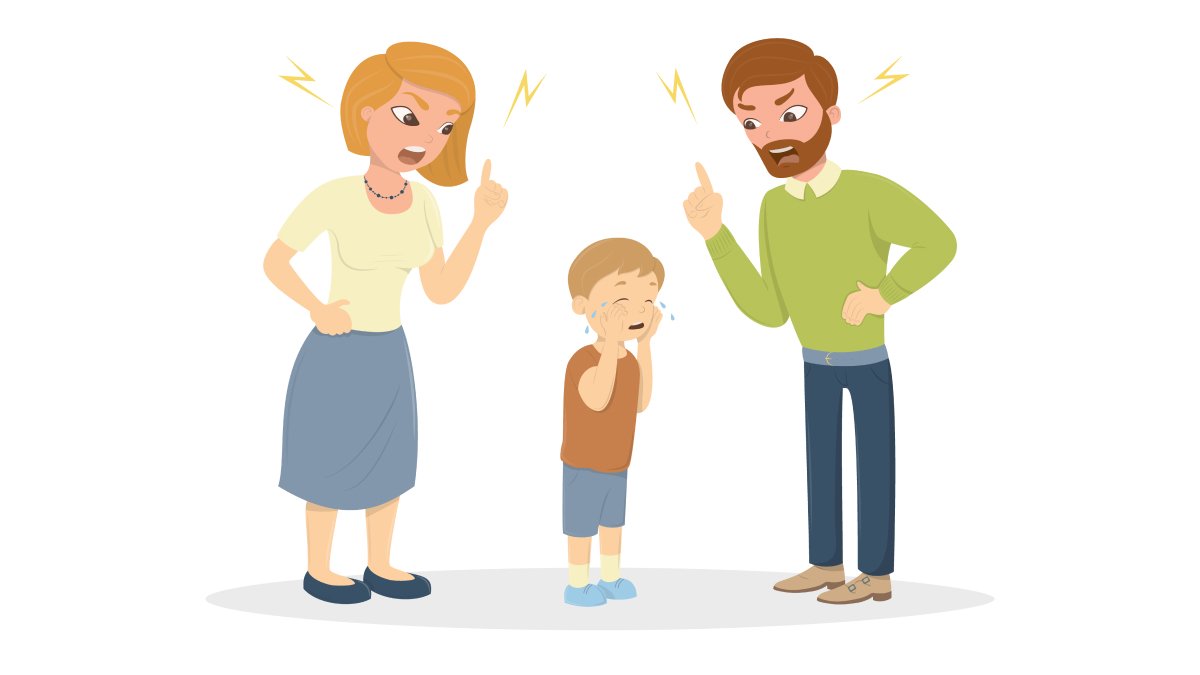
The ordeal of dealing with a narcissistic parent changes you forever.
There’s a constant pain in walking on a tightrope with your family, knowing that no matter how hard you work to make your parent proud, how carefully you choose your words, or how endlessly you try to prove your loyalty and respect, the conversation always circles back to how you disappointed them, embarrassed them, or failed to meet their expectations.
Even for an adult child raised by a narcissistic parent, a simple phone call back home can leave you drained.
After decades of dealing with narcissistic family dynamics, especially during your formative years, it’s very likely that you already believe you are somehow responsible for the friction with your family.
But maybe it’s time to pause and analyze this emotional script that has been on a constant loop in your upbringing.
Take the spotlight away from your parent, focus on your thoughts and feelings, and uncover the decade-old patterns so you can protect your well-being in the present.
Clinical psychologists at Psych Central define narcissism as “a continuum where you may believe in your superiority and prioritize your needs, sometimes at the expense of others.”
This personality trait exists on a spectrum ranging from mild to severe. Most people have a mild, moderate, or situational narcissism, and some psychoanalysts have even argued that some level of narcissism is required for normal emotional and social development.
On the other extreme of the narcissism spectrum is a condition known as Narcissistic Personality Disorder (NPD). In the official Diagnostic and Statistical Manual of Mental Disorders (DSM-5-TR), NPD is defined as a “pervasive pattern of grandiosity, a need for admiration, a lack of empathy, and a heightened sense of self-importance.”
@narcfamiliesHi, it’s Juliana! One thing most narcissistic parents have is a zero-sum mentality. This means they don’t believe there can be two winners. Someone has to win, and someone has to lose. So when you come home in a good mood, they don’t look at you and think, “I’m glad my child is happy.” They think, “If they’re happy, I must be losing somehow.” So they often find a way to take that happiness away so they can “win.” Is this true 100% of the time? No. Could they just be in a bad mood? Sure. But that zero-sum mentality is real. And more often than not, it’s the reason they struggle to tolerate seeing their children happy. To your healing, Juliana ❤️🩹♬ original sound – Narcissistic Families
A study of over 34,000 adults published in the Journal of Clinical Psychiatry found that at least 6 in 100 people, 7.7% of men and 4.8% of women, have narcissistic symptoms pathological enough to be diagnosed as NPD.
Most experts believe that a much larger population has NPD, but they stay under the radar and remain undiagnosed.
However, a parent doesn’t need an NPD diagnosis to be classified as narcissistic. While mild or moderate narcissism usually has a limited impact on the average person’s social interaction, this effect becomes pronounced when a narcissist takes up the selfless task of parenting.
According to the Newport Institute, narcissistic parents are so pathologically self-centered that they live vicariously through their children, blurring the boundary between parent and child while using manipulative and abusive tactics to mold them into versions of themselves.
Growing up with a narcissistic parent may mean having your struggles ignored because their problems are always bigger, more urgent, or more important.
If love, approval, and peace from your parents have always been conditional, if your needs were consistently dismissed, affection was tied to your performance, or you were made to feel responsible for your parents’ emotions, you don’t need a clinical diagnosis to validate your hurt.
Image credits: artursafronovvvv / Magnific
Many narcissistic tactics are subtle and seemingly unproblematic when viewed in isolation, so recognizing narcissistic parenting can be difficult. Here are the most typical signs of a narcissistic parent:
The American Psychological Association defines empathy as “understanding a person from their frame of reference rather than one’s own.”
Because a narcissistic parent’s nature is self-absorbed and prone to prioritizing themselves, they have a limited ability to empathize with their child’s emotions.
When you share something painful or deeply personal, their default response is to compare it to their own struggles or dismiss your emotions entirely.
Did you have a difficult day at work? It doesn’t matter much because their problems are worse.
Are you in emotional distress? You must be dramatic or ungrateful.
Children of narcissistic parents are subtly convinced that their feelings are inconvenient. Even as an adult, you subconsciously suppress your emotions because expressing them never got you any comfort or understanding.
Manipulation, including tactics like gaslighting, is the most powerful tool in the narcissistic parent’s arsenal because it helps them maintain control over you.
It might manifest as subtle statements implying that you owe them constant loyalty because of everything they sacrificed for you. Or whenever you try to assert your autonomy, they throw out accusations that you’ve become selfish, disrespectful, or “influenced by the wrong people.”
Interestingly, a narcissistic parent might be entirely unaware of what they’re doing and how it’s affecting you.
A 2021 study on parental psychological control published in the journal Frontiers of Psychology showed that narcissistic mothers who exerted psychological control on their children were actually under the impression that they were not controlling.
Another 2020 study by the American Psychological Association found that this parental control led to children having low self-esteem, decreased life satisfaction, and engaging in risky behaviors as adults.
If setting boundaries or prioritizing your own needs with your parent is a source of guilt and tension, there’s a high chance you’re dealing with narcissism, and it’s important you break free from that dynamic.
@zelina.chinwoh.msw.lcsw Signs Of A Narcissistic Parent: Will Use Verbal Abuse & Name Calling— Sometimes Used To “Provoke” Thier Children For A Response #fyp#foryoupage#narcissist#narcparents#narcissisticfamily#dysfunctionalfamily#blacksheep#scapegoat#nocontact#narcissisticparent#motivational#inspirational♬ original sound – Zelina Chinwoh, MSW, LCSW
Because they see you as an extension of themselves, narcissistic parents typically have an intense need to oversee your choices as an adult.
Even when you’re no longer under their direct control, they constantly criticize your career, relationships, lifestyle, or parenting choices. The goal is to subtly undermine your confidence so they can keep evaluating and influencing your decisions.
A 2022 paper published by the American Psychological Association found that parental criticism is linked to a higher risk of depression and anxiety. There’s a line between helpful advice and scrutiny that forces you to justify and defend your life choices, even when those choices are perfectly reasonable.
With a narcissistic parent, you must learn to draw that line and block out their negative impact for your well-being.
Image credits: Drazen Zigic / Magnific
If your parents’ experiences dictate the emotional landscape of the entire family, you might want to pause and check for narcissistic tendencies.
Your milestone shouldn’t become an opportunity for them to talk about their sacrifices. Neither should your challenge trigger a story about how they handled something similar, but bigger, harder, and more impressive.
Even your wrongdoings shouldn’t reflect on your parents’ reputation or personal narrative.
If attention and recognition feel scarce in your family, that’s a red flag for narcissistic parenting.
Rather than confronting their own insecurities or failures, the average narcissistic parent redirects those feelings onto their child.
If they feel inadequate, they cope with it by calling you lazy or unmotivated. If they feel resentful, they label you as difficult or disrespectful.
This trauma response loads you with emotional burdens that don’t actually belong to you.
Without breaking free, you may start to internalize accusations that make you see yourself through the distorted lens of your narcissistic father or mother’s shortcomings.
Image credits: freepik / Magnific
Narcissistic family dynamics don’t affect each child in the same way because the parents unconsciously divide the kids into rigid emotional roles to serve their own needs. Two of the most common roles in this context are the Golden Child and the Scapegoat.
The golden child is the one who can seemingly do no wrong in the eyes of the narcissistic parent. Their achievements reflect their parents’ success, so they are protected and elevated above other children.
Sounds good? Not quite. The approval, attention, and privilege that the golden child gets aren’t unconditional. They aren’t exactly loved for who they are, but for how well they embody their parents’ ideal version of success.
The carrot of privilege comes hand in hand with a stick: the expectation that the child will continue to uphold the parent’s image. Because the golden child is an extension of their parent’s ego, any imperfection triggers criticism harsher than any other child would get.
Golden child dynamics are a lot more common than you’d expect. Our team has compiled real-life experiences from adults who grew up as the golden child or the other sibling.
The experiences share an eerily similar dynamic of hidden pressure behind the praise and the need to maintain a perfect image even into adulthood to avoid losing their parents’ approval.
On the opposite end of the spectrum, there’s the scapegoat. This child is the outlet for a narcissistic parent’s frustration, insecurity, and anger.
While the golden child is idealized, the scapegoat is blamed. If something goes wrong in the family, the scapegoat is the prime suspect.
Image credits: vector4stock / Magnific
Ironically, the scapegoat is actually the child who challenges the dysfunctional narcissism of their parent.
Sounds heroic? Also not quite. Because narcissistic parents rely on control and admiration, the scapegoat questioning their behavior can make them feel threatened.
To assert control, they label this child as difficult and rebellious. Dealing with this sort of pressure in formative years can damage the child’s self-esteem and reinforce the shameful belief that they are fundamentally flawed.
So, either as the scapegoat or as the golden child, a product of narcissistic parenting, stands a high risk of having some sort of dysfunction.
The most painful consequence of this golden child-scapegoat dynamic is how it distorts the relationship between siblings.
Because they live in a system that rewards loyalty to their narcissistic parent, and the difference in their upbringing prevents them from ever truly understanding one another, the golden child and scapegoat grow up as competitors.
In our collection of experiences from scapegoat children who had to cope with favoritism while growing up, the stories are similar to the other extreme.
The golden children felt pressured to defend the parent, while the scapegoats became increasingly isolated within the family until it all backfired in adulthood, causing lifelong damage to their relationships.
The effects of narcissistic parenting rarely end when you move out. Children raised in these dynamics tend to carry the conditioning into adulthood, where it quietly shapes how they see themselves and relate to others.
Because affection was tied to performance, many adult children become chronic people-pleasers who struggle to recognize their own needs, set boundaries, or trust that they are worthy of love that is not earned.
The emotional fallout is well documented. The constant criticism and control common in narcissistic households are linked to higher rates of anxiety, depression, and low self-esteem that persist long after childhood.
These patterns also follow people into their closest relationships: a qualitative study of adult children of narcissistic parents found that many described difficulty trusting partners, a fear of abandonment, and a tendency to either over-give or pull away in romantic relationships.
Recognizing these struggles as learned responses, not personal flaws, is usually the first step toward unlearning them.
It can be isolating to feel like no one understands what growing up with a narcissistic parent was actually like. Reading other people’s accounts often puts words to dynamics that felt confusing, or simply normal, at the time.
Bored Panda readers have shared candid stories of life as the favored child and as the family’s blame magnet, and the parallels are striking: hidden pressure behind the praise, a slow erosion of confidence, and sibling relationships that never fully recovered.
Many describe how those childhood roles still echo in their adult friendships, careers, and parenting.
Once you begin to come to terms with the narcissistic patterns in your parent, the next step is figuring out what to do about it.
Here’s the not-so-great news. There’s no single conversation or breakthrough moment to fix this kind of dynamic.
Narcissistic parents have years of oblivious practice, so their behaviors are deeply ingrained, and most aren’t willing to admit or examine them. That’s why you have to shift your focus from trying to change them to protecting your peace.
Before you do anything else, take a moment to acknowledge what the realization of your parents’ dysfunction means to you.
You might feel angry about things that happened years ago, or need some time to grieve for the love you wish you had received growing up, or even feel guilt for questioning a parent who taught you that loyalty meant never criticizing them. That’s all normal.
Being raised by a narcissistic parent conditioned you to silence your emotions, but it’s time to do the opposite and prioritize yourself.
That might mean talking with a therapist, writing things down, or simply allowing yourself to sit with emotions you were once told to ignore.
You don’t have to resolve everything overnight, but just allow those feelings to exist without instinctively shutting them down.
@abbyrodmanpsychotherapy Narcissistic parents do damage to their children by not giving them the space or opportunity to discover who they are or what they want. This leads those children to spend their lives trying to uncover their purpose and preferences. Simply put, a narcissistic parent does the opposite of what any good enough parent knows to do — and that’s to create an environment in which children discover themselves freely with the support of their parents. #narcissism#narcissism♬ original sound – Abby Rodman | Psychotherapist
Next, you need to implement limits to protect your emotional safety. You’re in a vulnerable place while healing, so establish some mutual respect and decide what you’ll do if that boundary is breached.
For example, the next time they criticize your parenting, you could say, “If you continue to criticize my parenting, I’m going to end this call.” It’ll feel incredibly uncomfortable the first few times, but boundaries are only effective when you’re consistent with maintaining them.
After redefining your relationship by setting boundaries, you may want to tell your parent how their behavior has affected you to help you find some closure.
It’s helpful to find catharsis by expressing what you’ve bottled up for years, but you have to be prepared for the possibility that they may not hear you.
By definition, narcissism makes people struggle with accountability. Even when the conversation is thoughtful and respectful, they may become defensive, deny the behavior, or redirect the blame back onto you. Prepare your mind for that so you can simply move on to acceptance instead of spiraling again.
Even the most emotionally intelligent people may still catch themselves hoping that one day their narcissistic parent will finally recognize their feelings and take responsibility for the past. Grieve that hope and let it go.
Radical acceptance means acknowledging the reality of who your parent is without continuing to expect them to become someone different.
Once you can achieve that, you’re free from the clutches of your parents’ validation.
If you still want to maintain contact, learn how to deal with them in a healthy way. One of the most effective ways to do that is to stop giving them the emotional reactions they thrive on.
Imagine becoming as emotionally uninteresting as a grey rock sitting on the ground.
When they try to provoke an argument, criticize your choices, or bait you into defending yourself, you respond with calm, minimal answers in a neutral tone, offering no emotional engagement.
According to clinical psychologist Dr. Ramani Durvasula via Forbes, grey rocking with a narcissistic person helps you to disengage when you can’t lose contact with them.
Over time, you can take the target off your back by removing the emotional payoff they get from provoking you.
You may also need to rethink how much of your life you share with them. It’s natural to want to keep your parent involved in your life journey, but when they use those details to criticize, control, or manipulate you, it’s time to go into self-preservation mode by protecting your privacy.
Keep conversations light and neutral; talk about everyday topics and share general updates, but avoid discussing the parts of your life that matter to you if they are likely to become targets of criticism.
Living with the effects of narcissistic parenting can leave deep emotional marks that have followed you from childhood well into adulthood. As you heal from the psychological abuse, remind yourself that none of it was your fault.
Your parents’ ego, insecurity, and need for control were the engine of a dysfunctional dynamic, and that burden was never yours to carry.
Limited contact or no contact, the goal is for you to live with less anxiety, guilt, and self-doubt.
For the first time, you are the center of your universe, so let go of the people-pleasing tendencies and don’t hesitate to prioritize your mental health.
If a narcissistic parent continues to abuse you and pose a threat to your mental health, you can break off contact for self-preservation.
However, this is a last resort that should only be used after exhausting other options.
A strict parent sets high standards but still respects your feelings, your autonomy, and your right to become your own person.
A narcissistic parent uses control to serve their own image and emotional needs, and their approval stays conditional, no matter how much you achieve.

By entering your email and clicking Subscribe, you're agreeing to let us send you customized marketing messages about us and our advertising partners. You are also agreeing to our Privacy Policy.
Thank you! You've successfully subscribed to newsletters!

Something not mentioned is that the narcissistic parent becomes more narcissistic as they age. As they become more successful, whatever they define that as, they gain more and more narc behaviors. That's why you see so many narc mothers go off the rails when grandkids arrive, they want total control in a situation (parenthood) where nobody is ever in total control.

Only recently, I have realized I must be the golden child. I am the oldest of my siblings, and have always been the recipient of all the perks and benefits my mother wanted to provide, which virtually guaranteed my career success. When I went to college, I was taken with how nice it was to live in an academic setting, I knew I wanted to become a professor so I could remain in that type of environment;. My mother always encouraged me in academics, so this seems like a logical path to take. This eventually led me to where I am today, Purdue University. And I have to thank my mother for the lavish support she provided me along the way. All I had to do in order to receive this love and support was to carry out every request she made regarding what I now know to be my younger brother, the scapegoat. I never thought about it when we were kids, but my mother always hated my younger brother Just one example out of many is I remember when he was about 8 years old, she made him eat his dinner off the floor while the rest of us at the table watched; thinking back that seemed pretty mean, I don’t remember why she did this. It didn’t bother me that much, since it wasn’t me. He probably wasn’t even aware that she would constantly talk about him horribly behind his back to everyone she knew including his teachers at school and really anyone who would listen, so even from a very young age, he must have wondered why other adults seemed to immediately dislike him. She has never stopped doing that even up to today, and everyone in the family has never mentioned a word of this to him as we were instructed not to. Everyone in our family, even our father, was afraid of her and did everything they could not to upset her. She had unquestioned authority that is for certain. Regardless, over the years she was able to fine tune her use of her scapegoat and when he hit puberty, she found her ultimate weapon. She said she had a long talk with my sister determined that he had s*x with her. She said it happened in the house when we were all at home, and although no one heard anyone scream or anything you would expect if something like that took place, she said it happened. She didn’t mention it to him, but for the rest of us, she gave us instructions on how to treat him from that time forward. Looking back it is interesting that she didn’t file a police report, or take my sister to the doctor, and she has never gone to therapy, so it was never documented in any official capacity. What she wanted to do was carry out a long term plan of revenge and we were to participate as instructed. She began by spreading rumors to all his friends, all our relatives, and everyone in town that he was an a*****e pedophile rapist, but don’t ever tell him because he could become dangerous. She told the school principal to let all the teachers at the school know. It was a little strange, but she would always laugh when she told the rest of us about who she spread the rumor to next. I remember this continued after he went to college, the same college I attended. She asked me to spread the rumor all around campus even before he started his first semester, and I did exactly that. Some said that was betraying my brother, but I was supporting my mother, and who can say I didn’t do the right thing. I asked him one time about it, he said it wasn’t true. He said he wanted to take a lie detector test, but he wanted my mother to also take one. What a joke, that would never happen, I just dropped the whole subject and didn’t mention that to anyone. I wasn’t about to take that information back to my mother, it was just easier for me. I wanted to become a professor, so I went along with all of it. It even continued when he went off to work, she would get me to find out where he worked, and she would call his employers and tell them what a horrible person he is. It must have had some impact and he never knew my mother and I were secretly working against him like that. My mother would laugh at the thought of him getting horrible treatment from his coworkers due to her handiwork. All these years have passed and I don’t know where he is now, he doesn’t communicate with the family. That has been my experience with what I now understand as having a mother with this narcissistic personality disorder. I didn’t think growing up with her was all that bad for me and still don’t. It actually worked great for me. Sometimes sacrifices have to be made and at times, it is best not to question it. I have a prestigious position that I feel I deserve, and my mother is very proud of me being a leader in the English Department at Purdue University. Thomas J. Rickert Purdue University
Something not mentioned is that the narcissistic parent becomes more narcissistic as they age. As they become more successful, whatever they define that as, they gain more and more narc behaviors. That's why you see so many narc mothers go off the rails when grandkids arrive, they want total control in a situation (parenthood) where nobody is ever in total control.
Only recently, I have realized I must be the golden child. I am the oldest of my siblings, and have always been the recipient of all the perks and benefits my mother wanted to provide, which virtually guaranteed my career success. When I went to college, I was taken with how nice it was to live in an academic setting, I knew I wanted to become a professor so I could remain in that type of environment;. My mother always encouraged me in academics, so this seems like a logical path to take. This eventually led me to where I am today, Purdue University. And I have to thank my mother for the lavish support she provided me along the way. All I had to do in order to receive this love and support was to carry out every request she made regarding what I now know to be my younger brother, the scapegoat. I never thought about it when we were kids, but my mother always hated my younger brother Just one example out of many is I remember when he was about 8 years old, she made him eat his dinner off the floor while the rest of us at the table watched; thinking back that seemed pretty mean, I don’t remember why she did this. It didn’t bother me that much, since it wasn’t me. He probably wasn’t even aware that she would constantly talk about him horribly behind his back to everyone she knew including his teachers at school and really anyone who would listen, so even from a very young age, he must have wondered why other adults seemed to immediately dislike him. She has never stopped doing that even up to today, and everyone in the family has never mentioned a word of this to him as we were instructed not to. Everyone in our family, even our father, was afraid of her and did everything they could not to upset her. She had unquestioned authority that is for certain. Regardless, over the years she was able to fine tune her use of her scapegoat and when he hit puberty, she found her ultimate weapon. She said she had a long talk with my sister determined that he had s*x with her. She said it happened in the house when we were all at home, and although no one heard anyone scream or anything you would expect if something like that took place, she said it happened. She didn’t mention it to him, but for the rest of us, she gave us instructions on how to treat him from that time forward. Looking back it is interesting that she didn’t file a police report, or take my sister to the doctor, and she has never gone to therapy, so it was never documented in any official capacity. What she wanted to do was carry out a long term plan of revenge and we were to participate as instructed. She began by spreading rumors to all his friends, all our relatives, and everyone in town that he was an a*****e pedophile rapist, but don’t ever tell him because he could become dangerous. She told the school principal to let all the teachers at the school know. It was a little strange, but she would always laugh when she told the rest of us about who she spread the rumor to next. I remember this continued after he went to college, the same college I attended. She asked me to spread the rumor all around campus even before he started his first semester, and I did exactly that. Some said that was betraying my brother, but I was supporting my mother, and who can say I didn’t do the right thing. I asked him one time about it, he said it wasn’t true. He said he wanted to take a lie detector test, but he wanted my mother to also take one. What a joke, that would never happen, I just dropped the whole subject and didn’t mention that to anyone. I wasn’t about to take that information back to my mother, it was just easier for me. I wanted to become a professor, so I went along with all of it. It even continued when he went off to work, she would get me to find out where he worked, and she would call his employers and tell them what a horrible person he is. It must have had some impact and he never knew my mother and I were secretly working against him like that. My mother would laugh at the thought of him getting horrible treatment from his coworkers due to her handiwork. All these years have passed and I don’t know where he is now, he doesn’t communicate with the family. That has been my experience with what I now understand as having a mother with this narcissistic personality disorder. I didn’t think growing up with her was all that bad for me and still don’t. It actually worked great for me. Sometimes sacrifices have to be made and at times, it is best not to question it. I have a prestigious position that I feel I deserve, and my mother is very proud of me being a leader in the English Department at Purdue University. Thomas J. Rickert Purdue University


































 No fees, cancel anytime









29
4