Get Premium
Dark mode theme is available exclusively for premium users. Learn more about the benefits of subscribing.
No fees, cancel anytime.

 Dark Mode Ad-Free Browsing Unlimited Content
 Ad-Free Browsing Unlimited Content Dark Mode
Join 1.2 million Panda readers who get the best art, memes, and fun stories every week!
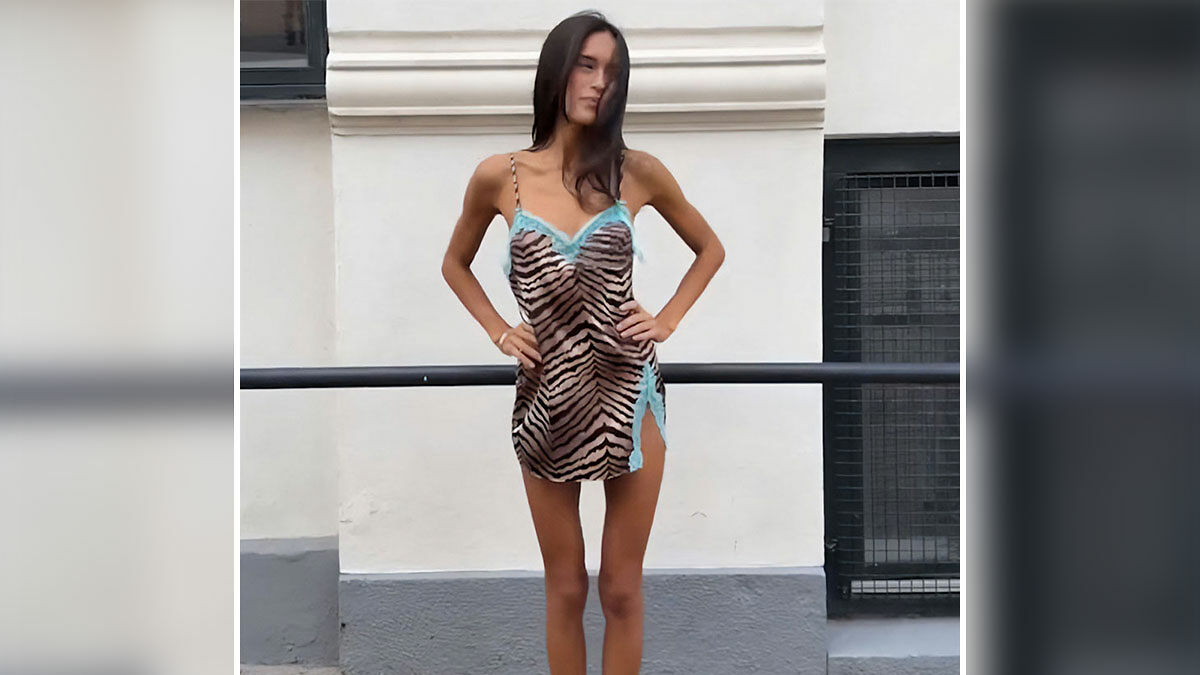
Victoria’s Secret thought it was selling an appealing new slip dress, but the ad has viewers questioning whether the brand is quietly bringing back a controversial old beauty standard.
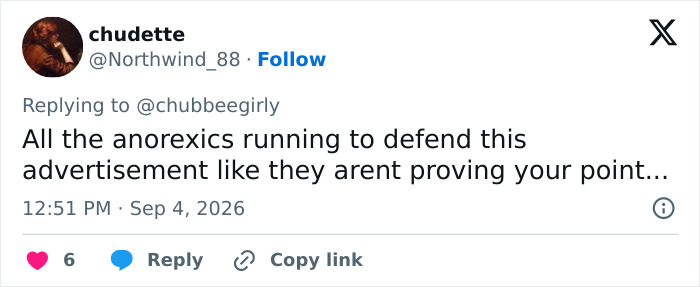
The TikTok campaign has sparked a wave of backlash, with some viewers accusing the lingerie giant of normalizing an extreme body ideal.
One person reacted, “Victoria’s Secret never left the 2000s they just pretend they did… this proves it!”
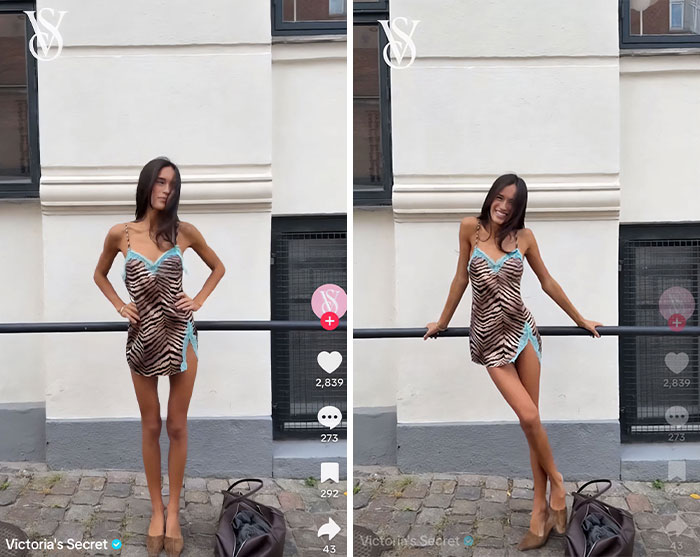
The controversy centers on a TikTok video Victoria’s Secret posted to promote its Tease Satin Lace-Trim Mini Slip Dress.
The satin style has a vintage-inspired silhouette, with lace detailing, a V-neckline, adjustable straps, and a short hemline.
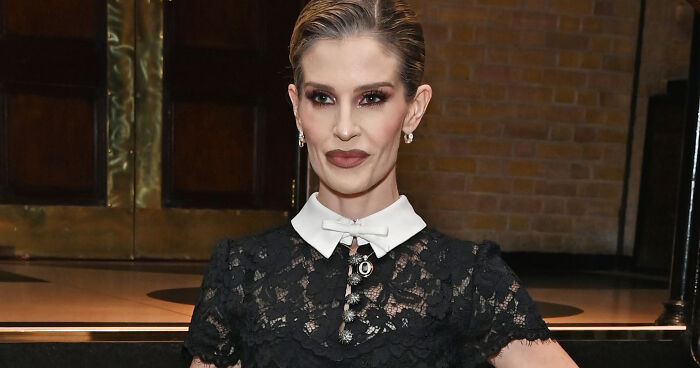
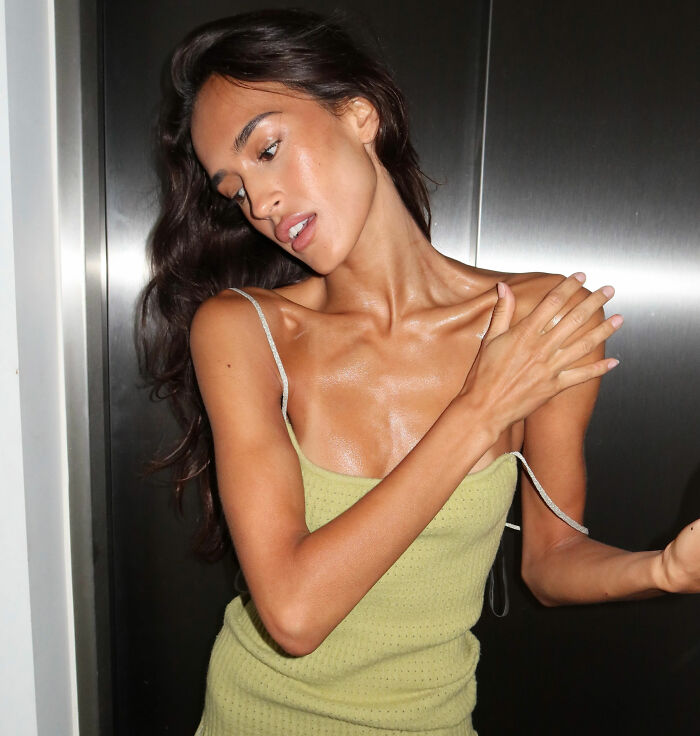
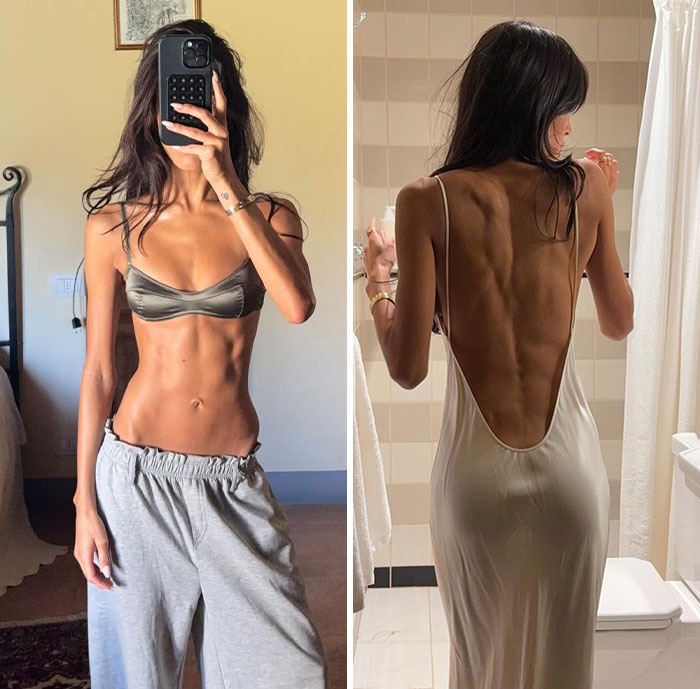
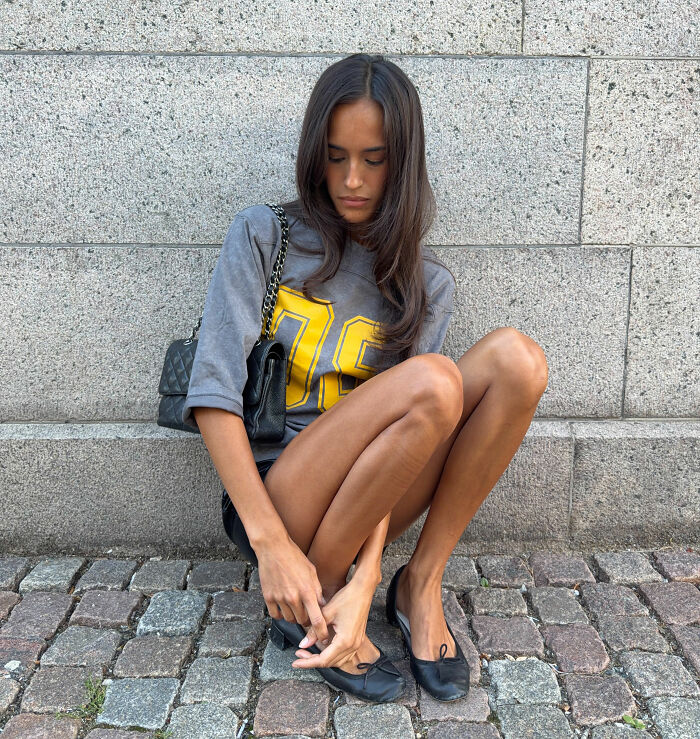
Across social media, viewers focused on the model promoting the dress, identified as Amalie Bladt, particularly her exceptionally slim frame.
View this post on Instagram
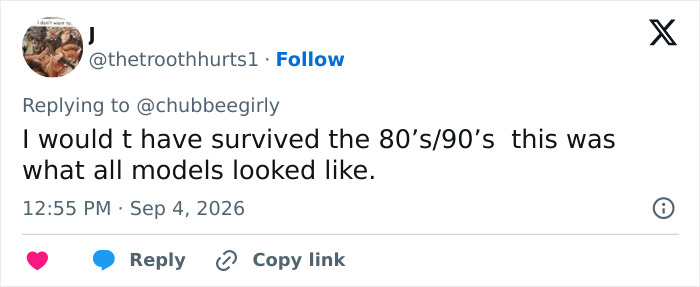
Some argued that the imagery looked like a throwback to the ultra-thin beauty standards that dominated fashion advertising in the 1990s and 2000s.
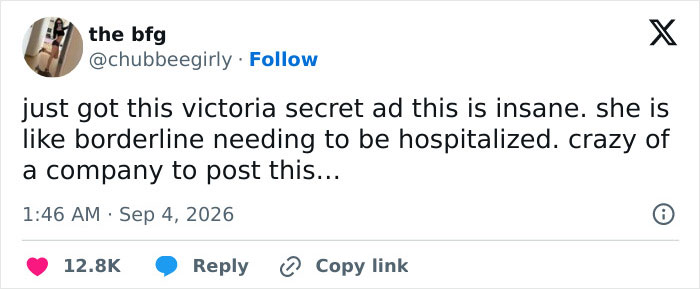
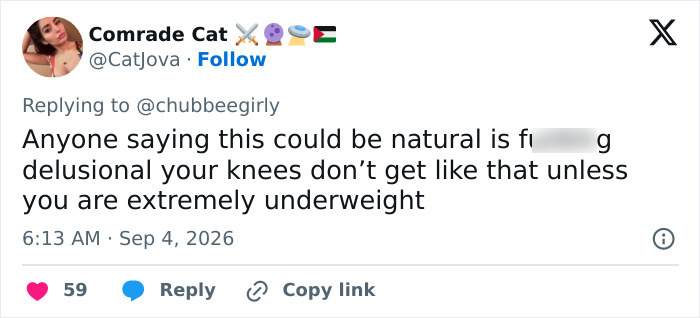
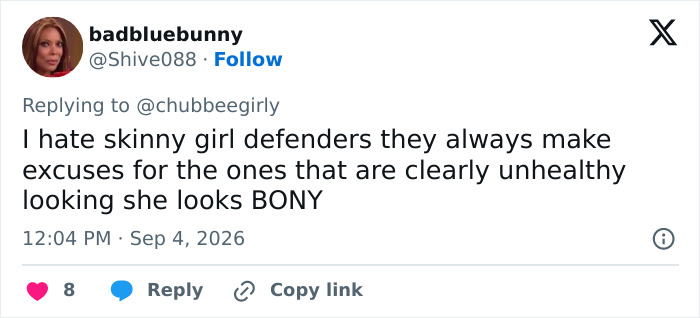
One viewer wrote, “Just got this victoria secret ad this is insane. She is like borderline needing to be hospitalized. Crazy of a company to post this…”
Another user added, “I got a Victoria’s Secret ad on TikTok with a very clearly extremely underweight model and was kind of shocked that we’re at this stage in beauty standards being normalized again.”
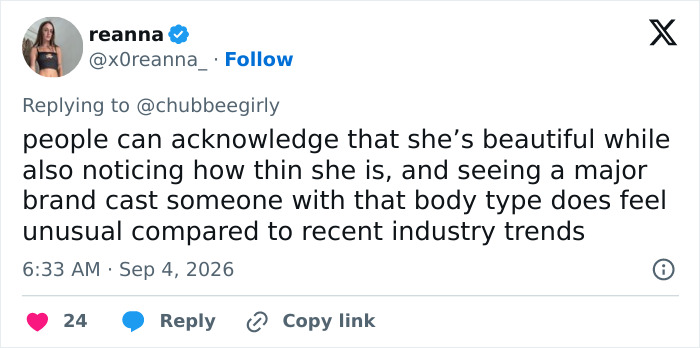
A third commenter wrote, “She’s a very pretty woman, but she’s also visibly severely underweight. It is unusual to see massive brands like victoria’s secret using models as thin as her nowadays.”
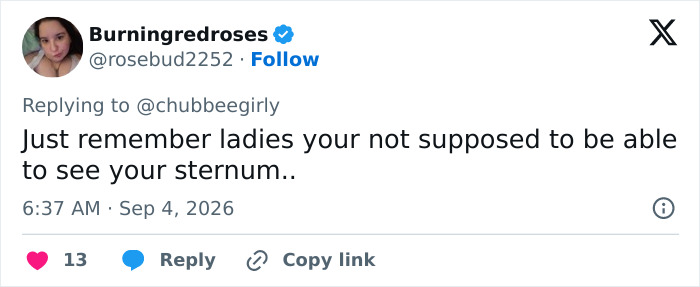
Another comment read, “Just remember ladies you’re not supposed to be able to see your sternum.”
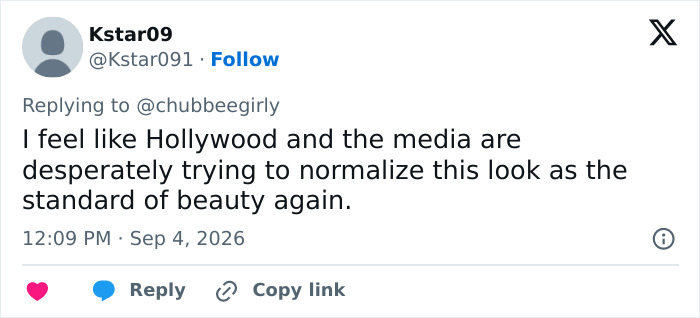
Others expressed, “I feel like Hollywood and the media are desperately trying to normalize this look as the standard of beauty again.”
“Why are the brands doing this? They want to sell to everyone, and for sure majority of women do not look like this.”
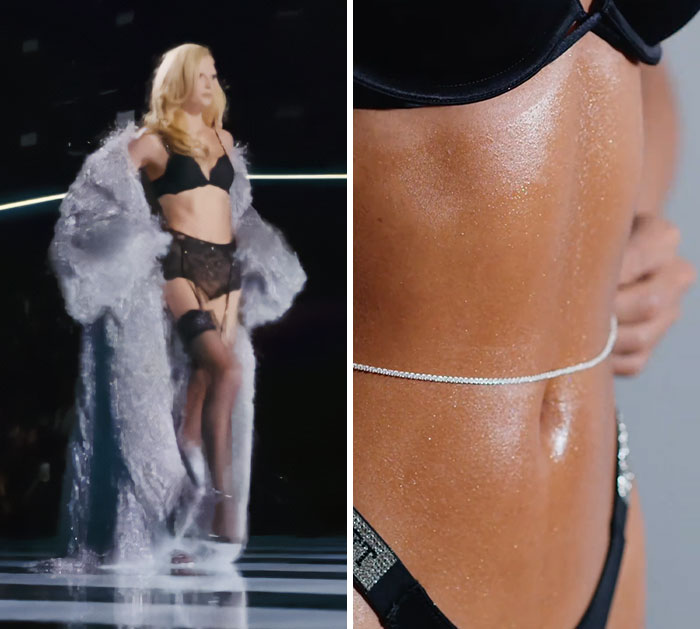
The backlash is particularly notable given Victoria’s Secret’s long and complicated history with ultra-thin beauty standards.
For years, the brand’s famous Angels were synonymous with exceptionally thin, conventionally glamorous bodies.
When the Victoria’s Secret Fashion Show returned in 2024 after a six-year hiatus, the company promoted the event as a more inclusive version of its famous spectacle.
CEO Hillary Super has described the brand’s current identity as “s*xy, glamorous, accessible luxury,” while also arguing that s*xiness should not be tied to one prescribed appearance.
However, for viewers who remember the era when Victoria’s Secret’s Angels helped define what “s*xy” was supposed to look like, seeing a similarly lean silhouette in a modern campaign can feel less like nostalgia and more like regression.
But not everyone agreed with the backlash, and some commenters turned their criticism toward those attacking the model herself.
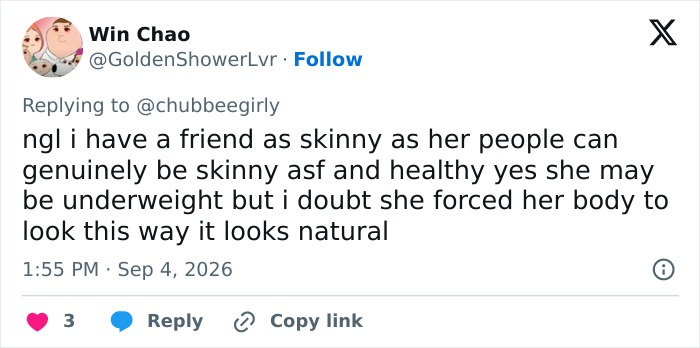
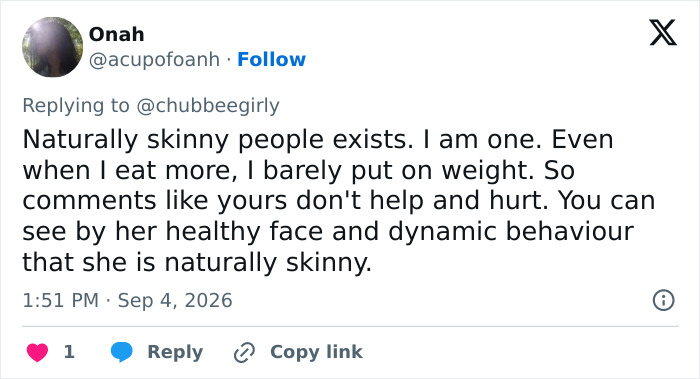
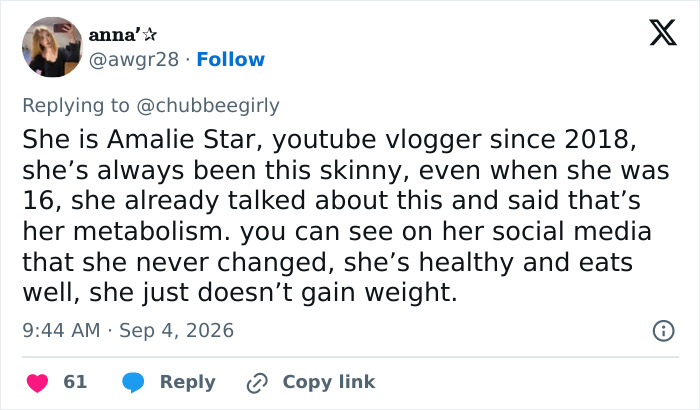
One defender argued that the model in the latest ad has always had a naturally slim build, writing that she was “always this skinny even as a teenager” and had previously attributed her appearance to her metabolism.
Another supporter added, “The outrage around her is crazy, she’s been on the internet since she was a teen and has always been this skinny. She can’t gain weight, that’s just how her body is. This is massive body shaming y’all are doing…”
Genetics can play a role in body composition, and differences in energy expenditure and metabolic rate can help some people naturally maintain a very lean physique.
In some cases, hypermetabolism can also make gaining weight difficult.
That, however, does not mean every exceptionally thin person has a “fast metabolism.”
Ultimately, much of the criticism is directed at the beauty standards promoted by the fashion industry rather than at the health or genetics of the individual models it hires.

By entering your email and clicking Subscribe, you're agreeing to let us send you customized marketing messages about us and our advertising partners. You are also agreeing to our Privacy Policy.
Thank you! You've successfully subscribed to newsletters!


That picture of her bent in the green dress is truly bizarre. Her head looks almost as big as the rest of her body.

Whether it's a healthy size/weight or not is, to my mind, irrelevant. If they had a fat model they'd be getting praised for their body-positive message, but surely that should work both ways? If they're being accused of promoting an unhealthy body ideal then all the fat ones, much more likely to be much less healthy, should be banned as well.

The thing is, it should be a mix of both. The trend recently has been rail thin models and celebrities, and that concerns people who lived through an era where eating disorders were rampant amongst teen girls due to all of the models and "pretty" people being so thin- it spreads the idea that if you aren't as thin as these models and movie stars, you're ugly. Luckily more has been done for body positivity since then, but it's still a concerning backslide. Both should exist, both can be beautiful, but just like people like to say that showing plus-sized models is "glorifying obesity", showing off overly skinny models is glorifying anorexia and other eating disorders. Yes, some people are naturally very skinny, but many aren't, and anorexia can be and is just as dangerous as being morbidly obese.
Load More Replies...
Don't forget, the camera adds twenty pounds to a woman and takes it off a man. She's not healthy. I used to modelm myself and know this all too well.
That picture of her bent in the green dress is truly bizarre. Her head looks almost as big as the rest of her body.
Whether it's a healthy size/weight or not is, to my mind, irrelevant. If they had a fat model they'd be getting praised for their body-positive message, but surely that should work both ways? If they're being accused of promoting an unhealthy body ideal then all the fat ones, much more likely to be much less healthy, should be banned as well.
The thing is, it should be a mix of both. The trend recently has been rail thin models and celebrities, and that concerns people who lived through an era where eating disorders were rampant amongst teen girls due to all of the models and "pretty" people being so thin- it spreads the idea that if you aren't as thin as these models and movie stars, you're ugly. Luckily more has been done for body positivity since then, but it's still a concerning backslide. Both should exist, both can be beautiful, but just like people like to say that showing plus-sized models is "glorifying obesity", showing off overly skinny models is glorifying anorexia and other eating disorders. Yes, some people are naturally very skinny, but many aren't, and anorexia can be and is just as dangerous as being morbidly obese.
Load More Replies... Don't forget, the camera adds twenty pounds to a woman and takes it off a man. She's not healthy. I used to modelm myself and know this all too well.













 No fees, cancel anytime











-11
22