Get Premium
Dark mode theme is available exclusively for premium users. Learn more about the benefits of subscribing.
No fees, cancel anytime.

 Dark Mode Ad-Free Browsing Unlimited Content
 Ad-Free Browsing Unlimited Content Dark Mode
Join 1.2 million Panda readers who get the best art, memes, and fun stories every week!

A viral video celebrating everyday products “designed by women” has sparked an intense debate online, as commenters started fact-checking who actually created them.
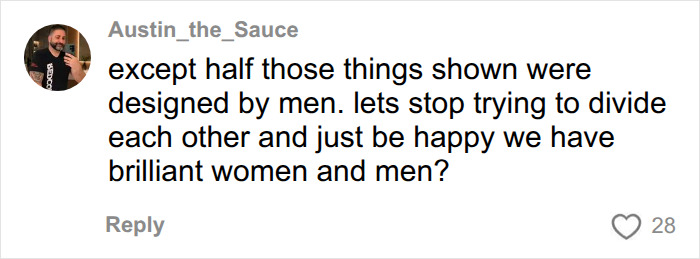
The compilation had viewers nodding along to clever bathroom fixtures, practical clothing, and ingenious shoes, but some users quickly pointed out that several of the products were actually designed or developed by men.
And, interestingly, some of the people challenging the video’s premise were women themselves.
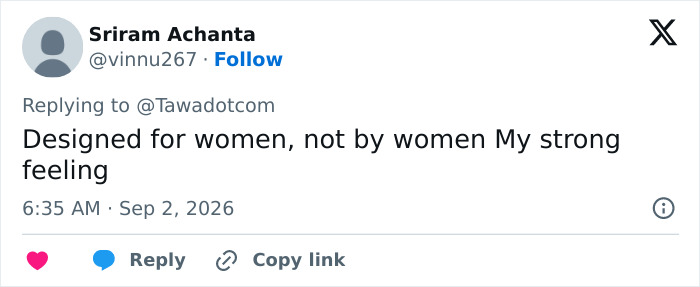
One person reacted, “I would say designed for women, not by women, My strong feeling on this!”
The original video was built around a simple premise: these are the kinds of everyday inventions that make women wonder, “I just know women designed this.”
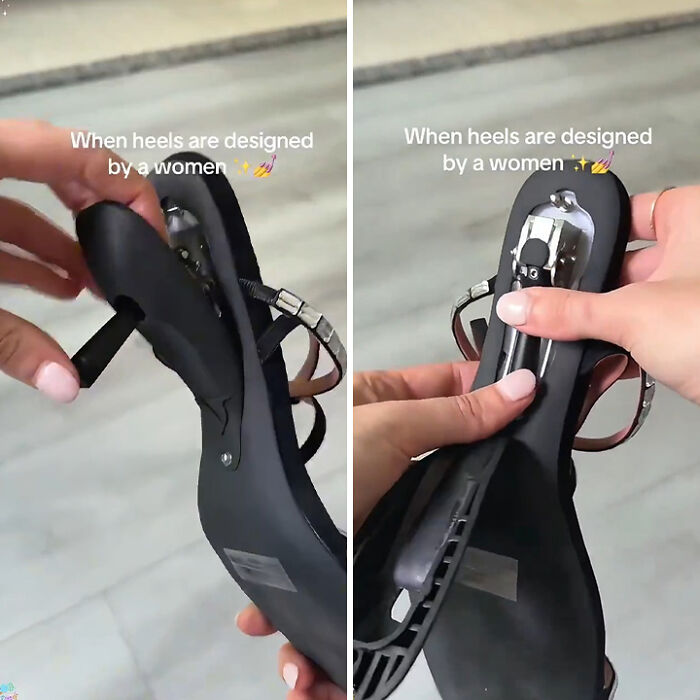
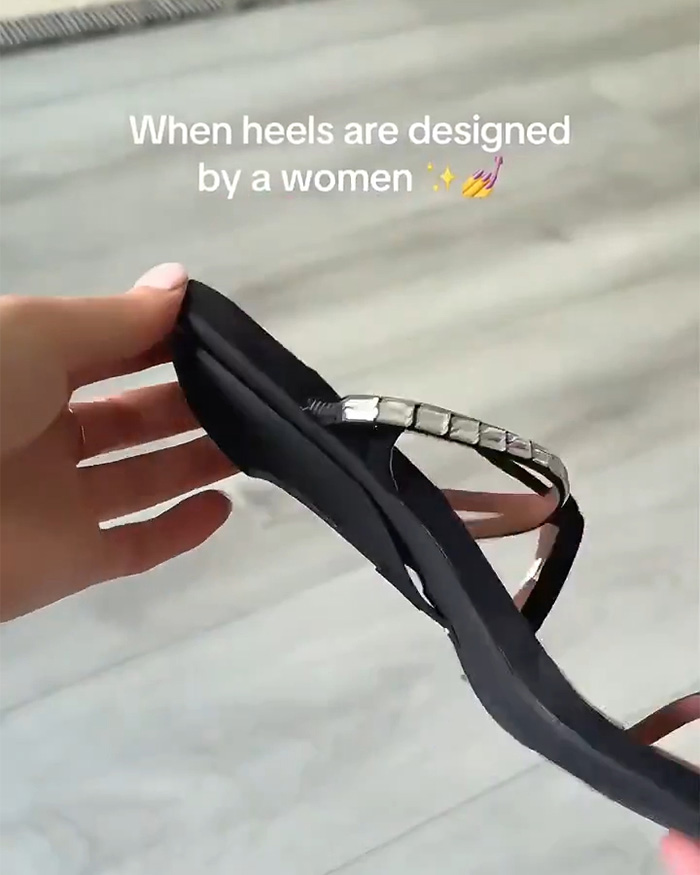
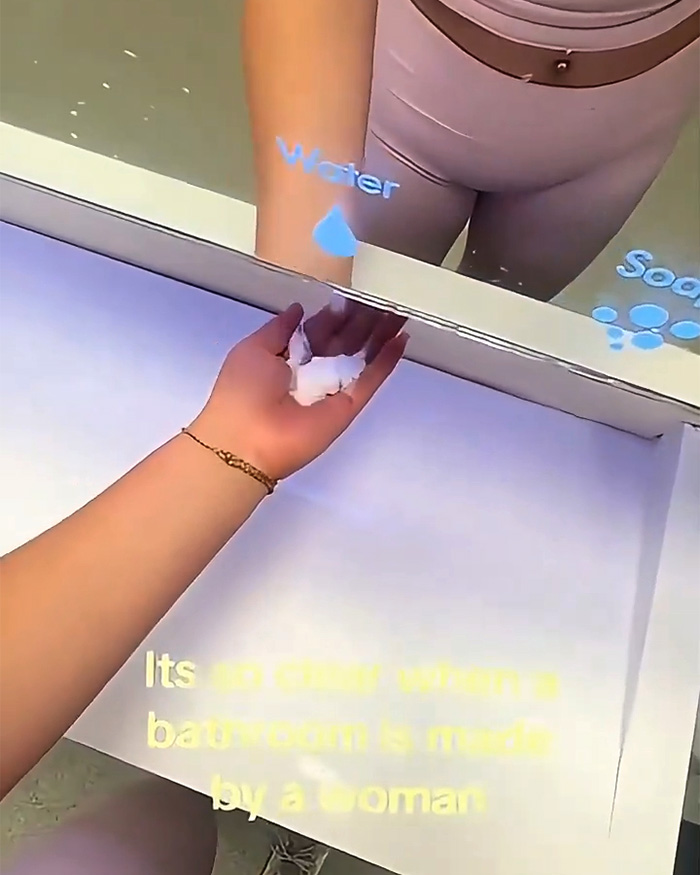
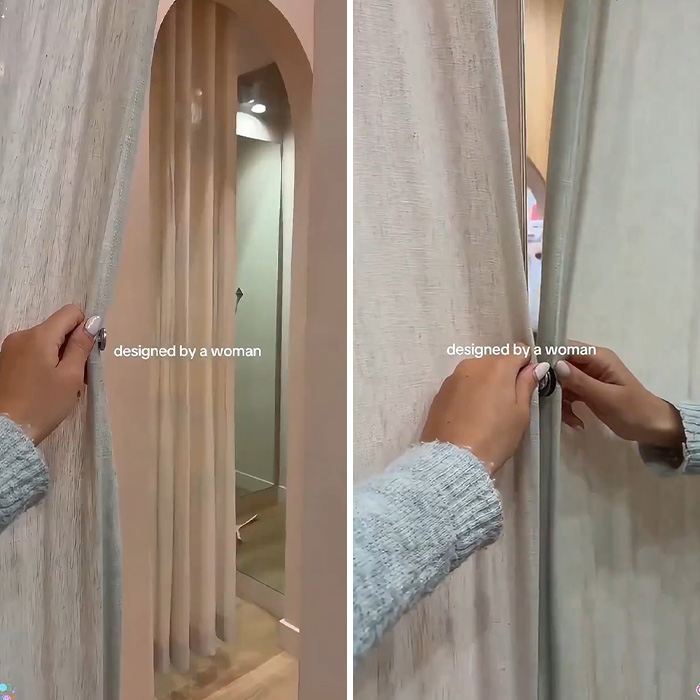
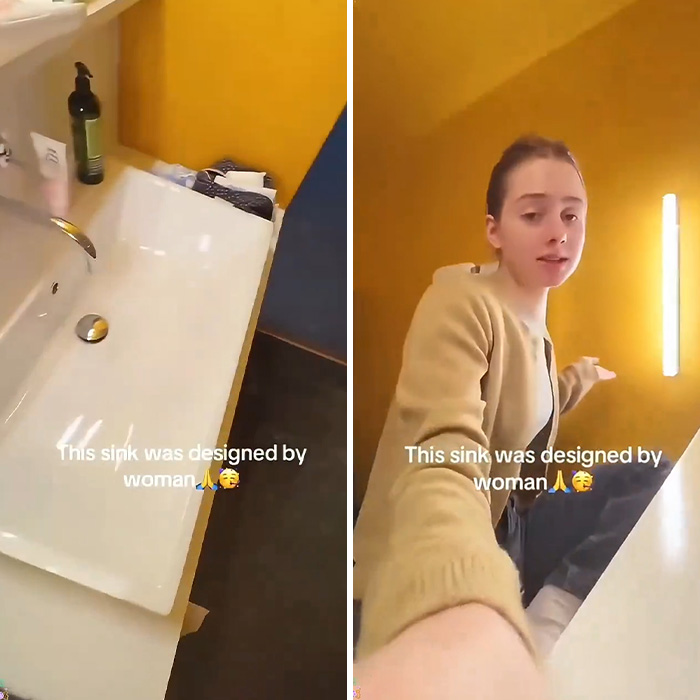
It featured a collection of products particularly familiar to women, from more convenient bathroom fixtures to dresses with pockets and convertible heels designed with practicality in mind.
However, the video’s claim that women designed these products quickly sparked intense backlash online.
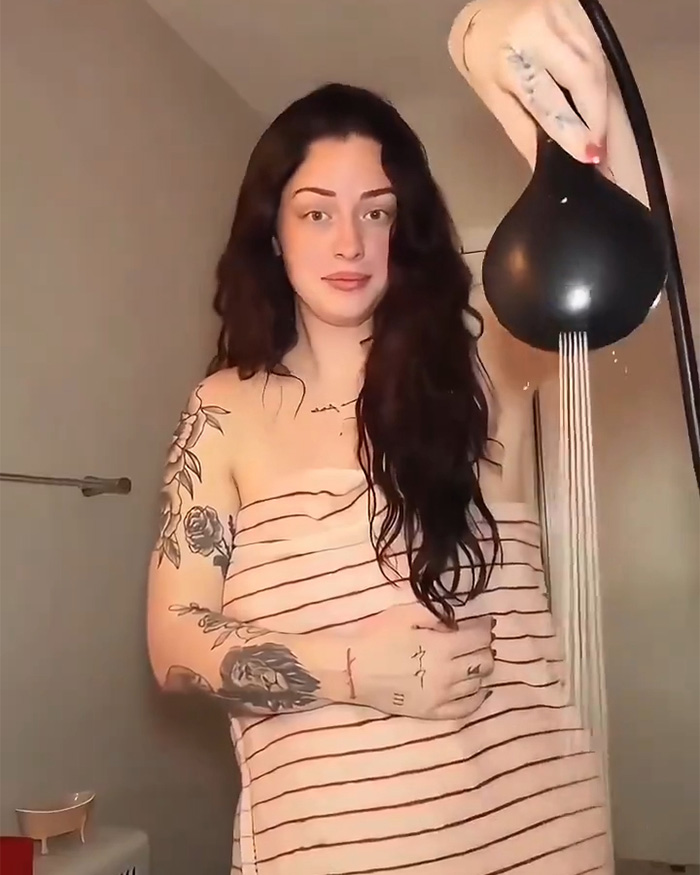
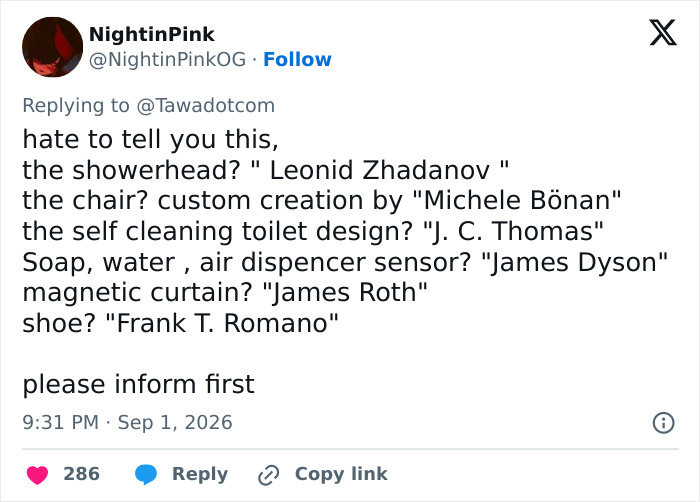
One commenter wrote, “Hate to tell you this, the showerhead? ‘Leonid Zhadanov’ the chair? custom creation by ‘Michele Bönan’ the self-cleaning toilet design? ‘J. C. Thomas’ Soap, water, air dispenser sensor? ‘James Dyson’ magnetic curtain? ‘James Roth’ shoe? ‘Frank T. Romano.’”
The comment was not entirely accurate, however.
Several of the names circulating beneath the video were linked to similar technologies or products, but that does not necessarily make them the creators of the exact items shown.
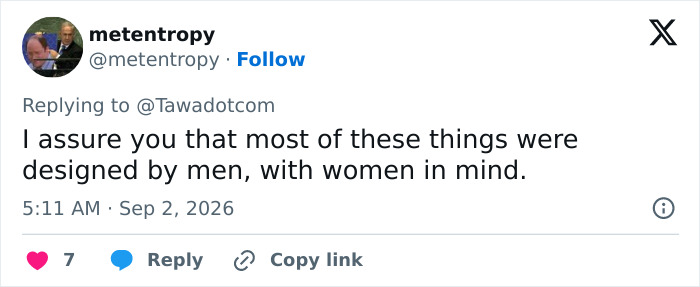
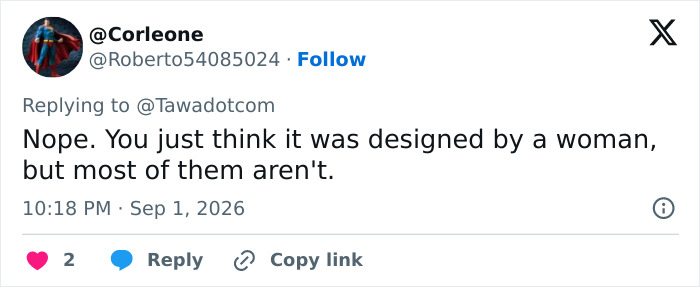
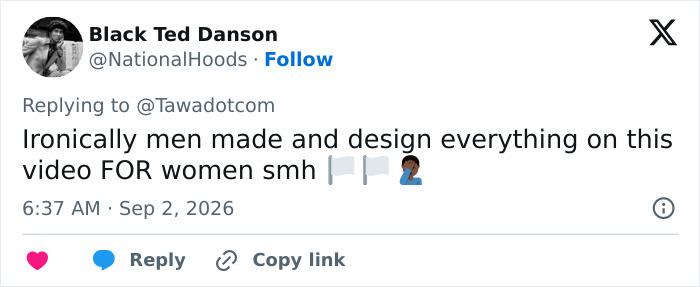
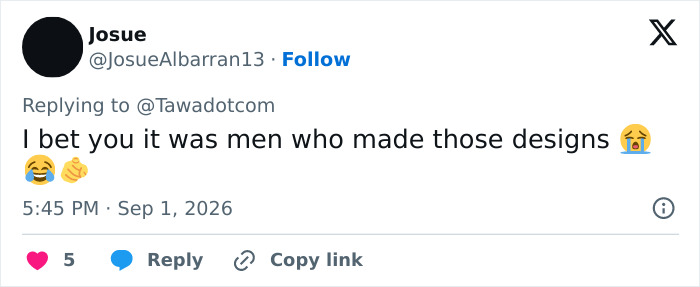
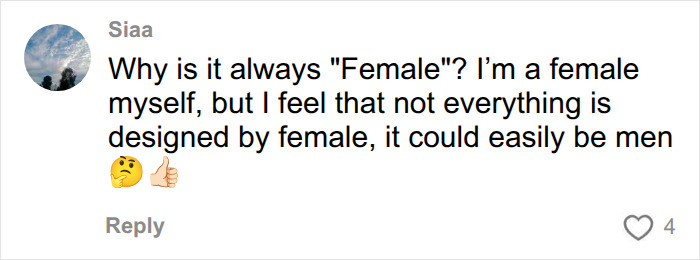
Another viewer wrote, “Most of these were made by men btw,” while a third commented, “I assure you that most of these things were designed by men, with women in mind.”
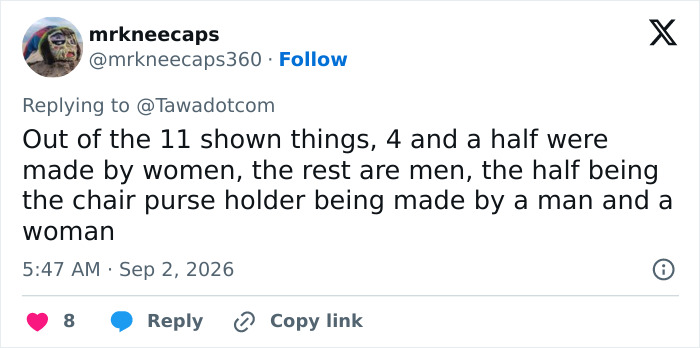
Others expressed, “Out of the 11 shown things, 4 and a half were made by women, the rest are men, the half being the chair purse holder being made by a man and a woman.”
And another user joked, “So funny how I bet most of those were actually made by men lol but the pocket one blew my mind of how absurd lol.”
Notably, some of the people making these observations identified themselves as women, meaning the pushback wasn’t simply men dismissing a celebration of female inventors.
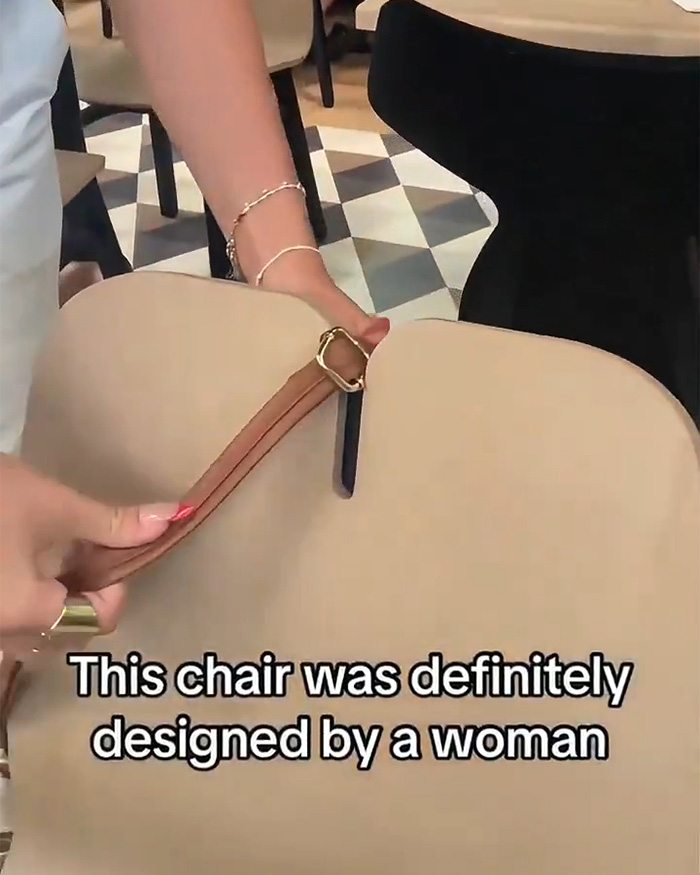
The chair with a dramatic vertical cut through the center of its backrest, featured in the clip, is the Cutter Chair, designed by Italian architect and designer Mario Bellini for B&B Italia.
Bellini’s own architecture studio describes the chair as having a backrest “slashed by a cut,” inspired by artist Lucio Fontana.
The cut also has a practical purpose: the two upper sections of the backrest can move independently, allowing someone to sit sideways and interact more comfortably with another person.
The Brill Seat-One is another particularly clear example.
It is an automatic toilet-seat-cover system manufactured by Brill Hygienic Products, and the company’s website identifies Allan Brill and David Jablow as the creators.
The Aunt Flow dispenser, meanwhile, was founded by Claire Coder, who says she began developing the company’s menstrual-product dispensing system at 18.
The company’s patented dispenser technology does list Coder as an inventor, but she is not the only one.
A U.S. patent for the product-dispensing system lists Coder alongside Anne Weigand, Pepin Gelardi, Emma Pearl Wilmer-Shiles, Gordon Thomas, Mark Dalhart, and Jesse Klein.
According to Wikipedia, the automatic sensor faucet shown in the compilation is credited to Australian inventor Norman Wareham, who developed an electronic “no-touch” system for controlling water flow.
Wareham is credited with inventing sensor-activated faucets in 1981, initially with applications for people who had difficulty operating traditional faucet handles.
As for dresses with pockets, nobody invented the idea in one identifiable moment.
Women historically used tie-on pockets worn underneath their clothing, while later dressmakers incorporated pockets into garments in different ways.
But one strong female name is associated with the modern idea of functional pockets in women’s fashion: Claire McCardell.
The American designer became famous for treating clothing as something that should allow women to move and live comfortably rather than simply conform to restrictive fashion conventions.
Her 1942 Popover dress, for example, incorporated a large practical pocket, and functional details became an important part of her design philosophy.
That makes McCardell an influential pioneer and popularizer, rather than the literal inventor of pockets in women’s dresses.
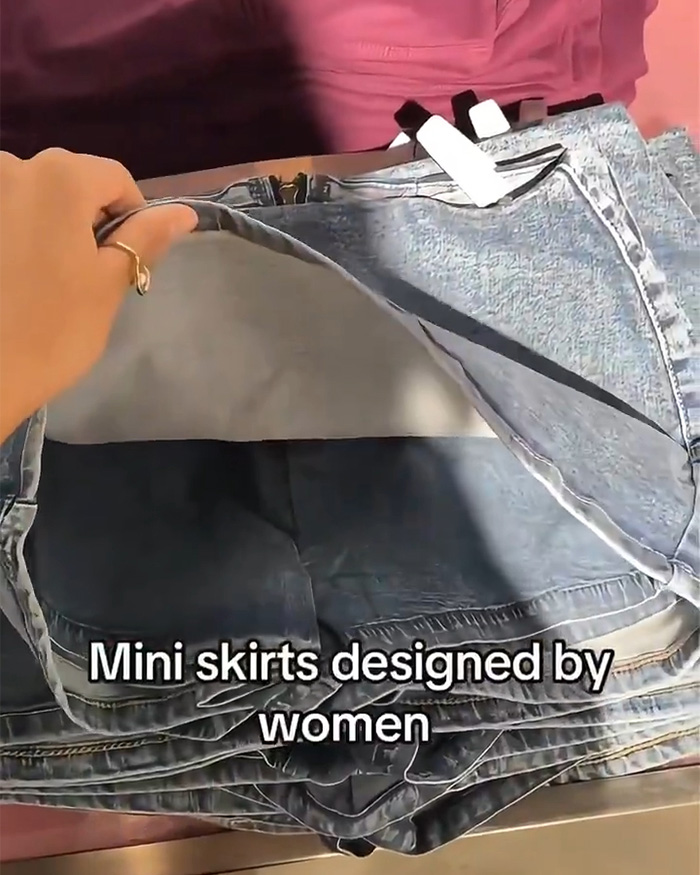
The skort, another garment sometimes included in this kind of list, tells a similar story.
The concept evolved from earlier divided skirts and athletic garments, with designers such as Elsa Schiaparelli playing an important role in popularizing divided skirts for women.
Later commercial versions involved both male designers and corporate teams.
In other words, the garment evolved over decades rather than appearing fully formed from one person’s workshop.
There is, however, at least one example where the video’s basic premise appears to be much closer to the truth.
The convertible high heel shown in the compilation is associated with Haley Pavone, founder of Pashion Footwear.
When Women Design… pic.twitter.com/xtxEDOkChY
— Tawadotcom (@Tawadotcom) September 1, 2026
Pavone came up with the idea after experiencing the familiar problem of painful high heels and spent years developing a system that allows the footwear to transform from a high heel into a flat.
That makes Pavone a genuine example of a woman developing a product specifically around a problem she had personally experienced.

By entering your email and clicking Subscribe, you're agreeing to let us send you customized marketing messages about us and our advertising partners. You are also agreeing to our Privacy Policy.
Thank you! You've successfully subscribed to newsletters!


There are still PLENTY of things designed and invented by women. Here are 6 pages of things: https://docs.google.com/document/d/19XLiKrWwPonFEbdTi_Z9EDtvEvDsI6v1AhTuaZbFnso/edit?usp=sharing

Thanks for that! I had planned to check it out just to make sure Grace Hopper was on it, but it appears I’m gonna be spending the next couple hours with the d****d thing ‘cause it’s interesting! Thanks a lot, Janet; I have a thousand things I need to do today, and you just threw a spanned in the works. Grrr. (But seriously, I appreciate it! 💋)
Load More Replies...
What's the point of the shower head? Also, I don't want my handbag hanging on the back of my chair, that's just asking for trouble.

“People who consider women’s needs when they design something” is a strangely 21st century concept. Strangely because women have been around for as long as men. So why has it taken thousands+ of years for this consideration to occur? Because for the first time in recorded history women have had enough cultural power to influence viewpoints about society, economics, design, etc. And this power, yes, was achieved because of so many women over the last 100 years putting their lives on the line to fight for rights and freedoms previously unheard of for women
There are still PLENTY of things designed and invented by women. Here are 6 pages of things: https://docs.google.com/document/d/19XLiKrWwPonFEbdTi_Z9EDtvEvDsI6v1AhTuaZbFnso/edit?usp=sharing
Thanks for that! I had planned to check it out just to make sure Grace Hopper was on it, but it appears I’m gonna be spending the next couple hours with the d****d thing ‘cause it’s interesting! Thanks a lot, Janet; I have a thousand things I need to do today, and you just threw a spanned in the works. Grrr. (But seriously, I appreciate it! 💋)
Load More Replies... What's the point of the shower head? Also, I don't want my handbag hanging on the back of my chair, that's just asking for trouble.
“People who consider women’s needs when they design something” is a strangely 21st century concept. Strangely because women have been around for as long as men. So why has it taken thousands+ of years for this consideration to occur? Because for the first time in recorded history women have had enough cultural power to influence viewpoints about society, economics, design, etc. And this power, yes, was achieved because of so many women over the last 100 years putting their lives on the line to fight for rights and freedoms previously unheard of for women



























 No fees, cancel anytime





















24
9