Get Premium
Dark mode theme is available exclusively for premium users. Learn more about the benefits of subscribing.
No fees, cancel anytime.

 Dark Mode Ad-Free Browsing Unlimited Content
 Ad-Free Browsing Unlimited Content Dark Mode
Join 1.2 million Panda readers who get the best art, memes, and fun stories every week!

A car seat is not exactly the kind of thing most parents want to receive with a mysterious backstory. A cute hand-me-down can be one thing, but safety equipment is another. If nobody can tell you where it came from, how long it was used, or what happened to it before it landed in your hands, “free” can suddenly come with a lot of unanswered questions.
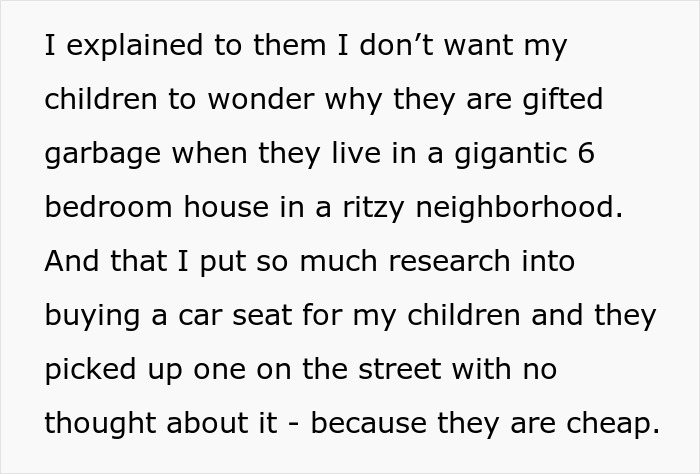
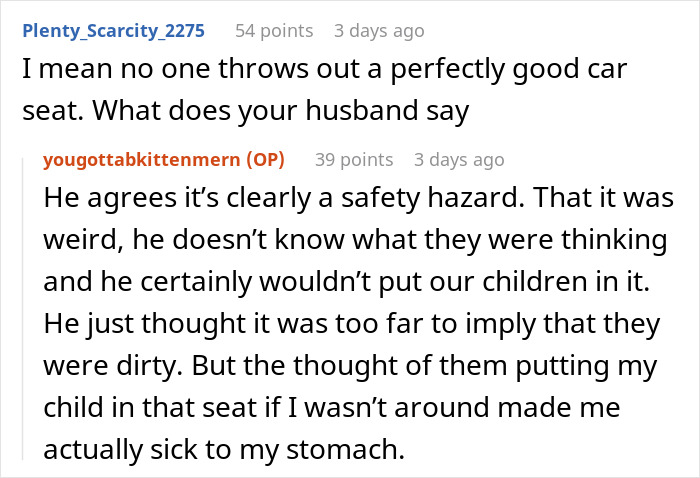
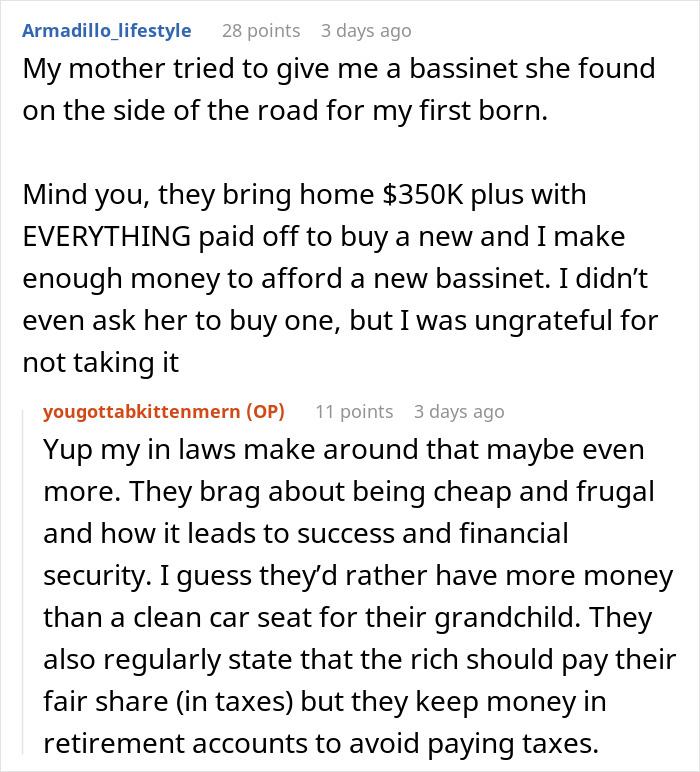
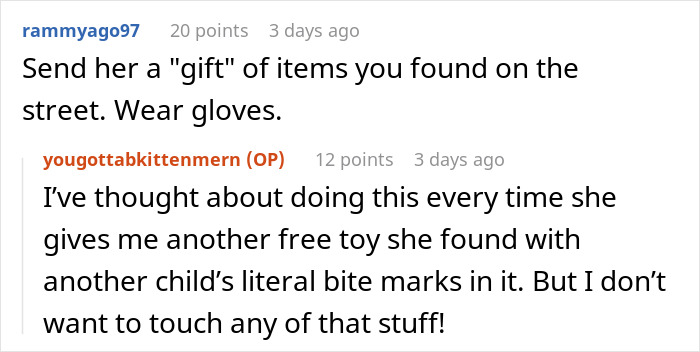
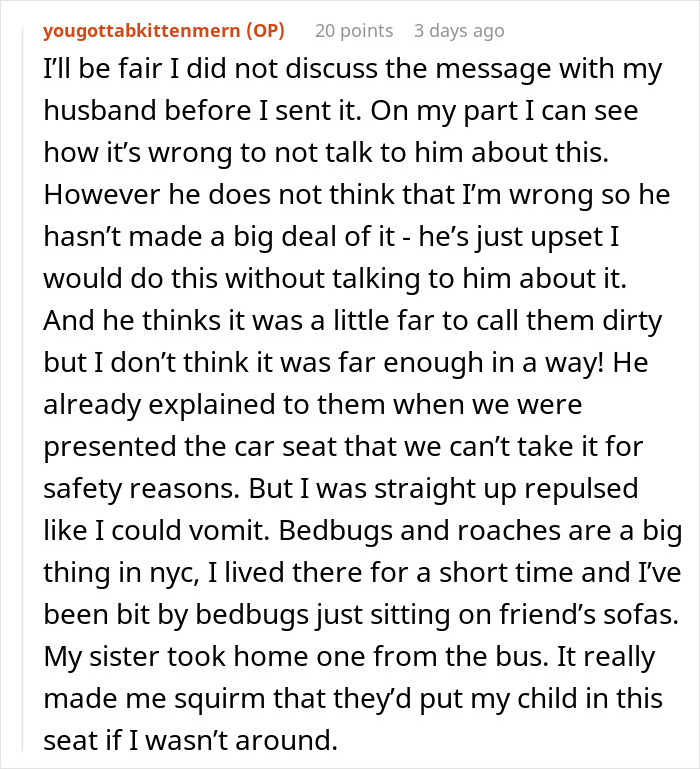
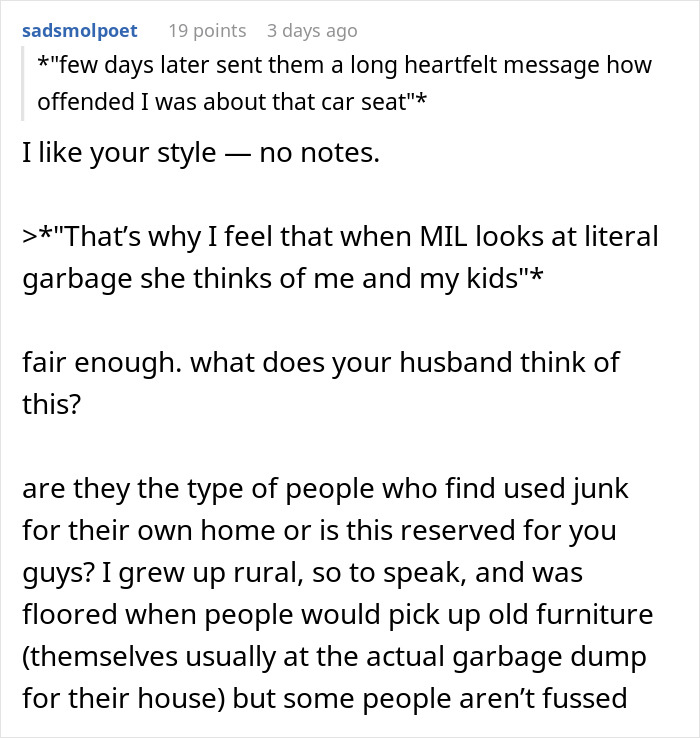
That is what made one mother so upset when her in-laws brought home a car seat they had found in a box beside the garbage during a trip to New York City. She already felt frustrated by their habit of collecting free toys, but this felt different.
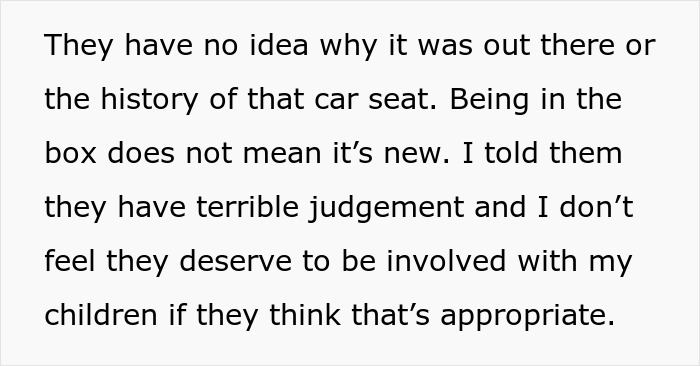

There is an important distinction between a second-hand car seat and a car seat with no known history. Certified Child Passenger Safety Technician and instructor Elizabeth D. W. described the basic issue for Safe Kids Worldwide, which is that a used seat can sometimes be appropriate, but not knowing what happened to it is a reason to rule it out.
The fact that the seat was found inside a box also does not solve the biggest problem. Packaging can conceal the condition of an item, but a mystery seat picked up from the street offers no reliable way to establish those basics before a child is placed in it.
Besides, one of the most important pieces of information missing from an unknown car seat is its crash history. The National Highway Traffic Safety Administration recommends replacing a seat after a moderate or severe crash because continued use may compromise its ability to provide the intended protection. How, then, does one know this if it was picked from garbage?
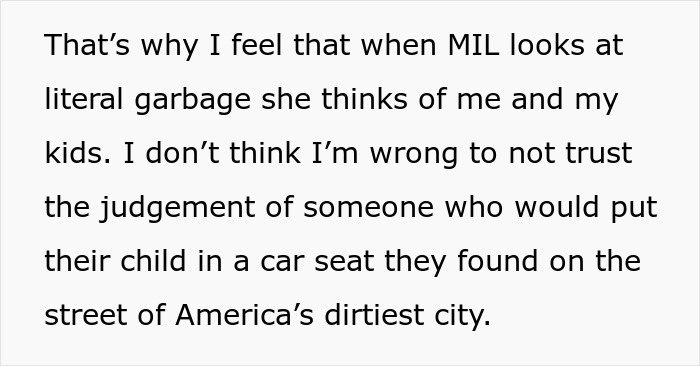
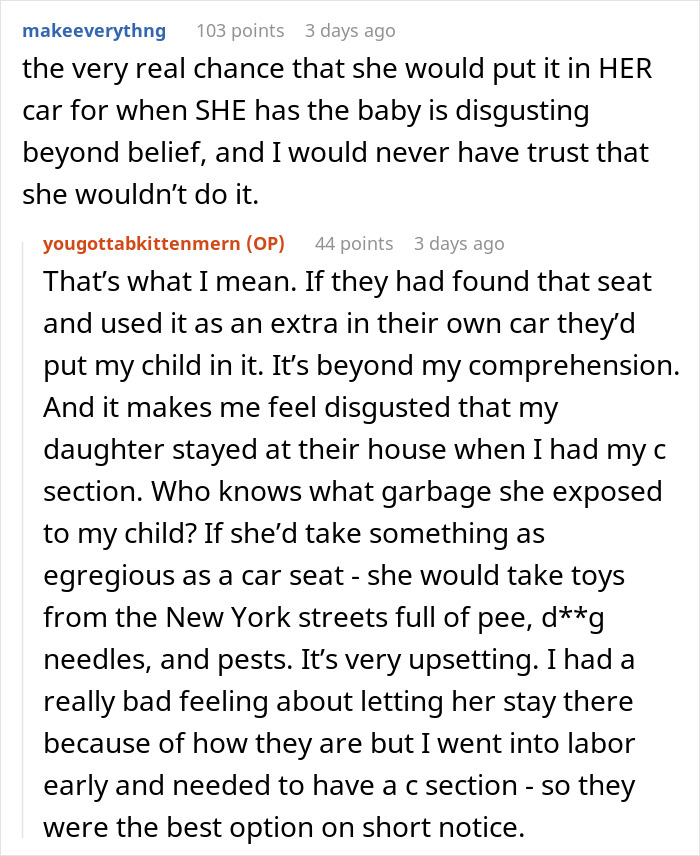
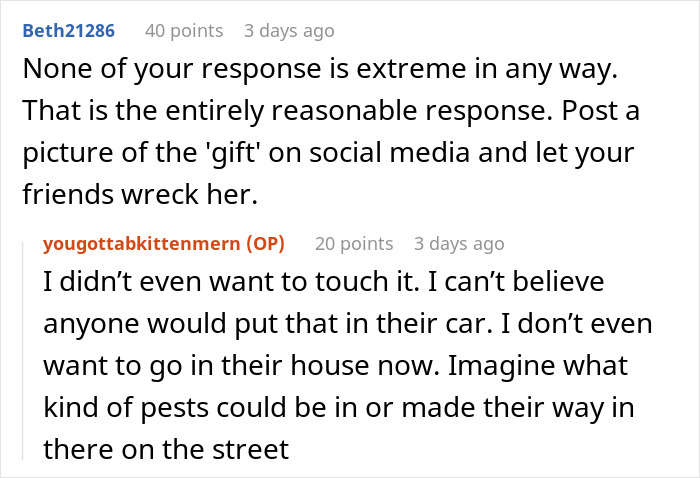
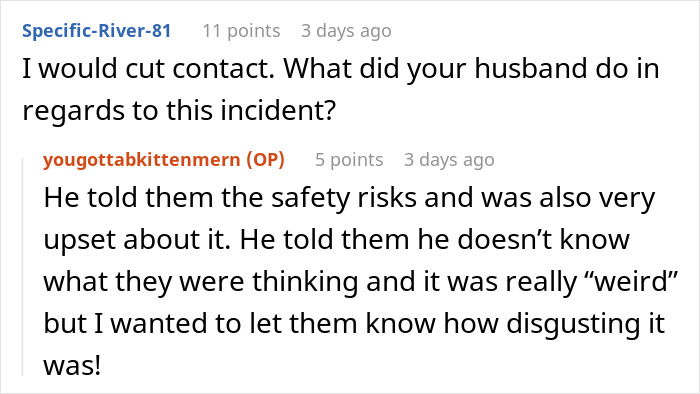
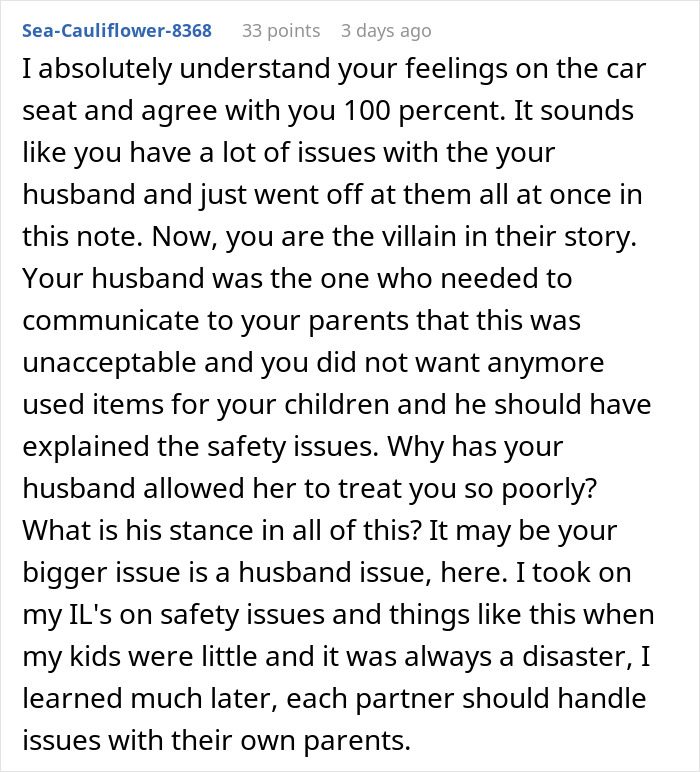
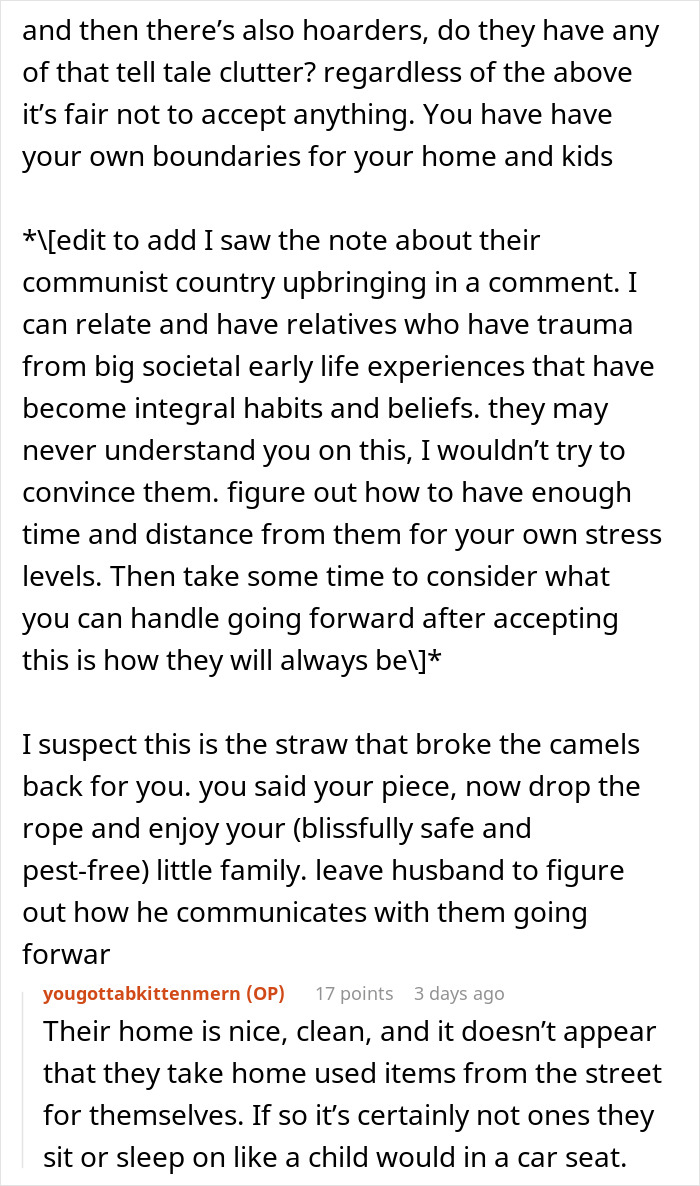
The mother’s concern about pests adds another dimension, although it is worth separating the realistic risk from the more dramatic possibilities. Bed bugs, for example, are not attracted specifically to dirty places, as WebMD affirms. Still, a discarded car seat presents an additional unknown. Therefore, the mother did not need to prove that the particular seat contained bed bugs to have a reason for refusing to bring it into her children’s routine.
Perhaps the disagreement also touches on something more ordinary. People do not always attach the same meaning to giving things away. Someone who enjoys finding free or discarded items may see a perfectly usable object that would otherwise go to waste. The person receiving it may instead see an item they never asked for and now have to inspect, store, or dispose of.
Psychologist and University of California, Berkeley researcher Emiliana Simon-Thomas has discussed how gift-giving can activate brain systems associated with pleasure, social connection, and trust. That can make a gift emotionally different from an ordinary transaction. In this case, the mother’s reaction suggests that the car seat was interpreted not as a thoughtful bargain but as a sign that her in-laws did not understand the standards she had set for her children.
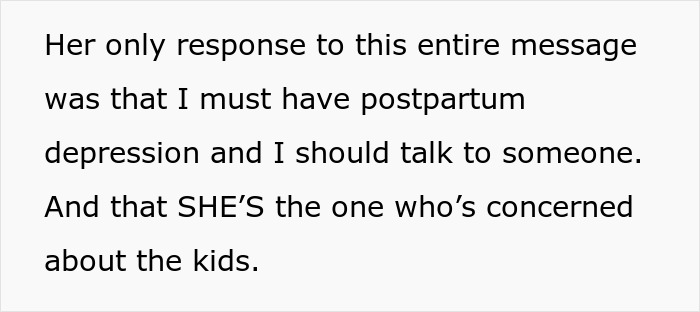
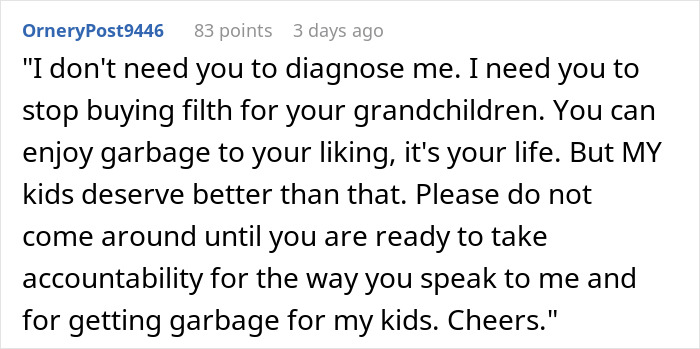
And even after explaining her concerns, the mother-in-law suggested that she might have postpartum depression and should speak to someone. Ouch. At that point, that response shifted the conversation away from the actual car seat and toward the mother’s mental health, which she experienced as another dismissal of her concerns.
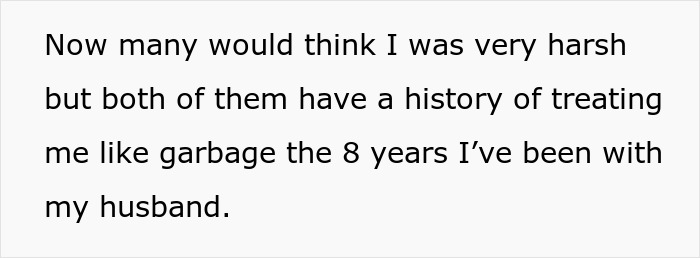
When someone repeatedly dismisses your concerns, especially a family member, it can be hurtful. However, Psychology Today maintains that there is no rule that says family members are automatically entitled to unlimited access to one another. If repeated attempts to communicate and establish boundaries have gone nowhere, reducing contact or ending a relationship can become a personal decision about protecting one’s peace and maintaining a healthier environment.
What do you think about this situation? Where would you draw the line between accepting a family member’s quirks and deciding you no longer want a relationship with them? We would love to hear from you!







My last salary was $8750, ecom only worked 12 hours a week. My longtime neighbor yr estimated $15,000 and works about 20 hours for seven days. I can't believe how blunt he was when I looked up his information, This is what I do..... 𝐍𝐞𝐭𝐏𝐚𝐲𝟏.𝐂𝐨𝐦
My last salary was $8750, ecom only worked 12 hours a week. My longtime neighbor yr estimated $15,000 and works about 20 hours for seven days. I can't believe how blunt he was when I looked up his information, This is what I do..... 𝐍𝐞𝐭𝐏𝐚𝐲𝟏.𝐂𝐨𝐦






























 No fees, cancel anytime









34
2