Get Premium
Dark mode theme is available exclusively for premium users. Learn more about the benefits of subscribing.
No fees, cancel anytime.

 Dark Mode Ad-Free Browsing Unlimited Content
 Ad-Free Browsing Unlimited Content Dark Mode
Join 1.2 million Panda readers who get the best art, memes, and fun stories every week!

In a relationship, it’s not fair for either partner to always get their way. Both sides need to be heard and appreciated. Otherwise, the seed of discontent might grow into much bigger problems.
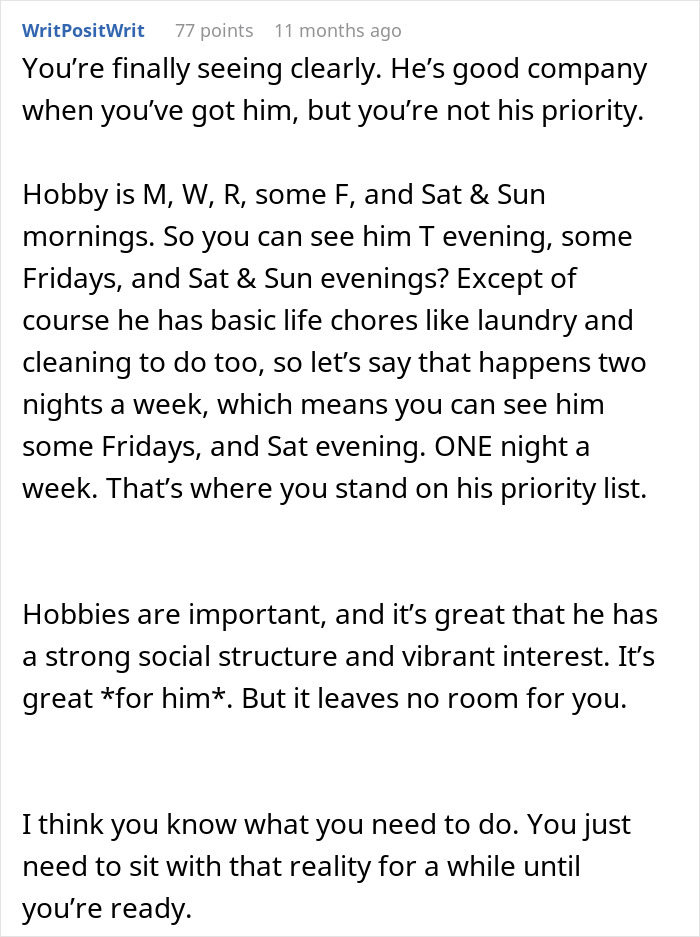
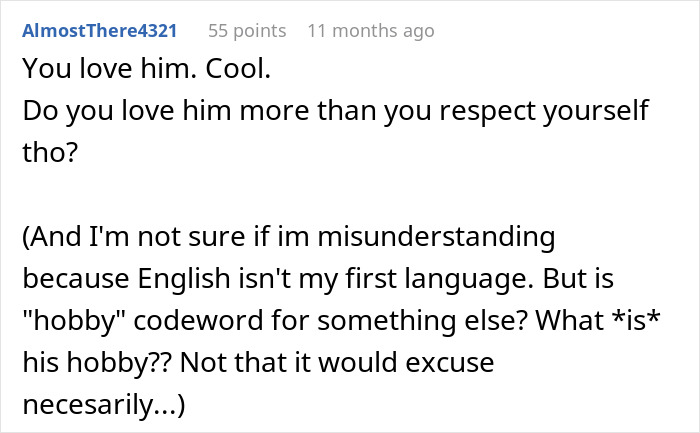
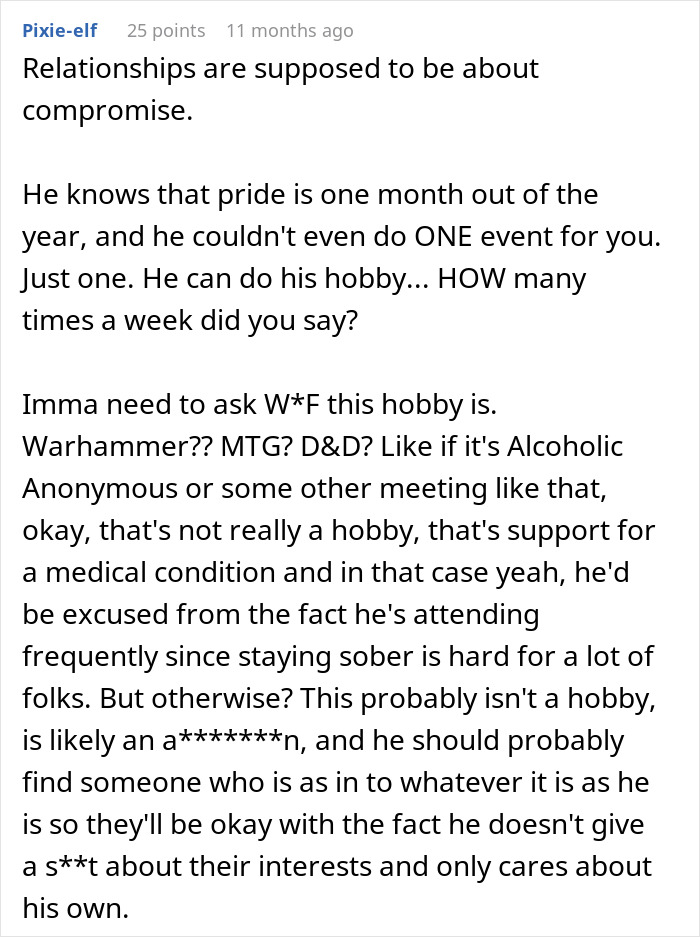
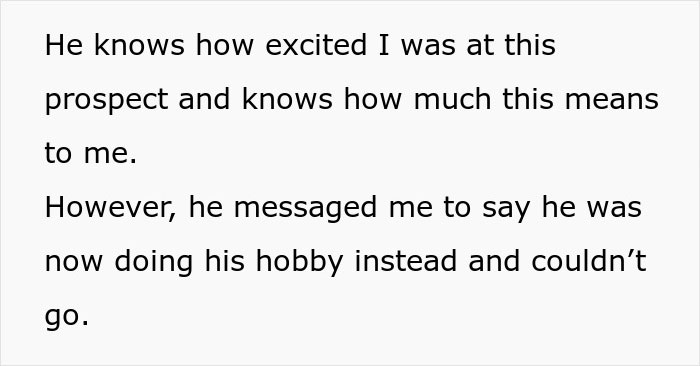
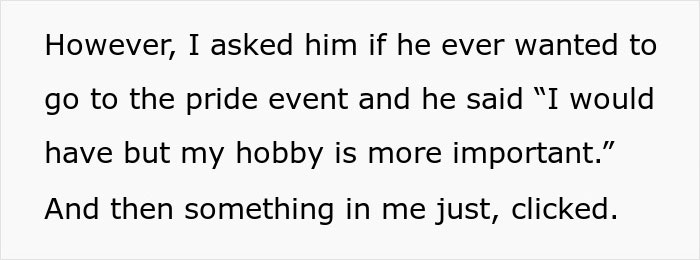
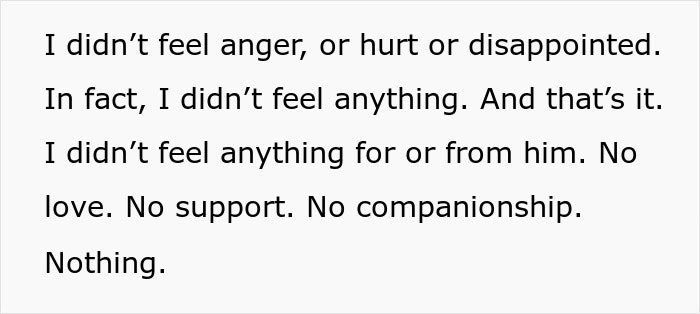
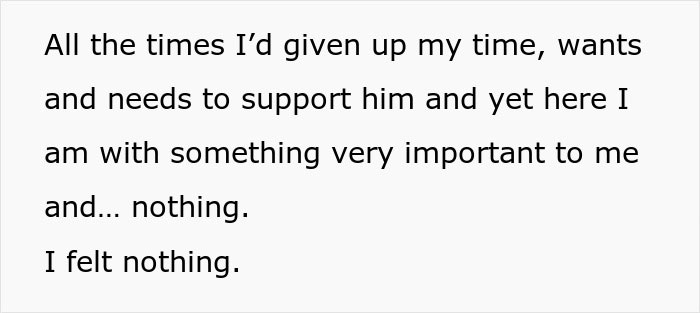
But one woman recently turned to the internet, saying she had become sick and tired of her boyfriend’s refusal to show any interest in what she values. What makes her feel even worse is that the guy expects her to fully support his own lifestyle.
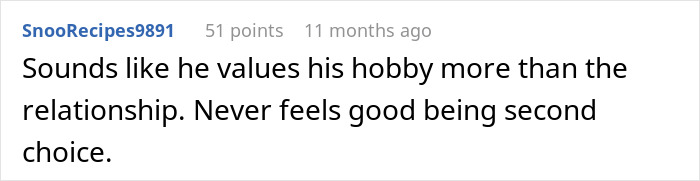
And while she had no problem with it at first, over time, it became clear to her that she would never come first in his priorities.
Image credits: The Yuri Arcurs Collection / Magnific (not the actual photo)
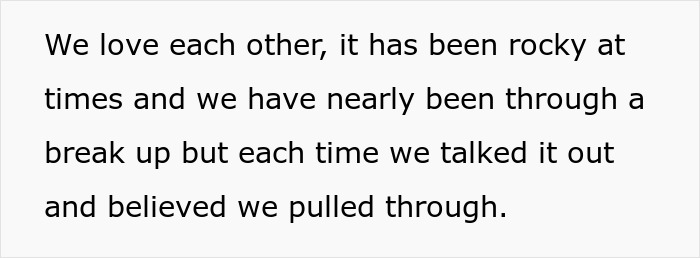
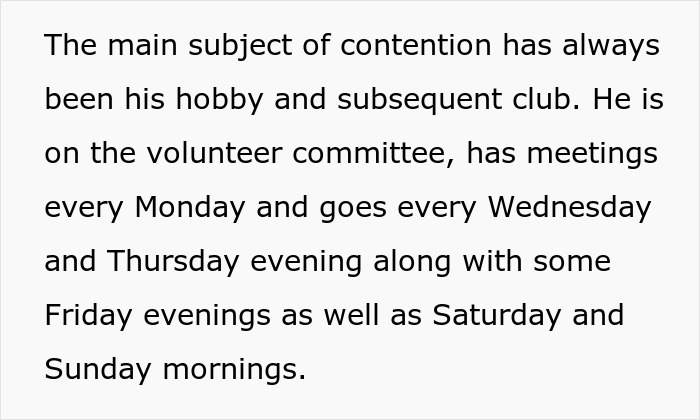
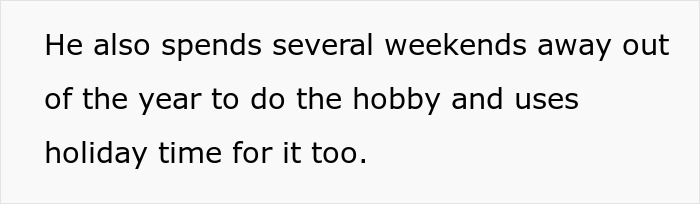
Image credits: Ahmet Kurt / Unsplash (not the actual photo)
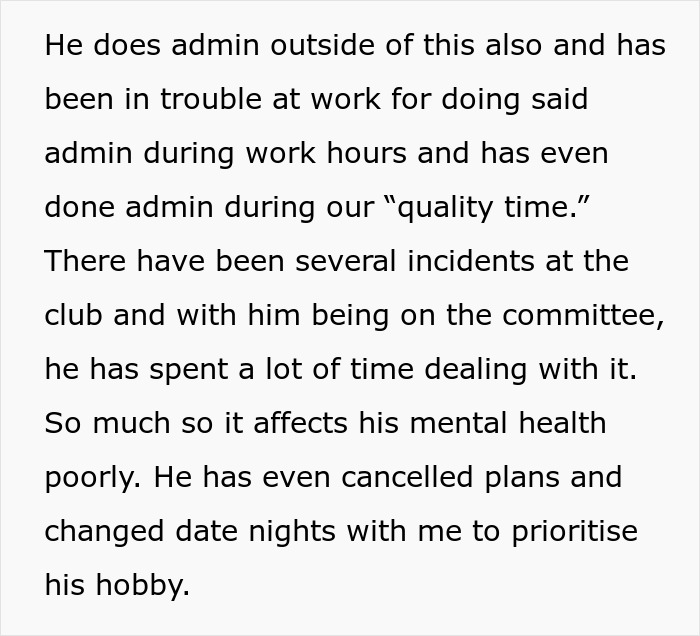
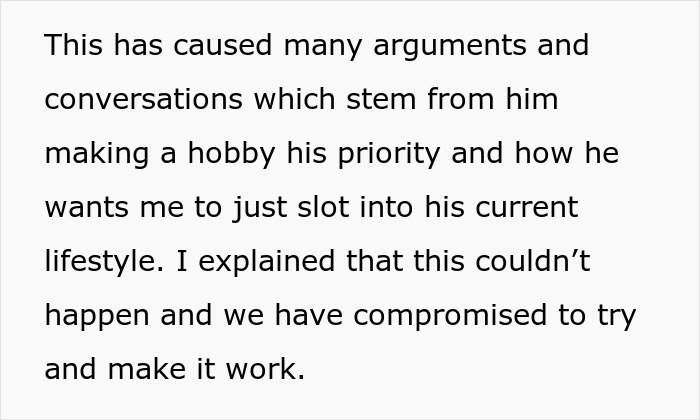
Image credits: Jonas Leupe / Unsplash (not the actual photo)
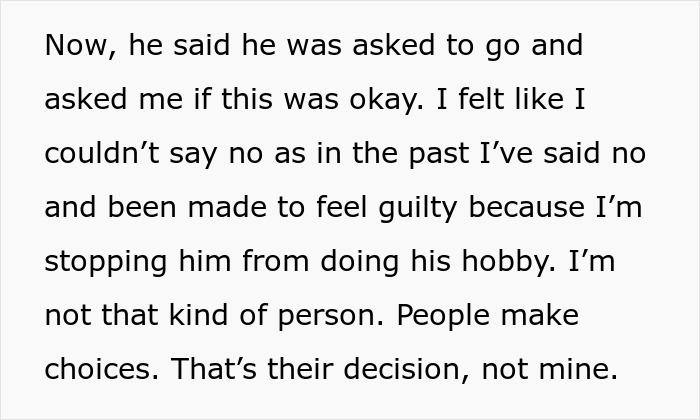
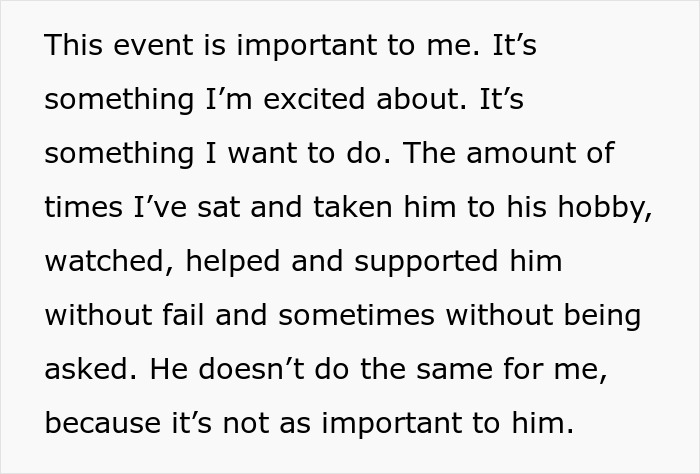
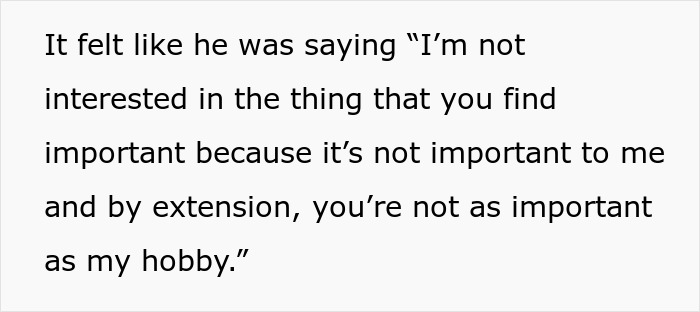
Image credits: The Yuri Arcurs Collection / Magnific (not the actual photo)
Image credits: PNW Production / Pexels (not the actual photo)
Image credits: freepik / Magnific (not the actual photo)
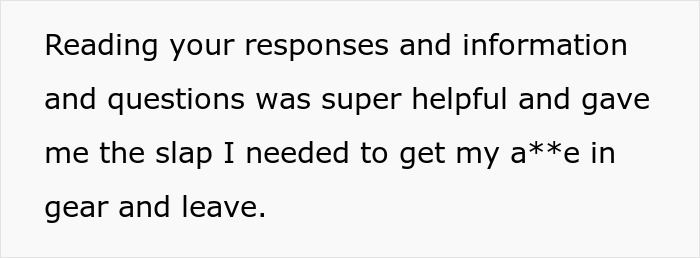
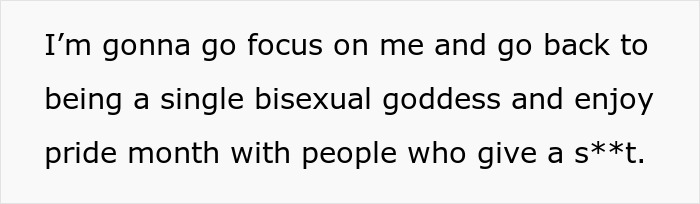
Image credits: ThrowRA_parody_twin9
Image credits: Priscilla Du Preez / Unsplash (not the actual photo)
A new survey of more than 4,000 Americans found that 33% of respondents feel they have compromised their standards when choosing a partner. Conversely, 28% believe their partner settled for them.
Women were more likely than men to believe they settled, 35% versus 31%.
“When we talk about ‘settling,’ we are usually referring to a situation where someone overrides core values, long-term needs, or a genuine sense of emotional or physical attraction in order to stay in a relationship,” said psychologist Danielle Roeske of Newport Healthcare.
She noted that this sacrifice creates a persistent feeling that something critical is missing, even if the relationship appears stable.
Roeske believes socialization and imbalances in emotional labor contribute to this gender discrepancy.
“Women are often socialized to be more emotionally attuned and introspective, which can lead them to evaluate the quality of their relationships more closely over time,” she explained.
Image credits: Camandona / Magnific (not the actual photo)
According to Claudia de Llano, LMFT, a licensed marriage and family therapist and author of The Seven Destinies of Love, a sign of a healthy relationship is not that you and your partner agree on everything, but that you’re able to compromise and work out your differences in a mutually respectful manner.
“When we compromise, we validate our partner’s feelings, needs, desires, and aspirations. We are showing them that we respect them, their needs matter, and that their point of view is valuable—even though it’s different from our own,” she said.
Of course, that doesn’t mean you should give up on your core values. For example, if you’re trying to decide which movie to watch, you can compromise and let your partner pick something they like. However, if your partner wants an open relationship and you don’t, then it’s important to make your boundaries clear. De Llano said that if you feel strongly enough about something, it’s worth fighting for it fairly.
But a relationship where only one person makes all the compromises is an unhealthy dynamic.
As psychologist Dr. Randi Gunther put it, people who keep compromising for their partner lose track of both what they offer and need in a relationship.
“Human beings are traders by nature. Every relationship is a give-and-get interaction. New lovers give and give and rarely ask for anything that is not offered,” she said.
“When both partners fully understand and commit to both, they sign a contract in good faith. There are no expectations that are not already clearly laid out in advance, so after-the-fact complaining is not acceptable by either partner.”
The sad part is that people often change over time, pull back on initially offered terms, or develop new desires that invalidate the initial agreement.
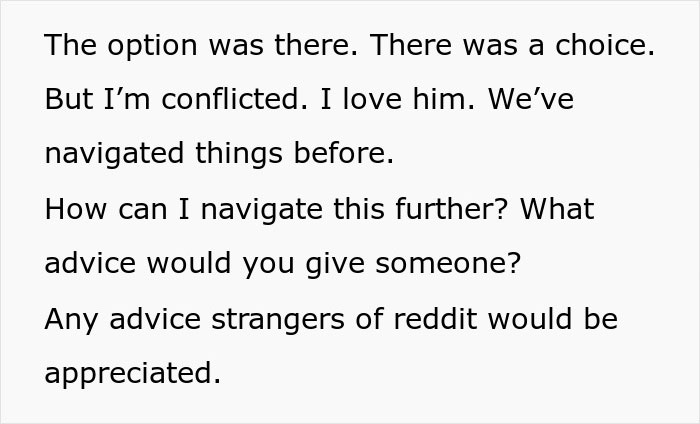
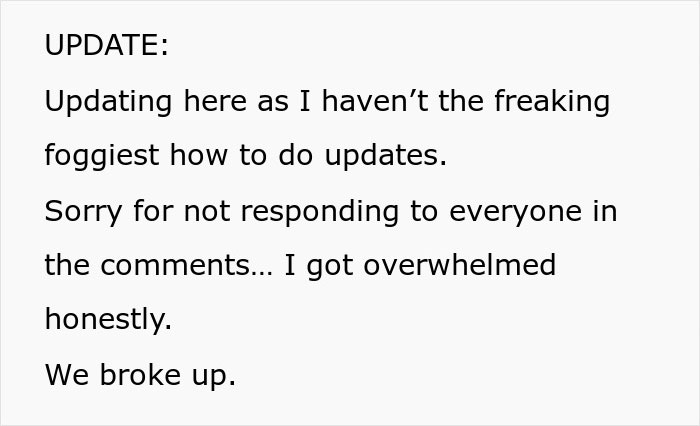
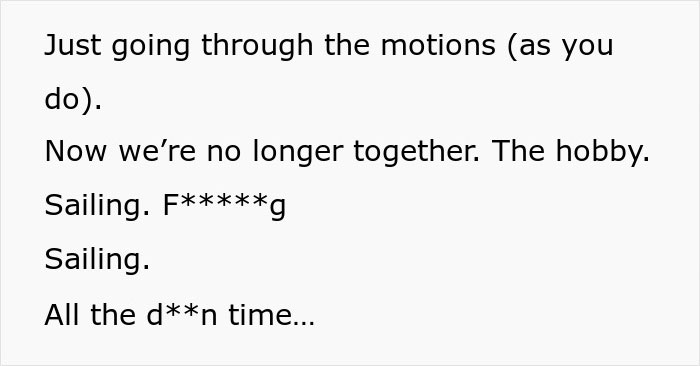
If you end up in a situation like the author of the post, you need to determine if you are still willing to pay the price for your relationship. Is the partnership, as it is, worth it to you? Can you give up the attachments that are making you participate in the contract you originally agreed to?












By entering your email and clicking Subscribe, you're agreeing to let us send you customized marketing messages about us and our advertising partners. You are also agreeing to our Privacy Policy.
Thank you! You've successfully subscribed to newsletters!

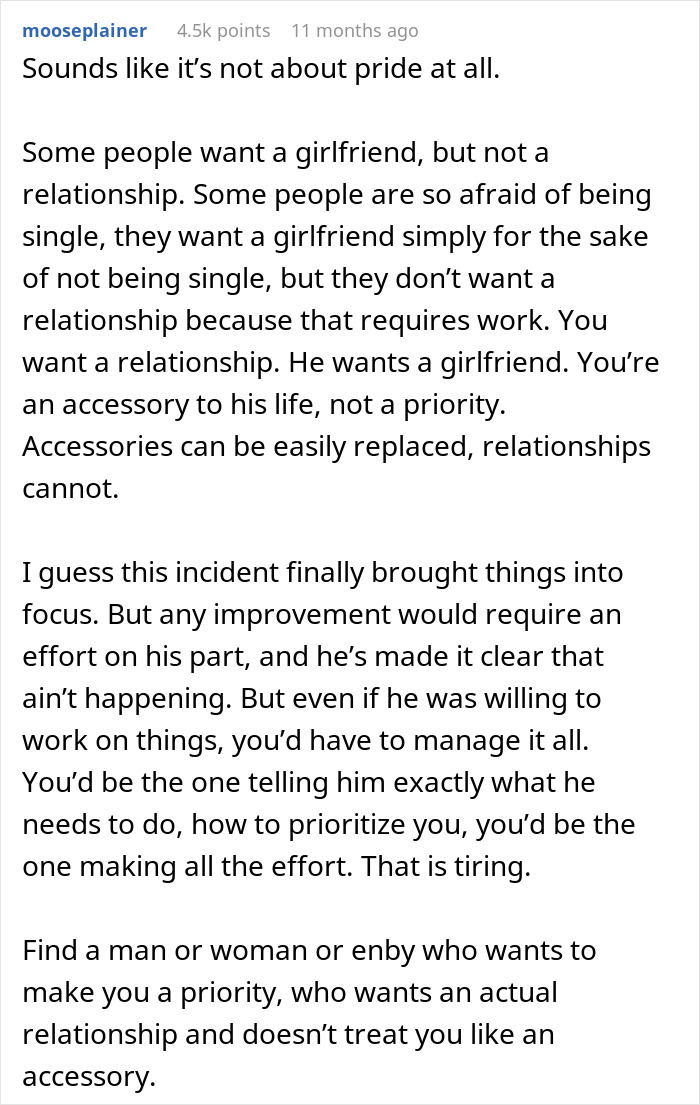
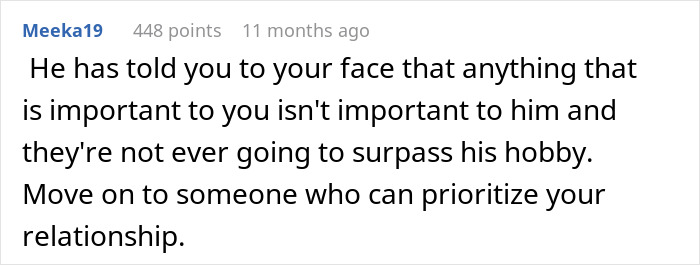
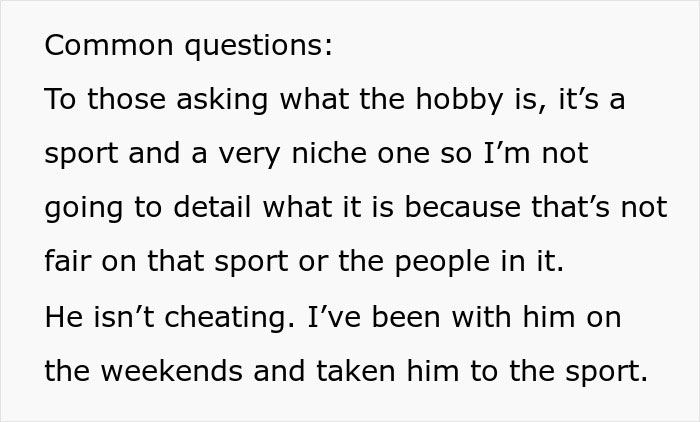
I expected his hobby to be Quidditch or something like that. Sailing isn't "very niche".



I'm not sure what the attraction could have ever been in the first place. He sounds entirely worthless.

He may have been very enjoyable on dates. At the beginning, it probably felt normal to see each other on weekends, then weekends plus Tuesday night and the occasional Friday. Then she realized it wasn't going to progress beyond that. He'd be better suited for a woman who's not interested in anything serious (they exist).
Load More Replies... I expected his hobby to be Quidditch or something like that. Sailing isn't "very niche".
I'm not sure what the attraction could have ever been in the first place. He sounds entirely worthless.
He may have been very enjoyable on dates. At the beginning, it probably felt normal to see each other on weekends, then weekends plus Tuesday night and the occasional Friday. Then she realized it wasn't going to progress beyond that. He'd be better suited for a woman who's not interested in anything serious (they exist).
Load More Replies...















 No fees, cancel anytime
















23
24