Get Premium
Dark mode theme is available exclusively for premium users. Learn more about the benefits of subscribing.
No fees, cancel anytime.

 Dark Mode Ad-Free Browsing Unlimited Content
 Ad-Free Browsing Unlimited Content Dark Mode
Join 1.2 million Panda readers who get the best art, memes, and fun stories every week!
To some people, the thought of becoming a parent alone brings an abundance of joy and happiness, while others could never imagine themselves being a mom or a dad. That is why the latter often choose to be childfree.
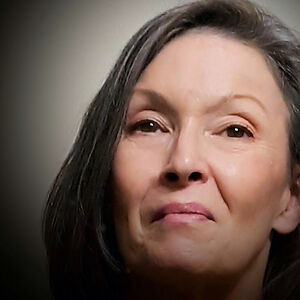
Even though their reasons differ from person to person, quite a few childfree people are met with surprised looks or the typical “never say never”. TikTok user ‘honeyandmud’ was also presented with such a phrase, after she told her co-worker she doesn’t want to have kids. She discussed their conversation in one of her TikTok videos, which quickly became viral and evoked numerous people to share their thoughts in the comments. Scroll down to find the full story and the video below.
Image credits: honeyandmud
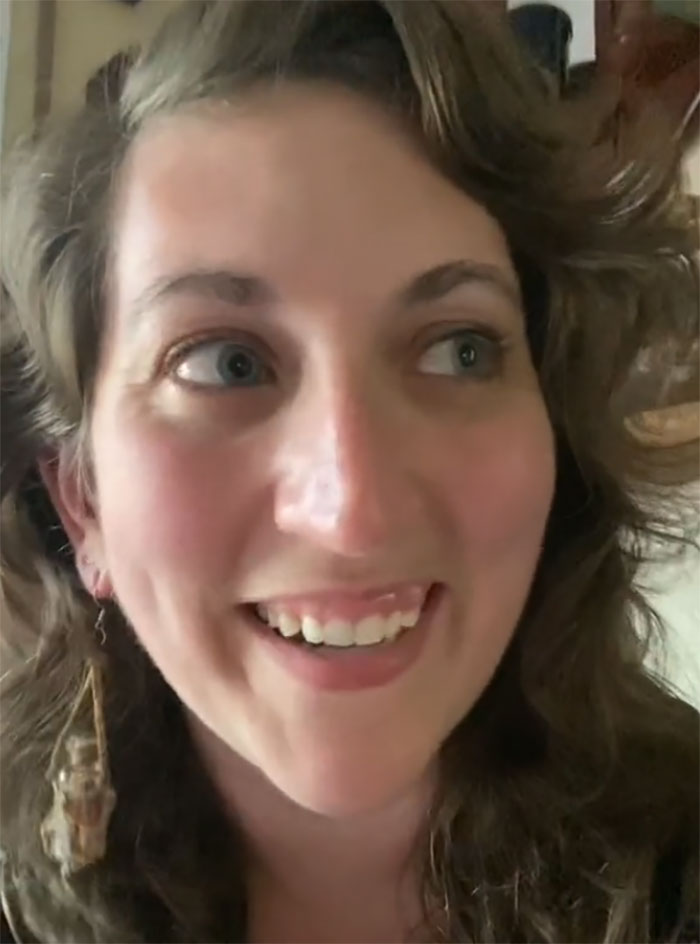
“I was chatting with a guy at work today and he asked me if I had any kids to which I responded with, ‘Oh, no, I’m not gonna have children.'”
Image credits: honeyandmud
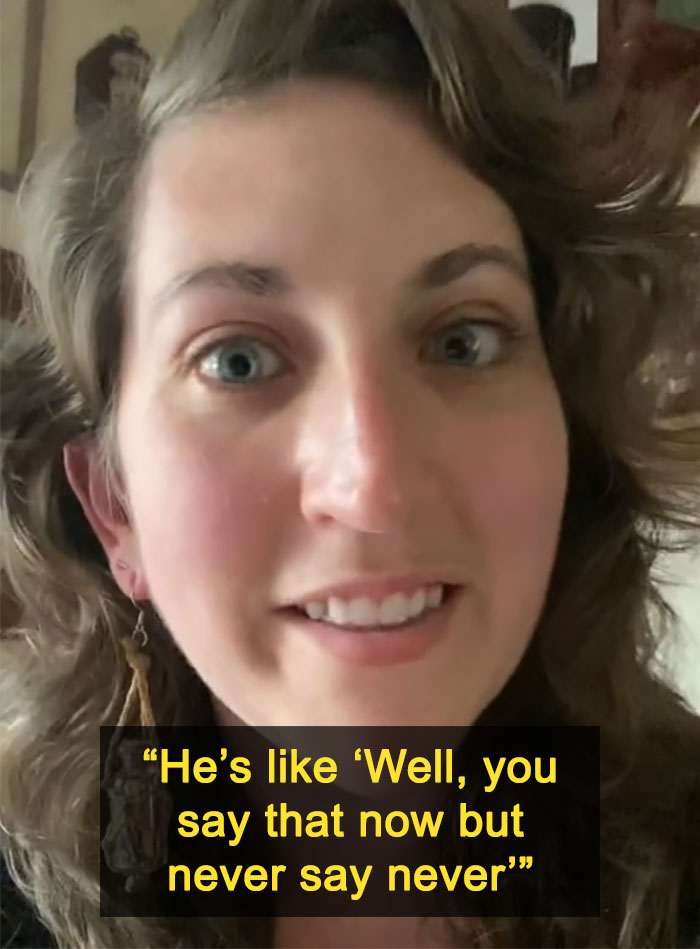
“He kind of laughs and he’s like, ‘Well, you say that now but never say never.’
To which I responded with, ‘No, I know for a fact that I’m never going to have children.'”
Image credits: honeyandmud
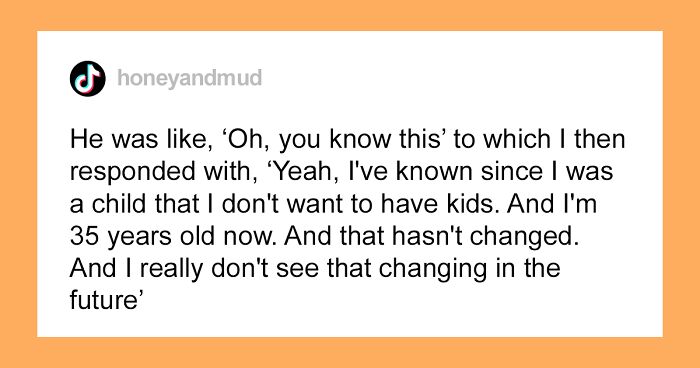
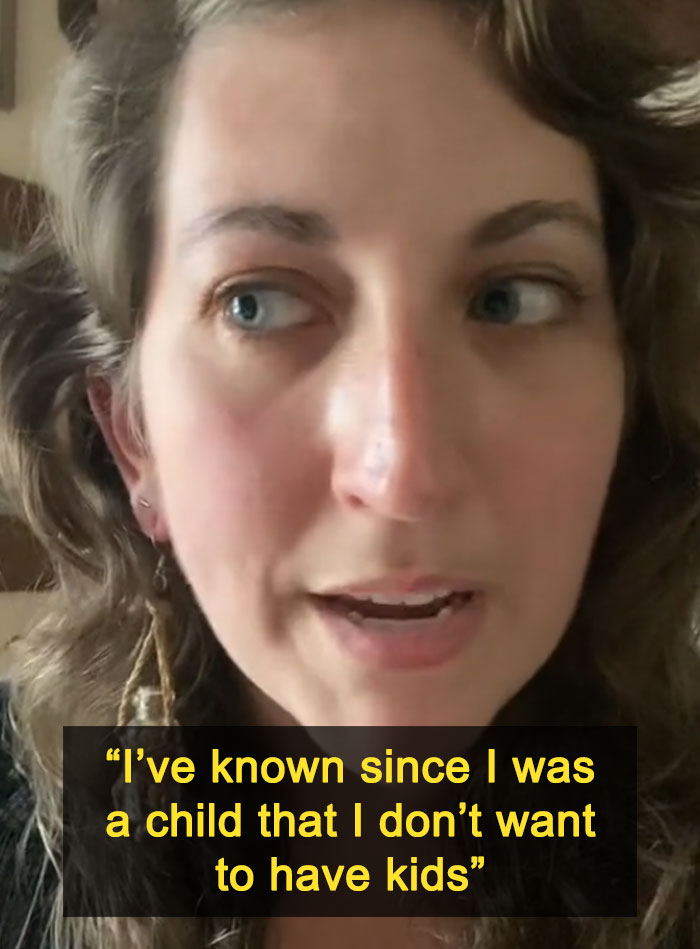
“He got a little curious at that part and was like, ‘Oh, you know this’ to which I then responded with, ‘Yeah, I’ve known since I was a child that I don’t want to have kids. And I’m 35 years old now. And that hasn’t changed. And I really don’t see that changing in the future. So yeah, I can confidently say I don’t want kids and I’m never going to have them.'”
Image credits: honeyandmud
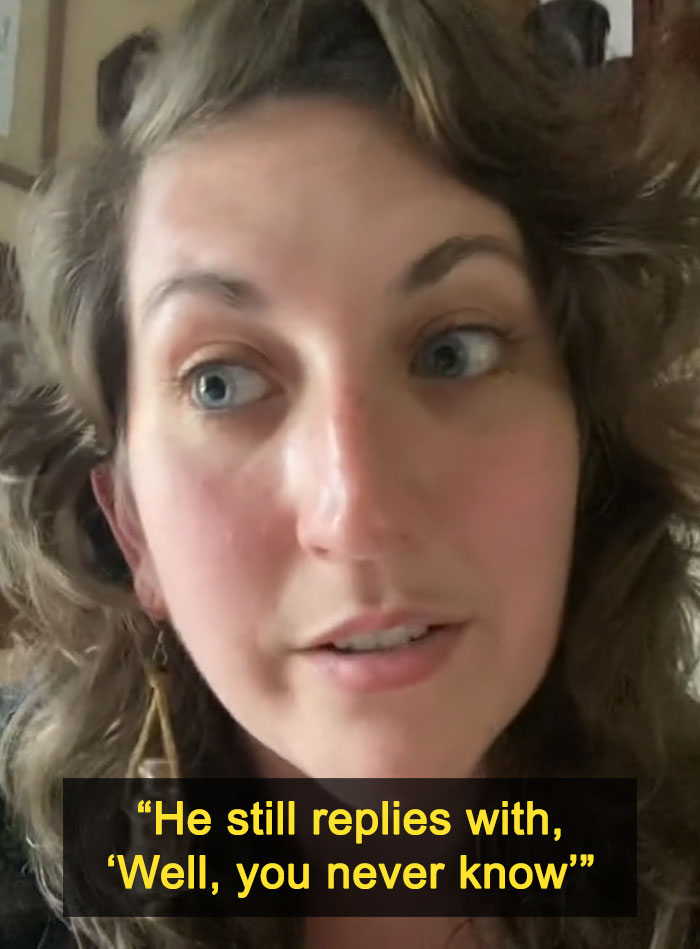
“And even after that he still replies with, ‘Well, you never know.’ And it’s just such a common theme. Any time somebody is choosing to be child-free, there are always people, usually parents, who are like, ‘You’ll regret that one day’ like they know the person better than the person knows themselves.”
Image credits: honeyandmud
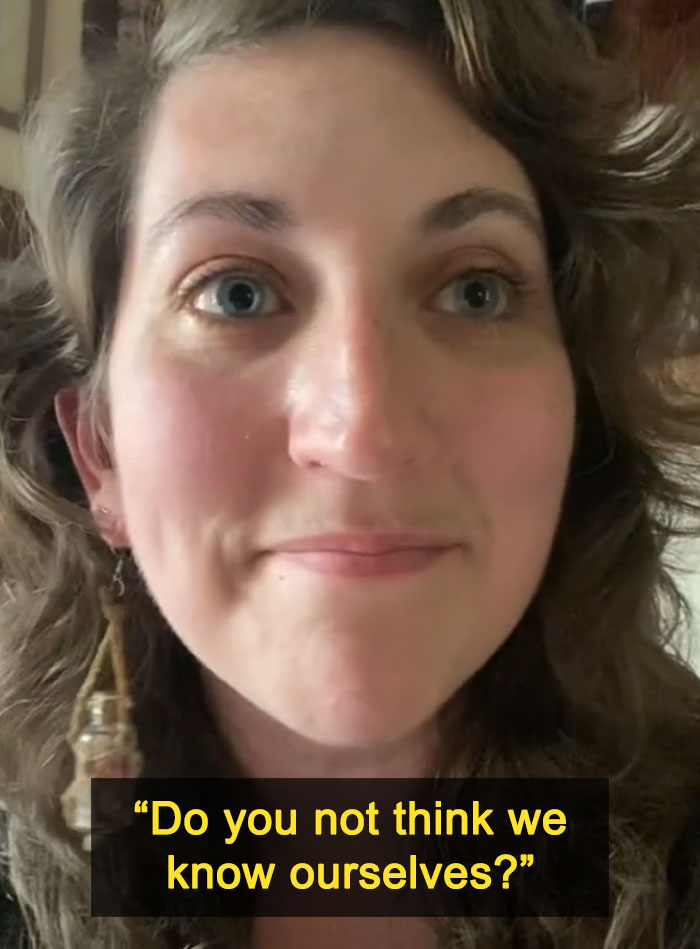
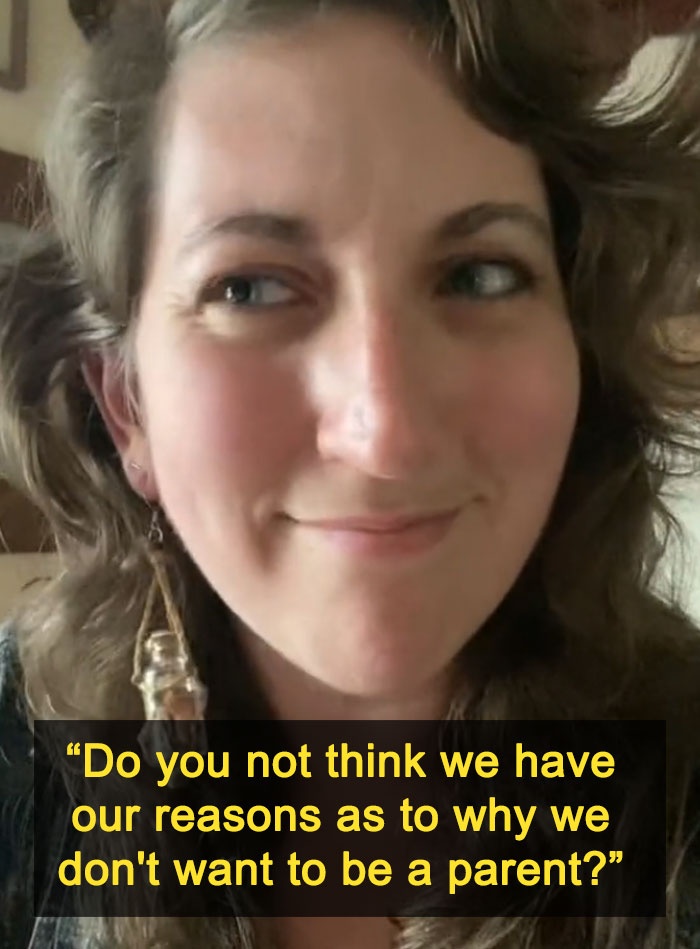
“Do you not think we know ourselves? Do you not think we understand this decision and have thought about this decision and have our reasons as to why we don’t want to be a parent or bring a child into this world? I don’t know, it’s funny to me. Trust that I know myself, alright? I’m not meant to be a parent, f**k.”
Image credits: honeyandmud
@honeyandmud i am so happy you love being a parent, but i promise you that i would not. trust that i can understand that about myself. #childfree#childfreebychoice#childfreemillennial#letusbe#storytime♬ original sound – honeyandmud
Image credits: Ba Tik (not the actual photo)
It’s no secret that raising children entails bearing a lot of responsibility and brings significant change into one’s life. That’s why it’s crucial to take all things into consideration before making the decision of becoming a parent. And while some people come to the conclusion that they’re willing and able to expand their families, some opt for the childfree route instead.
According to The Conversation, nearly 22% of people in the US choose to be childfree. Moreover, statistics reveal that—similarly to the OP—the majority of them come to such a decision at a rather early age: roughly 33% do it being 10 to 20 years old, and roughly 31% have their mind set between the ages of 20 to 29.
Other data suggests that men and women have varying opinions about why having children is not for them. Institute for Family Studies reported that according to a 2022 survey, finances was the most common reason for men not to have kids (33% of them said so), while childfree women (42%) said they wanted to maintain their personal independence.
In an article for Psychology Today, licensed clinical and forensic psychologist Dr. Samantha Stein pointed out that financial matters and lifestyle changes are just two of the common reasons for not wanting to have children. Others include environmental, career or health-related matters, the desire to travel, and existing caretaking responsibilities, among other things.
Image credits: Alex Green (not the actual photo)
In another piece for Psychology Today, professor of psychology at Otterbein University, Noam Shpancer, Ph.D., emphasized that despite the pressure or even criticism coming from others, childfree people are typically satisfied with their decision and don’t seem to regret it in the long run. However, he pointed out that women especially are viewed unfavorably or met with prejudice for choosing such a lifestyle.
A reporter for the Guardian, Tory Shepherd, suggested that some people use the phrase “never say never” believing there’s a hormonal clock that ought to make childfree women eventually change their minds. Yet she pointed out that, even though both men and women might have a change of heart about wanting to have kids, it is not related to any sudden hormonal surge. Moreover, according to Shepherd, the underlying message of such phrases as “never say never” or “you’ll change your mind” refers to motherhood as “the natural position”, which it might not be for everyone.
For those who view motherhood in such a way or simply enjoy their role as a parent, it can be difficult to understand why some would rather opt for voluntary childlessness. However, they say ‘to each their own’ for a reason; and as the TikToker emphasized herself, no one knows her better than she does. At this point, she is certain about her decision, and, judging by the comments under her video, she’s far from the only one.
Bored Panda has reached out to the user ‘honeyandmud’ via TikTok and will update the article once we’ve heard back from them.

I have serious mental health issues, why the hell do random people think I could care for a child when some days, I can hardly care for myself?

plenty of parents have serious mental health issues. Where do you think all the screwed up kids come from? totally agree with your choice too.
Load More Replies...
We have one child and our next door neighbors are d***s. They just built the most beautiful pool. They have 2 beautiful dogs. Their house is decorated so nicely and they have all the fun gadgets. Friends come over for big parties and they grill pork butt and steaks. They're not even rolling in the big bucks, they just don't have kids lmaooo. I would never judge someone for choosing a child-free life. I get it.
Also, all I hear when someone judges child-free people is "I'm jealous/insecure/need to be validated for my choices". It's sad.
Load More Replies...
My favorite response has always been, “Well I guess I mean if money is short enough I could always have one and sell it to pay off the mortgage.” To which the other person usually say “you can’t sell children”. I roll my eyes and give big air quotes “I mean private adoption”. So far it has stopped the asks. Even from pushy MIL.
I have serious mental health issues, why the hell do random people think I could care for a child when some days, I can hardly care for myself?
plenty of parents have serious mental health issues. Where do you think all the screwed up kids come from? totally agree with your choice too.
Load More Replies... We have one child and our next door neighbors are d***s. They just built the most beautiful pool. They have 2 beautiful dogs. Their house is decorated so nicely and they have all the fun gadgets. Friends come over for big parties and they grill pork butt and steaks. They're not even rolling in the big bucks, they just don't have kids lmaooo. I would never judge someone for choosing a child-free life. I get it.
Also, all I hear when someone judges child-free people is "I'm jealous/insecure/need to be validated for my choices". It's sad.
Load More Replies... My favorite response has always been, “Well I guess I mean if money is short enough I could always have one and sell it to pay off the mortgage.” To which the other person usually say “you can’t sell children”. I roll my eyes and give big air quotes “I mean private adoption”. So far it has stopped the asks. Even from pushy MIL.






 No fees, cancel anytime












35
36