Get Premium
Dark mode theme is available exclusively for premium users. Learn more about the benefits of subscribing.
No fees, cancel anytime.

 Dark Mode Ad-Free Browsing Unlimited Content
 Ad-Free Browsing Unlimited Content Dark Mode
Join 1.2 million Panda readers who get the best art, memes, and fun stories every week!

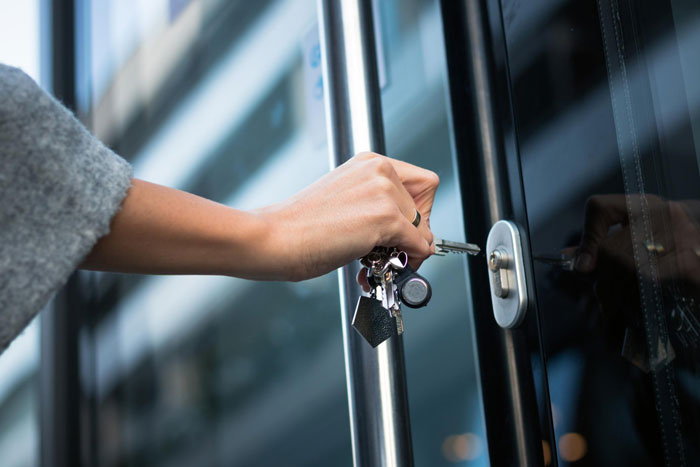
There’s a special kind of confidence that comes from having a spare key to someone else’s home. Apparently, for some people, they can take that as permission to start living there. At some point, the person with the key stops feeling like a guest and starts treating your apartment like a convenient extension of their own.
That’s essentially what happened to this Original Poster (OP) whose spare key was originally given to his sister as a practical favor. She was supposed to use it when he traveled for work and needed someone to check on his cat. But over time, the arrangement became much more casual, and eventually crossed a line he had already asked her not to cross.
More info: Reddit
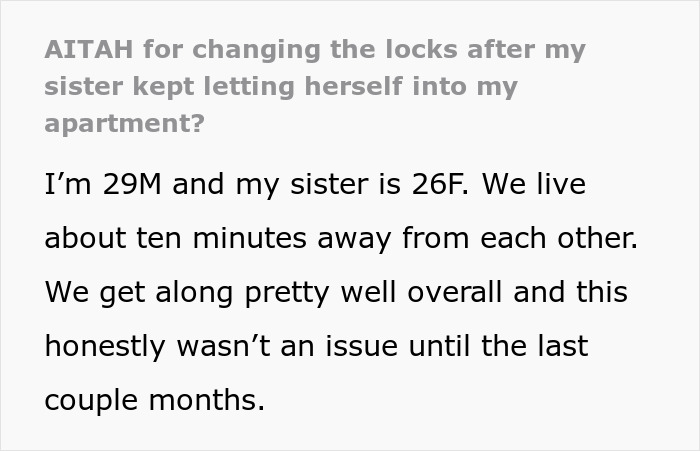
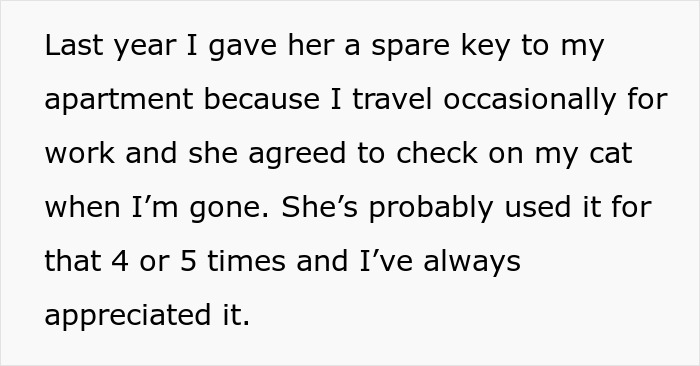
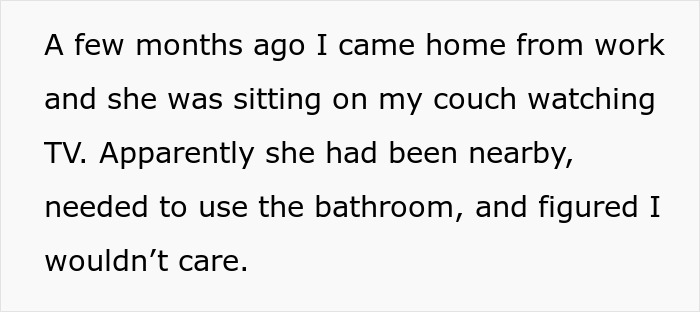


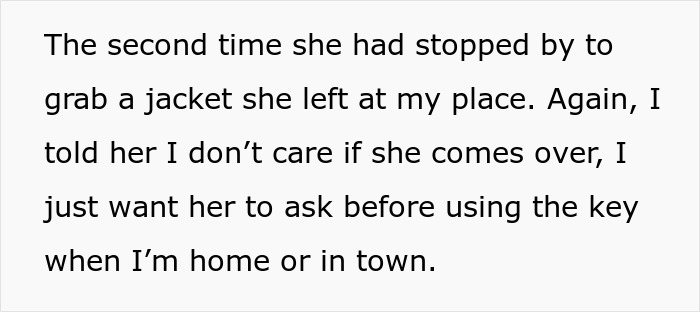




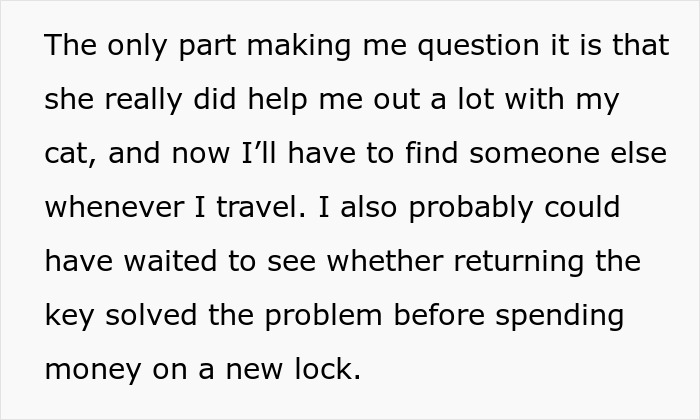

Image credits: Academic-Emu-4474
The OP explained that he and his sister live only about ten minutes apart and generally have a good relationship. The spare key seemed like a simple solution because he occasionally traveled for work and needed someone he trusted to look after his cat. For most of the first year, everything worked exactly as intended, as his sister used the key only a handful of times to help with the cat.
Then she started letting herself in for reasons unrelated to the cat. First, she stopped by because she needed to use the bathroom. Later, she came to pick up a jacket she had left behind. Another day, she stopped by during her lunch break because his place was closer. Neither incident was a huge deal on its own, but the OP asked her to text him before using the key when he was home or in town.
Food also began mysteriously disappearing from his fridge, until she casually revealed that she had helped herself during one of those visits. He reminded her why he gave her the spare key in the first place, and she apologized. However, a few weeks later, the OP came home unexpectedly early from work and discovered his sister inside his apartment with a friend.
Apparently, they had been shopping nearby, picked up takeout, and decided his kitchen was a convenient place to eat before continuing their errands. This time, he was furious, but she couldn’t understand why it mattered, arguing that she wasn’t stealing anything or leaving a mess. But for him, it was that she was entering without permission after being specifically asked not to.
After his sister left, he ultimately decided to have the locks changed. When his sister discovered he changed the locks, she was deeply offended as she thought the OP was implying that she was dangerous or untrustworthy. His mother also believed the lock change was excessive. However, he simply wanted to make sure that the boundary he’d repeatedly communicated was actually enforceable.
Relatives may feel that their history, closeness, or role within the family gives them continued access to another person’s time, space, decisions, or personal information. Haven Therapy notes that this can make newly established boundaries feel like rejection or disrespect rather than a reasonable limit.
Change Direction also points out that families struggle when familiar dynamics change. Understanding that resistance, however, doesn’t mean excusing behavior that crosses a clearly stated boundary. Instead, it can help people respond more effectively by expecting some pushback, remaining consistent with consequences, and avoiding justifying, arguing, defending, or over-explaining their decisions.
Privacy is another important part of this equation. Lime Tree Counseling emphasizes that privacy isn’t reserved for situations involving dangerous or untrustworthy people. It is a basic part of autonomy, personal identity, and healthy relationships, including relationships with people we love and trust.
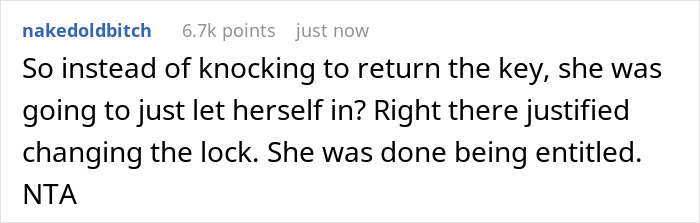
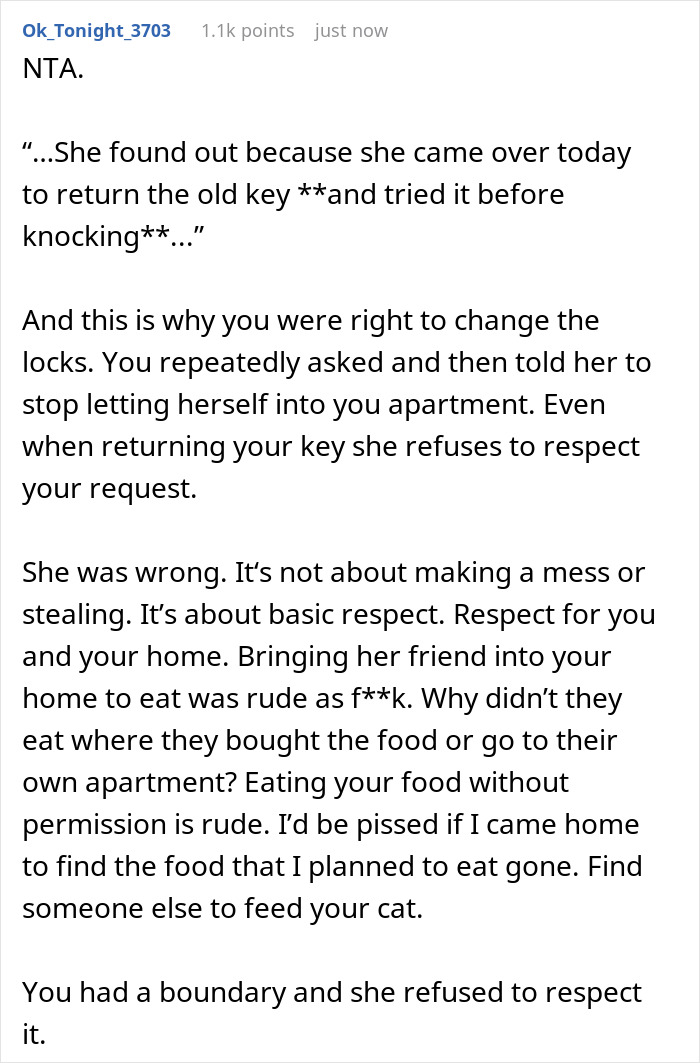
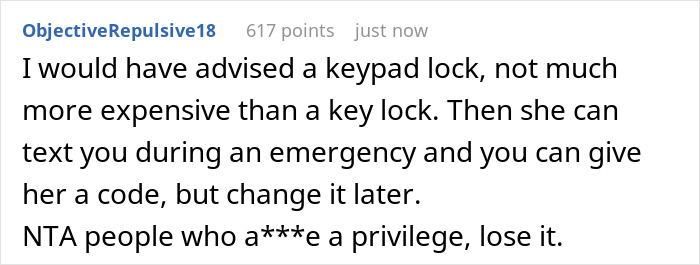
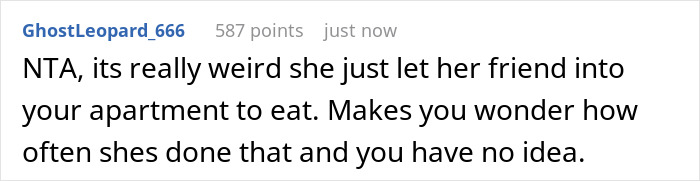
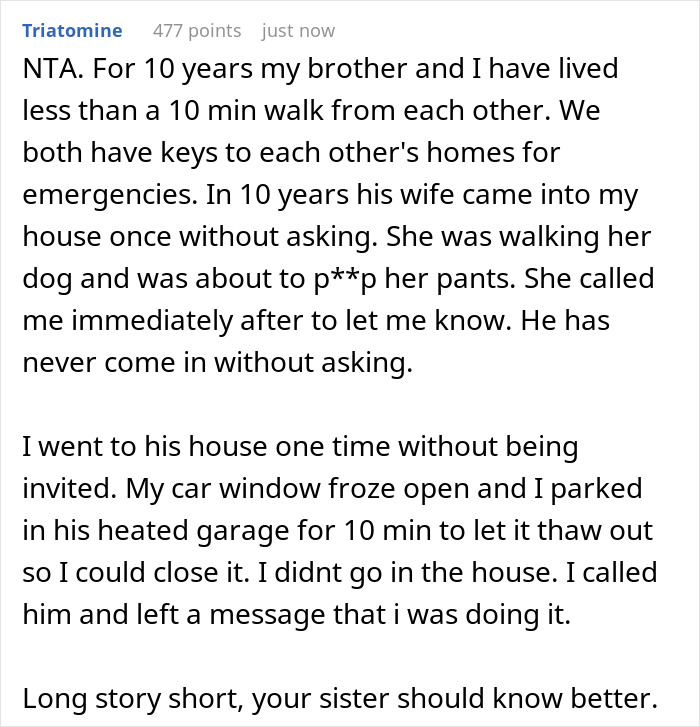
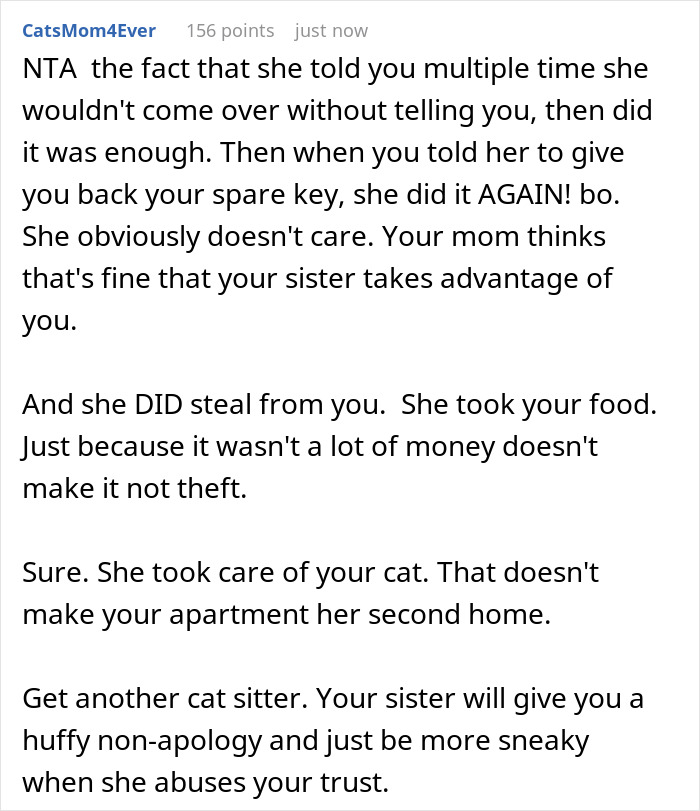
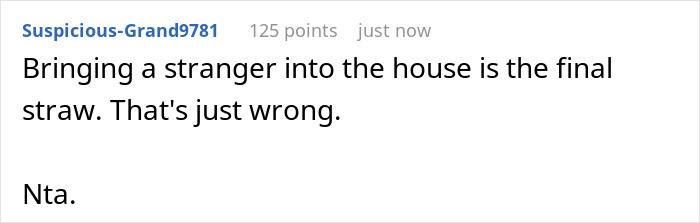
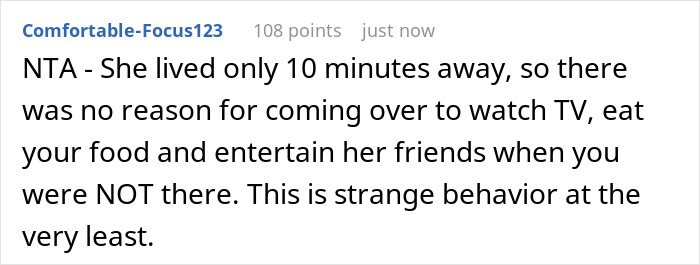
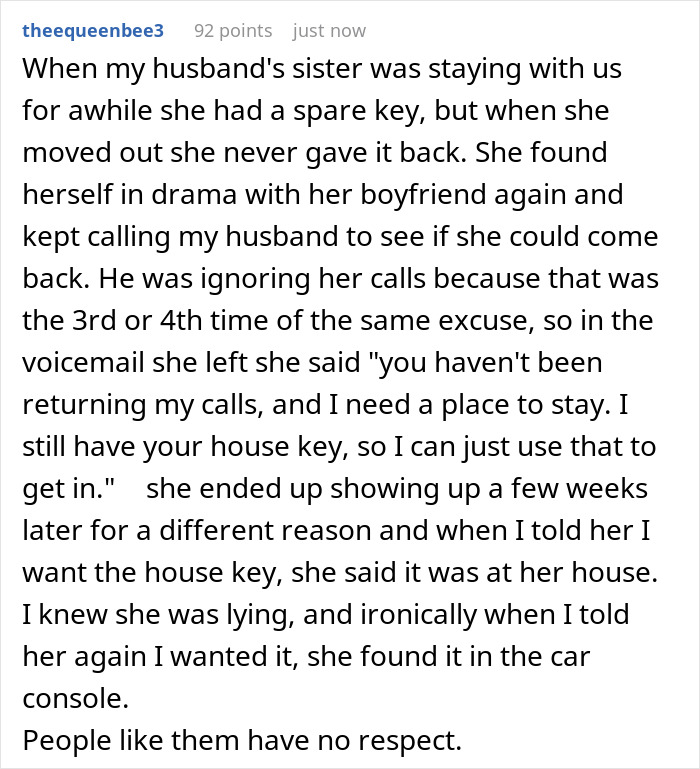
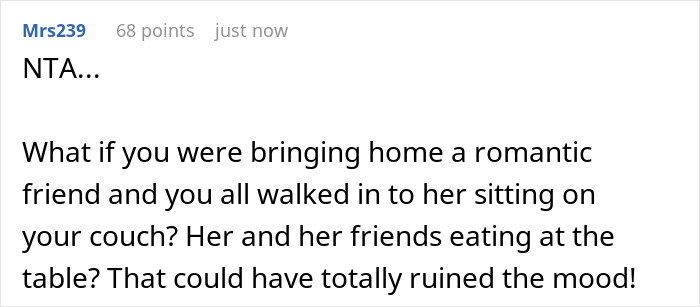
Netizens sided with the OP, arguing that being family doesn’t automatically grant someone unrestricted access to another person’s home. They felt the sister had already been given several chances to respect his wishes and should have known better. What do you think about this situation? At what point would you stop giving someone the benefit of the doubt? We would love to hear from you!






By entering your email and clicking Subscribe, you're agreeing to let us send you customized marketing messages about us and our advertising partners. You are also agreeing to our Privacy Policy.
Thank you! You've successfully subscribed to newsletters!


If she lives 10 minutes away, why can't she go home? This was not about the lock, this was about boundaries and entitlement. She won first prize at her own game.


OP's house, OP's rule about "call before you come over." Sis ignored the rule. He changed the locks. Sis and mom are wrong.
If she lives 10 minutes away, why can't she go home? This was not about the lock, this was about boundaries and entitlement. She won first prize at her own game.
OP's house, OP's rule about "call before you come over." Sis ignored the rule. He changed the locks. Sis and mom are wrong.



















 No fees, cancel anytime










35
14