Get Premium
Dark mode theme is available exclusively for premium users. Learn more about the benefits of subscribing.
No fees, cancel anytime.

 Dark Mode Ad-Free Browsing Unlimited Content
 Ad-Free Browsing Unlimited Content Dark Mode
Join 1.2 million Panda readers who get the best art, memes, and fun stories every week!

Facing the end of your life is unimaginably hard. Facing it while trying to decide who should parent your child after you’re gone? That’s the kind of emotional nightmare no parent ever wants to touch, let alone while dealing with betrayal and fading time.
One woman turned to an online community after learning that the husband she once trusted to adopt her 10-year-old daughter had cheated on her years earlier. Now, with hospice looming and the holidays likely her last at home, she’s torn between protecting her child’s future and following her gut.
More info: Reddit
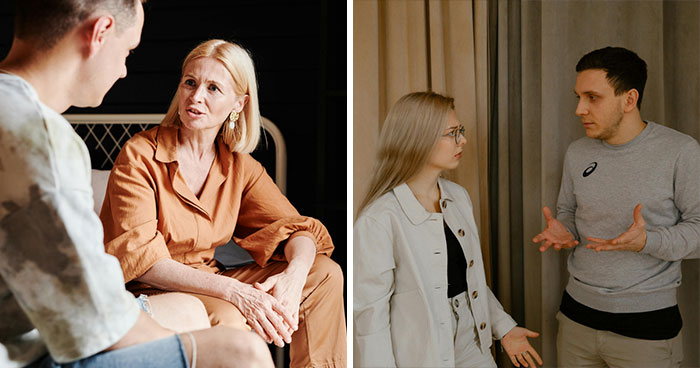
Image credits: The Yuri Arcurs Collection / Freepik (not the actual photo)
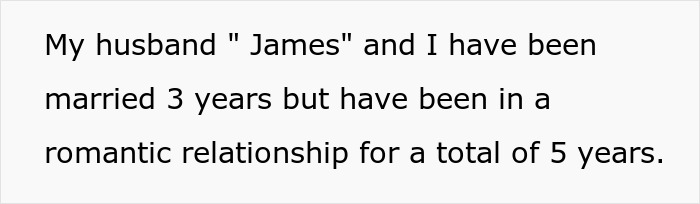
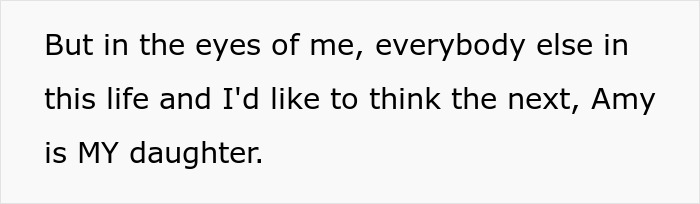
Image credits: prostooleh / Freepik (not the actual photo)
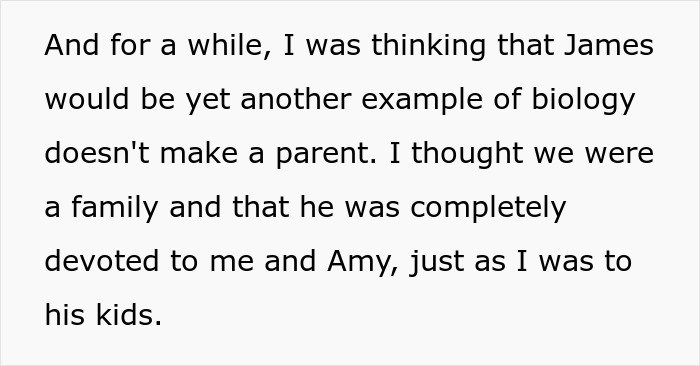
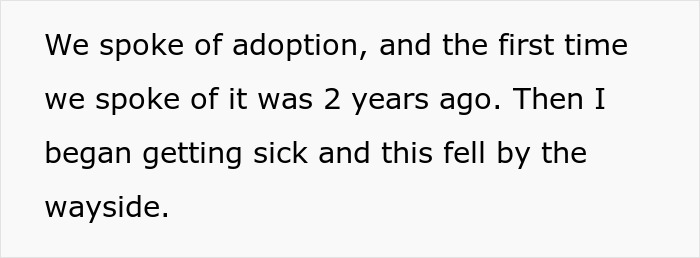
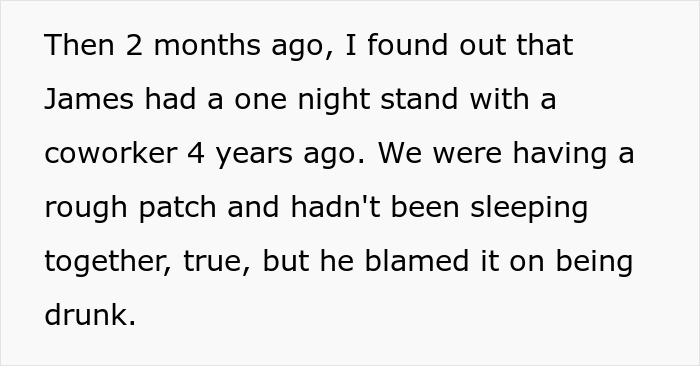
Image credits: freepik / Freepik (not the actual photo)
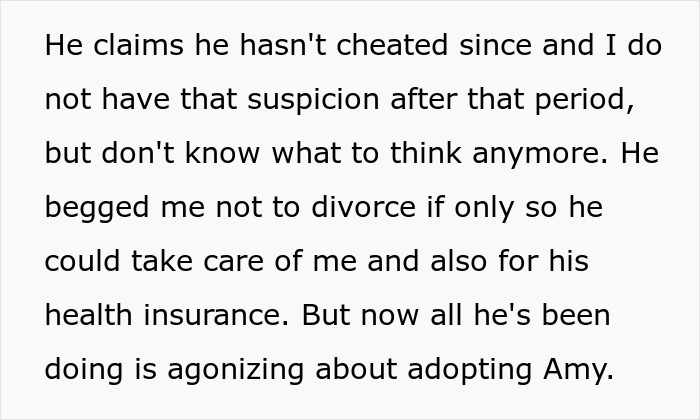
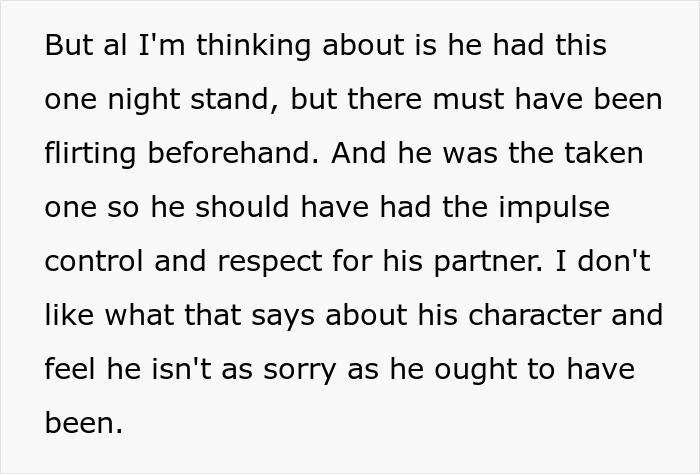
Image credits: wavebreakmedia_micro / Freepik (not the actual photo)
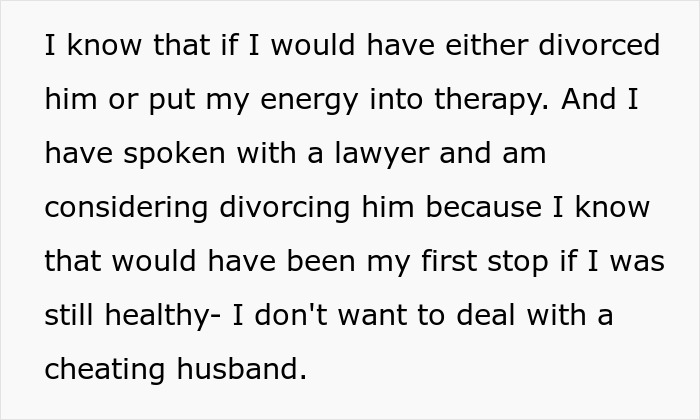
Image credits: Throwawayambe
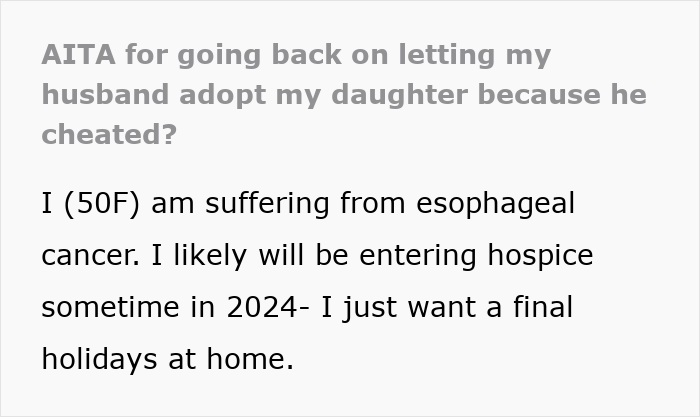
The original poster (OP), a 50-year-old woman facing terminal esophageal cancer, says her biggest wish is simple: one final holiday season at home with her 10-year-old daughter, Amy. But behind the seasonal warmth sits an agonizing decision about what happens to Amy once she’s gone.
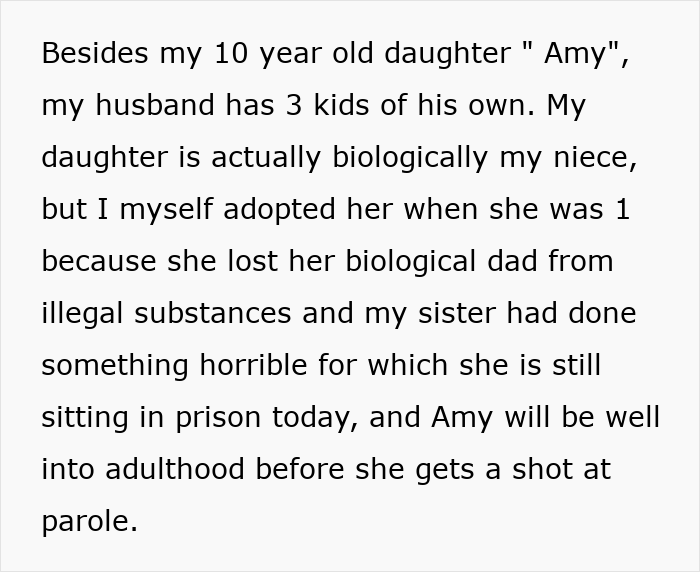
Amy is biologically OP’s niece, but after tragedy and incarceration tore her original family apart, OP adopted her as a baby and has raised her ever since. Over the years, she came to believe her husband James truly loved Amy as his own and would one day make the move to formally adopt her.
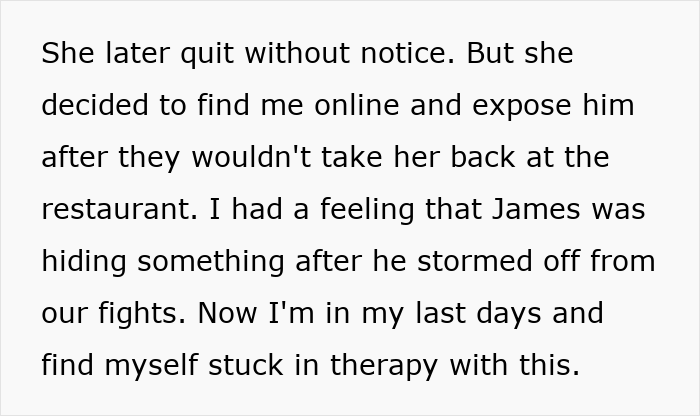
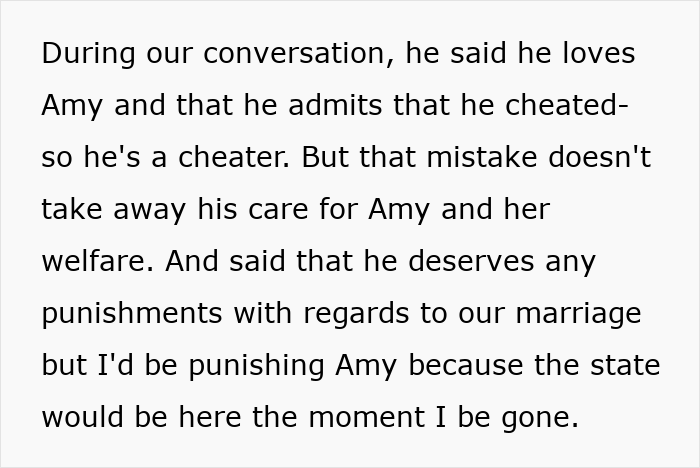
That plan began falling apart two months ago when OP discovered James had had a one-night stand with a coworker four years earlier. Though he insists it happened during a rough patch and never again, the betrayal cracked something much bigger than the marriage: OP’s confidence in both his judgment and character.
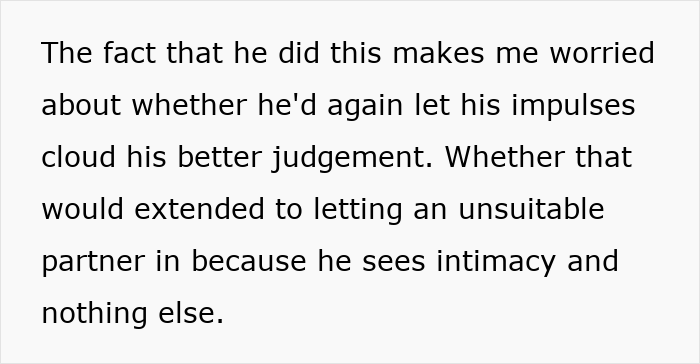
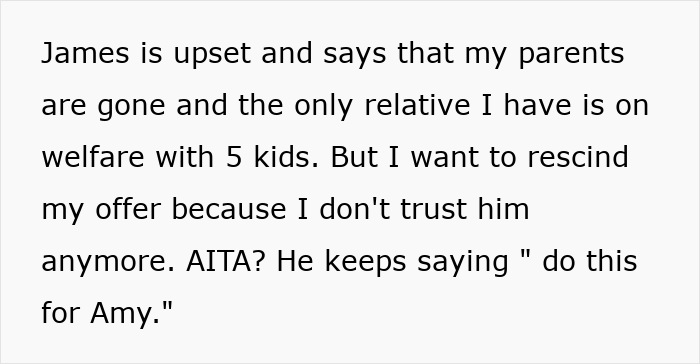
Now James is pleading with her not to revoke the adoption discussion, arguing that doing so would leave Amy vulnerable to the state after OP’s departure. But she just can’t shake the fear that someone capable of cheating might one day let someone equally sketchy into Amy’s life.
Look, cheating is devastating under any circumstances. But when the question isn’t just “Can I forgive him?” and rather becomes “Should this man raise my child after I can’t?” the emotional stakes shoot way past marriage drama and headlong into legacy, trust, and parental responsibility.
Image credits: freepik / Freepik (not the actual photo)
Family therapists often note that betrayal changes more than just romantic trust; it basically reshapes how we evaluate someone’s decision-making under pressure. In OP’s case, the affair isn’t just about broken vows anymore; it’s become evidence she can’t help but use to figure out whether James can be trusted with long-term parental judgment.
That’s especially complicated because Amy’s future isn’t an abstract possibility. Child welfare experts consistently emphasize that stable attachment figures are critical after the loss of a parent, and sudden placement disruption can deepen grief and insecurity. In other words, OP isn’t just deciding who deserves forgiveness; she’s deciding what stability looks like.
There’s also the question of anticipatory grief, something psychologists describe as the mourning process that begins before a loved one has actually passed. Parents facing terminal illness often feel enormous pressure to make “perfect” decisions for the children they’ll leave behind, which can make any crack in trust feel emotionally magnified.
James may genuinely love OP’s daughter, but love and reliability are not always the same thing. When a parent’s final act is deciding who shapes their child’s future, even one betrayal can transform from marital pain into a life-defining question of safety, values, and trust.
At the end of the day, OP isn’t actually deciding if James is entitled to forgiveness; she’s more weighing up whether or not Amy deserves certainty. And with her life slipping away from her, trusting her instincts may just be the most loving decision she can make.
What’s your take? Would you still let a loving but unfaithful spouse adopt your child, or is broken trust just too big a risk? Drop your thoughts in the comments!
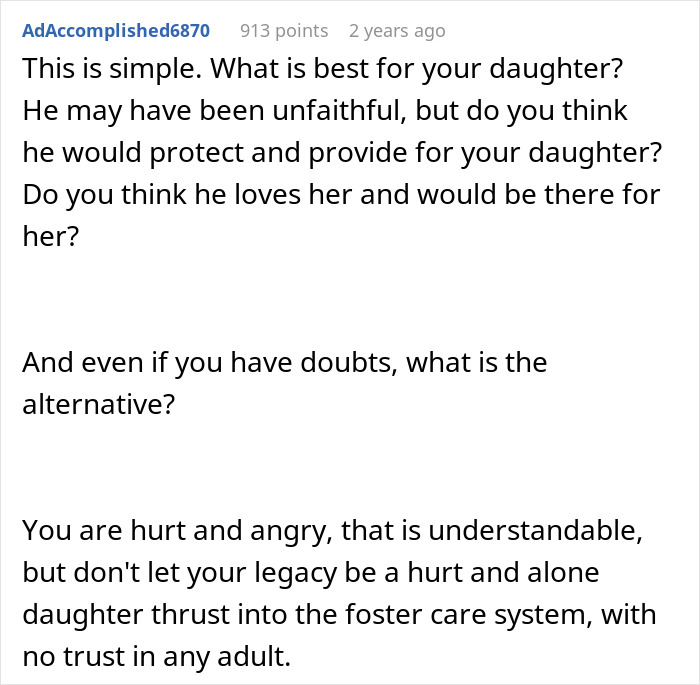
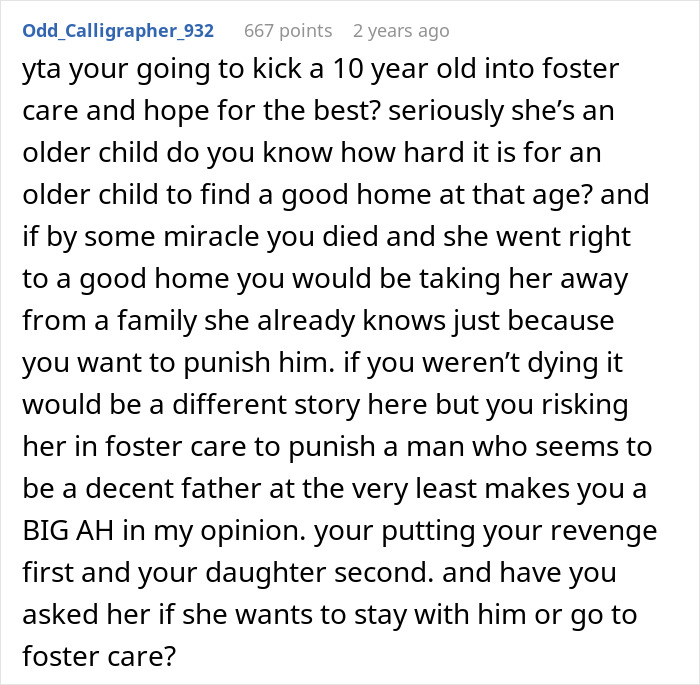
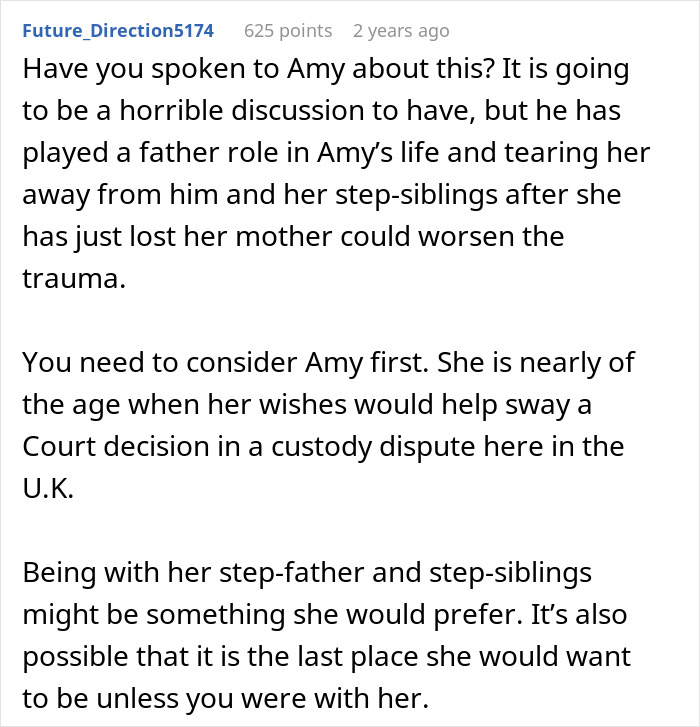

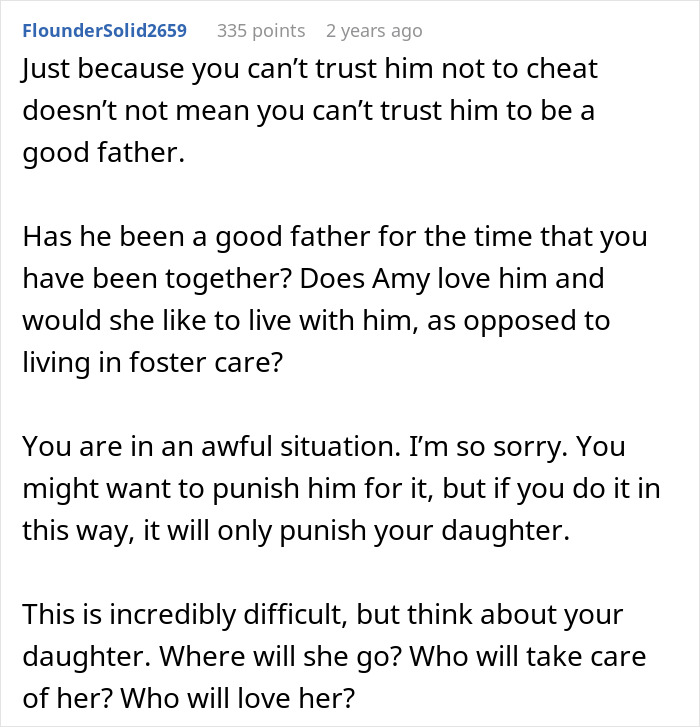
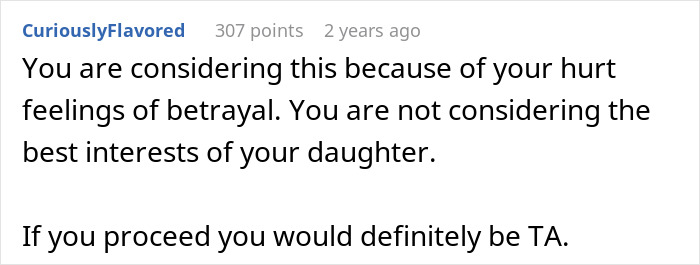
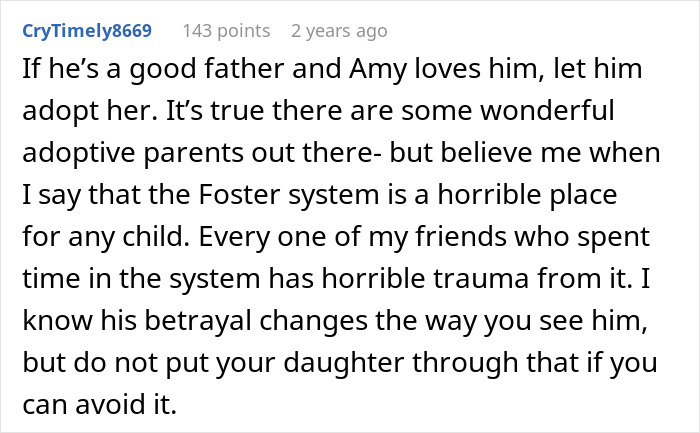

Emotionally blackmail? No, he's just stating the facts. A***e is rampant in the foster care system. Even kids who don't get a****d often don't have wonderful lives. And when they age out of the foster system, they don't have the same social supports kids with bio or adoptive parents have. There's a charity called One Simple Wish dedicated to giving foster kids the little things other kids get that they don't. And some are basic. I once granted a wish for Mountain Dew! I have seen wishes from minors for help affording groceries. Things their guardian should handle but can't. A bad husband isn't necessarily a bad father. It's better for Amy to stay with him.
As she didn’t state an alternative for the kid, I’m wondering what the hell she’s thinking. If her husband doesn’t get Amy, then who does? What’s the plan? I really, REALLY hope she’s not thinking of letting Amy be a ward of the state, as I’ve yet to meet ONE person who came out of it unscathed. Every single one has had absolutely sickening stories to tell. So far as I can tell, the foster system trafficks in kids for mollesters to use. It’s just gross. I really don’t understand why she thinks someone who cheated but who loves and cares for her daughter isn’t good to raise her daughter. She’d rather rely on a crapshoot? Oh, how I hope she’s relented, or that the state decided it’s best the kid stay with her husband. Poor little thing doesn’t have nyone else to love her. 😰

OP's account got banned, so it's hard to find her replies, but she said delusional things like "I've known state child welfare workers and they are overburdened but they care. The state would be making a decision anyway" and "Yes and in many ways he's been a good husband, but he carried on like he's always been a faithful husband. I just can't get past that. And people love non biological kids all the time. I know she's technically my niece, but still I am an example of loving somebody as your own kid even if you didn't birth them." So she didn't care about Amy's wellbeing at all and had convinced herself that a magical rainbow unicorn couple will adopt her 10-year-old, of course, because she WANTS it to be so. OP was so fixated on the fact that her husband cheated that she stopped seeing what was best for Amy.
Load More Replies...
I would not want my kid to go into foster care. She sounds like she's already not in her right mind. I wonder if her cancer has spread and is effecting her thinking. Just because he had a one night stand, doesn't mean he'll be a bad guardian and with the only alternative foster care, that's seems like she's just punishing the kids because her ego is bruised.
Emotionally blackmail? No, he's just stating the facts. A***e is rampant in the foster care system. Even kids who don't get a****d often don't have wonderful lives. And when they age out of the foster system, they don't have the same social supports kids with bio or adoptive parents have. There's a charity called One Simple Wish dedicated to giving foster kids the little things other kids get that they don't. And some are basic. I once granted a wish for Mountain Dew! I have seen wishes from minors for help affording groceries. Things their guardian should handle but can't. A bad husband isn't necessarily a bad father. It's better for Amy to stay with him.
As she didn’t state an alternative for the kid, I’m wondering what the hell she’s thinking. If her husband doesn’t get Amy, then who does? What’s the plan? I really, REALLY hope she’s not thinking of letting Amy be a ward of the state, as I’ve yet to meet ONE person who came out of it unscathed. Every single one has had absolutely sickening stories to tell. So far as I can tell, the foster system trafficks in kids for mollesters to use. It’s just gross. I really don’t understand why she thinks someone who cheated but who loves and cares for her daughter isn’t good to raise her daughter. She’d rather rely on a crapshoot? Oh, how I hope she’s relented, or that the state decided it’s best the kid stay with her husband. Poor little thing doesn’t have nyone else to love her. 😰
OP's account got banned, so it's hard to find her replies, but she said delusional things like "I've known state child welfare workers and they are overburdened but they care. The state would be making a decision anyway" and "Yes and in many ways he's been a good husband, but he carried on like he's always been a faithful husband. I just can't get past that. And people love non biological kids all the time. I know she's technically my niece, but still I am an example of loving somebody as your own kid even if you didn't birth them." So she didn't care about Amy's wellbeing at all and had convinced herself that a magical rainbow unicorn couple will adopt her 10-year-old, of course, because she WANTS it to be so. OP was so fixated on the fact that her husband cheated that she stopped seeing what was best for Amy.
Load More Replies... I would not want my kid to go into foster care. She sounds like she's already not in her right mind. I wonder if her cancer has spread and is effecting her thinking. Just because he had a one night stand, doesn't mean he'll be a bad guardian and with the only alternative foster care, that's seems like she's just punishing the kids because her ego is bruised.










 No fees, cancel anytime











20
4