Get Premium
Dark mode theme is available exclusively for premium users. Learn more about the benefits of subscribing.
No fees, cancel anytime.

 Dark Mode Ad-Free Browsing Unlimited Content
 Ad-Free Browsing Unlimited Content Dark Mode
Join 1.2 million Panda readers who get the best art, memes, and fun stories every week!

Even though there is only one true way of how historical events actually unfolded, there sure are many myths and legends that surround them. And while some seem way too far-fetched, others can be quite convincing, which is why they often become rather widely known.
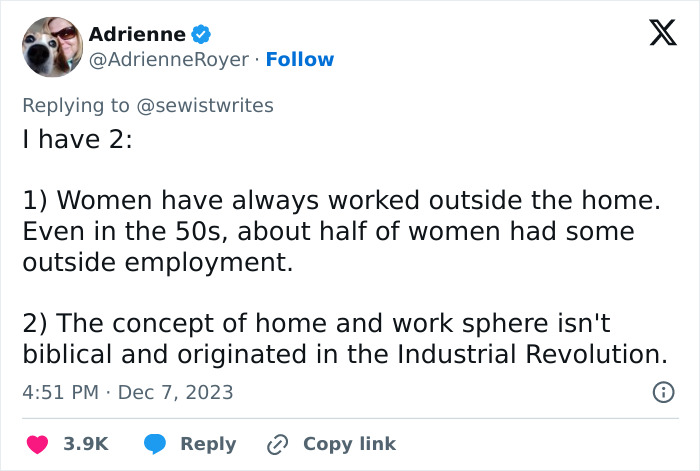
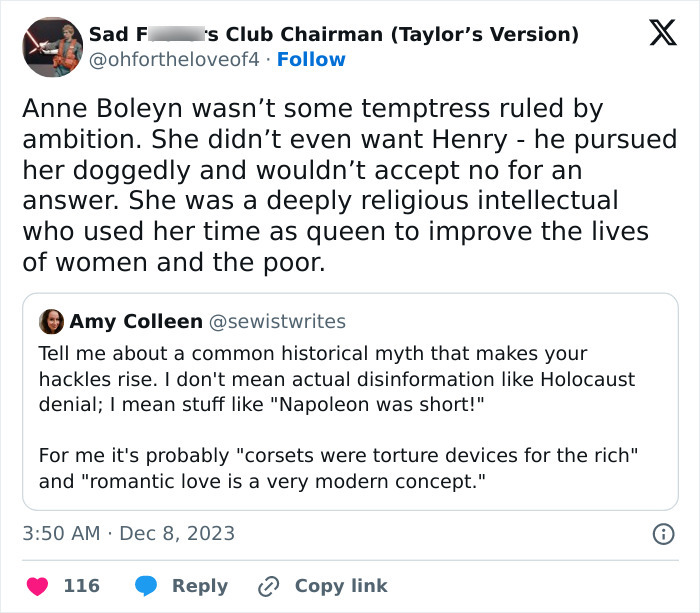
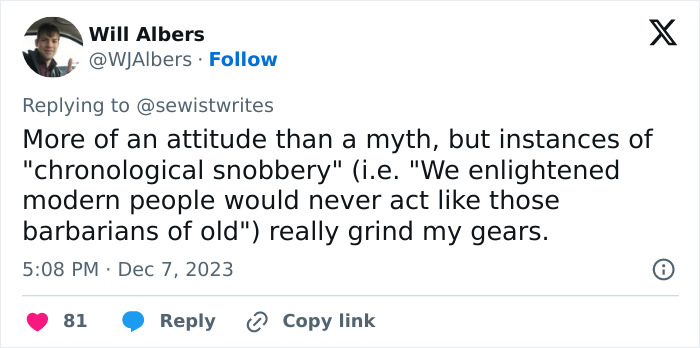
A netizen going by the moniker of ‘sewistwrites’ recently turned to X (formerly Twitter) to learn more about such convincing yet not necessarily accurate historical myths. She shared that the ones that make her hackles rise relate to corsets and romance, this way starting a thread, which covered everything from Columbus to salt, and beyond. Scroll down to find more historical myths shared by the netizens on X and see what other bits of historical information might not be entirely true.
In order to learn more about historical myths and how they can influence the way people view history itself, Bored Panda turned to associate professor of history at Southern Utah University, Dave Lunt, who was kind enough to answer a few of our questions. You will find his thoughts in the text below.

This post may include affiliate links.

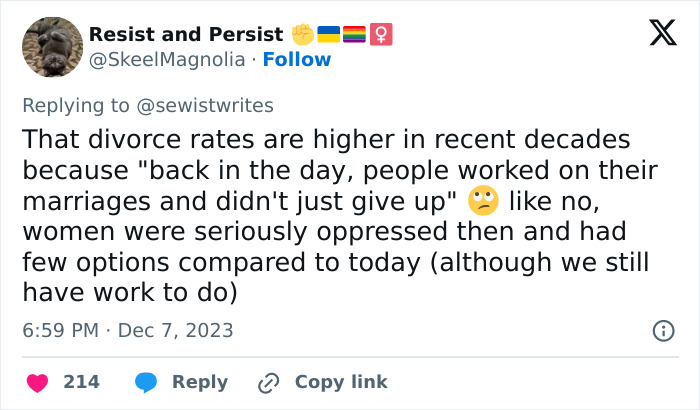
In some countries, it was practically impossible for a woman to divorce her husband. In New Zealand in the early 60s, proof of adultery in court would do it. Domestic abuse wouldn't, because behaviour in the home regarded as a 'domestic' issue.

There was a disease called the 'Green Sickness' that struck only young women. The cure was marriage. Yeah ... that would be rampant anaemia due to heavy periods. Marriage often meant repeat pregnancies, during which time the woman wouldn't bleed.
Oh, they know. That’s why every time someone promises to make schools teach it properly, the racists scramble to vote for the Racist Party.

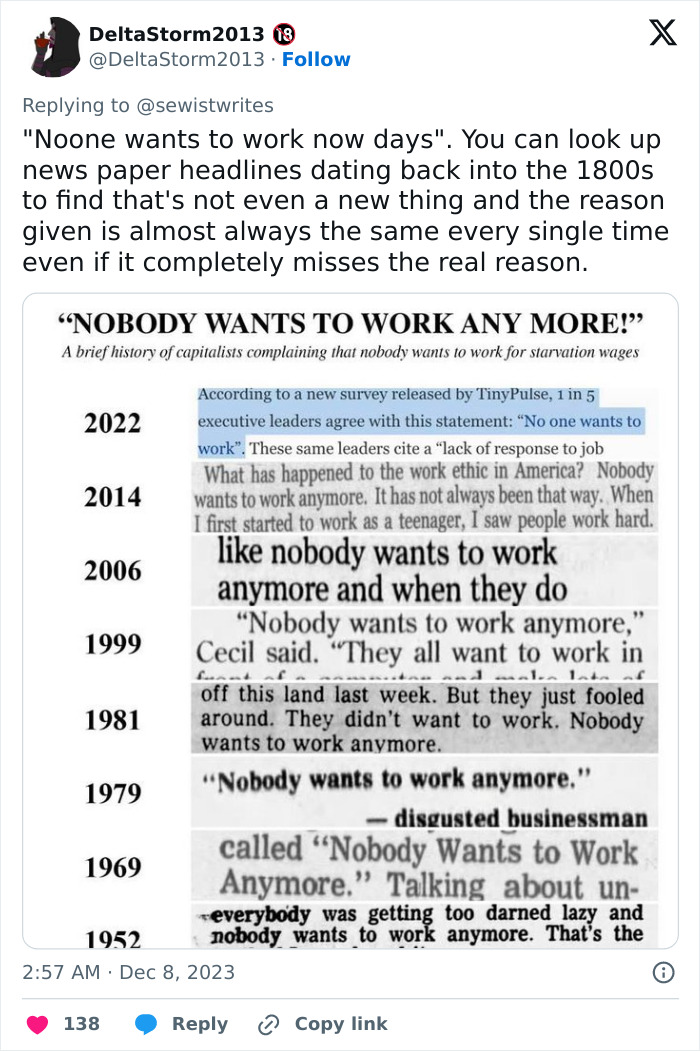
This is the cry of the bad employer, all of these are missing the "... for my company"
They were actually invented for men as it gave them better hold in stirrups.
I have three big heroes in computing - Ada Lovelace (who can be considered the first computer coder), Alan Turing (the enigma device and father of AI) and Margaret Hamilton (head of the team that wrote the Apollo 11 software which took "Men" to the moon and back on a computer less powerful than a modern fridge)
IIRC it was pink for boys, blue for girls before but that might also be a myth!

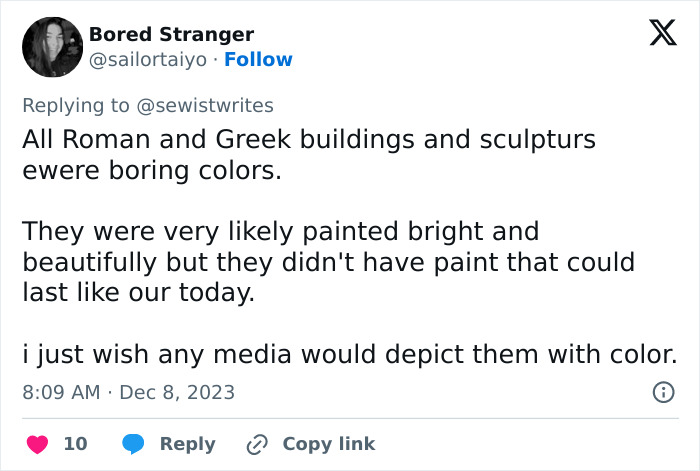
Greek building were mostly painted, but the origin of the painting style deserves a story by itself. The early stone temples were painted and shaped in a way that mimicked the older wooden temples and the older material used. The grey stone corniches and architraves were painted red to mimic the terracotta used to waterproof the timber roofs. The triglyphs were light blue because in the old days they were wood planks finished with beeswax on the cut face to prevent mold. The "guttae" decoration was green because it was a reminder for the oxidized bronze nails used in wooden framing, a detail that was maintained despite it had no other purpose than decoration. In Greek culture following the "natural order", i.e. what the ancient did, was of great value and architects kept some of these details going for centuries after they became effectively useless.
I wish we could have those old English letters back; thorn, wynn, ethel, eth, yogh, and ash. Some English words might actually make more sense.

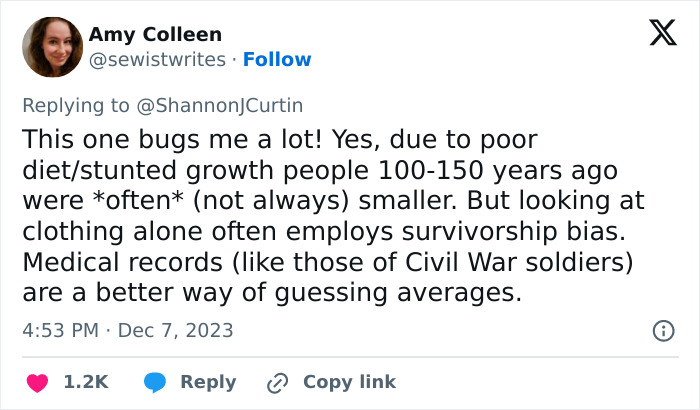
The clothes and shoes in Bath museum of costume are tiny. Dunno about survival bias, they were mostly owned by the better off.

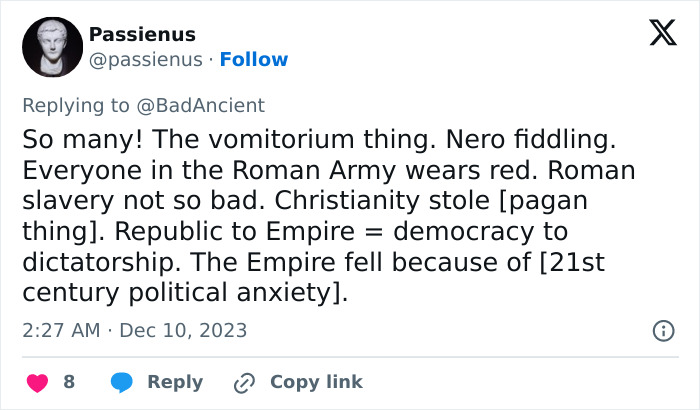
The western roman empire fell around 496 (even though it was slow process, not happening suddenly on that year). 1453 is the fall of Constantinople of the byzantine empire.
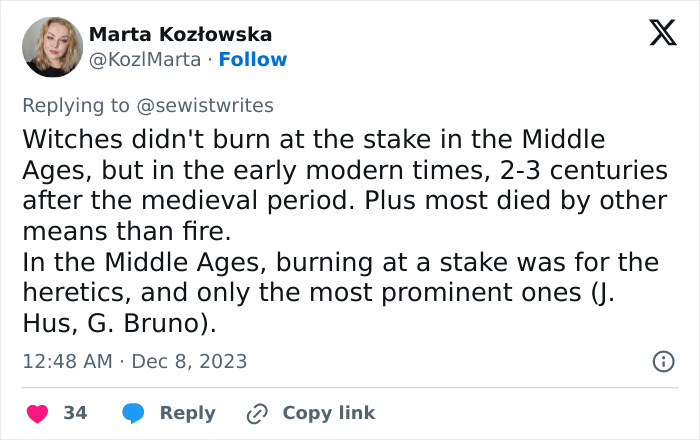
Also, the Catholic Church and the Inquisition put very little effort in hunting witches, because that would have meant admitting existence of witchcraft and this was against the doctrine. They very much preferred burning heretics. Witch burning was mostly a Protestant and Puritan thing. That's why it was quite common in UK and America (also Germany and Denmark for a while).
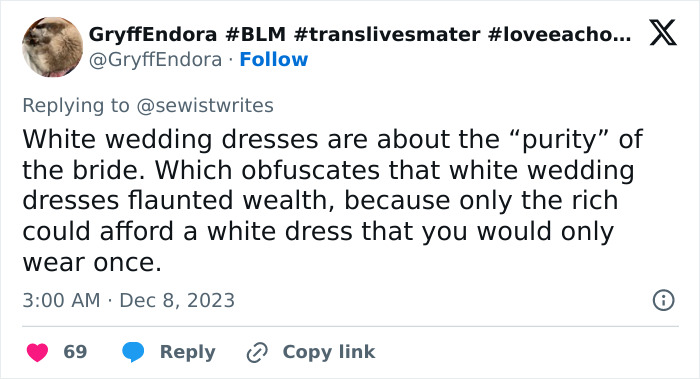
Well, there were laws about what colors various ranks of people could wear (hence the phrase 'royal blue' - or maybe more accurately, purple), so there is that. More here: https://www.encyclopedia.com/social-sciences-and-law/law/law/sumptuary-laws#:~:text=SUMPTUARY%20LAWS.,cloths%2C%20garments%2C%20or%20ornamentation.
Google proper Old English and see if you can read it. It does help a lot if you know German though.
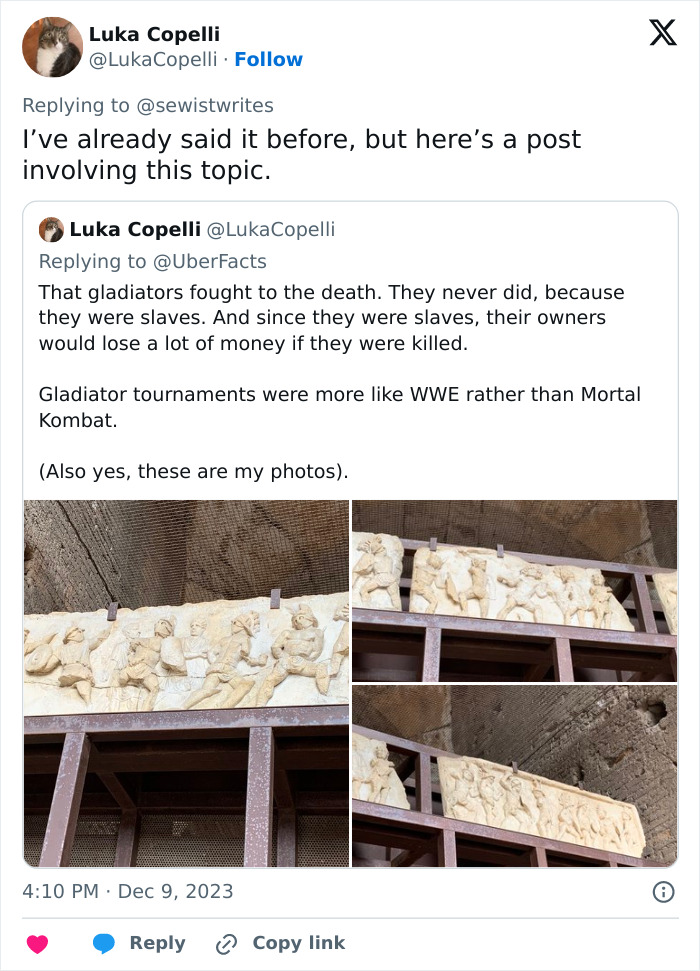
Gladiators weren't all slaves. Sure, a good number of them were prisoners and slaves sentenced to damnati, but there were Gladiator schools. People, free non-citizens and citizens, trained to become gladiators - the pay was good, there was housing, and the food was guaranteed. Thy might have even gotten fame and fortune - they kept all of their prize money and any gifts they were given, some famous gladiators even sponsored goods and bathouses.
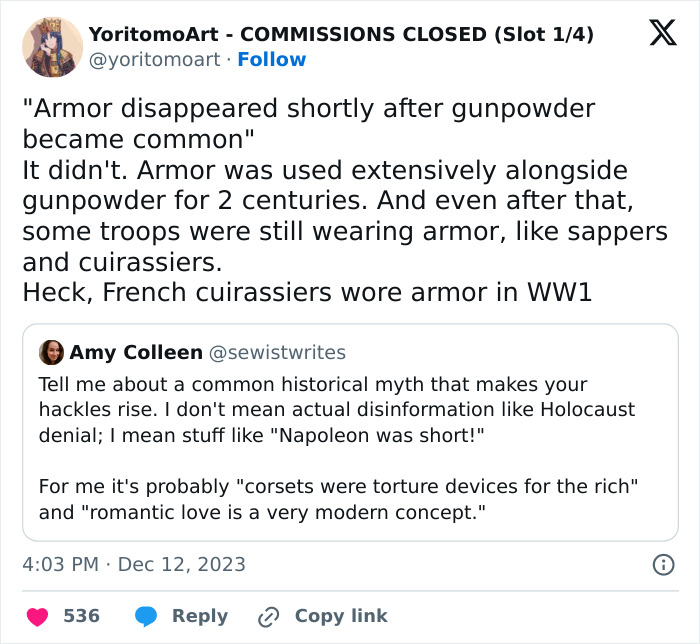
What is a bullet-proof vest if not body armor? It's just not plate metal anymore.

The samurai loved guns because they were literally mercenaries by our modern definitions... they loved anything that made their job easier...

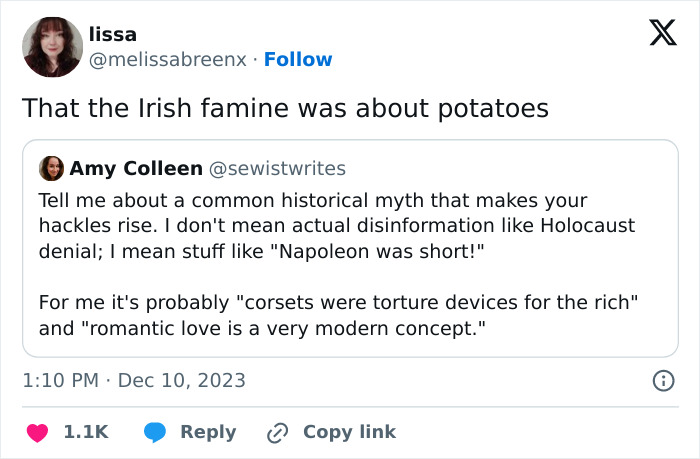
I thought it was potato blight, landlordship, food export to england that created an deficiency, and relying on one crop (potato)??

If someone is like me and believed the false version, the truth is Galileo was put under house arrest by the church until his death, not killed.
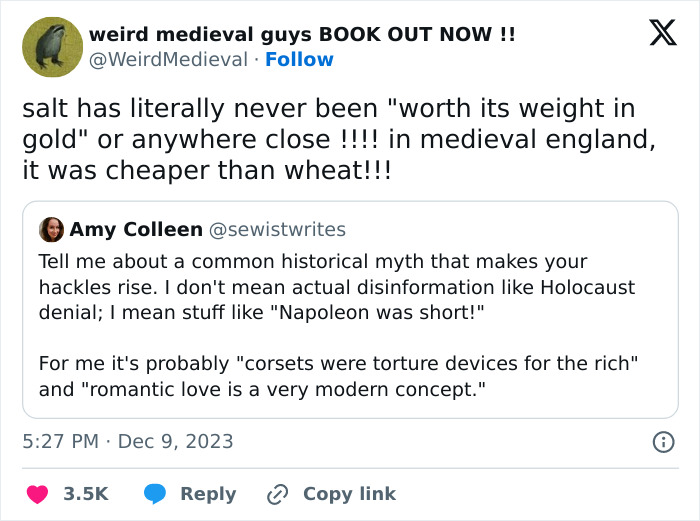
This one gets my goat major. The library never burned down at all, it eventually shut its doors around the mid third century AD due to falling footfall, with the building itself likely being destroyed when the Palmyrene Empire seized Alexandria around 270-290AD. A port storehouse was indeed accidentally lit on fire by Julius Caesar in 48AD while he was besieged at Alexandria - the law required that all books sent to the library were copied and multiple copies of all books were delivered to other libraries in the Roman Empire, so the knowledge absolutely still existed in spite of the storehouse fire.
They were certainly brilliant minds, but they were brilliant minds living among the general economic, demographic, social, political, and technological regress, striving to preserve the knowledge of the ancients, to make sense of the shreds of their knowledge and put it in the new Christian framework. Compare those to Hero, Ptolemy, Galen and others during the Roman times, people who actually did science, as in: expand the understanding of the world using the empirical method, because they lived in a world where this was possible and encouraged. The fact that there were some brilliant minds during the Dark Ages does not mean there were no Dark Ages.

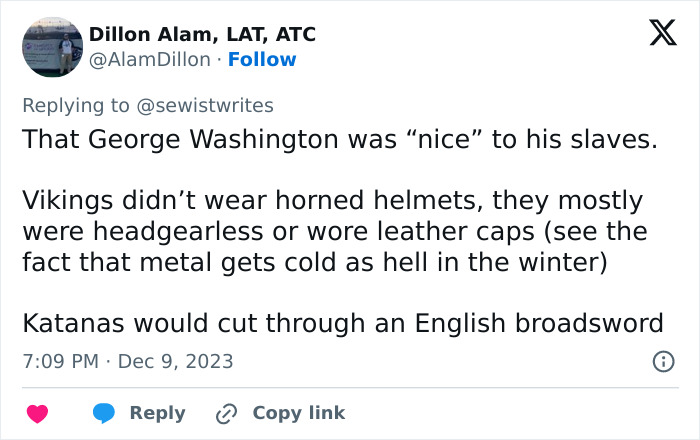
How about the myth that slavery is somehow an invention of white people in the western world, let alone the sole creation of American colonists, designed to "destroy black people and culture"? Slavery has existed for all of human history, every single shade of human skin has enslaved every other shade of human skin, including their own! White people bought and sold other white people, Africans bought and sold other Africans, Queen Nzinga had an alliance with the dutch, selling off 13,000 of her own people into slavery....per year, in the early 1600's. History is littered with ignorant, barbaric monsters, they were the rule, not the exception.

Good! I didn't think that the Aztecs could be that stupid.
Well, yes and no. Toilets were added in 1768, 144 years after the construction. Before that, in 1715, they agreed to collect faeces from the corridors once every week.
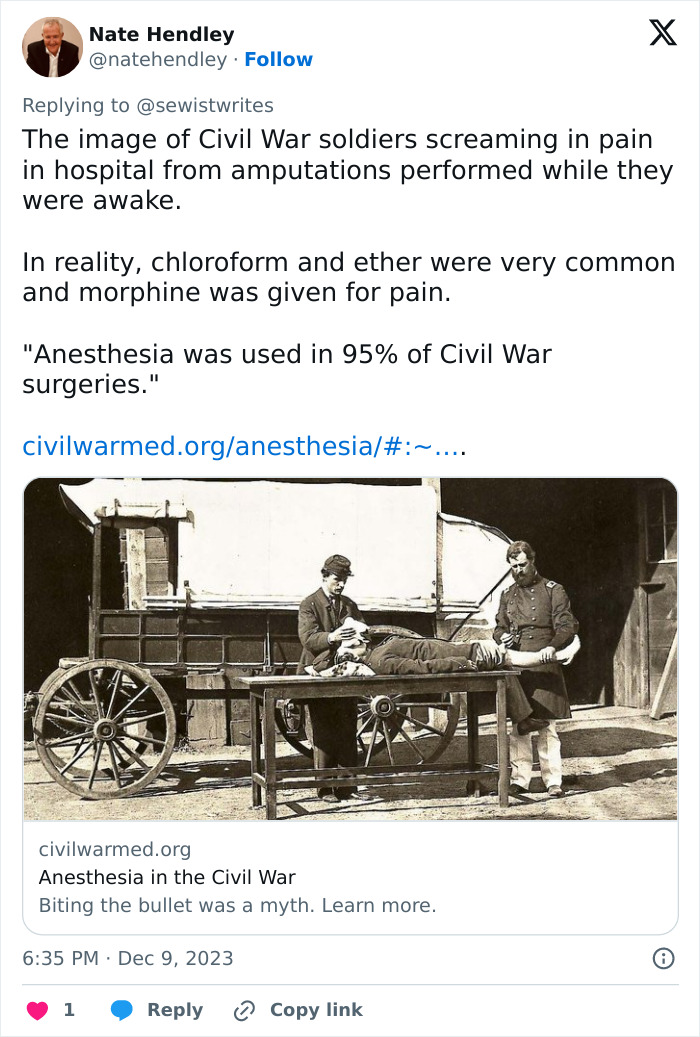
A piece of trivia that you may not know. The four earliest and best known anaesthetics, rum, nitrous oxide, ether and chloroform, were all common party drugs before they became used as anaesthetics.
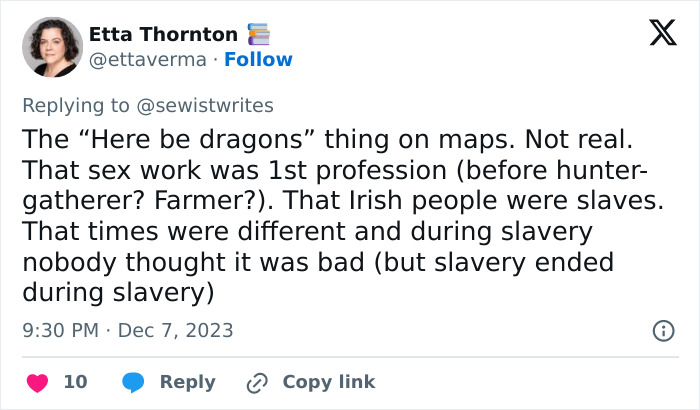
Here be dragons did in fact appear on a globe made in the 16th century. Irish people were absolutely slaves.....just centuries before Africa started selling off their own people (before anyone is "triggered" i'll again refer you to queen Nzinga) Hunter/gathering and farming weren't professions, they were just things people did to keep THEMSELVES and their families fed) Slavery, has existed for ALL OF HUMAN HISTORY, with the first recorded mention going back to 3500 BCE. That's 5500 years of slavery being the norm, and while it's certainly fallen out of widespread fashion over the past couple hundred years, there are MANY more slaves in the world today, (45 million) then existed throughout the entire 400 year Atlantic slave trade (12.5 million, of which only 388,000 were sent to the colonies/U.S)


That American women were "given" the right to vote. No, they fought long and hard for 70 years.


I agree with the corsets thing. It is also a myth that the Wall Street Crash caused the Great Depression - it certainly contributed, but other factors were in play that would have resulted in a devastating recession anyway.
Yeah, saying the crash caused the Depression is like saying that tickle in your throat caused your cold. No, it's the first symptom, not the cause.
Load More Replies... That American women were "given" the right to vote. No, they fought long and hard for 70 years.
I agree with the corsets thing. It is also a myth that the Wall Street Crash caused the Great Depression - it certainly contributed, but other factors were in play that would have resulted in a devastating recession anyway.
Yeah, saying the crash caused the Depression is like saying that tickle in your throat caused your cold. No, it's the first symptom, not the cause.
Load More Replies...







































 No fees, cancel anytime