Bored Panda works better on our iPhone app
Continue in app Continue in browser

The Bored Panda iOS app is live! Fight boredom with iPhones and iPads here.

“Yes, Maggots”: SIL Refuses To House Hoarder In-Laws After They Lose Their Home
6

“Yes, Maggots”: SIL Refuses To House Hoarder In-Laws After They Lose Their Home

Interview With Expert

41

ADVERTISEMENT

Having continuous difficulty parting ways with possessions despite their value may be a sign of a mental health disorder. In some cases, hoarding may not have a noticeable impact on a person’s life, while in more severe instances it can greatly affect daily functions and even pose a threat to well-being. 

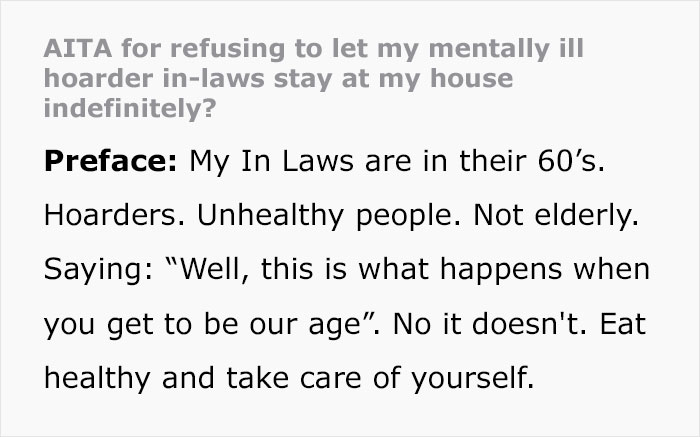
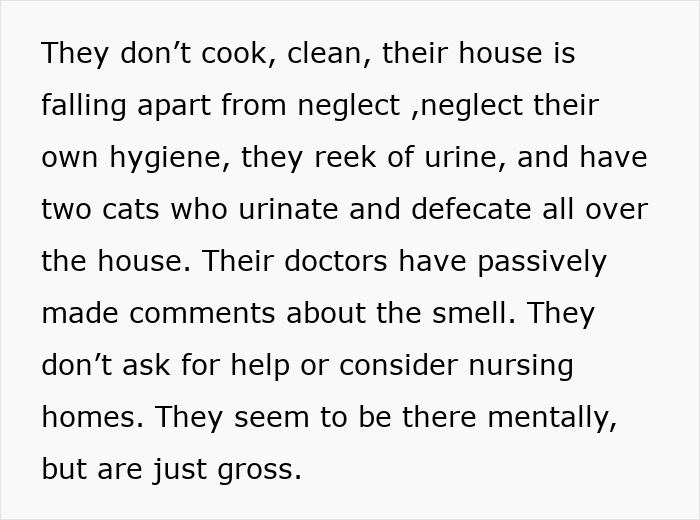
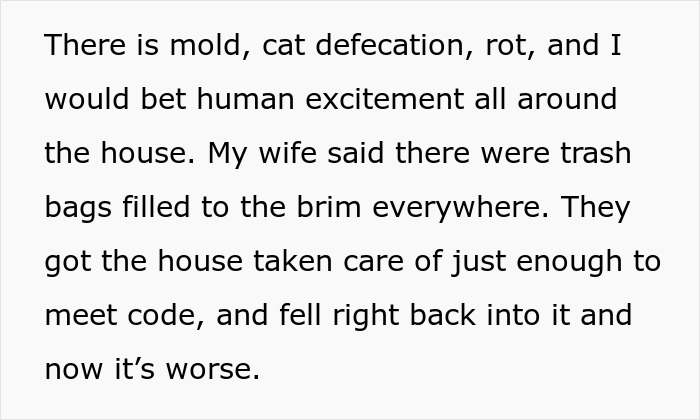
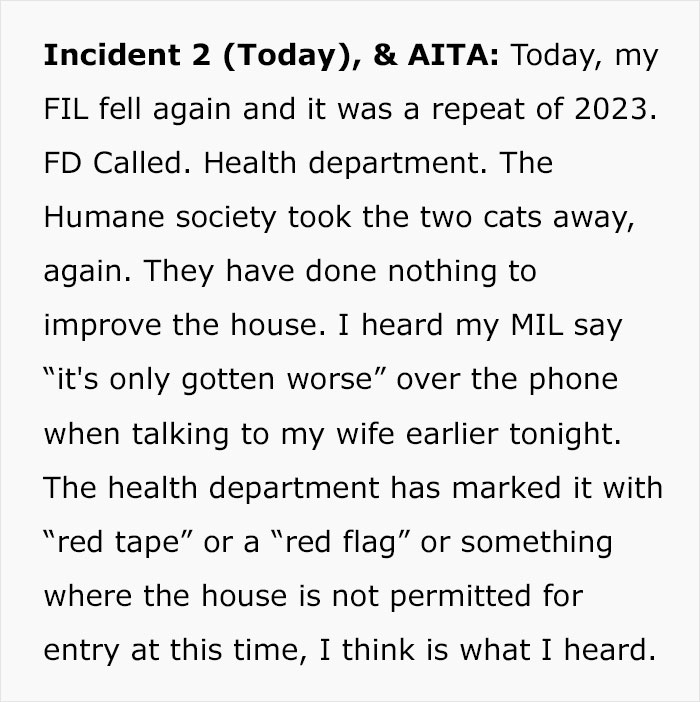
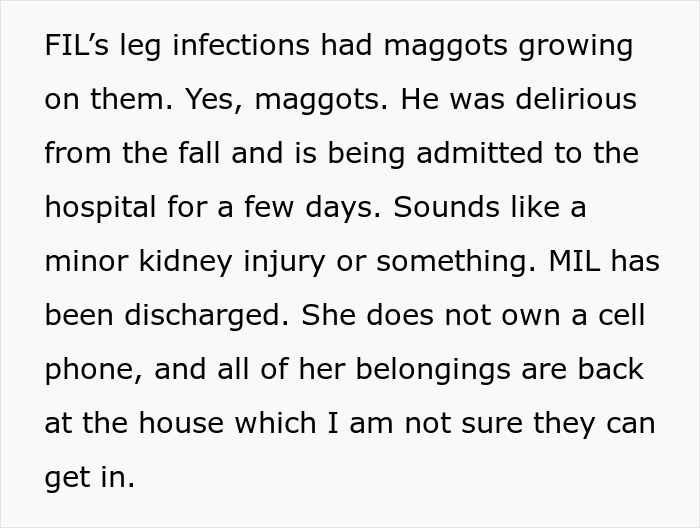
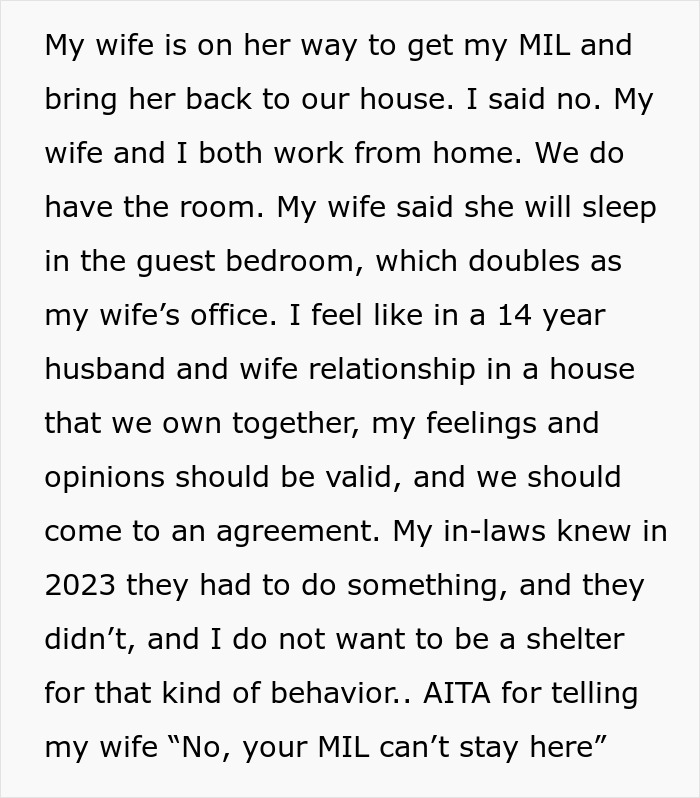
This guy recently shared how his in-laws’ inability to farewell with their belongings made their home unlivable for the second time. With nowhere to go, his wife suggested they stay with them, but he quickly opposed, thinking of all the things that could go wrong if they did.

Scroll down to find the full story and conversation with licensed clinical psychologist and the owner of Advanced Psychology Services, Leslie Crea-Kammerer, PsyD., organizing specialist in ADHD, hoarding, and time management and productivity, Diane N. Quintana, and ADHD and hoarding specialist and certified professional organizer in chronic disorganization, Dr. Regina F. Lark, who kindly agreed to tell us more about the hoarding disorder.

RELATED:

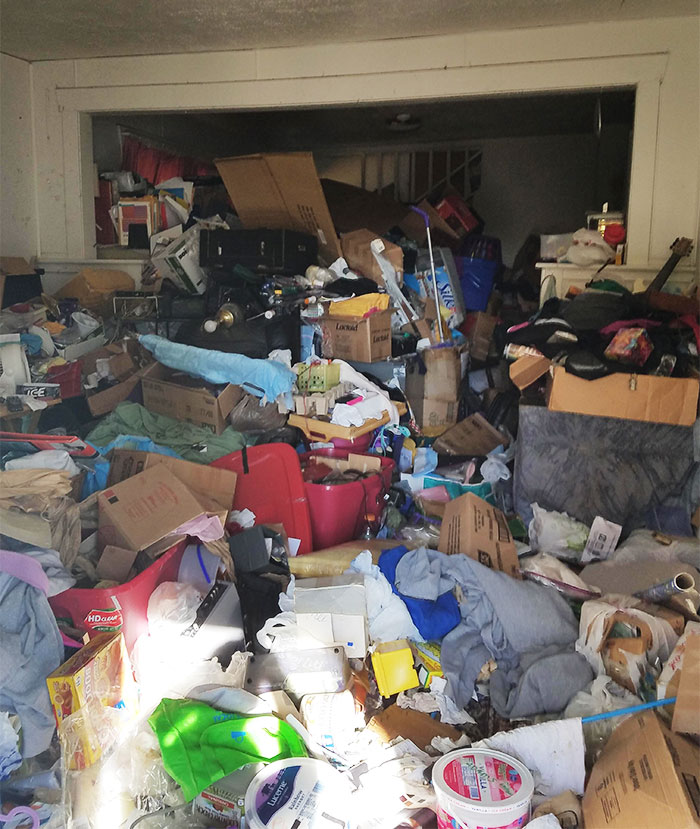
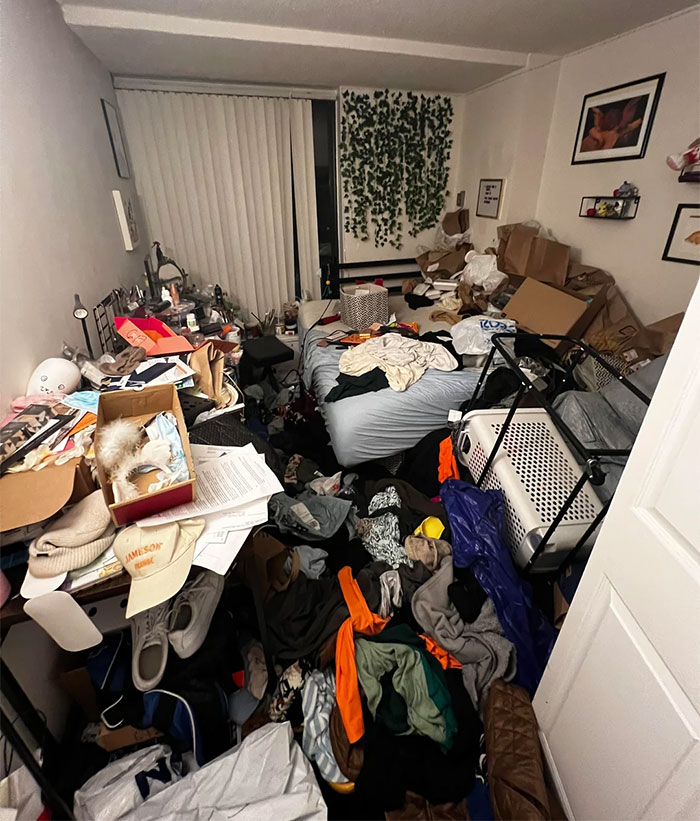
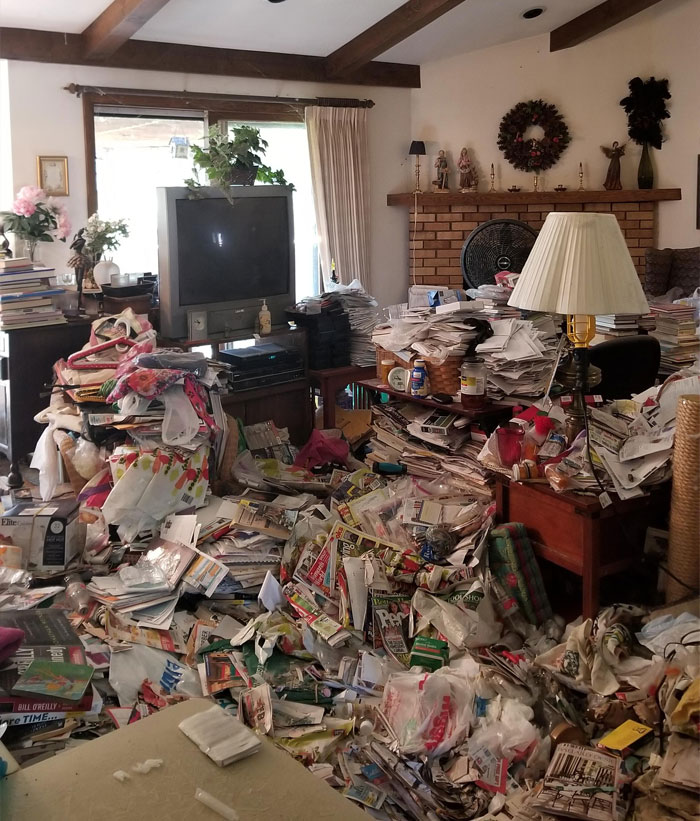
    Not being able to part with belongings can reach an extreme where a home is no longer safe to live in

    Image credits:  drunkjockey (not the actual photo)

    Like what happened with this guy’s in-laws, whose home was condemned for a second time and they had nowhere to go, as he didn’t want to let them in his home

    ADVERTISEMENT
    ADVERTISEMENT
    ADVERTISEMENT

    Image credits:  YuriArcursPeopleimages (not the actual photo)

    ADVERTISEMENT
    ADVERTISEMENT

    Image credits:  AITA_Throwaway_66666

    2 to 6 percent of the world’s population suffers from a hoarding disorder

    It’s estimated that around 2 to 6 percent of the world’s population suffers from a hoarding disorder. This translates to about 158–474 million people having such a mental health condition globally in 2021. 

    The National Health Service describes this disorder as the storing of an excessive number of items in a chaotic manner, usually resulting in an unmanageable amount of clutter. “The items can be of little or no monetary value,” the website writes.

    Hoarding becomes a significant problem when the amount of possessions starts interfering with everyday activities, relationships, and safety. “Some of the biggest signs are that the collections or behaviors are interfering with relationships, interfering with safety, or causing significant interference or problems with finances, being able to work, or being able to complete basic chores or tasks of daily life,” says licensed clinical psychologist and the owner of Advanced Psychology Services, Leslie Crea-Kammerer, PsyD.

    ADVERTISEMENT

    Another indication of a hoarding problem is when spaces no longer serve their intended purpose, says organizing specialist in ADHD, hoarding, and time management and productivity, Diane N. Quintana. “For example, when the kitchen counters are so packed with things that the person has no place to prepare food, or when the bathtub is full of magazines so the person cannot bathe, when they can only sleep on a portion of the bed—you know there is a problem and that hoarding behaviors are present.”

    People who hoard have a very hard time parting ways with their belongings, mainly because of fear

    People who hoard have a very hard time parting ways with their belongings, mainly because of fear. “There’s a lot of fear… fear of waste, fear of needing something in the future, even though they can’t identify what the future would have to look like in order for this thing to be used. Cognitively, it’s difficult because the executive function part of the brain is really compromised. And research has shown that early trauma can precipitate hoarding behavior,” explains hoarding specialist and certified professional organizer in chronic disorganization, Dr. Regina F. Lark.

    Crea-Kammerer adds that people overly accumulate things because they attach deep meaning to them or feel like they can get joy out of them in times of distress in their lives.

    ADVERTISEMENT

    Unfortunately, such cumulative tendencies only get worse with age and often come in combination with other mental health conditions, which makes it harder for people to see it as a problem. Hoarding issues gradually develop over time privately, so they often go unnoticed by family and friends, fostering their inability to part ways with their possessions. 

    Some people who have this disorder are aware of it but feel reluctant to seek help because they feel shame, humiliation, or guilt about it. So it’s usually family and friends who can help them get better once they notice what their loved one is going through. It’s very important that they do, as a house brimming with clutter can be a dangerous safety hazard. 

    ADVERTISEMENT

    Image credits:  DianaDitch_ (not the actual photo)

    Throwing everything out isn’t going to fix hoarding behaviors

    However, throwing everything out isn’t the first solution to a hoarding issue, even though it might seem like it. As they or someone else is sorting through their possessions, they might feel anxious, stressed, and uncomfortable, which can make them backtrack and rethink their decision to get better. The sudden surge of upsetting emotions can cause them to start buying and accumulating even more stuff. 

    ADVERTISEMENT

    “People can feel more pressure to keep items after having chosen to do so repeatedly before (a “sunk cost” fallacy). It can be difficult to “give up” on holding onto items after expressing so strongly to others that they needed them or that they had a special purpose; this can fuel those feelings of guilt and depression as well,” says Crea-Kammerer. 

    Therefore, it’s important to take it slow and make sure the person is feeling as comfortable with cleaning up as possible. “If the person with a hoarding disorder will allow the help, then proceed slowly. Let the person decide where they want to declutter first. Work for short periods of time on a specific task. Celebrate every time they are successful,” says Quintana. 

    In some cases, it might be beneficial to reduce the focus on hoarding behaviors and strengthen the relationship with the struggling person instead, says Crea-Kammerer. “This can be done in ways that are not related to the hoarding behaviors, such as scheduling weekly phone calls to tell them about their life or by continuing to invite them to events that are manageable and do not cause too much distress for everyone involved,” she explains.

    “Nurturing more positive feelings and relationships can help to strengthen the person’s ability to regulate their emotions in general and tolerate the distress related to the hoarding behaviors in particular, and it can help fuel their motivation to make change.”

    ADVERTISEMENT

    However, when hoarding behaviors start posing safety risks, loved ones can communicate their own feelings and limits using nonjudgemental language (this means avoiding saying “good,” “bad,” or unacceptable”), says Crea-Kammerer.

    “Be ready to accept that the person who struggles with the hoarding behaviors may decline the request. Identify your realistic options for interacting with them (what you are able and willing to do with them, what you can offer, agencies or supports you can contact) and try to choose options that most align with your goals for the relationship. These guidelines from the Association for Behavioral and Cognitive Therapy (ABCT) can also be helpful for having a conversation when the person is ready to do so.”

    Image credits:  praboin1 (not the actual photo)

    ADVERTISEMENT

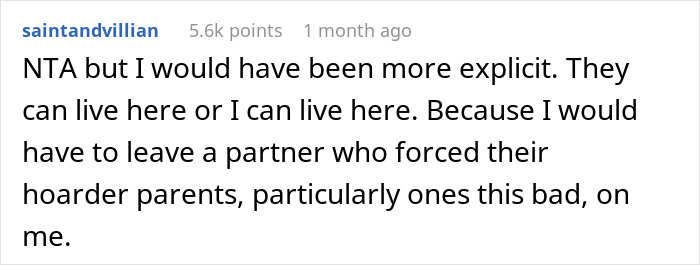
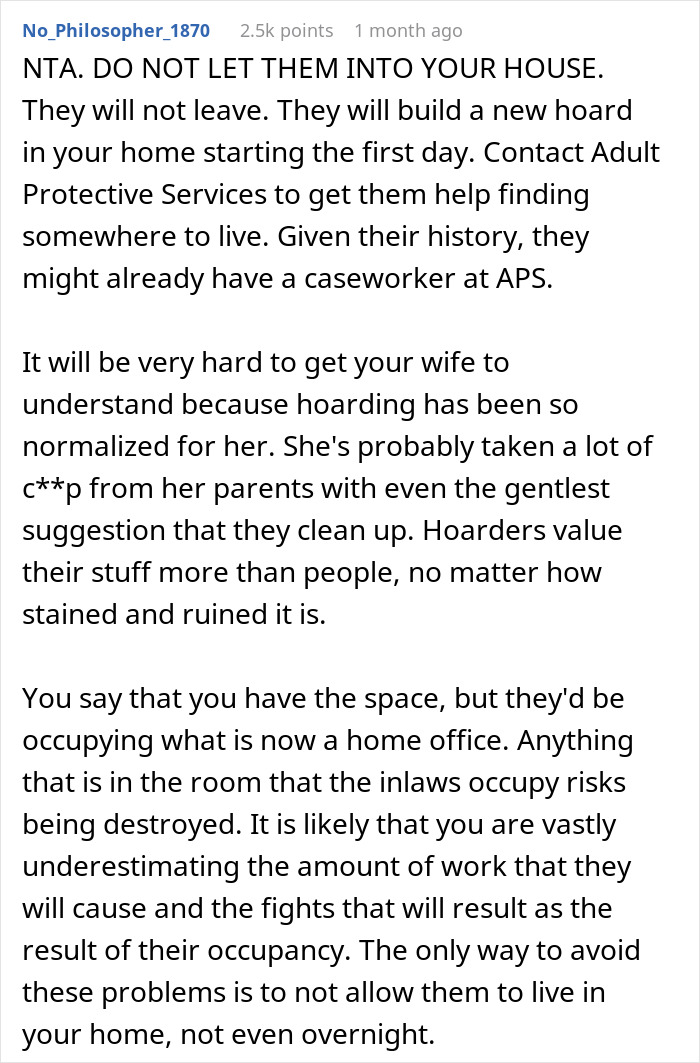
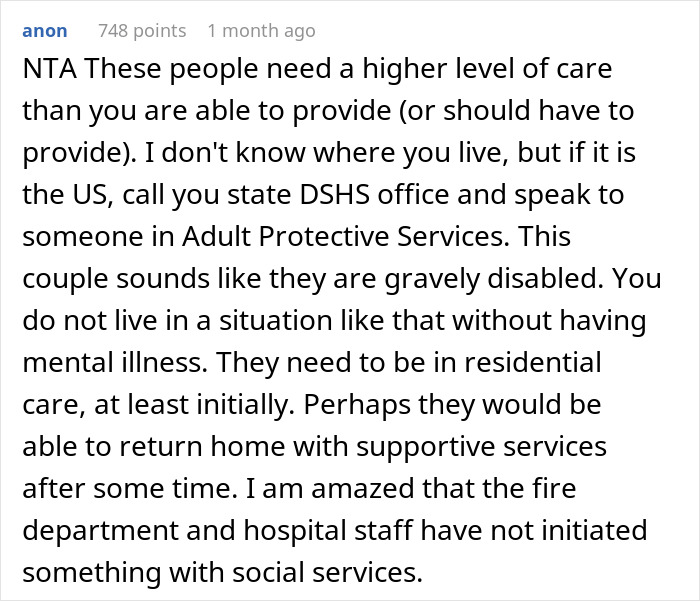
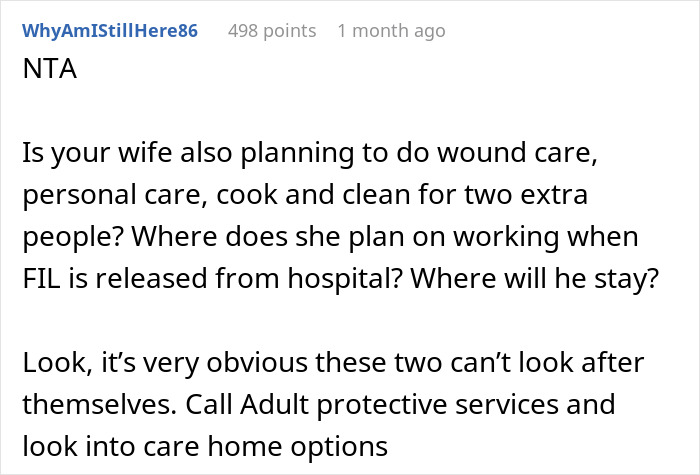
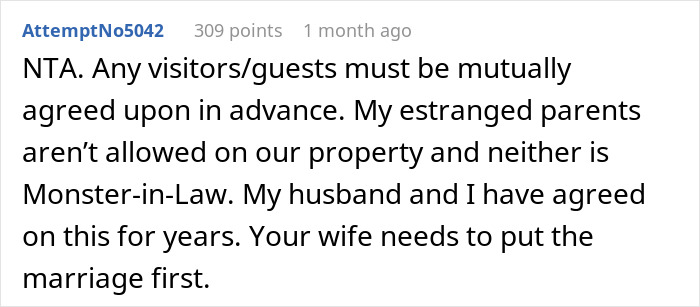
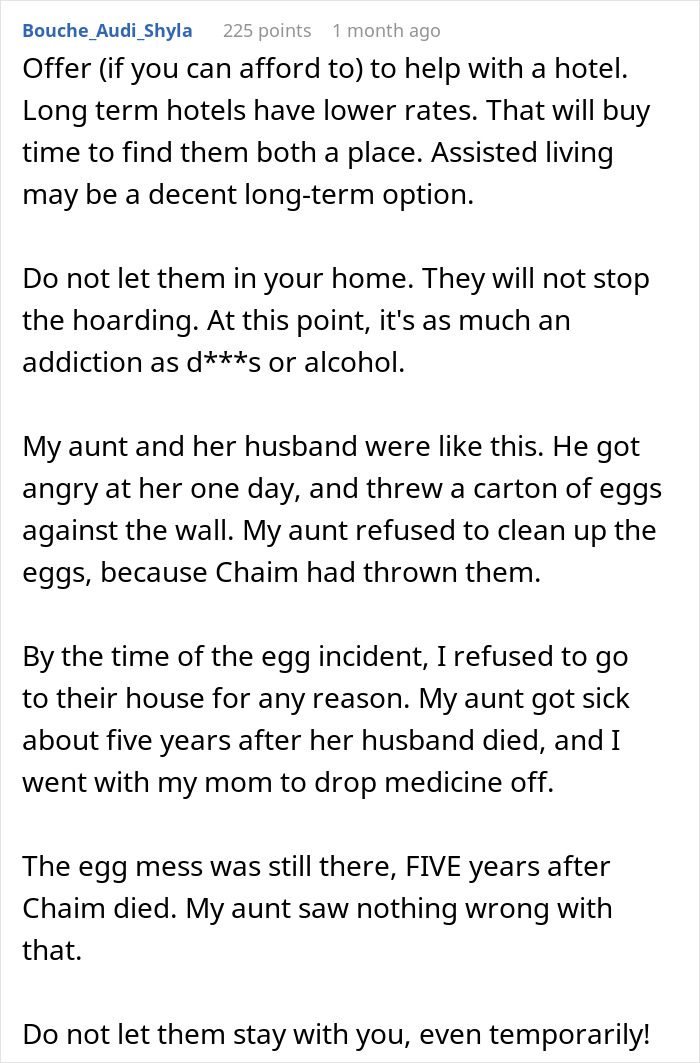
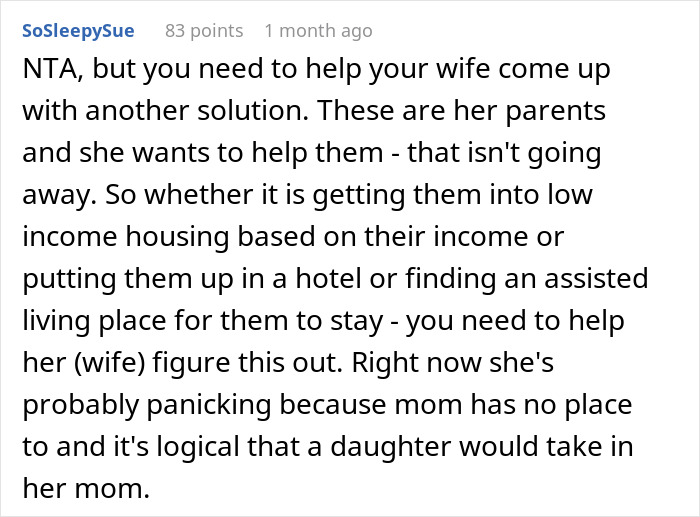
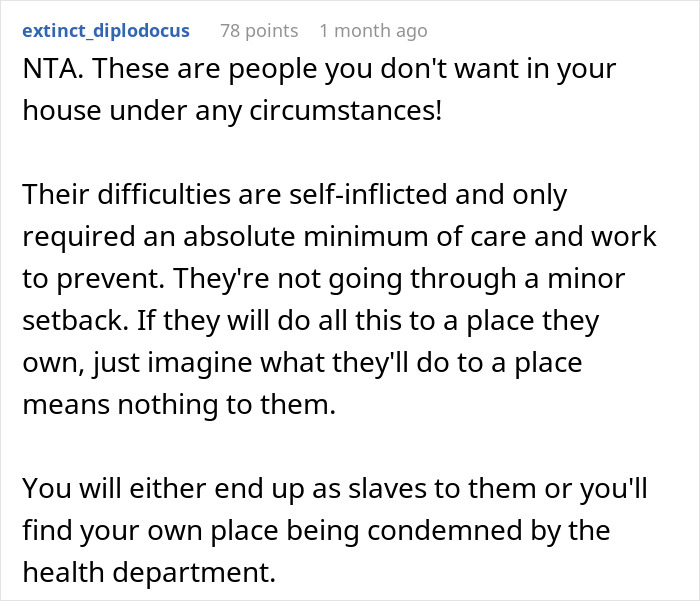
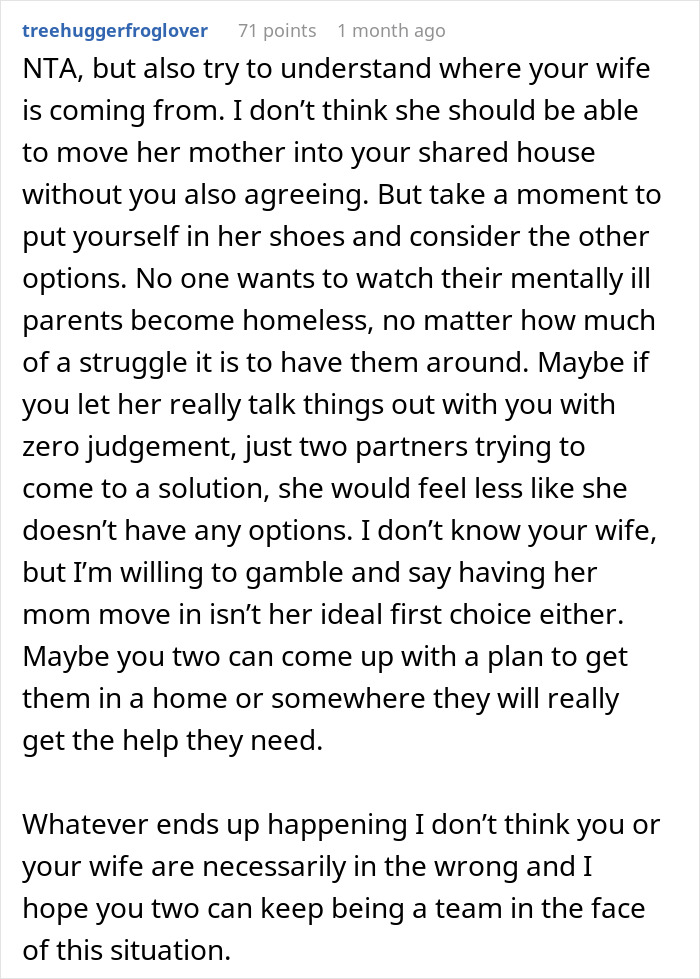
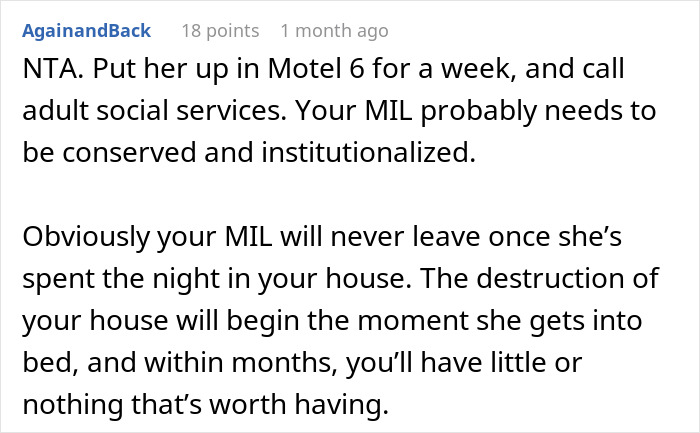
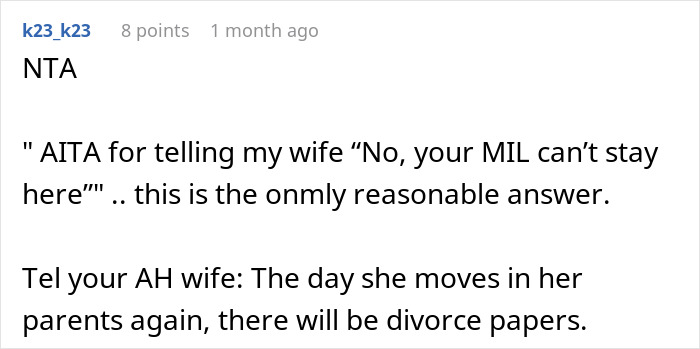
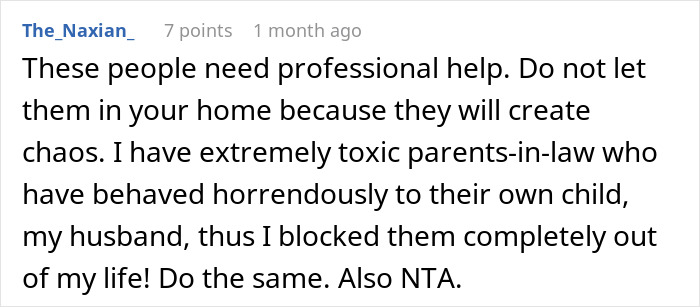
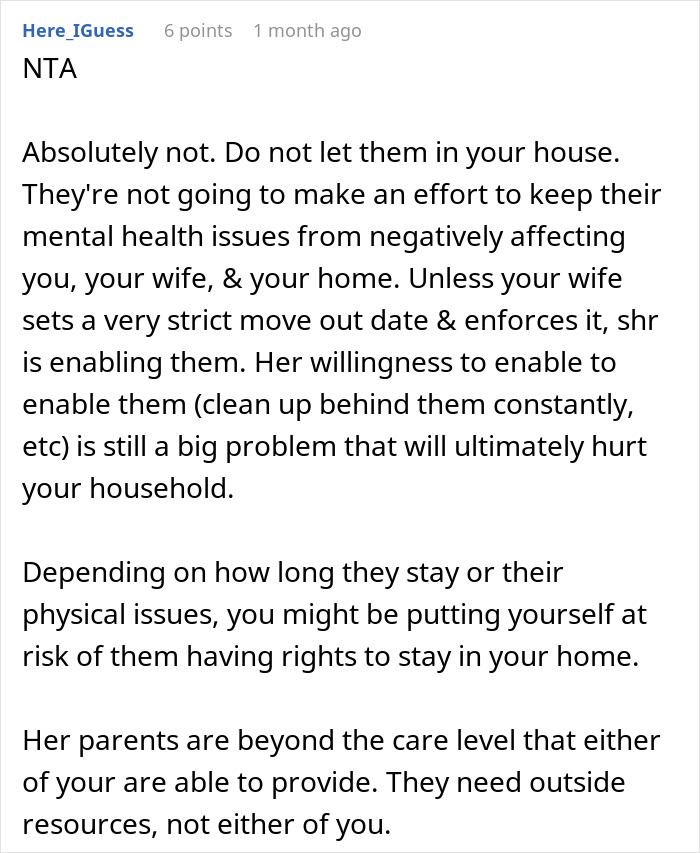
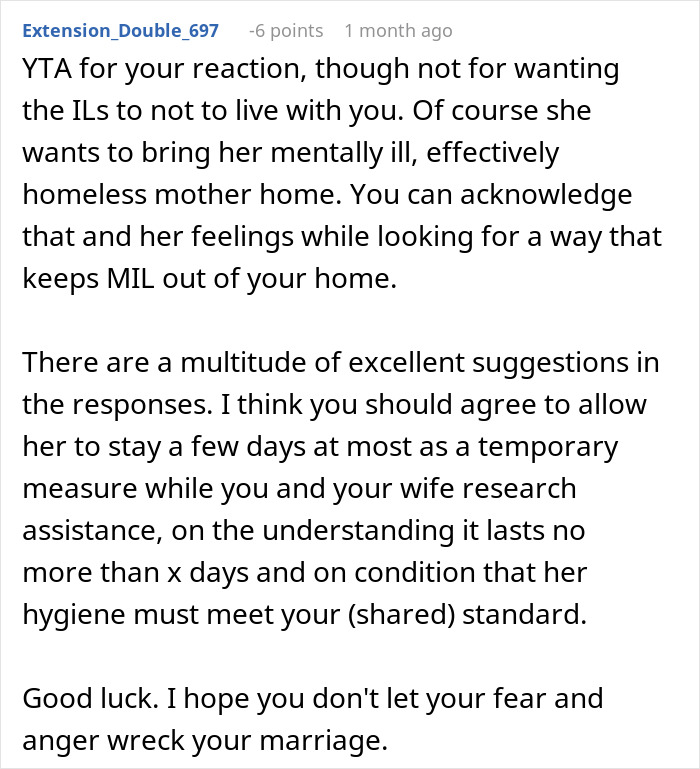
    Most readers justified the author’s behavior

    ADVERTISEMENT
    ADVERTISEMENT
    ADVERTISEMENT
    ADVERTISEMENT
    ADVERTISEMENT
    ADVERTISEMENT
    ADVERTISEMENT
    ADVERTISEMENT
    ADVERTISEMENT
    ADVERTISEMENT
    ADVERTISEMENT
    ADVERTISEMENT

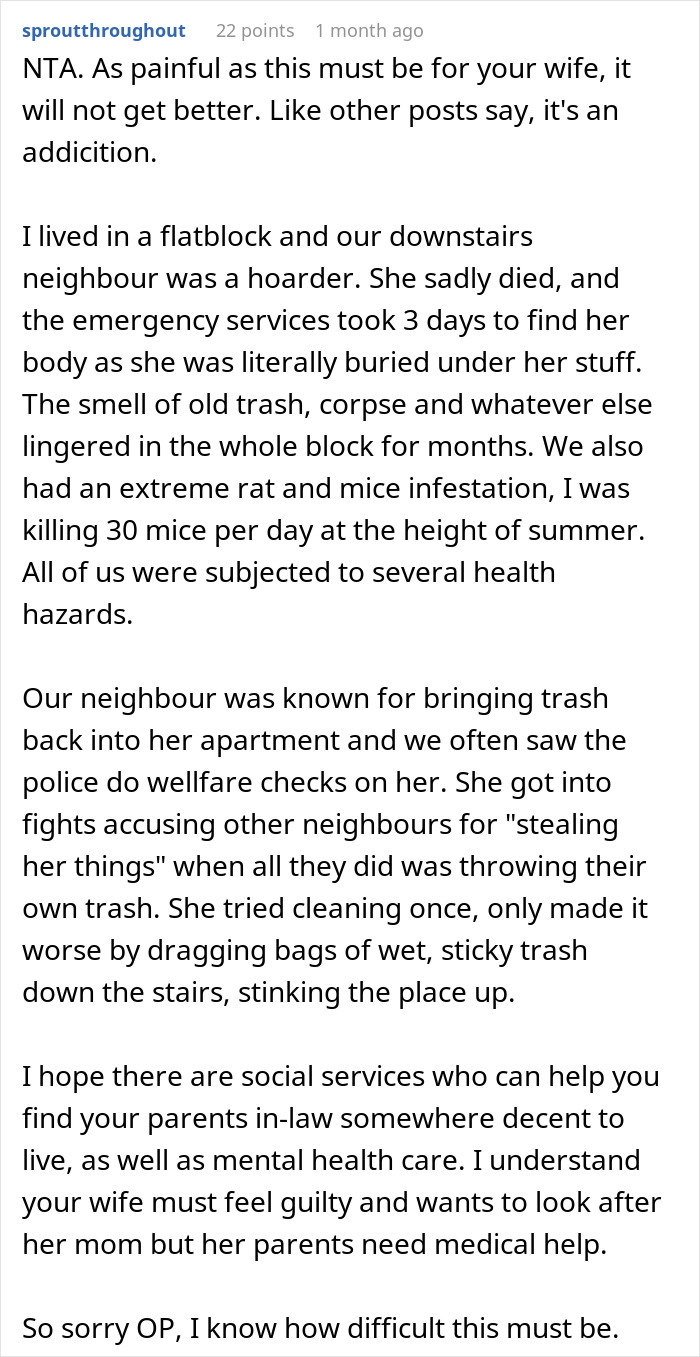
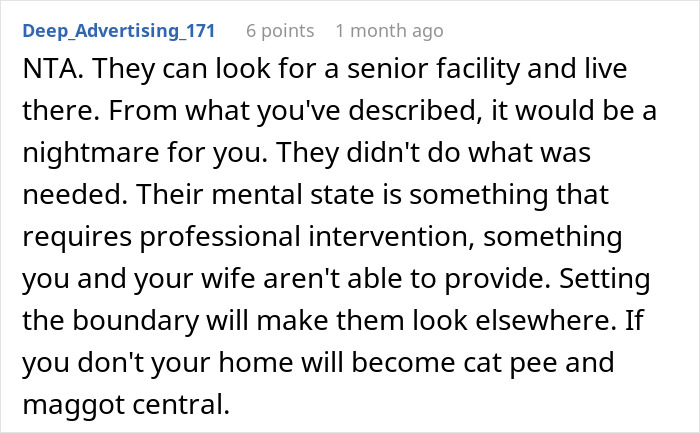
    While some thought that he should have let the in-laws stay

    ADVERTISEMENT

    Poll Question

    Total votes ·

    Thanks! Check out the results:

    Total votes ·
    Share on Facebook
    Austeja Zokaitė

    Austeja Zokaitė

    Writer, Community member

    Read more »

    Hi, glad you swung by! My name is Austėja, and in the past, I was a writer at Bored Panda. In my time here, I’ve covered some fun topics such as scrungy cats and pareidolia, as well as more serious ones about mental health and relationship hiccups. You can check them out below! I hope you enjoy reading them as much as I enjoyed writing them:)

    Read less »
    Austeja Zokaitė

    Austeja Zokaitė

    Writer, Community member

    Hi, glad you swung by! My name is Austėja, and in the past, I was a writer at Bored Panda. In my time here, I’ve covered some fun topics such as scrungy cats and pareidolia, as well as more serious ones about mental health and relationship hiccups. You can check them out below! I hope you enjoy reading them as much as I enjoyed writing them:)

    What do you think ?
    JJKeene
    Community Member
    Premium
    12 months ago Created by potrace 1.15, written by Peter Selinger 2001-2017

    My father was a hoarder. It's been almost a year since he died and I'm still cleaning up the mess he left behind in a 4/2 house and four detached sheds. So much stuff went to charity and thrift stores. The rest went in massively overfilled dumpsters. We still need at least one more massive dumpster to finish the job. His mess probably sped up my mother's death. Just say no to hoarders.


    Papa
    Community Member
    12 months ago Created by potrace 1.15, written by Peter Selinger 2001-2017

    Am I the only one amused by the sentence "There is mold, cat defecation, rot, and I would bet human excitement all around the house"? (I assume OP meant excrement instead of excitement.)

    ADVERTISEMENT
    Yu Pan
    Community Member
    12 months ago Created by potrace 1.15, written by Peter Selinger 2001-2017

    Stop getting cats, you hoarder!!!

    Alexandra
    Community Member
    12 months ago Created by potrace 1.15, written by Peter Selinger 2001-2017

    The in-laws are walking health hazards. OP's home will look like a rubbish tip in no-time if he lets them in

    roddy
    Community Member
    12 months ago Created by potrace 1.15, written by Peter Selinger 2001-2017

    How is she your MIL and also your wife's MIL? Whose mother is she? Either way, she needs professional care as clearly neither of them are capable of looking after themselves. Sixties is way too young to give up, sadly. I'm mid 70s and don't know anyone like this.

    Michelle Randazzo
    Community Member
    12 months ago Created by potrace 1.15, written by Peter Selinger 2001-2017

    Don't let them in! They will do the same to your home!!! They need help,mentally and physically. Assisted living would be best.

    kkrq2vk4tm
    Community Member
    12 months ago Created by potrace 1.15, written by Peter Selinger 2001-2017

    They cannot or will not change their behaviours, they will bring these life style choices into your home and your biggest problem will be getting them to leave

    Gwyn
    Community Member
    12 months ago (edited) Created by potrace 1.15, written by Peter Selinger 2001-2017

    Pay for a hotel for MIL for a week. Get adult services involved. They need to stay in a care home with supervision by someone who is not afraid to stand up to them and can keep them from turning their space into a dump. Take this opportunity while they are out of the house to get authority to take over the home, hire a service to just take all the contents to the dump. Anything sentimental will already have been ruined, so you don't need to sort out or look for anything. Sell the house and use the proceeds to pay for the care home.

    Kathrin Pukowsky
    Community Member
    12 months ago Created by potrace 1.15, written by Peter Selinger 2001-2017

    Were there some parts missing? OP talks about his in-laws moving in permanently, while the wife just intends to set her mom up in the guest bedroom for an unspecified amount of time. I get the impression that was her knee-jerk reaction to hearing that her mom was dismissed from hospital and couldn't enter her own home, so she's stranded. Sounds to me like this is an emergency arrangement and the (of course necessary) talk about a long-term arrangement is yet to happen, but OP acts like it already did. Maybe it was just the wording or missing details of what was said.

    KatSaidWhat
    Community Member
    12 months ago Created by potrace 1.15, written by Peter Selinger 2001-2017

    It's very hard to get someone out once they are in.

    Load More Replies...
    Ruth Watry
    Community Member
    12 months ago Created by potrace 1.15, written by Peter Selinger 2001-2017

    Forget the hoarding. What about the mold, urine, not bathing, etc. Chances are that if they ask MIL to bathe, she will refuse, or might just rinse herself with water, not wash her hair, and not use soap. I can imagine her hiding plates with food on them around the house. If they believe that there is human excrement in the house, I could imagine her urinating on the sofa.

    Load More Comments
    JJKeene
    Community Member
    Premium
    12 months ago Created by potrace 1.15, written by Peter Selinger 2001-2017

    My father was a hoarder. It's been almost a year since he died and I'm still cleaning up the mess he left behind in a 4/2 house and four detached sheds. So much stuff went to charity and thrift stores. The rest went in massively overfilled dumpsters. We still need at least one more massive dumpster to finish the job. His mess probably sped up my mother's death. Just say no to hoarders.

    Papa
    Community Member
    12 months ago Created by potrace 1.15, written by Peter Selinger 2001-2017

    Am I the only one amused by the sentence "There is mold, cat defecation, rot, and I would bet human excitement all around the house"? (I assume OP meant excrement instead of excitement.)

    ADVERTISEMENT
    Yu Pan
    Community Member
    12 months ago Created by potrace 1.15, written by Peter Selinger 2001-2017

    Stop getting cats, you hoarder!!!

    Alexandra
    Community Member
    12 months ago Created by potrace 1.15, written by Peter Selinger 2001-2017

    The in-laws are walking health hazards. OP's home will look like a rubbish tip in no-time if he lets them in

    roddy
    Community Member
    12 months ago Created by potrace 1.15, written by Peter Selinger 2001-2017

    How is she your MIL and also your wife's MIL? Whose mother is she? Either way, she needs professional care as clearly neither of them are capable of looking after themselves. Sixties is way too young to give up, sadly. I'm mid 70s and don't know anyone like this.

    Michelle Randazzo
    Community Member
    12 months ago Created by potrace 1.15, written by Peter Selinger 2001-2017

    Don't let them in! They will do the same to your home!!! They need help,mentally and physically. Assisted living would be best.

    kkrq2vk4tm
    Community Member
    12 months ago Created by potrace 1.15, written by Peter Selinger 2001-2017

    They cannot or will not change their behaviours, they will bring these life style choices into your home and your biggest problem will be getting them to leave

    Gwyn
    Community Member
    12 months ago (edited) Created by potrace 1.15, written by Peter Selinger 2001-2017

    Pay for a hotel for MIL for a week. Get adult services involved. They need to stay in a care home with supervision by someone who is not afraid to stand up to them and can keep them from turning their space into a dump. Take this opportunity while they are out of the house to get authority to take over the home, hire a service to just take all the contents to the dump. Anything sentimental will already have been ruined, so you don't need to sort out or look for anything. Sell the house and use the proceeds to pay for the care home.

    Kathrin Pukowsky
    Community Member
    12 months ago Created by potrace 1.15, written by Peter Selinger 2001-2017

    Were there some parts missing? OP talks about his in-laws moving in permanently, while the wife just intends to set her mom up in the guest bedroom for an unspecified amount of time. I get the impression that was her knee-jerk reaction to hearing that her mom was dismissed from hospital and couldn't enter her own home, so she's stranded. Sounds to me like this is an emergency arrangement and the (of course necessary) talk about a long-term arrangement is yet to happen, but OP acts like it already did. Maybe it was just the wording or missing details of what was said.

    KatSaidWhat
    Community Member
    12 months ago Created by potrace 1.15, written by Peter Selinger 2001-2017

    It's very hard to get someone out once they are in.

    Load More Replies...
    Ruth Watry
    Community Member
    12 months ago Created by potrace 1.15, written by Peter Selinger 2001-2017

    Forget the hoarding. What about the mold, urine, not bathing, etc. Chances are that if they ask MIL to bathe, she will refuse, or might just rinse herself with water, not wash her hair, and not use soap. I can imagine her hiding plates with food on them around the house. If they believe that there is human excrement in the house, I could imagine her urinating on the sofa.

    Load More Comments
    You May Like
    Related on Bored Panda
    Popular on Bored Panda
    Trending on Bored Panda
    Also on Bored Panda
    ADVERTISEMENT