Get Premium
Dark mode theme is available exclusively for premium users. Learn more about the benefits of subscribing.
No fees, cancel anytime.

 Dark Mode Ad-Free Browsing Unlimited Content

 Ad-Free Browsing Unlimited Content Dark Mode

Join 1.2 million Panda readers who get the best art, memes, and fun stories every week!
It’s natural to wonder what happens when we reach the final chapter of our lives — do we see a light at the end of the tunnel? Or do we experience something far more meaningful? Experts are finally starting to answer these age-old mysteries.
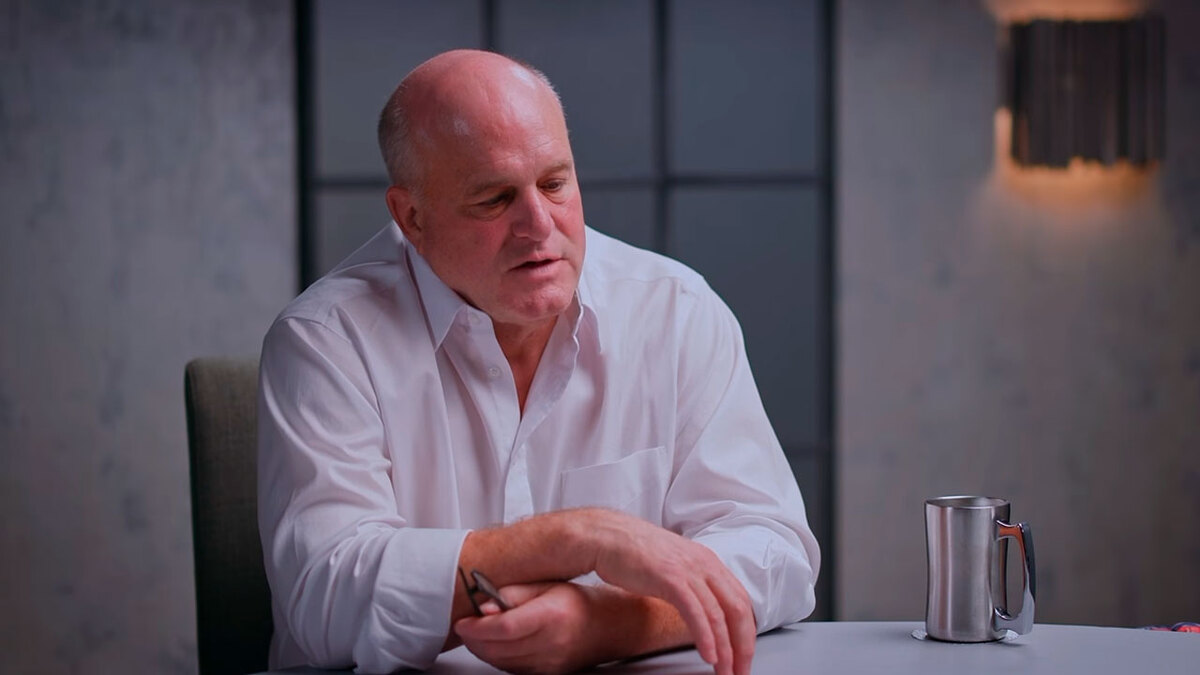
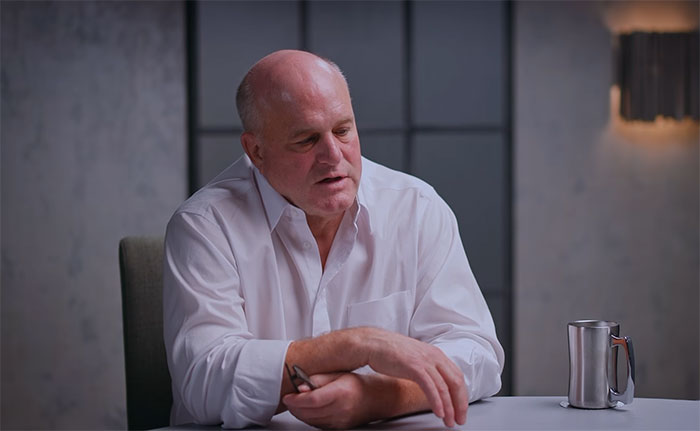
One of them is hospice doctor Christopher Kerr, who has listened closely to his patients’ experiences for decades. The pattern he uncovered is quite surprising as well as comforting — nearly 90% reported intense dreams and visions before they passed away.
Read the full story to learn what the patients saw and what other hospice doctors and nurses reveal about this phenomenon.
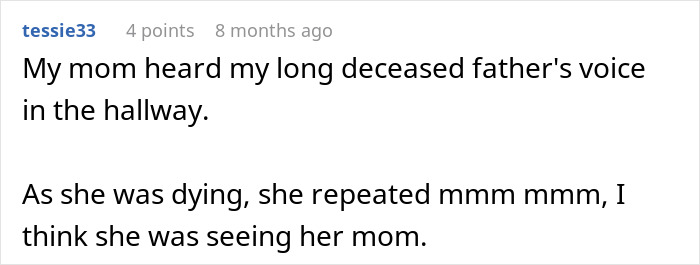
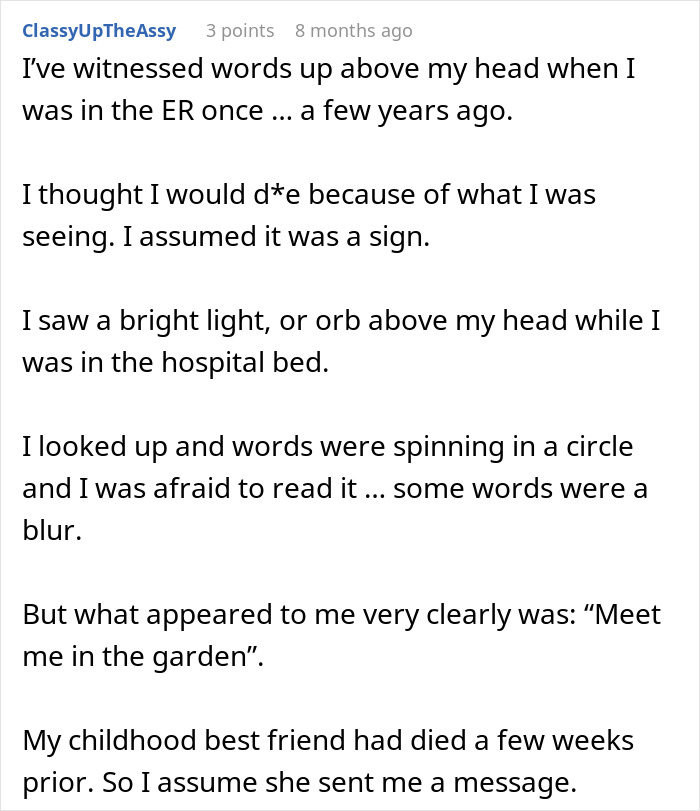
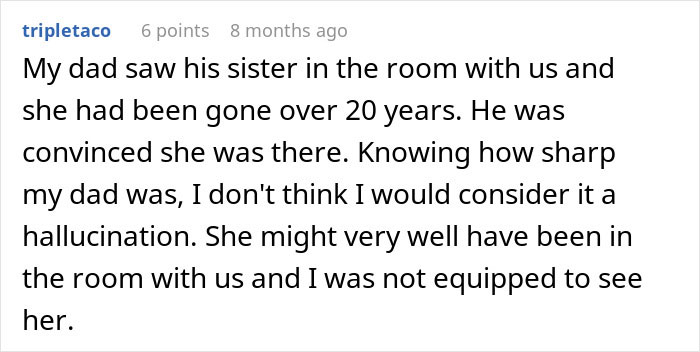
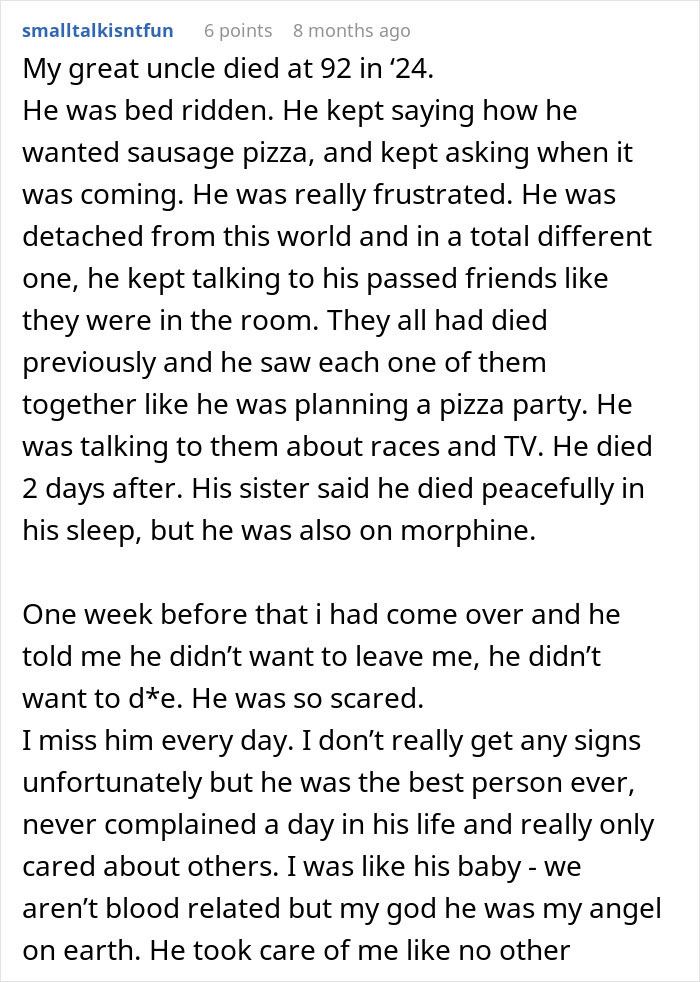
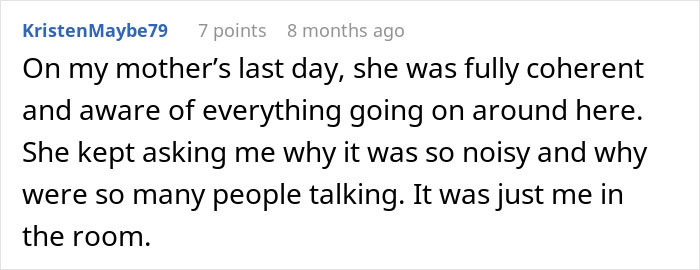
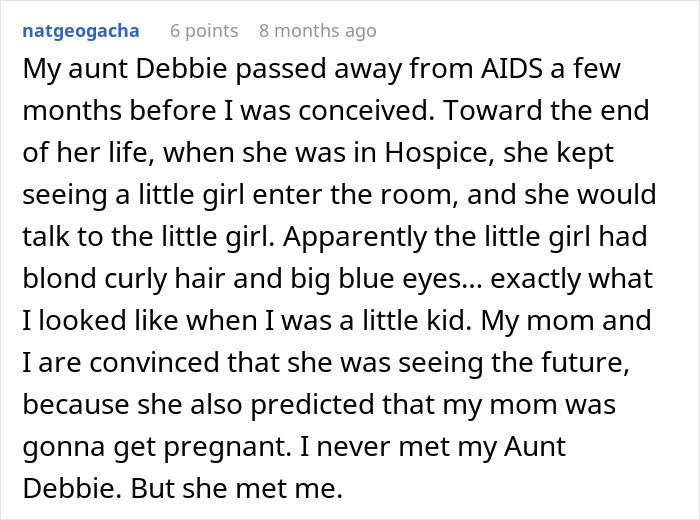
Since the late 1990s, neurobiologist and hospice doctor Christopher Kerr has documented thousands of patient accounts to better understand what happens to our minds near the end of life. His research on End-of-Life Dreams and Visions (ELDVs) reveals that many people report seeing deceased loved ones shortly before passing away.
These experiences can happen at any time — whether a patient is fast asleep, drifting in and out, or wide awake. Yet no matter when they occur, patients describe them with the same striking intensity.
To gather actual data, Dr. Kerr and his team started conducting daily interviews with patients at Hospice Buffalo’s 22-bed facility in New York in 2010. They carefully screened every participant to rule out confusion, delirium, or hallucinations.
Nearly 90% of patients reported having at least one vision. The study, published in the Journal of Palliative Medicine in 2014, found that these occurrences are far more common than previously thought.
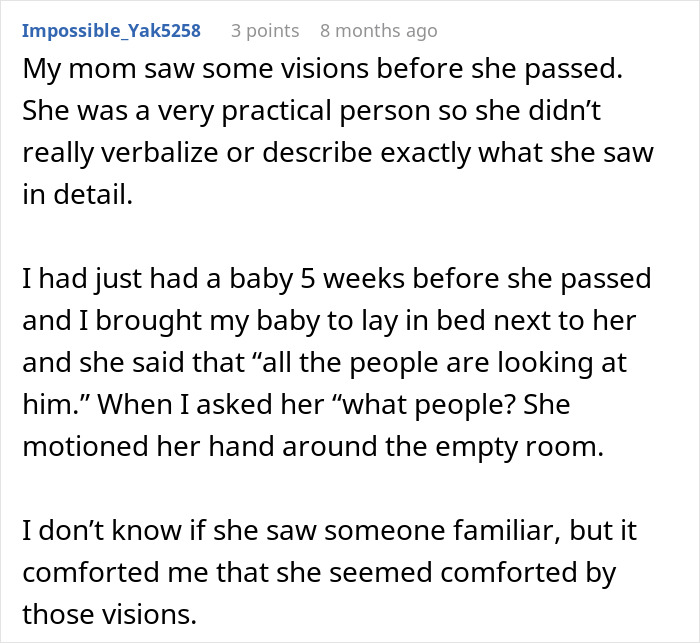
These experiences often begin weeks before a person passes away and become more frequent over time. Patients dream of everyday tasks — like paying bills or raising children — or see themselves taking journeys on foot, by car, or by train.
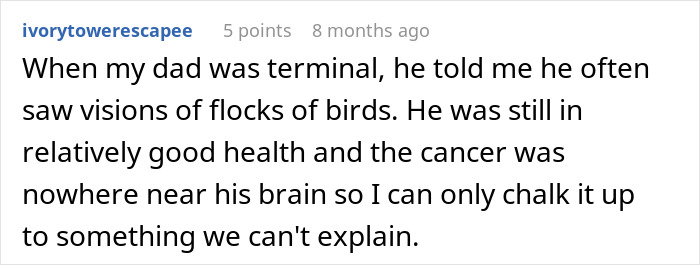
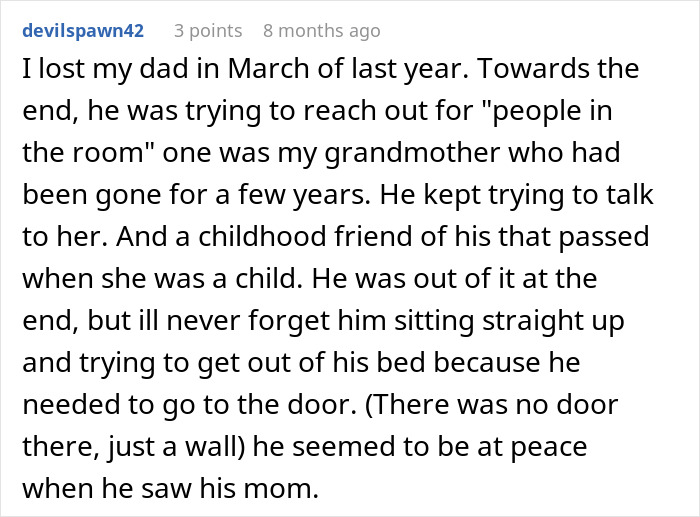
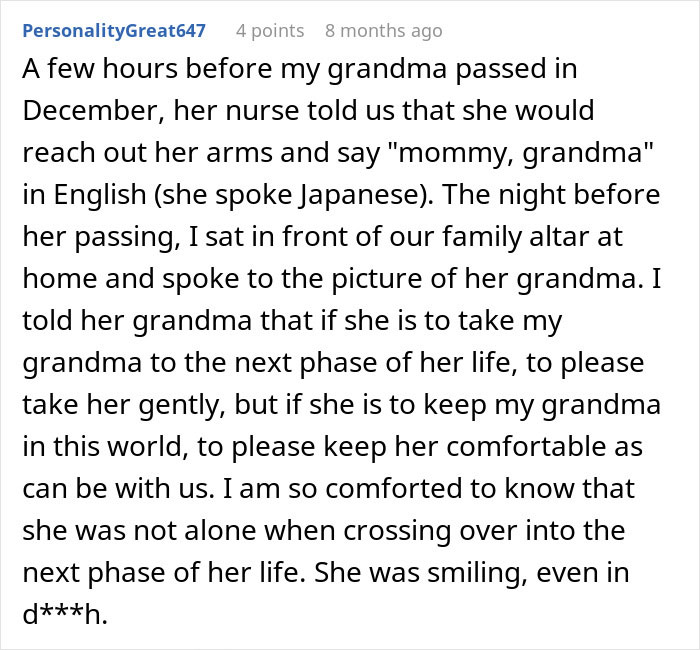
As the end draws closer, the focus shifts toward comforting visits from deceased loved ones and pets.
“The overriding theme is that they’re seeing people who they’ve loved and who they’ve lost and very specifically, it’s those that have loved them unconditionally, purely, and those that didn’t aren’t there,” Dr. Kerr said on Steven Bartlett’s Diary of CEO podcast recently.
He explained that even painful memories serve a purpose: about 10% of patients replay past trauma, using these intense moments to resolve old wounds and find closure.
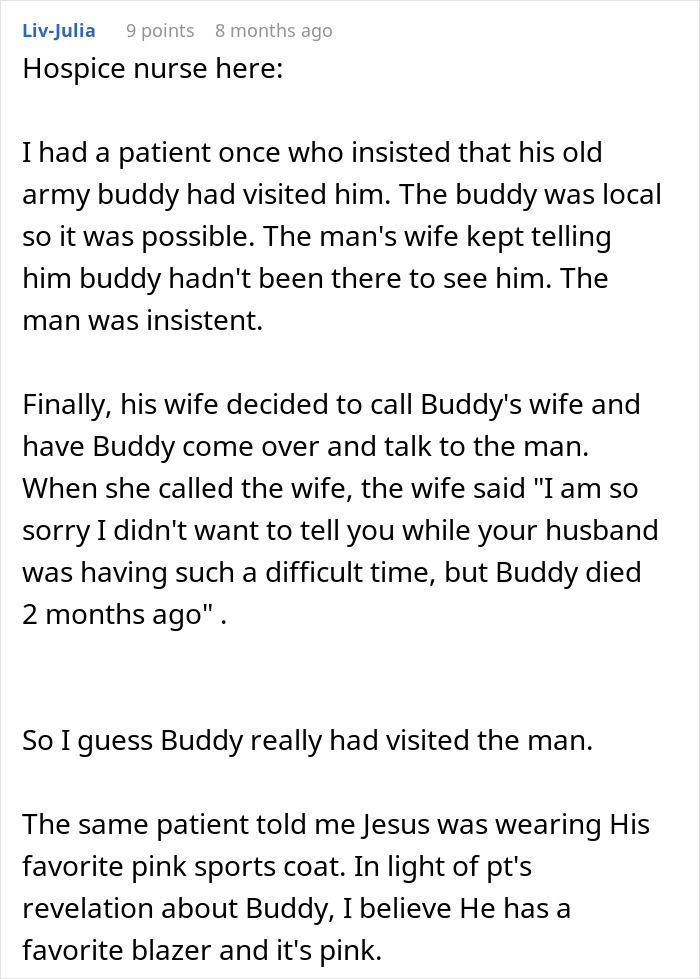
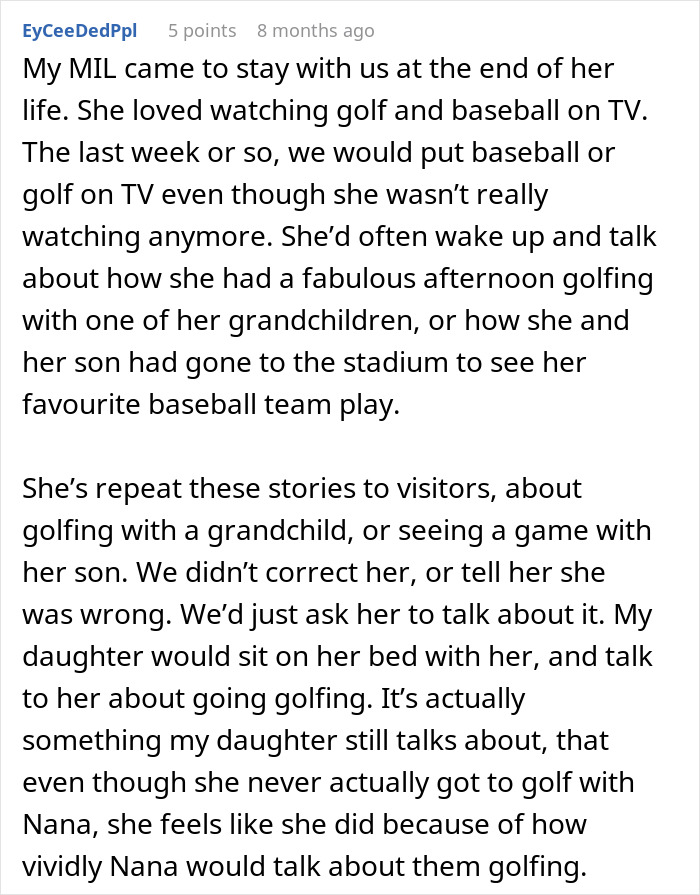
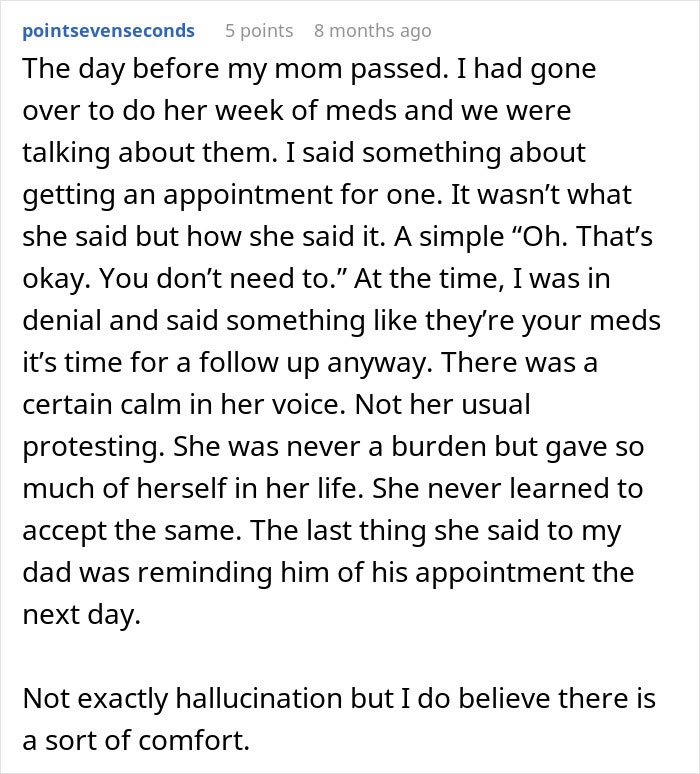
One terminally ill woman found deep comfort in a vision where she cradled the long-lost baby she had grieved for decades. In another room, a war veteran haunted by combat trauma found sudden peace after receiving a “visit” from a deceased comrade.
In one of the most remarkable cases, a critically ill toddler briefly woke up from an irreversible coma just long enough to offer her parents a reassuring smile before passing on.
As the study notes, “Children so young would not be expected to have the cultural conditioning or developmental capacity to understand the concepts of (passing away), nor be aware of the emotional impact of their impending (demise) upon their parents.”
When patients evaluated these encounters on a scale from zero to ten, they consistently rated them a ten, describing them as entirely real events rather than nighttime dreams.
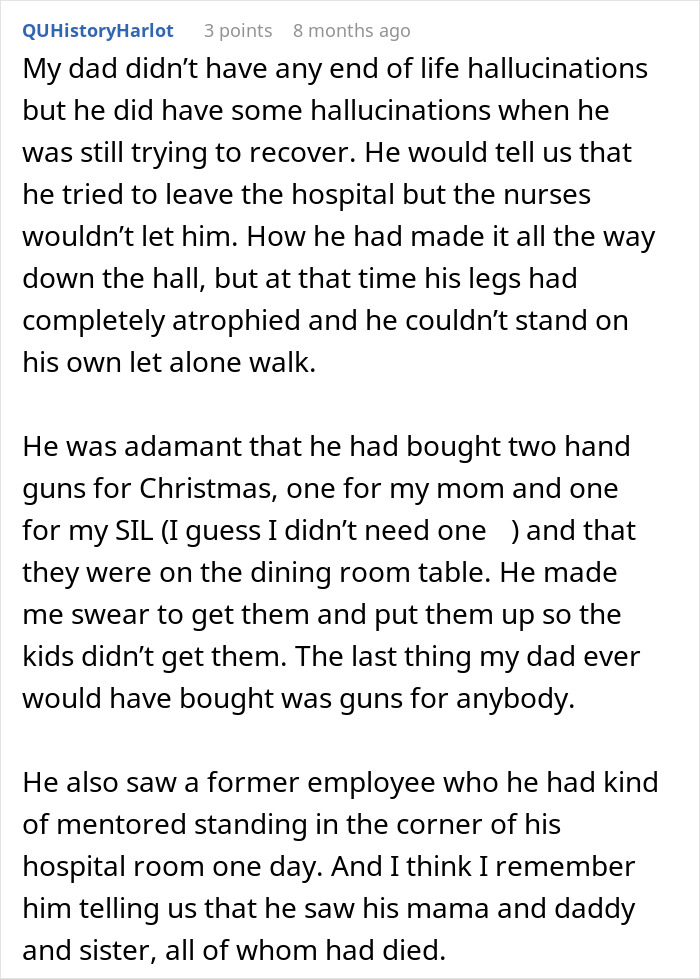
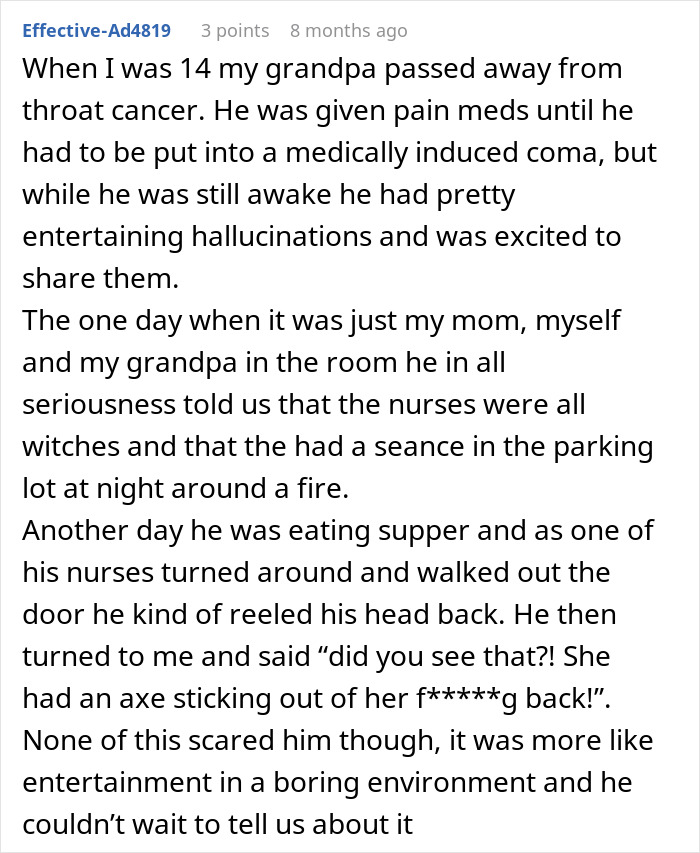
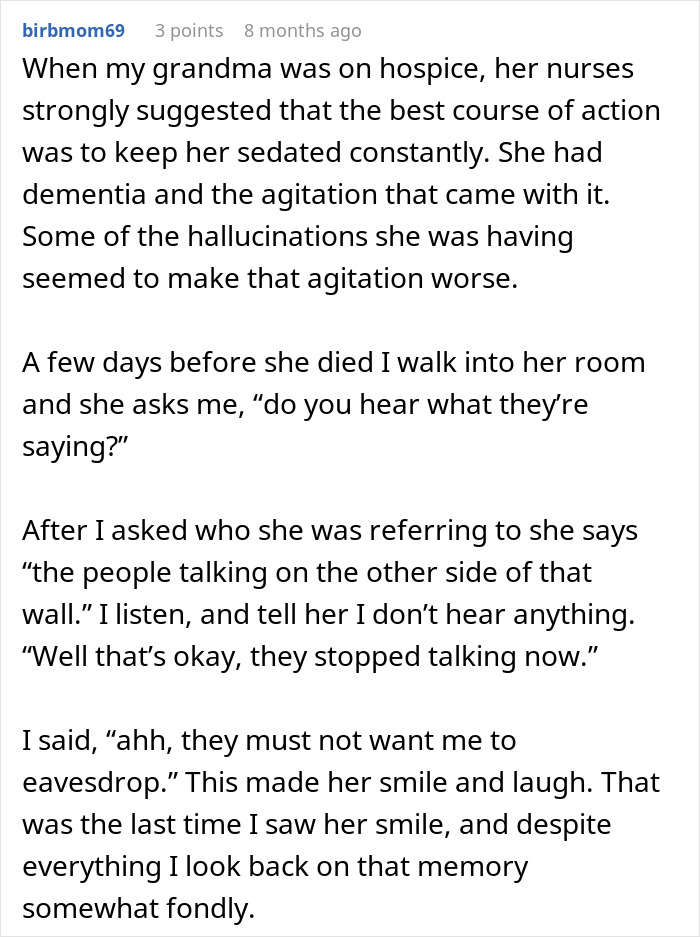
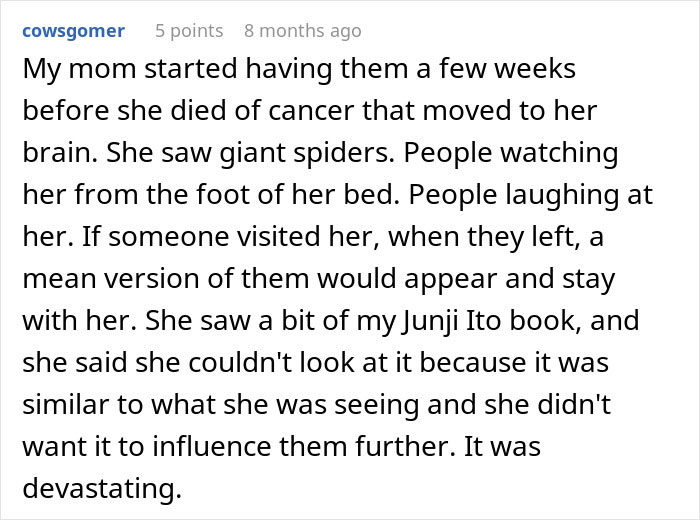
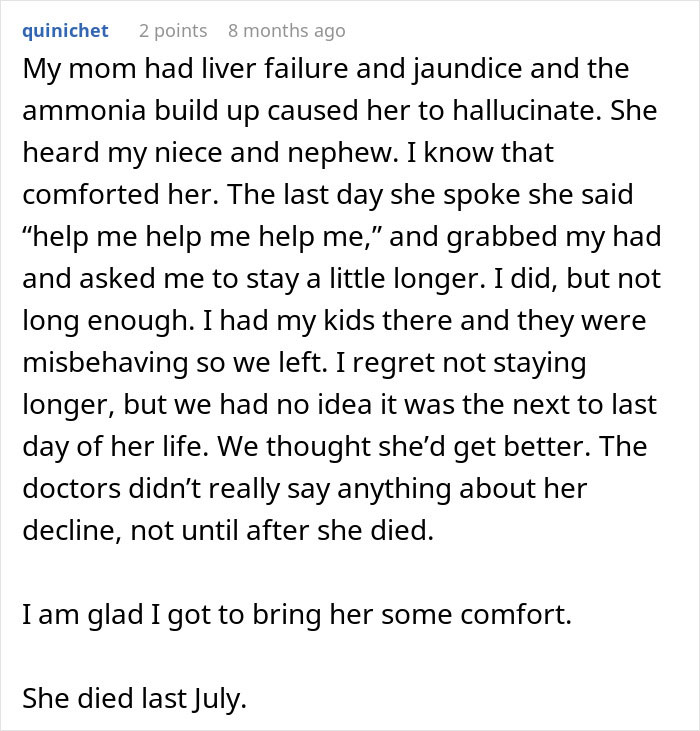
Research shows that unlike medical delirium — which leaves people feeling frightened, agitated, and disoriented — these end-of-life visions leave them feeling grounded and emotionally settled. Hospice nurses and doctors often report that patients wake from these states with complete clarity, eager to share detailed conversations with unseen visitors.
“When you ask them these sorts of questions, the thing that gets them most distressed is when you refer to them as dreams because these are unlike anything they’ve ever experienced,” Dr. Kerr explained. “They’re not dreams in the sense they’re not metaphorical. They’re not fantastical. They don’t require interpretation. I’ve never had a patient say hey what do you think this means.”
For decades, mainstream medicine dismissed these experiences as simple medical confusion or drug side effects. But modern experts are now beginning to take them seriously. Psychologist Elisa Rabitti, lead author of an Italian study on the topic, notes: ‘End-of-Life Dreams typically occur in patients who are able to recount them with a coherent narrative, while maintaining preserved attention and awareness.”
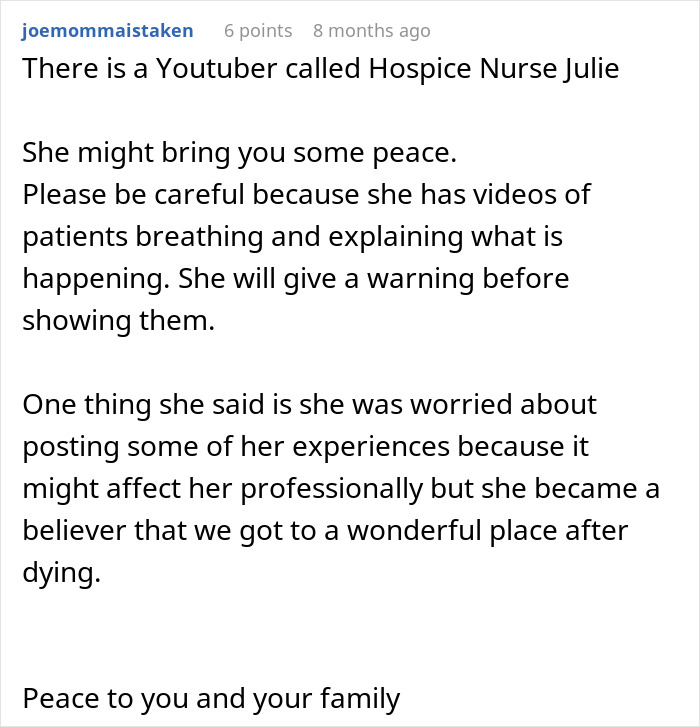
Hospice nurse Julie McFadden has also spent years sharing her front-line experience to help families understand what these final moments look like. She insists these peaceful visits are nothing like brain agitation or fever dreams. “Visioning is wild… They’re barely medicated, if at all. They don’t have low oxygen, they’re alert and oriented, and they’re almost as surprised as anyone else that they’re seeing things,” she shared.
Relatives who witness these calm encounters or hear about them find it much easier to process their loss and navigate life afterward, research shows.
For loved ones sitting by the bedside, Dr. Kerr offers a gentle reminder that the very end usually arrives peacefully. “People don’t (pass away) in an awake state. They do so in the depths of sleep.”
When these visions occur, experts advise family members to simply listen rather than correct or argue.
If a loved one on their deathbed is telling you they see their deceased mother sitting on an empty chair next to them, there is no need to question it — because to them, that presence is entirely real and most likely, highly comforting.
@podvaultt0They’re not dreams. Patients rate them 10/10 for realism 😳 🎙️ The Diary Of A CEO — Dr Christopher Kerr #death #dreams #hospice #diaryofaceo #afterlife #podcastclips♬ original sound – podvaultt0



By entering your email and clicking Subscribe, you're agreeing to let us send you customized marketing messages about us and our advertising partners. You are also agreeing to our Privacy Policy.
Thank you! You've successfully subscribed to newsletters!

Here's my brain, conscious of its own existence and eventual d***h, trying to understand the functioning of someone else's brain. That brain that is also self-aware and is aware that its existence is coming to an end is a more immediate event. So I can imagine the need to be comforted and to want resolution as we grapple with the idea of non-existence.


Here's my brain, conscious of its own existence and eventual d***h, trying to understand the functioning of someone else's brain. That brain that is also self-aware and is aware that its existence is coming to an end is a more immediate event. So I can imagine the need to be comforted and to want resolution as we grapple with the idea of non-existence.




























 No fees, cancel anytime











30
3