Get Premium
Dark mode theme is available exclusively for premium users. Learn more about the benefits of subscribing.
No fees, cancel anytime.

 Dark Mode Ad-Free Browsing Unlimited Content
 Ad-Free Browsing Unlimited Content Dark Mode
Join 1.2 million Panda readers who get the best art, memes, and fun stories every week!
Every once in a while, we all stumble into a question that won’t stop bothering us. It might hit you in the shower, taking out the trash, or halfway through a completely unrelated conversation, but suddenly, you just have to know what people used before toilet paper existed.
The internet is full of answers, sure. But it’s also full of confidently wrong guesses and disinformation. Especially now that AI is generating so much content. We need professionals.
Over the years, r/AskHistorians has helped countless curious people separate facts from fiction with detailed responses grounded in actual research and expertise. Here are some of the most interesting examples we found on the subreddit.
This post may include affiliate links.
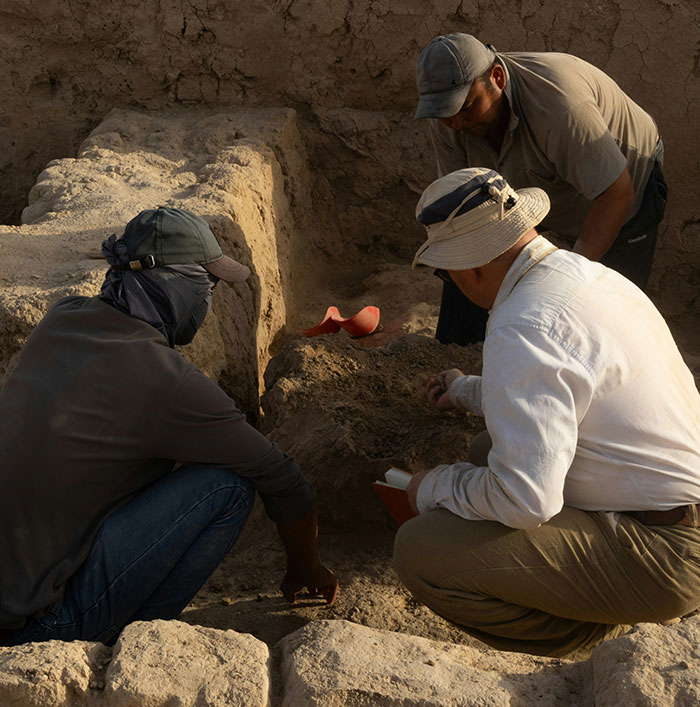 This is usually a question that students of archaeology, rather than history, stumble upon sooner rather than later. In my case the cat question was related to the 'mother goddess' at Catal Höyük and similar figures from different eras. The question went along the lines of "Was there really a wide-scale worship of big-breasted mothergodesses or were these figures just early p**n?". The short snippet on the linked site opens up what I'll try to elaborate on in this post - namely how archaeologists and historians to a lesser degree come up with their theories. My field of study used to be Near Eastern Archaeology, so I won't be able to go into the specifics of egyptian cat cults, but I'll try to give a small overview as to how archaeolgists end up with certain interpretations.
As a basis, we have to keep in mind that we're building our knowledge on hundreds of years of research which has been in a state of flux. Speaking in general, archaeologists, and historians to some degree, only establish theories. We find things and create theories that can change over time. A consensus might or might not be reached and might possibly change when new information comes to light, be it due to new digs, new texts or even new technologies used to analyze previously discarded evidence.
A prime example would be Winckelmann's Studies (1760's) on Greek and Roman statues, which were based on the idea that the state we found them in (unpainted, perfectly white) was their intended state. When he published his interpretation, it became a popular opinion that pure white statues were the epitome of beauty. In his opinion, colors found on statues were signs of b*******n abnormalties and not the intended way the artists made them. His publication "The History of Art in Antiquity" in turn influenced a lot of neo-classical art, which is why many people still view pure white marble statues as peak beauty. Nowadays, we know that most statues and buildings were painted - some even rather gaudy for our own tastes (examples). It still took a rather long time for the consensus to switch, or rather to reach the public and not be limited to scientific circles.
In a similar, more recent case, when Klaus Schmidt started to publish his findings from Göbekli Tepe (2001 for the preliminary reports of the first few seasons), he suggested that they were purely sacred sites with only temporary inhabitants. Quasi a pre-historical Mekka where hunter-gatherers gathered occasionally. This had rather large implications for (local) history, as it would mean that before hunter-gatherer socities (permanently) settled in the area, they had already started to create permanent places with sacred (thus the interpretation as shrines) or social functions. Schmidt later revised this and suggested that there might have been some permanent personel on site. The most famous counter to Schmidt's early theories came in 2011 by Edward Banning who suggested we're basing our opinion on incomplete research and maybe we're just looking at symbol-rich houses. And even 20 years after Schmidts first publication, there's no "100%" answer as to what exactly Göbekli Tepe was. There's some general consensus based on the found architectual remains as well as small finds or rather the general lack of certain small finds that would be indicative of permanent settlement. But due to the nature of archaeology (you can only dig so much), it's enterily possible that we're one dig season away from scrapping all that, though the focus of the dig has shifted since Schmidt's death in 2014, imo for the worse, towards a more small-scale approach so we'll probably never really know.
And this is where your question comes in again. For most of prehistory and early history, we're basing our opinions on material finds. Ideally, we cross-reference in the same time or shortly after (for Göbekli Tepe Schmidt's "Sie Bauten die Ersten Tempel" from 2009 does exactly that), try to slot it into overarching developments that have been established (like this series on architectual history [there's more books labled studies 4 and 5] by the Max Planck institute, in german) and then to make educated guesses based on this. But they more often then not remain guesses - even in times were we have written records, it's not very often that we get explicit texts on what something was intended for but that's another can of worms. These guesses are, in the most optimal cases, backed by evidence and the later in time we get, the more kinds of records we can use to back our guesses and the more sure we can be that we're correct. So we can't 100% rule out that cat-worship in ancient egypt was all an elaborate, wide-scale hoax. But we can make a pretty good guess that this wasn't the case. If we ever find evidence of it being a hoax, we can adjust the theory, much like Schmidt (or the team at Catal Höyük) did to a certain degree or how Winkelmanns ideas have been challenged and adjusted.
On a very much less serious note, David Macauly created a great book in 1979 called Motel of the Mysteries, where life in North America got wiped out in 1984 and archaeologists hundreds of years later are interpreting bedrooms as burial chambers and toilets as sacred urns. The book plays on the stereotypical idea that whatever archaeologists find, it's always a burial site, a temple or palace - which is something that used to happen a lot in older digs. It's a good example why we need to adjust our theories, as it's ok to interpret a large building as a palace but if you know there's generally only one or maybe a few palaces and you find 28 of the same kind of building, it gets a bit tricky to justify "Palace A-Z" in your publication.

This is why I say we shouldn’t take religious beliefs/texts seriously but understand that a lot of religious stories are probably just metaphorical. For example, there is a story in Hindu mythology that says that Lord Shiva once gave a woman a seed from which a baby boy was born. I think we all know what that is meant to represent. I think we take religion too seriously.
Really, your question answers another commonly asked question: why didn't the Fellowship fly to Mordor with the Eagles? Simple. They were writing and recording one of the greatest songs of all time.
Gandalf was their manager at the time, and after meeting with the Eagles after Orthanc, he gave them the idea for the song. Hotel California is actually about Saruman imprisoning Gandalf. ("You can check out anytime...but you can never leave")
Rescuing Frodo and Sam was only a PR stunt orchestrated by Gandalf before the release of their album to gain publicity. In fact, some experts believe Hotel California would not have been as popular if the Eagles had not saved the ring bearer.
Sources: History of Rock and Roll class

So, dandelions. First, in terms of the Great Depression, they're one of the generally disregarded products of the Columbian Exchange - there are some varieties of dandelion or closely related plants native to North America, but the ones you'd generally recognise are Old World imports. It's not clear whether they were intentionally imported or not, but given their seeding habits, the chances are good that they were accidental. They grow anywhere, and can be incredibly destructive plants when they push up through paving or have their roots crack through walls.
They're regarded as a food or medicinal plant through recorded history, though never as a particularly desirable one. Abū Bakr Muhammad ibn Zakariyyā al-Rāzī, known in the west as Rhazes, wrote about them around 900CE, but only as a medicinal plant, and Avicenna (Ibn Sina) reputedly devoted an entire chapter to them in one work a century later. As far as I can tell, though, they're not included by Al-Warraq in his cookery book in Baghdad, roughly contemporaneous with Ibn Sina (at least, I can't find any reference to them under the names I know, and the translator of the edition I have, Nawal Nasrallah, hasn't included them in the index of ingredients). They were almost certainly included in the range of green plants used by European medieval peasants in pottages, although, again, they're not actually included in any of the lists provided by Peter Brears in Cooking and Dining in Medieval England.
The Victorians seem to have made more use of the dandelion. E. Lewis Sturtevant, writing in 1886, notes it grown for the Boston market in 1836, and he says the seed is for sale in "various seed catalogues of 1885" in no less than 6 varieties. The first mention of dandelion as a vegetable he could find in England was 1846 in the Gardeners' Chronicle, where it's described as "a beautiful and delicate blanched salad". He also says "[t]he influence of rich soil and protected growth upon the dandelion is to give increased size and succulence to the plant, and to thicken the branching of the leaves", which is in line with most cultivated versions of wild plants. There was considerable interest in the Victorian era in new and exotic vegetables, much as there is now, and if they could be got by cultivating wild plants, so much the better.
However, dandelions, once grown, can be very hard to remove from a given location. The taproot - which is edible too - can go down a metre without much difficulty, and unless it's pulled out entirely, the plant will regrow from it. This is a feature if you're harvesting it, since it'll reappear within weeks, but if you're trying to clear it from a bed to make way for something else, it's a pain. This is probably one of the two reasons that it's not really grown for food anymore - the other being that it's not terribly good. Arugula, or rocket, is generally better tasting than the leaf. The flowers can be made into a hedgerow wine, but you generally need to add other things (lemons, for example) to get anything that tastes palatable. The root can be dried, roasted, and ground to make a drink that is claimed to be like coffee, presumably by people who have never had coffee - but actual coffee, or even chicory, is better. And so forth. By 1911, the Britannica says, somewhat delicately, "[f]or the purposes formerly recognized taraxacum is now never used". In addition, the difference between the cultivated and the wild dandelion isn't really enough to merit growing it deliberately.
They're not the only vegetable to disappear from modern use through inconvenience - there's one called skirrets, which resembles carrots and parsnips, but has a bunch of longer, thinner roots, which are obviously more difficult to peel and cook than their fatter cousins, so they've been left behind. Likewise, alexanders, a leafy green, is more bitter and requires more cooking than celery, its closest modern equivalent, so it's been abandoned as well. I haven't eaten skirrits (yet), but I can assure you that alexanders taste like freshly cut hedgerow smells.
They're not completely absent from modern cuisine, although they always seem to come with caveats. Harold McGee notes that it's 'occasionally grown on a small scale'. They're used in a traditional English soft drink called Dandelion & Burdock, which is still made (a brand called Fentimans is the one I know). There is a claim in various articles that a local variety called 'koproradiko' or 'mari' is eaten in Crete as a salad ingredient, or boiled, but it occurs in so many places with exactly the same phrasing that I suspect it's copied from a single source, and I can't find anything to back it up. They're eaten in Greece in general, though, as one of many plants under the label 'horta', and are known there as 'radikia'. 'Horta vrasta', which seems to be literally 'boiled greens' is possibly the most authentically historical way to eat them. Blanched leaves (grown under cover) are sometimes seen in salads in vegetarian restaurants here in Ireland, too, and they're occasionally used in French cuisine.

We used to eat dandelions in a salad (with nasturtiums) in the 50's, as well as making dandelion and burdock 'beer'.
 Don't be fooled by myths of "the first Thanksgiving." Traditionally, white Americans have been far more interested in ignoring or eradicating Native foodways than embracing them. Since this question asks about "Native American" restaurants specifically, I'll focus on a couple of moments in restaurant history where food perspectives of various Native peoples were cut out of wider American fine and family dining. However, an integral part of the story is indeed the targeted destruction of Native food cultures by white Americans - especially since, archaeologists and oral tradition tell us, adoption and modification of foodways rather than wholesale switchover had been the result of intertribal contact before 1500.
The corn/squash/beans agriculture of the Southwest nations had spread east and then north up the Mississippi and tributaries. But the Algonquians and Iroquois, like other Eastern Woodlands nations, would spend the winter in their permanent towns and villages through the spring planting season, then move to waterlines (rivers, lakes, ocean) for a few months. They would catch and preserve fish for the present and for the rest of the year, and return home when the crops needed taking care of and harvest. The foraging and hunting seems to have been traditional to the Eastern Woodlands people before the addition of agriculture--the Algonquians only added farming in the 16th century, it seems, later than the Iroquois. The introduction of new technology and even new foods, in other words, did not have to destroy foodways. Unfortunately, that would become a major reason for the scarcity of Native American or specific Native nations' restaurant cuisine today.
The first stage in American restaurant history I want to look at is the mid-19th century. The rise of "dining establishments" had happened quickly from the age of the smalltime colonial tavern - a skyrocketing American economy drew international businessmen to glittering urban hotels, whose dining rooms became well-known and catered to an audienced used to, above all, French and English food. It was the needs of business that, in America, detached food service places from sleeping, as workers in the earlier 19th century needed lunch on the job.
Why this mattered was the creation of highly "ethnic" communities in cities and rural/township regions through immigration, settlement, and employment patterns. From the 1840s, as midday food service places proliferated and eventually broadened their service, immigrant groups built their own ethnic food places to serve their own communities - the innumerable Biergarten of St. Louis, Missouri, for example. (Budweiser beer was born out of one such - failing! - establishment after the Civil War). For the most part, ethnic restaurants continued to target only their linguistic/cultural community. But it's significant for our overall story because it marks the foundational establishment of ethnic cuisine at a time that explicitly excluded Native nations.
Because, for those of you keeping score at home, that era that America was beginning to host ethnic restaurants was the same period that white America doubled down on its endless campaign of cultural genocide against Indians.
The deportation and exile of Indigenous people to typically isolated reservations - the areas white people didn't want to live! - by logic removed them from the opportunity to plant restaurants in bustling towns and thriving cities. But more importantly, the forced moves inherently ruined existing foodways in a lot of cases (you can't fish for salmon in the richest waters if you don't have access to the richest waters) and white American policies took care of the rest. The kidnapping of Native children and compulsory acquisition of Anglo-American cookery skills at boarding schools and mission schools went a long way towards wiping out traditional patterns.
In some cases, Indian cultures had the ability to adapt traditional foodways to new technology and ideas the same way white Americans were adopting their traditional cuisine. The Objibwa method of drying blueberries was superseded by canning technology and processed sugars, but they nevertheless continued (and continue today) to keep berries as a major part of their diet. (On the other hand, pressure from outside meant the berries were increasingly used in very European pies and European-style puddings, not ones thickened by corn as had been prepared for centuries.) In other cases, though, traditional knowledge was lost - actively destroyed - altogether.
Back on the restaurant scene: American xenophobia and (ironically) nativism in the early 19th century kept the ethnic restaurants and ethnic food - above all the "spicy" dishes of Italians and Chinese and other not-white-enough immigrants - somewhat sequestered in their own communities. However, one should note that the increasingly shrill anti-flavor voices were probably reacting to an increased broader public acceptance of said edible food. Some of the early cracks in the shell came through the World's Fairs of the late 19th and early 20th centuries, where Americans could dine on the "cuisine of foreign countries". Of course, this meant largely foreign white countries. The World's Fairs were rather better known for showing off the technological and cultural achievements of one set of countries and peoples, and showing off individual, living human beings of another set of countries and peoples as curiosities in and of themselves. So again, Native Americans - and here we should note also the scarcity of sub-Saharan nations' ethnic restaurants in the U.S. - were left out of the broadening of the white American palate.
The explosion in cookbooks and preserved foodstuffs in the early/mid-nineteenth century was actually a time Native women, in particular, tried to capture and assert the strength of their cultural foodways. In 1933, the Indian Women's Club of Tulsa, Oklahoma produced the first Native cookbook. You can read one recipe, from Creek Indian and club president Lilah Lindsay, on Google Books! Amanda Amanda's Choctaw Indian Dishes in 1935 seems to have been the first professional cookbook promoting one tribe's foodways.
Native women's efforts in the cookbook scene went further towards preserving various cultures' foodways for themselves and for each other, than promoting it to a broader American public with more money and more desire to "eat out" for entertainment and family socializing. The 1940s seem to have been the era when "dining ethnic" took off as a popular social act. Especially in major cities, immigrants began to establish restaurants outside their country-of-origin neighborhood.
However, once again, the foodways that became popular with white people were most often associated with Europe - in particular France, at this time, actually. (AskHistorians has some experts on Asian-American food cultures who will know more about that particular evolution). And once again, Native Americans were systematically excluded from this development, with the endurance of the reservation system and the difficulties or impossibilities of living an explicitly and marked Native life as a community outside.
Native nations were also excluded from the rise of "American regional" dining, which is generally considered to have been born with the Four Seasons in 1959. "Regional" did not include the Native map of America.
Every history of Native foodways will end with a spot of hope for the future. The tradition of cookbooks established by Lilah Lindsay and the Indian Women's Club of Tulsa, to which we probably owe a sizeable debt for preservation of traditional recipes through the mid/late-20th century rise of TV dinners and standardized fast food fare, flourishes; maybe you have had the chance to be a guest at a powwow or attend a restaurant featuring traditional local Native foods as opposed to simply appropriating the name.
I hope that a lot of you really interested in the question of why most of us don't have much exposure to Native American foods today will head over to r/IndianCountry and read or ask a little about how to get that exposure. :)

Fascinating read, but doesn't investigate how much of modern Mexican cuisine is based on traditional ingredients and cooking methods, which surely were shared with other indigenous people throughout much of North America. So maybe a simpler answer could be "There are load of Native American Restaurants, we just call them Mexican". ETA it's also worth noting that central American ingredients like chilis and potatoes went on to influence a lot of world cooking, particularly across the similar climates of much of southern Asia, so a lot of "curry" type dishes may also owe a lot to traditional indigenous American cuisine.
 I’m an archaeologist working in the US southwest and can add to that previous answer. There are a number of cave and rock shelter sites with preserved human coprolites (dried poop) adhering to different materials used to wipe.
There was a recent excavation at Eagle Cave in the Lower Pecos region of Texas that recovered human coprolites adhered to smooth river rocks suggesting those were used to clean. In other contexts in the region chewed bits of lechuguilla leaves have been found with similar coprolites adhered.
Hinds Cave in the same area of Texas (right where the Pecos River meets the Rio Grande) has the distinction of being the archaeological site where the most human coprolites have been found. There the coprolites are found in discrete areas with materials including cooked prickly pear pads (with spines removed) and cooked lechuguilla leaf base quids (fibers), some of which have poop adhering to them. The investigation of those coprolites suggest folks had extremely h**h fiber diets (lots of prickly pear pad skins, leaf fiber, h**h in plant material, etc.) and likely had stool that was easier to pass and clean than most people with modern western diets. My very first paid job in archaeology was cataloging chewed/cooked/pooped-on quids from the Amistad National Recreation area in Texas so this has special place in my heart.
Here is a link with info on that project
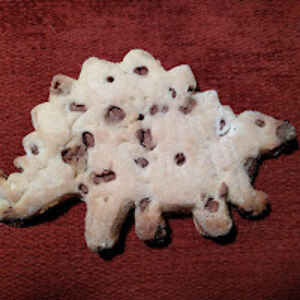
Here is a picture of an experimental lechuguilla quid (a chewed bit of the base of cooked leaves) to give you an idea.
In Mesa Verde National Park, one of the excavations at a site called Step House revealed coprolites adhered to corn cobs and an apparent latrine area near the village. Corn cobs were also pretty common in many areas in the western US into the early 20th century and are frequently found in latrine and privy contexts not just Native American sites, but really everywhere
One more example I just remembered from Salmon ruin near Farmington, New Mexico. Juniper bark with human coprolite was found in one excavated room there as well.
Edit:
I fixed a bunch of typos that I made typing on my phone. I also added some more details and links now that I'm at my computer. I should have guessed people would like to hear about this. I always have a Q&A in my undergraduate archaeology classes and this always comes up.
Okay, so I'm not getting any more work done before I teach today since I fell down this rabbit hole. Since people seemed to be into hearing about this I did a little more digging... in the Human Relations Area Files which is a cross cultural comparative ethnographic database hosted by Yale University and found some additional information. Most of this is late 19th and early 20th century info:
Chipewyans hunter gatherer populations reported using small remnants of rabbit fur left over after butchering animals that were eaten.
Copper Inuit report using handfuls of soft powdery snow to clean. Snow seems to be common in many areas in the arctic.
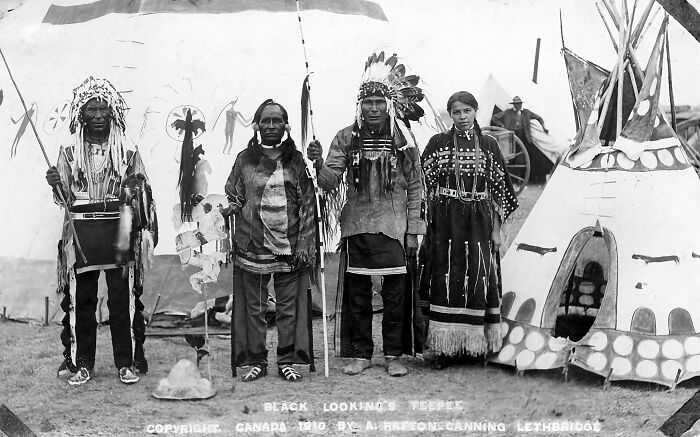
Blackfoot people in the great plains report preferring young leaves from the Artemisisa frigida plant (Mugwort)
Dine or Navajo people in the Southwest have reported preferring the young leaves of Artemisia filfolia (interestingly another plant in the same genus as Blackfoot people). It seems like plants like this with soft wooly bits are preferred in several contexts. Pictures of Artemisia here.
Siriono people in the Amazon reported backing up to a live sapling and using that to clean by rubbing up and down on it after they pooped. Apparently using leaves and grass is for kids only in this cultural context.
Warao people of the Amazon report using sassafras leaves and shoots. There was a funny reference in this ethnography that when someone needs to go poop, they'll grab a few sassafras shoots and then head into the jungle saying "they need to go k**l a deer" referring to their leafy toilet paper as their "arrows."
Yanoama people also in the Amazon also use saplings and sticks and they will construct a place to go for squatting using dead trees that allows them to largely not need much wiping.
The Ona in southern South America use various mosses and also guanaco (native camel in South America) wool byproducts from fiber/weaving preparation.
Zapotecs in Mexico in the early 20th century reported preferring smooth stones even when toilet paper was available.
A few studies I found in HRAF suggest that in contexts where people are living in largely open buildings in tropical environments (especially before sealed windows and climate control are common), toilet paper does not last long and can even become a medium for the growth of dangerous molds so it is often avoided.
Aren't human cultures amazing!?

Did they want to eat all that prickly pear? Or was that all that was available?
 First I am not a historian, I apologize if that is not allowed I am just a Dietitian with a passion for the history of food. I would defer to an answer from a historian on this topic.
Much of my information will come from the article "Making a global sensation: Vanilla flavor, synthetic chemistry, and the meanings of purity" by Nadia Berenstein.
A large part of why we enjoy the flavors that we do is hard to quantify, but the vanilla beans were used in the cuisine of many cultures in the region notably in the drink chocolatl which was served to Cortez by Montezuma. Many of our spices that now are common were a rarity across the world. While vanilla was incredibly saught across the world, it wasn't until it was artificially created that the ubiquity of vanilla became solidified.
The early days of its use in European cuisine were primarily as a component of chocolate which enjoyed popularity in the seventeenth century. Though botanists throughout Europe attained specimens they found their efforts fruitless without the "Melipona" bee that pollinates the flowers. The stubborn plant was eventually transplanted to the French island of Bourbon.
The transplanted vanilla orchid would remain fruitless until Charles Morren a professor of Botany first successfully pollinated the orchid artificially. A method of hand pollination was also developed by a s***e named Edmond Albius on a plantation in Bourbon. As demand increased in France for delicacies like vanilla chocolate and vanilla ice French colonies began to expand cultivation in the Indian Ocean, West Indies, and Tahiti, as well as Dutch plantations in Java and German East Africa.
Vanilla requires a labor-intensive process that requires beans to be dried, sweated, and cured which that sometimes may require months of daily work and close attention. Fortunately, the decades of vanilla planifolias colonization of the globe coincided with rapid advances in synthetic organic chemistry.
Vanilla was not the first synthetic flavor (this belongs to various fruit flavors), but it was the first luxury flavor to be produced synthetically. In 1874 German Chemists Ferdinand Tiemann and Wilhelm Haarmann synthesized vanillin from coniferin. This discovery was widely reported and confirmed by Karl Reimer who derived it from creosote tar. Vanillin did not enter the market cheap listed at $1,500 a kilogram considerably more than the cost of an equivalent amount of vanilla beans. New innovations in the production of synthetic vanillin lead to a drop in costs. New manufacturers across the United States and Europe challenged French and German companies' dominance of the market caused the price to plummet from 560DM in 1896 to 126DM in 1897.
By 1900 the US saw a rapid increase in the sale of both vanilla beans and synthetic vanilla corresponding to the expanding role of sweet foods in American life. Technological innovations created the ability to manufacture ice creams, chocolates, and other confectionary items on a large scale at a low price. Both artificial vanilla and vanilla beans prices continued to decrease throughout the early 20th century. Sugary vanilla flavored treats became everyday indulgences due to the wide availability of cheap sugar and artificial vanilla.
Today over 95% of the vanilla products on the market come from artificially produced vanillin.
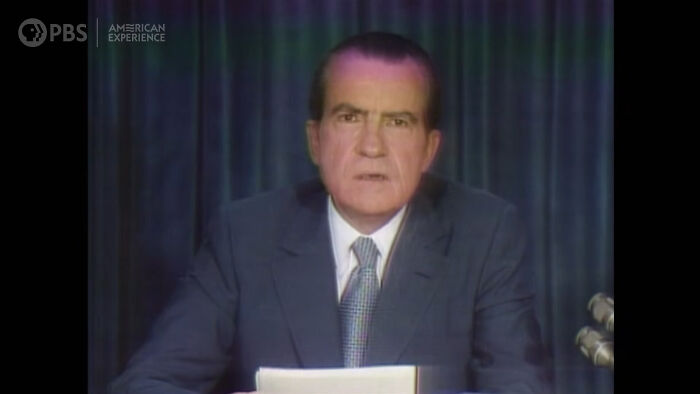
Gosh, what a great question! It's such a great question, in fact, that there is no definitive answer to it. (Maybe you can be the person who trawls the Nixon tapes and finds the answer.)
Before I start the discussion, it might be worth pointing out something that you (well, maybe not you in particular u/TrynnaFindaBalance, but you collectively, as in everyone reading this) might have overlooked.
What's obvious to us today, with the benefit of hindsight, was not clear to Nixon or anyone else in the United States in early 1972. We know the results, and so we have an artificial assurance that because things turned out they way they did, they must have turned out that way. Living in the moment is to live in uncertainty.
At the start of 1972, opinion polls showed Nixon and the various Democratic contenders in a close contest. Sen. Edmund Muskie was considered a strong candidate, and Nixon feared facing Alabama Gov. George Wallace (who was ultimately incapacitated in a May 1972 assassination attempt).
At the start of the year, when G. Gordon Liddy and Attorney General John Mitchell discussed the campaign to harass and sabotage the Democratic Party, Nixon's wide victory wasn't yet apparent. That would come later.
It's also important to remember that the June break-in — for which Gonzales, Barker, McCord, Martinez, and Sturgis became infamous — was only part of the campaign approved by Nixon's backers (including Liddy). That campaign also included wiretapping and other kinds of snooping. Remember that Nixon himself may not have been aware of the exact activities: It was the coverup that got him in trouble.
But that doesn't get to your key question: "What were the burglars after?"
There are a ton of fun theories about this. The most popular theory is that Nixon believed that Democratic National Committee chairman Lawrence O'Brien had some dirt on a loan given by billionaire Howard Hughes (yes, of Spruce Goose and "The Aviator" fame) to Nixon in 1969. Some of that money, according to reporting by "60 Minutes," went to paying for frills at Nixon's Key Biscayne home.
E. Howard Hunt, who hired the burglars, told the Miami Herald in 1997 that they were actually looking for ties between the Democratic National Committee and foreign governments. They were searching for evidence of foreign campaign contributions (something that might be familiar to Americans lately), which would make great dirt in the election that year.
“What we were looking for is the same thing every congressional committee is looking for today, which was evidence of illegal foreign contributions,” he told Herald. “That was the rationale for going in there. We’d heard rumors that both the Vietnamese and Fidel Castro were inserting funds illegally into the Democratic National Committee. And the idea was to look at the books, photograph them, in and out, and that’s it. It didn’t seem like such a deal to me. You know, I’d been doing that stuff for years, a ‘black-bag job’ into other embassies. But you know, I didn’t have skilled people.”
In 2001, Liddy testified that the burglars weren't after anything political: They were actually looking for photographs that put the wife of White House counsel John Dean into a call-girl ring.
Contemporaneous rumors held that the motive behind the burglary was to find evidence held by the Democrats that linked Nixon to various assassination attempts made by the United States against Fidel Castro. A lot of those rumors stemmed from the fact that the Watergate burglars had deep ties to anti-Castro plotters, and some Americans reveled in the idea that the nation's dirty tricks had come home to roost.
Columnist George Will has an interesting theory that ties the motive to events happening in the days surrounding the burglary. One year before the break-in, the New York Times began publishing the Pentagon Papers. Will has suggested that Nixon was worried that the Papers would expose Nixon's 1968 role in sabotaging peace talks related to the Vietnam War. Nixon's successful sabotage of those talks, revealed only in the past few years, violated the Logan Act of 1799.
Regardless of the motive, it seems likely that Nixon himself had no particular knowledge of the June break-in, but he did know broadly about a campaign of "dirty tricks" against the Democratic Party to hamper Democrats' efforts to fight him in 1972. And as I said before, it wasn't the break-in that ultimately forced Nixon to resign: It was the cover-up.
That's something worth remembering.
 Unfortunately, your question is based on an incorrect assumption. The Spanish Flu of 1918 did not stop spreading. It became one of the seasonal flu variants that circulated in the population[1].
The question is why did the subsequent seasons result in much fewer deaths. The dominant hypothesis is that there was a rapid mutation to a less deadly strain after the second wave. It is a recognized tendency for pathogenic viruses to become less lethal over time as the deadlier strains die out, though pathogenic viruses can always mutate into a deadlier strains. In 1952-1953 there was an influenza epidemic of the H1N1 variant that had a peculiar mortality curve, affecting the young more then the old, because the older people had some immunity due to having been exposed to the earlier 1918 variant[2].
The 1957 H2N2 pandemic, followed by the H3N2 pandemic largely crowded out the H1N1 1918 Spanish Flu from the seasonal circulation in the human population. H1N1 variants still did circulate, but they were not the dominant strain and they were not a significant contributor to the flu seasons after 1957. However, the 1970 swine flu outbreak at Fort Dix was an example that the Spanish Flu virus descendants were still endemic to swine and could jump back into human hosts. This was reinforced by the 2009 swine flu pandemic, which was a re-assortment of four different H1N1 virus, and where it was noted that people born before 1950 who had exposure to the 1918 Spanish Flu virus (or its descendants) had protection from the "new" flu pandemic[3]. It is also an example of a less-lethal endemic virus mutating into a more deadly strain. Since the 2009 swine flu pandemic, the seasonal trivalent inactivated flu vaccine that protects against the Swine Flu descendents also protects against the 1918 Spanish Influenza virus[4].
The normal mortality curve for flu outbreaks is usually causing higher deaths in the very young and very old. The Spanish Flu, similar to the 1952 epidemic and to some extent the 2009 Swine pandemic had an unusual mortality curve where it affected young adults more then elderly. One theory is that the Spanish Flu caused cytokine storms which caused the higher death rates of young adults. A 2007 study of journals of the period of time of the Spanish Flu Pandemic finds that the the flu infection was no more aggressive than other previous influenza strains. Among the different theories on why the Spanish Flu affected young adults more is the possibility that the Spanish Flu is itself a descendent of a previous H1N1 flu that had swept through the world earlier, but was removed from the yearly circulating strains by the 1889 flu pandemic[5].
In summary, the 1918 Spanish Flu never stopped spreading. The human population (and swine population) never achieved a herd immunity. The strain probably evolved to be less deadly and humans have learned to live with the seasonal flu (in all its different subtypes, not just the 1918 H1N1 subtype) in a way that it "only" kills 290,000 to 650,000 people per year [6] globally through treatment (better nursing and treatment to manage downstream effects like bacterial infection of the lungs, cytokine storms and also through development of medicines like antivirals) and prevention (better awareness and hygiene, and the massive effort each year to develop and distribute the appropriate yearly flu vaccine).
 A few quick thoughts as a scholar of religious studies.
First, historians cannot assess whether anyone "was an honest to god Christian who truly believed in Jesus and Christianity." Assessing what someone "truly believed" is off the table for us. Furthermore, as David Congdon has most recently argued (Who Is a True Christian?: Contesting Religious Identity in American Culture [New York: Cambridge University Press, 2024]), the category of "true Christian" is also not on the table for scholars. That's a normative category that's contested by religious insiders when certain Christians delegitimize others. As historians, and I say this as someone who is primarily a scholar of ancient Christianity, we cannot make claims about what counts as true versus false Christianity. It does not even help to make arguments about what the "original" form of Christianity was. The earliest 'Christian' writings we have are Paul's letters, and he positions himself as a Jewish teacher of non-Jews who is trying to get such gentiles to follow the Jewish god since the inclusion of gentiles was one of the dominoes that he thought needed to fall in the final sequence of the Jewish god's end-times plan. There's literally nothing in his letters about starting some new religion of Christianity. Neither he nor any other biblical writers were Trinitarians in ways recognizable to later 'Orthodox' Christian doctrine, which itself did not settle what 'True Christianity' would have been in their time. It would have been news to Athanasius's opponents and the tens of thousands of Arian Christians that they were no longer Christians after a council of other Christian elites declared they weren't anymore. Same would be true today when conservative Presbyterians reject the legitimate Christianity of some conservative Baptists.
Second, and more to your main question, a more recent generation of historians of American religion have been arguing repeatedly that the framing of "How did conservative Protestants go from their values that supported Carter to voting conservative Republican for Reagan and, eventually, Trump?" is misinformed. That question relies on taking the propaganda of 20th century conservative Evangelical leaders at face value when they declared that what defined them as Christians were their "moral values" of being against adultery, in favor of missions and serving the poor, in favor of "the family," and so on. As Kristin Kobes Du Mez (Jesus and John Wayne: How White Evangelicals Corrupted a Faith and Fractured a Nation [New York: Liveright, 2020]), Matthew Sutton (American Apocalypse: A History of Modern Evangelicalism [Cambridge: Harvard University Press, 2016]), Timothy Gloege (Guaranteed Pure: The Moody Bible Institute, Business, and the Making of Modern Evangelicalism [Chapel Hill: University of North Carolina Press, 2015]) have argued from various angles, conservative Protestantism has always been primarily animated by upholding white patriarchy, the inequality of capitalism, and American exceptionalism. As Du Mez argued in her accessible book, the overwhelming white evangelical vote for Trump was the culmination of evangelicalism, not an aberration. The vocal evangelicals who reject the sexism, xenophobia, homophobia, and Christian Nationalism of MAGA are the minority or non-dominant voices of evangelicalism.
As for Protestant support for Jimmy Carter, that illustrates the point of recent historians of evangelicalism. Carter was elected before the Republican "Southern Strategy" had really hit its zenith (i.e., the deliberate plan to convert southern white Democrats to Republican voters by appealing to their white supremacy), which truly flowered not just with Nixon earlier, but then Reagan ... who crushed Carter in the 1980 Presidential election. Conservative leaders delegitimized Carter as a Christian representative by spinning narratives of him making America weak internationally and also soft domestically by devaluing 'hard work' (i.e., Carter supported the New Deal state that sought to let workers share in the profits of their employers instead of being exploited by them for higher corporate profits) and not standing for the masculinity they attributed to Reagan based on (not kidding) his cinematic roles. So while it's a notable historical phenomenon that many white Protestant voters jumped from Carter to Reagan, their initial support of Carter wasn't so much based on him being a "true Christian" but a Democrat for whom many 'southern Democrats' still voted.
Hope this helps. The history is more complicated than what I was able to post here, but these are the basics.
In 1801, James Monroe and Robert R. Livingston (the R. also stood for Robert, oddly enough) were sent to Paris not to buy the enormous swath of land subsequently called the Louisiana Purchase but to negotiate the purchase of New Orleans and the Mississippi Delta, thereby securing the lucrative Mississippi River shipping route. Negotiations fell through, and it wasn't until Livingston returned in 1803 that Napoleon was so hard-up on cash due to the continent-wide war of conquest he was waging that he was willing to make a deal with the Americans. At the time, Livingston was authorized by Jefferson to spend up to $9 million in order to purchase New Orleans and the rights to the Mississippi. Since the US was planning on making a significant purchase from France, the delegation (Monroe rejoined Livingston in Paris shortly thereafter) travelled to Paris with $3 million in gold. In 1803,gold was worth just under $20 an ounce, which means they were travelling with almost 10,000 lbs of gold. This wasn't even remotely close to the carrying capacity of freighters of the time. "Tea Clipper" Frigates of that time could carry twenty times that weight..
Now, the negotiations took a turn when Napoleon decided he needed more money and offered the whole Louisiana Purchase for $15 million. Livingston and Monroe were authorized by Jefferson to spend up to 9 million on New Orleans and the rights to the Mississippi, so when given this offer, they had to make a decision without the President's approval, and just couldn't pass up the deal. Oddly enough, I just read the chapter describing the negotiations in Stephen Clarke's very entertaining 1000 Years of Annoying the French. According to Clarke, the purchase was paid for with the above-mentioned 3 million in gold as a down payment, with the cancelling of 3.75 million in debt that France owed to the US for French piracy on American ships since the revolution, and the rest was issued in bonds. Again from Clarke:
French Banks were too nervous to accept the bonds, and two foreign banks had to step in to provide the cash. The first was Hope and Company, a bank based in Amsterdam but set up by Scotsmen. The second was a London bank, Barings. Napoleon was in such dire straits that he agreed to sell the bonds to the banks at a 12.5% discount.
I hope this answers your question sufficiently!
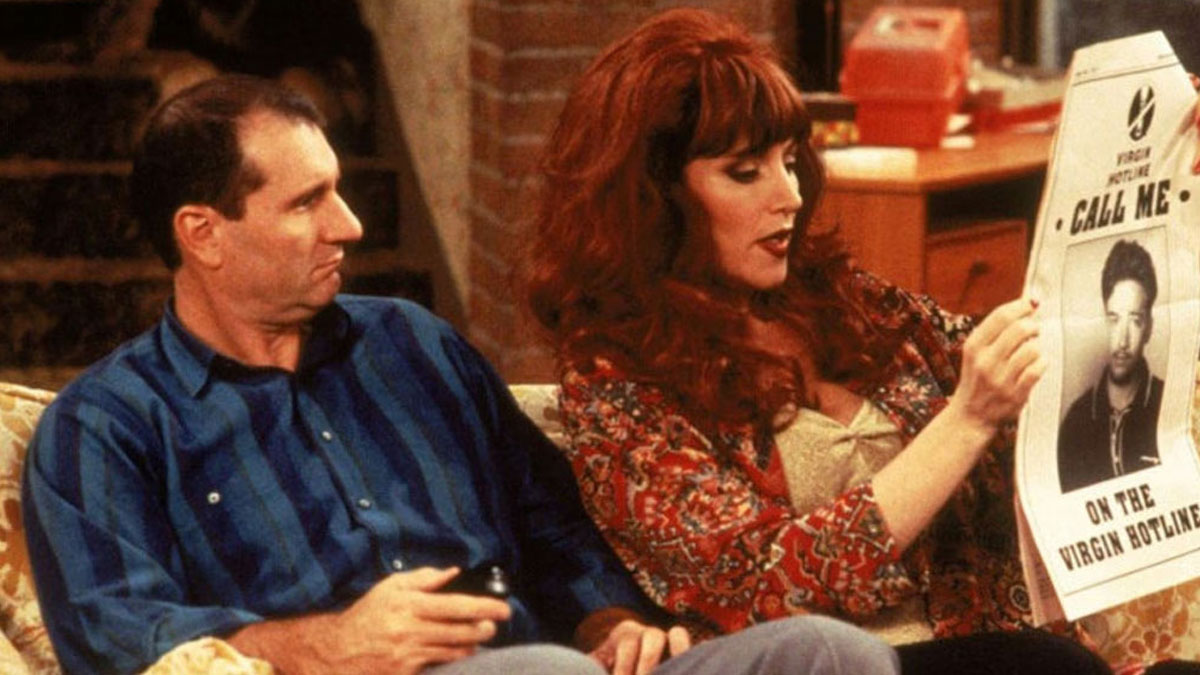
Wow! I can finally provide some help with a question on r/AskHistorians as a lawyer who does some labor, employment, and wage work, and as a big fan of the show. I can at least give some background on what we know about the show and about the wages Al earned while joking with Griff and taking jabs at the rotund customers.
Let's rock:
Some basics on this for those who don't know: The show ran from 1987 to 1997 on Fox, and was (along with The Simpsons) the first hit for the fledgling network.
First, the income analysis. We can look at this in two ways: How much did shoe salesmen earn around that time, and how much Al Bundy actually earned.
We actually know a great deal about how much Al earned. Al earned a base salary plus commission at the store. We know from "My Mom, the Mom" (S03E12) Al earns that way, because he states he earns a 10% commission on each sale. I would say this really tells us how great of a salesman he is, considering how many customers he can insult and still earn those bonuses.
Even better, we actually know Al's base salary! In 'Tis Time to Smell the Roses, S07E23, Al is offered "a year's salary" for an early retirement. How much? $12,000. At 40 hours a week that breaks down to about $5.77/hour. Or $231/week. Of course, Peg spent Al's retirement bonus in a single day, as she is known to do, and Al returned to work the very next day. :-(
How realistic was that for retail employees in general during that time? I found data from 1993 Chicago, showing that retail clerks at that time had a mean weekly salary of $278. So, when you add in Al's commissions, it seems entirely realistic!
Just to add in general: The minimum wage of Illinois in 1991 increased to $4.25/hour. So, again, Al's compensation on the show is very realistic. Jefferson approves!
Now, the matter of the family living arrangements. We know that the Bundy family lives in a "Chicago suburb". The actual exterior shot of the Bundy house is taken from 641 Castlewood Ln, in Deerfield, Illinois. That home sold in 1998, a year after the show went off the air, for $320,000. What's more, we know from 1990 Census data that average home costs for Deerfield, Illinois, were between $1400-$1500 per month for homeowners with a mortgage. So, unless scoring 4 touchdowns in a single game at Polk High came with a big cash bonus (and BTW that fact is extremely relevant at all times), Al wasn't mortgaging a home in Deerfield (using 30% monthly income as the "affordability" figure like most banks).
Uh oh. Not looking good we would realistically see The Dodge parked in that driveway. Historical home values from the county clerk's office suggest that was not a huge sudden increase, either.
So we know Al couldn't swing that particular house, but what about in general? The median home price in 1990 Illinois was $80,100 based on the 1990 Census. But Al didn't BUY the house in 1990. He bought the house sometime before 1987.
Assuming Kelly was a child and Bud was a toddler when they bought the house, which would make sense, they could have purchased it around 1980. In 1980, the average home price in Illinois was $50,004, again using Census data from 1980. Freddie Mac data says the average 30-year fixed mortgage rate was 13.74% that year (oof). That makes the mortgage payment $466, figuring Al scraped up a 20% down payment. We can reasonably estimate $500 with taxes and insurance.
So now, in terms of a median home price and the Bundy family's likely situation, the show makes some sense. In 1987-1997, Al would maybe be able to "afford" that median house he purchased in 1980, as in, make payments, but (especially if he drove most customers away with his fat jokes, and had less commission), it would be a real struggle. The struggle often portrayed by Al's frustration on the show. And why shouldn't he be frustrated? All he wants is to sit on the couch and possibly read the occasional issue of Big Uns (or potentially the special issue with 120 pages - that's 240 "Uns"!).
 Great question! Unfortunately (or fortunately), it straddles different topics, eras, and historiography which makes it an adventure to answer and difficult to give you a single answer. This doesn't mean it can't be done, but in the spirit of Ask Historians, an answer about the layers of history in your question. And then an attempt at an answer.
First, there's the matter of what we can infer from children’s behavior centuries ago based on what adults put down in writing and which writing endured. There’s the use of your word “toddler” which is a fairly modernish term (usage dates to the late 1700) that describes a human in a particular stage of development distinct from previous or subsequent stages; and this notion of distinct stages has its own history. Then there's the specificity in your question around the “terrible twos” which is a very short window of time in a human’s life about which an adult may or may not write. (I feel comfortable saying two-year-olds medieval toddlers weren't keeping food and behavior journals.) Finally, there’s how the adults around the child constructed boundaries for behaviors and how they vary in terms of what’s considered an inappropriate tantrum or an appropriate expression of independence. These boundaries are shaped by a society’s – be it modern or medieval – thinking about gender, disability status, race, religion, class, the nature of childhood itself, the expectation of children, and in the case of your question, dietary habits.
It's helpful to spend a bit more time thinking about one of the challenges in your question: your precision. It's a great detail, but alas, it makes it a bit harder to answer as a historian of the medieval era can probably shed some light on the eating habits of toddlers but likely won’t be able to explicitly say “yes, this thing happened” because the adults who wrote about children wouldn’t have used your level of precision.
I often experience similar tensions in American education history, I can rattle off anecdotes I've come across from teacher journals from the mid-1800s where a child is described as misbehaving (her words), but the child’s age is often not noted (“the youngest Smith boy”) or is described in the context of when they attended school (“winter session.”) However, I also know that her journal writing is informed by the social pressure she experienced related to how well she did her job. So, it's difficult to know for sure if what she's describing as "misbehavior" was the sort of thing children did because they're children or truly something dangerous or harmful. And to complicate it, the same teacher might write home that the same child was an absolute hellion to her but through sheer force of will and motherly instincts, she was able to calm him down and teach him his letters. And of by the way, if the school board was interested in buying new books for the school, she knows this particular boy simply loves to read. Which is to say, she's a bit of an unreliable narrator with regards to the things children in her charge did. So, if you asked, "have 7-year-old boys always hated school?" I couldn't say for sure. I could tell you there are instances of teachers reporting boys around age 7 or so did not like doing the thing they asked them to do.
Although related in historiography and themes to the history of education, there is a separate branch of historians who study the history of childhood and youth. It's their work that can help us understand the imprecision regarding age I described above is not a universal trait. As an example, Berner (2014) looked at the rituals in the lives of Ashkenazic Jews in the 1700s and could describe down to particular years how children were treated because a child's age played a role in the rituals of the community. From her 2014 article: "very young infants were often brought to the synagogue, bringing toddlers and children under the age of three or five was usually discouraged." So it's possible a historian of Ashkenazic Jewish childhood could speculate how two-year-olds might have responded to food they disliked, but it's difficult for us to extrapolate from one community to the broad category of human two-year-olds across an entire extended era.
Finally, there's the issue of taste. That is, this idea we wouldn't eat something - or allow a toddler to pick and choose - because of the taste or flavor has its own complicated history that I dipped my toe in and promptly turned around. Perhaps a food historian can chime in on the history of food for toddlers - but again, it would difficult for us to extrapolate from taste to behavior to patterns over time.
That said, I'm going to go out on a limb and say no. To be sure, historians can look at the historical record and reach different conclusions. It happens routinely and is, in truth, one of my favorite parts of "doing" history. So, it's entirely possible someone is writing another post in which they say, "yes, and here's what leads me to that conclusion." I, however, am going to say no, and here's why.
It's very possible that a two-year-old in 1066, when faced when a spoon full of food, offered a very strong opinion that indicated they did not want to eat that food, thank you very much. And given what we know about universalities of human development, it's very likely they did. However, the heart of your question is how the adults responded, not what the child did. The very notion of a tantrum is a fairly modern - 20th century - concept. That is, the idea of toddler expressing their opinion strongly and vocally in response to a request for an adult deserves its own name ("tantrum") emerged from the idea that there is "typical" child behavior - or normal and abnormal behavior that needs to be redressed.
I wrote about the field of Child Study in response to the question, "What is the history behind "What is your favorite color?"" and the movement's impact can be seen in your question, and in fact, the curiosity behind your question. In effect, they asked the same thing you're asking: why do small humans do these things that big humans don't? The founder of the movement, a man named G. Stanley Hall, was fascinated by this idea that the attributes of childhood could be observed and studied in the same way scientists studied the natural world. This isn't to say adults before the Hall came along in the late 1800s weren't curious about children's motivations - or had opinions - but rather, Hall created structures that gave rise to developmental psychology, child psychiatry, and societies for Mental Hygiene focused on children's behavior.
While adults in previous eras would and could describe children's behavior on a continuum or scale in relation to their siblings or other children, what Hall and his contemporaries did was related to scale and norming. They collected thousands of anecdotes about children, detailing everything toddlers did and wrote about patterns. The field of child psychology encouraged doctors and parents to frame children's behaviors as good or bad, healthy or unhealthy. Kathleen Jones 1999 book, Taming the troublesome child: American families, child guidance, and the limits of psychiatric authority. goes into more detail about how this history evolved and explores how the theories behind a child's "tantrum" ran the gauntlet from "their mother gave them too much attention as a baby" to "their mother didn't give them enough attention as a baby." Public health, especially child health, was a very popular social issue in the early 1900s and doctors around the warned of disastrous events if a child's bad behavior weren't fixed. Thus, tantrums became something to be handled and fixed, rather than something children did.
Which is to say, did medieval toddlers strongly and vocally express their opinions about food? Probably. Did parents see such opinions as abnormal behavior that needed to be handled? Likely not.
In the medieval period UK, peas were a major staple of everyone's diet - potatoes and sweetcorn hadn't yet arrived from the Americas. so peas and beans (often dried for the winter and then soaked) were the major carbohydrate of the diet. (No idea whether kids still spat them out though, but there was hunger in the majority of the populace, so maybe that overcame the desire to play up.
 There's no question that the prevalence of myopia (nearsightedness) was much lower in the Middle Ages than today. No, we have absolutely nothing even remotely resembling statistics, and just because in the past century or several there's been a noticeable increase in myopia doesn't itself say anything about medieval western Europe (what I'll be talking about here). However, medieval popular Christianity relied on visuality in some pretty basic ways I'm not sure it would have if 50% of some such of people couldn't see their own shoes. "Art is the book of the illiterate" was a basic philosophy of religious instruction. Church sculpture, mosaic, decorated rood screens, stained glass were meant to glorify God but also to instruct (hence the popularity of Last Judgment scenes over the tympanum). And watching the priest consume the Eucharist (bread and wine) could substitute for the person doing it themselves--even in the case of a saint like Nicholas von Flue.
But we also know that some people were indeed nearsighted, and obviously eyesight deteriorated in various ways (presbyopia/farsightedness, AMD, cataracts, etc) with ageing. I want to briefly introduce a distinction that scholars of disability and medicine make between "impairment" and "disability." Impairment in this sense is used as a deviation from the normative (not from the normal! lots of things are normal); disability refers to when an impairment affects someone's functioning in the world. Here, I'm going to talk more on managing visual impairment to minimize (not necessarily eliminate) disability.
This being the Middle Ages, obviously the first way people tried to cope was by praying for miracles. And indeed, miracle stories attached to saints and shrines offer some really interesting cases of the extreme end of visual impairment that's "not quite blindness," although we should keep in mind that "blind" is a subjective term that means different things in different contexts.
Two important themes that arise from miracle stories are the effect on mobility and on ability to work. One of St. Elisabeth of Hungary's miracles concerns a girl who, it's clear, has some vision but only a little; the story emphasizes that she can't even see well enough to find her way on a path. (Medieval "roads" could just be a trampled line through fields). There's a similar miracle concerning a middle-aged man who developed possibly cataracts (macula, stains) and similarly couldn't find his way on a path; he reported being ridiculed for it.
In these cases, the key was to lean on the support of other people. We read a lot about blind and otherwise visually impaired people being "led" to shrines. That's probably the single most common theme in anecdotes of people with disabilities in the Middle Ages--the ad hoc, case-by-case reliance on friends and family, or in a few cases monastic charity.
With respect to work, it seems that in a lot of cases the key was to find a task a person could perform. The miracles of St. Bertin tell of one evidently nearsighted man who couldn't see well enough to perform outdoor manual labor, but up very close could still see well enough to do needlework. So he sat with the women of the duke's household all day, working on embroidery and weaving!
The later Middle Ages did have knowledge of and practice rudimentary cataract surgery, sometimes even successfully. In 1351, aging abbot Gilles le Muisit of St. Martin's in Tournai had his cataracts removed only to find that behind them, he was farsighted:
I saw not as in my young age but as my age demanded, because I was already an octogenarian, and I saw the sky, the sun, the moon, the stars, though not perfectly recognizing people, and I saw everything at a distance from me very well, but I was not able to write or read.
The first "glasses", which were designed to be held rather than worn, were for reading (i.e. for farsightedness). Here's a photo I took in the Dominican church museum in Eisenach of a 1510 altarpiece relief from Thuringia--the scene is the death of the Virgin Mary, and the man with the book and glasses is probably supposed to be a physician. Glasses were one type of iconographic shorthand for physicians (another being a flask filled with urine. You do you, Middle Ages.)
Ronald Finucane and Irina Metzler have both pointed out that we are much less likely to read about nobles with disabling conditions. There was then as there is now a stigma attached to disability, even more so because of the stronger link between sin (moral failure) and impairment. So even in miracle stories that do involve knights and other nobles, the recorder will allow the healed to express a sense of shame--even to the point of feeling suicidal, in one case--a consciousness of emotion denied to lower classes.
That was the case with the knight Gilbert, whose story is told in the miracle of St. Foy. Twice in a row he received a head injury in combat--once while, apparently, breaking up a barfight--that caused vision problems. And he was, given the source, miraculously healed in several stages. (Draw your own medical conclusions.)
But one of the most interesting cases hops way above the others. Holy Roman Emperor Frederick II in the 13th century--the one who looked at the Crusades, said "I got u, fam" and negotiated his way into taking over Jerusalem from Muslim control--actually dealt with developing myopia over the course of his life. This could have been a hardship for him, as his true love was hunting. (He embarked on very few building projects over the course of his reign, but these included several hunting lodges, which is also where he preferred to spend much of his time). What did he do? He still hunted with great enthusiasm, apparently. But then, hunting in the Middle Ages wasn't about food (unless you were desperate and poaching), it was about power and masculinity and status and probably blowing off some steam. So even in the parts where humans didn't rely on their dogs and birds to do the work for them, perhaps there was not as much pressure to perform.
But then, of course, there's the ultimate solution. Can't fight like a knight, can't hunt as well as you want to?
Write a book about it.
And Frederick did.
There's a tendency to romanticize the Revolutionary War sharpshooter's uncanny accuracy at long range. Half of them couldn't see their front sites and the other half couldn't see the target and their barrels were not rifled. There was little aiming happening, just pointing and calling your shots after they 'hit.'
This is a matter of knowing versus comprehension. It's also a matter of practicality. Yeltsin could have undoubtedly found out the contents of the average American grocery had he cared to. It's doubtful the United States would have exerted much effort to stop him from discovering Pudding Pops or Coca-Cola. But Yeltsin never had any reason to. It was simply never relevant. Do you think Donald Trump or Obama have ever shopped in a Chinese supermarket? Probably not. It's just not relevant to their lives.
Yeltsin also probably had statistics on standards of living available to him. But it's another thing to actually see and experience it. In addition, coming from the Soviet world where statistics were often... dubious if not outright fabricated, he had at least some reason to be suspicious.
Now, onto the context. What is not open for debate: Yeltsin did indeed visit an American grocery store. He had, by all reports, a grand time. He tried some of the wares and the manager gave him some free food to take with him. He inquired about the food distribution system and how managers were chosen. He was deeply affected by this and repeatedly commented on how much better the standards of living in the US were, both to people there and to his aides. Likewise, Yeltsin' assessment that the United States was wealthier and did a better job providing for its people was simply objectively correct. There is some controversy on this point by Soviet apologists, but I'm not aware of any mainstream historian who disagrees. (There are reasons for this other than Communism, but this does not change the standards of living themselves.)
All this is attested to by multiple sources who tell the same broad story with only a few minor contradictions or unverified reports. One aide, for example, recalls Yeltsin planned to open his own chain of grocery stores on this model, and spoke about grocery stores as the fundament of the modern world. While this is not mentioned in other reports, it doesn't really introduce ambiguity into the narrative. It broadly agrees with the other accounts and doesn't contradict them in a meaningful way.
But let's pull back a little. Because this incident didn't come out of nowhere. The Soviet Union and the United States had been competing on the standards of living for decades, going back to the '50s. Before Yeltsin visited the supermarket there were multiple incidents like the Kitchen Debates and other displays where both sides tried to outdo each other in living standards. In reality, the United States was always ahead but the Soviet Union was willing to lie to make it seem otherwise. From time to time, someone would expose this and embarrass the Soviets.
By making a surprise visit and comparing conditions, Yeltsin was acting in a tradition that would have been familiar both at home and in the United States. The surprise was that Yeltsin openly admitted his side wasn't winning. That had never happened before.
Why did he do that? Well, he says in part because it was true. And it certainly was true. But, and I have no citation for this, politicians lie. And (I do have a citation for this) the Soviets lied all the time to make themselves look better. Why the reversal?
The pat little story is that Yeltsin saw this grocery store and decided to fight Communism. This has no historical evidence: the reforms began in 1986 (three years before) and Gorbachev explicitly wanted to preserve Communism. Yeltsin was a critic but was not, at the time, explicitly anti-communist. The context was instead of a world where Gorbachev was trying to thaw relations with the United States and reform/revitalize the Soviet Union. He was a reformer doing battle with hardliners at home while trying to keep liberals from tearing the Soviet Union apart. And Yeltsin was a reformer.
By losing one of these 'kitchen debates' (for lack of a better term) he was damaging the conservatives who didn't want to admit the Soviet Union was behind while encouraging his own reformists. It was an attempt to show he was willing to break with previous policy and tradition to force the Soviet system to be examined and reformed. At the same time, hardliners would be put in the awkward position of having to lie without the support of the Soviet government (as a result of Gorbachev's reforms). And without that support, their lies would be much more apparent. It would also warm relations with the west at a time when the Soviet Union was vulnerable (and where Gorbachev was trying to warm the relations).
But none of this answers the more personal question. This is more an explanation of why friendliness to the West fit well into his general program. Why did the visit affect him like this? Yeltsin undoubtedly had more power, prestige, and luxuries than anyone else in that store.
In short, because Yeltsin was a Soviet.
It's easy to dismiss people with different belief systems as either secretly believing what we believe or believing in some more base philosophy. For example, saying that Stalin's actions were not really about Communism but about power. No one could really believe that, could they? Well, usually, yes. They could and did. And Yeltsin's autobiography shows that he really, truly believed in Communism. But he believed it in a specific way: he believed it was right, that it was better for the working class. And this was blatant, empirical proof that the United States was beating them in providing for the working class. This is what he tells us himself.
And that genuinely shocked him.
I spent a month in Costa Rica and was briefly overwhelmed by US grocery stores upon return. So many choices! Why is the lighting so bright? Where is my bodega cat? And then I tried to haggle at a Walmart.
I see questions about modern fundamentalism (which I assume are a part of the 'some sects' your refering to) come up here from time to time - some of them get almost no (good) responses, some generate some good discussions (even if some are conflicting).
I hope this generates some good responses as I'd love to hear them as well - if not, here's a related (but different) question from a couple of years ago I had saved in case it helps you find your own way:
How accurate is the statement, "Christian Fundamentalism is only about a couple hundred years old and creationism and biblical literalism are both very new ideas."
---
RansomIblis:
I can talk about several denominations within Christianity in Canada from the 50s onwards. These denominations (spec. Baptists, Mennonites, and CMA/CAMA, tended to be, and still tend to be, more conservative than other groups with Canada, including the RC church, Anglicans, and so on--though the latter are not my area of expertise). Please note that when I refer to "Baptists", I'm not referring to the Southern Baptist movement within the United States. Rather, I'm talking about Canadian descendants of the Anabaptist movement in 16C. They may have similar roots but frankly I don't know.
Putting aside dietary restrictions for a moment, in the third quarter of the 20th century (so 1950-1975) there were strong taboos against men with long hair (1 Cor 11.14) and tattoos (Lev 19.28) in mainstream Baptist, Mennonite, and CMA congregations in Western Canada. Sermons were preached about it in many churches over many years. The same goes for tattoos, which were seen as unacceptable unless a church member were an adult convert. While the taboo against long hair grew less influential in the 80s, the taboo against tattoos lasted longer.
The question is, to what extent did existing religious norms influence society as a whole, as long hair, certainly, was seen to be a part of youthful rebellion. In smaller communities within AB, BC, and SK (and even larger centres such as Lethbridge), many businesses were simply closed on Sundays during this quarter. I would argue that, the more religious the community, the more influence that the church had upon individual towns, to the extent that Biblical precepts against working on the Sabbath influenced the culture as a greater whole. (Some of those restrictions, closures on Sunday in particular, still have ramifications today, but that's beyond the scope of this subreddit.)
Homosexuality within these groups was simply not tolerated, and abortion... well, that's an interesting topic, as the laws on abortion in Canada were loosened in 1967 as a result of Pierre Trudeau, himself influenced by the Quiet Revolution in the 60s (which saw a shift in societal values away from the Roman Catholic church and towards secularism). While abortion was quasi-legal at that time, it was still largely decried by many Christian churches within Canada, including Baptists and Mennonite groups, and CAMA/CMA (The Christian and Missionary Alliance).
There may be individual congregations with exceptions to the above rule, but looking at statements of belief from this era (and God help me but I can't find any of my old textbooks in which this was discussed... we're talking about mimeograph copies from provincial assemblies of the aforementioned groups, and I have no idea where they are), the above is by and large true.
So: the above groups largely condemned homosexuality (let alone gay marriage) and abortion, as well as tattoos, working on Sundays, and long hair for men. Consistent so far. Back to dietary restrictions: speaking of Christianity, there are no longer any dietary restrictions, period. In Acts 10 & 11, Peter has a vision in which God essentially tells him that it's okay to eat anything, that the old dietary laws of the Old Testament no longer applied. This is why Christians in general have no issue with eating anything, and that's a blanket statement that applies worldwide (with a few minor exceptions, such as Messianic Jews).
I understand that this is a very limited answer from a very limited geographical area within North America. I apologise for my lack of sources, but little on this can be found online outside of regional paper archives, and those are spread out and difficult to access on a Sunday afternoon (heh). The texts to which I have access, including Readings in Baptist History: Four Centuries of Selected Documents by Joseph Early and Tracks and Traces: Baptist Identity in Church and Theology by Paul Fiddes are broader and the former does talk about Southern Baptists; this would be a useful resource to look at belief statements from larger organising bodies. My post is related more towards a posteriori experiences in individual congregations in the latter part of the 20th century in W. Canada.
So I have no memory of seeing this movie, though my wife says we saw it in the theaters, but in any case: it's not likely Jack would have been to Singapore, because during the early 1700s, ish, when the movie is set, Singapore wasn't really a thing. It was the property of the Sultan of Malacca Sultanate of Johor, and it wasn't until 1819 with the arrival of the British East India company that the islands started to grow in prosperity.
That said, though, there's no reason not to think Jack may have been to East Asia in general, or visited/traded with the Dutch settlements in Indonesia. I believe that the character was involved with John Company in some way before becoming a pirate, and the company had trade interests in East Asia during that time period. Many sailors of the time would have taken posts in merchant ships regardless of nationality, so it wouldn't be out of the range of possibility for Jack to have sailed there in a Dutch hull. Or he could have served on a voyage of exploration -- the English mariner and sometime privateer William Dampier made several voyages of exploration to East Asia and Australia, starting originally as a privateer in Virginia then in the Caribbean, around the time of POTC.
Edited to add: A lot of the removed comments (which I can see because I'm a moderator) are really confusing the distinction between a pirate and a privateer. A privateer was a ship captain or master who had a letter of marque from a government, allowing them as a private citizen to legally prey on enemy shipping without being subject to the issuing government's laws regarding piracy. (The more rare letter of reprisal was issued to a captain whose goods may have been stolen by a representative of a foreign nation, allowing them to do the same in reprisal.) The US Constitution allows Congress to issue letters of marque and reprisal, though the Paris Declaration of 1856 legally renounced privateering; the US is not a signatory to that treaty, but hasn't commissioned any privateers since 1815 anyhow.
Unsurprisingly, may nations regarded foreign privateers as pirates in any case, but there is a distinction in law. Captain William Kidd, for example, sailed under protection of a letter of marque, though he exceeded its authority and was convicted of murder and five counts of piracy in what was essentially a political trial.
Edit the Second: So I probably shouldn't try to answer a popular thread like this while also trying to be at the park with my 5-year-old, because I thought I wrote this a bit more clearly. The example above of Dampier is what I had in mind as a direct analogy to Captain Jack: William Dampier was a privateer captain and later commissioned officer born in Somerset in 1651, who joined a privateer crew in the Caribbean in 1679; he was part of raids on Spanish possessions on the west coast of New Spain (now Mexico), then was part of an expedition that crossed the Pacific to the East Indies and returned eventually to England, having circumnavigated the globe.
I'm sourcing this mainly from The Social History of English Seamen, 1485-1649, edited by Cheryl A. Fury, and Royal Tars: The Lower Deck of the Royal Navy, 875-1850 by Brian Lavery. Sorry it's vague, but there's not a lot to be said about the accuracy of what is after all a fictional (and over-the-top) series of pirate movies that are based on a theme park ride.
There's an adage in education that is basically, "we measure what matters." Which is to say, we can get a sense of what a community or society values based on the knowledge, skills, or dispositions that are assessed in schools. (There's often a disconnect between the things adults claim to value and the things we ask children to learn but that's a different conversation for a different subreddit.)
So, given that rule of thumb and an understanding of American education history, I feel comfortable saying that yes, "dinner with the boss" was a thing that actually happened - or teachers thought might happen - and the main reason is that the New York State Regents Examinations in Comprehensive Vocational Homemaking routinely asked the young women taking the exam about entertaining, including for their husband's boss.
First, some quick context setting. NYS has the oldest formal system of education in the United States, dating back to the 1780s. This headstart meant NY policymakers and educators were experimenting with different structures long before some other states were even considering the possibility of public education. After a few different approaches to funding and curriculum, the structure that NYS fell into, and stuck with to the present day, was based on the idea that in order to ensure consistency across the state, there needed to a common measure of student learning. This measure, which was first given in the mid-1800s is colloquially known as The Regents Exams. I won't subject you to a history of the exams (as fascinating as I think it is) but basically, they're a series of exams given to high school students across the state as a way to document their mastery of content the state deems necessary before they'll award a high school diploma with a Regents endorsement.
For the purpose of your question, the most important feature was the feedback loop between NYS teachers and the exams. (At one point in the early 1900s, there were upwards of 90 different Regents exams. Schools/students could pick and choose which ones to take.) Teachers across the state determined the content for the exams and then went back to their classrooms and taught students the content that would appear on the exams. Teachers who did not participate in the writing process were given guides on what would appear (AKA standards.) They didn't know the exact questions on the exams but, for example, the teachers who taught bookkeeping knew there would be several questions where students had to solve long arithmetic problems by hand and show their work. So they taught their students how to solve complicated arithmetic problems by hand and show their work. Etc.
This doesn't mean Homemaking was offered at every NYS high school or that all girls had to take the course, but rather, there were NYS HS teachers who wanted to offer the course and felt their course content was worthy of inclusion in the pool of knowledge students learned as part of obtaining a diploma. At some point in the early 1930s, a group of NYS educators proposed courses and a corresponding exam called Comprehensive Vocational Homemaking. Their rationale and the exact year is several hundred miles away from me in the state's archive, but I know from other research that the time between proposal and exam administration was typically 1-3 years. Students then needed 3 years of courses to sit for the exam (hence "Comprehensive.")
It's my understanding that the first administration was in June 1937 and included the note:
The minimum time requirement [for taking this exam] is 10 periods a week for three school years with outside preparation and home project work. These three years of work must include homemaking B and D.
The exam was broken into multiple parts and the first question on Part I, section III of the 1937 exam question read:
Suppose that you intend to invite five friends for supper, and the evening on Sunday, July 7.
a. Write your part of a telephone conversation inviting one of these friends. [3 points] .
b You have decided to serve a buffet supper. Write the menu for it. [5 points]
c State your plan for the entertainment of the guests. [2 points]
So we know that from the beginning, Homemaking teachers thought teaching young women how to entertain was important. However, the exams weren't just about entertaining - there were questions about taxes (T/F: Assessments for taxation purposes are divided equally among all the houses in a locality.) child safety (T/F: Instinct teaches a mother how to care for her baby. False. FYI.), food safety (The growth of bacteria, yeasts, and molds cause the ___ of food.), etc.
I don't have access to any of the exams from the 1940s but questions about entertaining appear on the 1950 exam:
Part II, Question 1: Part of a home experience might be assuming responsibility for preparing dinner for a family of four and two guests. A girl might choose the following menu:
tomato juice
broiled steak
mashed potatoes
buttered peas
molded fruit salad
baking-powder biscuits
butter
chocolate cake
coffee
milk
A. Consider all duties involved in preparing this meal. List four duties which might be done the night before, showing good management of time.
While I cannot confidently speak to what happened in other states (there's a book coming out in May on the topic that I'm very much looking forward to) but it's safe to say that the heteronormative idea that a husband would go off in the morning to an office job (more on the history of "9-5" if you're so inclined) while the wife stayed home as a homemaker and at some point, "dinner with the boss" would happen.
Which is to say: if the calendar in the kitchen is to be believed, Mr. Hart, Vision's boss was coming for dinner on Wednesday, August 23, 1950, 1961, or 1967. I can't say it's common - hopefully, someone familiar with the history of workplace etiquette from the era will chime in - and I'm not sure when Wanda would have graduated high school or if she went to school in NYS but odds are good that if she attended a suburban white high school and was interested in obtaining a Regents diploma, she likely took a high school course that prepared her to expect the homemaking responsibility of hosting her husband's boss (or conversely be the boss' wife.) She would have been taught the content needed to answer questions like (all from Homemaker exams between 1950 and 1961):
A homemaker on a limited budget, with only one hour to prepare dinner ... could include in the menu (1) rib roast of beef (2) stuffed onions (3) angel food cake (4) gingerbread with applesauce
~~
Which indicates formal balance in a living room? (1) candlesticks placed at one end of a mantle and a clock near the center (2) similar chairs placed on either side of a window (3) a grouping of a desk, a chair and a wastebasket (4) a grouping of a reading lamp, a few books and a bowl of flowers on an end table
~~
A girl's appearance is affected by her ability to choose clothes wisely and to keep them attractive.
A. For each of the following, give two characteristics which would indicate good workmanship, (1) a hem (2) a dart (3) a zipper
B. Explain two ways in which the construction of a garment can affect its durability.
C. For each of the following undesirable characteristics of a dress, suggest one type of alteration or remodeling to make the dress wearable. (1) neckline too low (2) bustline too tight (3) stained underarm area
~~
A person is developing emotional maturity when he (1) controls his reactions (2) requires frequent praise (3) forms many intimate friendships (4) laughs at awkward social situations
~~
A father's change in jobs makes it necessary for his family to move to a different locality. In this family, there are the father, the mother, a sixteen-year-old girl, a thirteen-year-old girl, a seven-year-old boy and a two-year-old boy.
A. The family must first decide whether to live in the large city where the father will be working or in one of the small surrounding communities. Suggest four questions the family will need to consider in making this choice. [4]
~~
The following is a dinner menu for a married couple entertaining the husband's supervisor. Dinner is to be served at 6 PM. Roast beef, mashed potatoes, fresh spinach, bread, gravy, (canned) buttered beets, butter, chocolate cornstarch pudding, coffee, or milk.
List four items from the following plan which indicate good timing in preparing the meal described above. Give reason for each answer.
Night before - make chocolate pudding and place in serving dishes.
2 PM: Wash and peel potatoes and place in cold water.
3:15: Place 5 lb. roast in oven at 325 °.
3:30: Wash spinach and place in cool water
3:40: Set table and fill water glasses
5:00: Put potatoes, spinach, and beets on stove to cook
5:30: Drain and mash potatoes and place on top of a double boiler
5:45: Measure coffee into pot and set water on to boil
5:50: Get serving dishes from cupboard.
5:55: Place meat and vegetables on serving dishes.
Make a seating chart and diagram of one place setting for this dinner.
(Postscript: It's fairly easy for us in 2021 to read such questions and pass judgment on the teachers who wrote the exams and the young women who took the courses. However, it's worth stressing again that the exams also included questions about negotiating a lease, first aid, disaster management, pursuing professional goals, and pulling together a sharp outfit. Also, question 48 on the 1957 exam read: The ideal family pattern toward which most young couples strive today is (1) autocratic (2) matriarchal (3) patriarchal (4) democratic. The correct answer was 4.)
 I am not a trained historian, but rather a Political Science guy, but I feel qualified to answer this. The 2000 election for those of us too young to remember was a s******w. In fact, news stations had to recall their initial projections twice. Following the election night drama, the election continued on for almost a month before ending in a controversial supreme court decision.
Let us start with election night itself. Early in the night, major networks called Florida for Al Gore. NBC was the first network to call it at 7:50 p.m. EST, but quickly the other major networks called it as well. However, as the night grew older more and more data came out of Florida that implied the calls were too early. Two hours later, CNN retracted their call after noticing a change between what the polling data they based their call on, and the actual results that was streaming on. Following the CNN call, the other major stations withdrew their decisions as well.
Then early the next morning a little after 2 am, most of the major networks (CNN, FOX, CBS, etc.) called Florida for Bush (AP being the only exception). However, this devision would also be recalled around two hours later, as more votes came in which favored Gore. The final results on election night showed Bush up by 1,784 votes which triggered an automatic recount.
The automatic recount brought up a lot of questions. Because of the way Florida conducted its ballots in 2000, there were some ballots that had trouble being counted. Florida used a ballot similar to a push-pin, where you pushed out a dangling (or chad as they became known) to vote for a candidate Occasionally, the chads so to speak on these ballots would not be fully disconnected resulting in a hanging chad, which the voting machines could not accurately read. This lead to even further confusion in the counting.
After conducting the first recount, the new official total showed Bush with a 537 vote lead. Because of how close this margin was, both the Bush and Gore campaigns filed legal briefs and cases to try and get support. Although Gore won at the Florida Supreme Court, ultimately, the United States Supreme Court ruling in favor of Bush in Bush v. Gore. This ended the recount and was decided on partisan lines (i.e. the five conservatives on the court voted in favor of Bush and the four liberals for Gore).
Now comes the ultimate question, was the election stolen. First off, there is no concrete evidence that Gore would have won the election. A group of media organizations conducted an extensive review of the disputed ballots that were ruled on in Bush v. Gore and found it would not have decided the election in favor of Gore. However, they also didn’t claim that Bush certainly won the total vote. Besides the over 43,000 votes that were at stake during Bush v. Gore, there was an even broader group of 175,010 ballots that was rejected in other counties.
The election of 2000 in Florida was basically a statistical tie. The votes that were counted under Florida Law resulted in Bush winning by 537 votes. Either candidate could probably have claimed victory under this close of a race, but the systems favored George Bush (the Florida Secretary of State was Republican and the Supreme Court of the US was controlled by Republicans). So in my mind, it was not a stolen election just an uber close election where the system benefited Bush.

Yes, it was stolen, because Bush the Elder had his cronies on the US Supreme Court order the vote counting in a Florida county (I forget which, but it was the last to declare and the outcome of the election rested on that one county) be stopped before all votes were counted when it became clear that Gore was likely to overtake Bush the Younger if all votes were allowed to be counted.
 Were the most common hours in 1980 really from 9 am to 5 pm?
9-to-5 was a catchphrase by that time. It had been a catchphrase for a very long time. It did not even represent an "average" job when the phrase was first coined.
Furthermore, the 9-to-5 phrase was introduced back when a six day workweek was common. So it wasn't even representing a 40-hour workweek, but a 48-hour one.
...
Let's start by jumping back a bit to the 1890s.
The average work-day for men was 10.2 hours a day and women 9.2 hours a day, out of a six-day workweek.
For men, the bottom decile worked an average of 10 hours a day while only the top decile made it to 8 hours a day. The top decile men got to start at 8 rather than 7 am, and took lunch for an hour rather than a half hour. Even the 70th-80th decile had an average of 10 hours a day.
In 1892, Massachusetts passed a law limiting the hours-per-week for women to 58 hours. So while the concept of an 8-hour workday was already around (most famously in 1886 where hundreds of thousands of workers went on strike to demand an 8-hour workday, and many got it) it was often not a thing in practice.
...
The earliest reference I've found regarding 9-to-5 used as the phrase is from 1918:
1918
Coe, when he returns from his vacation, will find he has graduated from the night force to a 9 to 5 job with the day regulars.
Let's follow up a bit through the years:
1926, interviews with women who write
You can't make a 9 to 5 job out of it and really get anywhere. And it's not a snap job. But the work is absolutely fascinating...
(For reference, the above quote is roughly when work started to change from six to five days a week, but it wasn't instant or universal.)
1931
You will be helping to lick "the winter of our discontent" -- and maybe fitting your wife for a 9-to-5 job should she ever need it.
1948
It is far from a 9-to-5 job, but it is a real challenge, and as law students are truly wonderful people...
1949
For five years he got up early enough to practice a couple of hours before the 9 to 5 job, practiced in the evenings, studied until 2 or 3 in the morning.
1953
We know that we have a great responsibility when speaking to people who risk freedom and even life when they listen to us. We know ours can never be a 9-to-5 job from which one goes home and forgets.
1956
His is no 9-to-5 job. Too much is at stake; the lifetime dreams of those he serves.
1957
Nursing does not appear to be all that was promised in the classroom. They feel inefficient, and long for a nice tidy '9 to 5 job' in an office or elsewhere.
Observations:
There was a vague sense of 9-to-5 as a "women's work" stable job -- finding your wife a 9-to-5 -- but it wasn't universal; the phrase was more nebulous and could include both men and women.
9 to 5 was "low responsibility, low stakes"; you could "go home and forget".
9 to 5 was "nice and tidy".
My general point is that the exact hours of 9-to-5 were picked up as a catchphase very early.
The first quote is notable because it involves railroad workers. Railroads are where much of the early 8-hour day push happened. The Adamson Act of 1916 -- only two years earlier -- established an 8-hour workday for a certain subset of railway workers, and other workers soon demanded the same. Here's another quote from the same section:
Bros. Martin, Lee, Umbaugh, Howard, and L***h are still on the 12-hour grind. However, relief has been promised ... When these brothers first made heir request for an 8-hour day, before joining the O.R.T., it was almost ignored. Since their committee strolled down to see the boss man a new man is now posting on the job, with the promise to line up more extra men as soon as they can be secured, thus giving the boys their "eight-hour day".
(Also, notably, early railroads are the only instance I have been able to find where 9 am to 5 pm are regularly the actual exact hours; it is possible they were even the origin of the phrase, but there isn't enough evidence to tell.)
9-to-5 certainly did not describe a typical job. It described, in some sense, an ideal job.
I can find no point in the history of work where it was "the most common". For example, in 1937, in the District of Columbia, 2,892 women who worked in department stores were surveyed about their working hours. Only 7 worked 40 hours exactly and only 15 worked 48 hours exactly. Overwhelmingly, the most common number of hours was exactly 45 (9 hours a day for 5 days a week).
I unfortunately haven't been able to find any survey of an exact start time for 1980, a survey from 1991 gave 8 to 5 as the most common hours, and the general data on hours indicate very little change between the two. So, in summary: there is no missing hour: as a catchphrase that dated back more than hundred years; even though such hours have existed in the past and even still exist today, the phrase "9-to-5 job" hasn't meant the actual hours of 9 am to 5 pm for a very long time.
Focusing on the time period of your question and experience (late 1990's and early 2000's) and building off the fact that other comments have discussed the regional/local implications of differing standards.
Another comment mentioned specifically Virginia as their experience, and Virginia's Department of Education DOES have their past standards all posted in PDFS nicely organized on their website allowing us to make some direct comparisons of standards.
For reference Here is the main page for the Virginia SOL's. On this page are the most recent, adopted in 2008, as well as links at the bottom to previous iterations from 2001 and 1995.
Reading through the different history standards for the various grade levels did show some changes in their treatment of "legends" and "stories" in teaching history.
The 1995 Kindergarten Standards have as their first history standard:
The student will understand that history relates to events and people of other times and places by
• identifying examples of past events in legends and historical accounts, including Paul Revere’s ride and the stories of Johnny Appleseed, Booker T. Washington, and Betsy Ross;
• identifying examples of interesting Americans through exposure to biographies of important people of the past, including George Washington, Harriet Tubman, Abraham Lincoln, and Davy Crocket
By 2001 The standards was edited to read:
The student will recognize that history describes events and people of other times and places by
a) identifying examples of past events in legends, stories, and historical accounts of Pocahontas, George Washington, Betsy Ross, and Abraham Lincoln
And The current version has:
The student will recognize that history describes events and people of other times and places by
a) identifying examples of past events in legends, stories, and historical accounts of Powhatan, Pocahontas, George Washington, Betsy Ross, and Abraham Lincoln;
Looking at the three versions we can see a clear shift in the 2001 standard removing what are considered the "popular myths" portion. It is important to note that the two updated versions do still use the phrase "legends, stories, and historical accounts", which leaves a large room for error in the students not fully understanding the difference in the three.
The Virginia Department of Education also publishes a series of lesson plans for each of the grade level standards.
In The lesson plans for the standards US History Up to 1865 there is a lesson (page 87 of the pdf) that covers the contributions of Thomas Paine and Patrick Henry. The corresponding standard is:
c) describing key events and the roles of key individuals in the American Revolution, with emphasis on George Washington, Benjamin Franklin,Thomas Jefferson, and Patrick Henry;
In this lesson the students are given links to an excerpt of Common Sense and a transcript of Patrick Henry's "Give Me Liberty" speech. They are then instructed:
3.Have students read the excerpts individually or aloud as a class. If some of the language is difficult for students to understand, have them look up unfamiliar vocabulary. After they have completed the readings, help them identify the main ideas, and have them complete their guided reading outlines.
4.Have students use the information from the readings and from the textbook to write a persuasive editorial for the local newspaper explaining why colonists should support the battle for independence. Show students examples of present-day editorials from the local paper to help them understand the format and purpose of an editorial.
As a lesson on its own there is nothing overtly wrong with this; however, if we compare this to a similar lesson published by the University of Texas we can see that UT included in their lesson the statement:
The speech you read was not recorded in contemporary sources, but was instead recounted from memory and reported to William Wirt (who was writing Henry’s biography) many years later in 1816. Does the fact that Henry may not have actually said the famous words attributed to him “Give me liberty...” change the significance of this speech? How does historical evidence change the impression we get of those who were the heroes of the American Founding? Is it possible for the speech to be important even if we are not certain that it is accurate? Why or why not?
The UT lesson includes an exploration into the possibility that the speech is apocryphal while the Virginia one does not; leading to students exploring the same idea with different levels of understanding.
If you explore the lesson plans for the lower grade level's on the Virginia DOE page many of the kindergarten lessons that accompany the standard listed above call on the teacher to find a text to read to their students that covers the event or person being discussed. As another comment already pointed out; most of the people teaching at these grade levels will not have taken many higher level history courses and may choose texts that perpetuate the myths without the teacher themselves realizing the inaccuracies.
This issue is added to by the fact that in 2010 the Washington Post published an article covering historical inaccuracies in textbooks being used in Virginia classrooms. The texts and publisher being discussed in that article were (and still are) on the approved textbook list published by the DOE. The state is currently going through a new revision of textbooks but still on that site you can see that the books being discussed had to be updated to a second edition and re-approved (their works being approved in 2011) while all the other texts for the Virginia History and History to 1865 section were not put through the same process and still have their approvals from 2009.
So as a TLDR;
Standards from when you went to school may have included such myths
The lessons your teachers used may have omitted the historical complexity and/or possibility of the story being inaccurate
The texts that your teachers used may have had incorrect information printed in them that your teacher was not educationally equipped to catch.
Also a big shout out to the Virginia Department of Education for putting all their standards in such an easy to navigate and locate website. I tried Texas first to look at the transition from the TEAMS test to TAAS and then TAKS and STAAR but couldn't find anything like what the Virginia DOE has on the Texas DOE website.
It's well established now that Mr. Kennedy had a, if you will, boatload of health problems for which he was heavily medicated and used adaptive technology to counteract. Official health records and Mr. Kennedy's medical staff confirm this, in particular his debilitating back pain. Biographers have even described a power struggle among physicians treating the president over whether more exercise or continued painkiller injections was the better option for treatment. (Spoiler alert: physical therapy).
Likewise, Arthur Schlesinger's (relatively) recently released interviews with Mrs. Kennedy affirm that on Inauguration Day, she took Dexadrine between the inauguration ceremony and the evening ball to get through it.
So the question is really whether Mr. Kennedy's medical-treatment drug useage extended to "drugs to lift you up for the event and bring you down gently afterwards", and whether Mrs. Kennedy repeated her use of an amphetamine.
The difficulty for historians is that the attention here focuses on a shady celebrity doctor named Max Jacobson, who based his treatment program, reputation, and not coincidentally income on a cocktail drug injection based around amphetamines and painkiller. The vast majority of the evidence for Mr. Kennedy's "off track betting" use of drugs comes from Jacobson's unpublished biography; he (of course) destroyed his medical records. (And not just drugs adminstered by Jacobson--he tells one anecdote of Mrs. Kennedy discovering Demerol in their bathroom and her asking him to convince her husband not to take it). Furthermore, Jacobson was never on the White House medical staff and does not appear among counts of official entourages for various state visits abroad.
Journalist and professor Richard Reeves (President Kennedy: Profile of Power) seems to be one of the few writers on the Kennedys who has actually bothered to investigate the possible veracity of Jacobson's claim. Here is the evidence he gathered:
The FBI file for Jacobson asserts that Mr. Kennedy was listed as one of his patients by the Bureau of Narcotics and Dangerous Drugs
Jacobson visited the White House 30+ times from 1961-1962 (in late '62-'63, Mr. Kennedy's official medical staff headed by George Burkley cracked down on his more freewheeling medical treatment preferences, so the timing fits)
For a presidential trip to Vienna, Dr. and Mrs. Jacobson are listed in White House documents as booked into a room in the entourage hotel
A memo from Mrs. Kennedy's social secretary notes Dr. Max Jacobson coming to visit her--although I'll note that could easily refer to a discussion about her husband's health rather than her own (see the Demerol story above, for example)
The Kennedy presidency was incredibly carefully stage-managed, above all by Mrs. Kennedy herself. (Who was also no slouch in the political arena, recent historiography has begun to reveal.) Sealed records, destroyed records, stigma against people with disabilities, and the eternal popularity of conspiracy theories about/involving/by/against the Kennedys complicate our ability to get a crystal clear picture. However, the evidence suggests that there was a relationship between Jacobson and the Kennedys, and it seems a fair presumption that between Jacobson and Mr. Kennedy at least it was a doctor-patient one.
As to domestic violence, I can only say that (20 year rule applied) the historiography on spousal abuse and U.S. presidents/first ladies is extremely sparse. Almost unbelievably so. Rumors circulated that Grover Cleveland's "boorish" behavior extended to battery of his wife Frances; she went on public record denying them and affirming that their marriage was basically perfect. Rachel (Mrs. Andrew) Jackson survived an abusive marriage before marrying the future president. I caution that this is referring to physical abuse rather than verbal or emotional. No, I don't think that's the whole story even with the limitations, but scholarship on first ladies is still young a and largely hagiographical/biographical. I suspect this is a "stay tuned" topic for the future.
 This is a question of obvious contemporary political importance so I will endeavor to answer it cautiously and with respect to the emotions it no doubt raises.
The logic here is best found in some of the signatory nations’ legal interpretations and internal Law of Armed Conflict manuals,neatly summarized by the Red Cross here. . The Dutch manual of 2005, for instance, tells us the following:
Riot control agents such as tear gas may not be used as a method of warfare (Chemical Weapons Convention Article 1). Use as a means of maintaining order, including the control of internal unrest, is not prohibited. Military use must be distinguished from this. This conceals the danger that the use of a relatively harmless chemical may unleash the use of some other, more lethal one by the adversary...[M]ilitary use of a non-lethal weapon may pose the danger that the adversary perceives it as a forbidden means, which may induce the adversary to use other, more lethal means. One example is the use of tear gas, mentioned above.
Chemical weapons pose particular problems on the battlefield as weapons of mass destruction. In the case of tear gas and other riot control agents, which do not pose major concerns in terms of environmental persistence, excessive painfulness, persistence of pain after the victim is removed from exposure to the gas, and potential for permanent injury, the problem posed is one of escalation. Consider two armies locked in combat, let’s call them Red and Blue. Each side is a signatory to the same chemical weapons treaties, each side has a robust no-first-use policy, but each side has a stockpile of lethal chemical weapons including nerve agents as a deterrent to the enemy’s use of chemical weapons. Neither side adheres to the 1993 rule on riot agents. A low-level Blue commander, Major Indigo, is having a h**l of a time getting a Red battalion off an important hill. Major Indigo requests permission to fire tear gas onto the hill to dislodge the Red forces. It’s an important hill, taking it could turn the tide of battle, and so his boss Colonel Cyan authorizes it. Meanwhile, the Red forces under Major Crimson are taking no chances. They’ve been sweating in their gas masks and chemical suits all day, just in case. The call comes down the line - gas, gas, gas! - and Red’s soldiers hunker down nervously, safe but uneasy in their protective gear. None of them are exposed, so it’s hard to tell immediately just what chemical they got hit with. Major Crimson calls his boss, General Ruby. General Ruby knows one thing: when weapons of mass destruction are in play, you have to maintain the credibility of your deterrence. Blue has to be shown immediately that use of chemical weapons will not go unpunished. With staff academy lectures on “escalation dominance” echoing in the back of his mind, General Ruby signs the paperwork authorizing a limited but punishing chemical weapon retaliation. Three short-ranged ballistic missiles loaded with nerve gas are fired at Blue’s position. Colonel Cyan, Major Indigo and their subalterns die a horrific, gasping death. An hour later, as Blue’s own bombers and missiles loaded with mustard and VX begin to launch, the battlefield lab analysis lands on General Ruby’s desk. Just tear gas.
The above scenario seems perhaps melodramatic or overwrought, but it highlights the stakes involved with weapons of mass destruction and the extreme consequences of incomplete information. The presence of nonlethal chemical agents on the battlefield creates a risk far out of proportion to the actual severity of the weapons themselves.
As for sourcing, in addition to the link given above, my perspective on deterrence, escalation risks, and the consequences for uncautious behavior with WMDs is heavily informed by Larsen and Karchtner’s On Limited Nuclear War in the 21st Century and the opinions on so-called “battlefield” nuclear weapons expressed by Michael Kofman in several of his CSIS presentations. These both do not directly connect to chemical weapons, but many of the concepts of deterrence are similar across categories of WMD; there is simply more literature on nuclear weapons than chemical.

WMD started as nuclear weapons, then someone mentioned "what about biological weapons, they can be just as deadly" and someone else chimed in that chemical weapons are cheaper to produce in vast quantities. A billion dollars spent on either nuclear, biological or chemical weapons will do about as much harm.
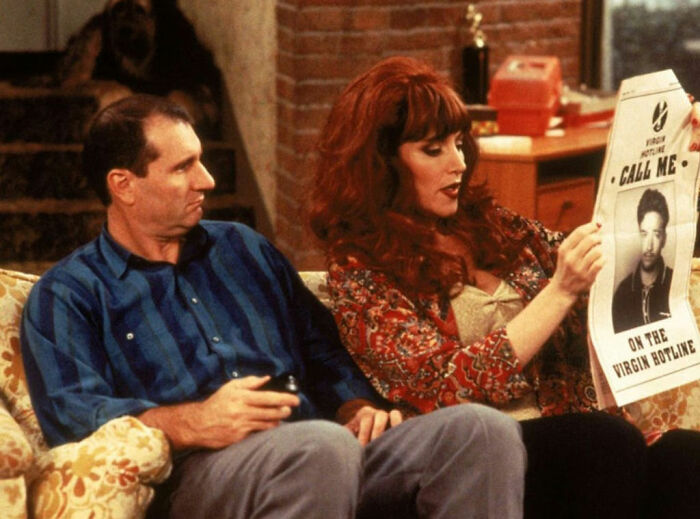 Question: There used to be a lot of shows in the 80s and 70s in which the butt of the joke was often the husband and the wife hating each other
This contrasts with earlier comedies like I love Lucy or Bewitched where the couple loved each other dearly, and with more current shows which also tend to have healthier relationships, even in Malcom in the Middle the parents loved each other despite how disfunctional they were in other senses
The "I hate my wife" comedies seem to have been made for and by baby boomers
Did baby boomers have worse marriage lives than other generations?, did they just find the idea specially funny for some reason?
---
Answer:
First off, I'm not sure if your exact premise based on sitcoms quite pans out. There is some noticeable change in family dynamics in sitcoms starting in 1970 and going through 1990, but it's not as simple as mutual spousal animosity. I trudged through a number of lists and came up with prominent 80s sitcoms with married couples:
The Cosby Show (84-92)
Family Ties (82-89)
Diff'rent Strokes (78-86)
Webster (83-89)
ALF (86-90)
Small Wonder (85-89)
Out of This World (87-91)
None of these seem to be premised around parents that loathe each other. Two of them involve aliens (ALF and Out of This World) and one involves a robot (Small Wonder).
Maybe you're thinking of Married... with Children, which ran from 1987 to 1997, so perhaps counts as 80s? Or The Simpsons which started in 1989 so just touched the 80s, but I don't think anyone would describe as a 1980s show? (We'll get back to both of those.) Or if you're shooting for deep cuts, Unhappily Ever After, which Ron Leavitt (who co-created Married... with Children) worked on, but that's not way out until 1995 to 1999? Or Family Guy, which started in 1999, so starting a year before Malcolm and the Middle?
If you're going back in time, maybe you mean All in the Family (1971-1979), featuring bigoted father Archie Bunker. In one of the most famous episodes, Edith's Problem, Edith goes through menopause.
Mike Stivic [son-in-law of Archie]: What did the doctor say?
Archie Bunker: He just said that menopause is a pretty tough time to be going through; especially for nervous types.
Mike Stivic: So?
Archie Bunker: So he prescribed these here pills.
Mike Stivic: Oh, good.
Archie Bunker: I gotta take three of 'em a day.
Archie is certainly insensitive (and can't handle Edith's problem interfering with a trip to Florida) but it still doesn't quite match the "boomers hate their wife" thing you're going for. (And menopause in 1972 would likely indicate someone from the "Greatest Generation" -- boomers are two generations away.) While All in the Family's massive success (Archie was called "the most expensive racist on television") led to something of a television revolution, it was more in the framing of complex themes (like Maude, an All in the Family spinoff) as opposed to simply including more aggressive characters.
So, let's reformulate the question to something that might give a satisfying answer:
Did the family dynamics depicted in sitcoms deteriorate between 1950 and 1990, and does this reflect what happened to US culture at large?
This ends up hitting close to what I think the original question meant, and there's a fair amount of literature about it. Of course, one argument is what "deteriorate" means. On the more "conservative" end, Popenoe wrote in length during the 1990s about how
Recent family decline is more serious than any decline in the past because what is breaking up is the nuclear family and traced this same decline across various sitcoms. Other media theorists in the "deteriorate" camp are Buck, Fields, and Hoffman. However, some from the 1990s simply argued that there was a simple change in family structure and diversity, like Cantor and Moore.
The "diversity" part certainly is true -- while the 1950s families were nearly all "intact" (the "nuclear" form Popenoe wanted) that's not the case by the late 80s; here's a list of "intact" vs. "non-intact" vs. "mixed" families for television shows shown the week of March 9-15 in 1987:
Intact: Cosby Show, Family Ties, Growing Pains, 227, Newhart, Webster, Jack & Mike
Nonintact: Who's the Boss, Kate & Allie, Carvanaughs, My Sister Sam, Sidekicks, Nothing Easy, Rags to Riches, Our House, Starman
Mixed: Dallas, Dynasty, Falcon Crest, Knot's Landing, Colby's
(Incidentally, The first time a divorced woman was on television was 1962 -- The Lucy Show, with Lucy Carmichael -- a widow -- sharing a house with Vivian Bagley, a divorced mother. Lucy Carmichael was played by Lucielle Ball of I Love Lucy and Vivian Bagley was played by Vivian Vance, who was Ethel Mertz on I Love Lucy. This doesn't mean every single family was "nuclear"; the show Bachelor Father, with a premise right in the title, ran from 1957-1962.)
What the question is really asking about, though, is negative interaction between spouses. To make the question easier I'll consider family interactions in general. A mammoth 1980 study analyzed three seasons of television (75-76, 76-77, 77-78) and counted interactions that
"go against" (attack, oppose, ignore)
"go away" (evade, withdraw)
"go toward" (offer information, seek information, contribute, support, show concern, petition, direct, accept support, accept direction)
The first two categories (essentially, what I'll call the "negative" ones) had 13% to 16% of interactions, while the remainder fell into the "go toward" category, the majority being in "offers information" (35% to 37%).
A 1992 study used the exact same categories, with the 1989-1990 season. This time things were broken down by show; the negative percentages again:
Cosby Show: 16%
Full House: 10%
Growing Pains: 33%
Married with Children: 37%
Simpsons: 20.7%
Note that the fairly "traditional" shows were in line with the mid-1970s, but Growing Pains and Married with Children raise the conflict significantly. However, this can simply indicate more drama and variation. Notably, the sitcoms still followed the "everything resolves" model -- as Cantor concludes in a paper:
If we watch the news, the game shows, and adventure programs on television, we know there is a greedy, hostile, violent world out there. But the domestic dramas present a different message. Here human virtues prevail. While we may not be able to have an impact on political or economic conditions, in the family, through love and sensitivity solutions of conflicts are still possible, and the world is still manageable.
That's great that you want to learn more about U.S. history! I focus on indigenous history, as well as the indigenous slave trade, and in the list below highlight some of my favorite books, with a little nod to Texas/Western U.S. history.
I'm going to recommend some of my favorites below, in a rough order of increasing difficulty for an absolute newbie, and detail why they are my favorites. However, please let me know if there is a specific place/time/people of interest, and I can make more targeted recommendations. Good luck on your reading journey, and feel free keep asking questions here! We love that!
Charles Mann 1491: New Revelations of the Americas Before Columbus is a great place to start your journey. Mann is a journalist, not a historian, so he oversimplified some complex topics, but he crafted an engaging introduction to the history of the New World. Most newbies cite this book as sparking their love of New World history.
The Rediscovery of America: Native Peoples and the Unmaking of U.S. History by Ned Blackhawk is a very approachable survey of Native North American history from one of the best indigenous historians out there.
The Heartbeat of Wounded Knee: Native America from 1890 to the Present by David Treuer is another great book from an indigenous historian, and as the title indicates, explores more recent history. Again, a good general introduction if you, like most people, kinda lose the thread of Native American history after 1890.
Matthew Restall Seven Myths of the Spanish Conquest is a mind-blowing book. He establishes seven persistent myths of the conquest, then breaks those myths down in one brief volume. Forget what you think you know about the early colonial period, and be prepared for a deeper, richer story than you could ever imagine.
Daniel Richter Facing East from Indian Country: A Native History of Early America is a great introduction to eastern North American history, and like Restall's book above helps to shift your understanding of the narrative of contact away from the European perspective, and instead anchoring the story in Indian Country.
Andrés Reséndez The Other Slavery: The Uncovered Story of Indian Enslavement in America is the single best introduction to understand the temporal, geographic, and cultural magnitude of the native slave trade in the Spanish Empire. Absolutely vital for understanding the history of the Americas, and almost no one outside of history nerds has heard about the impact of indigenous slavery on the history of the New World.
Jeffrey Ostler Surviving Genocide: Native Nations and the United States from the American Revolution to Bleeding Kansas is an amazing book that details the violence of early U.S. Indian policy, and the creation of an unhealthy world for Native Americans. Ostler details how Native nations fought for sovereignty in the face of an aggressive, expansive neighbor bent on their removal. This is part one, a forthcoming part two will focus more on the western experience, and I really can't wait.
Colin Calloway One Vast Winter Count: The Native American West Before Lewis and Clark is the best introduction and overview of the American West. I absolutely adore this book. I recommend it all the time because it blew my mind the first time I read it.
 Best that I can find, there wasn't much call for this. A little, which I'll touch on, but it seems to have been quite muted. Even by the time that the statue had arrived in the US, it had shifted from the red-brown copper it had shown off in Paris to a pure brown as the patination had begun (Thanks to u/ducatimechanic here, this is a guide to visualize the change). It was fully expected that patination would occur, and for that matter, important that it would. Although Bartholdi apparently had hoped it would end up in a bronzed color, the statue staying its natural copper would be awful for it, structurally, and in restoration work that has happened, it has been important not to disturb the patina, because it is a layer of protection against the elements, which helps prevent further corrosion. Removing it, or worse, maintaining a continual cleaning schedule to prevent it at all, would just mean the copper would just continue to deteriorate away! This was of great concern in the '80s when a massive restoration effort was underway, especially when a cleaner being used on the interior seeped out and started to dissolve the patina in places, which workers had to quickly work to stop.
Checking through what literature I can find, the real issue concerning restoration has always been focused around who pays for it. The Statue of Liberty proved to be a somewhat awkward gift that left the US Government in a quandary, unsure quite what to do with it, and as such it fell into an administrative quagmire of competing jurisdictions. The National Lighthouse Board, the US Army, and the American Committee (the group which had fund-raised for the pedestal and operated ferries to visit), for various reasons, all had some level of responsibility, but also all insisted that the other groups were the ones who should be maintaining it. A 1890 bill was defeated in Congress that would have made is a public park maintained by the Federal government, and it wasn't until another decade had passed that Congress agreed to a small one time expenditure of $62,800, which was enough to do some interior painting and install the elevator, but hardly enough to anything more substantial, or long-lasting.
Now, to be sure, there was a good deal of public concern about this, and a number of newspapers, starting within a few years of the statue's arrival, decried this, but it doesn't seem to be about the color. As already noted, the patina plays an important role in preservation, and the only articles I could find from the time which makes reference to any calls to strip the patina are focused on explaining why it would be a bad idea! There were some people saying it should happen, but one author, writing in 1910, makes it fairly clear it was a proposal that was ignored:
The patina is the rust on bronze, which, however, does not, like the rust on iron, corrode the metal. It is green in color, the exact shade depending on the amount of alloy used with the copper to form the bronze. It is formed by the statue gathering from the atmosphere carbon and sulpher, and in the formation of nitrate copper crystals on the surface.
"In the case of the Statue of Liberty on Bedloe's Island" said Mr. [Gutzon] Borglum, "the continuous washing of the wain and the spray keeps it clean. I should have gone to Washington, if necessary, if the proposal to take away its patina had been likely to be adopted a year or so ago. People said then that it was eating into the metal, and that in certain placed the bronze was rent away. All I can say is, if there are any thin places they are the result of flaws in the original casting."
So again, as this suggests, there was clearly some people calling for the patina to be stripped, but from the start, experts were making clear that it was not needed, and a bad idea. An earlier article, from 1903, is even further in praise of the green, noting that of burgeoning hue at that point:
Kindly nature has been spinning for her a fine cobwebby outer raiment or verdanlique, deeper in one place, lighter in another. Snows and stinging hail, fogs and rainstorms have been gently removing the repulsive newness of her bronze and streaking cheek and uplifted arm, draperies and crown with tender shades or green such as the cleverest bronze rounders try to produce with chemicals on their new 'castings, but never quite succeed in simulating.
The author further warns against any voices which might "shriek wildly for scrubbing brush and Putz-powder", not just for the writer's aesthetic tastes, but also again for the protective covering the patina offers. The editorial also calls for the appointment of a 'keeper of public monuments', specifically to ensure ignorance doesn't result in the destruction of monuments, not just 'Lady Liberty', a position which seems to have at least somewhat come about by 1910, as that seems to be the role Gutzon Borglum was assisting in by then. Additionally, as before, this suggests the existence of those who desired a de-greening, but again that despite their existence, it was a call which experts pushed back against.
One related thing I did find, which I would also make mention of, was a call not for a stripping down to the natural copper color, but instead to paint it! An article in 1906 makes mention of such a proposal, and again the author instead favors the "marvelous harmony of blended colors" from the "varying shades of light green, delicate white, and a subtle dash of yellow" which by that point have almost entirely overtaken the bronzed hues. The proposal had been written up in several papers, but at least as presented in this article, but was clearly not in an advanced stage of planning. Capt. George Burnell, in command on the island for the War Department, mentioned to the author the "bushels of letters", almost all of which were aghast at the proposal - which additionally helps to point to the acceptance of the green quite quickly - and additionally talks to copper experts who find the idea not only unnecessary, but quite ludicrous. Unfortunately I was unable to find the original announcement, but it is certainly clear enough that it all came to naught.
Anyways though, to continue with this more general over view of restoration, during the Wilson Administration, a Public-Private partnership with the World newspaper saw another $30,000 from the government, but again, it was a one time expenditure, and this time for installing flood-lights. Lights which, lacking maintenance funds, had mostly ceased working by 1930.
This funding morass continued through the 1930s, when it finally was moved to the jurisdiction of the National Park Service, as part of a larger push under the FDR administration, in step with the New Deal, to give 'Lady Liberty' her due as a symbol of the country. Unable to get the funds solely on its own, between 1937 and 1941 the NPS worked in conjunction with the PWA and WPA to give the statue its first real overhaul, a $1.5 million dollar makeover which involved clearing the entire island of buildings to start fresh, building a seawall, a new dock, walkways, and most importantly much needed maintenance of the internal iron structure - although not quite extensive enough - which was becoming quite rusted at points, thanks to the salty seawater surrounding it. Much was done, but of course the outbreak of war in late 1941 brought it to a halt. Work would resume again in 1946 to wrap up work unfinished in '41, but over the next decade or so, the real focus with funding was on the creation of an American Museum of Immigration, which would eventually open in 1972 after a long and fraught 'battle'.
By 1981, even the work done by the NPS decades earlier was showing its age, and spurred by an analysis by French architects, a renewed focus on a thorough overhaul of the statue, especially in light of the upcoming centennial, began to be planned, perhaps most famously with American Express donating a penny for every purchase made with their card to the endeavor, resulting in $1.7 million dollars. Closed to the public in 1984 for the work - and as noted above, careful not to disturb the green! - the work was completed in time for the "Liberty Weekend" centennial celebration in 1986, with President Reagan turning on the floodlights the night of July 3rd, and the statue officially reopened on the 5th.
Children's culture in history can be difficult to study. Adult observers tend to reflect more formal types of play and practice; memoirs reflect the haze of memory and desired memory; it's sometimes difficult to tell whether schoolbook exercises represent an individual experience or a standard trope. In this case, fortunately, a look at the broader culture of children's wargaming in early modern Europe can help answer the question.
Children's play often imitates the adult world for two reasons: first, children mirror what they see; second, adults encourage it to help prepare children for the future. The encouragement of martial play among boys (only boys) in the late Middle Ages and early modern era is a good illustration of these. We have stories from hagiography of the future saint who stepped aside from the mock swordfighting to play at being a priest dispensing the Eucharist, and proverbs observing that when children play at swords, war is in the air. From the adult encouragement angle, with the rise of a visible toymaking industry from the fourteenth century, hobby-horses and swords were among the most popular items.
Although toy guns start to appear from the later half of the sixteenth century, it's really in the seventeenth that guns displace the swords of knighthood as boys' wargame toy of choice. This is in conjunction with the encouraged realism of militaristic play. Memoirs of noblemen raised at a royal court, like Louis Henri with Louis XIV, stress the popularity of fully organized "armies" of boys marching and drilling under their "commander," the king. And this was in no way limited to the elite of the elite. Army-style drills were not just a major component of the all-around education of boys at grammar and secondary school--school sponsorship of these types of exercise actually served as a marketing appeal. The Lincoln Grammar School stressed the realism of its schoolyard play in opposition to "childish games": its students "exercised in all their military postures, and in assaults and defenses." And from the 17th century, assaults and defenses meant guns.
With princes and high nobles, it seems that the guns and cannons would be smaller, boy-sized versions, but real. Louis Henri describes learning how to shoot with a harquebus that then-Prince Louis gave him, and mentions how he and the other boys (which is to say, their fathers) lavished the future king with many and diverse shooting weapons.
But moving down the social ladder to the urban middle classes (presumably), actual toy guns were exceedingly popular among boys. Actual records are scanty, of course, but archaeological digs and trawls of the Thames (where worn out or unneeded toys might be disposed of, or make their way there through a sewer or settlement) turn up toy guns and cannons as among the most numerous survivals. And for the most part, these toys appear to have been designed for mock shooting, including packing with powder and pellets to fire.
But children playing with toy guns in the manner they were designed to be used by adults is not yet the same as children making the leap themselves. For that, we turn to disciplinary and legal records of situations where boys improvised. One student of the Bodwin School participated in wargaming exercises not just by carrying a dummy gun. He actually got a candle, hollowed it out, and packed it with powder. This isn't a mock stick, but it's pretty close.
There are plenty of tragic events where children did not realize a gun was loaded, went to play with it, and killed a playmate or bystander by accident. But one case from turn of the 18th century London demonstrates the realism that permeates surviving accounts of boys' wargaming. A twelve-year-old apprentice came across his master's gun and wanted to play with it. But he wasn't content to point and cock and click, like plenty of boys did in the cases where the gun proved to be loaded. No, for this boy, playing with guns started with inserting the ststick and packing it with powder.
Some caution is of course warranted. These aren't cases of boys pointing sticks at each other and making exploding noises with their mouths. And surviving sources, as I've discussed, are going to be biased towards more realistic types of games. Nevertheless, the combination of being so steeped in militaristic "play" and the general tendency to learn adulting by observation led our two improvisers to want "toy guns" that mirrored the real thing at every step except the very last. It seems likely, therefore, that just like we can all remember a range of ways we "played pretend" with "guns" when we were little, 17th and 18th century boys also scaled up towards imitating the real thing with whatever they had.
A reasonable trawl through the Internet will inform you that American universities borrowed the terminology from Oxford and Cambridge, where they had come to describe different levels of "sophester" or sophist--someone who thinks they are wise. (Sophomore adds on either a simple Latin -or 'operator' ending, or possibly Greek moros/fool--either way, the meaning is clear; the adjective "sophomoric" means immature). In the sixteenth century, sophister sometimes had an additional connotation of someone who takes money for teaching wisdom instead of being an exploited adjunct living a pure life of the mind or something--basically, a philosopher who sold out. This would track with the use of more advanced students employed to tutor earlier ones.
What the OED and blog posts won't tell you, on the other hand, is why the labels for students are inherently insults.
Medieval universities incubated a tradition that early modern ones would carry on with pride: periodically awful student behavior. (Also, you know, excellent academics & drool-worthy libraries & the foundation for modern scientific research &c &c.) Most infamous is student violence, of course--right along with universities' determination to shelter their own from charges of murder and rape.
But more to the point with the classifications is that university students also had a reputation for living up to a somewhat lower standard than what Robert Lowth wanted to see in Oxford:
[A place] where a liberal pursuit of knowledge, and a genuine freedom of thought was raised encouraged and pushed forward by example, by commendation, and by authority
and somewhat more along the lines of what Edward Gibbon (yes, our Edward Gibbon!) remembered:
To the university of Oxford I acknowledge no obligation; and she will as cheerfully renounce me for a son, as I am willing to disclaim her for a mother. I spent fourteen months at Magdalen College; they proved the fourteen months the most idle and unprofitable of my whole life...
In the university of Oxford, the greater part of the public professors have for these many years given up altogether even the pretence of teaching.
As a gentleman commoner, I was admitted to the society of the fellows, and fondly expected that some questions of literature would be the amusing and instructive topics of their discourse. Their conversation stagnated in a round of college business, Tory politics, personal anecdotes, and private scandal...The names of Wenman and Dashwood were more frequently pronounced, than those of Cicero and Chrysostom.
The point isn't that there were no deeply studious students making serious academic gains of their own and scientific progress overall, it's the reputation they had for being--well, sophists: more concerned with the social life of debate and politics and looking/acting smart to each other, than living up to some lofty ideal. Oxford opened its first coffeehouse in 1650. And by early modern coffeehouse, we should mean something like a literary salon--a place where the literati would gather to discuss intellectual topics and current events.
Of course, to contemporary eyes, this was a great deficit from what it should be. A 1901 investigation of Oxford in the 18th century summed up its findings in this description of freshman, freshly-minted college men:
We see the public schoolman, just freed from the rod of Busby’s successors, strutting about town for a week or so before entrance, courting his schoolfellows’ envy...swaggering at coffee-houses, and giving himself a scholar’s airs at the bookshops.
and things did not improve over the years:
A month or two sees them metamorphosed into complete smarts...The "smart's" breakfast is scarcely over by ten.
It's important to keep in mind that these attitudes were not only external in the sense of town-gown relations or alumni making a point about the quality of English universities compared to continental ones. Student university hazing could be absolutely brutal. Internal university hierarchy, built upon the idea that students with less experience were complete no-nothing fools, reigned supreme.
Most infamously, there's a late medieval sort of "Latin textbook" for university students that consists of a series of dialogues we think were meant to teach students useful Latin vocabulary for surviving uni daily life. One of the settings is a violent and humiliating initiation ritual in which the freshman or beanus is made into an animal that must be tamed. Well, scholars will continue to dispute whether in the 15th century this was a literary fantasy that drew on a solid tradition of hazing. On the other hand, there seems to be fairly solid evidence that early modern students at some universities took the description as prescription--and performed the hazing ceremony.
The straightforward etymologies of sophomore, junior (sophister), and senior (sophister) from Greek sophia and Greek/Latin sophister, in other words, aren't really the interesting part of the story--and a much funnier one for those of us who never attended college or have already graduated.
I wouldn't be surprised if there are more swimming events that Phelps competes in than ancient events as a whole. There were three fighting events: boxing, wrestling, and pankration (a combination of the two, maybe a bit like MMA). Two riding events: chariot and horeseracing. Four different running events (including the race in armor), and the pentathalon. So I think it is a bit unfair to Leonidas.
The one that comes to mind is Phayllos of Kroton, who leapt so far he cleared the pit and broke his leg. As the pit was about fifteen meters long, this is well beyond the 8.9 Mike Powell managed in Barcelona. That being said, the sheer size of this leap has made plenty of people a bit leery, and it does seem to be straining against the limits of the possible, and so there is a bit of a debate over what the long jump was actually like. One possibility is that the weighted [halteres](https://en.wikipedia.org/wiki/Halteres_(ancient_Greece)) that the athletes apparently held while jumping was used in some way to add lift or effect the center of gravity, but modern testing hasn't really provided a comparable effect. The simpler explanation is that it was just a triple jump, which makes 15 meters extremely impressive but well within the 18.3 meters that is the current record.
If you want to read more, Leuven has a great little site about the Olympics, I linked Phyllos' page.
EDIT: it is worth noting that event athletics became proffessionalized to an extent during the Hellenistic and Roman periods. There were enough places hosting games that it was possible for a talented athlete to make a comfortable living going from Games to Games and surviving off of the prize money. By contrast the competitors of the classical games were young aristocratic amateurs, so I find it pretty likely that the quality of competition was much higher in the Hellenistic and Roman periods, but authors primarily primarily talked about the classical games.
EDIT: Okay -- the FOUR part answer is all done. I might have done a little bit crazy. A couple people messaged me about Foucault -- I wrote a response in Part 4 below (and about how, despite finding him influential, I largely agree with the mods policy on him).
What a wonderful question! I'm going to answer this in three parts -- the first talking about autopsies and medical perception, the second about Charles II, and the third to generally talk about my approach to paleopathology and medical history.
So here is my "mod alert" -- I am going to talk about the ever-controversial Michel Foucault (though very early Foucault). Foucault, of course, is always a controversial reference on r/AskHistorians (and in history in general). If you want to rustle some jimmies, try citing "Discipline and Punish" in this forum. That being said, it's more or less impossible to talk about pathological anatomy and the Paris Clinical School before referencing a very early Foucault book "The Birth of the Clinic: An Archaeology of Medical Perception". As far as I'm aware, this is the first serious study of medical perception and the postmodern concept of "the gaze" (Foucault used the French phase "le regard", which is usually translated as "clinical gaze," but the term "medical perception" used most commonly in his title I think fits bette). Foucault is interested in the dawning of the Paris Clinical School, starting in the waning days of the Ancien Regime and lasting through the Revolution and the next several decades. I'll actually defend Foucault's historiography in this case (of course, the man himself would hate that I used the word history of describe anything he did) -- the work is very well referenced, and mostly concerned with the discourse of physicians themselves. That being said, while he's been very influential, his historiography is overly reliant on these physicians' own interpretations, and modern historiography (Erwin Ackerknecht, and more recently La Berge and Hannaway) has unsurprisingly revealed a far subtler picture. For example, where Foucault sees a sharp break between the classical and hypothetical curriculum of the Ancien Regime faculty and new hands-on "hospital medicine," scholars have actually looked at notes from students studying in both these regimes, and notes a more gradual shift.
That was quite a caveat -- but I actually take Foucault's philosophy of science quite seriously. So one of Foucault's central theses in Birth of the Clinic (expounded more in The Order of Things) is that medical perception is largely driven by unconscious assumptions about what constitutes disease and man's relationship to it. This is in contrast to the traditional scientific narrative that medical understanding happens gradually as more knowledge is slowly added. He would argue that these collections of unconscious assumptions (he would later label this an "episteme") in fact are not additive but replace one another.
So I want to talk about three different epistemes before I get to Charles II. The first is what I would call traditional Western medicine, dating back to the ancients. Simplifying quite a bit, this is the idea that human health and disease is caused by balances and imbalances in the four constituent body fluids -- blood, black bile, yellow bile, and phlegm. These body fluids are directly affected by the natural environment. Food, weather, altitude, close contacts, the alignment of the stars and planets -- all could cause changes in humors, and therefore cause disease. These has some important underlying assumptions. For example, a human organism cannot be separated from its environment. Diseases are not unique entities, but have similar causes. Treatments need to be focused on "rebalance". The psychological and the physical are fundamentally interlinked. This is the context in which the tradition of anatomy emerged -- spreading from Vesalius to become an important part of both medical education and Western art. However, there's no sense that DISEASE can be determined from autopsy (or even variants within humans, which is very common). Disease, after all, lies in the four humors, and the life-bringing pneuma, both of which are obscured by death.
Starting in roughly the late 17th century, and dominating the 18th, you have the episteme of nosology. Think Sydenham, Cullen, Pinel. They rejected humoral explanations, which didn't line up with the observations they were making. Instead they reclassified human disease based on symptomology and similarity to one another. The big comparison is botany -- just like Linnaeus attempted to classify all life within a hierarchy, doctors did the same, carving out orders, classes, genus, and species (and they carved out a LOT of them). Anatomy by this time was widespread, both in medical education, and after death. The biggest example would be Morgagni, who started to notice that there were different changes after death in oragans associated with different disease states (Auenbrugger is in this tradition too, though he's most often associated with the next episteme).
Which takes us to the third episteme -- that of pathological anatomy. I could go on forever about this, but essentially doctors started to realize that certain diseases had specific changes associated with tissue types -- and that what had been thought to be multiple diseases, might be just a single disease with multi-system effects. Think Bayle, Laennec (and Auenbrugger, even though he's writing in the 1760s -- an example of how this is more of a framework rather than a hard and fast rule). This episteme has largely survived to the present day, though with considerable modification -- Virchow readjusted to show that the CELL, rather than tissues, was the fundamental unit of disease, and germ theory gave an incredibly important etiologic factor, and the 20th and 21st century has revealed even smaller units, such as CML, caused by the BCR-ABL translocation.
However, for the most part, our modern noslogy outside of psychiatry (these days the ICD-10) largely operates on these assumptions. And there are important assumptions. For example, close examination of the patient, in ways they cannot access, are now of extreme importance (back then this meant percussion and a stethoscope; now it means MRIs, PET scans, biopsies, &c). These has had important implications in removing patients from their own state of health. Disease is also now freed from the metaphysical (France no longer employs astrologers and meteorologists to track outbreaks, like in the Ancien Regime). It turns out that it's also a fairly effective way to target treatments, hence its dominance.
Well, the answer is unfortunately not that satisfying, but I expect that you came into this question realizing it was a somewhat vain hope given the use of "disappeared from history". To provide a little background, Sally Hemmings had a number of children, some of whom died in infancy, which are generally accepted as being fathered by Thomas Jefferson (I would direct to here for more discussion, broadly, of the sexual relationships between masters and slaves in the antebellum South). Whether or not this was fact has been debated since before Jefferson himself died, and scholarly opinion has swayed about, but it is pretty much now the consensus.
Anyways though. Harriet, described as "nearly as white as anybody and very beautiful" had no trouble passing for white, and as you already are aware, made use of this. She was freed in 1822 at the age of 21, apparently on a promise Jefferson had made to Sally Hemings to do so when the children reached that age. The documentation of Harriet's liberation is almost next to nothing. Edmund Bacon, who worked as an overseer at Monticello, described her departure, being the one who gave her the $50 that you mention, and stating she had been headed for Philadelphia. And as for her life after she headed north, we only have one account which we can give any real credence to, that from her brother Madison, who wrote in 1873:
Harriet married a white man in good standing in Washington City, whose name I could give, but will not, for prudential reason. She raised a family of children, and so far as I know they were never suspected of being tainted with African blood in the community where she lived or lives. I have not heard from her for ten years, and do not know whether she is dead or alive. She thought it to her interest, on going to Washington, to assume the role of a white woman, and but her dress and conduct as such I am not aware that her identity as Harriet Hemings of Monticello has ever been discovered.
Washington City in this case refers to the District of Columbia as it was then known, and it would appear that while she kept a low profile, she did not choose to cut all ties with her family, at least immediately, as Madison claims to have remained in contact with her through the 1860s (he was writing in 1873). He also gives us reason to believe it quite possible that she has living descendants, but of course was much to guarded to allow any information to get out which could give much of a thread to follow. What the end of communications even meant is up in the air - perhaps she decided to cut her final tie to non-white society, or perhaps she simply died. We can only speculate. But in any case, Madison's account is the lone source we can rely on to reconstruct any sense of her post-emancipation life.
She was not the only child of Jefferson and Hemmings to follow such a route. While Madison and Eston both left records, writings, and known descendants, their brother Beverley was similarly allowed to leave Monticello for the North, and even less seems sure about his fate then his sister, doing a similar disappearing act but without, it seems, even the record of correspondence that Harriet left He was briefly in contact, long enough to communicate back that he had married a white woman and that they had a daughter, living in Washington City, but that seems to be the end of it. In both the case of Beverley and Harriet, it should be noted, Jefferson officially recorded them as being escaped slaves, as their departure was recorded in the 'farm book', but it was quite clearly allowed with his approval as a means of sending them North in technical compliance with the aforementioned agreement he had made with Sally. The backhanded means of liberation is thought to have been a means of following through without providing ammunition for those looking to prove the parentage.
Now, as to the second part of your question, you might perhaps want to x-post to r/AskScience as it is less a history question that one for a geneticist. What I do understand of these things would imply that it is possible to find genetic matches that show relations by various degrees, but it isn't like those genes are signed "T.J." Establishing who that common ancestor is takes a lot more leg work. To compare to the famous claim about Genghis Khan's widespread DNA, this is based on finding the the same Y-chromosome (which records patrilineal descent) in millions of people that shows they share a common male ancestor a certain period back in time. Genghis Khan is then assumed to be the one based on historical circumstances. But I would hesitate to say more, as again, this is getting into the territory for a scientist to discuss.































 No fees, cancel anytime