Get Premium
Dark mode theme is available exclusively for premium users. Learn more about the benefits of subscribing.
No fees, cancel anytime.

 Dark Mode Ad-Free Browsing Unlimited Content
 Ad-Free Browsing Unlimited Content Dark Mode
Join 1.2 million Panda readers who get the best art, memes, and fun stories every week!
S, M, L, XL, XXL.
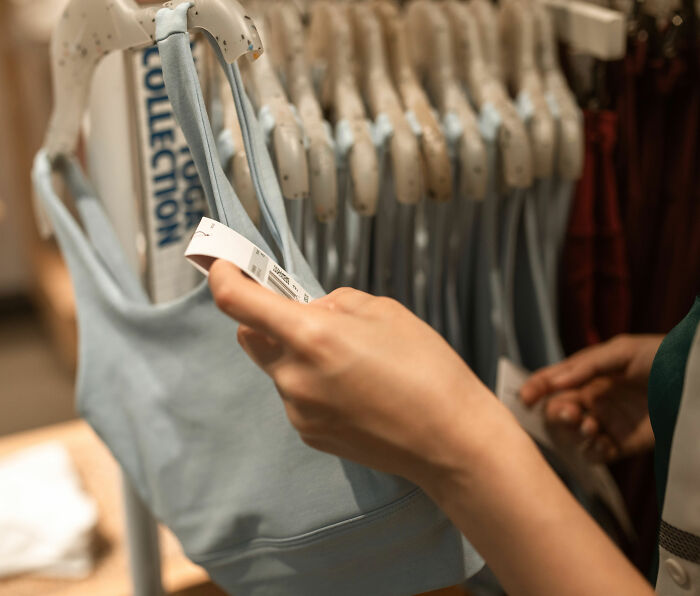
These are just letters. Yet somehow, they hold so much meaning when they are printed on a tag and hanging from a dress you just squeezed your way into.
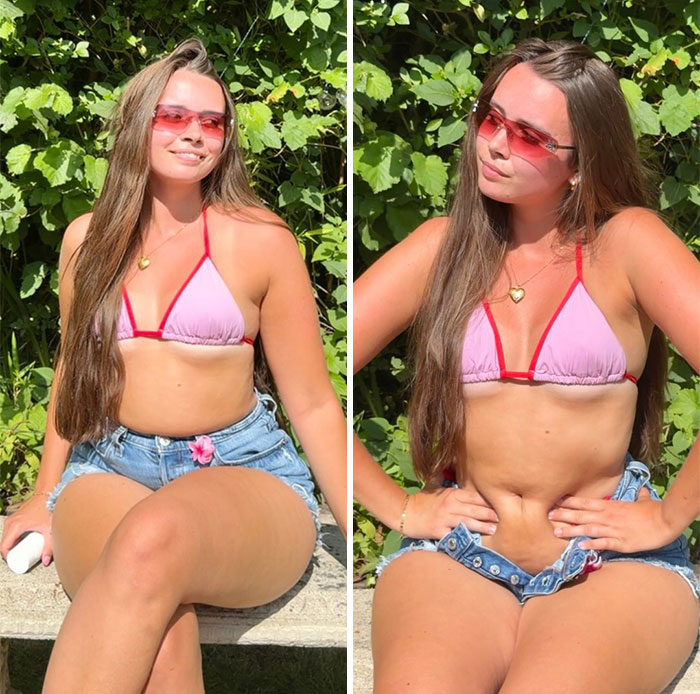
One viral TikToker challenged this idea in a video, showing how women can fit into every one of those sizes depending on the clothing brand.
Image credits: gracetutty
TikTok star and content creator Grace Tutty recently shared a video with her 589K followers on Instagram.
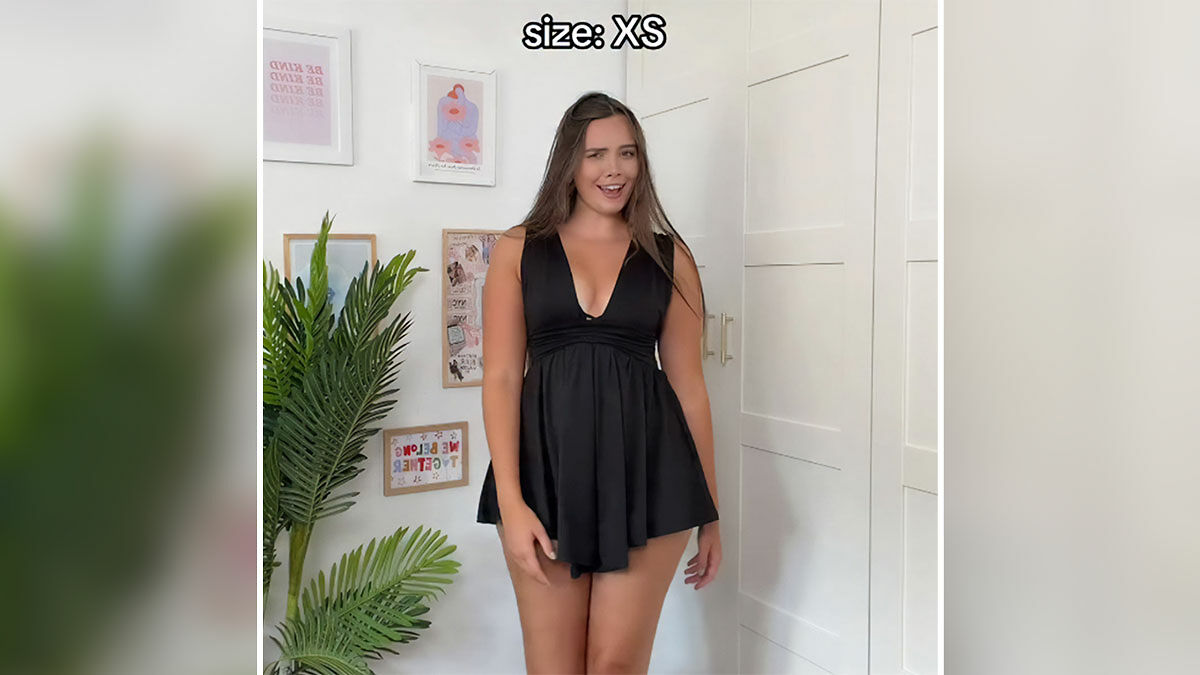
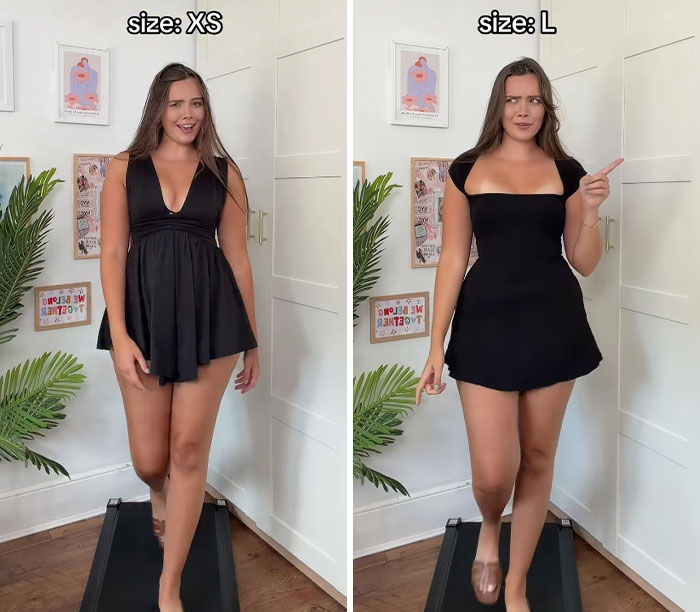
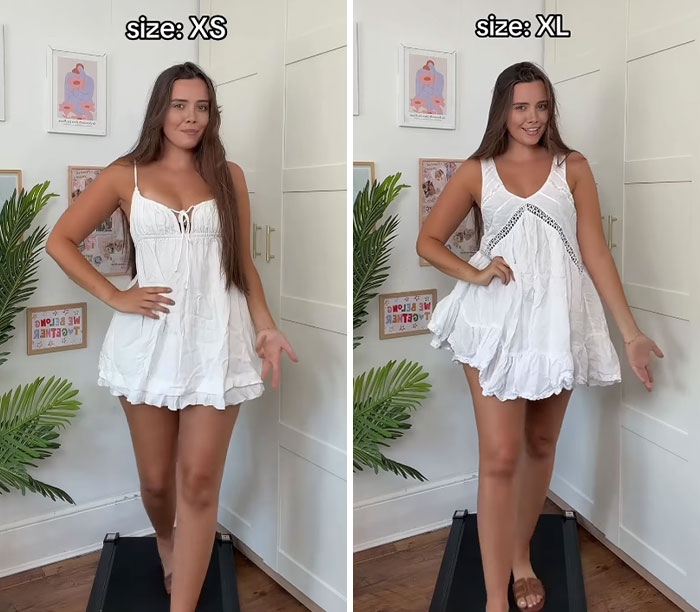
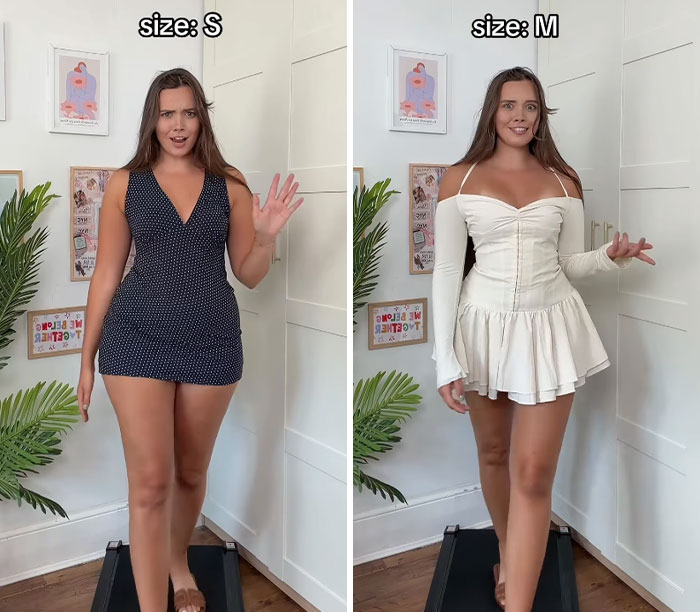
“Proof you shouldn’t base your worth on your clothes,” read the title of her video, where the camera captured her marching in different dresses.
Each dress was a different brand and a different size. But all of them fit her perfectly, from XS to XL.
Image credits: gracetutty
“Proof ‘going up a size’ doesn’t mean your body changed, it means the clothes did!!” she wrote in the caption.
“I won’t stop making these videos until fashion brands standardize clothing sizing!!!”
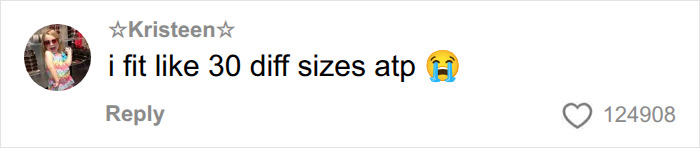
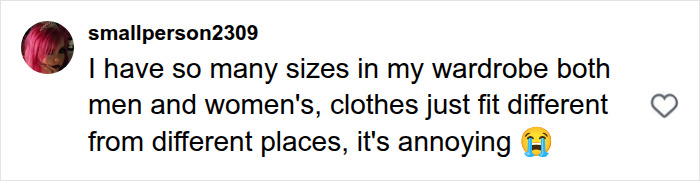
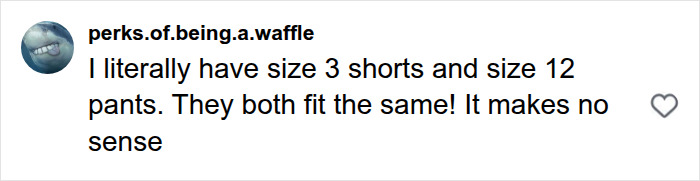
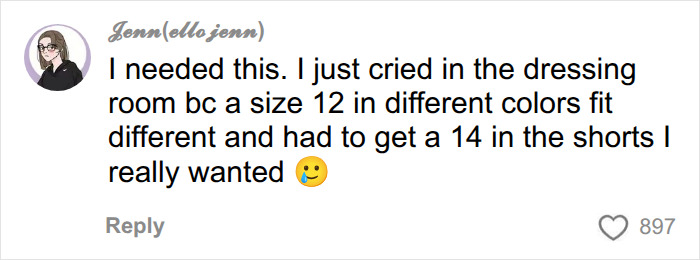
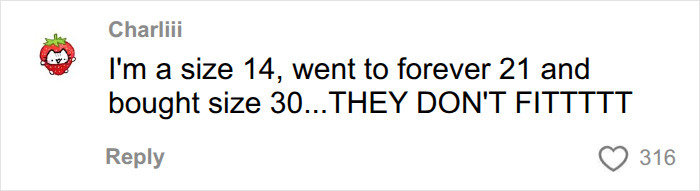
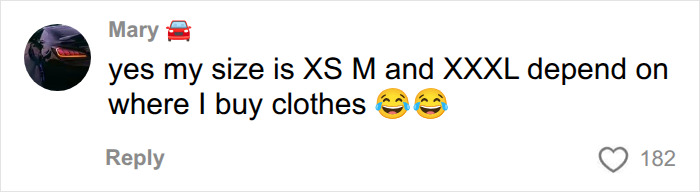
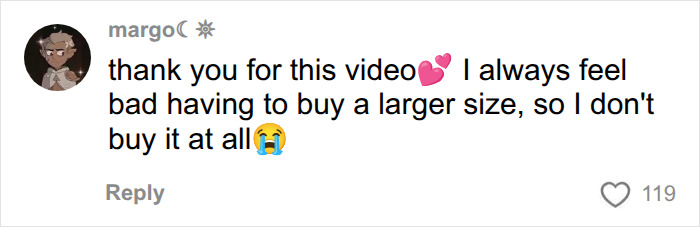
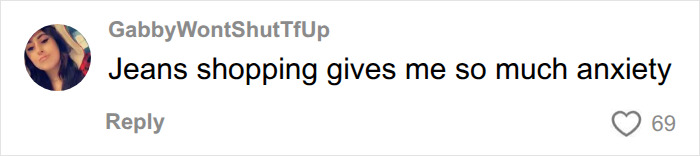
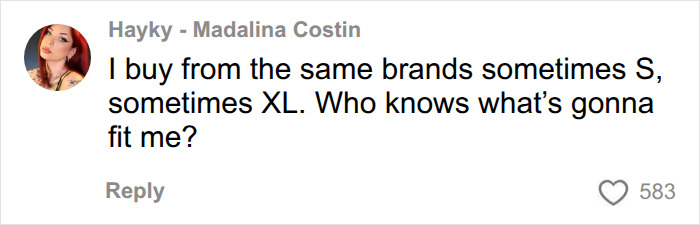
Viewers agreed with her in the comments section, saying, “I have everything from xs-xl in my closet!”
“So true. And even in one brand you can’t be sure!” another said.
Image credits: gracetutty
The content creator’s video laid out a reality that was so relatable to many shoppers: the body doesn’t have to change at all, but can still cycle through small, medium, and large sizes, showing how clothing labels can often feel inconsistent and even misleading.
Experts say the confusion is not accidental.
“American garment manufacturers have been manipulating sizing since at least the 1930s,” Linda Przybyszewski, author of The Lost Art of Dress, a New York Times bestseller, and teacher of history at the University of Notre Dame, told Bored Panda.
@gracetutty Proof ‘going up a size’ doesn’t mean your body changed, it means the clothes did!! I won’t stop making these videos untill fashion brands standardise clothing sizing!!! 🩷 #bodypositivity #clothessizing #dresses #pearshaped #insecurities dresses from @Princess Polly @PrincessPollyUK @asos @White Fox Boutique @Pull&Bear @Oh Polly @Brandy Melville @Urban Outfitters Europe ♬ my way – Olivia Rodrigo
When it comes to understanding size labels, “there is no industry-wide standard for sizing. Each brand does pretty much its own thing,” Sylvie Blum, author and expert on Women and Fashion, told Bored Panda.
Brands even manipulate sizing because “wearers in general want to feel they are a smaller size,” said Dirk de Waal, a sustainable fashion scholar.
“Sizing within a brand is generally consistent,” he told Bored Panda. “However, you might find variances within a retailer’s sub-brands, as the measurements of a specific size (s/m) might shift based on the brand’s sizing.”
The reason why brands manipulate sizes is “most likely to encourage the customers to feel like they are thinner, and therefore it’s a feel-good practice,” Blum added.
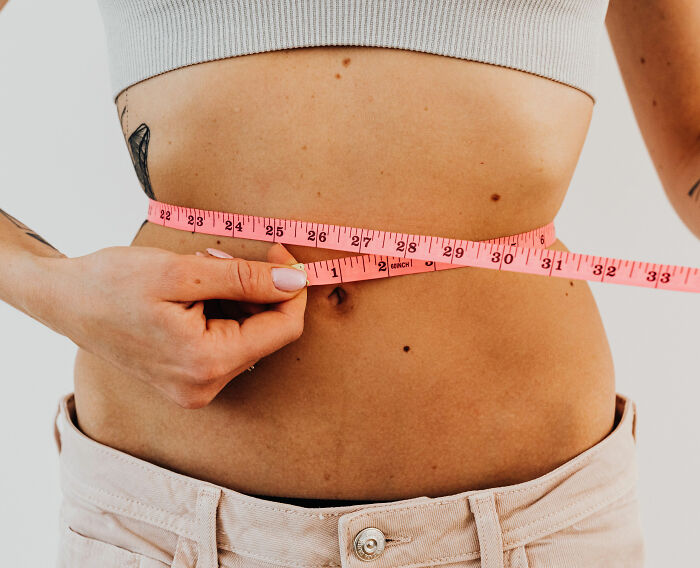
Image credits: RDNE Stock project/Pexels (not an actual photo)
As bodies have changed over time, so have clothing labels, too. And sometimes, this is not to reflect measurements, but to influence how shoppers feel when they look at the tag.
For instance, “vanity sizing gave larger numbers to children’s sizes in order to assure mothers their children were healthy and growing, and smaller sizes to women to flatter them,” Przybyszewski said.
“Also, as Americans have gotten larger, size numbers have gotten smaller,” she added.
The author used her own measurements to illustrate how dramatically sizing has shifted over the decades. Nearly a century ago, the same body measurements would have placed her in a much larger size. But today, they correspond to smaller labels.
“I have a 36’’ bust, which in the 1930s would be a size 18 in a sewing pattern, but is now a 14, and anything from an 8 to a 12 in ready-to-wear. (Sewing patterns have changed less because dressmakers own tape measures so you can only con them so much),” she explained.
Image credits: gracetutty
“Some recalibration as people got taller and wider is justified, but the rest is vanity sizing like my RTW knit tops marked ‘small’ which are wider across than ones marked ‘medium.’ I have noticed that more expensive brands tend to vanity size more than department stores. Basically, you are paying to be flattered.”
The problem, however, is just how the fashion industry has established itself. Experts say that shoppers themselves have been trained to see a smaller size as a win.
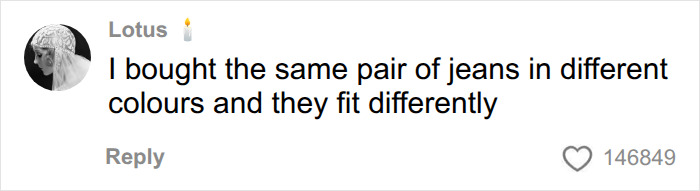
“Unfortunately, we consumers are partially at fault,” Przybyszewski said. “Researchers have found that if you ask a woman to try on two pairs of jeans cut from the EXACT same pattern, she will tell you the ones marked size 8 fit better than the ones marked size 10.”
@gracetutty clothes are meant to fit around your body, don’t spend your life trying to squeeze into clothes in sizes that aren’t accurate anyway🫶🏻🫶🏻 #womensclothes #jeanssize #bodypositivity #womensfashion ♬ GOOD LUCK BABE by CHAPPELL ROAN – Chappell’s Fandom 👑
Research suggests that the impact of clothing sizes goes beyond just being a source of shopping frustration. It can shape one’s self-esteem and how they feel about their bodies in general.
In one study, researchers examined responses from 20 women, aged 18 to 45, and their experiences with dress fit and body image.
They found that the participants had a complicated relationship with clothing sizes and used well-fitting clothes to boost confidence, conceal areas they felt insecure about, and create a body shape closer to the “slim hourglass” ideal.
The study also found that women experienced decreased body confidence when the clothes were tight, even if they were generally body-confident women.
Seventeen women further admitted that they disguised parts of the body they disliked using clothes.
Image credits: h&co/Pexels (not an actual photo)
This emotional connection to clothing sizes is precisely why experts say vanity sizing can be so powerful. By attaching smaller labels to larger garments, brands may influence how consumers feel about themselves.
“Vanity sizing came to the fore in the 1980 and 90s, and brands never looked back. Size 0 and 00 were not a thing before that,” Elizabeth Wissinger, Professor of Fashion and Liberal Studies at the City University of New York Graduate School (GSUC), told Bored Panda.
Vanity sizing not only creates confusion but can also make fashion less inclusive. When brands assign smaller labels to larger garments, shoppers who genuinely need those larger measurements may find fewer options available to them.
“Labeling large garments with smaller sizes has led to negative sizes. When you turn a size Large into what is essentially a Medium, what is a person who is an actual size Large supposed to do?” Wissinger said.
Image credits: Kaboompics/Pexels (not an actual photo)
“Non-inclusive sizing leaves out bodies. A key difference? At least those on the smaller end can alter larger clothes to fit. Those on the larger end have no such option,” she added. “In sum, limited size ranges leave too many bodies out, both large and small.”
A standardized sizing system could potentially address more than just the emotional frustration among shoppers while they are in fitting rooms. Wissinger said consistent sizing could also help reduce fashion’s environmental impact by cutting down on unnecessary returns.
“Standard sizing could reduce fashion pollution,” Wissinger said. “Standard sizing could reduce fashion’s carbon footprint by minimizing returns. Right now, consumers have no other option but to overorder and return most of it. This practice leads to extra shipping and pollution.”
@gracetutty clothes are meant to fit your body, your body isnt meant to squeeze into clothes that dont fit you! 🫶🏻 womens clothing sizes need to become standardised!!! its sooo frustrating shopping with a new brand and having no idea whether ill be a S or an XL😭 #clothingsizes #womensfashion #dresssize #size10 #midsize ♬ original sound – ☆
While many shoppers may wish for a universal sizing system, creating one is far more complicated than simply assigning the same measurements to every brand.
Human bodies vary widely, especially from one geographical region to another. And there is no single “average” shape that can accurately represent everyone all across the world.
Two people can share the same bust, waist, or hip measurements while having completely different proportions, making a one-size-fits-all system difficult to create.
Sizing also changes depending on a brand’s target customer, design aesthetic, and the type of garment being made. A luxury label, a fast-fashion retailer, and an athleticwear brand may all approach fit differently, while fabrics and design can affect how clothing sits on the body.
Image credits: Burst/Pexels (not an actual photo)
Beyond design challenges, changing sizing systems would require brands to overhaul patterns, manufacturing processes, and international size charts.
This is a costly and complex process that most fashion houses wouldn’t bother undergoing.
“The fashion system moves fast, but it does not want to break things,” Wissinger said. “The designers and advocates I’ve interviewed for my research pointed to one cause for fashion’s slow pace of innovation in the materials and manufacturing space.”
“It’s all about infrastructure. The system can’t stop and retrofit and still make delivery quotas and keep up with turbocharged trend cycles,” she continued.
Image credits: Arina Krasnikova/Pexels (not an actual photo)
Moreover, the fashion industry’s relationship with body diversity has been inconsistent.
In recent years, there was a cultural push towards body acceptance, which in turn prompted brands to expand their size ranges, change their messaging, and embrace more diverse body types.
But Wissinger said this progress has been recently challenged by the return of extremely thin body ideals in popular culture.
“Size inclusivity had a moment. Then came bodies ‘on the shot,’ as the saying goes,” she added. “Skeletal celebrities are once again celebrated. It feels like the 1990s all over again.”

By entering your email and clicking Subscribe, you're agreeing to let us send you customized marketing messages about us and our advertising partners. You are also agreeing to our Privacy Policy.
Thank you! You've successfully subscribed to newsletters!


Nothing new here, for years I have had garments marked 5 different sizes in my wardrobe. Every one when measured is the same size in bust, waist etc.


While I can confirm that sizes vary ridiculously depending on brands, I call BS on the XS in this case.
Nothing new here, for years I have had garments marked 5 different sizes in my wardrobe. Every one when measured is the same size in bust, waist etc.
While I can confirm that sizes vary ridiculously depending on brands, I call BS on the XS in this case.










 No fees, cancel anytime










18
34