Get Premium
Dark mode theme is available exclusively for premium users. Learn more about the benefits of subscribing.
No fees, cancel anytime.

 Dark Mode Ad-Free Browsing Unlimited Content
 Ad-Free Browsing Unlimited Content Dark Mode
Join 1.2 million Panda readers who get the best art, memes, and fun stories every week!
They say you can love someone for years and still not truly know them. Relationships depend on trust, yet sometimes the people closest to us keep secrets we could never guess.
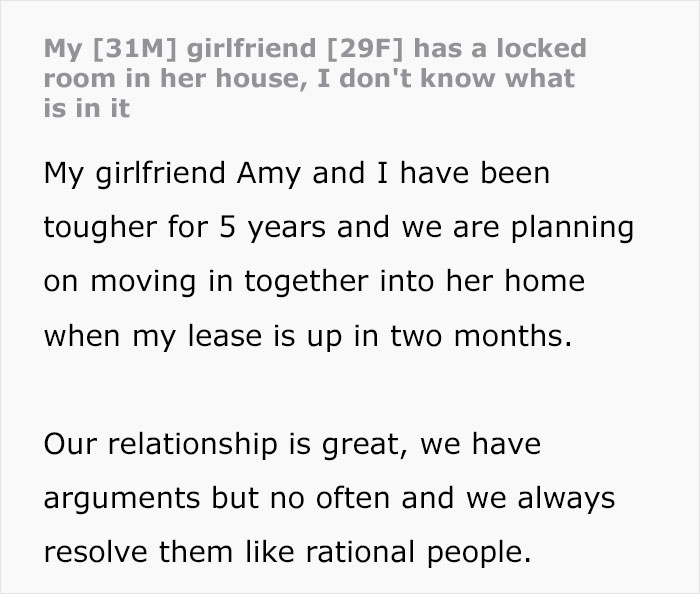
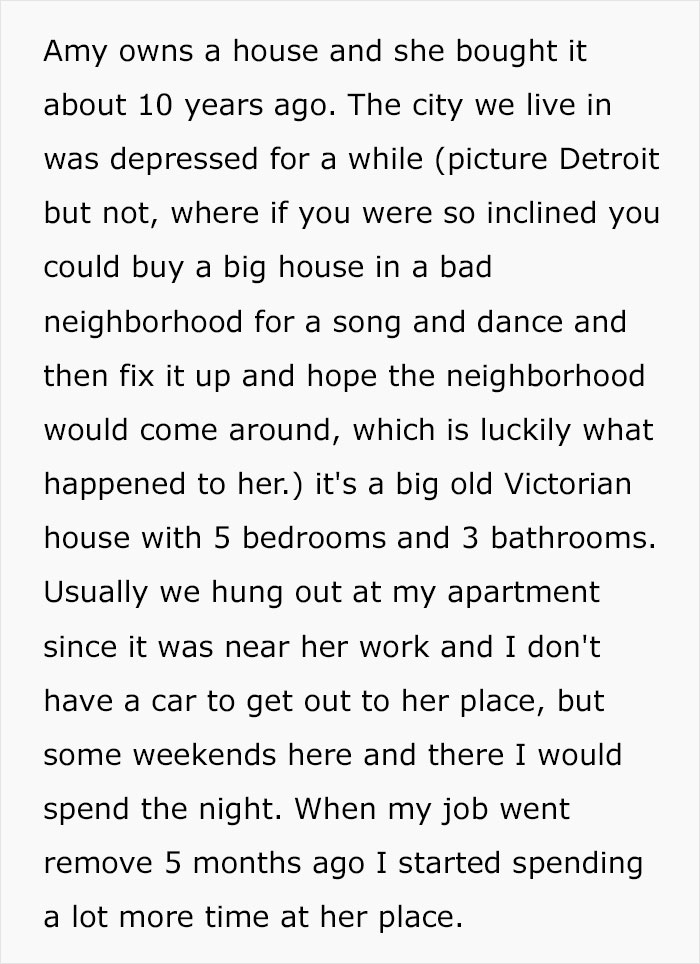
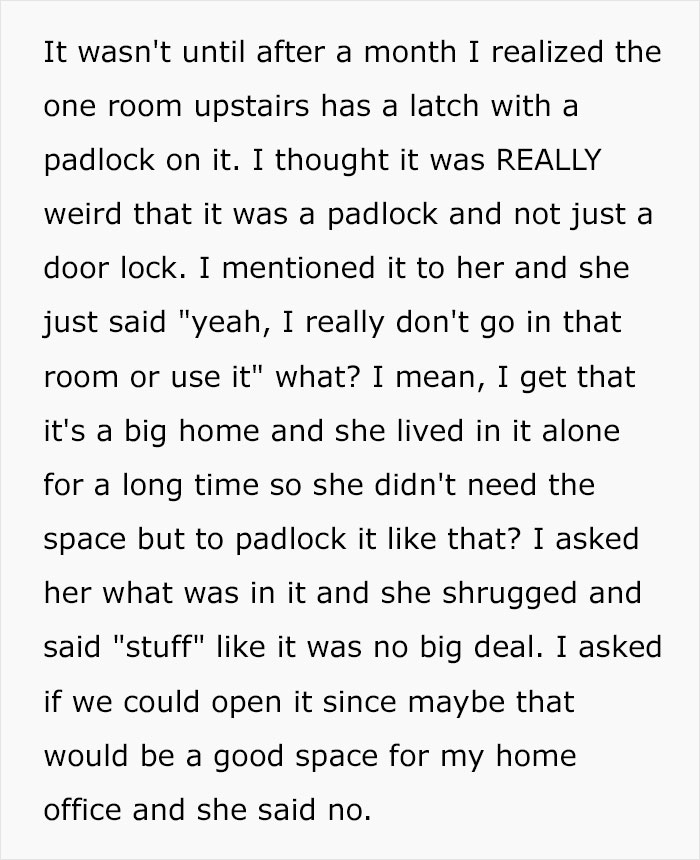
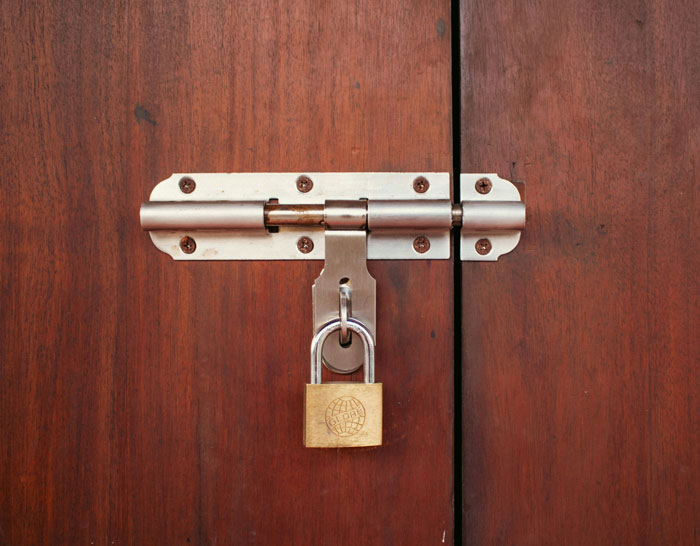
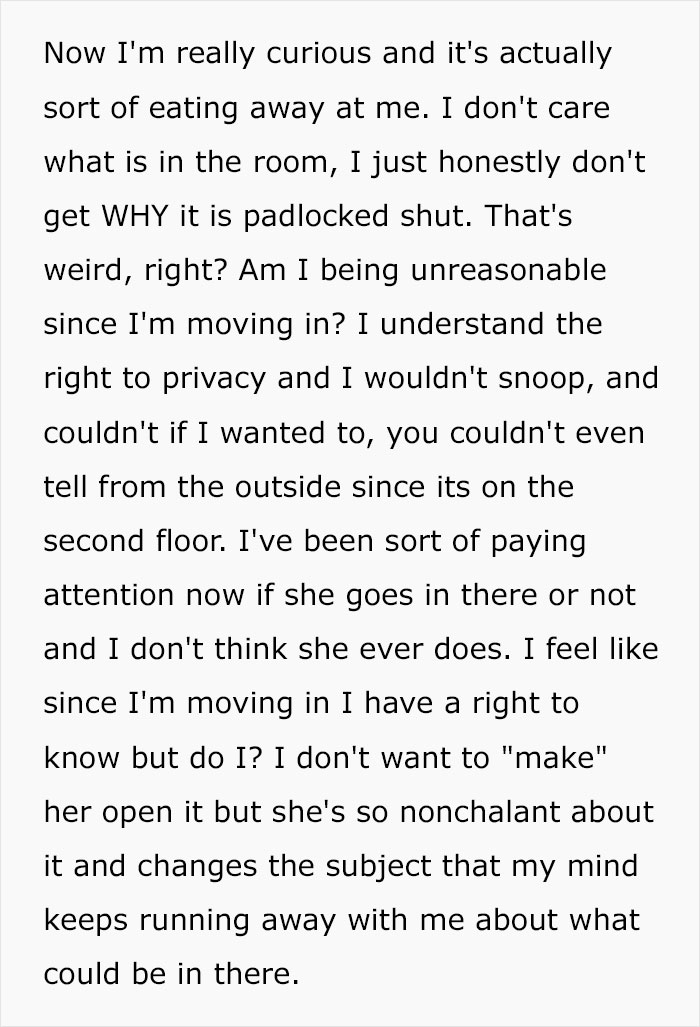
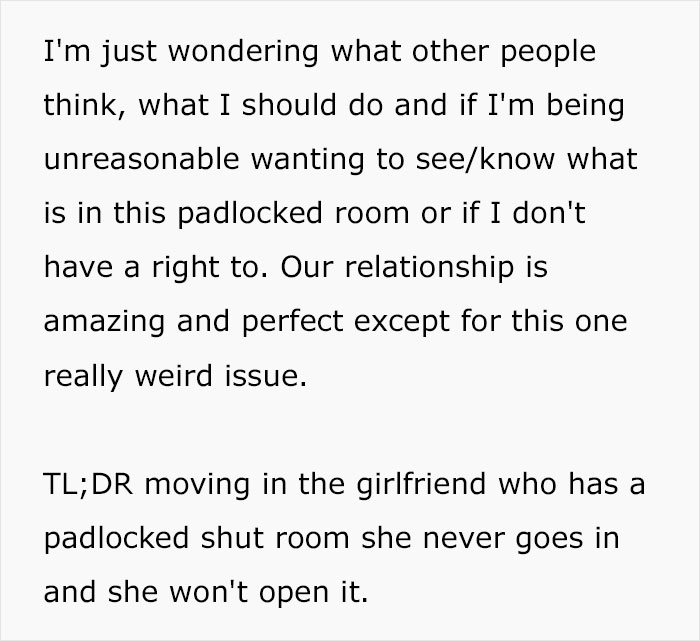
This happened to one guy after five years in an otherwise perfect relationship. When getting ready to move in with his girlfriend, he saw a big padlock on a spare room. She totally brushed it off, but the secrecy drove him crazy.
Spiraling, he turned to the internet for advice. Armed with a Reddit reality check, he dropped an ultimatum: he wouldn’t move in until she opened the door.
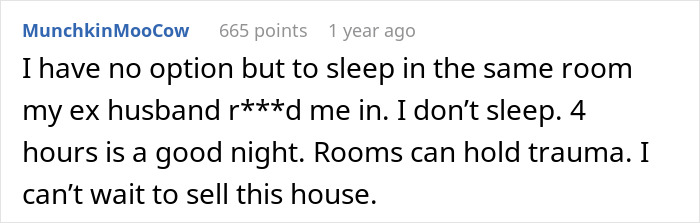
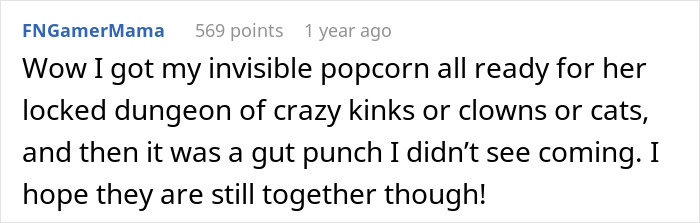
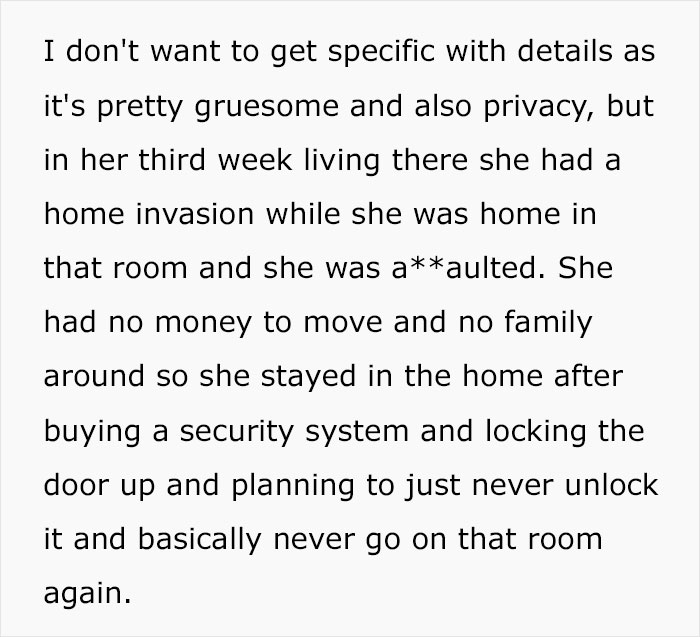
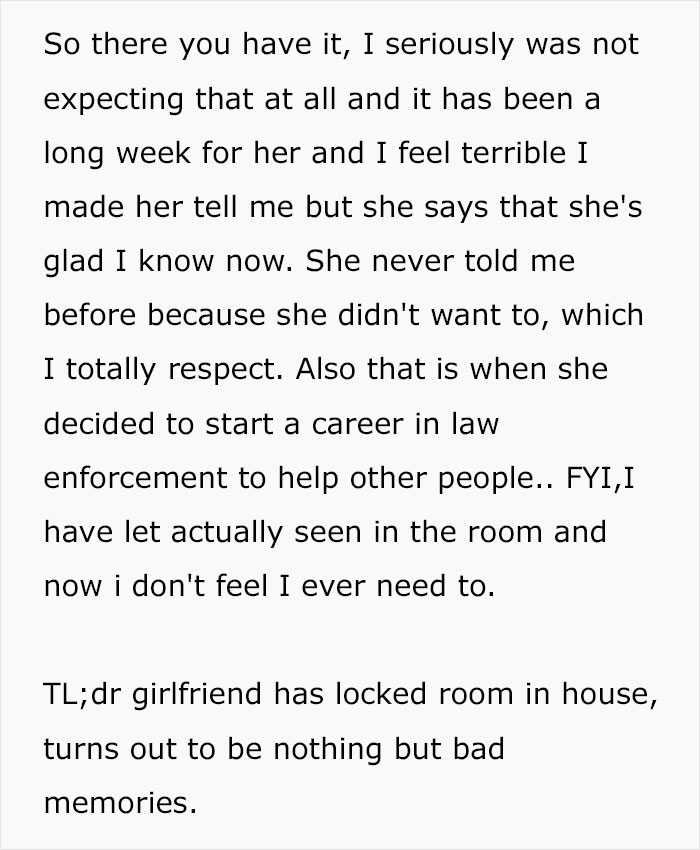
He braced himself for a sketchy double life. Instead, she completely broke down. What followed was a heartbreaking confession and some dark truths that she’d been literally locking away.
Image credits: The Yuri Arcurs Collection / Magnific (not the actual photo)
Image credits: Zoshua Colah / Unsplash (not the actual photo)
Image credits: Stockbusters / Magnific (not the actual photo)
Image credits: lockedroomsthrowaway
When it comes to keeping secrets, the idea of absolute transparency is a myth, even in long-term relationships.
Research from Dr. Michael Slepian at Columbia University shows 97% of people have at least one active secret at any given time, with the average person carrying around 13 secrets.
According to Elite Singles, 92% of people think honesty is key for a happy partnership, yet only 53% believe everything needs to be shared. That means 47% feel some stuff should stay private.
More than half of the respondents said they’d totally get it if their partner was hiding something, trusting there might be a good reason.
So while we think total honesty is what works best, most people understand the value of keeping a few things to themselves.
There can be several reasons for that.
“One of the primary reasons for keeping secrets in a relationship is self-protection… Your partner might be tempted to hide things about their past, their mistakes, or the personal habits they aren’t proud of for fear you might be turned off,” says social worker and psychotherapist Amy Morin.
She says feelings of shame may also cause a partner to keep certain behaviors hidden.
Many people also keep personal regrets, family issues, or minor anxieties to themselves simply because they feel they have a right to an inner world that belongs solely to them.
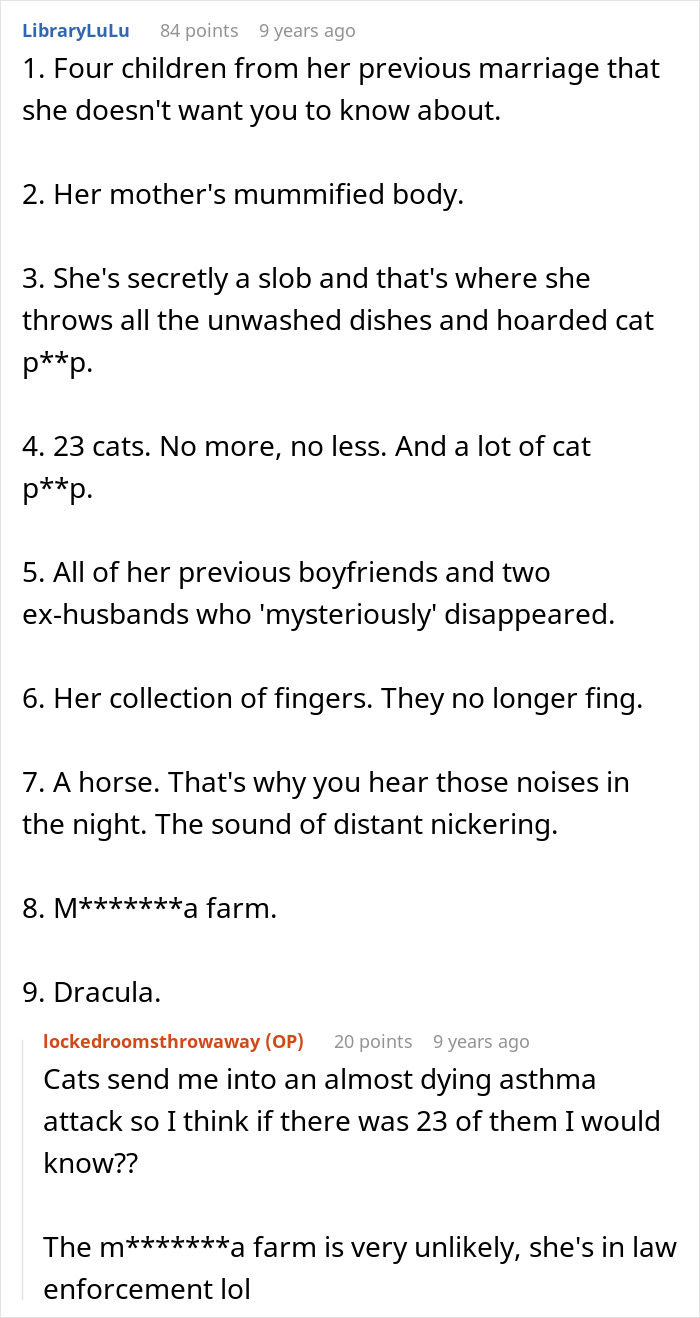
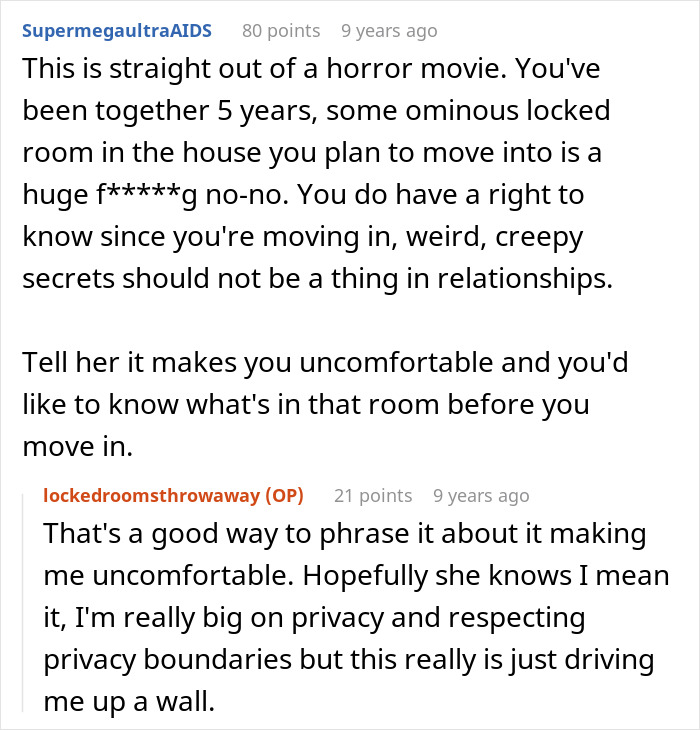
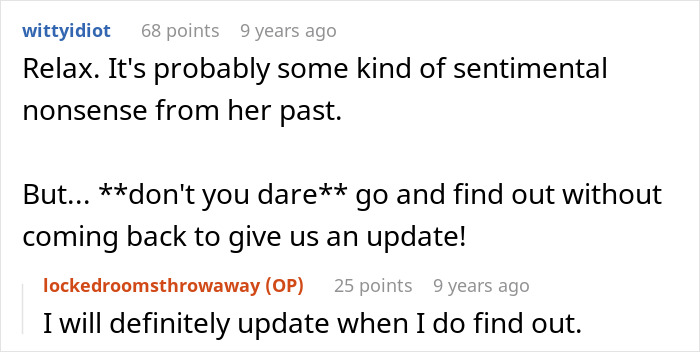
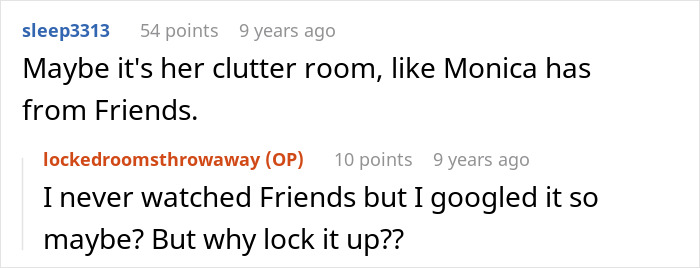
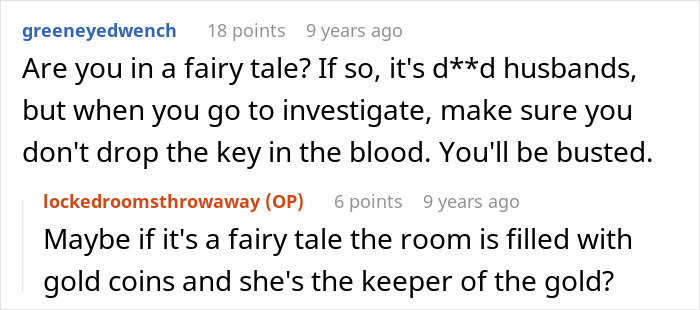
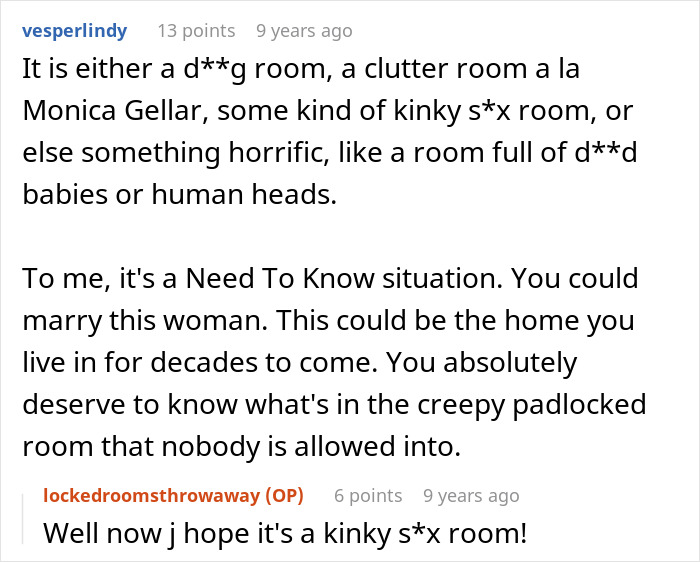
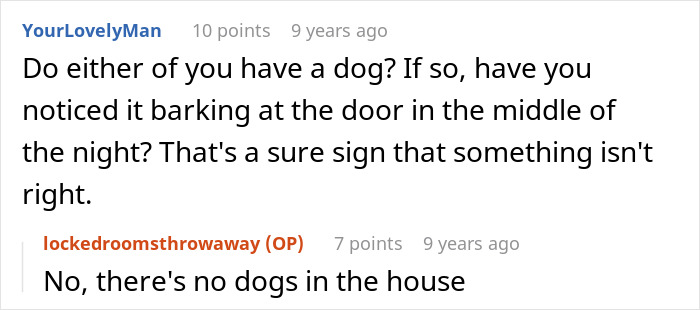
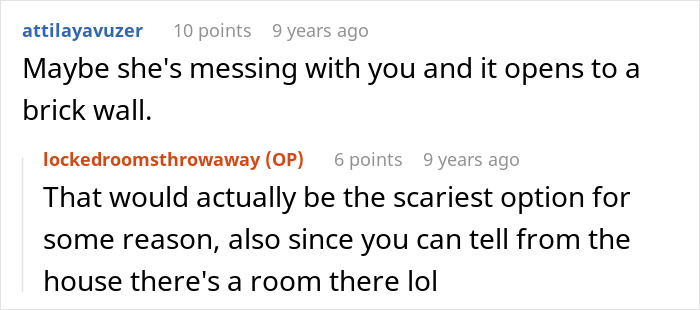
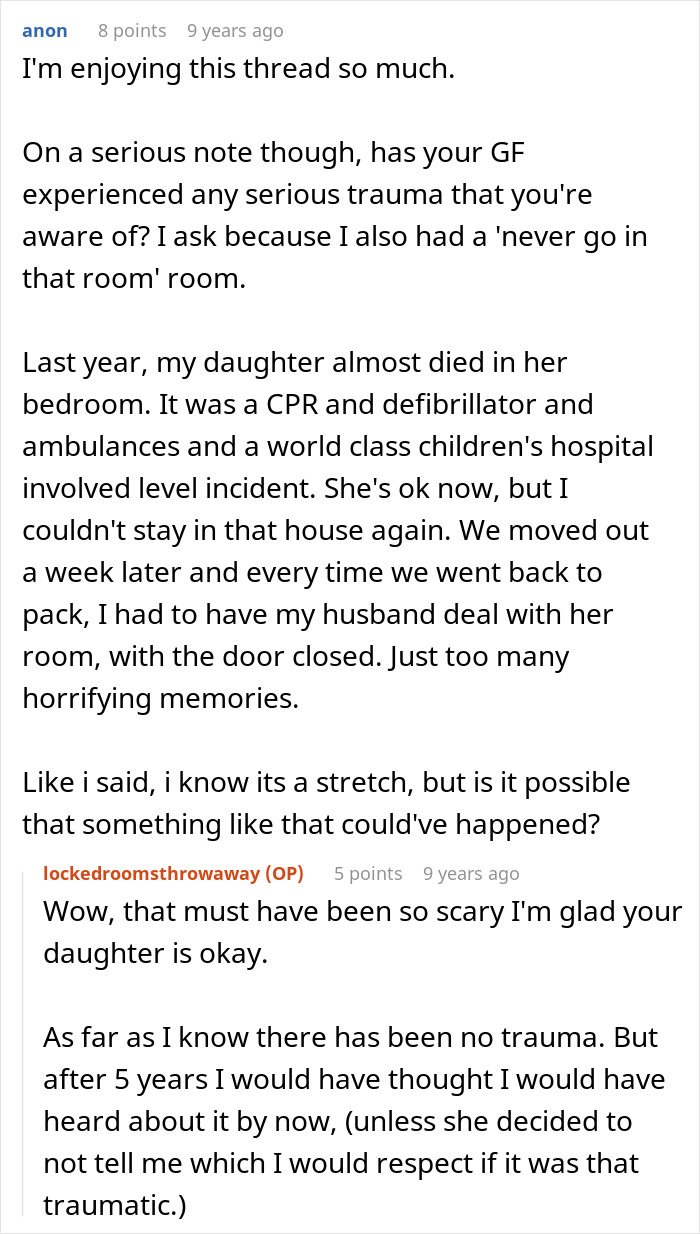
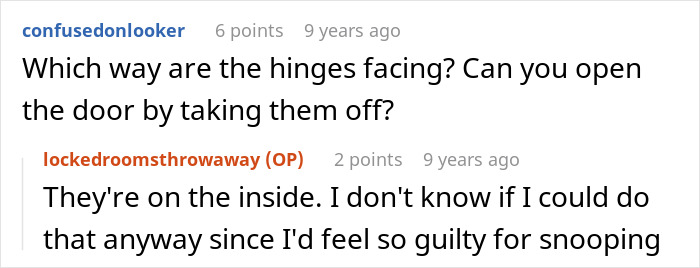
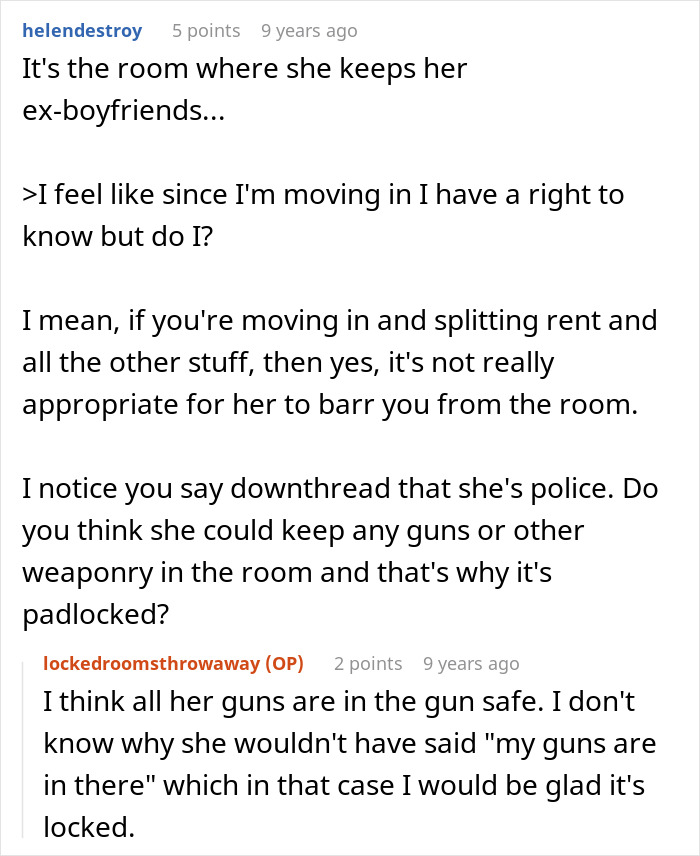
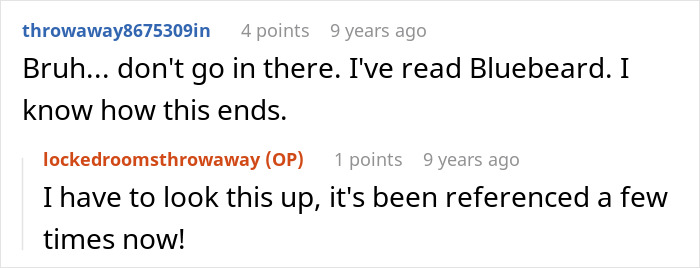

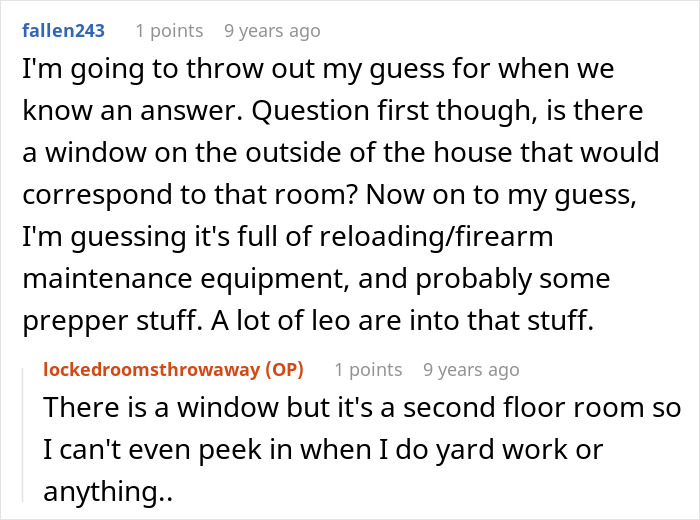
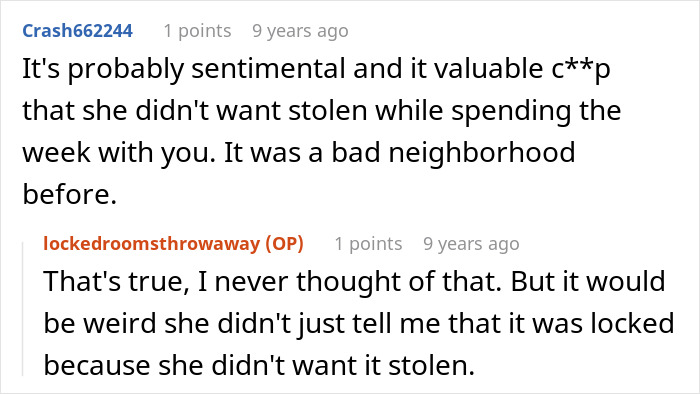


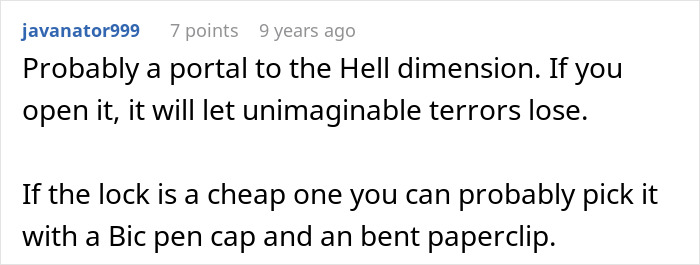


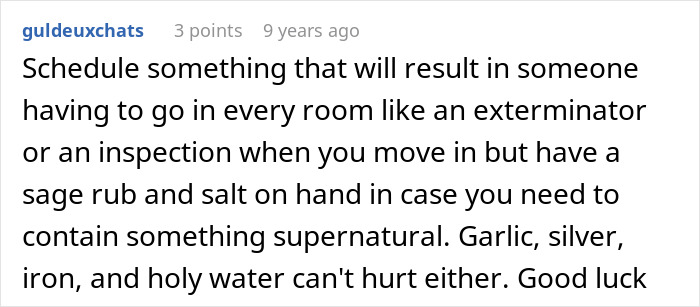


Image credits: Magnific (not the actual photo)
Image credits: Imkara Visual / Unsplash (not the actual photo)
Image credits: lockedroomsthrowaway
When someone lives through something terrifying, like an assault or someone breaking into their home, it does wild things to the brain. To a person looking from the outside, locking up a room and pretending it doesn’t exist seems bizarre. But psychologically, it’s a classic survival move.
When you go through a massive shock, your brain’s main job is just to keep you alive and functioning. To do that, it often uses a defense mechanism called compartmentalization.
Think of it like desktop folders on a computer. If a file is too heavy or complicated, your brain takes that memory and shoves it into a hidden folder.
Experts believe that survivors do this so they can go to work, date, laugh, and live a normal life without being constantly flooded by panic.
Putting a literal padlock on a door is just the physical version of what the brain is already doing inside. It’s about emotional survival.
“Many survivors grapple with the overwhelming reality that articulating their experiences makes the memories and re-lived experiences more emotionally palpable, forcing the individuals to confront the rawness of their wounds head-on,” says Richard Nicastro, PhD, betrayal trauma specialist.
Studies also show that many survivors stay quiet because they don’t want their past to become their entire identity.
They worry that if they tell their partner, the partner will look at them with sad, pitying eyes, treat them like they are fragile, or worse, blame them.
There’s a ton of research that proves that assault survivors often have symptoms associated with Post-Traumatic Stress Disorder (PTSD).
Stepping into a place where something terrible happened can instantly trigger strong reactions. Your heart might race, you could break out in a cold sweat, or even have a full panic attack. It’s like your mind thinks the threat is happening once more.
Someone might seem fine for a decade, convinced the traumatic event is buried deep. But it has a weird way of bubbling up.
Experts warn that untreated trauma can give you random flashbacks and panic attacks. You may also feel disconnected from reality, be super on edge, or struggle to sleep.
“People often try to forget traumatic experiences. They push these memories into a mental ‘black box’ that grows bigger over time. This happens both consciously and unconsciously as our mind tries to shield itself from overwhelming pain,” says Stacey Glasenapp, a therapist based in Wisconsin.
She believes that healing starts when you stop running from the pain.
The problem with avoiding things that scare you is that it actually backfires. Every time you dodge a trigger, your brain mistakenly thinks it just saved you from a real danger. This makes the fear grow stronger over time instead of fading away.
The same thing happens when you bottle up your emotions. Trying to push bad memories aside just to get through the day actually feeds them.
Research shows these buried feelings eventually explode when you least expect it, often turning into physical pain or sudden emotional breakdowns.
“The road to recovery starts with feeling safe, both outside and inside, before we can process any trauma. Proven therapies like Trauma-Focused Cognitive Behavioral Therapy work well with practices like yoga and mindfulness. These methods create strong foundations to recover. They recognize how trauma affects our biology and give us tools to regulate our nervous system and process emotions,” Glasenapp explains.
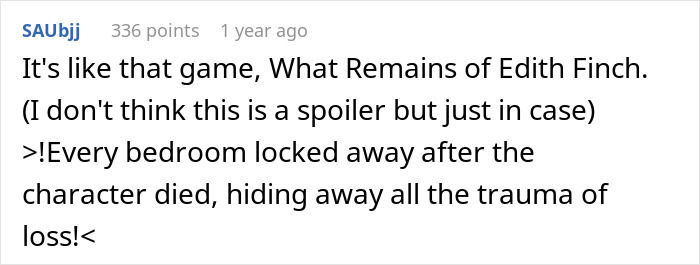
By demanding the truth, the author unknowingly created a safe space his girlfriend needed to finally share a decade of isolated pain.
If you suspect your partner is guarding a locked door of their own, don’t let curiosity lead the way… let empathy take the wheel instead.






By entering your email and clicking Subscribe, you're agreeing to let us send you customized marketing messages about us and our advertising partners. You are also agreeing to our Privacy Policy.
Thank you! You've successfully subscribed to newsletters!


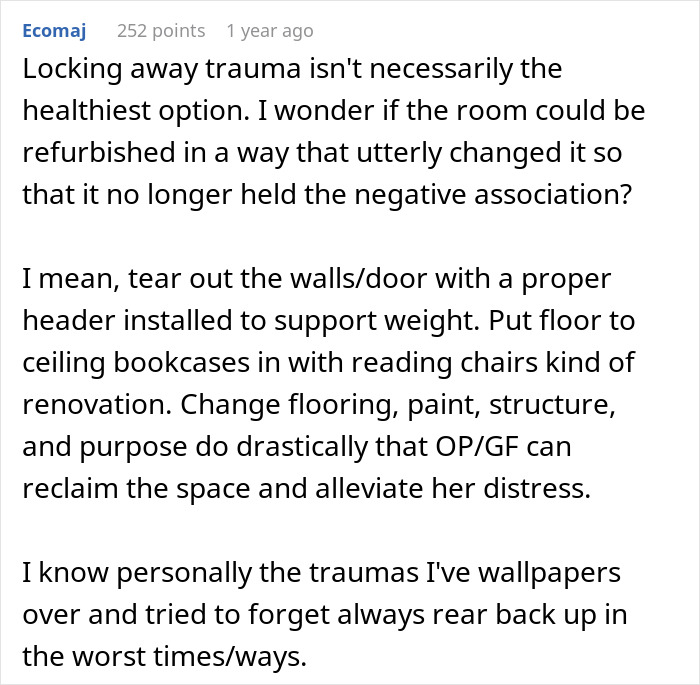
Well dàmn, was not ready for that. Amusing, intriguing little mystery and then BAM - hits you in the face with a brick labelled 'reality'.

I was going to say the body of the last person who kept going on about it.
Well dàmn, was not ready for that. Amusing, intriguing little mystery and then BAM - hits you in the face with a brick labelled 'reality'.
I was going to say the body of the last person who kept going on about it.













 No fees, cancel anytime







29
6