Get Premium
Dark mode theme is available exclusively for premium users. Learn more about the benefits of subscribing.
No fees, cancel anytime.

 Dark Mode Ad-Free Browsing Unlimited Content
 Ad-Free Browsing Unlimited Content Dark Mode
Join 1.2 million Panda readers who get the best art, memes, and fun stories every week!
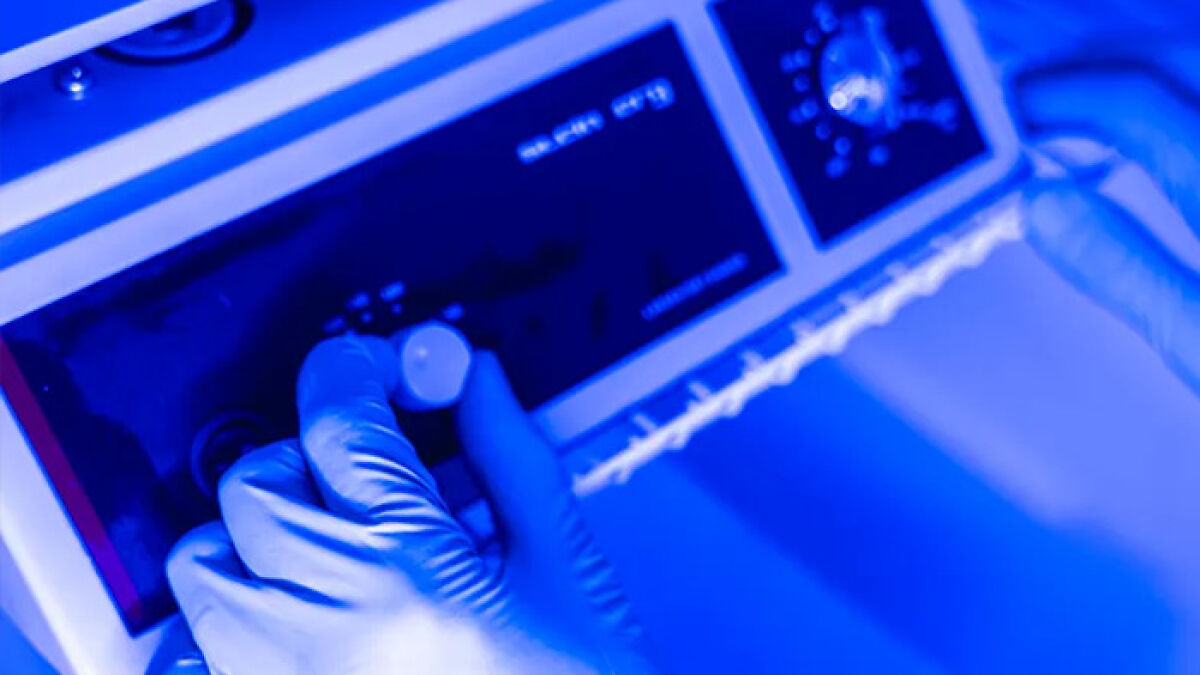
A high-tech cryonics start-upis offering to freeze patients in liquid nitrogen after death, one day bringing them back to life for a cost of $200,000 (£165,000).
Europe’s leading cryopreservation company, Tomorrow.Bio, claims that about 700 customers have joined the list of those waiting to be preserved, while six people and five pets already have undergone the procedure.
According to Fernando Azevedo Pinheiro, the company’s co-founder, many people are simply fascinated by the possibilities of future technology and experiences, such as space travel, while for others, the primary motivation is their fear of dying.
“The idea of extending life and having more time to achieve personal goals and dreams is incredibly appealing,” Pinheiro noted.
Image credits: Tomorrow Bio
According to Dr. Emil Kendziorra, Tomorrow.Bio’s co-founder and a former cancer researcher, their typical customer is between 30 and 40, healthy, working in technology, and more likely to be male than female.
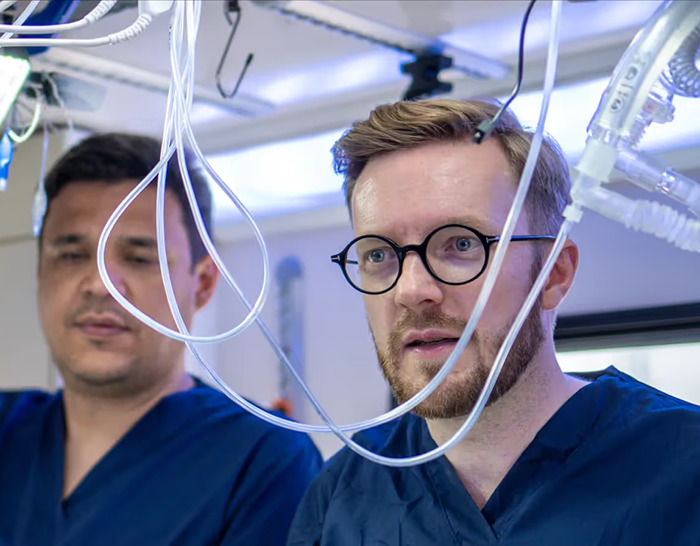
When a client dies, Tomorrow.Bio brings an ambulance to their location along with a medical team. They begin cooling the body using ice and water as quickly as possible while providing heart massages and oxygen to slow the effects of decomposition.
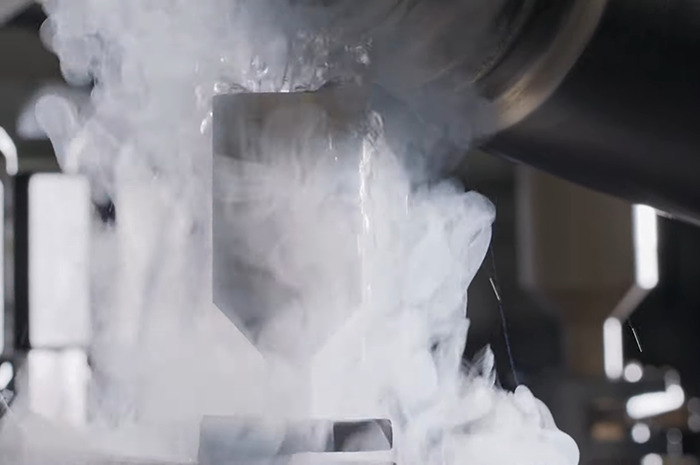
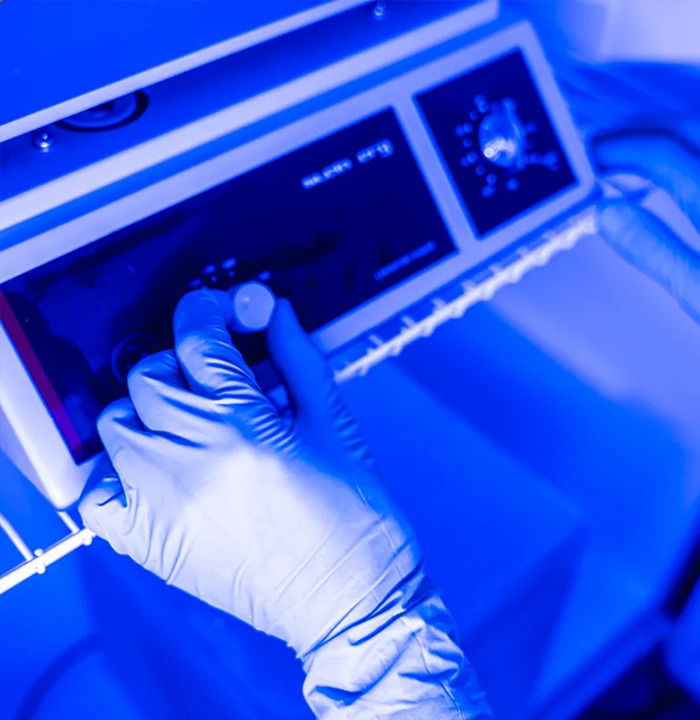
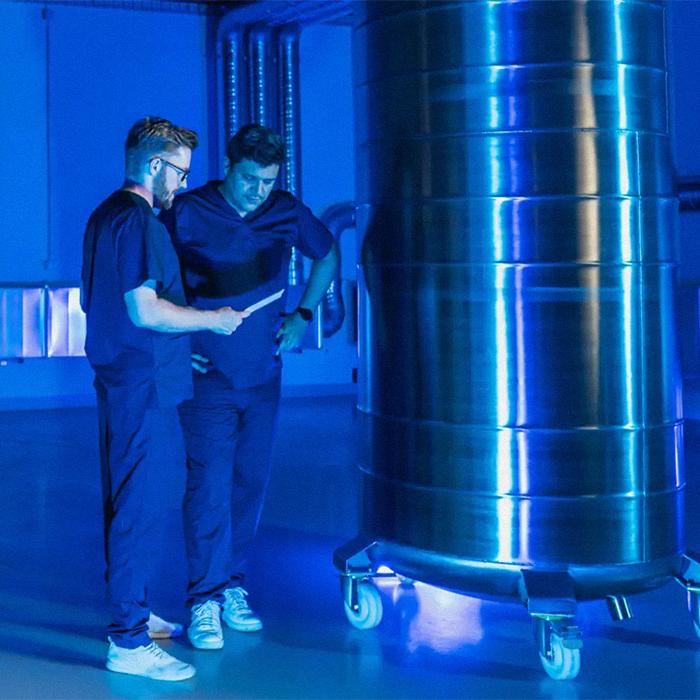
The body is then infused with a ‘cryoprotectant’ and transported to the facility in Switzerland, where it is stored in a pod surrounded by liquid nitrogen and cooled to around minus 200 degrees Celsius.
Image credits: Tomorrow Biostasis
Image credits: Tomorrow Bio
Image credits: Tomorrow Bio
“Once you go under zero degrees, you don’t want to freeze the body, you want to cryopreserve it. Otherwise, you would have ice crystals everywhere, and the tissue would get destroyed,” Kendziorra explained.
“To counteract that, you replace all the water, everything that could freeze in the body, with the cryoprotective agent,” he added.
Such a state of the body can then be kept for virtually indefinite timeframes.
“We want to build a world where people can choose how long they want to live – independent of where they are, who they are, and their financial resources,” Casali explained.
Image credits: Tomorrow Bio
The company’s co-founder, Dr. Emil Kendziorra, came up with the idea of Tomorrow.Bio by switching his focus to biostasis due to slow results in longevity science.
Alessia Casali from Tomorrow.Bio’s marketing team explained in an interview with Bored Panda that the company wants to spread awareness and inform people openly about the option of cryopreservation, offer a high-quality service, and conduct and fund research to further the field of cryonics.
Since there is still a lot of skepticism around the concept, the company created a blog and a video to try to debunk some of the myths about cryopreservation.
But outside of cryonic companies and cryonic-linked interest groups, many scientists are quite skeptical about cryonic methods.
Image credits: Tomorrow Bio
According to Clive Coen, professor of neuroscience at King’s College London, there is currently no proof that organisms with brain structures as complex as humans’ can successfully be restored, exposing the concept as ‘preposterous.’
The professor also has a very skeptical opinion that nanotechnology (carrying out elements of the process on a nanoscale) or connectomics (mapping the brain’s neurons) will help with the current gap between theoretical biology and reality.
Holger Reinsch, head of the Competence Center for Life Sciences at ILK Dresden, an independent research institute with a focus on refrigeration technology, has similar thoughts.
“Cryonics uses scientific methods but is not science itself because it deals with problems which science has no solution for. There are many challenges which are not only of a scientific nature but also ethical,” he shared with Bored Panda.
Reinsch explained that with the current state of science, there is no way to freeze a human body without major damage.
Image credits: Tomorrow Bio
Image credits: Tomorrow Bio
“Cryonics providers use the perfusion method but the human body is much too large and far too little vascularized for an adequate distribution of the required CPA as well as for cooling it down fast enough,” he explained.
According to Reinsch, there are clear physical limits that cannot be overcome with this method.
“Ice will form inside the tissue and the organs during cooling and brings you back as mush after thawing (imagine, like with frozen strawberries),” he noted.
And yet, during an experiment conducted almost a decade ago, some scientists said they were able to cryopreserve the brain of a rabbit and recover it in near-perfect condition.
Another promising example was announced by researchers at China’s Fudan University. Using a new technique, they froze human brain tissue, and it regained normal function after thawing.
Image credits: Tomorrow Bio
Reinsch explained that, for instance, in Germany, the freezing of a living human body is strictly forbidden (it’s considered murder).
“The process of cryonics can only start after death has been confirmed by a doctor. But as we know from first aid, the brain dies irreversibly within 10 minutes after death,” he said.
Reinsch gave the example of the provider Tomorrow.Bio, with only two rescue teams for all of Europe to drive by car and bring the body to Switzerland.
“Before a team of the cryonic provider will be able to start with the procedure, the person will be dead for hours,” he said.
“Seen this way, resurrection would not be the task of a future scientist but solely for God, I guess,” Reinsch added.
And yet, no matter the skepticism, Tomorrow.Bio not only strongly believes in its vision but also has plans to expand to the continental United States by 2025.
“I’m kind of curious to see what the future would be like and, in general, I like life,” shared Becca Ziegler, who’s only 24 years old yet decided to give it a shot as one of Tomorrow.Bio’s clients.
“In some ways it’s weird,” the young Californian said. “But on the other hand, the alternative is to be put in a box in the ground and get eaten by worms,” she added.
Image credits: Tomorrow Bio

Science fiction author Larry Niven wrote a series of short stories about 'corpcicles'. He speculates about these issues. Definitely worth a read.

Specifically, "A World Out of Time." Read it. If your attention span is degraded like mine, see https://en.wikipedia.org/wiki/A_World_Out_of_Time
Load More Replies...

First, I want to see a mammal (preferably a larger one, with a body weight of ~50-100 kg, and not just a mouse) that got cryonically preserved and, let's say, after a month revived. That supposed to be easier than a human, as the preservation prpocess may start immediately after death.
Heck, lets just see them do it on a frog or field mouse just to prove its even feasible to pursue a larger animal...
Load More Replies... Science fiction author Larry Niven wrote a series of short stories about 'corpcicles'. He speculates about these issues. Definitely worth a read.
Specifically, "A World Out of Time." Read it. If your attention span is degraded like mine, see https://en.wikipedia.org/wiki/A_World_Out_of_Time
Load More Replies... First, I want to see a mammal (preferably a larger one, with a body weight of ~50-100 kg, and not just a mouse) that got cryonically preserved and, let's say, after a month revived. That supposed to be easier than a human, as the preservation prpocess may start immediately after death.
Heck, lets just see them do it on a frog or field mouse just to prove its even feasible to pursue a larger animal...
Load More Replies...





























 No fees, cancel anytime

























19
24