Get Premium
Dark mode theme is available exclusively for premium users. Learn more about the benefits of subscribing.
No fees, cancel anytime.

 Dark Mode Ad-Free Browsing Unlimited Content
 Ad-Free Browsing Unlimited Content Dark Mode
Join 1.2 million Panda readers who get the best art, memes, and fun stories every week!
Before short-form videos and endless scrolling took over our feeds, there was a wonderfully chaotic corner of the internet called Tumblr. The platform had perfected its own unique brand of humor, where a simple observation could turn into an unexpectedly hilarious conversation and one random post could send you down a rabbit hole for hours. From clever jokes to wonderfully bizarre exchanges, Tumblr gave us plenty of unforgettable gems over the years.
Today, we’ve rounded up some of the funniest Tumblr posts that deserve another moment in the spotlight. Some are clever, some are completely unhinged, and others somehow get even funnier every time you read them. Keep scrolling, Pandas, to revisit the kind of humor that made Tumblr impossible to explain—and even harder to stop reading.
This post may include affiliate links.
Social media has become such a huge part of everyday life that it's hard to imagine a world without it. In 2025, more than 5.4 billion people worldwide were estimated to use social media—well over half the global population sharing photos, opinions, jokes, news, and occasionally far too much information about their breakfast. But social media didn't begin with smartphones, influencers, or endlessly scrolling feeds. Its roots stretch back to the early days of computer networking, when people looked for ways to connect through glowing, text-only screens.
In 1978, computerized bulletin board systems, or BBSs, allowed users to exchange files and post messages through dial-up modems. Usenet soon expanded the idea through categorized discussion groups, laying the groundwork for the online communities and comment threads we know today. A major step toward modern social networking came in 1997 with SixDegrees, which allowed people to create profiles, build friend lists, and explore connections between users.
The early 2000s were when social networking really began moving into the mainstream. Friendster launched in 2002 and helped prove that people were interested in mapping their real-world friendships online, while platforms such as MySpace turned personal profiles into creative spaces where users could customize nearly everything. As Thomas Ward explores in A History of Social Media: From Analog Gatherings to Algorithmic Tsunamis, SixDegrees arrived before the technology and internet access needed to support its ambitions, while Friendster eventually struggled under the weight of its own rapid growth.
MySpace, launched in 2003, became particularly popular with young users who could personalize their pages with custom HTML, backgrounds, music, and just about every other design choice imaginable. Then, in 2004, Mark Zuckerberg launched Facebook, initially for Harvard students. Its cleaner design, real-name profiles, and focus on connecting people through existing networks represented a very different approach—and eventually helped turn social networking into a truly global habit.
As internet connections became faster, social media moved beyond static profiles and began happening in real time. YouTube launched in 2005 and gave everyday users an unprecedented way to upload and share videos with audiences worldwide. Suddenly, you didn't need a television network or production company to broadcast yourself; you just needed an internet connection and something people might want to watch.
A year later, Twitter (now known as X) introduced microblogging, originally limiting posts to just 140 characters. The format encouraged users to share thoughts, news, reactions, and jokes in quick, bite-sized updates, helping create the fast-moving online conversation we now take for granted. Social media increasingly became a place where breaking news could spread almost instantly, often through the people witnessing events themselves.
Then, in February 2007, 21-year-old developer David Karp launched Tumblr from his mother's apartment. The platform carved out a unique space between traditional blogging and the shorter, faster style of microblogging. Tumblr made it easy for users to share text posts, photographs, quotes, links, audio, videos, and more from a simple dashboard. Unlike the heavily customized chaos of MySpace or Facebook's increasingly structured social network, Tumblr emphasized creative expression and the content itself. Its chronological feed also let users follow people based on shared interests rather than real-world friendships. This helped the platform become a home for artists, writers, photographers, meme-makers, and communities that often didn't quite fit anywhere else online.
One feature in particular helped define the Tumblr experience: the “reblog” button. Users could share someone else's post directly onto their own blog, add a comment, and then pass it along to their followers, creating long chains of reactions, jokes, artwork, and conversations. A single post could travel across thousands of blogs, picking up new commentary along the way. This made Tumblr an especially important space for fandom culture, where communities built around television shows, films, books, anime, music, and celebrities could create and share content almost continuously. Over time, Tumblr also became a major incubator for internet humor, visual aesthetics, online language, and conversations around identity and social issues. Many trends and jokes that later spread across the wider internet either began on Tumblr or were shaped by its distinctive culture.

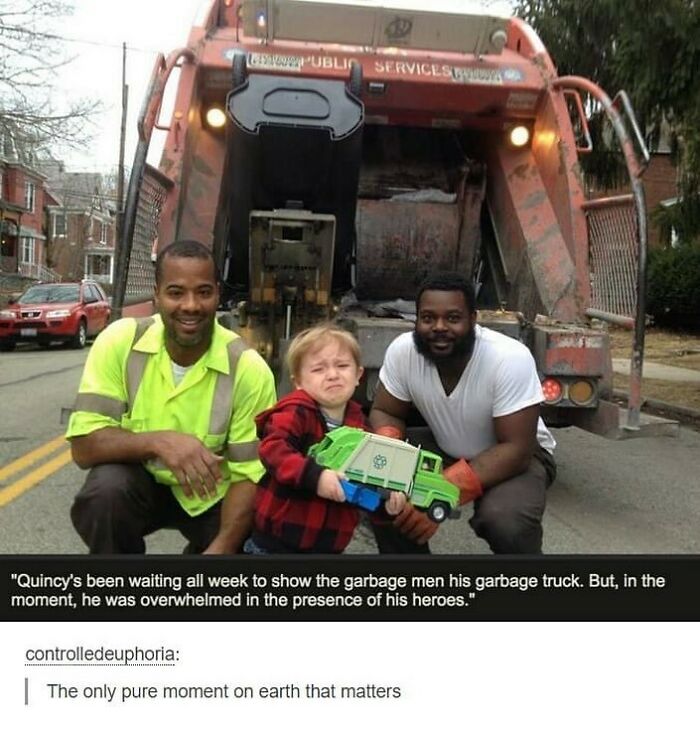
I love that they took the time to talk to him and have their photo taken with him.
I think that the cool thing about humans is, that if we want to, we can make ourselves wings and horns and etc. Some of it even functional. And even if we dont make ourselves the horns and wings, we can still immagine that we have them and other humans sometimes even play along with us. And I think thats neat.
Tumblr's cultural influence eventually caught the attention of much bigger companies. In 2013, Yahoo acquired the platform for around $1.1 billion under CEO Marissa Mayer. However, bringing Tumblr's highly creative and often fiercely independent community into a large corporate structure proved complicated. Finding ways to monetize the platform without alienating users became a constant challenge. One of its biggest turning points came in late 2018, when Tumblr introduced a broad ban on adult content following safety and policy controversies. The decision was deeply unpopular with many users, including artists and communities who had relied on the platform as a space for creative expression. Many people left or reduced their activity, marking a major shift in the site's culture and contributing to a significant decline in its traffic.

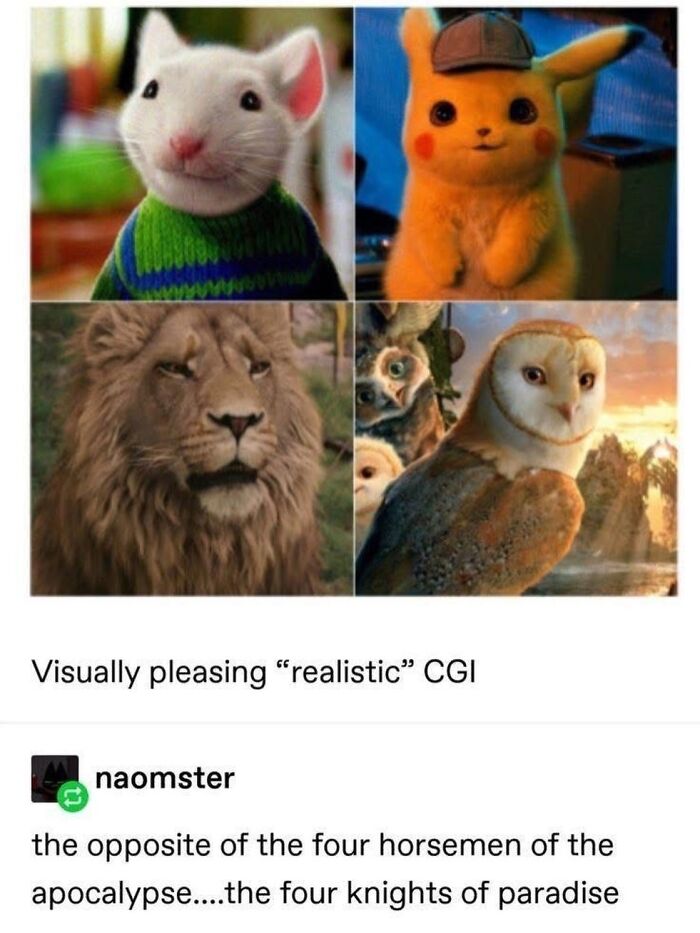
Oh, what a beautiful bird, I wish to give an owl head scratches at least once in my life, someday

While Tumblr navigated these changes, the rest of social media changed just as quickly. The rise of smartphones pushed platforms toward mobile-first experiences, with photos and videos becoming increasingly central to how people interacted online. Instagram and Pinterest, both launched in 2010, made visual sharing and curation a major part of social media, while Snapchat attracted younger users with disappearing messages and casual, less polished content.
By the late 2010s, TikTok helped transform the entire formula again. Instead of primarily showing people content from friends and accounts they had chosen to follow, its powerful recommendation system increasingly focused on what users appeared to be interested in. This shift to an algorithm-driven feed of endless short videos changed how people discovered content and made scrolling feel like a hobby on its own.
Today, social media is a massive and sometimes overwhelming part of modern life. It shapes politics, shopping, entertainment, friendships, careers, news, and how we communicate with people halfway across the world. The landscape may have changed dramatically since the days of dial-up bulletin boards, but one thing has remained surprisingly consistent: people still go online to share ideas, find communities, make each other laugh, and occasionally post things that make absolutely no sense outside their original context.
And that's part of what makes collections like today's Tumblr posts so entertaining. They're little snapshots of the wonderfully strange side of the internet, capturing thoughts, jokes, observations, and moments that could probably only exist online. Keep scrolling, Pandas, and let us know—which one of these Tumblr posts made you laugh, left you confused, or felt just a little too relatable?


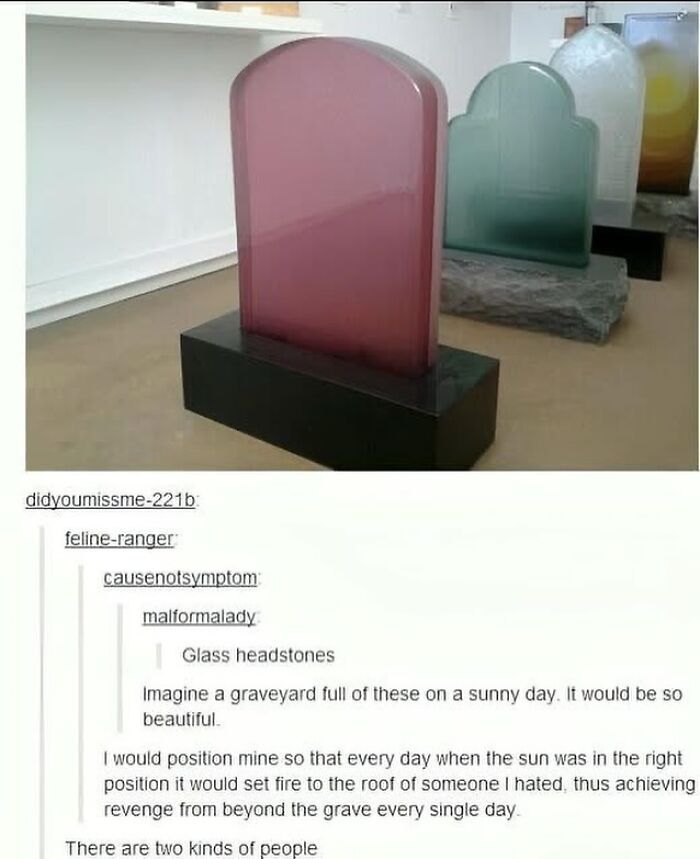
I'm both kinds. I think it would be beautiful to know the roof of someone I hated was burning.

Oooh, cool idea. Definitely going to tell my better half to keep her phone ready to record whenever I have a loud dream, should be hilarious.

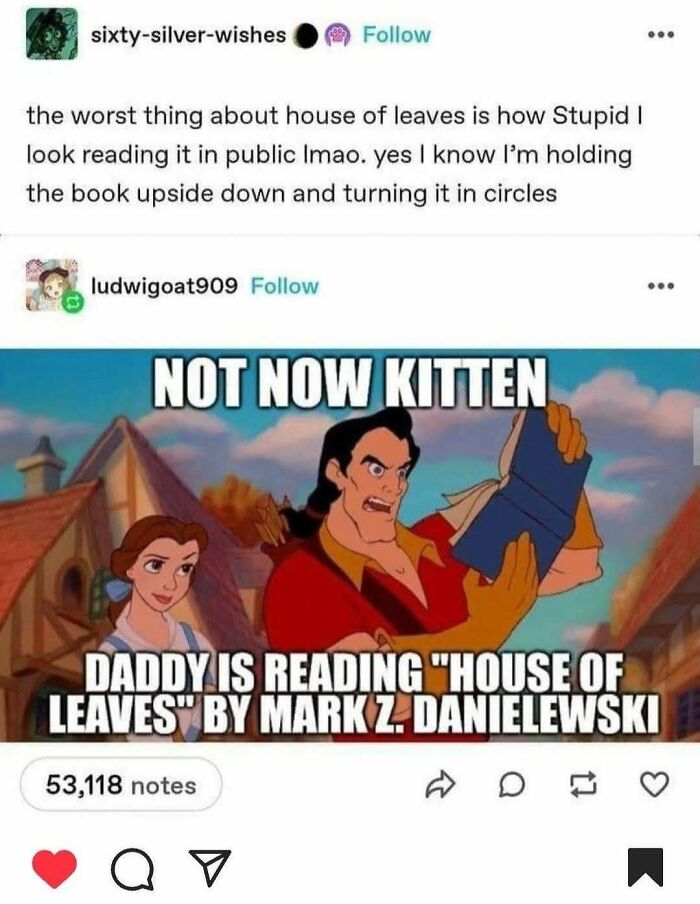
So having read House of Leaves I feel like I need to explain this meme. It’s one of the original liminal horror stories. The main story is about a man who finds that his house is larger on the inside than it is on the outside, and what happens as he tries to explore and explain this space. But it’s told through 3 different people’s perspectives, each at different times and in different places. Included in this are letters and notes from people and books inserted throughout the writing, and they’re quite often in obscure places, so you end up having to turn the book around to read them. It’s meant to be read multiple times, so that you can focus on one person’s perspective instead of being pulled this way and that by different notes or jarring perspectives.

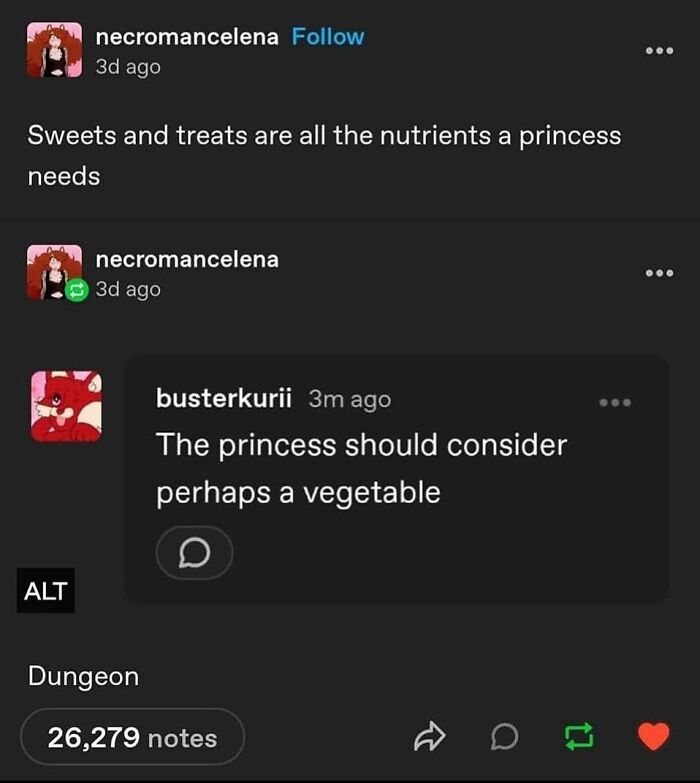
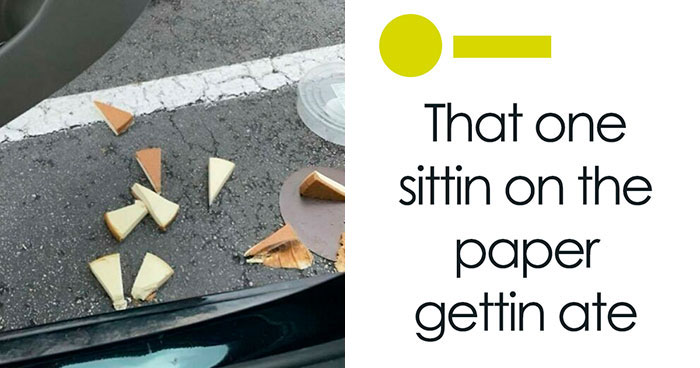
Princess will need a crown, and a filling, and a bridge, maybe even a denture
















 No fees, cancel anytime