Get Premium
Dark mode theme is available exclusively for premium users. Learn more about the benefits of subscribing.
No fees, cancel anytime.

 Dark Mode Ad-Free Browsing Unlimited Content
 Ad-Free Browsing Unlimited Content Dark Mode
Join 1.2 million Panda readers who get the best art, memes, and fun stories every week!
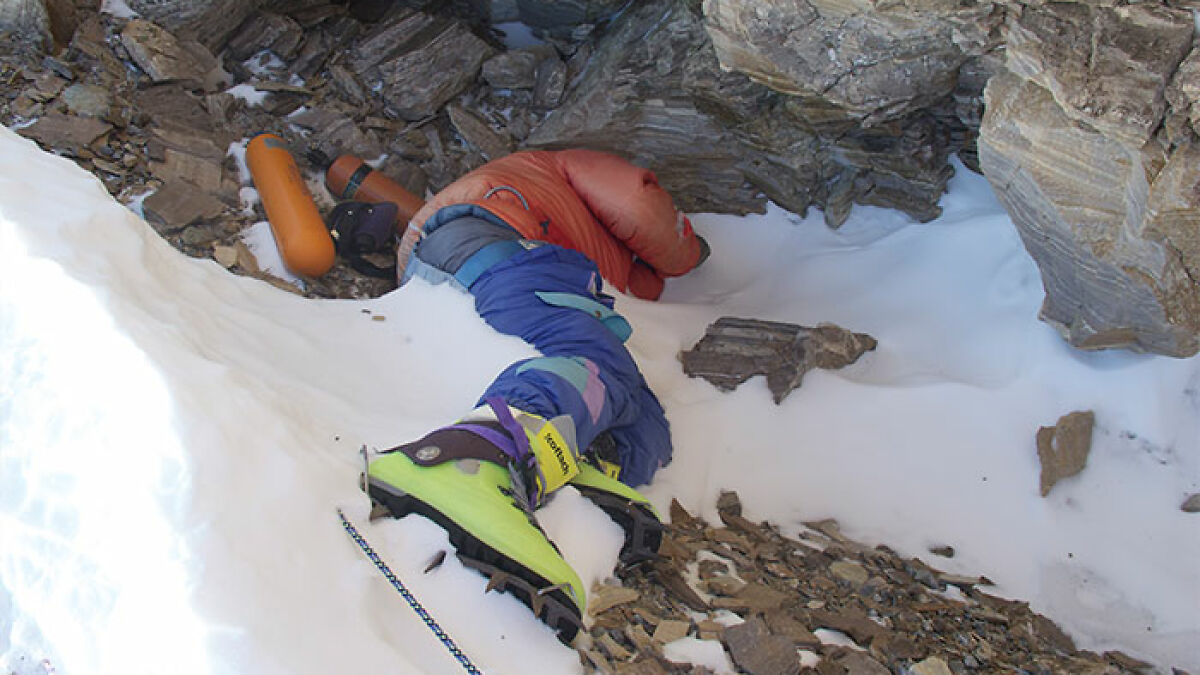
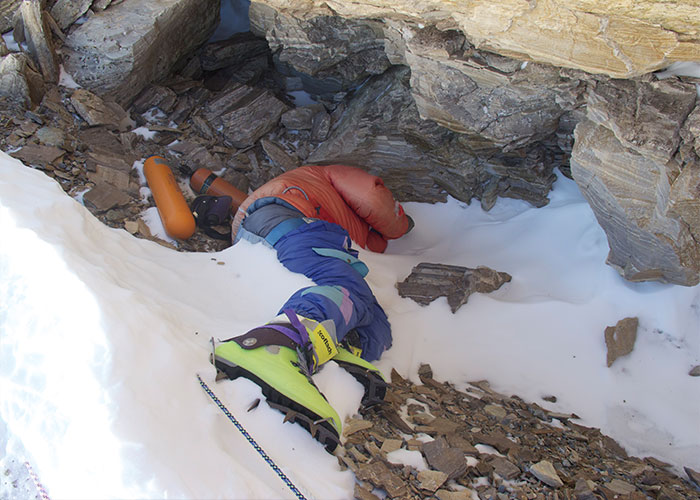
After thirty years, the family of “Green Boots,” the man who perished in a small limestone cave near the top of Mount Everest, will finally get closure.
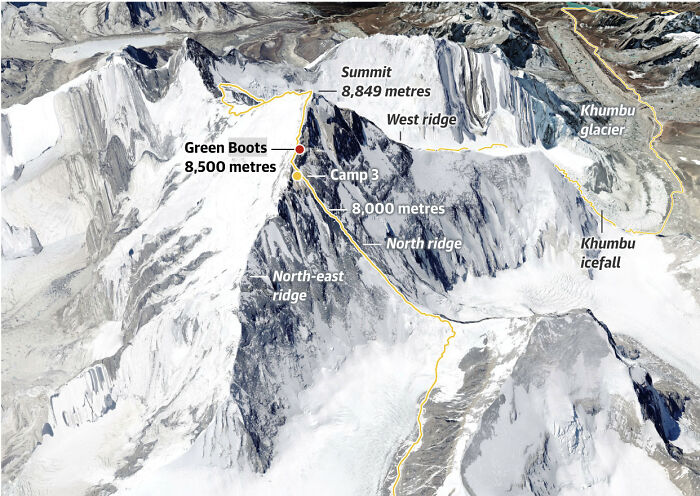
Green Boots set out to climb the tallest mountain in the world in 1996. His body was found 350 metres (1,150 feet) from the summit, where it remains today, about 8,500 metres (27,900 feet) above sea level.
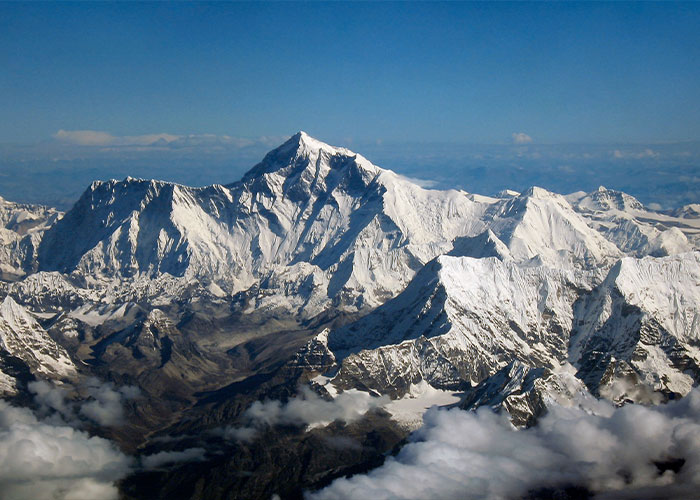
Image credits: shrimpo1967 / Wikipedia
Trigger warning: This article contains details that some readers may find distressing.
The man is believed to have succumbed to temperatures of -30°C (-22°F) and extremely strong winds during a severe blizzard that year.
For decades, the body of Green Boots, named after his lime-colored Koflach boots, had been linked to Indian climber Tsewang Paljor.
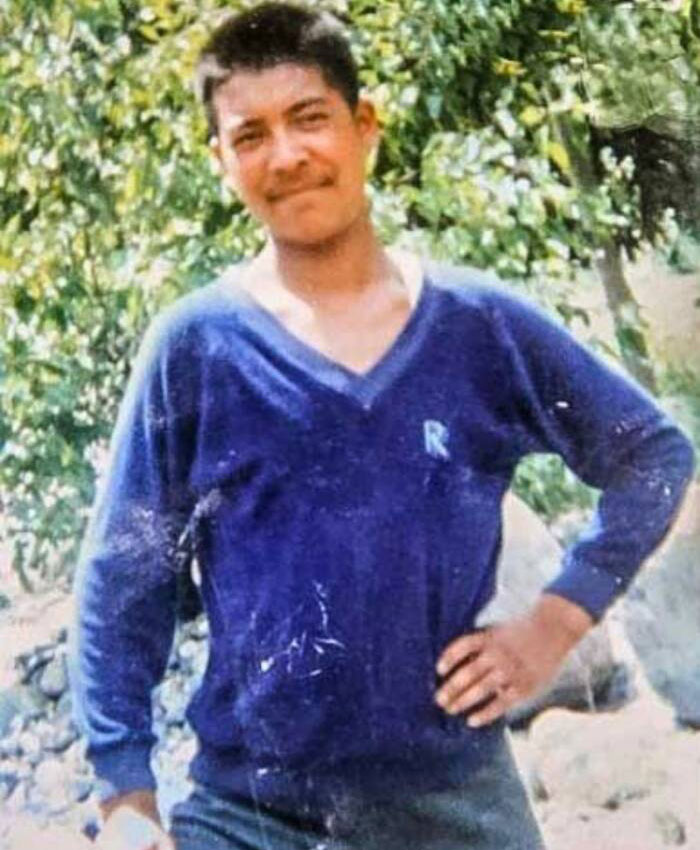
However, Indian authorities have now challenged that theory, with a recovery plan for the deceased climber’s body identifying him as Dorje Morup.
Image credits: Maxwelljo40 / Wikipedia
Morup, also an Indian national, had taken on the challenge of climbing Everest on the same day as Paljor. Both lost their lives during the expedition, along with a third climber.
The three were part of an Indo-Tibetan Border Police (ITBP) expedition attempting a historic first Indian ascent of Everest from the north side.
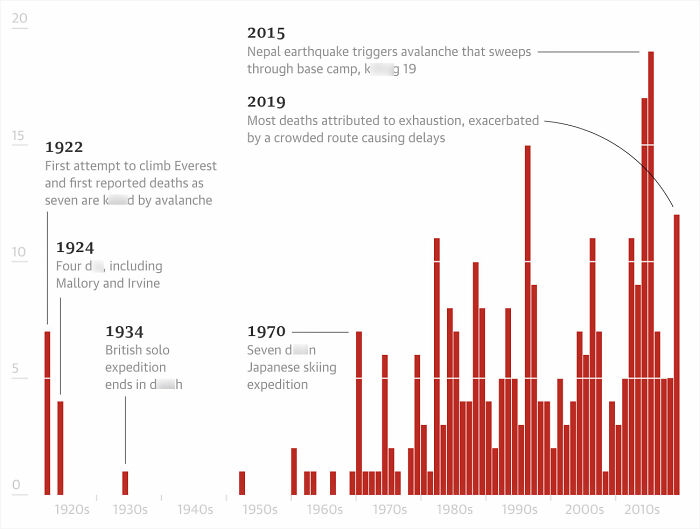
During that climbing season, 12 people perished trying to reach the summit, making it the most fatal season on Mount Everest at the time.
The body recovery operation, which authorities hope will solve the mystery of Green Boots’ identity, is expected to cost $150,000.
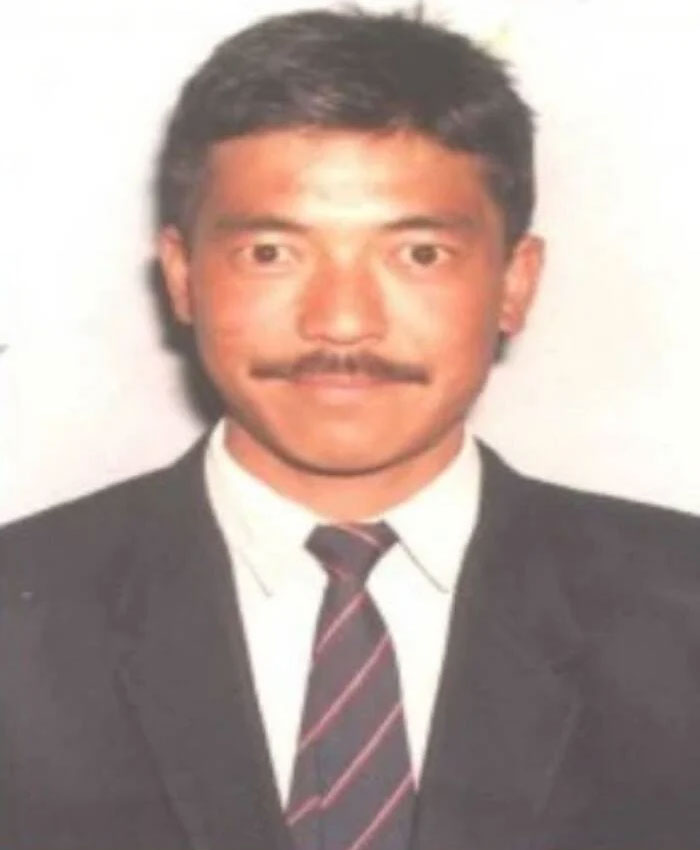
Image credits: Find a Grave
According to The Guardian, which saw the recovery plan, the expedition will be carried out by a specialist team of at least six Sherpas who have summited Everest multiple times.
The Sherpas, a Tibetan ethnic group native to the mountainous regions of Nepal, must provide evidence of the mission and transport the body to Delhi by October.
The Indian government prepared a tender document describing the operation to recover Green Boots’ body and asking companies to bid for the mission.
Image credits: Find a Grave
The document explicitly identifies Morup as the climber, per The Guardian.
The identification of Morup “has been confirmed through a prior verification process conducted under an earlier tender/technical assessment”, the document states, without providing further details.
The document does not clarify why authorities want Green Boots’ body brought down.
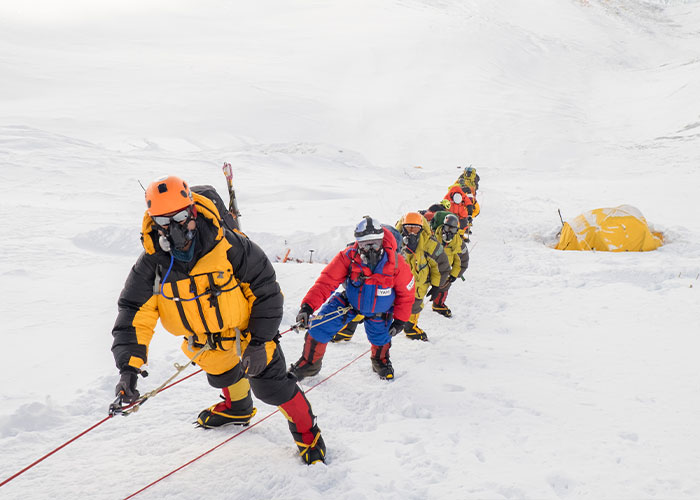
Image credits: Westend61 / Getty
Tshiring Jangbu, the founder of Everest Sherpa Expedition who has been involved in numerous body recovery efforts, said the operation will be extremely dangerous, even for a specialized team.
He explained that decision-making above 8,000 metres is challenging, as rescuers have only a third of the oxygen available at sea level. Helicopters cannot safely fly at such high altitudes.
Making the recovery operation even more complicated is the weight of Green Boots; a frozen body in climbing gear can reportedly weigh up to 200 kg (440 pounds).
Image credits: Guardian graphic / Google Earth
According to Jangbu, climbers may have to make the difficult decision to amputate a frozen limb that cannot be bent.
“There is no choice to do another way,” he said.
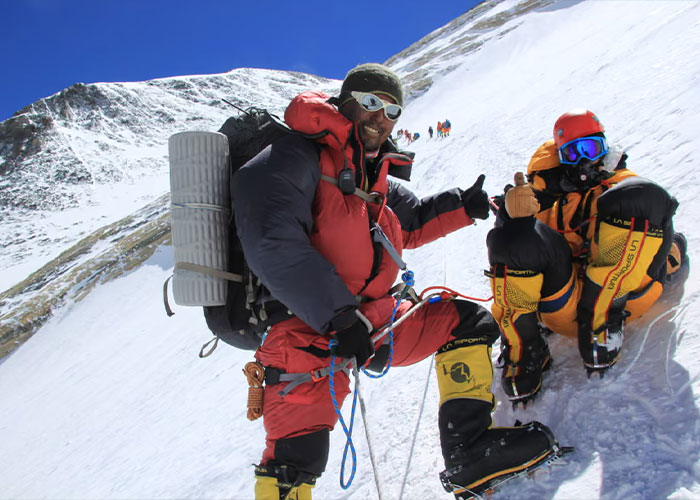
Alan Arnette, US mountaineer and prominent Everest blogger, explained that this decision is especially difficult for the Sherpas, who are predominantly Buddhist and don’t believe in desecrating bodies.
“I’m glad that they’re bringing him down [but] it’s going to be a gruesome task,” Arnette said.
The mountaineer added, “That’s kind of a mystery to me, why all of a sudden the identity has changed.”
Weather conditions could further complicate the operation to bring Green Boots’ body home, as heavier snowfall typically occurs between June and October, according to Nepal-based company Makalu Adventure.
The company estimates the mission could take a total of 40 days.
Guy Cotter, a New Zealand climber who coordinated the retrieval of a climber who perished on Everest the same year as Morup and Paljor, highlighted the moral dilemma posed by such treacherous missions.
“It would have been a good thing to have done a long time before now,” Cotter said.
“For families to have a body returned from the mountain brings closure, as long as it’s not putting other people at undue risk. There have been situations with body recoveries where more people have d*ed. It’s a very thin line.”
An estimated 200 bodies remain on Everest.
Image credits: Guardian graphic
2024 was the first year Nepali authorities set a goal of retrieving five bodies from the so-called “d*ath zone,” above an altitude of 8,000 meters, where wind speeds often exceed 100 km/h.
That year, rescuers retrieved four bodies after a 54-day operation that concluded in June.
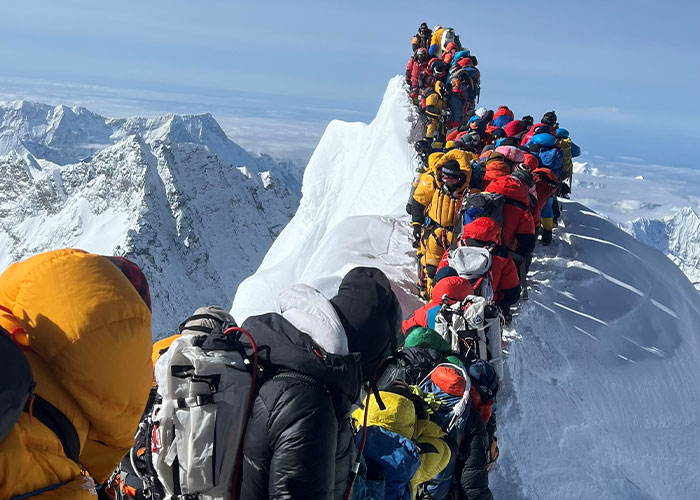
Image credits: picture alliance / Getty
Many people cannot afford to retrieve the bodies of relatives who have perished on the mountain.
In some cases, families have the financial means to cover the significant costs, but private companies refuse to retrieve the bodies due to the dangerous conditions at high altitude, including altitude sickness, strong winds, and avalanche hazards.
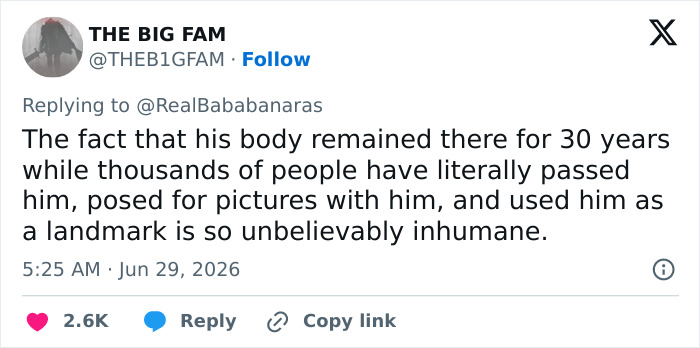
Image credits: THEB1GFAM
Image credits: MillerTalk_Pod
Image credits: LKononden
Image credits: CannedDock
Image credits: ProudHin
Image credits: pilot_baba77
Image credits: _Attitude_Vini
Image credits: AttractiveEdge
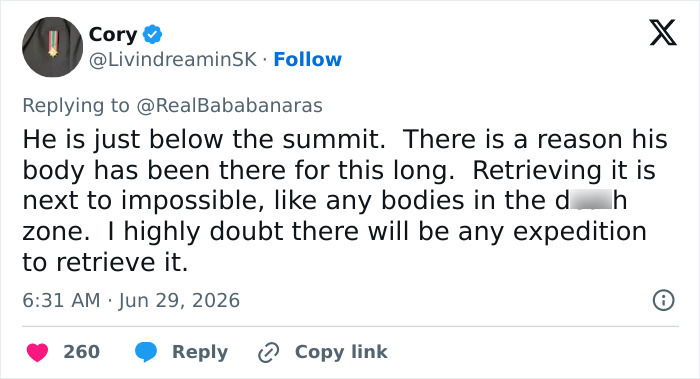
Image credits: LivindreaminSK
Image credits: UseCodeNSB
Image credits: C_Dickey_
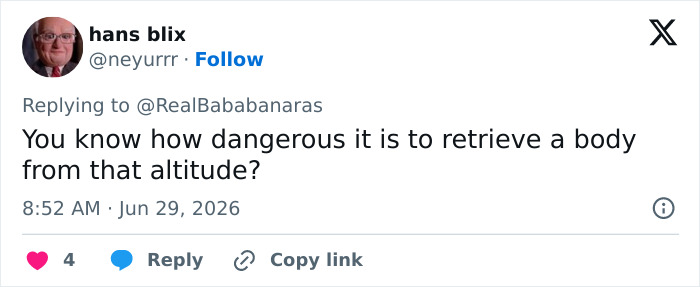
Image credits: neyurrr
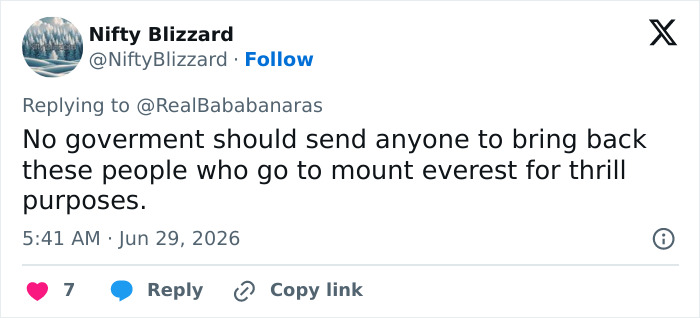
Image credits: NiftyBlizzard
Image credits: yadavmayank
Image credits: robie474
Image credits: Toma_web3
Image credits: hriday_sa
Image credits: themindbelives

By entering your email and clicking Subscribe, you're agreeing to let us send you customized marketing messages about us and our advertising partners. You are also agreeing to our Privacy Policy.
Thank you! You've successfully subscribed to newsletters!


They've got a serious problem up on Everest - global warming is defrosting the bodies. Apparently during the summer you can now smell Everest if you're downwind and it is not pleasant.

That's interesting (and horrifying). I'm extremely interested in mountaineering but never heard about that.
Load More Replies...
We can have photos of d**d bodies, but not write d**n without censoring? 😬

If any of the words you use are in Bored Panda's Big Book Of Words That Might Offend Our Advertisers, the answer is "Nope". The process is entirely automated. No intelligence--real or artificial--is involved.
Load More Replies...

It’s hardly gross; we can’t even SEE any of the body. It’s a photo of clothes. I thought people only got angry about clothes when they don’t cover enough of a celeb for their tastes. But yeah; go ahead and get mad about a pile of clothes.
Load More Replies... They've got a serious problem up on Everest - global warming is defrosting the bodies. Apparently during the summer you can now smell Everest if you're downwind and it is not pleasant.
That's interesting (and horrifying). I'm extremely interested in mountaineering but never heard about that.
Load More Replies... We can have photos of d**d bodies, but not write d**n without censoring? 😬
If any of the words you use are in Bored Panda's Big Book Of Words That Might Offend Our Advertisers, the answer is "Nope". The process is entirely automated. No intelligence--real or artificial--is involved.
Load More Replies... It’s hardly gross; we can’t even SEE any of the body. It’s a photo of clothes. I thought people only got angry about clothes when they don’t cover enough of a celeb for their tastes. But yeah; go ahead and get mad about a pile of clothes.
Load More Replies...































 No fees, cancel anytime
















32
11