Get Premium
Dark mode theme is available exclusively for premium users. Learn more about the benefits of subscribing.
No fees, cancel anytime.

 Dark Mode Ad-Free Browsing Unlimited Content
 Ad-Free Browsing Unlimited Content Dark Mode
Join 1.2 million Panda readers who get the best art, memes, and fun stories every week!

The human brain is, by most accounts, completely unhinged. We spend roughly a third of our lives unconscious, and we still cannot fully explain what happens up there while the lights are off. Comas are even further out—they’re a state of consciousness that neuroscientists still poorly understand.
Even with all of their equipment and decades of research, they can still only describe what they see happening in the brain rather than what it actually feels like from the inside. And the people who come back from them? They come back with stories. Stories so vivid, so detailed, and so emotionally devastating that waking up is sometimes the hardest part.
Clélia Verdier, a 19-year-old from Lyon, France, was placed in a medically-induced coma for three weeks. During those weeks in June 2025, her brain built her an entire life. She fell pregnant. She went into labor, and she felt every second of it. She gave birth to triplets, named them Mila, Miles, and Maïlée, held them for the first time, and experienced what she describes as an overwhelming wave of love.
She also lost one of them and grieved for years. And then she watched the other two grow up across what felt like seven full years. Walks, meals, bedtime stories, two little girls with completely distinct personalities that she knew and loved with everything she had.
Image credits: user12798814 / Magnific (not the actual photo)
Image credits: sorindarii / Magnific (not the actual photo)
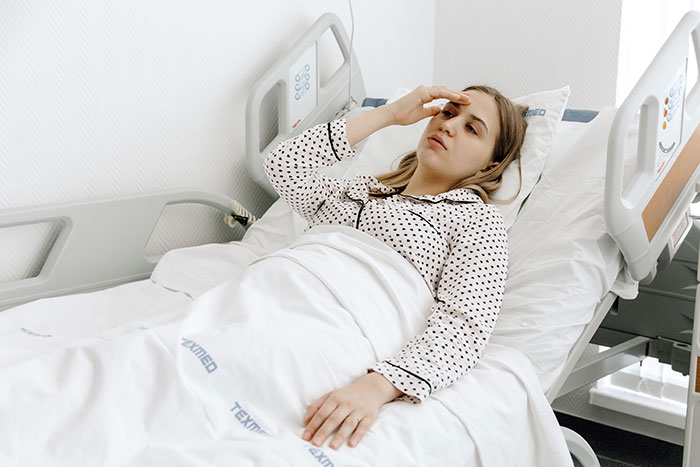
When she woke up, the first thing she did was ask the medical staff where her children were. Then she saw her parents and told them they were grandparents. The doctors had to explain that none of it had happened. No pregnancy. No labor. No daughters.
Only three weeks had passed, not seven years, and every single memory she had of motherhood had been constructed entirely inside her own head while she was unconscious in a hospital bed. “It was a shock,” she told The Daily Mail.
Almost a year on, Verdier is still processing an experience that lacks a clear resolution. “Now I feel very disconnected from others,” she admitted. “I still miss my daughters today.” “I lived as a mother — even if it was ‘just a dream,’ with everything I felt and experienced, I will always be their mother. It was my only reality for a while.”
She does hope to have real children one day, but is clear that they won’t replace what she lost in that hospital bed. “They will have a different place in my heart, but one just as important.” But Clélia isn’t the first person to try to pick up the pieces after such a traumatic incident.
Image credits: studiopeace / Magnific (not the actual photo)
Caroline Leavitt wrote about her life-altering encounter back in 2021. She described waking up and feeling like she had been “pulled violently from one world to another, as if she had stepped from one room to another.” She had been living in an imaginary town where she knew the streets, recognized people, and had an apartment that was hard to get to but big and beautiful.
She told her husband and her friends, who had been sitting by her hospital bed every single day, all about it. “I knew it was real,” she wrote. “I’ve kept dreaming over the years, always the same town, the same people in it, but things change.” She has tried to make sense of it, but even her therapist could only speculate about these prolonged adventures.
Image credits: Kiwistocks / Magnific (not the actual photo)
Image credits: Drazen Zigic / Magnific (not the actual photo)
After severe medication misuse, like in Clélia’s case, the brain and major organs are under enormous stress. A medically-induced coma is often brought on using heavy sedatives to essentially reduce the brain’s activity and metabolic demands, protecting it from further damage while the body processes and clears the toxic substances. It also prevents seizures and allows medical staff to manage breathing mechanically.
But the brain does not actually fully switch off, and that is where things get strange. The sedative medications used to induce comas are well documented to cause vivid, hyper-realistic dreams and hallucinations. On top of that, ICU delirium is one of the most recognized and studied phenomena in intensive care medicine, affecting the majority of ventilated patients to some degree.
The brain, deprived of normal sensory input and running on fragmented glimpses of consciousness, essentially starts filling in the gaps. Dr. Stephan Mayer, Neurocritical Care and Emergency Neurology Services for Westchester Medical Center, described it as being like an old television set. “It’s just lots of fuzz until the picture comes on for just a minute — and then, boom, gone again,” he said.
“What you end up with is a collection of disjointed, disconnected glimmers of awareness.” For most people, those glimmers are confusing and forgettable. For some, like Verdier, the brain stitches them into something else entirely: seven years of a life that felt more real than anything she had ever known.
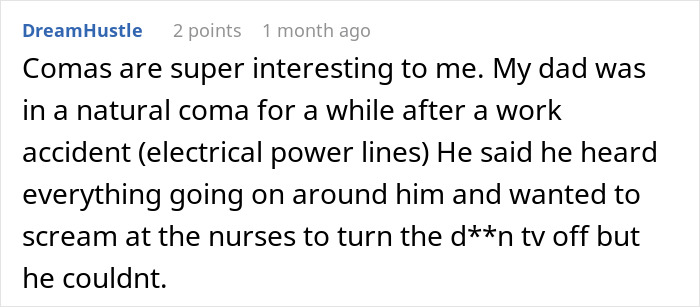
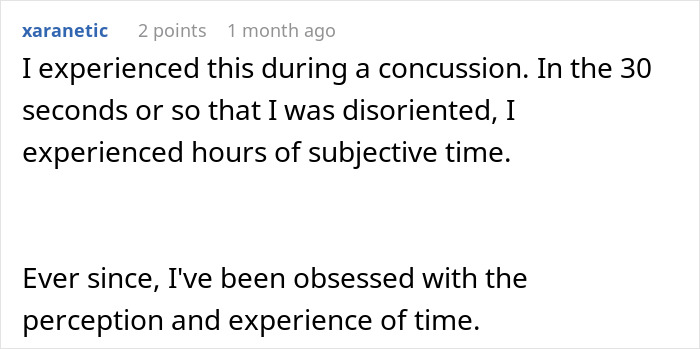
Have you ever heard of someone having lived this kind of experience? Tell us all about it in the comments!
































 No fees, cancel anytime


























32
6