Get Premium
Dark mode theme is available exclusively for premium users. Learn more about the benefits of subscribing.
No fees, cancel anytime.

 Dark Mode Ad-Free Browsing Unlimited Content
 Ad-Free Browsing Unlimited Content Dark Mode
Join 1.2 million Panda readers who get the best art, memes, and fun stories every week!
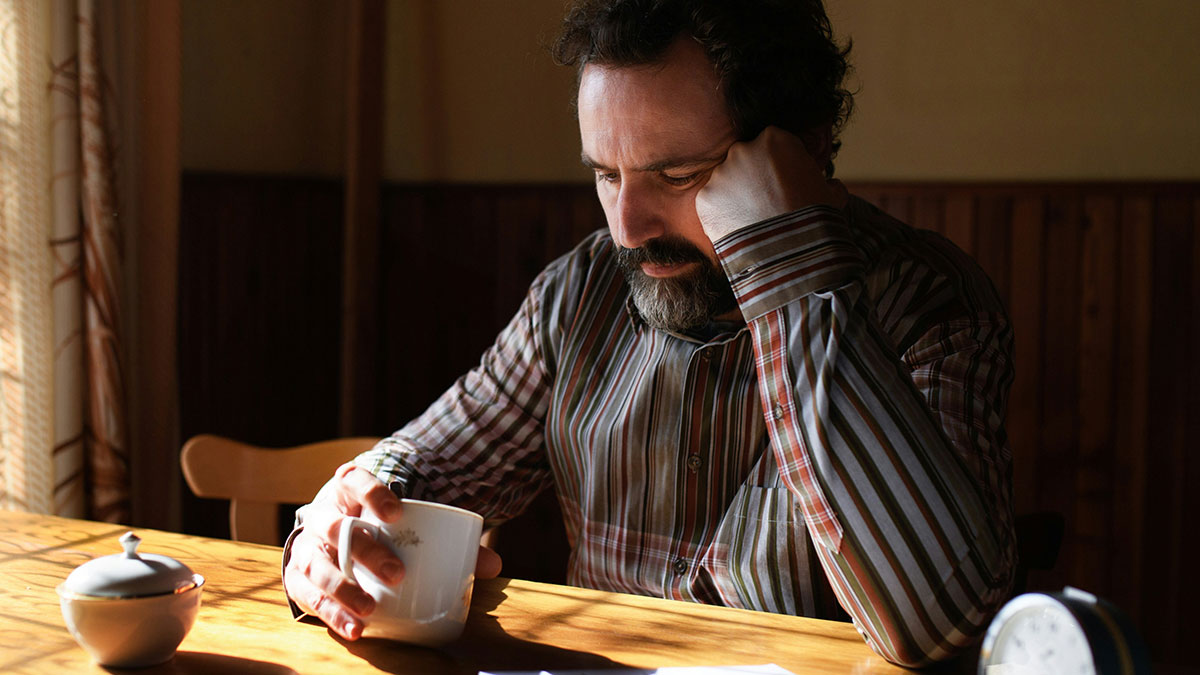
Families can be complicated, and even well-intentioned help can lead to frustration when boundaries aren’t respected.
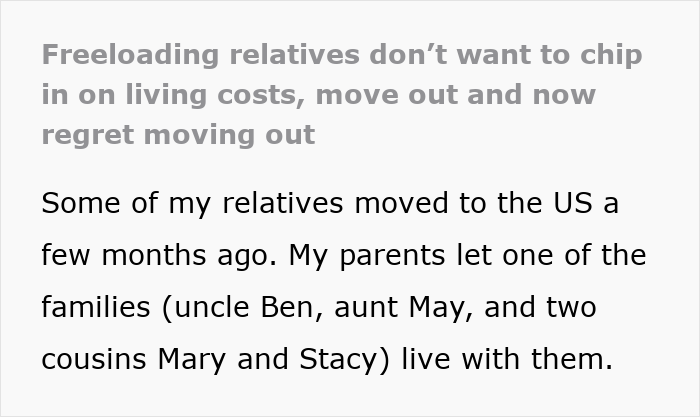
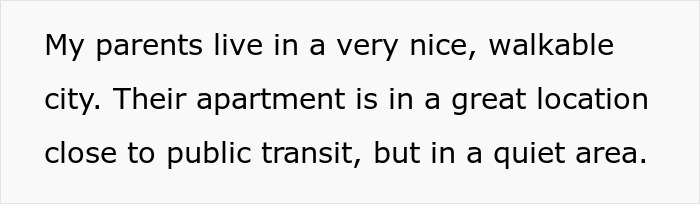
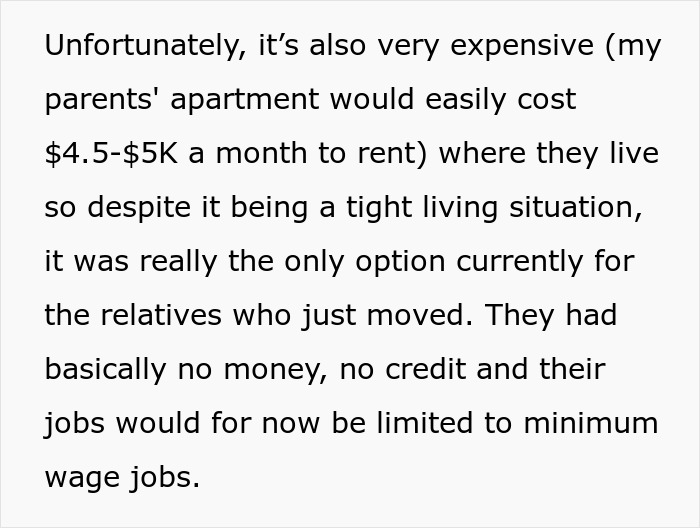
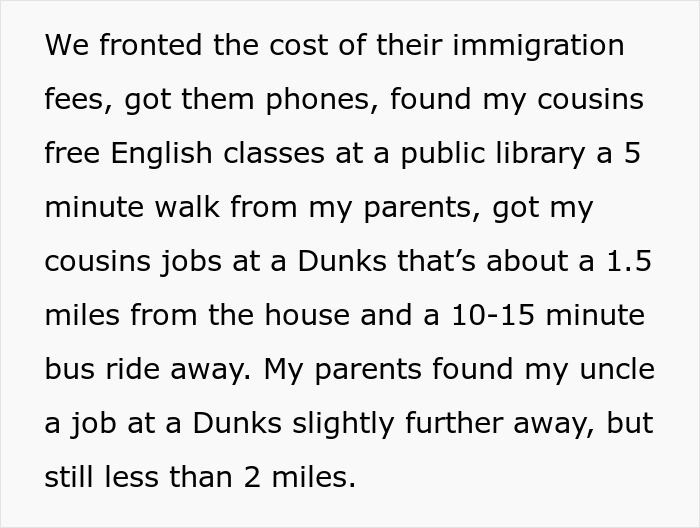
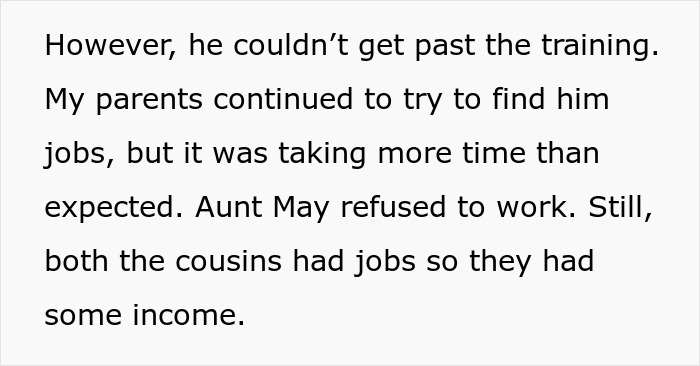
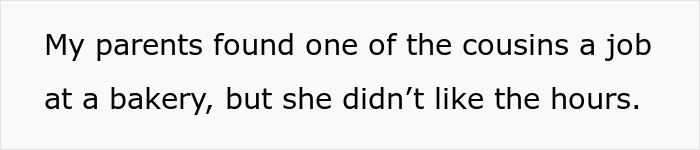
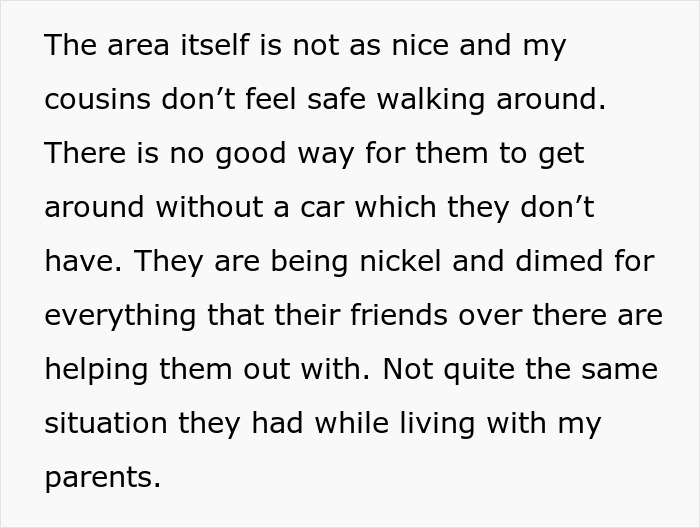
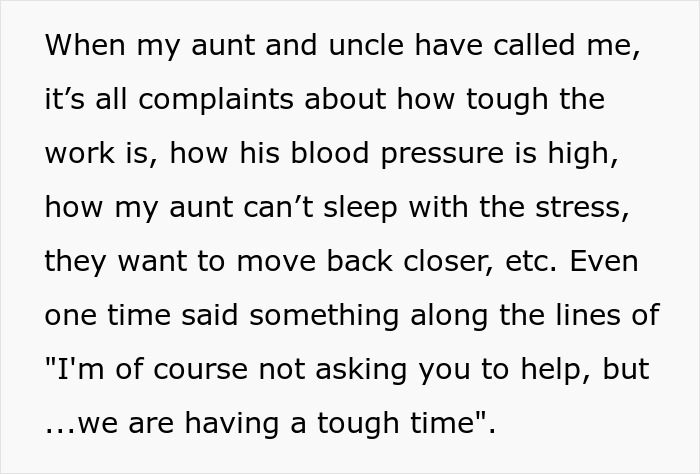
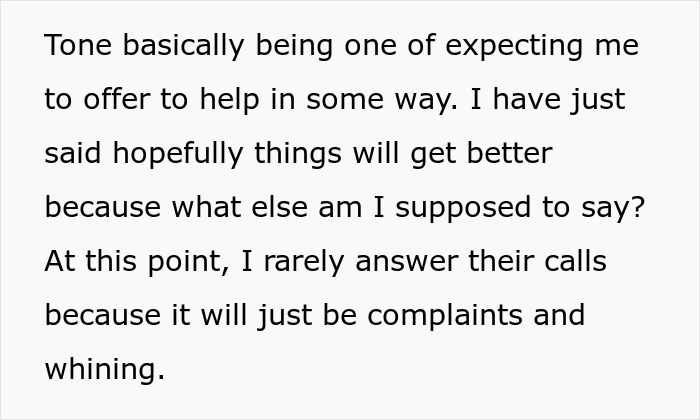
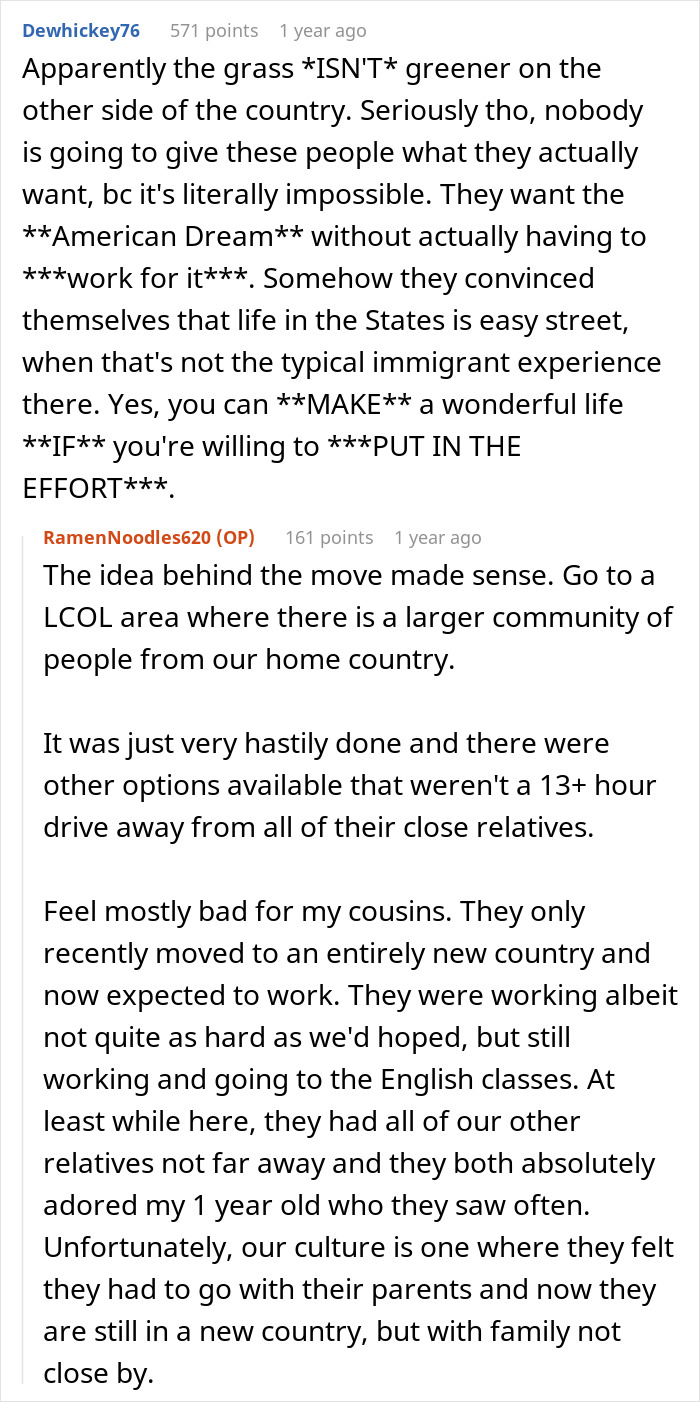
Reddit user RamenNoodles620 shared a story on r/OhNoConsequences about his immigrant relatives who moved in with his parents. For months, his old folks provided a home, covered expenses, and helped them get jobs and learn English, but when they were finally asked to start contributing to groceries and utilities, the relatives abruptly moved away.
However, this decision made them realize that life without all the extra support was far harder than they expected.
Image credits: Curated Lifestyle (not the actual photo)
Image credits: Getty Images (not the actual photo)
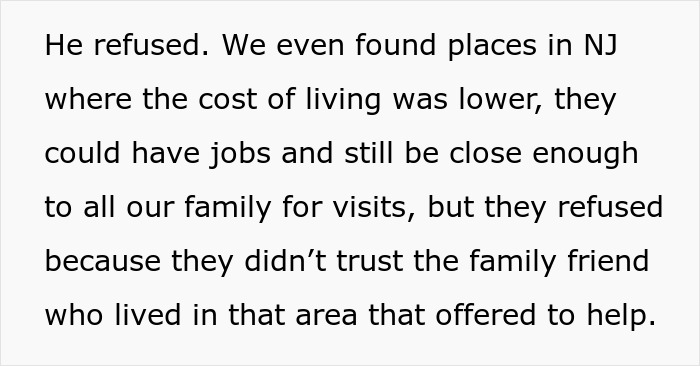
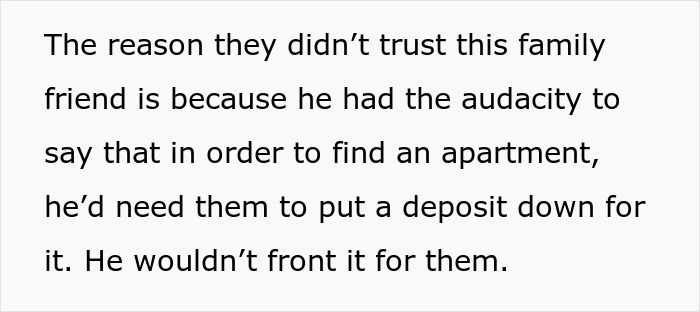
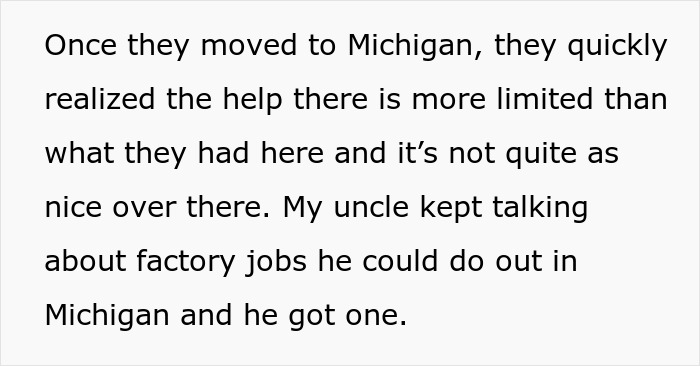
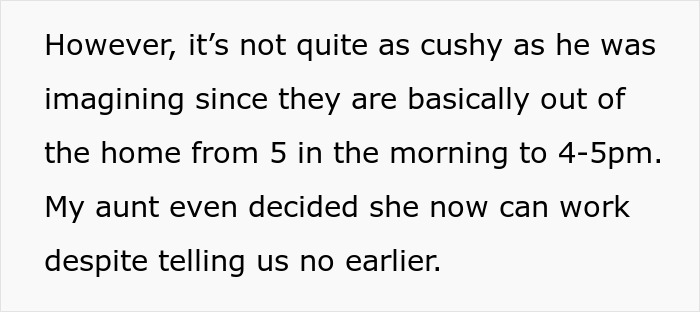
Image source: RamenNoodles620
Image credits: Getty Images (not the actual photo)
While it’s easy to blame others in such situations, it’s usually more productive to take a look at ourselves. Vikki Stark, a family therapist with over three decades of experience, says we might enable our families to walk over us by trying to avoid guilt.
“We train our families to take advantage of us and then feel angry and resentful when they do,” Stark writes. “My kids do tons for me—we are very close and depend on each other for the big things in life mutually. But I’m so used to being the good mom that I hardly notice when I encourage my family to make the assumption that I always make—that I’ll take care of things—I’m a good taker-carer.”
To correct the balance, Stark believes we have to be ready to say “no” and insist on things we need help with, even if it is not convenient for the other person.
“I often hear women say, ‘I don’t want to have to ask,’ but you do—you have to ask and expect that it will be done. Don’t be ready to capitulate at the first sign of resistance.”
“We have to learn to tolerate our family grumbling as we institute our re-education campaign … Our family members are just not that helpless.”
However, it’s important to interpret this story as an example of the challenges within immigrant communities, not the norm.
In reality, the average might look the opposite.
Using millions of father-son pairs spanning more than 100 years of US history, researchers found that children of immigrants from nearly every sending country have higher rates of upward mobility than children of the US-born. This immigrants’ advantage is similar historically and today despite dramatic shifts in sending countries and US immigration policy.
“Immigrants show a great deal of drive to succeed and far more willingness to sacrifice for their children,” family therapist and researcher at Dalhousie University, Michael Ungar, Ph.D., says. “While it is well-documented that migrants are often working in jobs where they are underemployed, the same is not true of children who are raised by families that value education and expect their children to study hard and graduate.”
“These value systems distinguish any population that has had to struggle to survive. They are also the same characteristics that would have been found historically in the family trees of many of today’s native-born Americans who are, at least for the moment, securely anchored in the middle class,” Ungar adds.

By entering your email and clicking Subscribe, you're agreeing to let us send you customized marketing messages about us and our advertising partners. You are also agreeing to our Privacy Policy.
Thank you! You've successfully subscribed to newsletters!

Sounds like the Voetsekkers (the South African "farmers" who went to the U.S. as refugees). They complained that they were stuck with nothing to do and had to speak English all the time. Poor babies. /s

Being a new immigrant is hard in the US as Im sure it is everywhere. I feel for people trying to make it in another country but they have to be willing to work hard and realize nothing happens over night.
And nothing is just handed to them. I’m the great-granddaughter, granddaughter, and wife of immigrants. My grandparents (great-grandparents passed long before I was born) used to talk about taking any job they were offered, no matter what, because a terrible job is better than no job at all (and you can look for another job while still getting a paycheck), especially when you just got to the US and hardly know a handful of words in English. But you do the work, continue finding better-paying work, live frugally, save your pennies, and eventually you move up on the SES ladder. It’s tough, even if you have some kind of support system and safety net (like my husband had with me). You’re starting over from the bottom, but at least you have the freedom to move up the ladder if you have the ability. My paternal grandparents (who had the equivalent of a fourth grade education between them, and worked as a handyman and hotel maid when they got here) eventually bought several rental properties, and became top members of their community. My husband and I now own our own business—-he’s the talent, I run the office. But when he first got here and got his work permit, he had to start over from the bottom. Luckily, he chose to train in a solidly recession-proof industry (pest control) so business is good, and growing. You can just see how proud he is of his accomplishments when he talks about the company. Took him a couple decades working in the field and getting to be the best at before he felt confident enough to go out on his own. So, it can happen for anyone who immigrates. It’s just not going to be immediate, and it’s definitely not going to be just handed to you.
Load More Replies...
As an American who grew up in poverty, it's not all cushy here. I started contributing financially at 10 delivering papers before school until I was 14. At 15, I got a 40hr/week job after school. I worked ever since and got myself out of poverty (with some help). I was forced to medically retire in my mid-40s, but have myself set financially until I'm 72 - I won't live that long. If they aren't willing to work hard, I don't see how they are going to thrive here.
Sounds like the Voetsekkers (the South African "farmers" who went to the U.S. as refugees). They complained that they were stuck with nothing to do and had to speak English all the time. Poor babies. /s
Being a new immigrant is hard in the US as Im sure it is everywhere. I feel for people trying to make it in another country but they have to be willing to work hard and realize nothing happens over night.
And nothing is just handed to them. I’m the great-granddaughter, granddaughter, and wife of immigrants. My grandparents (great-grandparents passed long before I was born) used to talk about taking any job they were offered, no matter what, because a terrible job is better than no job at all (and you can look for another job while still getting a paycheck), especially when you just got to the US and hardly know a handful of words in English. But you do the work, continue finding better-paying work, live frugally, save your pennies, and eventually you move up on the SES ladder. It’s tough, even if you have some kind of support system and safety net (like my husband had with me). You’re starting over from the bottom, but at least you have the freedom to move up the ladder if you have the ability. My paternal grandparents (who had the equivalent of a fourth grade education between them, and worked as a handyman and hotel maid when they got here) eventually bought several rental properties, and became top members of their community. My husband and I now own our own business—-he’s the talent, I run the office. But when he first got here and got his work permit, he had to start over from the bottom. Luckily, he chose to train in a solidly recession-proof industry (pest control) so business is good, and growing. You can just see how proud he is of his accomplishments when he talks about the company. Took him a couple decades working in the field and getting to be the best at before he felt confident enough to go out on his own. So, it can happen for anyone who immigrates. It’s just not going to be immediate, and it’s definitely not going to be just handed to you.
Load More Replies... As an American who grew up in poverty, it's not all cushy here. I started contributing financially at 10 delivering papers before school until I was 14. At 15, I got a 40hr/week job after school. I worked ever since and got myself out of poverty (with some help). I was forced to medically retire in my mid-40s, but have myself set financially until I'm 72 - I won't live that long. If they aren't willing to work hard, I don't see how they are going to thrive here.



































 No fees, cancel anytime





















40
22