Get Premium
Dark mode theme is available exclusively for premium users. Learn more about the benefits of subscribing.
No fees, cancel anytime.

 Dark Mode Ad-Free Browsing Unlimited Content
 Ad-Free Browsing Unlimited Content Dark Mode
Join 1.2 million Panda readers who get the best art, memes, and fun stories every week!
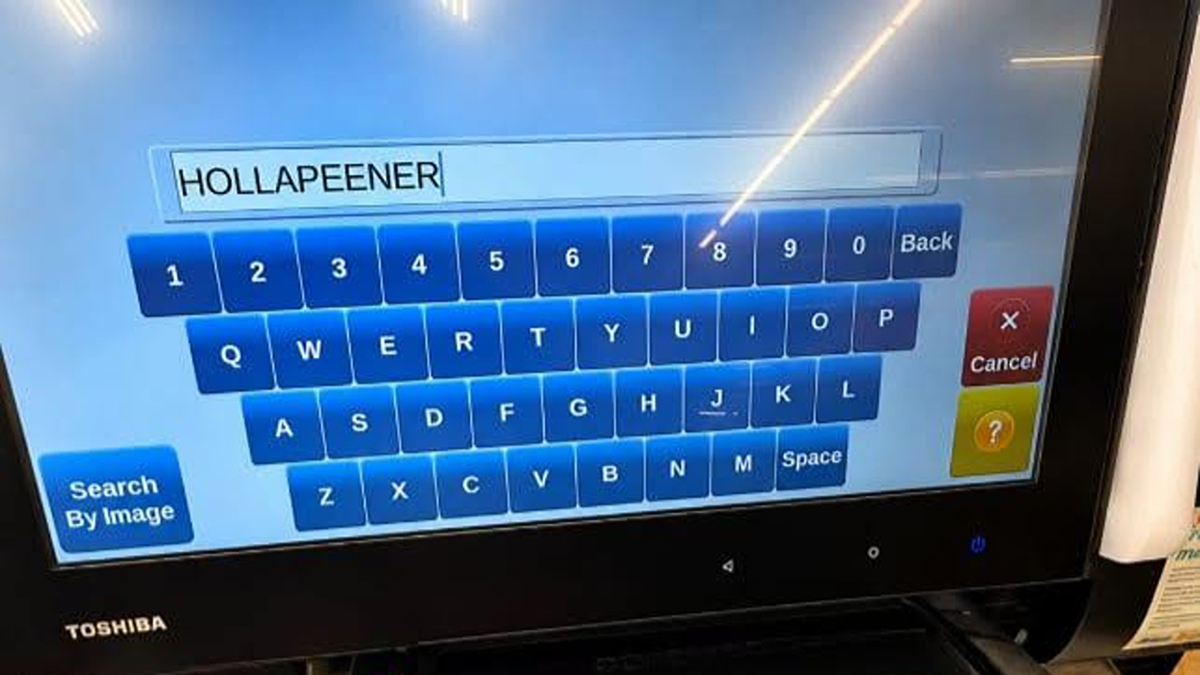
Memes have evolved radically. What started as a simple format for sharing relatable content has mutated into something that defies categorization, logic, and occasionally the Geneva Convention. At their best, they do not need context, a punchline, or any discernible connection to reality. They just need to exist, and somehow that is enough.
The Feral Memes Unhinged page has built an audience of over 200,000 dedicated followers on that exact promise. No theme, no agenda, and no attempt to make sense of anything. Just a daily delivery of content that could only exist on the internet, for people who showed up specifically because they wanted it. Their motto says it all: "Group for the unhinged, the reckless and the downright insane." These are their people, and these are their posts. Enter at your own risk.
This post may include affiliate links.
Richard Dawkins coined the word "meme" way back in 1976 in his book 'The Selfish Gene', borrowing from the ancient Greek word "mimeme" and shortening it to rhyme with "cream." He used it to describe discrete bits of human culture that replicate and spread between people the way genes do, which at the time referred to melodies, catchphrases, and ideas. He had absolutely no way of knowing he was also describing a photo of Bernie Sanders in mittens that would one day raise $1.8 million for charity.
Apart from being a genre, it is also a survival tool. In 2018, when China's state censorship blocked every hashtag related to the global #MeToo movement, women found a way around it using images of rice and a bunny. Innocuous enough to dodge the algorithm, but when the words for rice and bunny are said aloud in Mandarin, they sound like "mi tu." Women used the images to share their stories and coordinate the movement inside a country that has historically been suspicious of exactly this kind of organizing. A bowl of rice and a cartoon bunny was something the censors never saw coming.
According to Paolo Gerbaudo, director of the Centre for Digital Culture at King's College London, memes are "a sort of ready-made language with many kinds of stereotypes, symbols, and situations. A palette that people can use, much like emojis, to convey a certain content." Which is a very academic way of saying that sometimes a single image of a distracted boyfriend looking at another woman communicates something that would take three paragraphs of therapy to unpack properly. By 2020, Instagram reported at least one million posts mentioning "meme" being shared every single day, telling us that the palette is being used extensively.
Not everything that spreads is technically a meme, and researcher Limor Shifman at the Hebrew University of Jerusalem wants you to know the difference. "A text that just spreads well, and a lot of people see it, is not a meme," she says. "It's viral. But if a lot of people create their own versions, then it becomes a group of texts, and then it's a meme." The meme is participatory, a is a conversation instead of a broadcast. Facebook researchers in 2014 found 121,605 different variants of a single meme posted across 1.14 million status updates. Do we just have too much time on our hands?
The best memes, according to researcher Idil Galip at the University of Edinburgh, share a few reliable qualities. They reference something recent and widely known, they appeal to the broadest possible common denominator, and they are, in her words, "fun to look at and fun to share." Studies back this up, finding that memes sparking stronger emotional responses are more likely to be shared, and that people forward funny content over cute, disgusting, or anger-inducing content. Humor is the most efficient delivery mechanism available; remember that.

Yanno...bras used to annoy me, but I'm that idiot who walks into things all the time. Started wearing padded bras and now I'm a fearless little bumper car!
Niche memes operate on an entirely different logic and are not trying to go viral at all. Galip notes that niche memes are "meant usually to create things like in-group belonging, something that kind of strengthens a sense of identity." One small study found that people with depression rated depression-related memes as more humorous, relatable, and shareable than people without, suggesting the format offers something closer to social support than entertainment. The same principle applies across marginalised communities, including the LGBTQ+ community, where memes have been found to build collective identity in ways that translate from online spaces into the real world.
Politically, the meme has become one of the more surprisingly effective tools available to anyone trying to communicate something quickly to a large audience. During the 2017 UK General Election, 30 video and GIF political memes amassed more than 45 million views. The Ukrainian government was publishing memes on its official Twitter account before the war with Russia began, using humor to publicly undermine Russia's denial of its plans.

And in 2015, female scientists responded to Nobel Prize winner Tim Hunt's comments about "girls" in laboratories by posting thousands of images of themselves in full protective gear with the hashtag #distractinglysexy. This generated more than 10,000 posts within hours and a mainstream media conversation about sexism in science that the original comment had not anticipated producing.

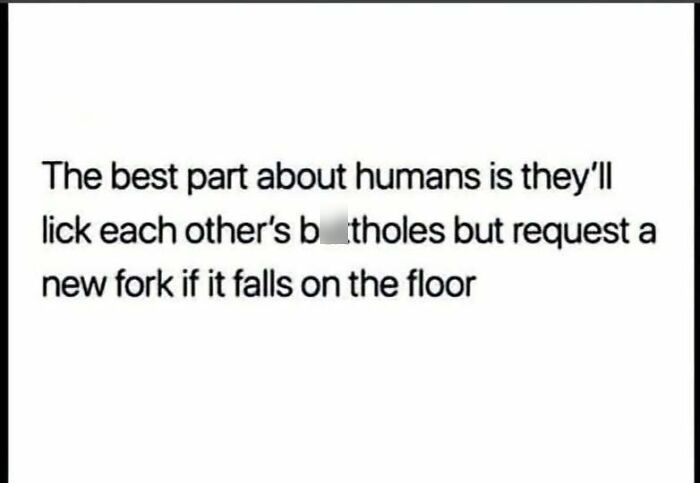
I mean, usually you clean the buttholes beforehand. If I'd just freshly cleaned the floor and my fork fell on it, I'd probably just wipe it off and go on with my day.
It is pretty clear that the meme is not going anywhere, and researchers largely agree on this even if they disagree on what it means. "This format of communication is here to stay because it's a very stable way of expressing your individuality and your communality," says Shifman. Gerbaudo points out that TikTok videos are already memetic in structure, built around challenges and pre-established formats that people remix and respond to. The format evolves, but the function stays the same: take something real, make it shareable, and send it to someone who will immediately understand why you sent it without needing a single word of explanation.
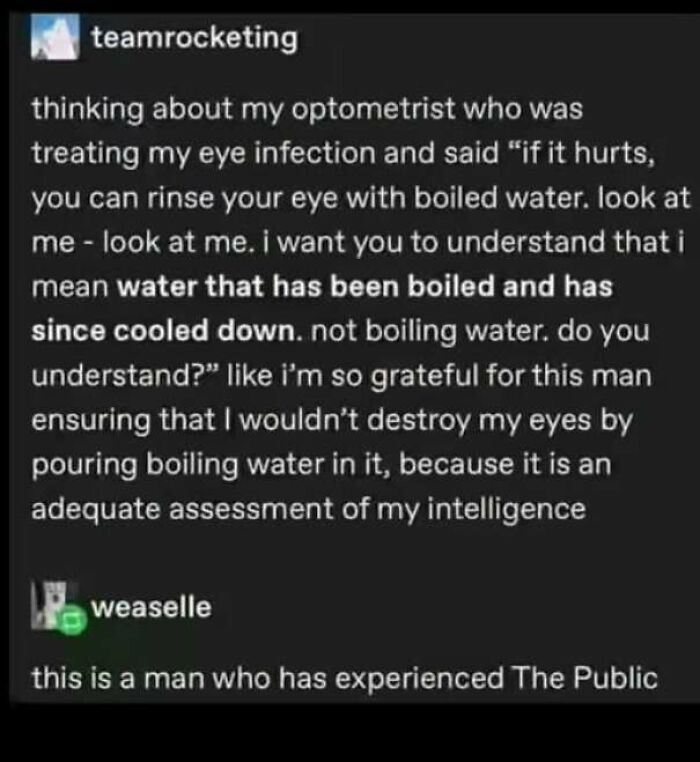
This is just true though? Cleveland Clinic has an article about it if you're interested.

"Things have gotten so bad that if a clown beckoned me from the woods, I'd just go."

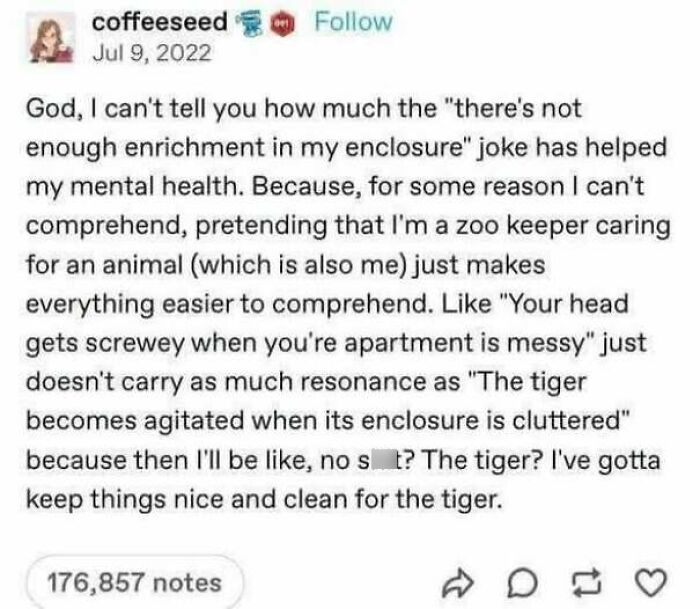
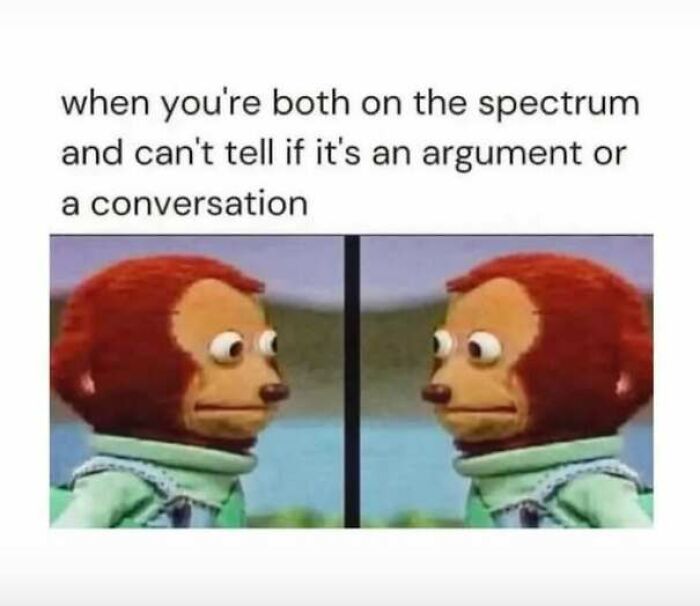
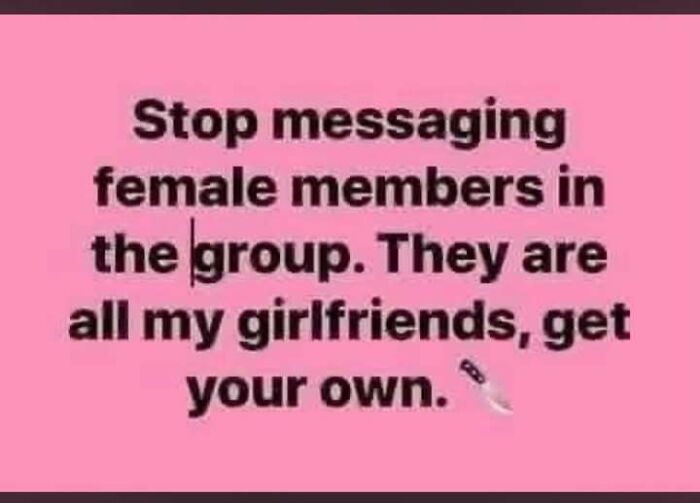
Uh-oh; we’ve got one “random_froggg (she/they 86/47)” can’t work out. His brain is likely exploding as I type, as now he’ll be forced to ask for help.
I think I'm one of these people. Aside from a few nights, I get tired consistently around 8:00 and I can just decide to go to sleep once I'm in bed.
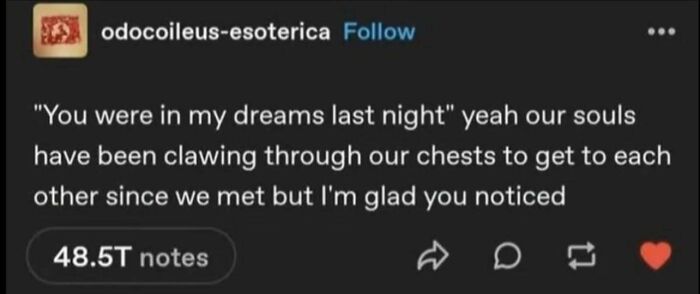
That “48.5T notes” is bothering me. This didn’t *really* get 45 terabytes of notes, right? Is the “T” a “K” in a different language? Though 48.5K of notes also seems absurdly high. If anyone knows what that thing about notes means, I’m all ears!





























 No fees, cancel anytime