Get Premium
Dark mode theme is available exclusively for premium users. Learn more about the benefits of subscribing.
No fees, cancel anytime.

 Dark Mode Ad-Free Browsing Unlimited Content
 Ad-Free Browsing Unlimited Content Dark Mode
Join 1.2 million Panda readers who get the best art, memes, and fun stories every week!
Birthdays for kids should be special days when they feel celebrated, loved, and seen. However, in blended families, these milestones can sometimes reveal subtle but painful patterns of favoritism and exclusion.
One child might be showered with gifts while another is overlooked, not because of anything they did, but simply because of family dynamics. This is exactly what happened in our Original Poster’s (OP) family, and she wasn’t going to stand for it.
More info: Reddit
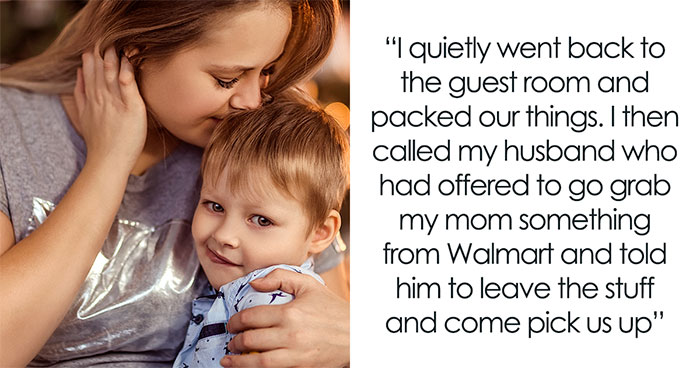
Image credits: prostock-studio / Freepik (not the actual photo)

Image credits: freepik / Freepik (not the actual photo)

Image credits: The Yuri Arcurs Collection / Freepik (not the actual photo)
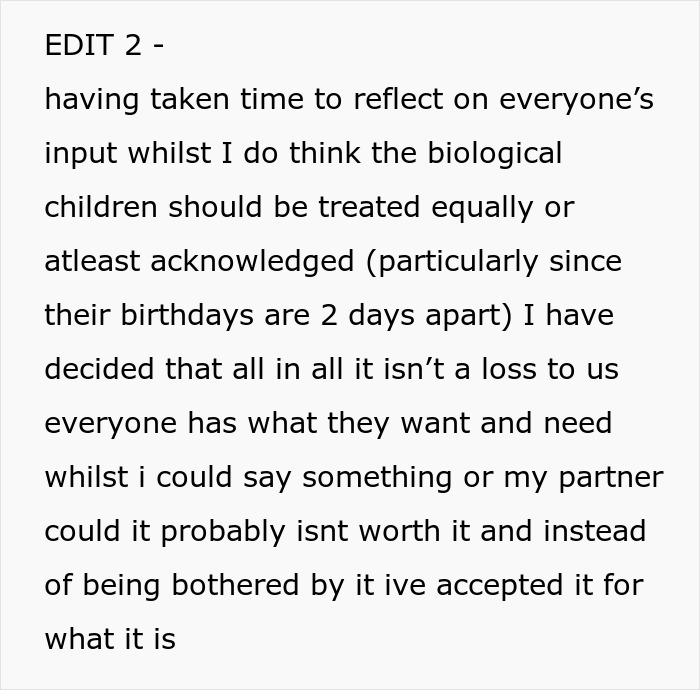
Image credits: Leather-Map3479
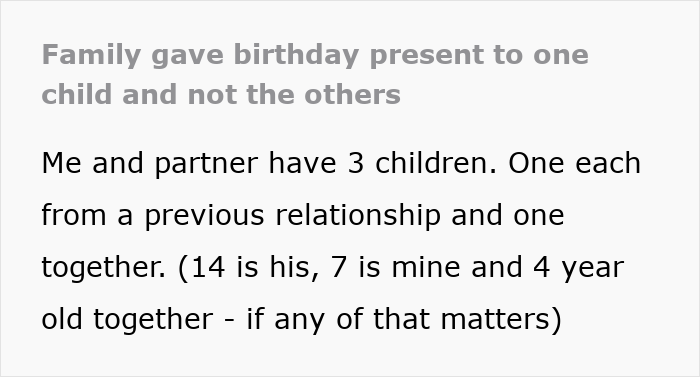
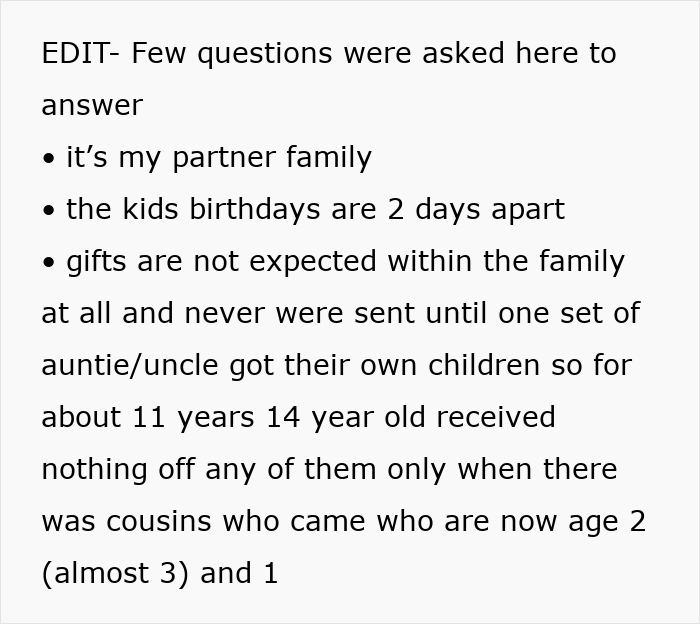
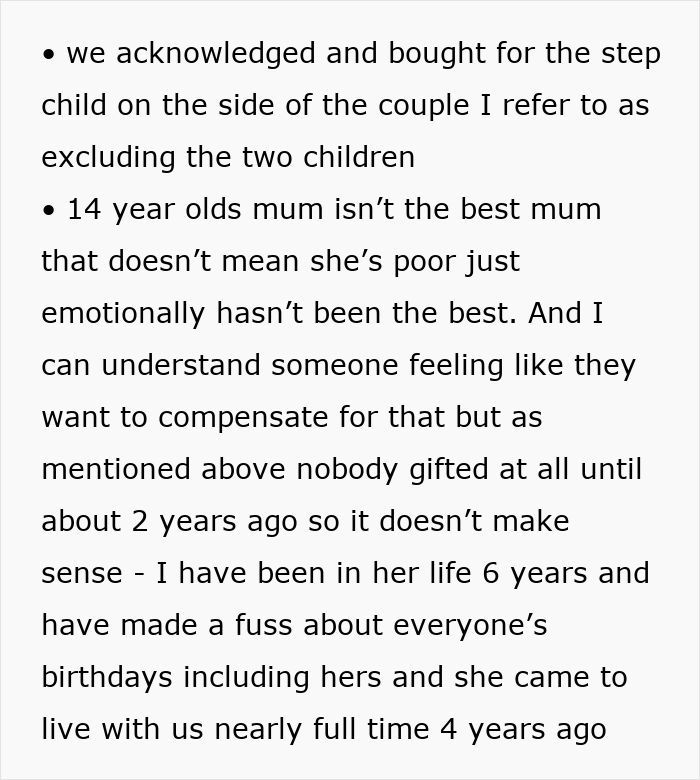
The OP explained that she had three children. A 14-year-old was from her partner’s previous relationship, a 7-year-old was from her previous relationship, while they shared a 4-year-old together. However, over the years, their birthdays revealed a pattern.
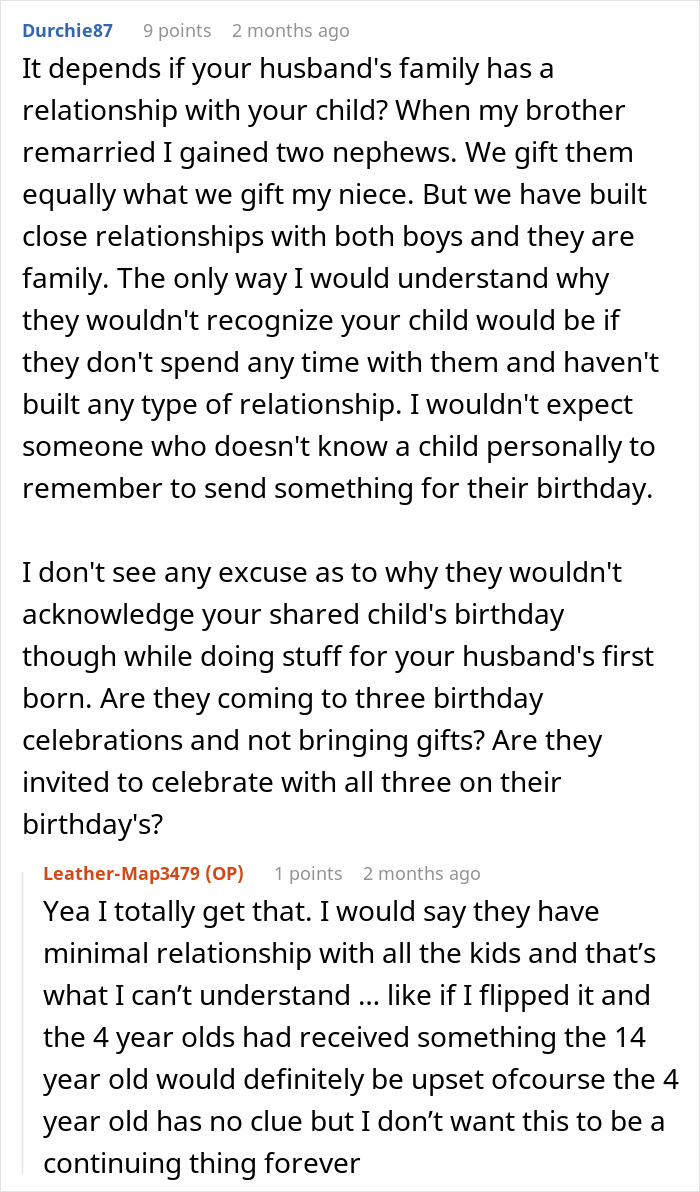
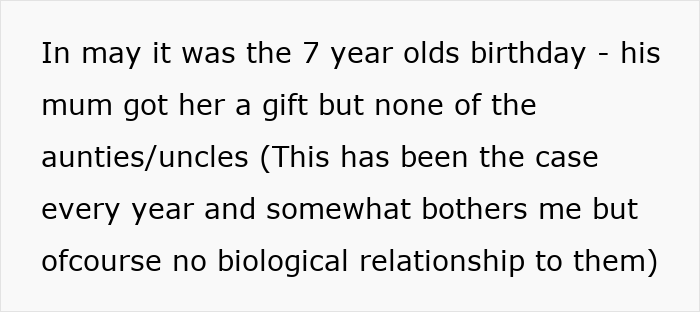
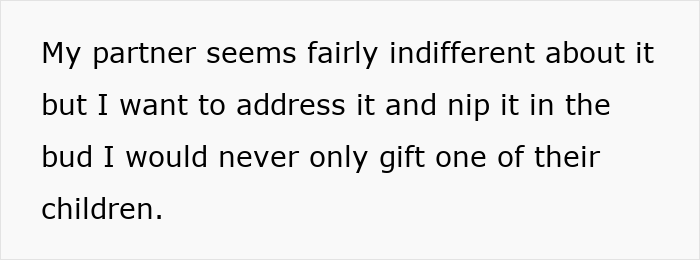
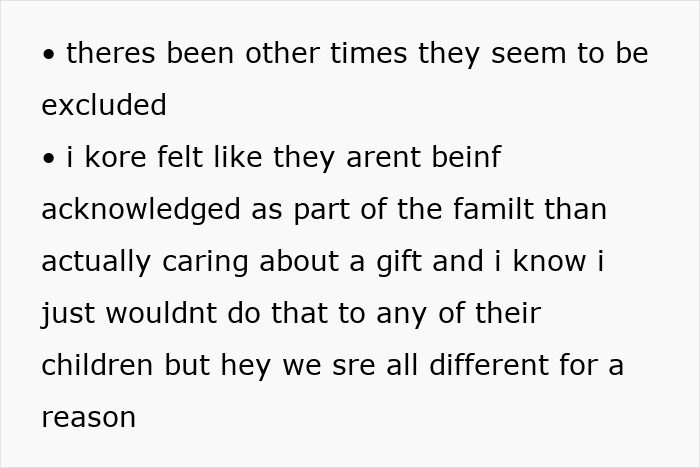
She noticed that when the 7-year-old celebrated his birthday, gifts came from her biological parent’s side, but not from her stepfamily’s aunts and uncles. This wasn’t new, but it stung a little more each time. Eventually, she decided to stop buying birthday gifts for those relatives’ children in return, especially since the effort wasn’t being reciprocated and her partner agreed.
Things came to a head during the most recent round of birthdays, though. Her youngest child turned five and received money from one of the relatives, but not the other. Then, shortly after, the 14-year-old celebrated and received gifts or money from everyone without exception.
Individually, each instance might seem harmless, but together, they painted a picture that felt impossible for the OP to ignore. She noted that two of her children consistently receiving less acknowledgment than the other made the situation feel less accidental and more like favoritism.
Image credits: dragonimages / Freepik (not the actual photo)
Research highlights just how sensitive children are to unequal treatment, which makes the blended-family birthday scenario particularly significant. According to Scientific American, children are remarkably perceptive when it comes to noticing differences in how they are treated by parents or authority figures.
Even small distinctions in attention, resources, or rules, things adults may view as practical or minor, can be interpreted as favoritism. Eastlake Pediatrics expands on this, noting that unresolved favoritism, even indirect, can erode trust and sibling relationships over time. Non-favored children may develop anxiety, jealousy, or lower self-esteem, while favored children face pressure to uphold an idealized role.
On the flip side, Raising Children emphasizes that active inclusion by extended family can counter these negative effects. When aunts, uncles, and grandparents involve stepchildren in celebrations and everyday family life, it fosters emotional security and a sense of belonging. Inclusive behavior reassures children that they are valued, helping to strengthen family bonds and support positive emotional outcomes.
Netizens pushed back on the idea that unequal gifting automatically means harm or malice, especially in blended families. On the other hand, some felt the situation crossed a line, particularly when it came to the couple’s shared child. What do you think? Is this a clear case of favoritism, or are the relatives within their rights to choose who they gift? We would like to know your thoughts!
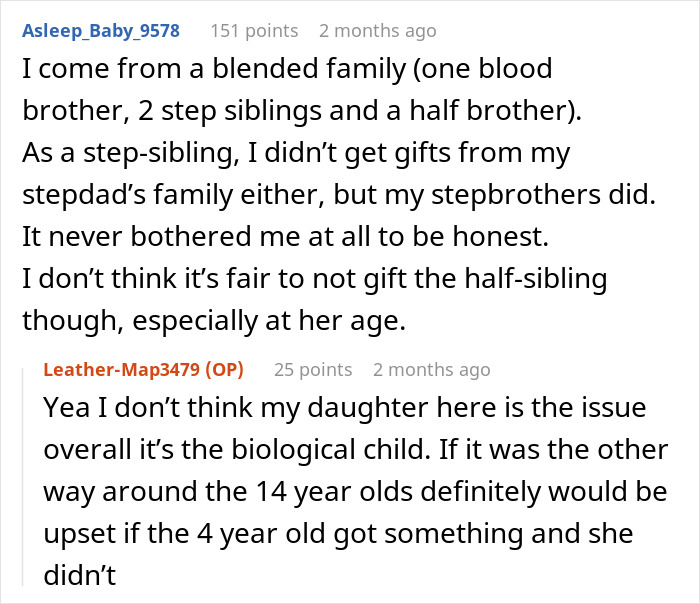


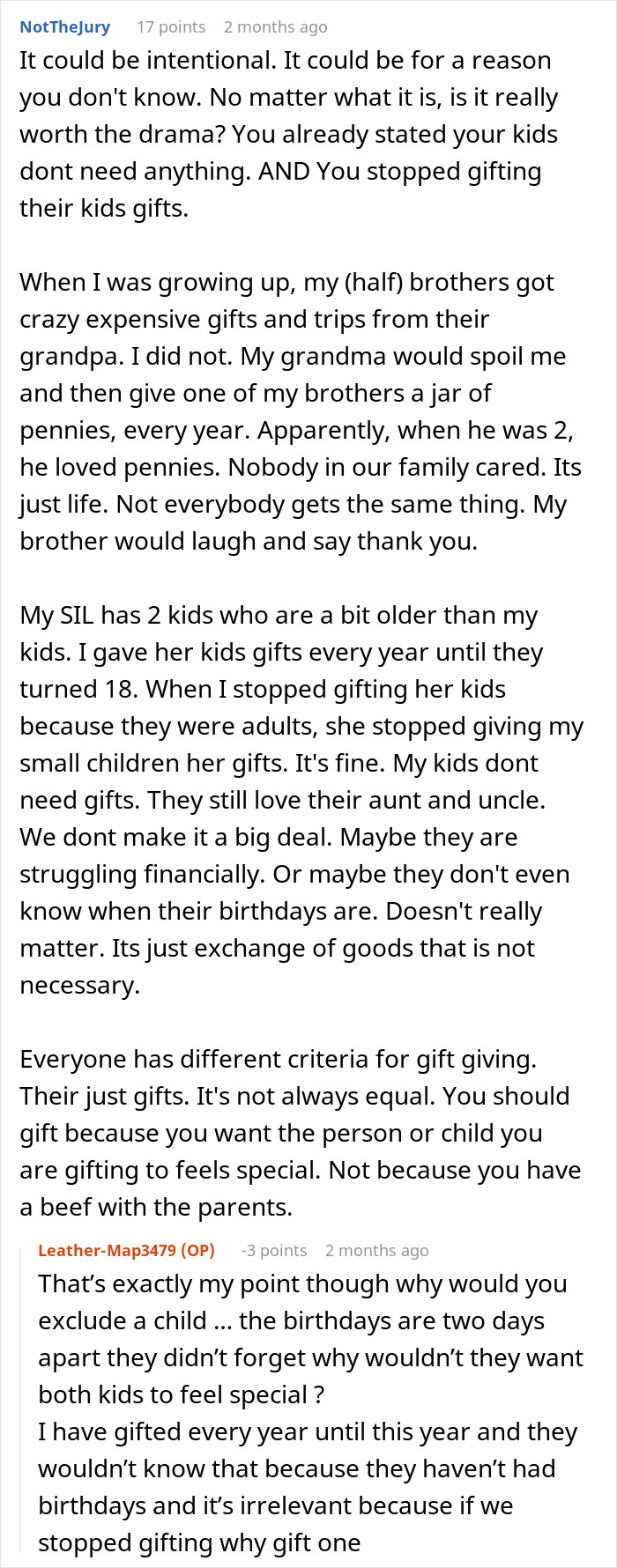



I got 4 niblings at once when my brother met his now-wife. All of them were family to me, straightaway and treated as if they were his children. Family isn't just DNA, and people who worship at the altar of bloodline are ridiculous. Especially if it's small children who don't understand these things.
I got 4 niblings at once when my brother met his now-wife. All of them were family to me, straightaway and treated as if they were his children. Family isn't just DNA, and people who worship at the altar of bloodline are ridiculous. Especially if it's small children who don't understand these things.













 No fees, cancel anytime
 then open in external browser


 and click "Open in External Browser"










20
1