Bored Panda works better on our iPhone app
Continue in app Continue in browser

The Bored Panda iOS app is live! Fight boredom with iPhones and iPads here.

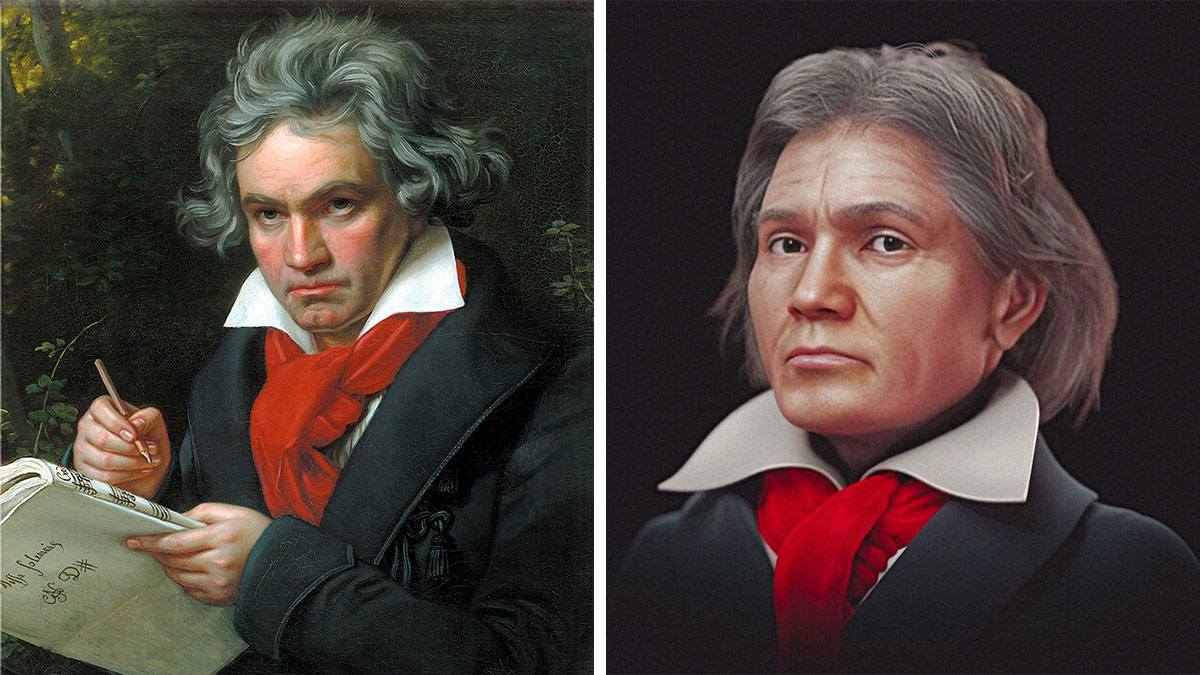
This Skull-Based Facial Reconstruction Gives Mozart, Bach, And Beethoven A Whole New Look
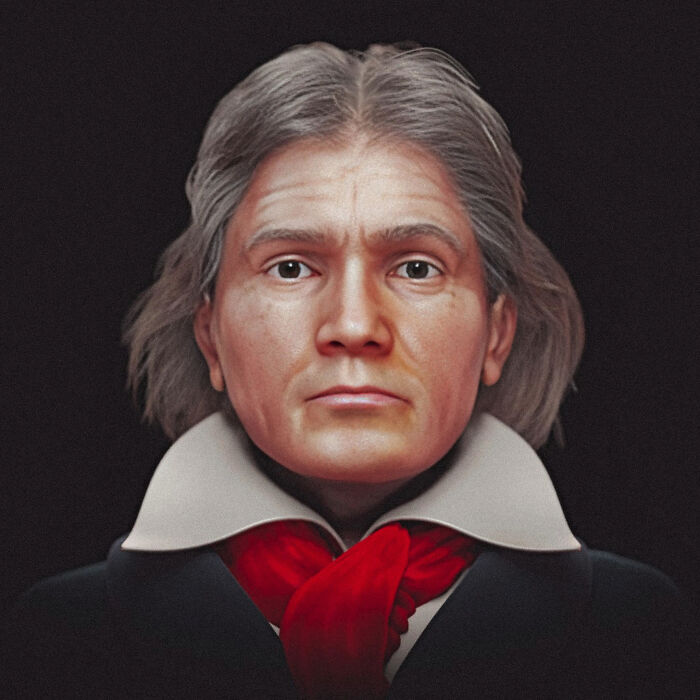
Side-by-side comparison of classical portrait and facial reconstruction of Beethoven using skull scans and portraits.
User submission

This Skull-Based Facial Reconstruction Gives Mozart, Bach, And Beethoven A Whole New Look

35

ADVERTISEMENT

Painted portraits of famous figures reveal a lot about their likeness, with the mastery of artists being in their ability to capture someone’s essence. Yet, they lack the true three-dimensionality and plasticity of a face. And reconstructing these elements is exactly what keeps Brazilian 3D designer and researcher Cícero Moraes busy. You might remember him from Bored Panda’s previous feature on his reconstruction of Ivan the Terrible, where he used forensic-style methods and historical data to build a lifelike face from old remains and records.

Moraes has become a familiar name in the world where history, anatomy, and digital art overlap. His work focuses on facial approximation: creating a scientifically grounded “best possible” face from skeletal evidence, whether that’s a famous historical figure or human remains recovered in archaeological digs. It’s not the same thing as identification (DNA still wins that battle), but it can be surprisingly powerful for helping modern viewers connect with people who otherwise feel trapped behind oil paint and mythology.

More info: Instagram | ciceromoraes.com.br

RELATED:

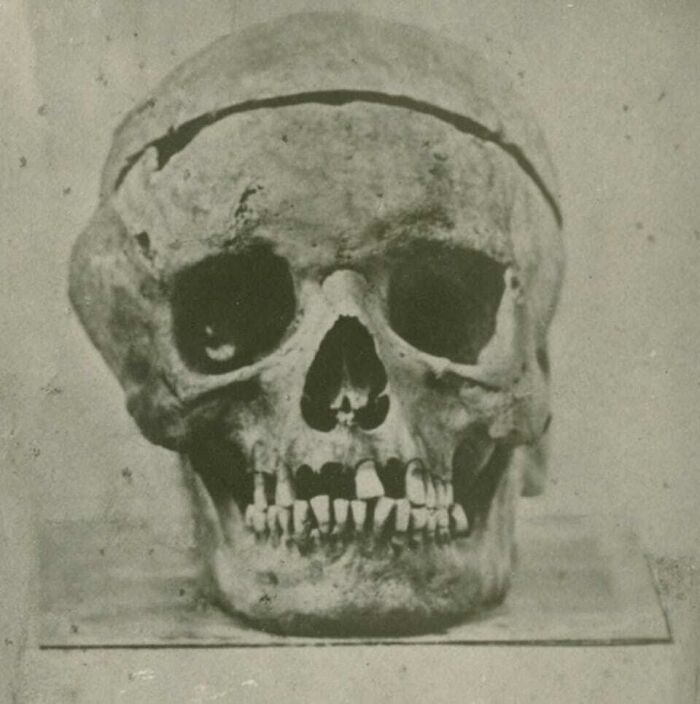
    Beethoven’s skull, photographed straight-on, gives the hard limits for face width, jaw shape, and eye placement

    Image credits: Cícero Moraes

    In this post, we’re staying in the world of classical music, bringing you facial reconstructions connected to Mozart, Bach, and Beethoven. And while each case can involve different source material (a skull, casts, old photos, or measurements), the underlying workflow follows a similar logic: start with the skull’s hard limits, then build outward using anatomical rules and population-based averages.

    ADVERTISEMENT

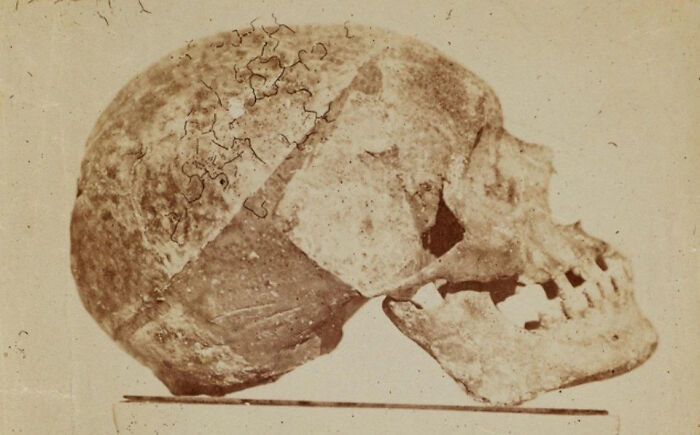
    A side view makes the “profile math” obvious

    Image credits: Cícero Moraes

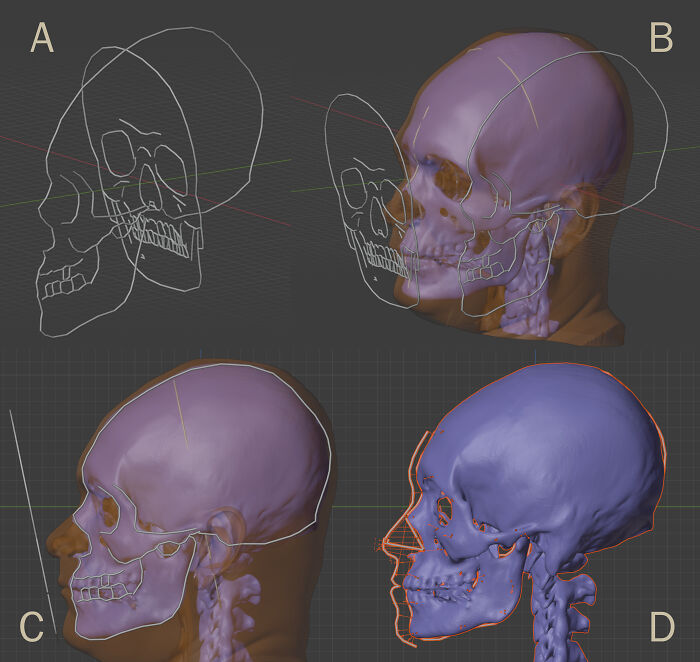
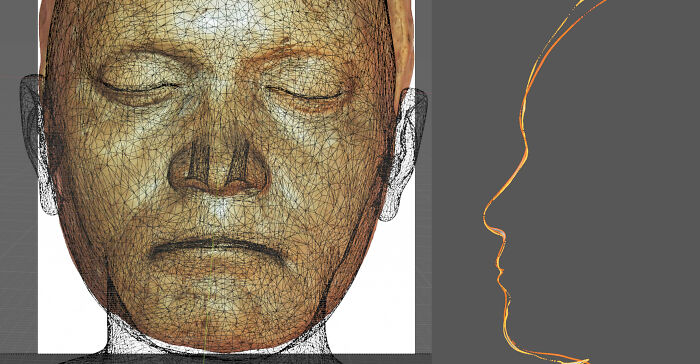
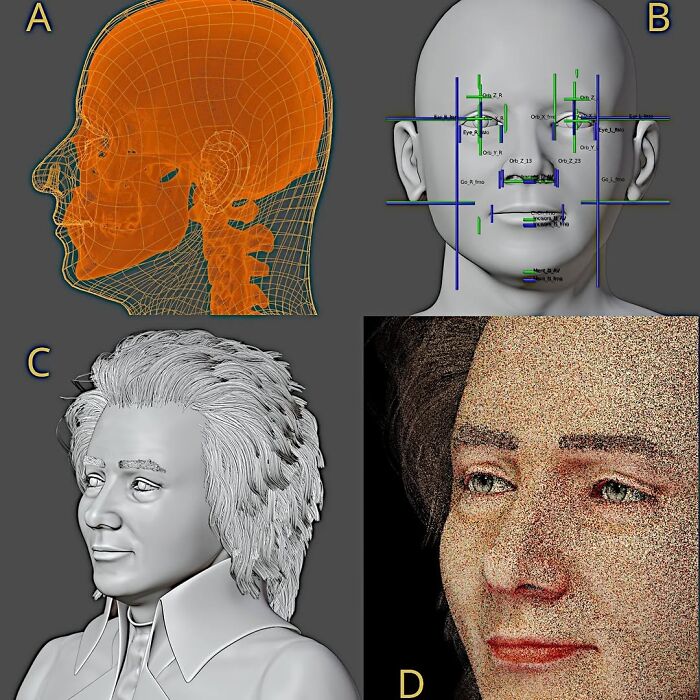
    First glimpses of the face appear when the skull scan is uploaded into a 3D modelling program

    Image credits: Cícero Moraes

    So what does that look like in practice? In Moraes’ digital workflow, the skull is first positioned and scaled in a 3D scene, sometimes reconstructed from published photos and measurements when a full scan isn’t available.

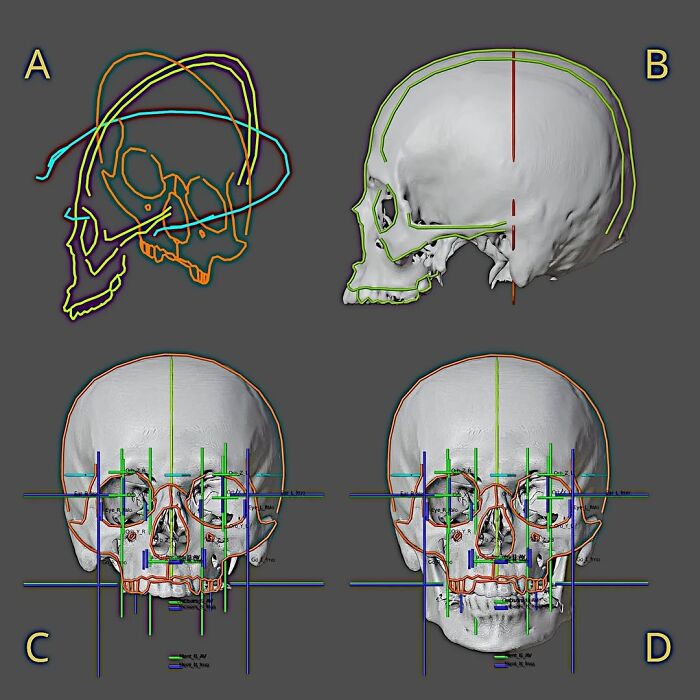
    Before the face exists, Moraes builds the framework by overlaying reference guides to the skull

    Image credits: Cícero Moraes

    ADVERTISEMENT
    ADVERTISEMENT

    The skull gets “dressed” in a digital soft-tissue shell, showing how muscle and fat would sit over bone

    Image credits: Cícero Moraes

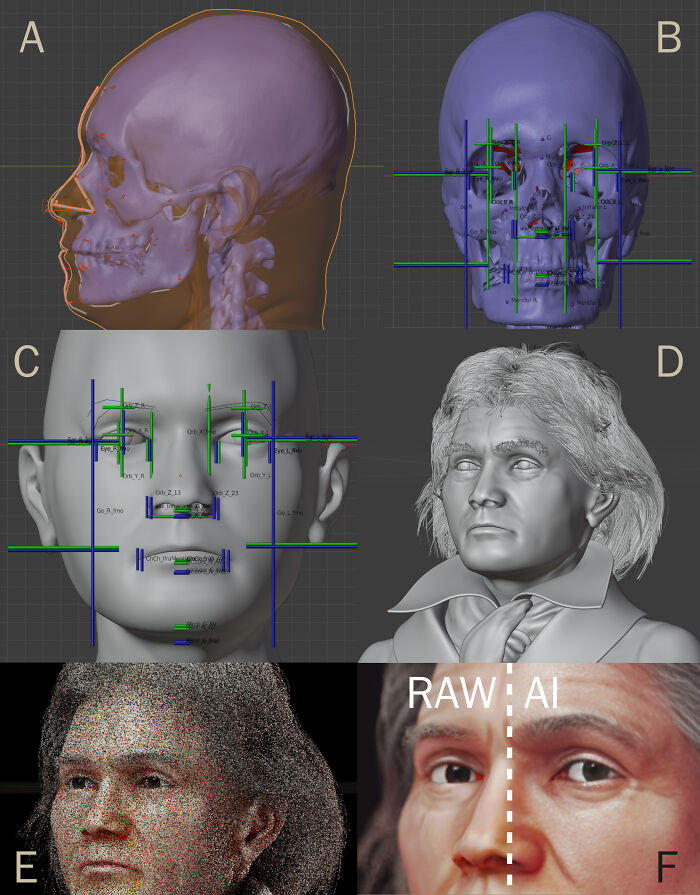
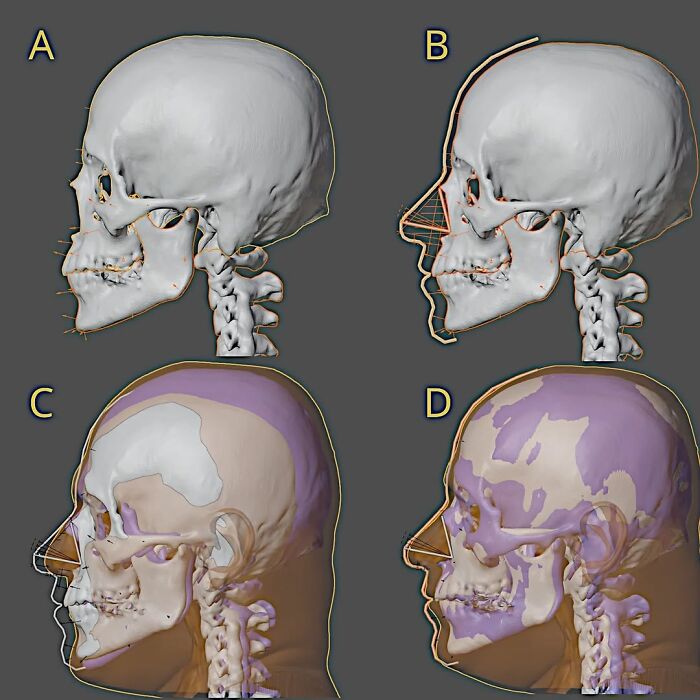
    From there, he adds soft-tissue thickness markers. These are depth guidelines based on real datasets across key points of the face to estimate how much “living” tissue would sit over bone. Next comes feature projection, especially the nose, which is notoriously tricky because cartilage doesn’t survive; to compensate, multiple established methods can be used together to estimate its likely shape.

    Outlines and landmarks help compare multiple historical references

    Image credits: Cícero Moraes

    The skull is aligned with 2D reference geometry, letting Moraes test proportions and correct angle distortions

    ADVERTISEMENT

    Image credits: Cícero Moraes

    A particularly interesting step is using a “virtual donor” head scan (a CT-based reference) that’s digitally adjusted to match the target skull’s proportions, helping generate realistic facial volume before the final sculpting pass. Once the face is structurally complete, the more interpretive elements, hair, styling, and presentation, get layered in, and final detail can be enhanced with careful, human-supervised AI touch-ups rather than letting an algorithm freeload its way into rewriting anatomy.

    ADVERTISEMENT

    Multiple profile outlines stack together, showing where sources agree and where artists may have flattered

    Image credits: Cícero Moraes

    ADVERTISEMENT

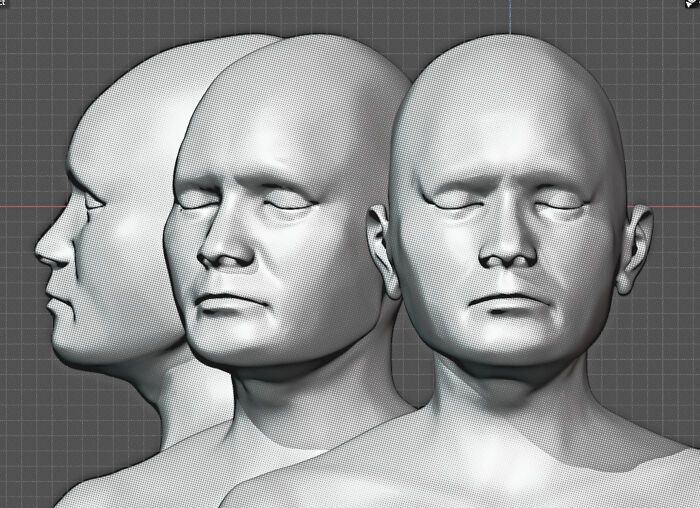
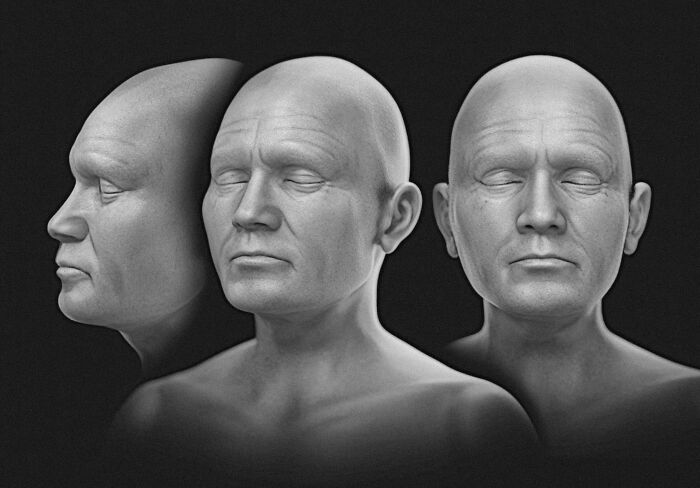
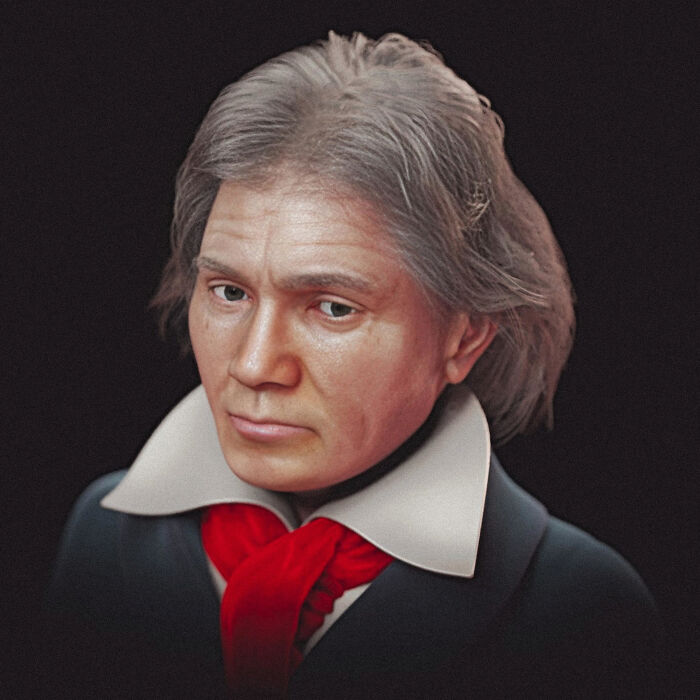
    The “raw” 3D head emerges, then gets refined by adding hair, skin texture, and lighting

    Image credits: Cícero Moraes

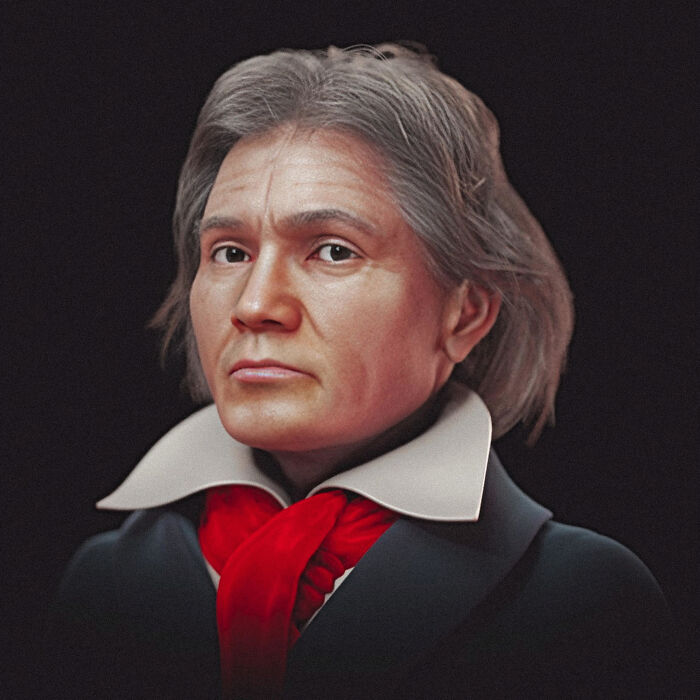
    A more human, less mythic Beethoven emerges

    Image credits: Cícero Moraes

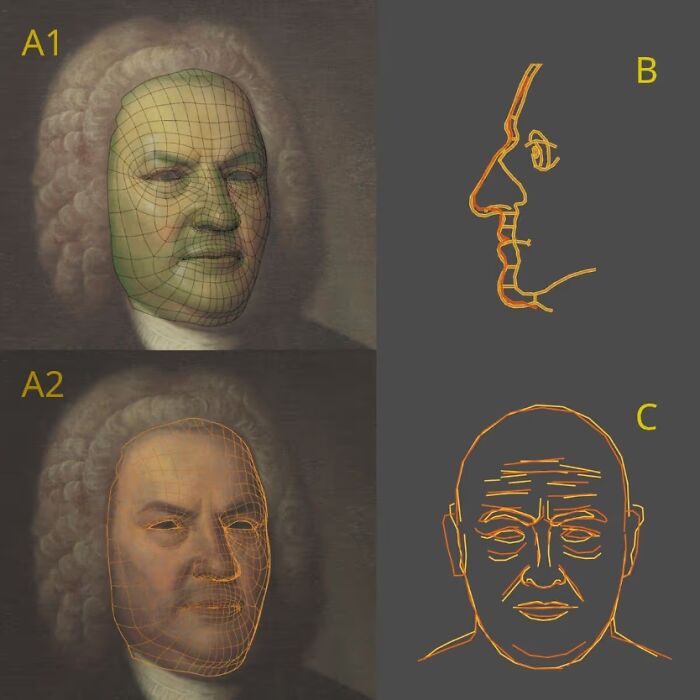
    Bach begins with a different challenge: matching a 3D facial mesh to a historical portrait

    Image credits: Cícero Moraes

    ADVERTISEMENT

    The portrait becomes a measurement tool as Moraes maps facial planes and landmarks

    ADVERTISEMENT

    Image credits: Cícero Moraes

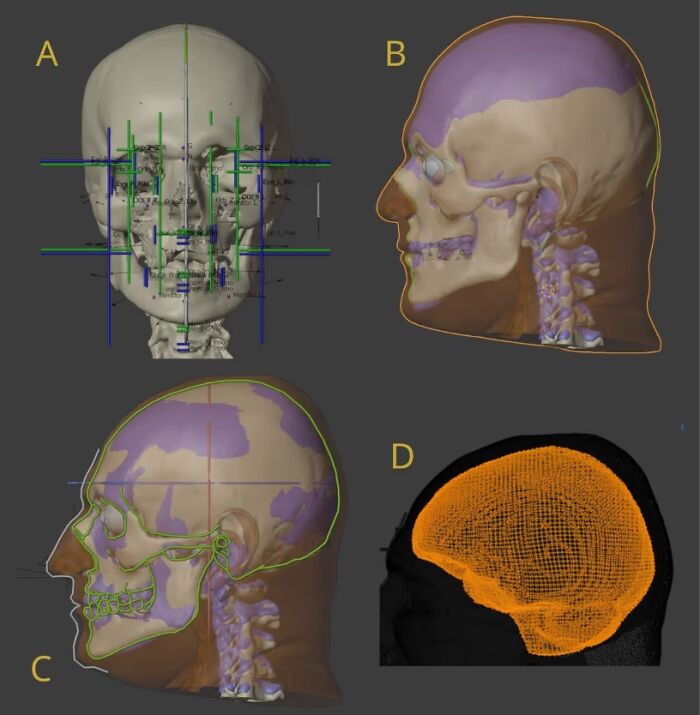
    A calibrated skull model, aligned profile, and head volume work together to shape the final model

    Image credits: Cícero Moraes

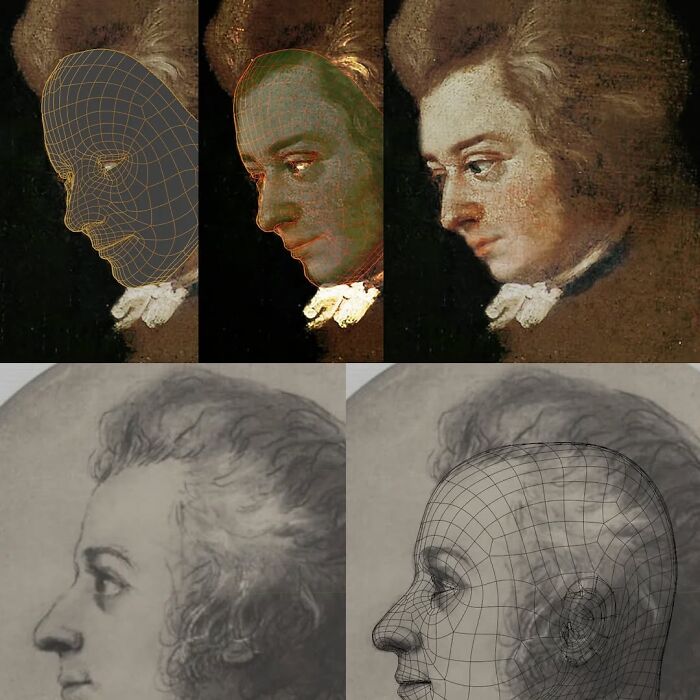
    Mozart’s process starts with reference imagery, turning a painted profile into a usable 3D guide

    Image credits: Cícero Moraes

    A second reference angle gets matched in 3D, helping confirm the proportions of the brow, midface, and chin

    ADVERTISEMENT

    Image credits: Cícero Moraes

    ADVERTISEMENT

    A second reference angle gets matched in 3D, and compared to previous attempts at reconstruction

    Image credits: Cícero Moraes

    Mesh-on-portrait overlay: the face grid is adjusted until key points sit where anatomy says they should

    Image credits: Cícero Moraes

    The skull model and the facial “envelope” get combined, showing how the reconstruction is constrained by bone

    ADVERTISEMENT

    Image credits: Cícero Moraes

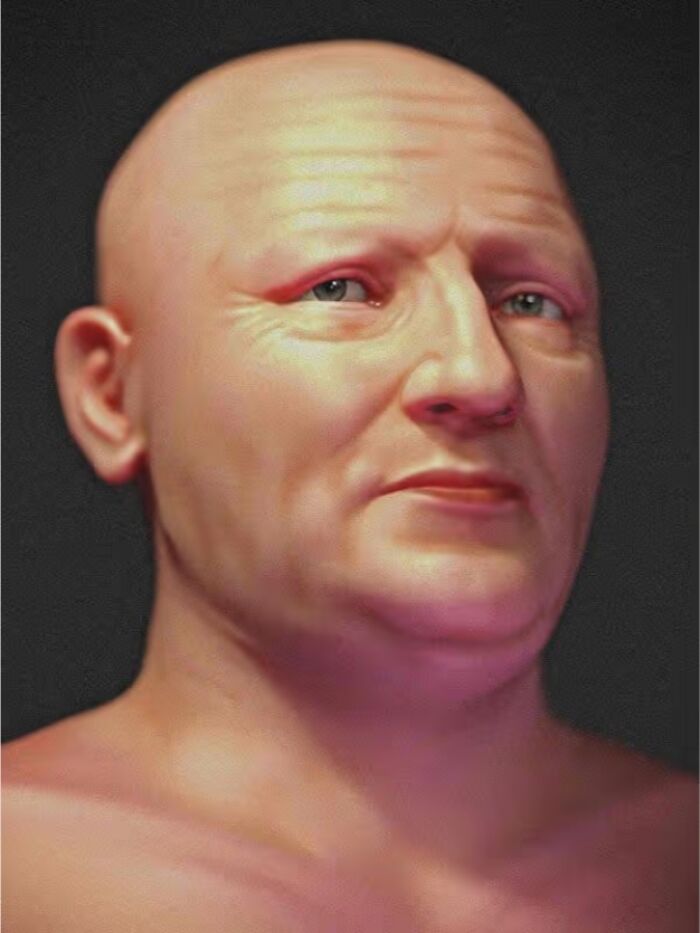
    A clean 3D sculpt becomes a lifelike head as pores, shading, and subtle asymmetries are added

    Image credits: Cícero Moraes

    ADVERTISEMENT

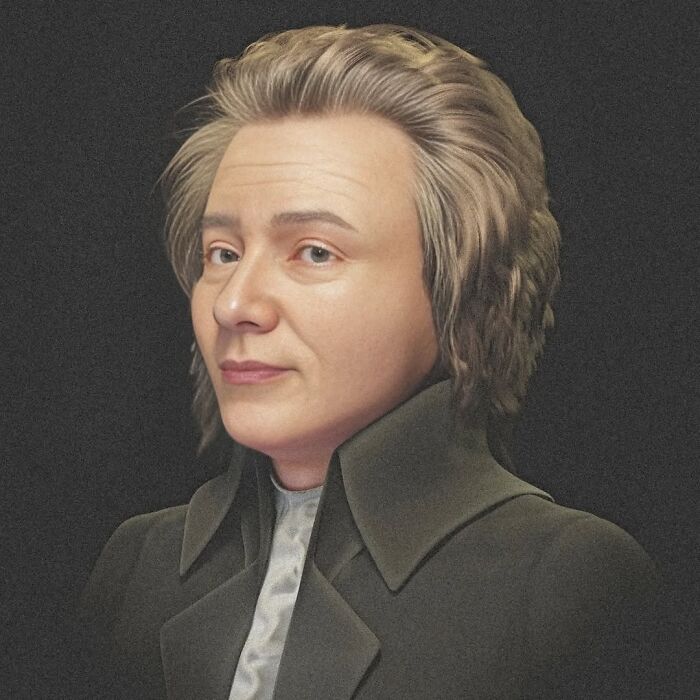
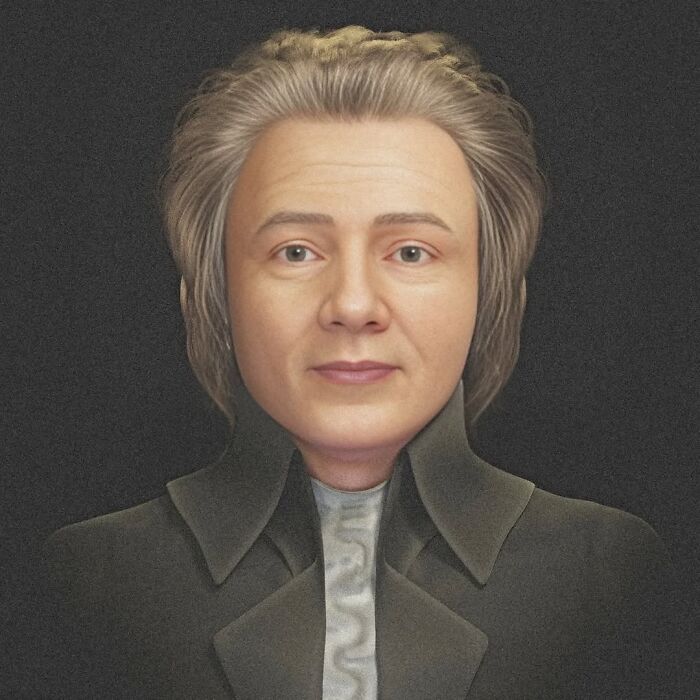
    Mozart’s reconstructed face looks softer and more aged than in historical portraits

    Image credits: Cícero Moraes

    ADVERTISEMENT

    1k+views

    Share on Facebook

    Explore more of these tags

    Hidrėlėy

    Hidrėlėy

    Author, Approved Contributor

    Read more »

    I am a Brazilian digital artist who loves transforming imagination into hyper-real visuals. I work with artificial intelligence and image editing to create what I always wondered as a child: how would our favorite characters look in real life? Over time, many of my artworks have gone viral and were featured in international publications. I have recreated realistic versions of cartoon characters such as Disney and The Simpsons, imagined how celebrities who died young would look today, and even gave modern faces to historical figures like Mona Lisa or Shakespeare. Beyond entertainment, I created Para Não Esquecer, a social project that revisits memorable criminal cases in Brazil. My goal is to honor victims, keep memory alive and remind society that justice and empathy matter. I also write for Bored Panda, where I create articles featuring artists, photographers, rescue stories and feel-good moments from around the world. My work aims to highlight creativity, kindness and emotional storytelling. In everything I do, my purpose is the same: to touch hearts, evoke emotion and make people feel something real.

    Read less »
    Hidrėlėy

    Hidrėlėy

    Author, Approved Contributor

    I am a Brazilian digital artist who loves transforming imagination into hyper-real visuals. I work with artificial intelligence and image editing to create what I always wondered as a child: how would our favorite characters look in real life? Over time, many of my artworks have gone viral and were featured in international publications. I have recreated realistic versions of cartoon characters such as Disney and The Simpsons, imagined how celebrities who died young would look today, and even gave modern faces to historical figures like Mona Lisa or Shakespeare. Beyond entertainment, I created Para Não Esquecer, a social project that revisits memorable criminal cases in Brazil. My goal is to honor victims, keep memory alive and remind society that justice and empathy matter. I also write for Bored Panda, where I create articles featuring artists, photographers, rescue stories and feel-good moments from around the world. My work aims to highlight creativity, kindness and emotional storytelling. In everything I do, my purpose is the same: to touch hearts, evoke emotion and make people feel something real.

    Tarik Velić

    Tarik Velić

    Writer, BoredPanda staff

    Read more »

    Hey Pandas! I’m Tarik, a Community Manager at Bored Panda. Day-to-day, I help creators present their posts in the best possible way, spotlight great work, and keep an eye on community activity so discussions stay welcoming, constructive, and fun. Before joining Bored Panda, I worked in freelance writing and project coordination/management at my alma mater. Outside work, you’ll find me carving corners on my motorcycle, falling into history-related rabbit holes, keeping up with politics, and occasionally building scale models or Lego “for five minutes” that turns into an entire evening. I also have a weakness for bold colors, sunsets, and wonderfully strange animals.

    Read less »

    Tarik Velić

    Tarik Velić

    Writer, BoredPanda staff

    Hey Pandas! I’m Tarik, a Community Manager at Bored Panda. Day-to-day, I help creators present their posts in the best possible way, spotlight great work, and keep an eye on community activity so discussions stay welcoming, constructive, and fun. Before joining Bored Panda, I worked in freelance writing and project coordination/management at my alma mater. Outside work, you’ll find me carving corners on my motorcycle, falling into history-related rabbit holes, keeping up with politics, and occasionally building scale models or Lego “for five minutes” that turns into an entire evening. I also have a weakness for bold colors, sunsets, and wonderfully strange animals.

    What do you think ?
    Cícero Moraes
    Community Member
    1 month ago Created by potrace 1.15, written by Peter Selinger 2001-2017

    Thank you very much for sharing my work! A big hug!

    Pernille
    Community Member
    1 month ago Created by potrace 1.15, written by Peter Selinger 2001-2017

    Great work, thank you for doing it, it was very interesting.

    Load More Replies...

    Multa Nocte
    Community Member
    Premium
    1 month ago Created by potrace 1.15, written by Peter Selinger 2001-2017

    Very interesting. When I think of Mozart I will always think of Tom Hulce in Amadeus. This rendition has the same sparkle that Hulce showed in the movie.

    ADVERTISEMENT
    geezeronthehill
    Community Member
    1 month ago Created by potrace 1.15, written by Peter Selinger 2001-2017

    At first I thought they were claiming to have Mozart's skull, which would have been astounding, since he was buriedin a potter's field. .
    Load More Comments
    Cícero Moraes
    Community Member
    1 month ago Created by potrace 1.15, written by Peter Selinger 2001-2017

    Thank you very much for sharing my work! A big hug!

    Pernille
    Community Member
    1 month ago Created by potrace 1.15, written by Peter Selinger 2001-2017

    Great work, thank you for doing it, it was very interesting.

    Load More Replies...
    Multa Nocte
    Community Member
    Premium
    1 month ago Created by potrace 1.15, written by Peter Selinger 2001-2017

    Very interesting. When I think of Mozart I will always think of Tom Hulce in Amadeus. This rendition has the same sparkle that Hulce showed in the movie.

    ADVERTISEMENT
    geezeronthehill
    Community Member
    1 month ago Created by potrace 1.15, written by Peter Selinger 2001-2017

    At first I thought they were claiming to have Mozart's skull, which would have been astounding, since he was buriedin a potter's field. .
    Load More Comments
    You May Like
    Related on Bored Panda
    Popular on Bored Panda
    Trending on Bored Panda
    Also on Bored Panda
    Go to:
    Back to Top
    Homepage
    Trending
    ADVERTISEMENT