Get Premium
Dark mode theme is available exclusively for premium users. Learn more about the benefits of subscribing.
No fees, cancel anytime.

 Dark Mode Ad-Free Browsing Unlimited Content
 Ad-Free Browsing Unlimited Content Dark Mode
Join 1.2 million Panda readers who get the best art, memes, and fun stories every week!

Few things feel as instantly satisfying as rubbing your eyes when they start to itch. You might do it without even realizing it, especially after a long day staring at a screen or when you’re struggling to stay awake. It feels so good, which is probably why so many people never think twice about the habit.
But that little moment of relief may come with a downside. Eye specialists warn that rubbing your eyes too often can have consequences you might not expect, making this seemingly harmless reflex worth a second thought.
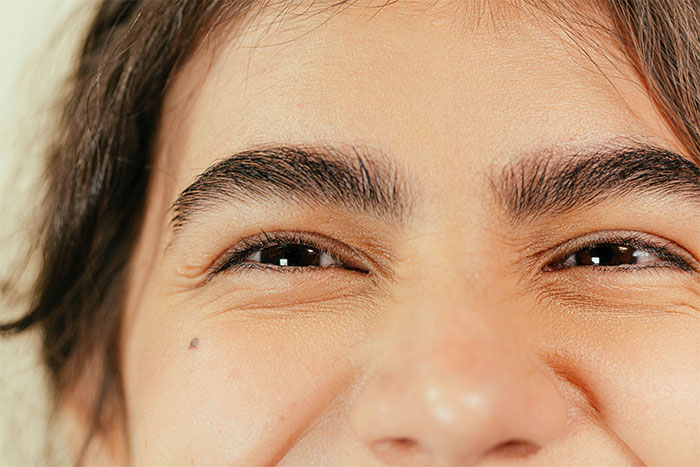
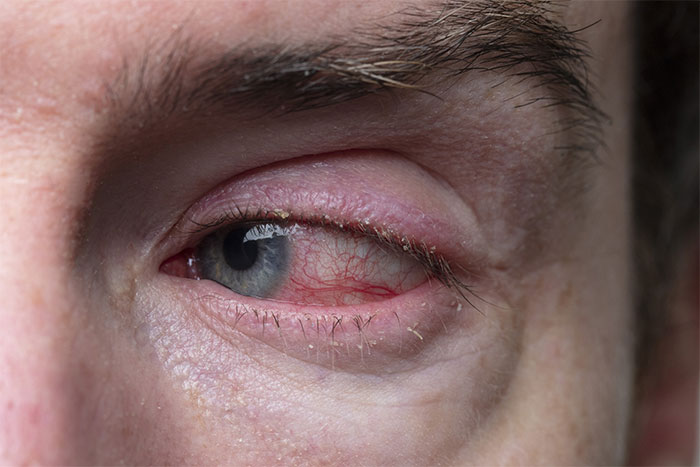
Itchy eyes can be caused by pollen, dust, pet dander, and mold. These can trigger inflammation that leaves your eyes red, watery, and begging to be scratched for some relief. According to eye experts, allergic conjunctivitis can also cause an itchy and burning sensation, making rubbing feel almost irresistible.
When your eyes don’t produce enough tears or the tears evaporate too quickly, they may feel scratchy. Spending hours looking at a phone or computer can make it worse because people tend to blink less while concentrating on a screen, letting the eye’s surface dry out. An eyelash, a speck of dust, smoke, or misplaced contact lenses can also leave your eyes feeling irritated.
So why does rubbing feel so satisfying? According to optometrist Dr. Weston Tuten, pressure around the eyes can stimulate tear production, temporarily lubricating the surface and easing discomfort. The sensation can also trigger a reflex involving the nerves connected to the heart, briefly creating a calming effect.
The problem is that temporary relief doesn’t necessarily mean the irritation has gone away. If allergies, dryness, or another issue is causing the itch, rubbing may leave you reaching for your eyes again and again.
A quick, gentle rub doesn’t automatically mean you’ve damaged your eyes. The concern is frequent or forceful rubbing, especially when your eyes are already irritated. Eye specialists warn that repeated pressure can cause several problems.
1. You can scratch your cornea
The cornea is the clear front layer of the eye that helps focus light. A fingernail, eyelash, or tiny particle caught between your finger and eye can scratch it, causing pain, redness, tearing, and light sensitivity. A scratch may need medical attention, particularly if symptoms are severe or your vision changes.
2. You may worsen allergies and irritation
Rubbing can transfer more pollen, dust, and other allergens from your hands to your eyes. It can also aggravate inflammation, making them more itchy.
3. You could increase your risk of infection
Your hands touch phones, door handles, and countless other surfaces throughout the day. Touching or rubbing your eyes with unwashed hands can transfer germs and increase the risk of infections such as conjunctivitis, commonly known as pink eye.
4. Repeated rubbing may contribute to corneal damage
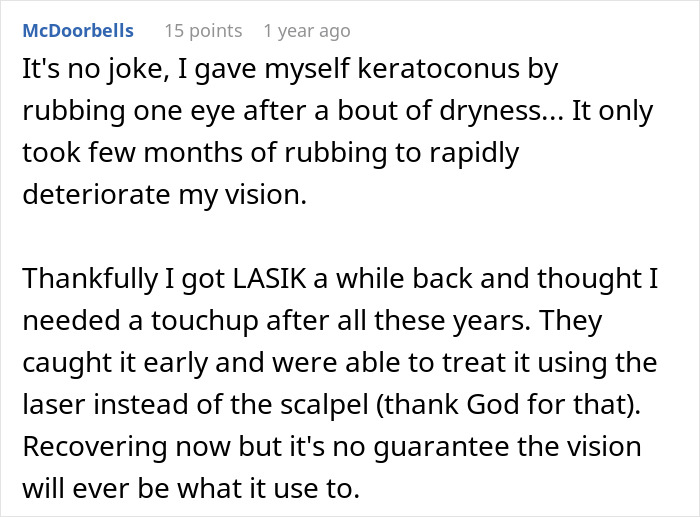
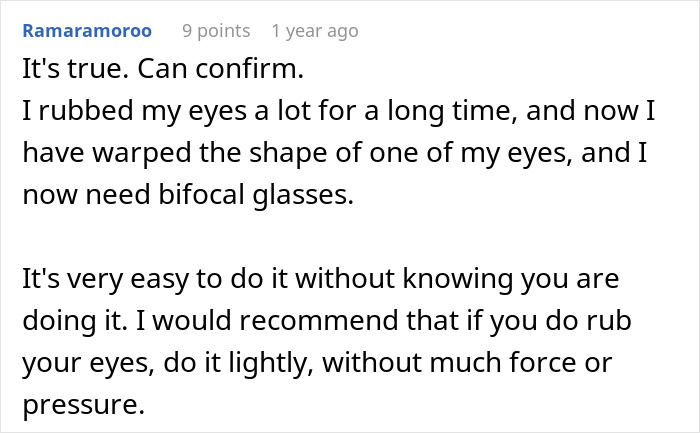
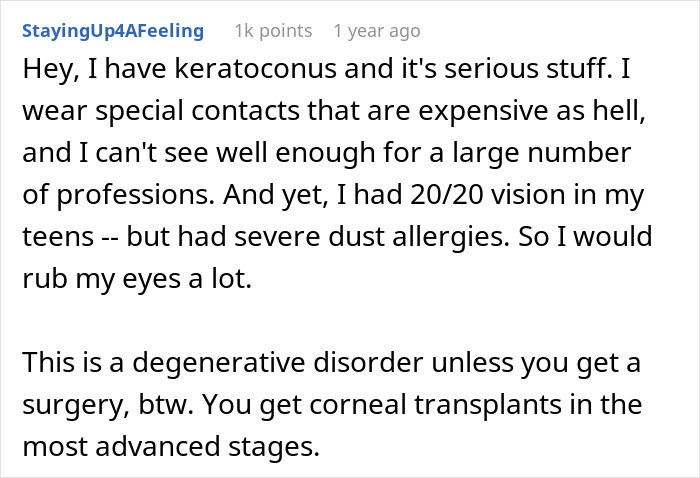
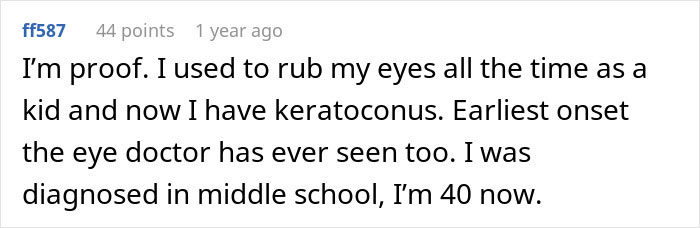
The cornea needs to maintain its smooth, rounded shape to focus light properly. Frequent, forceful rubbing has been associated with keratoconus, a condition in which the cornea thins and bulges outward, potentially distorting vision. According to optometrists, repeated rubbing can weaken the cornea over time, especially in people susceptible to the condition.
5. You may aggravate existing eye problems
If your eyes are already inflamed, dry, or injured, rubbing can worsen the discomfort. Persistent itching may also signal an underlying condition that needs treatment rather than repeated attempts to soothe it.
The best response depends on what’s causing the irritation. Rather than rubbing your eyes and hoping the feeling passes, try these safer alternatives.
1. If your eyes are itchy, use a cool compress
Close your eyes and gently place a clean, cool washcloth over your eyelids for a few minutes. This can help ease itching and swelling, especially when allergies are to blame.
2. If your eyes feel dry, consider lubricating eye drops
Artificial tears can help moisturize the eye’s surface. Ask a pharmacist or eye-care professional which product is suitable, particularly if you need drops frequently or wear contact lenses. Avoid using medicated eye drops without appropriate medical advice.
3. If something gets into your eye, don’t rub it out
Wash your hands and gently rinse the eye with clean, lukewarm water or sterile saline. Blink several times to encourage tears to flush out a loose particle. Don’t try to remove anything embedded in the eye. Seek urgent medical care if an object won’t come out, pain persists, or your vision changes.
4. If your eyes feel tired after screen time, give them a break
Experts recommend the 20-20-20 rule: every 20 minutes, look at something about 20 feet away for at least 20 seconds. Remember to blink regularly, too, as this helps spread tears across the eye’s surface.
5. If allergies keep bothering you, tackle the trigger
Keep windows closed when pollen levels are high, avoid rubbing your eyes after touching pets, and wash your hands after exposure to dust or other irritants. If the itching keeps returning, an eye specialist can help identify the cause and recommend appropriate treatment.
You can start by eating foods rich in vitamin A, such as eggs, sweet potatoes, carrots, and leafy green vegetables, to support healthy vision. Eye specialists explain that vitamin A helps you see in low light and keeps the surface of your eyes healthy. A balanced diet with a variety of fruits, vegetables, and fish can also support overall eye health.
Remember to protect your eyes when you head outside, too. Choose sunglasses that block 99% to 100% of UVA and UVB rays, even on cloudy days, as ultraviolet radiation can damage your eyes over time. The American Academy of Ophthalmology recommends UV-blocking sunglasses to help reduce the risk of sun-related eye problems.
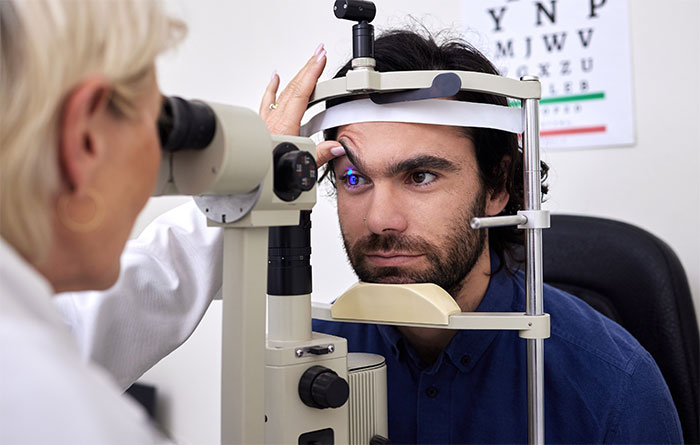
It’s also worth booking an eye examination even when your vision seems perfectly fine. Some eye conditions develop without obvious symptoms, so waiting until something feels wrong can mean missing an opportunity to catch a problem early.
The National Eye Institute recommends comprehensive dilated eye exams to help detect eye diseases before they cause noticeable vision changes. An eye-care professional can advise you on how often you need one based on your age and individual risk factors.
And, of course, try to resist the urge to rub your eyes whenever they feel irritated. Wash your hands before touching the area around your eyes and use a clean, cool compress or suitable lubricating eye drops when you need relief.
If itching keeps returning, or you notice pain, redness, light sensitivity, or changes in your vision, get advice from an eye-care professional rather than assuming the problem will go away on its own. A few small changes can go a long way toward keeping your eyes comfortable and your vision healthy.
@doctoreyehealth Did you know there’s a hidden danger to rubbing your eyes? While it may provide temporary relief, eye rubbing puts immense pressure on your cornea. It’s both a cause and symptom of an eye disease called keratoconus, or KC. This condition causes the cornea to thin and become cone shaped. Other KC symptoms include blurry vision, frequent headaches, and difficulty seeing at night. Because KC is progressive, it may get worse over time and lead to vision loss. That’s why it’s important to get treatment as soon as possible. Take the KC quiz at CouldItBeKC.com. #keratoconus♬ original sound – Joseph Allen, OD, FAAO








By entering your email and clicking Subscribe, you're agreeing to let us send you customized marketing messages about us and our advertising partners. You are also agreeing to our Privacy Policy.
Thank you! You've successfully subscribed to newsletters!








































 No fees, cancel anytime






















31
0