Get Premium
Dark mode theme is available exclusively for premium users. Learn more about the benefits of subscribing.
No fees, cancel anytime.

 Dark Mode Ad-Free Browsing Unlimited Content
 Ad-Free Browsing Unlimited Content Dark Mode
Join 1.2 million Panda readers who get the best art, memes, and fun stories every week!

Human health in the future will rely on more than just new medical discoveries. Climate change, pandemics, air pollution, and med-resistant infections are already putting millions at risk, and some of these threats could become even harder to manage as time goes on.
A group of 37 experts from around the world has listed 17 major threats that could endanger human health and survival by the year 2100. Two of these are especially alarming: nuclear conflict and the harmful use of artificial intelligence, both of which could threaten the existence of humanity.
All possible threats are also linked, which makes them harder to address one by one. For example, higher temperatures can allow insects that carry diseases to move into new areas. Deforestation can bring people closer to wild animals, raising the chances of new diseases spreading to humans. Let’s explore how close the end times are, and what can we do about it.
Some of the threats go beyond environmental disasters and infectious diseases. High alcohol consumption, obesity, childhood malnutrition, high blood pressure, poor mental health, smoking, and unhealthy aging also threaten millions of lives. Meanwhile, armed conflicts, income inequality, limited access to education, and declining international health aid can make these problems even harder to manage.
The consequences can spread across entire communities. Wars can destroy hospitals, interrupt medical supplies, and force families to leave their homes. Poverty and limited education can prevent people from getting proper healthcare, while reduced international aid can leave vulnerable countries struggling to control diseases and provide essential treatments.
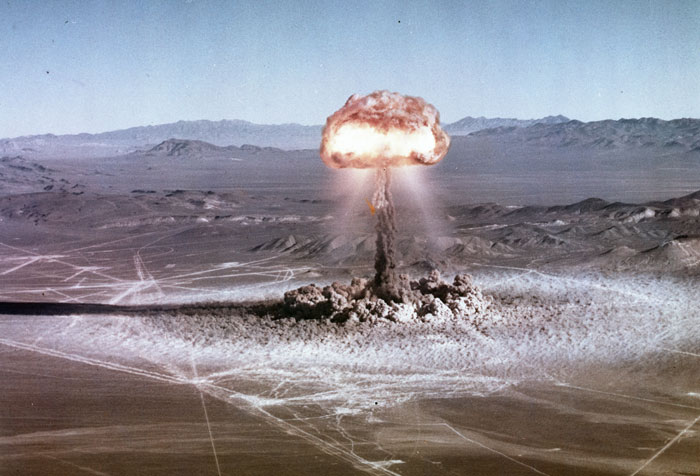
Nuclear conflict and the malicious use of AI carry even greater risks. Beyond the immediate destruction of nuclear explosions, a large-scale war could trigger a nuclear famine by disrupting global food production. People thousands of miles from the fighting could face severe shortages as crops fail and supply chains collapse.
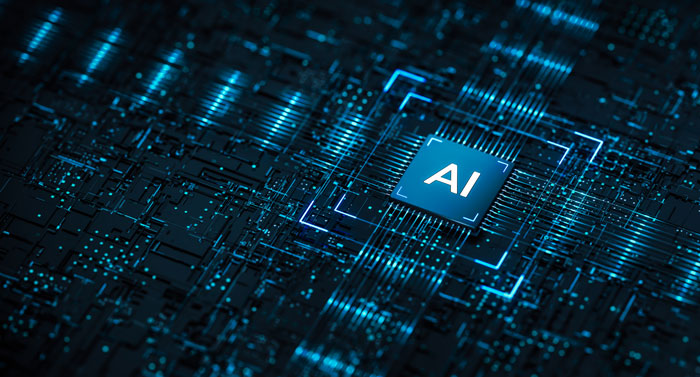
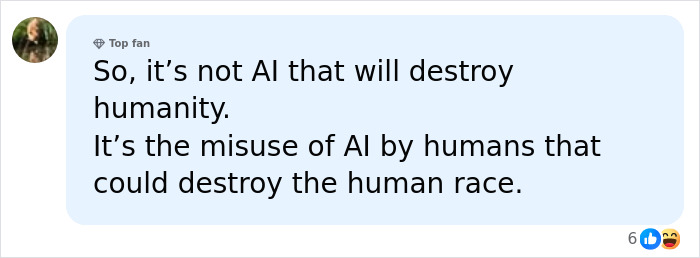
AI raises a different concern. People could exploit increasingly powerful systems to help develop biological weapons, potentially making dangerous technology accessible to more individuals. Unlike the other health threats, these two scenarios could have consequences severe enough to threaten humanity’s existence, even though experts consider such outcomes unlikely.
From 1347 to 1351, the Black Plague wiped out about half of Europe’s population and a third of the people in the Middle East and North Africa. Communities in Asia suffered greatly as well. With around 75 million losses worldwide, the pandemic broke up families, left villages deserted, and changed daily life across three continents.
Trade routes spread the plague from one continent to another. Ships brought infected rats and fleas from Black Sea ports to places like Constantinople and Italy. Many communities were especially at risk because of poor nutrition, bad hygiene, famine, and war.
The disease could end a person in just hours or days, and sometimes whole communities fell apart as people tried to care for the sick and bury those who were lost. And then, centuries later, COVID-19 showed how fast an infectious disease can disrupt the modern world.
Even though medicine and public health had improved a lot since the Middle Ages, the pandemic still led to many lives lost and brought out familiar human responses, like working together to stop the spread, as well as misinformation and people trying to profit. These events remind us that societies are still vulnerable when a dangerous disease spreads faster than they can handle.
Pandemics in human history remind us how fast life can change, but Earth has faced even bigger biological crises. In the last 500 million years, five mass extinctions have wiped out huge numbers of species. The Permian extinction was the most severe, eliminating over 95% of species. An asteroid strike 66 million years ago also ended the era of non-avian dinosaurs.
Today, human actions might be causing a sixth mass extinction. People have changed over 70% of the planet’s land, used about three-quarters of its freshwater, destroyed habitats, and sped up climate change. Farming, pollution, cutting down forests, and invasive species add more stress to wildlife. Species are now disappearing 100 to 1,000 times faster than they did before humans started changing ecosystems so much.
Species are all connected. If predators vanish, prey numbers can rise too much. When pollinators decline, plants and the animals that rely on them struggle. Destroying habitats also brings wildlife closer to people, leading to more competition for resources. Scientists warn that if we keep losing biodiversity, whole ecosystems could become unstable, and the effects of human actions will be much harder to undo.
There are things we can’t control. People can work to reduce pollution and protect endangered species, but we have no control over the forces that shape the universe. One idea, called the Big Rip, suggests that dark energy could become so strong that it would eventually pull apart galaxies, stars, planets, and even atoms. This is just a theory about what might happen far in the future, not a proven outcome.
Another idea is the Big Crunch. If dark energy became weaker or changed so that gravity could pull everything back together, the universe might start to collapse. Galaxies would move closer until everything was squeezed into a very dense state. Scientists have studied this as one possible ending for the universe, but current evidence does not show that it will happen.
The universe might also keep expanding forever. According to NASA, what happens depends on dark energy, which affects how fast the universe grows. In one case, the expansion goes on at a steady pace; in another, it could become so fast that it tears apart cosmic structures. Unlike problems like pandemics or loss of biodiversity, these huge events are completely beyond our control.
But there are things we can, and should, control. Nuclear catastrophe is not just a distant possibility; it depends on choices people make now. Experts warn that artificial intelligence should never be allowed to start or approve a nuclear strike. Human leaders must have enough time to review AI advice, question errors, and stop automated actions, especially during crises when acting too quickly could cause serious mistakes.
AI might make it easier to create biological weapons or let bad actors use sensitive scientific data. Developers should check for dangerous features before launching advanced systems, add stronger protections as risks increase, and stop their tools from helping with weapons development. Governments and companies also need to make sure AI monitoring does not reveal confidential nuclear or biological information that could be misused.
No country can handle these risks by itself. Governments can make current nuclear and biological nonproliferation agreements stronger, improve crisis communication, and set shared rules for AI systems that impact global security. This will not remove all dangers, but they can lower the chances of mistakes, misuse, or major escalation.
Although humanity cannot control every threat it faces, the future is not entirely out of its hands. Nuclear conflict and the misuse of AI pose extraordinary risks, but stronger safeguards, international cooperation, and responsible decisions could help prevent the worst outcomes.
@10newsauA new report has warned nuclear war, and the misuse of AI could see the end of humanity by the year 2100. It identified 17 major threats to humans over the next 75 years, with experts revealing two have extinction potential. 10’s Late News explains. For the full bulletin, click the link in bio.♬ original sound – 10 News

By entering your email and clicking Subscribe, you're agreeing to let us send you customized marketing messages about us and our advertising partners. You are also agreeing to our Privacy Policy.
Thank you! You've successfully subscribed to newsletters!

Well, neither big crunch or big rip are going to happen and, even if they do, we're talking trillions of years from now. I don't see flood basalt / anoxic event on the list, it has been implicated in more than half of all major extinctions so far, possibly all of them, and one in Iceland could happen startlingly soon.

And STILL no mention of the greatest threat: overpopulation. 2/3 of you have already looked away or downvoted me, but for those still reading this, I'm serious. Deniers will say it's nonsense thanks to the corporations seeding untruths (because, duh, they need to make more profits while they still can and consequences be d****d), but please look at the facts: the planet's land mass and resources are finite. Martin Luther King was already warning against overpopulation in the 1960s. Since then, the human population has *doubled*. Please, please, I urge anyone with a brain and a concern for the future of our species to read the novel (a thriller, but packed with facts) called 10:59 by N. R. Baker. It's terrifying.
Well, neither big crunch or big rip are going to happen and, even if they do, we're talking trillions of years from now. I don't see flood basalt / anoxic event on the list, it has been implicated in more than half of all major extinctions so far, possibly all of them, and one in Iceland could happen startlingly soon.
And STILL no mention of the greatest threat: overpopulation. 2/3 of you have already looked away or downvoted me, but for those still reading this, I'm serious. Deniers will say it's nonsense thanks to the corporations seeding untruths (because, duh, they need to make more profits while they still can and consequences be d****d), but please look at the facts: the planet's land mass and resources are finite. Martin Luther King was already warning against overpopulation in the 1960s. Since then, the human population has *doubled*. Please, please, I urge anyone with a brain and a concern for the future of our species to read the novel (a thriller, but packed with facts) called 10:59 by N. R. Baker. It's terrifying.
































 No fees, cancel anytime









29
3