Get Premium
Dark mode theme is available exclusively for premium users. Learn more about the benefits of subscribing.
No fees, cancel anytime.

 Dark Mode Ad-Free Browsing Unlimited Content
 Ad-Free Browsing Unlimited Content Dark Mode
Join 1.2 million Panda readers who get the best art, memes, and fun stories every week!

The world is currently witnessing a historic acceleration in innovation, driven by the rapid advancement of Artificial Intelligence and cutting-edge research that is producing new scientific breakthroughs at an unprecedented pace.
Recent scientific discoveries are no longer confined to laboratories; in the last few years, scientists have moved from theoretical success to delivering tangible results that are gaining global recognition.
These breakthroughs represent profound solutions to challenges that have plagued humanity for generations.
This post may include affiliate links.
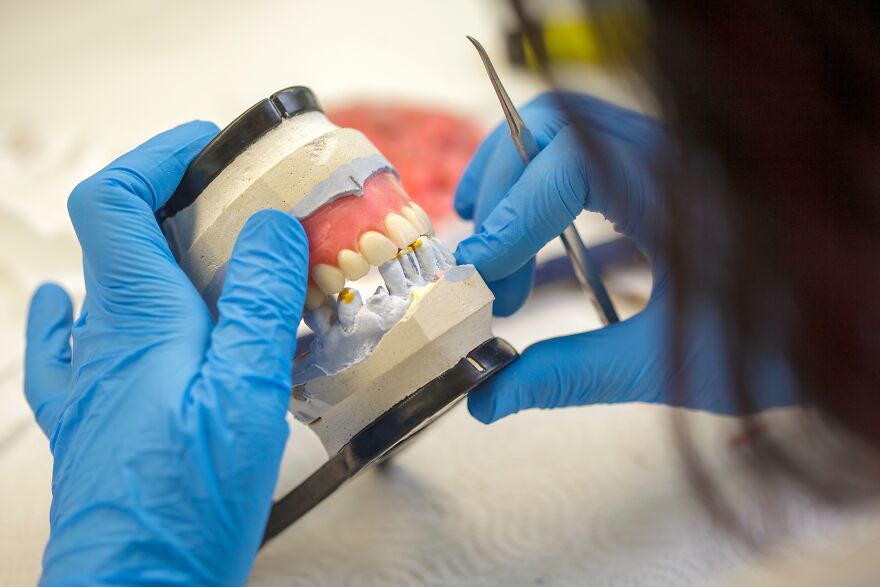
One of the more bizarre recent scientific discoveries involves a toothpaste made from hair that could revolutionize how we repair and protect damaged teeth.
Researchers from King’s College London have found that keratin, the primary protein found in hair, skin, and wool, can actually aid in tooth enamel repair and halt early-stage decay.
Because tooth enamel does not naturally regenerate once it is eroded, dental damage has historically been permanent.
However, this study revealed that when keratin comes into contact with the minerals in human saliva, it produces a protective, crystal-like coating remarkably similar to natural enamel.
Sara Gamea, the study's lead author, notes that keratin offers a “transformative alternative” to existing treatments, effectively bridging the gap between biology and dentistry. Beyond the health benefits, this discovery is a major win for the environment.
By using sustainably sourced keratin extracted from materials like wool, this toothpaste eliminates the need for traditional plastic resins, a common but non-biodegradable substance used in restorative dentistry.
This shift marks an exciting new era in biotechnology, where our own biological waste becomes the key to lifelong dental health, and it is expected to be adopted commercially in the next 2-3 years (via BBC).
In an era where we relentlessly seek sustainable alternatives and biodegradable solutions, scientists have struck gold in the most unlikely of places.
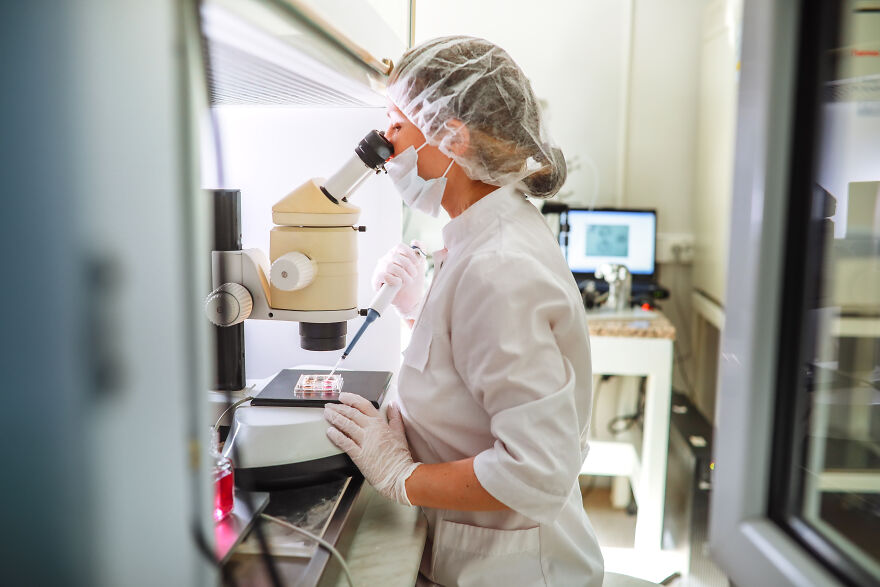
In 2025, researchers at the Berkeley Lab and UC Irvine engineered a yeast that turns human waste into a valuable material.
The engineered osteo yeast converts urine into hydroxyapatite, the primary mineral in human bones and teeth.
Traditionally, this material is expensive to synthesize, but this discovery paves the way for a circular economy where wastewater is transformed into materials for dental implants, bone grafts, and even high-grade fertilizer.
Beyond medicine, the lightweight durability of this biomaterial also makes it a potential alternative to some plastics and a new tool for sustainable construction.
According to Yasuo Yoshikuni, head of the DNA Synthesis Science Program at the Joint Genome Institute (JGI), today humans use 1% of the world’s energy just to produce fertilizers from nitrogen gas.
If scientists are able to develop new hydroxyapatite and nitrogen fertilizer from the ammonia in urine, there is a chance to “potentially replace a significant portion of the total nitrogen demand, saving energy while also dramatically reducing costs at wastewater facilities” in the world around (via AZO Life Sciences).
2026 is the year of breakthroughs in science that will revolutionize astronomy.
The Vera C. Rubin Observatory is unlike regular telescopes that zoom in on specific objects, but instead, it will sweep across the heavens, filming the night sky to create an unprecedented time-lapse of the universe.
The observatory began its formal 10-year Legacy Survey of Space and Time (LSST) in early 2026, recording the entire visible southern sky in great detail every few nights.
In a single year, the telescope will gather more optical data than any other in history, gradually building a 3D map of the cosmos.
During its commissioning, it has already captured interstellar visitors such as Comet 3I/ATLAS and identified thousands of new asteroids near Earth.
This vast amount of data will affect all areas of astronomy, providing new insight into the formation of galaxies and the expansion of the universe (via Science).
A landmark breakthrough in gene-editing treatment recently allowed a newborn to overcome a life-threatening metabolic condition that was previously considered unfixable without a transplant.
The patient, a baby boy named KJ Muldoon, became the world’s first person to receive a personalized, in vivo CRISPR treatment tailored to his unique genetic code.
KJ was born with a CPS1 enzyme deficiency, a rare disorder that prevented his liver from converting toxic ammonia into urea. Without intervention, ammonia builds up in the blood, causing irreversible brain and liver damage.
Typically, infants with this condition are confined to hospitals on extremely strict diets while waiting months or years for a liver transplant. In a race against time, researchers at the Children’s Hospital of Philadelphia diagnosed KJ within days of his birth.
They spent the following six months designing, testing, and refining a custom gene-editing therapy to rectify his specific deficiency.
After the treatment, the ammonia levels in KJ's blood dropped to safe levels, allowing him to tolerate dietary protein, reduce his medications, and finally gain weight.
Now 18 months old, KJ recently reached a milestone his parents once thought was impossible: he took his first steps. (via Science).

As a layman, I personally feel that the impact of gene editing may eventually have a greater impact on medicine than antibiotics. I know there are major hurdles, and that the research is (appropriately) going slow, but I hadn't heard of any insurmountable obstacles. I'm not likely to see these in my lifetime, but my children certainly might. I also think that laws are going to be put in place prevent questionable practices, sort of like cloning.
Each year, over one million stroke survivors in the United States face decreased mobility in their arms and shoulders, making even mundane tasks a significant challenge.
To address this, Harvard’s Move Lab has developed Reachable, a soft, wearable robotic device designed specifically for upper-body assistance.
This extremely lightweight vest uses inflatable underarm actuators and advanced sensors to adapt its support to each user's unique progress.
The life-changing device enables independent at-home therapy, allowing survivors to carry out day-to-day activities with greater autonomy.
Supported by a $5M NSF Convergence Accelerator grant, the project has already been tested by over 30 patients. The latest iterations have integrated machine learning that anticipates intended shoulder movements with 94% accuracy, while a new physics-based model ensures movements, such as lowering a coffee cup, feel smooth and natural.
By functioning like a comfortable harness rather than a rigid exoskeleton, Reachable tracks user progress and provides a boost only when needed.
Currently, the Move Lab is focused on making the device even more compact and user-friendly, aiming to bridge the gap for patients who cannot access in-person treatment due to cost or travel constraints (via SEAS Harvard).
Just speculation. I can see this also being used for other uses by older people. It'd be cool if it could help people that now have trouble with everyday tasks just because of their age. If it could be extended to the lower body, walker use could be decreased. Again, just speculation.
Researchers at North Carolina State University have achieved what was once considered impossible: an engineered system that allows industrial materials to self-heal.
Drawing direct inspiration from the regenerative processes of living organisms, the team developed a technique that can mend cracks and structural separations in composite materials over 1,000 times without losing integrity.
The revolutionary breakthrough focuses on fiber-reinforced polymer (FRP) composites, which are layered structures of glass or carbon fibers held together by a polymer matrix.
While these materials are already prized for their incredible strength-to-weight ratio in aircraft and wind turbines, they are prone to delamination, the internal cracking that eventually leads to failure.
By integrating a vascular delivery system into the matrix, the researchers have created a material that bleeds a healing agent into cracks the moment they form.
They calculated that this self-healing strategy can extend the operational lifetime of these composites by centuries, compared to the 15 to 40-year design life of conventional composites without this system.
This discovery not only promises to make air travel and renewable energy safer but also drastically reduces the carbon footprint associated with manufacturing and replacing the world’s heavy infrastructure.

The problem here is that the inclusion of self-healing is only possible with a reduction in strength and stiffness. I personally prefer fault-tolerant materials, that still function satisfactorily after what would normally be considered a failure.
A landmark achievement in the scientific world is the controversial revival of animals engineered to resemble the extinct dire wolf.
Researchers at Colossal Biosciences aim to revive extinct species by editing key genes from a close living relative.
They achieved a breakthrough after sequencing the dire wolf genome from a 13,000-year-old tooth and a 72,000-year-old skull, allowing them to identify 14 genes that differ between the extinct animal and modern canids.
By making 20 changes to the DNA of a gray wolf to recreate specific physical traits, scientists placed the edited genes into domestic dog eggs and implanted them into surrogate dog mothers.
The first animals bearing these dire wolf traits, two males named Romulus and Remus, were born in October 2024, followed by a female, Khaleesi, in January 2025.
While these offspring weren't identical to the original dire wolves, their birth proved that we can restore ecological functions lost thousands of years ago, possibly to combat climate change.
Colossal is currently working to revive the dodo, the woolly mammoth, and the thylacine, despite drawing criticism on ethical grounds from conservationists who believe this funding should be prioritized for protecting existing species (via Smithsonian Magazine).
Proof of concept. I personally would love to see Colossal succeed to any degree with the thylacine (Tasmanian tiger). It would be so cool to see them reintroduced into their former habitat if possible.
Given the prevalent shortage of organs available for transplants, doctors have turned toward attempting to heal humans with transplanted animal organs, also known as xenotransplantation.
Previously, the human immune system would reject animal organs in days.
However, surgeons at Massachusetts General Hospital carried out a transplantation using a pig kidney with 69 genetic edits.
The organ worked for a record 271 days, just over nine months. Setting a new record in a patient named Tim Andrews, which failed in October 2025.
Previously, a pig kidney with 10 genetic changes had helped a woman for four months before it had to be removed.
The engineering of pigs with the genome editor known as CRISPR has revolutionized the long quest to help humans with xenotransplants, with recent developments facilitating the fast-tracking of the process.
Researchers agree that donor pigs still require additional yet-to-be-determined genetic modifications to increase the survival time of transplanted organs (via Science).
A new AI model called popEVE is all set to change the game in rare disease diagnosis by predicting the likelihood that specific variants in a patient’s genome will cause disease.
For years, scientists have struggled to identify disease-causing members within the vast sea of genetic variants.
However, this tool now allows researchers to identify new drug targets for treating various genetic conditions.
Developed by the Harvard Medical School (HMS) researchers and colleagues, the model can distinguish between benign and pathogenic variants and even predict whether a variant will lead to illness in childhood versus adulthood.
According to Debora Marks, professor of systems biology in the Blavatnik Institute at HMS, the ultimate goal is to “develop a model that ranks variants by disease severity, providing a prioritized, clinically meaningful view of a person’s genome.” A process that used to take years can now be achieved in a matter of seconds.
The model has already identified 100 novel alterations responsible for previously undiagnosed disorders and is already being used by clinics in Spain to interpret patient data.
The practice of medicine is changing in amazing ways. Next few decades are going to be amazing. Funding is likely going to be a speedbump.
Just when you thought you'd seen every shade in the spectrum, recent scientific discoveries have revealed a color that no human has ever witnessed in the natural world.
Researchers at the University of California, Berkeley, have successfully stimulated the human retina to perceive a brand-new blue-green hue they've named Olo.
The experiment was conducted using a highly sophisticated device called Oz, an intricate system of mirrors, lasers, and optical lenses.
By firing precise laser pulses into their own eyes, scientists bypassed the brain's usual processing limits and directly stimulated specific retinal cells.
The study's co-author, Professor Ren Ng from the University of California, described the findings as "remarkable." He told the BBC that the color was "more saturated than any color that you can see in the real world."
The existence of Olo as a truly new color remains contested among vision scientists. Some researchers argue that participants may have simply perceived an exceptionally saturated version of cyan, rather than a color outside normal human experience.
Professor Ng acknowledges that Olo is "certainly very technically difficult" to see without specialized equipment, and the team is careful to present it as an early-stage finding rather than a settled conclusion. However, the implications go far beyond a visual curiosity.
The team believes this breakthrough could pave the way for revolutionary research into color blindness and advanced vision therapies, taking us closer to understanding how to unlock parts of the human eye that have remained dormant for many years.
“Scientists have created a new platform called 'Oz' that uses laser light to control up to 1,000 photoreceptors in the eye at once. Using Oz, the researchers showed people images, videos and a new, ultra-saturated shade of green that they have named 'olo.' The platform could be used to probe the nature of color vision and provide new insight into human sight and vision loss.” ( Scientists trick the eye into seeing new color 'olo', Science Daily)

Hmm. Faintly interesting, but I suspect the descriptions of being AI generated on the grounds that I've heard of most of the above and read *much* better explanations in every case. Oh yes, and they've not re-invented the dire wolf. That's just nonsense.

At first yes. But it will eventually spread into mass medicine
Load More Replies... Hmm. Faintly interesting, but I suspect the descriptions of being AI generated on the grounds that I've heard of most of the above and read *much* better explanations in every case. Oh yes, and they've not re-invented the dire wolf. That's just nonsense.
At first yes. But it will eventually spread into mass medicine
Load More Replies...





























 No fees, cancel anytime