Get Premium
Dark mode theme is available exclusively for premium users. Learn more about the benefits of subscribing.
No fees, cancel anytime.

 Dark Mode Ad-Free Browsing Unlimited Content
 Ad-Free Browsing Unlimited Content Dark Mode
Join 1.2 million Panda readers who get the best art, memes, and fun stories every week!

Entitlement will take people to lengths that are as horrible as they are absurd. Unfortunately, folks who can’t really see anyone else’s perspective can and do make it everyone’s problem. This can range from minor annoyances around, say, seating on a plane, all the way to life threatening risks because they don’t accept something like an allergy.
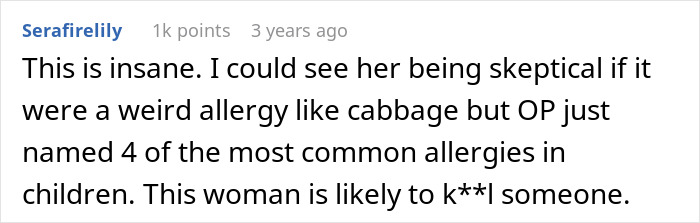
A man shared his childhood encounter with a woman who truly believed that allergies weren’t real and it was all just children being picky about food. The result was that she lied about the ingredients of her wedding cake and, inevitably, paramedics had to be called to the event.
Image credits: sonjachnyj / Magnific (not the actual photo)
Image credits: nazariykarkhut / Envato (not the actual photo)
Image credits: Wavebreak Media (not the actual photo)
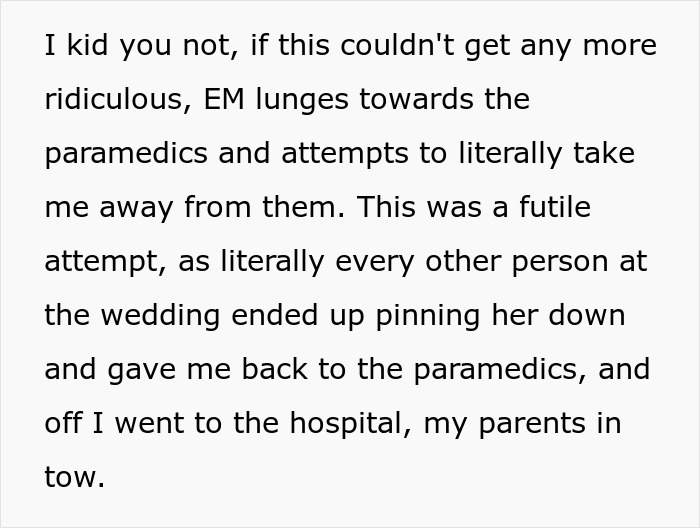
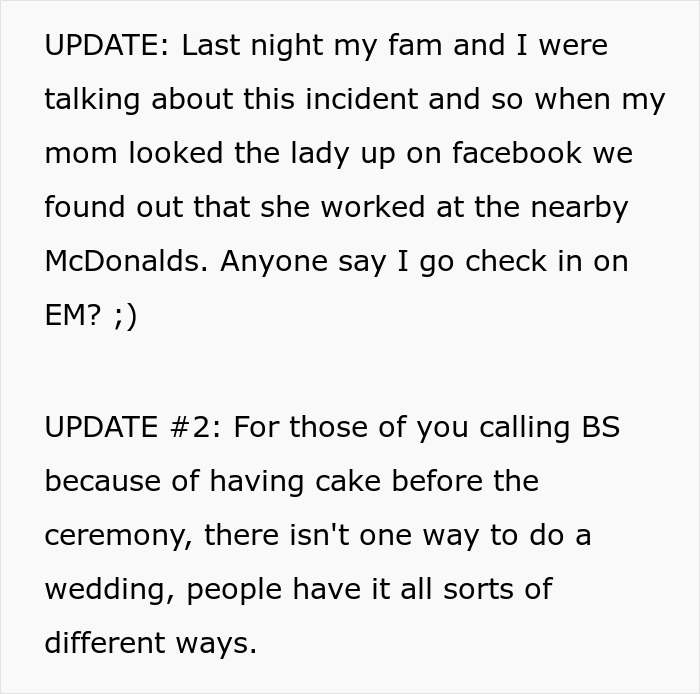
Image credits: Powerful_Dream_711
What EM did was deliberate, which puts her in a category of her own. But the belief driving her actions, that food allergies are invented or exaggerated by overly cautious parents, is far more widespread than most people realize. Understanding where it comes from is worth some time, not to excuse it, but because it keeps coming up.
A big part of it is confirmation bias. People who have never watched someone go into anaphylaxis tend to carry a fixed mental picture of what a real illness looks like, and food allergies don’t fit that picture neatly. Someone can seem perfectly healthy before a meal and be in an ambulance by the time it ends, and to a skeptic, that gap between apparent health and sudden crisis feels suspicious rather than medically explainable. The disbelievers often think they are actually being helpful, that the allergic person would simply be more comfortable if they realized food was not so dangerous. They absorb the information and file it somewhere it cannot change anything.
There is also a generational aspect to it. Older generations were significantly less likely to encounter diagnosed food allergies during their own childhoods, which leads some of them to assume the current prevalence is exaggerated. That skepticism gets reinforced by the loose way the word “allergy” gets used in everyday conversation, applied to genuine immune responses and simple dislikes interchangeably. When the same term covers both, it becomes easier to lump the whole category together and dismiss it.
The picky eater comparison deserves a direct response. A child who will not eat broccoli is exercising a preference. A child with a peanut allergy is experiencing an immune system response in which harmless proteins are treated as a threat, and the body mobilizes accordingly. What happens next is rapid and serious: histamine is released, airways begin to close, blood pressure can drop, and the cardiovascular system can be affected. This is not discomfort or fussiness. It is a medical emergency that can become life-threatening within minutes.
Image credits: freepic.diller / Magnific (not the actual photo)
The numbers reflect that. Food allergy is a serious disease of the immune system affecting more than 33 million people in the United States, roughly 1 in 13 children and 1 in 10 adults. Each year, around 200,000 people in the United States seek emergency medical care due to food allergies. Between 150 and 200 people pass away from food-induced anaphylaxis in the United States annually, and peanut allergy is consistently the single most common cause. Teenagers and young adults with food allergies are at the highest risk of a fatal reaction.
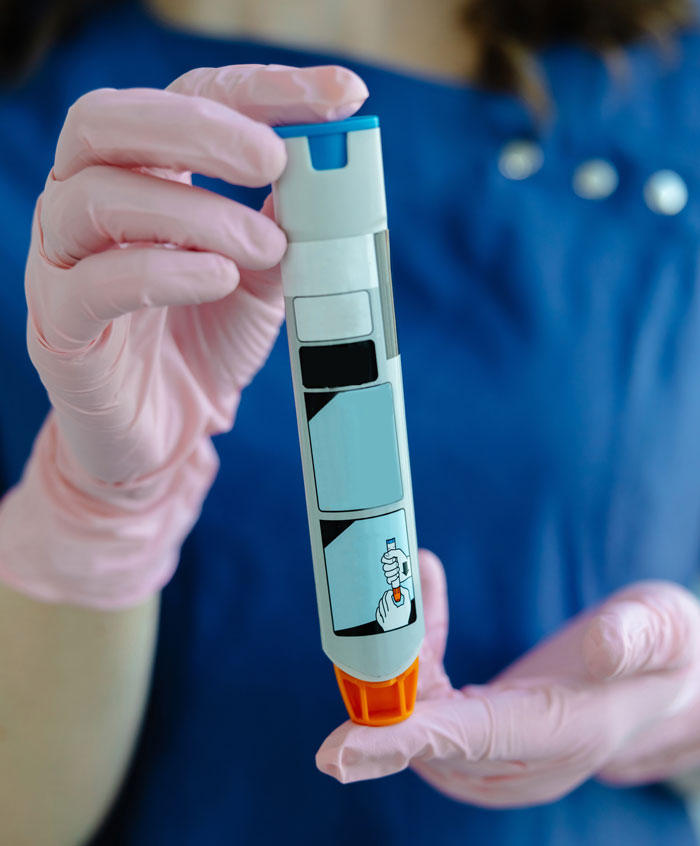
One of the things that makes peanut and tree nut allergies particularly difficult to manage is the unpredictability of reaction severity. Research has shown that deaths from food-related anaphylaxis frequently occur in allergic people whose previous reactions had been mild, underlining how unpredictable severity can be. A child who only broke out in hives last time might need an ambulance the next time. That is the entire reason for carrying an epinephrine auto-injector at all times, and why parents of allergic children bring it to every occasion, including someone else’s wedding.
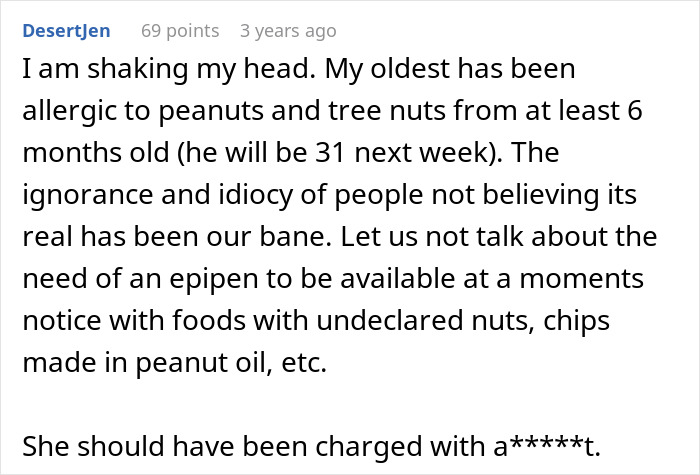
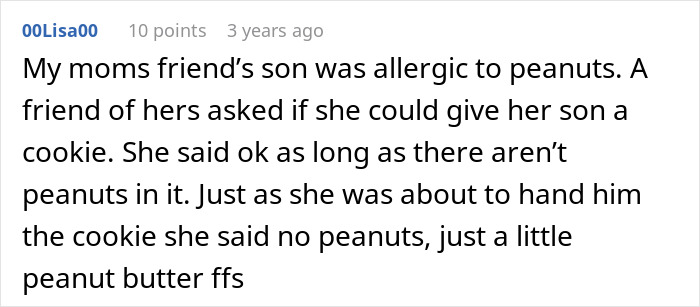
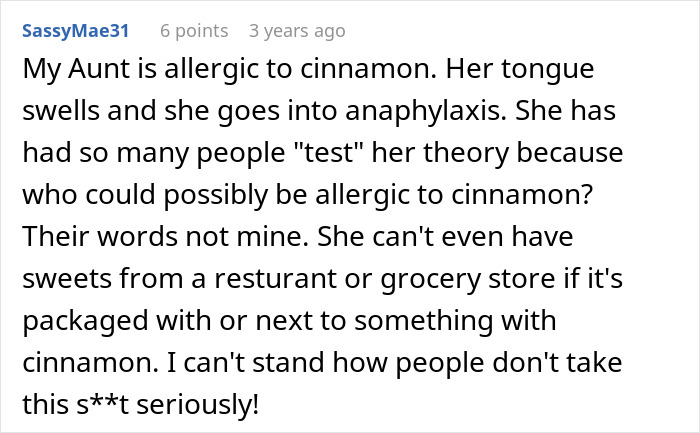
There is also no reliable safe threshold. Individuals may be so sensitive to peanut allergens that severe systemic reactions can occur in response to minute contaminants of the allergen introduced accidentally during food preparation. Trace amounts introduced through shared utensils, cross-contamination, or an undeclared ingredient can be enough to cause a serious reaction. That is not a theoretical risk.
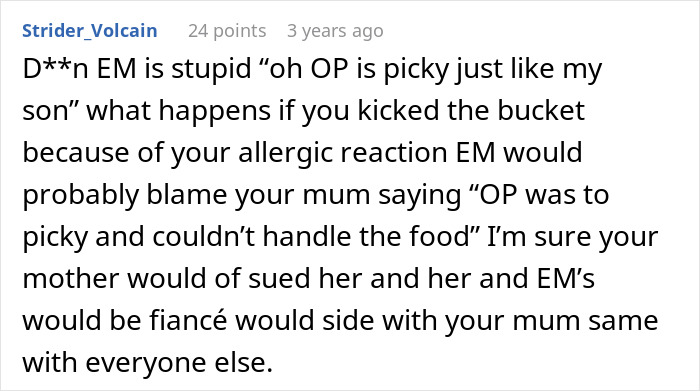
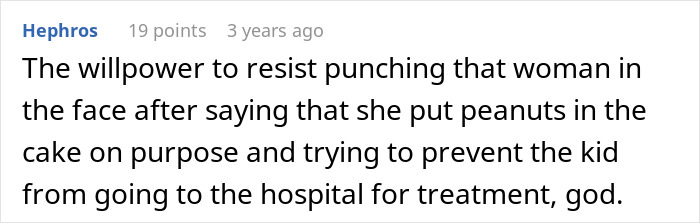
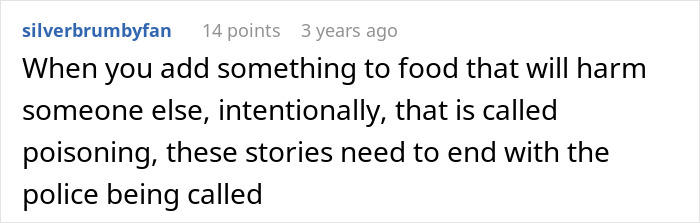
It is the documented mechanism behind most accidental exposures, and it is what makes introducing an allergen into someone’s food without their knowledge seriously dangerous in a very specific way. The hives, the breathing difficulties, the ambulance, all of it was exactly what the medical literature says happens when an allergic child ingests their allergen. The only point she made was that she had access to his food and was willing to use it.







By entering your email and clicking Subscribe, you're agreeing to let us send you customized marketing messages about us and our advertising partners. You are also agreeing to our Privacy Policy.
Thank you! You've successfully subscribed to newsletters!

This is either a ragebait or one of the stupidest, most insufferable women I've ever heard of

Or both. Clearly it's grown in the telling, at the very least, cos the 2-year-old would not have remembered any of it, and the amount of unnecessary extra detail and explanation they've added just makes it less and less believable.
Load More Replies...
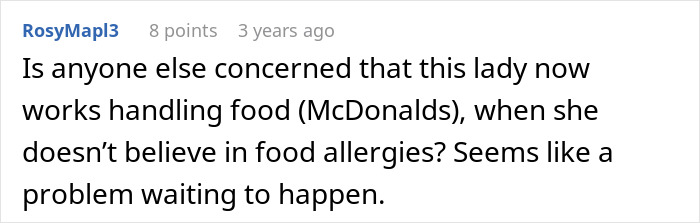
I was amused by the comment above expressing concern that a woman who doesn't believe in food allergies works at McDonald's. Does he or she think McDonald's prepares special meals to accommodate food allergies?

McDonald's has standard recipes, but it doesn't mean she couldn't contaminate food.
Load More Replies...

weddings can be different, OP even said such, Polish weddings for example can be 2 or 3 DAYS. some ppl go to a DRIVE THRU wedding in LAS VEGAS.
Load More Replies... This is either a ragebait or one of the stupidest, most insufferable women I've ever heard of
Or both. Clearly it's grown in the telling, at the very least, cos the 2-year-old would not have remembered any of it, and the amount of unnecessary extra detail and explanation they've added just makes it less and less believable.
Load More Replies... I was amused by the comment above expressing concern that a woman who doesn't believe in food allergies works at McDonald's. Does he or she think McDonald's prepares special meals to accommodate food allergies?
McDonald's has standard recipes, but it doesn't mean she couldn't contaminate food.
Load More Replies... weddings can be different, OP even said such, Polish weddings for example can be 2 or 3 DAYS. some ppl go to a DRIVE THRU wedding in LAS VEGAS.
Load More Replies...






















 No fees, cancel anytime










24
17