Get Premium
Dark mode theme is available exclusively for premium users. Learn more about the benefits of subscribing.
No fees, cancel anytime.

 Dark Mode Ad-Free Browsing Unlimited Content
 Ad-Free Browsing Unlimited Content Dark Mode
Join 1.2 million Panda readers who get the best art, memes, and fun stories every week!

Reaching out to others in your industry is a common and often necessary part of career growth. Whether you’re trying to understand a company’s culture, build relationships, or just get a clearer picture of where you might fit in, a simple message can go a long way, or it can go ignored.
However, what happens when the person who once dismissed your professional outreach suddenly needs help from you? Today’s Original Poster’s (OP) story reveals how quickly the tone of a conversation can shift when power dynamics change.
More info: Reddit
Image credits: tsyhun / Freepik (not the actual photo)
Image credits: filthy_mug
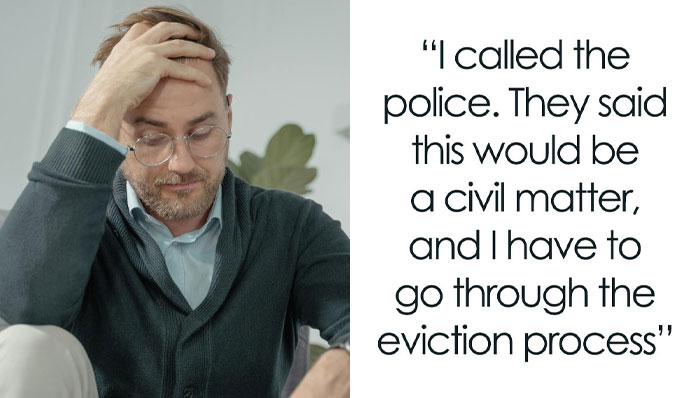
Image credits: Tima Miroshnichenko / Pexels (not the actual photo)
Image credits: filthy_mug
Image credits: prostock-studio / Freepik (not the actual photo)
Image credits: filthy_mug
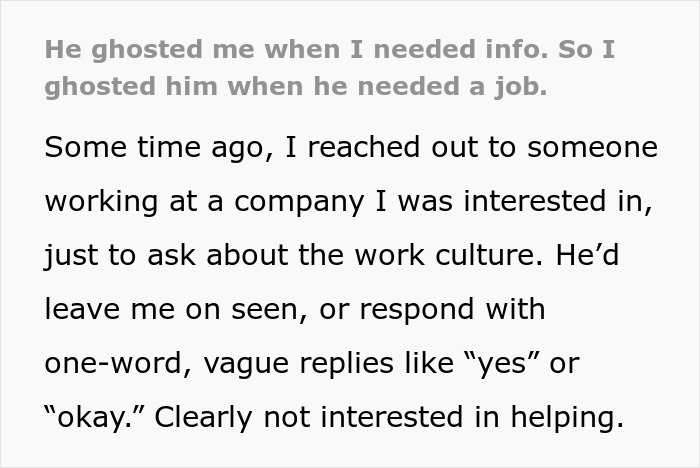
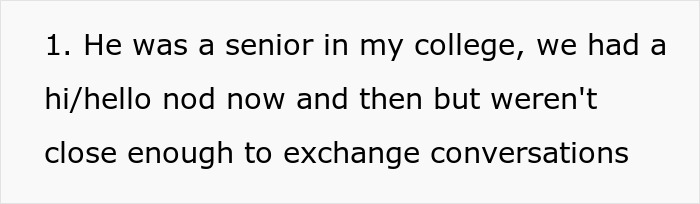
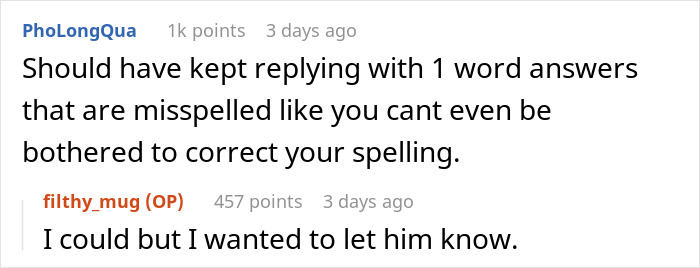
The OP reached out to someone working at a company they were interested in, hoping to learn more about the work environment. Instead of openness or even a polite refusal, they were met with minimal engagement of either one-word responses or silence altogether.
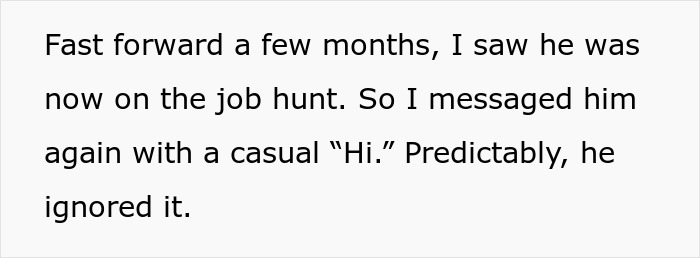
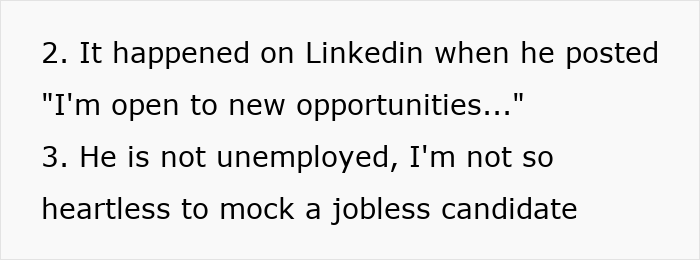
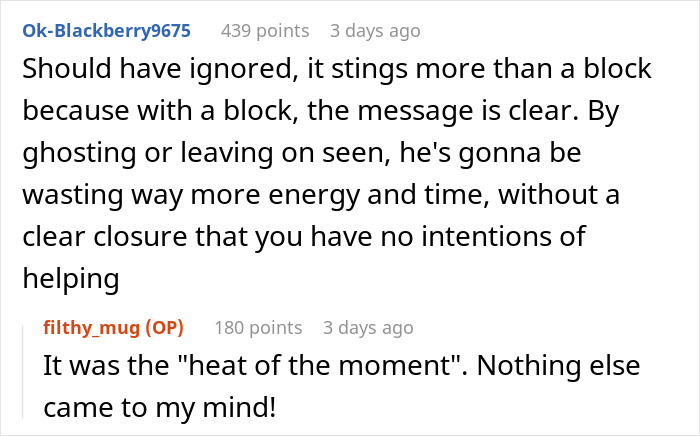
Some time passed, and then the OP noticed that the same individual was now publicly searching for new job opportunities. With no apparent grudge, they sent a friendly “hi” to re-establish contact. As expected, it was ignored.
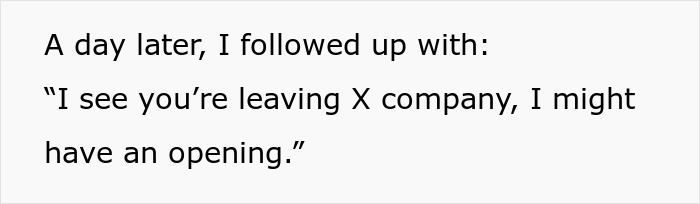
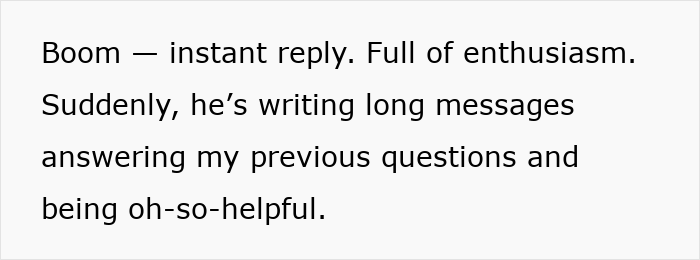
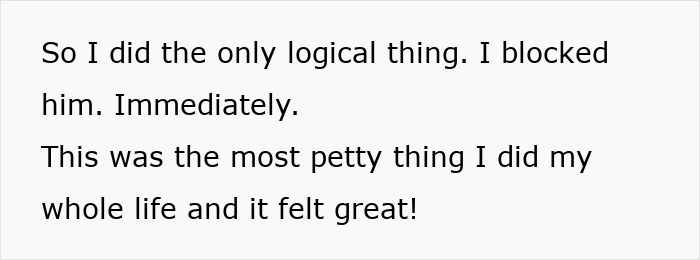
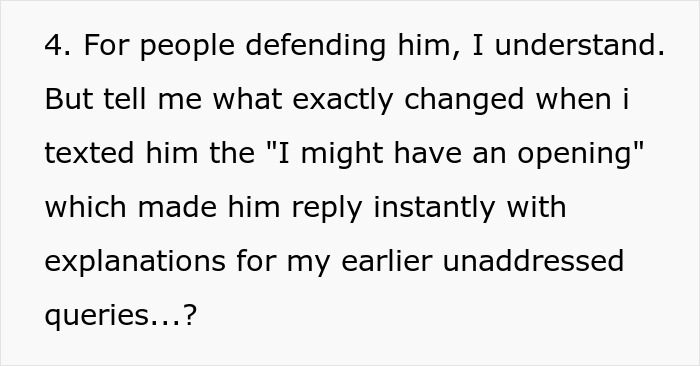
However, the following day, they sent a message letting him know that their company might have an opening. That single line prompted a complete shift, and suddenly, he enthusiastically started answering earlier questions and attempting to build a professional rapport. Now faced with this sudden change in tone, the OP blocked him.
To understand the nuances behind professional interactions and networking, Bored Panda spoke with career coach Ronke Adesina, who shared valuable insights on common dilemmas many face today.
When asked about the etiquette for receiving cold messages when seeking career advice, she emphasized the importance of kindness and curiosity. “If the message is respectful and genuine, a thoughtful, brief reply can make a big difference.”
Image credits: Swello / Unsplash (not the actual photo)
She acknowledged the courage it takes to reach out and that it’s always nice when there’s a response, and it can even turn strangers into future colleagues or even bosses. Yet, she noted that “it’s also perfectly fine to politely decline or share a resource if time is tight. The key is to stay professional and human.”
On the role of humility and consistency in professional relationships, Adesina highlighted how these qualities form the foundation of lasting career success. “Humility keeps you grounded and open to learning, no matter how far you advance,” she said, “while consistency builds trust and credibility with every interaction.”
She also pointed out that people remember how you made them feel far more than your job title, and that staying authentic and respectful through career changes demonstrates emotional intelligence and character, often more important than any position.
When it comes to why some professionals only engage when there’s something in it for them, Adesina acknowledged that this is a common, very human behavior. Heavy workloads and busy schedules often lead people to prioritize relationships that offer immediate value. However, she cautioned that this transactional mindset can come off as self-serving and short-sighted.
“The most successful professionals strike a balance between giving and receiving,” she explained, “knowing that genuine relationships often bring unexpected, long-term rewards.” While widespread, she emphasized that this approach isn’t the best way to build sustainable professional connections.
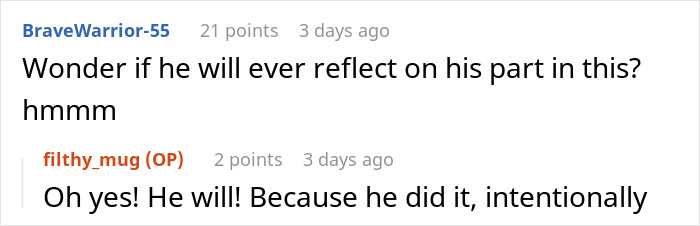
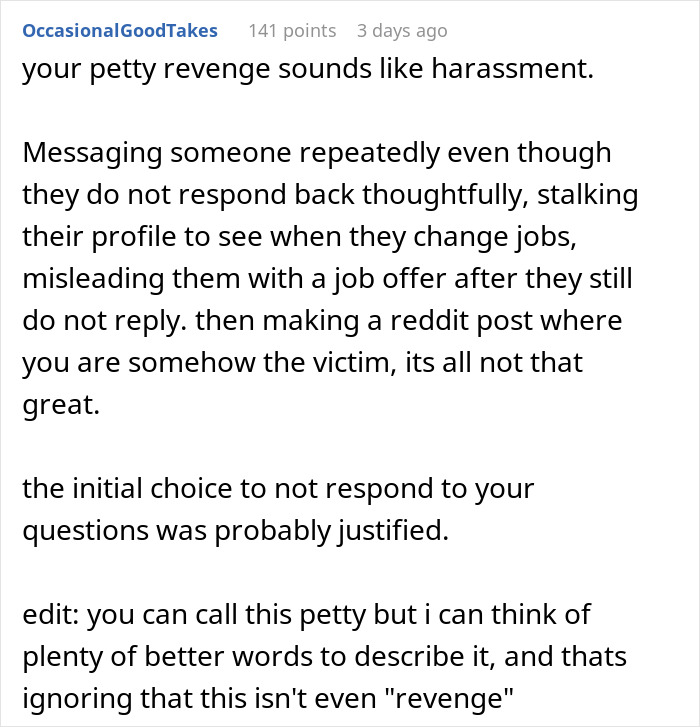
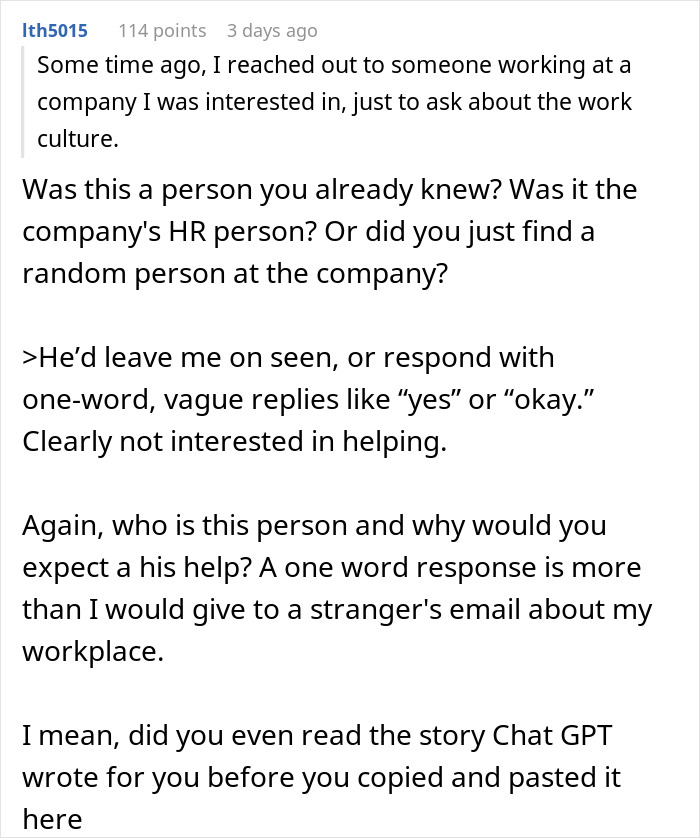
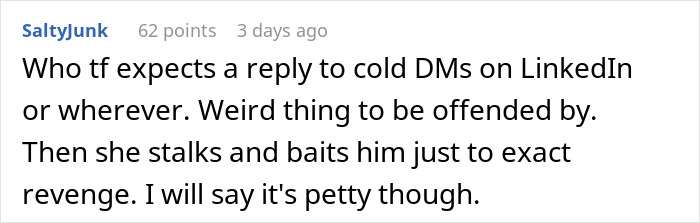
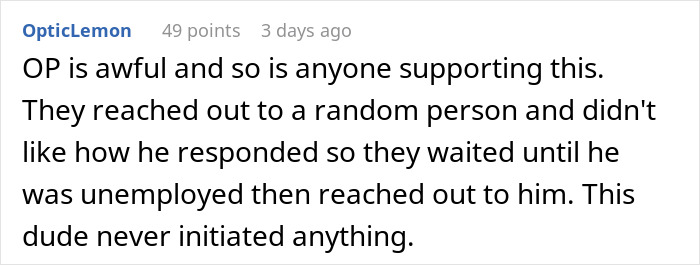
Netizens were divided on this one, with many applauding the OP’s move as a satisfying response to transactional behavior. They saw the action as a clever form of subtle accountability, praising the restraint. On the other side, some viewed the action as excessive, describing it as misleading or unnecessarily vindictive.
Do you think blocking them was fair, or did it cross a line? What would you have done in this situation? We would love to know your thoughts!

By entering your email and clicking Subscribe, you're agreeing to let us send you customized marketing messages about us and our advertising partners. You are also agreeing to our Privacy Policy.
Thank you! You've successfully subscribed to newsletters!




























 No fees, cancel anytime













38
5