Get Premium
Dark mode theme is available exclusively for premium users. Learn more about the benefits of subscribing.
No fees, cancel anytime.

 Dark Mode Ad-Free Browsing Unlimited Content
 Ad-Free Browsing Unlimited Content Dark Mode
Join 1.2 million Panda readers who get the best art, memes, and fun stories every week!

A recent study by researchers at Loma Linda University in California has found that including eggs in one’s diet can significantly impact the chances of a person developing Alzheimer’s.
The illness is a progressive neurodegenerative disease that is the 6th leading cause of fatalities in the United States.
Alzheimer’s Association claims that in 2026, at least 1 in 9 Americans (11%) aged 65 and above are clinically diagnosed with the condition, which is also one of the biggest triggers of dementia.
“These findings suggest a potential neuroprotective benefit of nutrients found in eggs when consumed as part of a balanced diet,” the study stated.
Image credits: Unsplash (Not the actual photo)
Alzheimer’s, characterized by the accumulation of amyloid-β plaques, neurofibrillary tangles, and widespread neuronal loss, ultimately leads to cognitive decline and loss of independence before a person passes away.
The study, published on April 17, 2026, inThe Journal of Nutrition, found that eating eggs just twice a week can reduce the risks of Alzheimer’s by 20%.
The risk decreases by more than a quarter if one consumes eggs five times a week or more.
Image credits: Unsplash (Not the actual photo)
For the study, the scientists tracked 40,000 men and women over 15 years. Those who had eggs just once or twice a month were found to be 17% less likely to develop incurable dementia than those who never ate them.
The figure rose to 27% for those eating eggs 4-5 times a week, or 20 times a month.
Image credits: Unsplash (Not the actual photo)
“Moderate egg intake was independently associated with a lower incidence of Alzheimer’s disease, even after adjusting for other dietary factors, demographic variables, lifestyle behaviors, and comorbidities,” the study claimed.
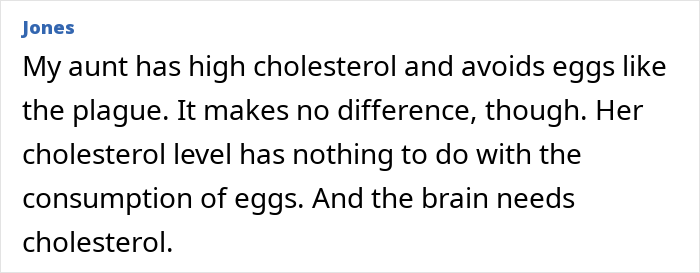
A common worry surrounding eggs is their association with high cholesterol. However, the American Heart Association Journal says that an adult can eat up to one whole egg per day, or seven per week.
Image credits: Unsplash (Not the actual photo)
Eggs can be crucial in battling Alzheimer’s because they are a rich source of several nutrients relevant to brain and nervous system health, including vitamin B12. Its deficiency can elevate homocysteine, a recognized Alzheimer’s disease risk factor, and promote neuroinflammation through altered methylation and cytokine activity.
One egg, particularly its yolk, provides 25% of the recommended dietary allowance of vitamin B12.
Egg yolks are also rich in phospholipids, which are essential for neurotransmitter receptor function.
Image credits: Unsplash (Not the actual photo)
“Other key nutrients in eggs include high-quality protein rich in tryptophan (a serotonin precursor involved in mood regulation, cognition, and melatonin synthesis).”
The food also contains “docosahexaenoic acid, an omega-3 fatty acid important for synaptic plasticity, neurogenesis, and neuronal membrane integrity,” the Loma Linda University study further added.
Image credits: Unsplash (Not the actual photo)
Eggs also contain choline and DHA—both critical for acetylcholine synthesis, neurogenesis, and synaptic maintenance. Eggs provide lutein and zeaxanthin, carotenoids present in brain tissue, which help improve cognitive performance and reduce oxidative stress.
The study emphasized that, given how Alzheimer’s disease pathology begins nearly two decades before any clinical symptoms show up, identifying modifiable lifestyle factors such as diet is critical.
Image credits: Unsplash (Not the actual photo)
The Alzheimer’s Organization’s2026 survey has revealed that an estimated 7.4 million U.S. adults of age 65 and older are living with clinical Alzheimer’s dementia. 74% of them are 75 or older.
The percentage of people younger than 65 who are developing Alzheimer’s is also increasing every year.
Researchers believe that about 110 of every 100,000 people aged 30 to 64 years, or about 200,000 Americans in total, have younger-onset dementia.
Image credits: Unsplash (Not the actual photo)
Globally, the prevalence of young-onset dementia (including Alzheimer’s) rose by over 200% between 1990 and 2021, increasing from 3.7 million to 7.8 million cases, according to a 2025 study published onPubMed Central.
Image credits: Unsplash (Not the actual photo)
While the disease has no concrete prevention or cure, the Alzheimer’s Organization urges readers to check for early warning signs, which include memory loss; difficulty with time or place, remembering personal details, understanding spatial or visual relationships, and having problems with speaking or writing in their known languages.

By entering your email and clicking Subscribe, you're agreeing to let us send you customized marketing messages about us and our advertising partners. You are also agreeing to our Privacy Policy.
Thank you! You've successfully subscribed to newsletters!


So does once having been an egg effect one’s chance of developing Alzheimer’s?


Horribly written article and title of article misleading and inaccurate.
So does once having been an egg effect one’s chance of developing Alzheimer’s?
Horribly written article and title of article misleading and inaccurate.








































 No fees, cancel anytime

























29
4