Get Premium
Dark mode theme is available exclusively for premium users. Learn more about the benefits of subscribing.
No fees, cancel anytime.

 Dark Mode Ad-Free Browsing Unlimited Content
 Ad-Free Browsing Unlimited Content Dark Mode
Join 1.2 million Panda readers who get the best art, memes, and fun stories every week!
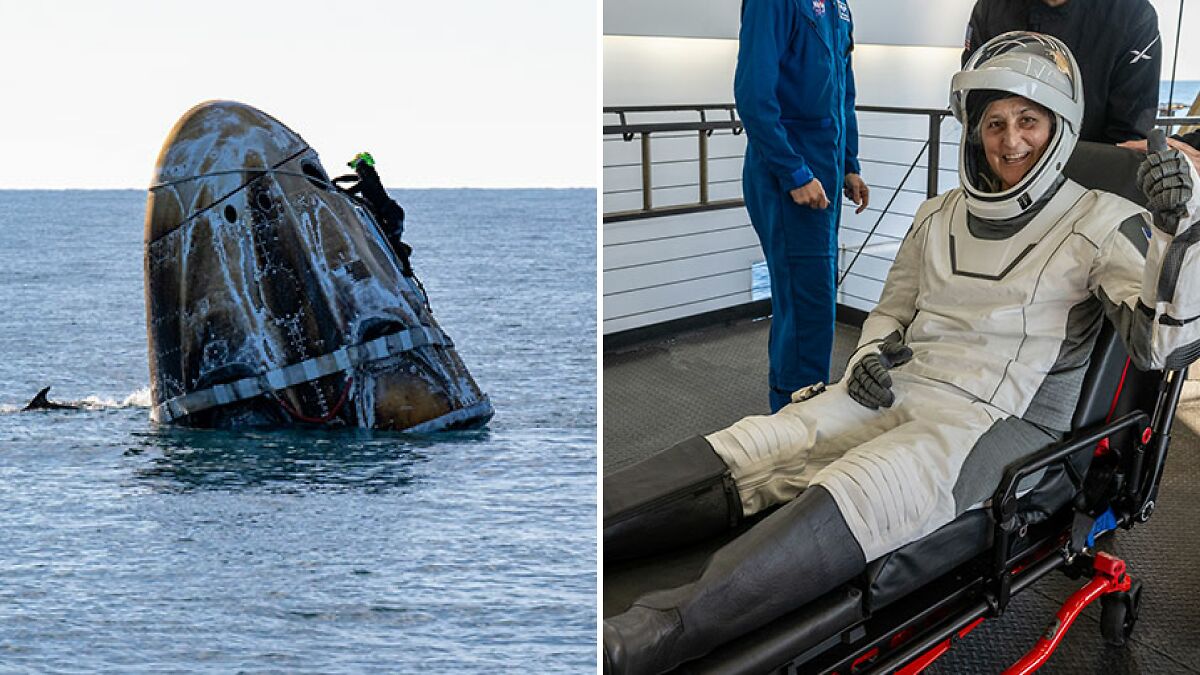
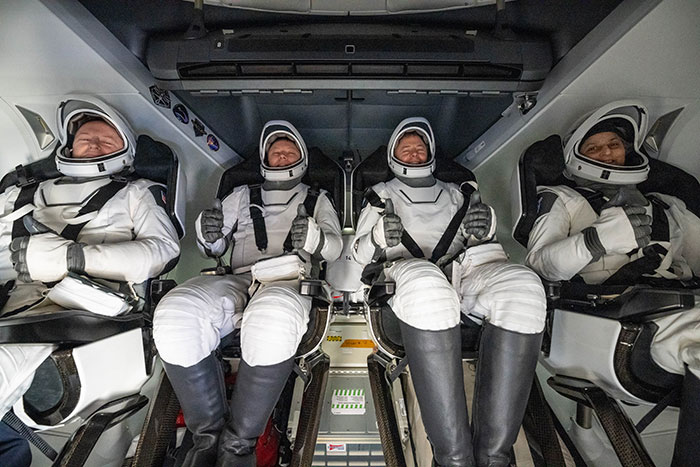
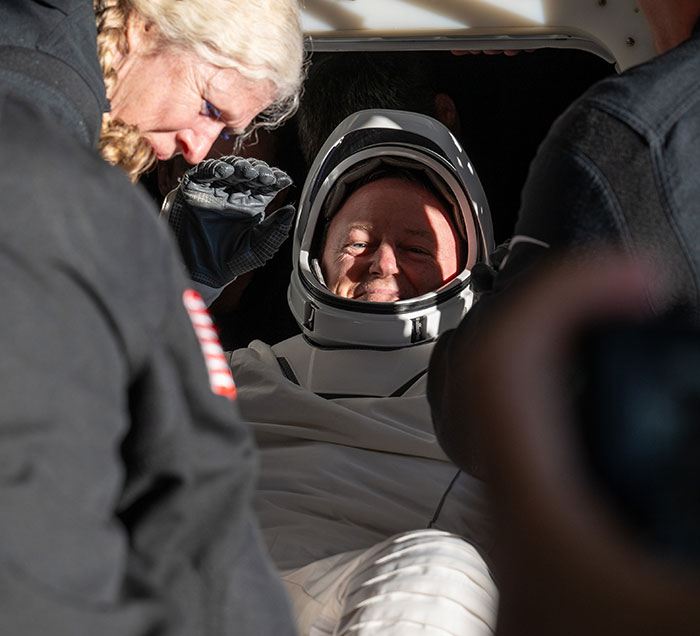
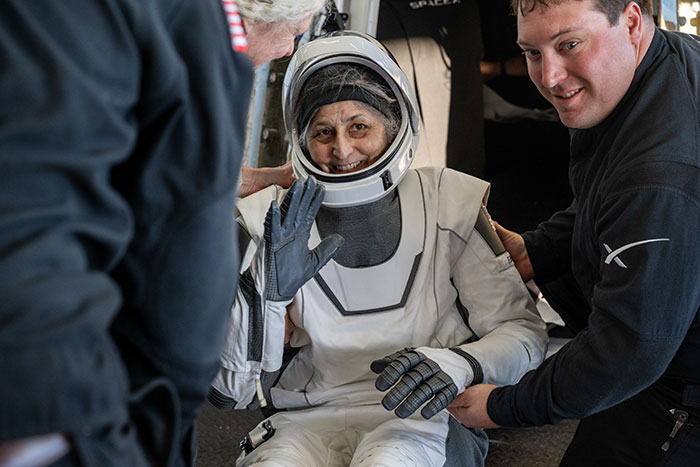
After being stuck in space for 286 days, Starliner astronauts Barry “Butch” Wilmore and Sunita Williams returned to Earth aboard a SpaceX Crew Dragon capsule.
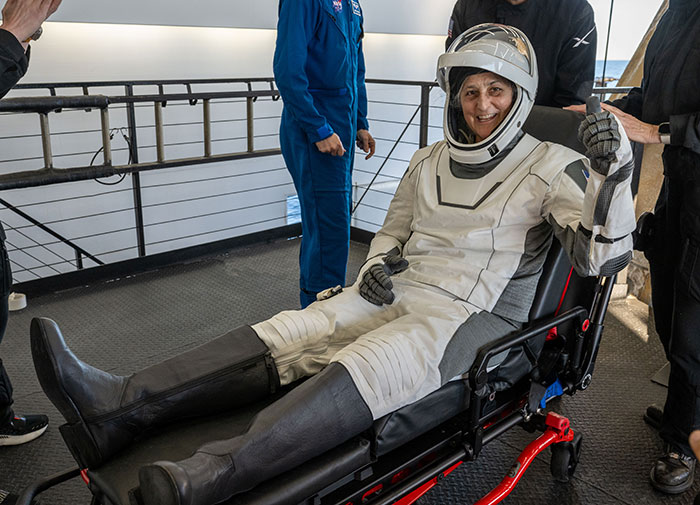
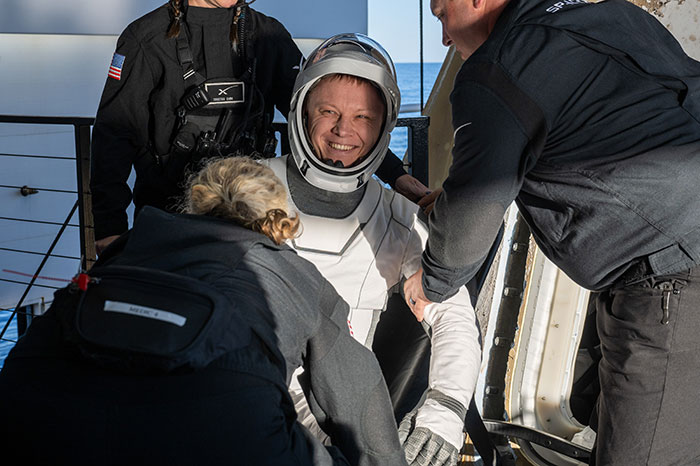
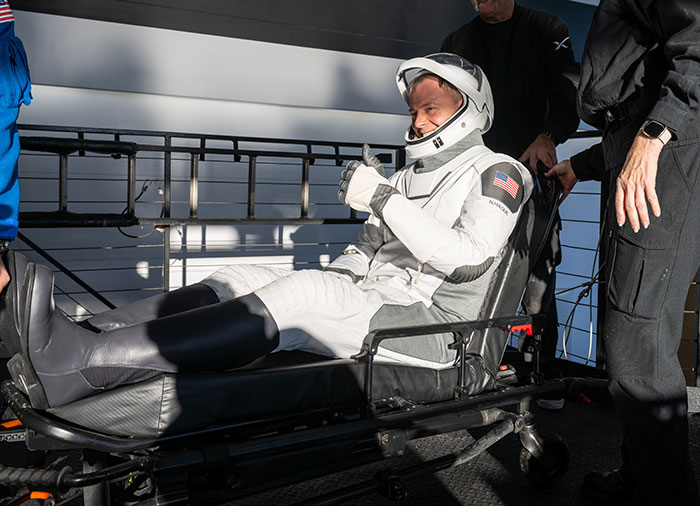
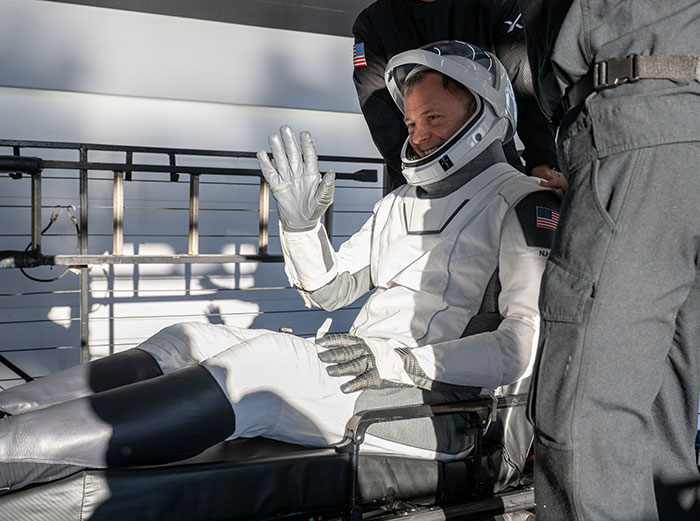
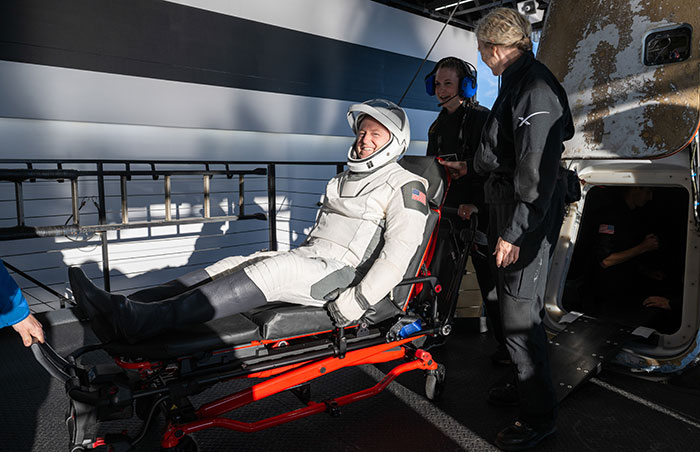
Images of the astronauts being wheeled off the spacecraft on stretchers sparked widespread speculation about their health.
Williams and Wilmore’ June 2024 mission was initially meant to last for only eight days. But their stay unexpectedly turned into a 9-month-long odyssey in outer space that finally came to an end this week.
Image credits: www.nasa.gov
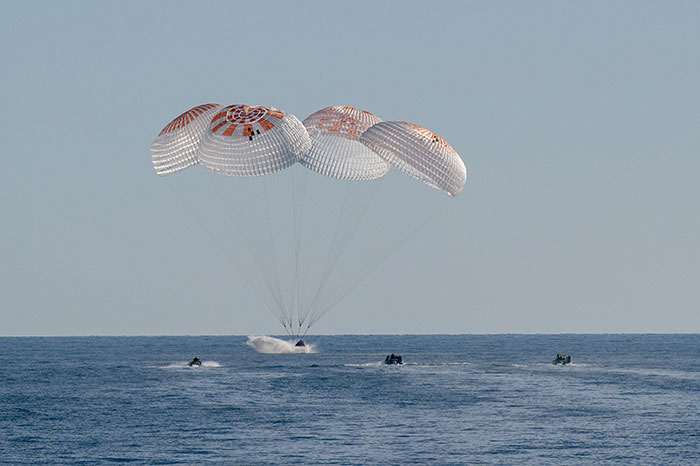
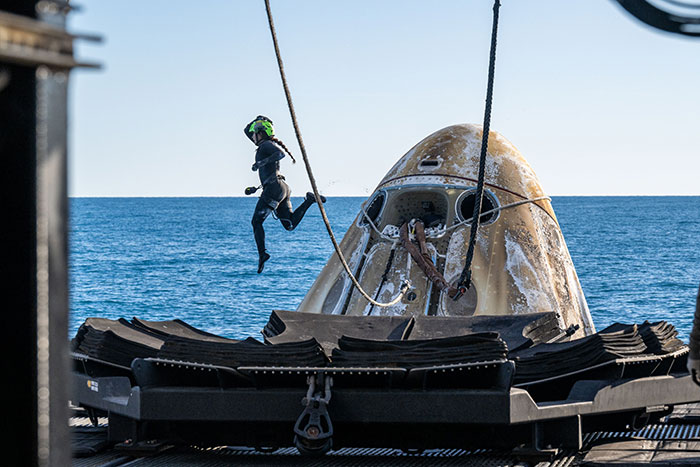
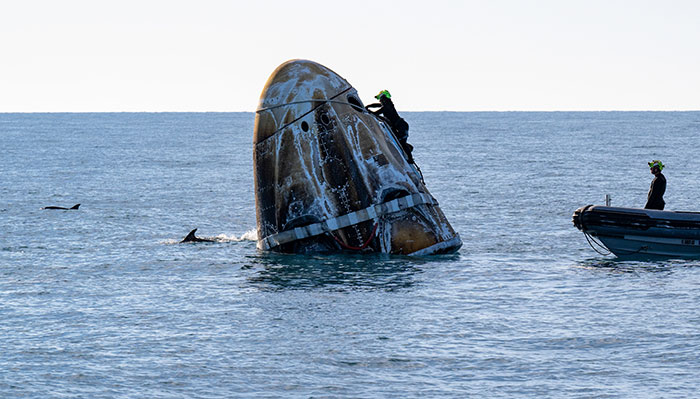
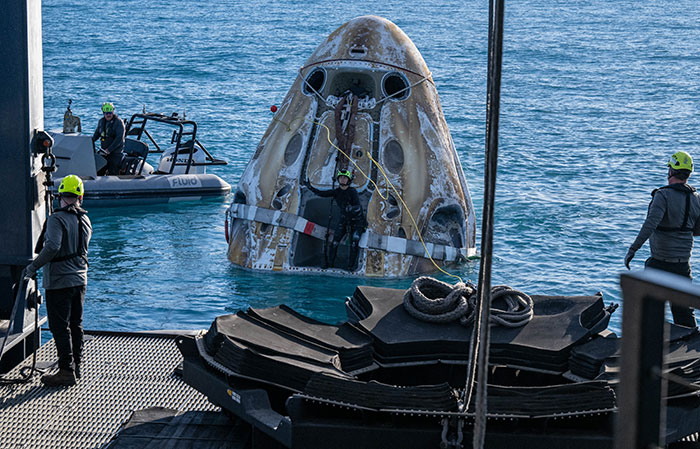
The SpaceX capsule carrying the astronauts was surrounded by a pod of dolphins as it made a splashdown off Florida’s Gulf Coast on Tuesday, March 18.
They’re an “honorary part of the recovery team,” NASA commentators joked about the marine creatures.
Image credits: NASA/Keegan Barber
Netizens were both relieved and concerned to finally see the pair return to solid ground.
“Thats awesome. Im sure they must have some wild stories to tell about space!!!” one commenter said.
Another wrote, “What an amazing thing to witness! The pod of dolphins that greeted the SpaceX capsule was great!”
Image credits: NASA/Keegan Barber
Other comments took a different tone, with one saying, “Welcome back to hell.”
“They may want to take the next shuttle back,” another wrote.
One joked, “Welcome back! just don’t look at the egg prices.”
Image credits: NASA/Keegan Barber
Many were worried about the astronauts’ health, wondering when they would be able to fully adjust to life back on Earth.
“They won’t be walking for a while,” one commenter said, while another wrote, “Wonder how long it’ll take them to rebuild their muscles and coordination to start running again.”
Image credits: NASA/Keegan Barber
“Nine months is nasty,” one said. “I imagine they lost a lot of weight.”
“I’d be curious to read about their health in the next few weeks. I think something happens to the bones,” another wrote.
“It is hard to imagine their mental state. Although they are professionally trained, staying in outer space for such an unexpectedly long time is truly beyond imagination,” one said.
Image credits: NASA/Keegan Barber
It may have been unusual for some people to see the astronauts being carried out of the SpaceX Dragon on stretchers.
However, it was nothing more than the protocol to be followed.
Space travelers, who return from prolonged periods of living without gravity, may experience dizziness and nausea upon touchdown. They may not be able to walk right away, and hence, they are carried out in stretchers.
Image credits: NASA/Keegan Barber
“I’ve been up here long enough right now I’ve been trying to remember what it’s like to walk,” Sunita told the students of her alma mater, Needham High School in Massachusetts, in January.
“I haven’t walked. I haven’t sat down. I haven’t laid down,” she continued.
“You don’t have to,” she added, explaining that one can simply close their eyes and float right where they are.
Image credits: NASA/Keegan Barber
The human body is designed to function in a world with gravity, and many parts of the body and its sensory organs have evolved to respond to gravity’s pull.
When in space, the brain adjusts to the weightlessness in different ways. And once the space travelers return back to Earth, their body once again starts readjusting to life with gravity
After long periods of time in space, astronauts undergo a number of physiological changes, such as loss of muscle and bone density.
Image credits: NASA/Keegan Barber
Without Earth’s gravity, weight-bearing bones can lose an average of 1% to 1.5% of bone mineral density per month, according to NASA.
“The major concerns for prolonged weightless have to do with the loss of bone and muscle mass. The body is not fighting against gravity and maintaining bone and muscle is energy intensive, so the body starts to do away with it,” Don Platt, associate professor and director of the Spaceport Education Center, Florida Tech, told Bored Panda via email.
He explained that the body “gets rid of bone” by turning it into calcium.
Image credits: NASA/Keegan Barber
“This calcium can wind up in the kidneys and cause kidney stones,” he went on to say. “Fluid also gets pushed toward the head in microgravity since we naturally have a force to push fluid up in the body again to fight against gravity. The body then senses that there is too much fluid in your body, so you do not want to drink as much, and you get dehydrated.”
“This can be one of the factors for dizziness in some astronauts when they come back to Earth. As well the balance system is not used to sensing gravity, so this also adds to you being unsteady on your feet when you return,” said Platt, the owner of Micro Aerospace Solutions, which conducts R&D and development of advanced systems for small satellites.
Image credits: NASA/Keegan Barber
It could take weeks for astronauts to readjust to life back on Earth.
Platt explained that the internal calcium levels in the bone may never return to pre-flight levels, but muscle mass would return faster.
Astronauts living in microgravity or weightlessness may also see the impact on their vision.
Vision problems can arise because the fluids in the body shift upwards in space, causing pressure on the eyes.
Image credits: NASA/Keegan Barber
After returning to Earth, astronauts undergo numerous tests to determine their overall health and wellbeing.
“There will be tests to determine the amount of muscle and bone lost and countermeasures provided such as calcium and other osteoporosis treatments,” Platt said.
Some tests are even conducted annually to keep a check on the astronaut’s skin, vision, hearing, hypertension, cardiovascular health, and more.
“The heart can also enlarge in space which has something to do with fluid shifts and the other effects that we talked about so the heart will be closely evaluated. Normal full bloodwork will also be taken to ensure the body is healthy,” he continued.
Image credits: NASA
Apart from physical health, the astronaut’s psychological well-being will also be analyzed.
“There is also psychological adjustment to being back on Earth so a psychological evaluation will be made and a debriefing done somewhat like how a military person might experience after a deployment,” added the human space exploration expert.
John DeWitt, director of applied sports science at Rice University in Texas and a former senior scientist at NASA’s Johnson Space Center, told Live Science that Wilmore and Williams are confident about readjusting to life back on Earth without any “major issues.”
He noted that they would be getting the exact treatment they would have gotten if their trip was initially planned for nine months.
“They’re in good spirits and feel very confident that there’s not going to be any major issues because of being on the space station so long from a physiological perspective,” he said.

By entering your email and clicking Subscribe, you're agreeing to let us send you customized marketing messages about us and our advertising partners. You are also agreeing to our Privacy Policy.
Thank you! You've successfully subscribed to newsletters!


Their health issues should make it obvious that humans will never be colonizing any other planets. Imagine spending years in space to go to Mars only to arrive and not be able to walk on the planet, then die from radiation induced cancer.


The poll question in the end is lacking an option what was my first reaction: "D**n the Boeing again". First they produced several 737 MAX airplanes with faults that crashed them, then there were reports about door falling out of planes, and in general about quality of planes having been drastically reduced over years. And then they left astronauts stranded on space station. And I doubt that the situation will be better in the future, as this is clearly a top management issue who surely pressures everyone to gain as much money as possible by sacrificing everything that used to made planes the safest way of transportation.
Their health issues should make it obvious that humans will never be colonizing any other planets. Imagine spending years in space to go to Mars only to arrive and not be able to walk on the planet, then die from radiation induced cancer.
The poll question in the end is lacking an option what was my first reaction: "D**n the Boeing again". First they produced several 737 MAX airplanes with faults that crashed them, then there were reports about door falling out of planes, and in general about quality of planes having been drastically reduced over years. And then they left astronauts stranded on space station. And I doubt that the situation will be better in the future, as this is clearly a top management issue who surely pressures everyone to gain as much money as possible by sacrificing everything that used to made planes the safest way of transportation.








































 No fees, cancel anytime


























34
11