Get Premium
Dark mode theme is available exclusively for premium users. Learn more about the benefits of subscribing.
No fees, cancel anytime.

 Dark Mode Ad-Free Browsing Unlimited Content
 Ad-Free Browsing Unlimited Content Dark Mode
Join 1.2 million Panda readers who get the best art, memes, and fun stories every week!
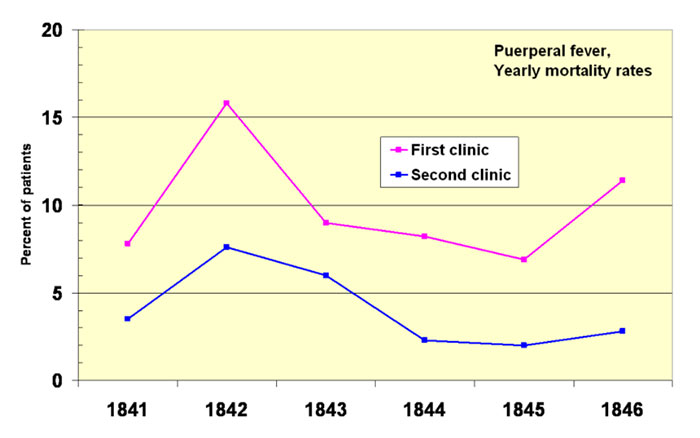
A woman in 1840s Vienna was sometimes safer giving birth with an untrained midwife than at the city’s most respectable teaching hospitals. If a pregnant woman chose the latter, the day of her childbirth would determine if she was treated by the Vienna General Hospital’s physicians and their students, or by resident midwives, who would alternate when they worked. In the doctor-run First Division, maternal mortality rates from childbed fever were as high as 18%, roughly three times the rate of the midwives’ ward.
The First Division’s reputation got so bad that pregnant women reportedly begged to be admitted on “safe” days, or sometimes preferred to avoid the hospital in general. The leading cause, not just in the Vienna General Hospital, but across Europe, was Childbed fever. This deadly infection of the reproductive tract typically followed delivery and has been recognized since antiquity, even if physicians remained ignorant to its cause. Despite the measurable disparity in mortality rates, no one could explain why one ward was more dangerous than the other next door.
The 1840s was still the era of miasma theory, imbalance bodily humors and poorly explained “epidemic influences.” Germs, as a medical concept, were still unknown. Physicians of the period regarded themselves as highly educated gentleman-scientists. The idea that perhaps the doctor’s actual hands might be to blame was seen as scientifically unfounded and even insulting.
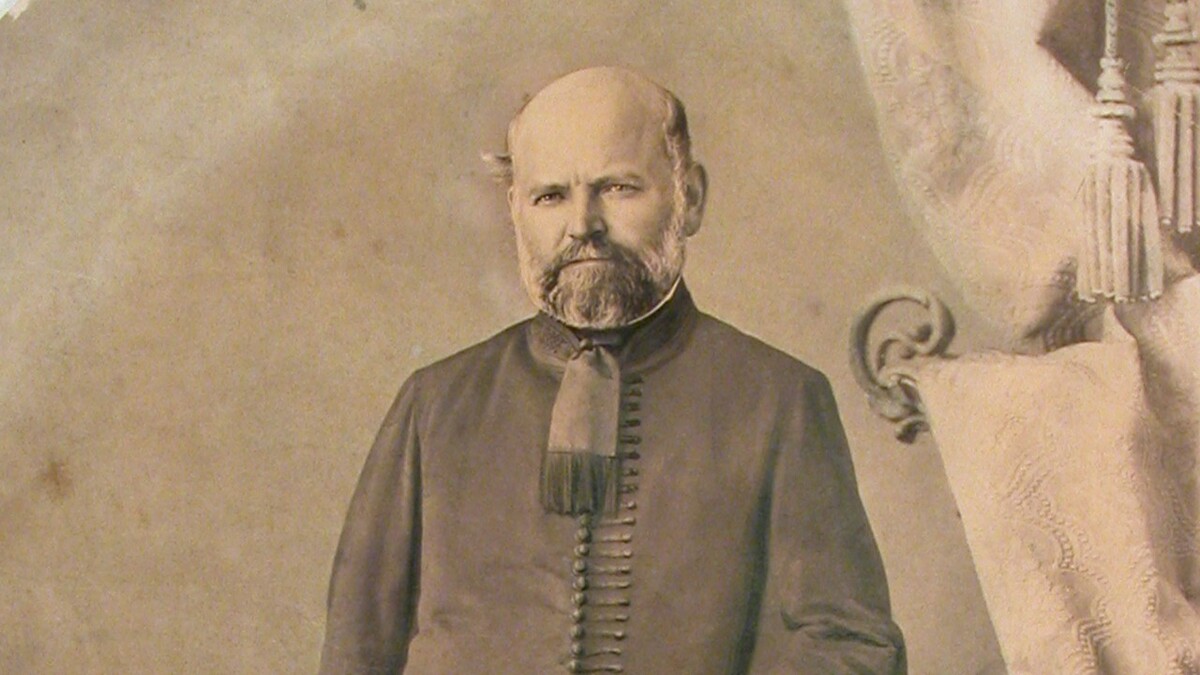
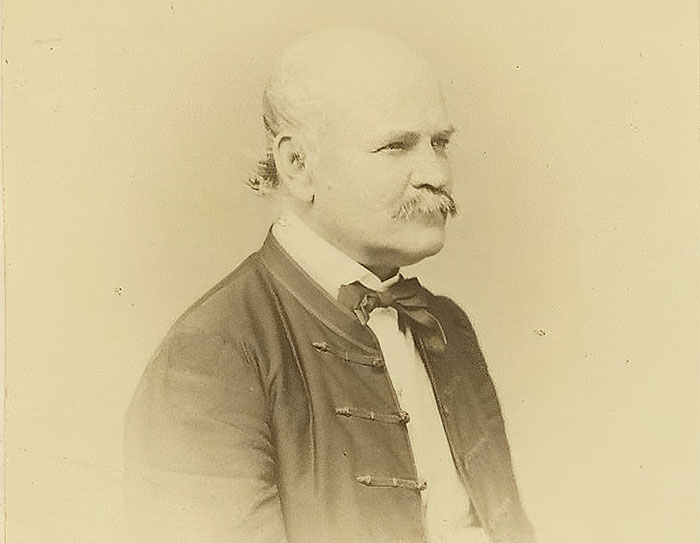
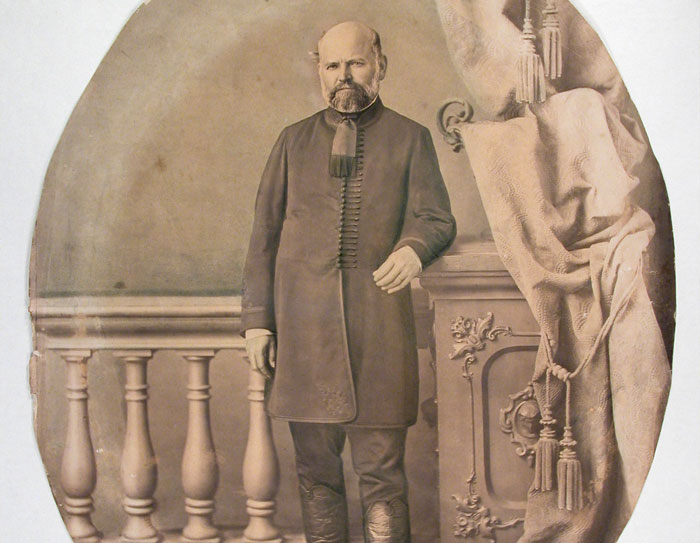
But there was no denying that something in the First Division was causing more women to die. In 1846, a young Hungarian obstetrician named Ignaz Semmelweist began working at the Vienna General Hospital and turned his attention to solving this conundrum. He would go on to suffer the fate of many medical minds who were ahead of their time, discovering something new and then seeing his ideas repeatedly rejected.
He ruled out what seemed at the time as the obvious candidates, overcrowding in the ward, the woman’s diet, even the delivery position. Other physicians favored ventilating the hospital, to help clear the mystical “miasma” that was blamed for many illnesses. The first real clue came in 1847, when Semmelweis’s colleague, a professor of forensic medicine, died from an infection contracted after cutting himself during an autopsy. Semmelweis noted that the symptoms leading up to his death closely resembled those of the women dying from Childbed fever in the ward.
He realized that medical students and physicians would often perform autopsies before moving on to work in the maternal ward. Semmelweis theorized that they must be carrying with them “cadaverous particles” on their hands and then transferring them to the unfortunate women in the ward during examinations. Midwives, in contrast, never handled cadavers. That year, he ordered everyone entering the First Division to scrub their hands in a solution of chlorinated lime. His reasoning was that the solution would remove the smell of decay.
It worked. The maternal mortality rate in the First division fell from 18% to 2% in a matter of months. The Viennese medical establishment was unmoved. While Semmelweis could describe the pattern, he could not explain the underlying mechanism, as germ theory did not yet exist. To his contemporaries, his findings were seen as a lucky coincidence rather than science. They were similarly hostile to the idea that respected doctors were unwittingly killing their patients. He did not publish any papers on his findings at this time, hampering the spread of his ideas. When Semmelweis’s contract expired in 1849, his supervisor declined to renew it. To add insult to injury, his contributions or lowering the mortality rate in the First Division were credited to other unrelated causes.
Semmelweis returned to Hungary and became head of obstetrics at St. Rochus Hospital in Pest. He instituted the same handwashing protocol and helped cut mortality rates from 10-15% down to under 1%. His methods found more popularity in Hungary than in Vienna and other hospitals began introducing them. Semmelweis wasn’t alone internationally, a few years earlier, American physician Oliver Wendell Holmes had published an essay “The Contagiousness of Puerperal Fever,” arguing that Childbed fever passed from patient to patient via birth attendants. Ahead of his contemporaries, he identified the mechanism, writing that “The disease, known as Puerperal Fever, is so far contagious as to be frequently carried from patient to patient by physicians and nurses.” Similarly to Semmelweis, Holmes’ ideas were met with resistance from the medical establishment.
Following the end of his time at the Vienna General Hospital, Semmelweis grew increasingly bitter over the medical establishment’s refusal to budge and the deaths it was causing. He wrote an essay titled “The Difference in Opinion between Myself and the English Physicians regarding Childbed Fever.” In 1861, he published his major work “Etiology, Concept and Prophylaxis of Childbed Fever,” which was considered long, repetitive and combative.
Following unfavorable reviews of his 1861 book, Semmelweis began to lash out, publishing open letters branding his skeptical ex-colleagues as murderers. He would demand other doctors arrange a conference of physicians where he could argue his ideas, suggesting that he would stay “until all have been converted to his theory.”
Those who worked with him in the mid-1860s described him as growing increasingly erratic. Historians suggest that this could have been a result of neurological or psychiatric illness, tertiary syphilis or just exhaustion at seeing decades of preventable deaths. The idea that he was locked away for his ideas is an oversimplified modern myth, but the real story is just as tragic.
In July of 1865, Semmelweis’s colleagues arranged to have him committed to a recently opened asylum in Vienna, reportedly by luring him there under the context of viewing the new medical facility. When he realized what was happening, he attempted to resist and was forcibly restrained. He died two weeks later, on August 13th, 1865. He was 47 years old. The cause of death was recorded as pyaemia, also known as blood poisoning, likely arising from a gangrenous wound caused during the struggle, the sort of infection he’d spent his career trying to prevent.
Recognition for his efforts only came later. Two decades after he passed away, French microbiologist Louis Pasteur would develop germ theory, supplying the mechanism Semmelweis needed to prove his theory. British surgeon Joseph Lister would apply the same logic to his procedures, using carbolic acid as an antiseptic, which helped reduce post-operative mortality. This would earn Lister the title “Father of modern surgery.”
Chemistry can now explain what Semmelweis could only observe. Soap molecules are amphiphilic, meaning that one of their ends binds to water, the other to fat. Many bacteria are “wrapped” in a fatty outer membrane. When soap meets that membrane, its fat-loving ends wedge in and pull it apart, disabling that microbe. The water-loving ends carry the debris away under running water.
This is why the CDC recommends scrubbing for at least 20 seconds rather than just quickly rinsing. The chemical action and physical friction both need time to do their work. Childbed fever is now understood to be mainly caused by Group A Streptococcus (that’s 3 c’s) bacteria, introduced into the uterus during or after delivery, hand-to-patient. Hand washing interrupts this.
Centers for Disease Control and Prevention
The practice that cost Semmelweis’s career and which lack arguably contributed to his death is now considered one of the most basic and uncontested tools in medicine. Semmelweis is regarded as a pioneer in infection control and sometimes called the “savior of mothers” and a medical university in Budapest bears his name. His story gave rise to the term “Semmelweis reflex”, used to describe the reflexive rejection of evidence that contradicts established belief.








































 No fees, cancel anytime










33
0