Get Premium
Dark mode theme is available exclusively for premium users. Learn more about the benefits of subscribing.
No fees, cancel anytime.

 Dark Mode Ad-Free Browsing Unlimited Content
 Ad-Free Browsing Unlimited Content Dark Mode
Join 1.2 million Panda readers who get the best art, memes, and fun stories every week!
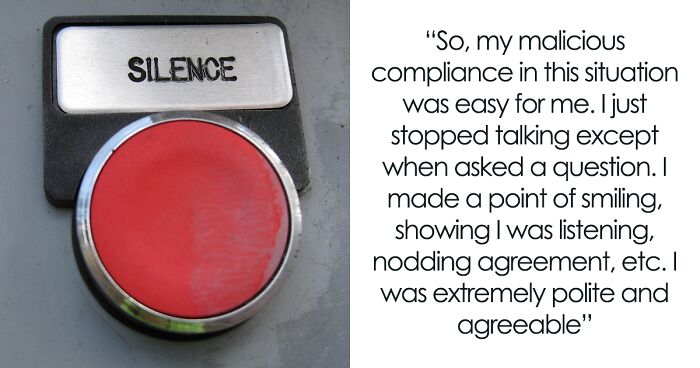
I believe everyone can agree at this point that we’re all sick and tired of people being unconstructive rumps when it comes to feedback. And it doesn’t matter if it’s work or life—sooner or later, people face situations where they have to tell someone to knock it off. But what happens more often than not is they keep quiet until it implodes.
But there’s also another level of feedback that begs even more questions. And that is feedback that has absolutely no foundation to it, let alone reality. Results may vary, but it’s ridonculous regardless.
Take this one person, for example. She got a comment from her boss about making people uncomfortable with her “contemptuousness”, but failed to elaborate on it in any way. So, how do you fight absurdly lacking feedback? With malicious compliance, of course!
More Info: Reddit
Image credits: Pavel Danilyuk (not the actual image)
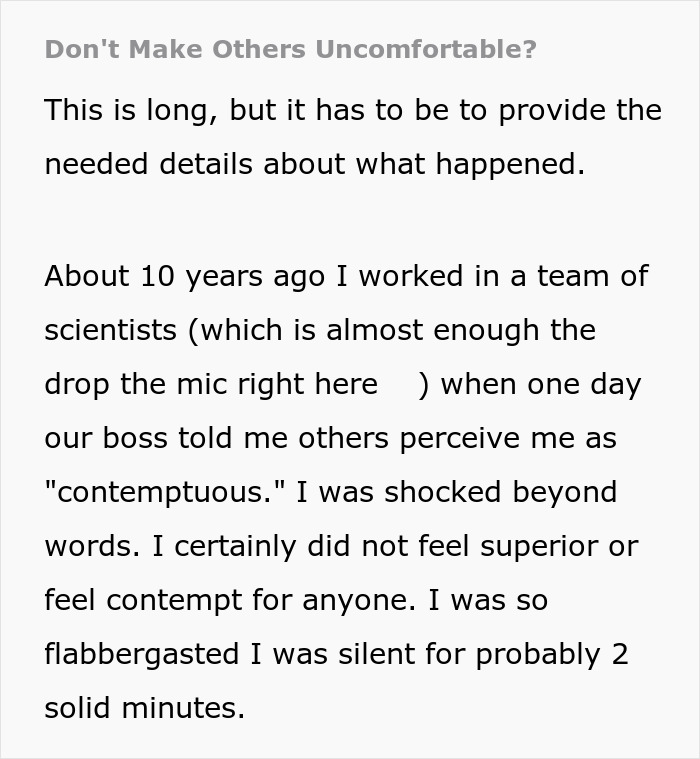
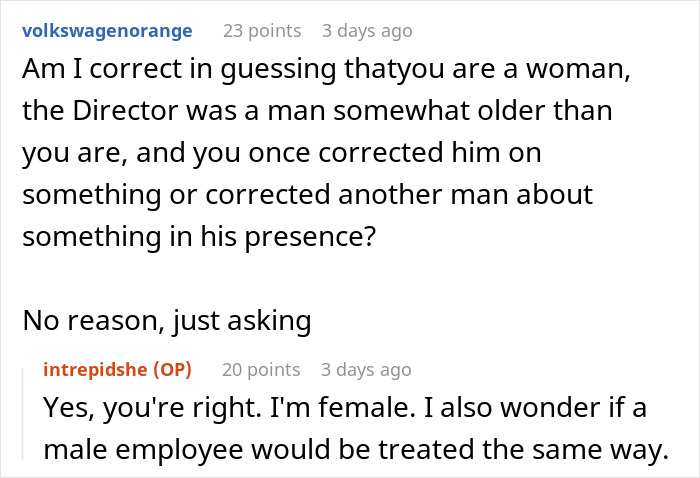
The story goes that Reddit user u/intrepidshe used to work in a laboratory with a team of scientists. One day, her boss sat her down and, out of the blue, told her that others saw her as “contemptuous.” That alone was surprising to her, but after asking for more details, the boss’ answer was effectively “I don’t know.”
So, let us get this straight: there is a problem with a person being allegedly contemptuous, yet there are no clear examples, no clear people, no nothing to back it up? OK, seems legit.
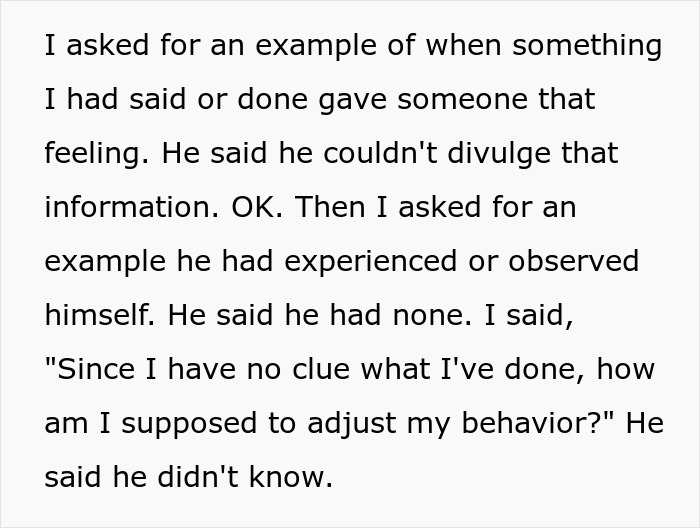
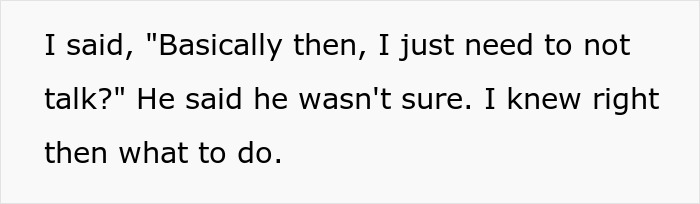
OP’s next question was “since I have no clue what I’ve done, how am I supposed to adjust my behavior?” The boss didn’t know. OK, follow-up question: “Basically then, I just need to not talk?” The boss was again not sure.
OP knew what to do, though.
Image credits: u/intrepidshe
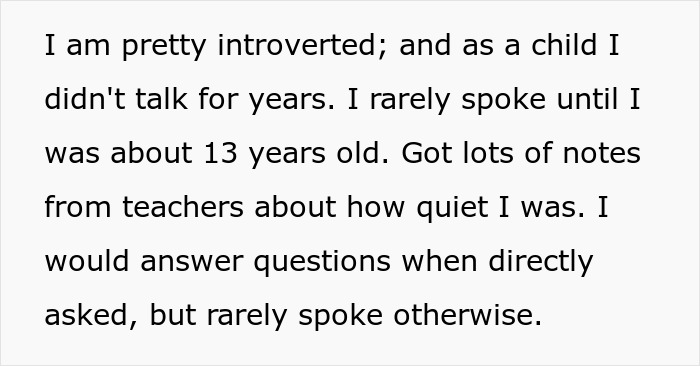
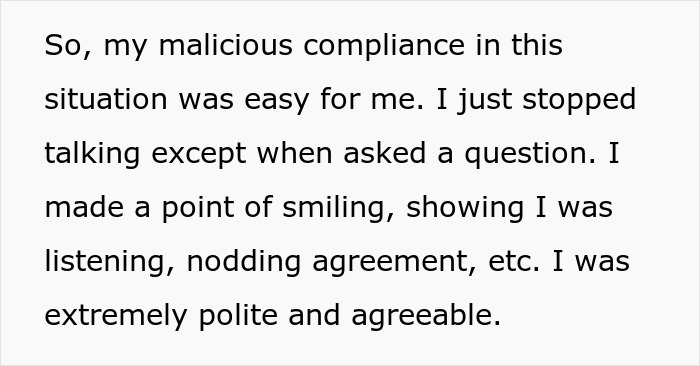
For context, OP explained that she’s always been rather introverted. So, staying silent, unless spoken to, was going to be easy for her. This didn’t mean that she shut herself away from everyone completely—she would still smile at coworkers, show that she was listening, and was respectful and polite with everyone. It’s just that she would not speak until someone directly engaged in conversation with her.
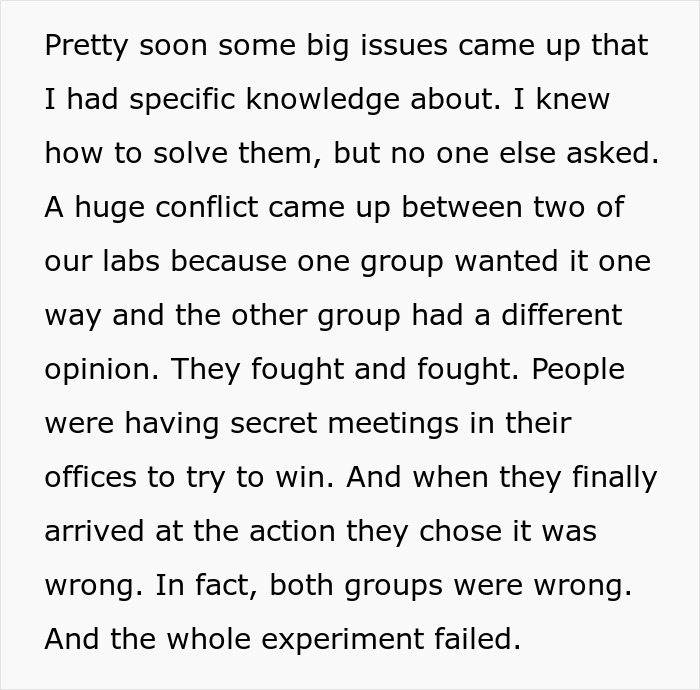
Given this, it didn’t take long for this one big issue to arise at her job. Luckily, OP had specific knowledge about the problem, and even knew how to fix it. Unluckily, though, nobody asked her input on it. And hence she remained silent. Silent for long enough for it all to explode. Not literally, of course.
Image credits: u/intrepidshe
Image credits: Chokniti Khongchum (not the actual image)
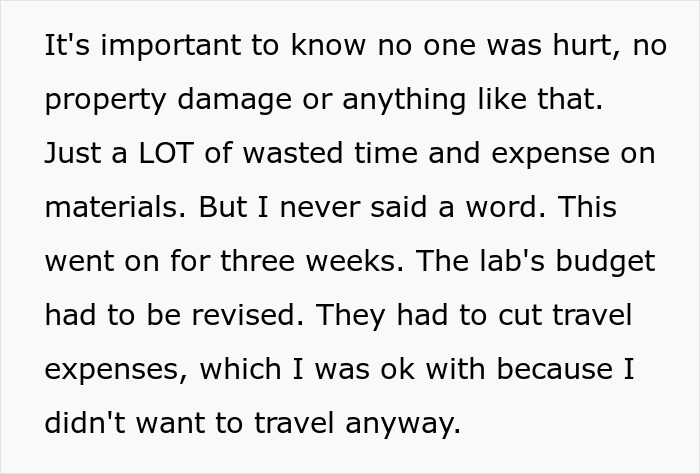
What happened was that there was this huge conflict between two of the laboratories on how to solve the issue. But neither side had a guaranteed solution. The conflict escalated to a degree where there were secret meetings and the like, seemingly creating an even bigger divide in the company. And the solutions never worked out—it only ended up wasting a lot of money and time.
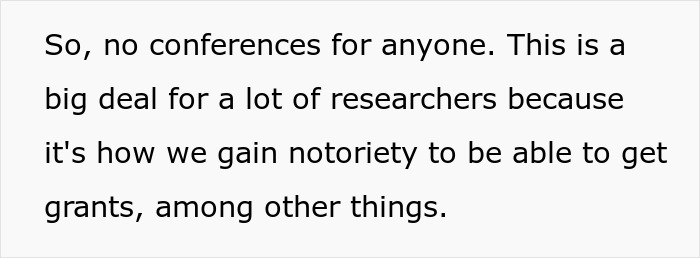
This in turn meant that budgets were soon cut, so no more conferences, which is how scientists gain notoriety and potential grants for their research.
Image credits: u/intrepidshe
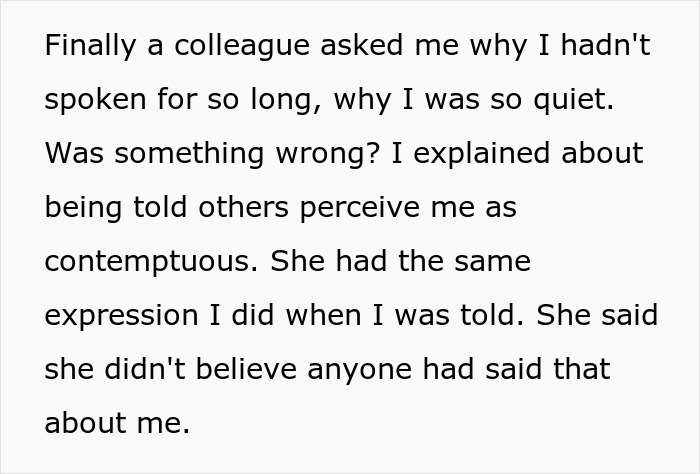
Finally, someone approached OP asking why she was so silent. Since this was a direct question, she explained that she was told about the whole “contemptuous” thing. Both were left surprised as the coworker didn’t think that, nor did she believe anyone else did, and OP—because it turns out the boss lied.
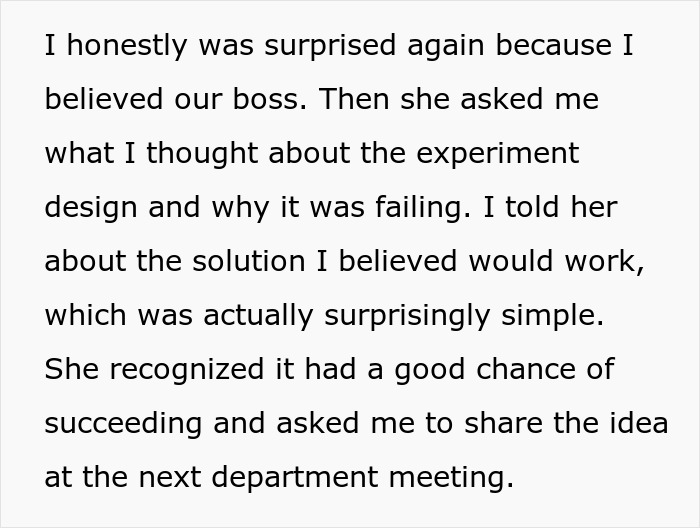
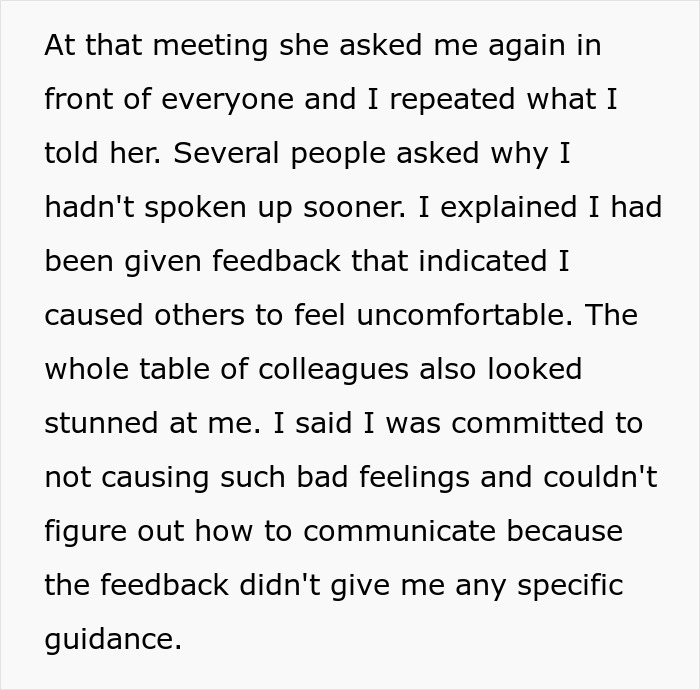
The two also talked about the experiment and OP’s solution to it—which the coworker urged her to share at an upcoming meeting. Fast forward to it, the said coworker nodded towards OP to share her idea. After doing so, several colleagues asked why she never shared this in the first place, and so the exposing began. She explained how she was given feedback about making folks uncomfortable, given absolutely no explanation or guidelines about it, and was led to the conclusion that silence would be the best approach.
Image credits: u/intrepidshe
Image credits: Pavel Danilyuk (not the actual image)
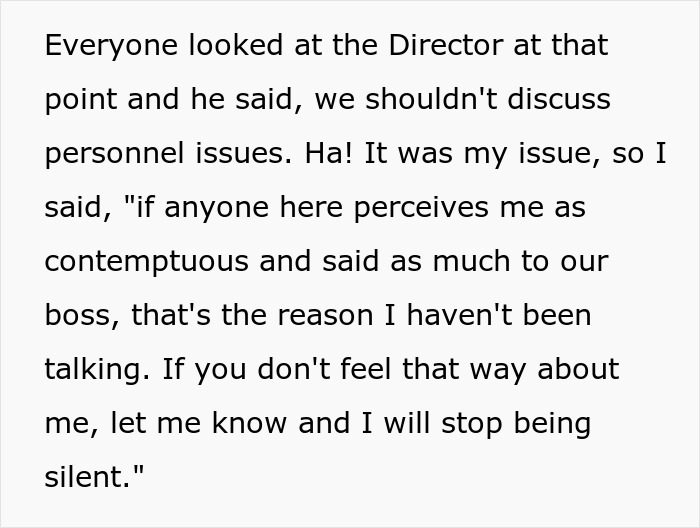
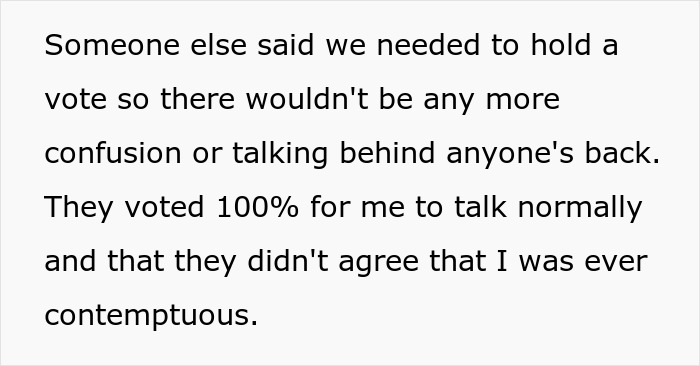
At this point, everyone’s eyes were dead centered on the boss, who suggested “not discussing personal issues”. One thing led to another and a vote was cast on the matter, with everyone saying they never felt like OP was contemptuous, let alone wanted her to be silent.
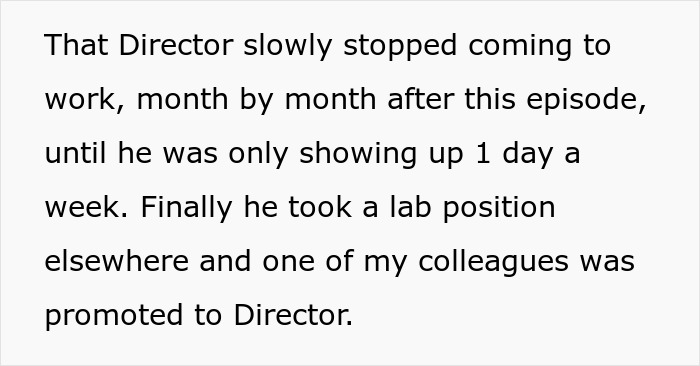
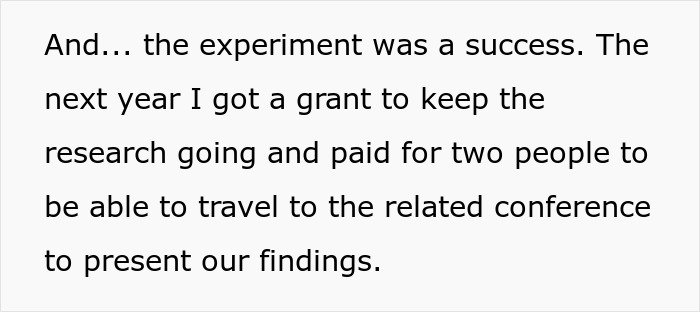
Needless to say, this was an awkwardly unfortunate turn of events for the boss, as they slowly stopped coming to work, eventually switching jobs. But, hey, OP’s solution worked and things were back to normal!
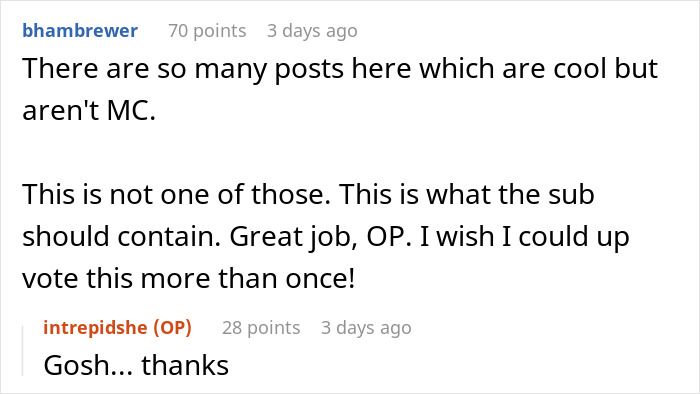
The story got quite a bit of attention on the r/MaliciousCompliance subreddit, garnering over 7,000 upvotes (with a 95% positivity rating) and gaining a couple of Reddit awards.
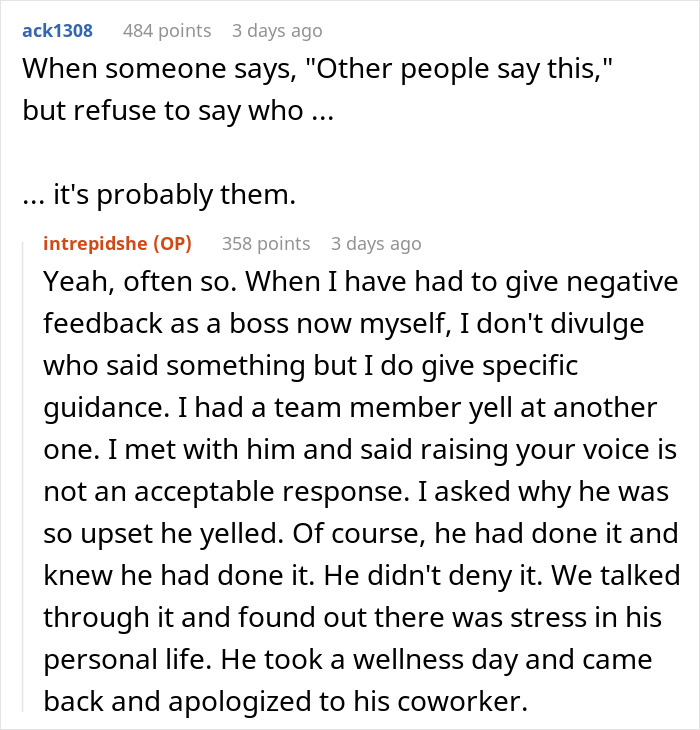
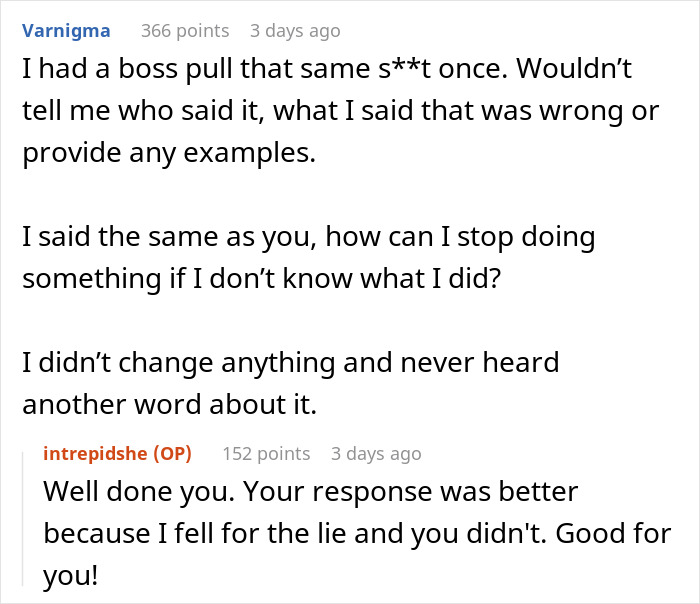
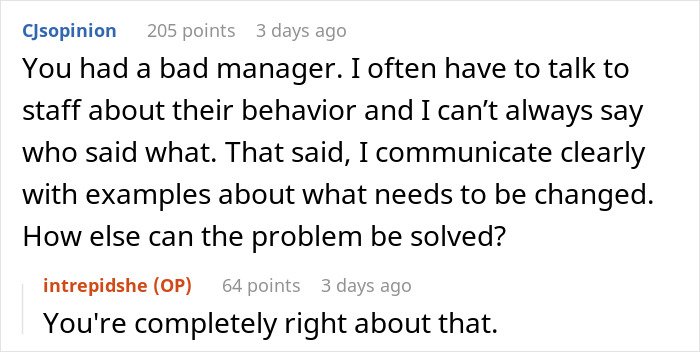
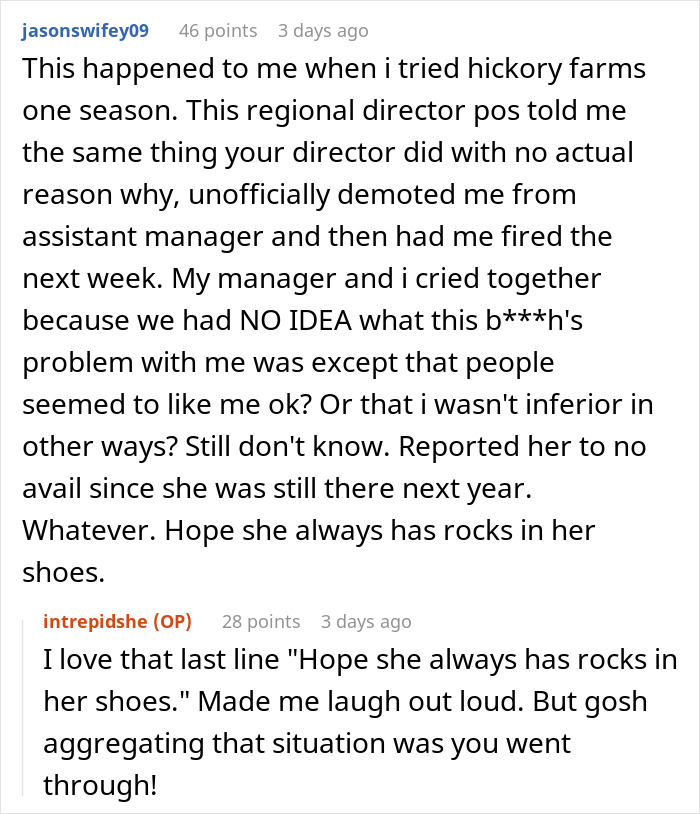
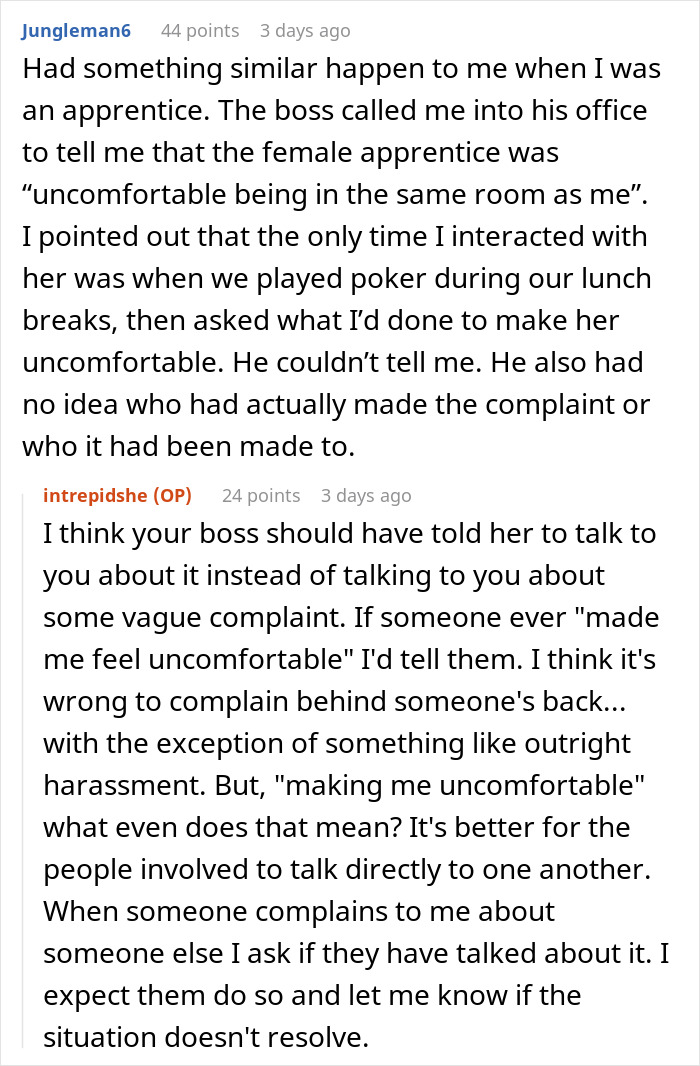
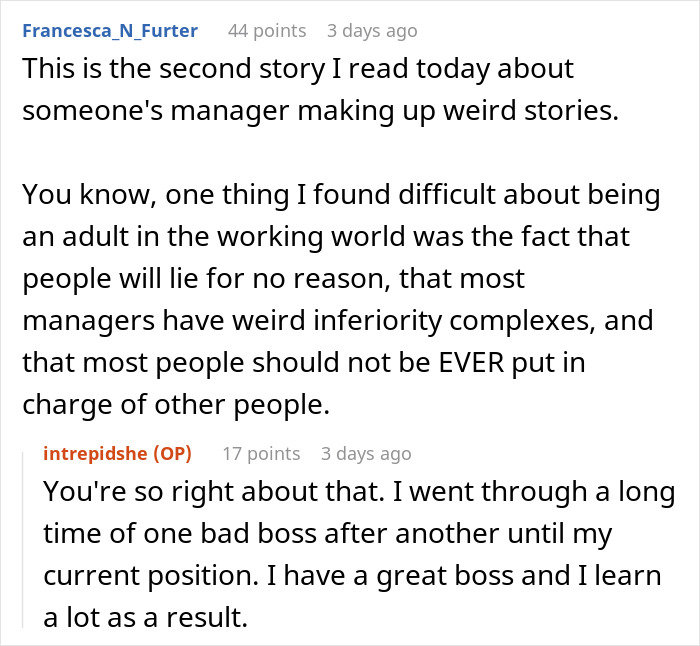
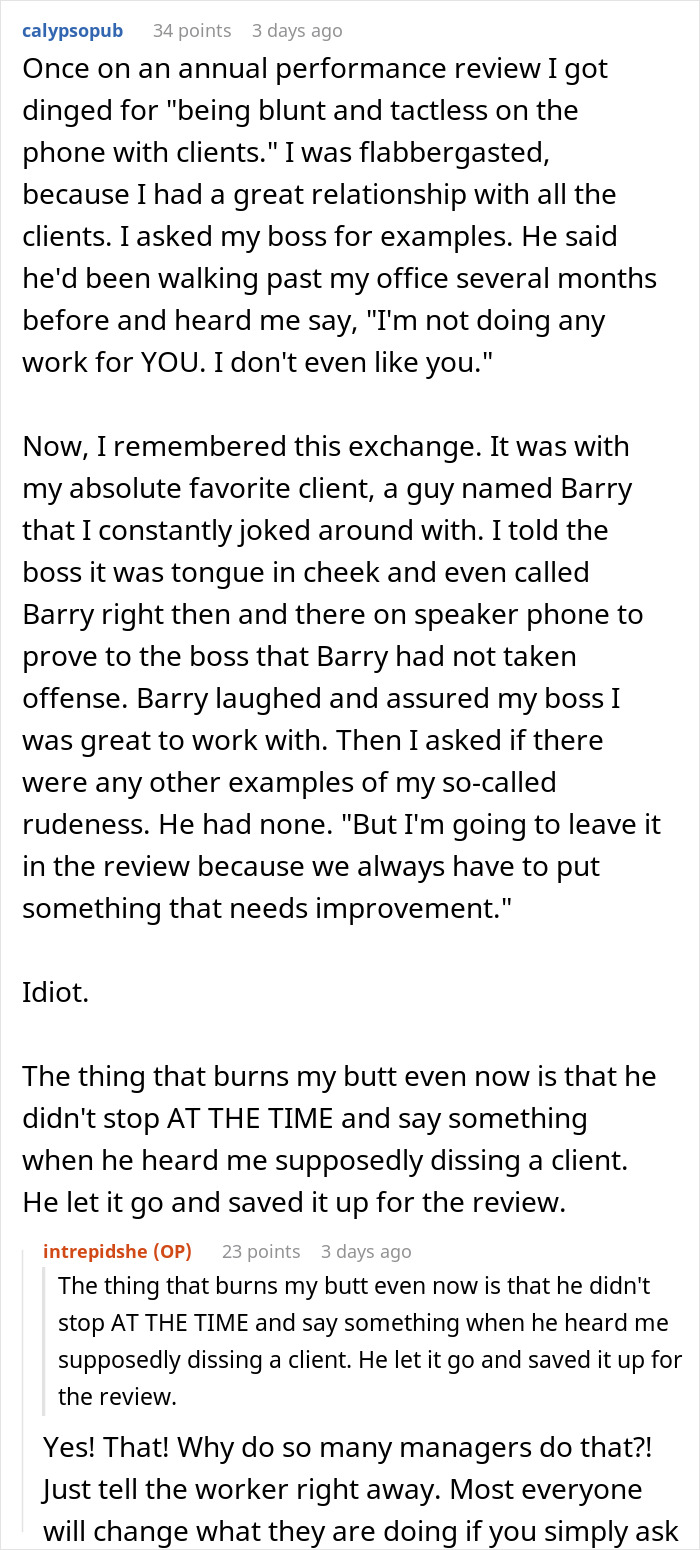
A number of people shared similar stories of questionable feedback, whether people appealed it or not. But one thing’s for sure—always ask for specifics as they are often the first indication of how legit feedback is.
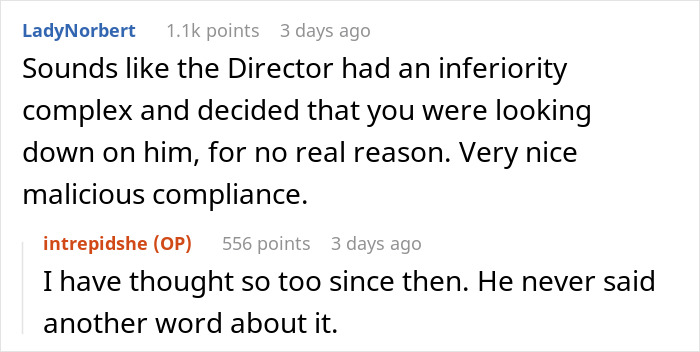
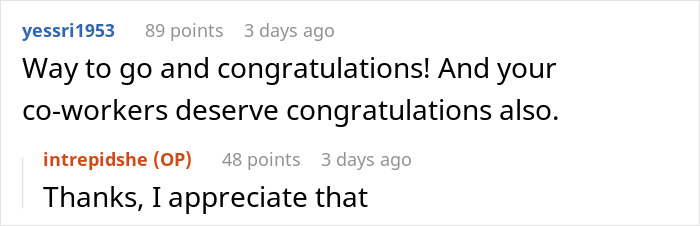
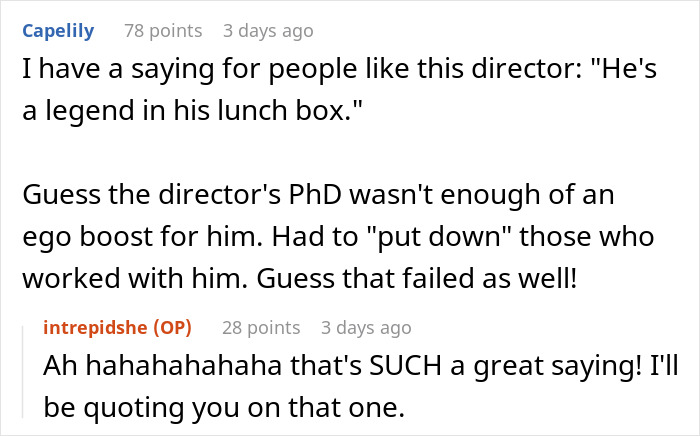
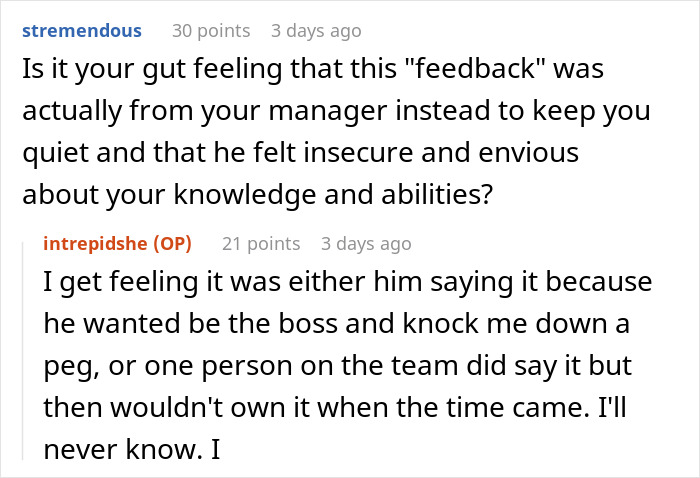
Others praised the person who called for a vote to clear OP’s name. It not only let OP know that she was accepted as a colleague, but also exposed the boss and his shady intentions. Another commenter pointed out that it might have happened with multiple people with varying results, which is scary to think.
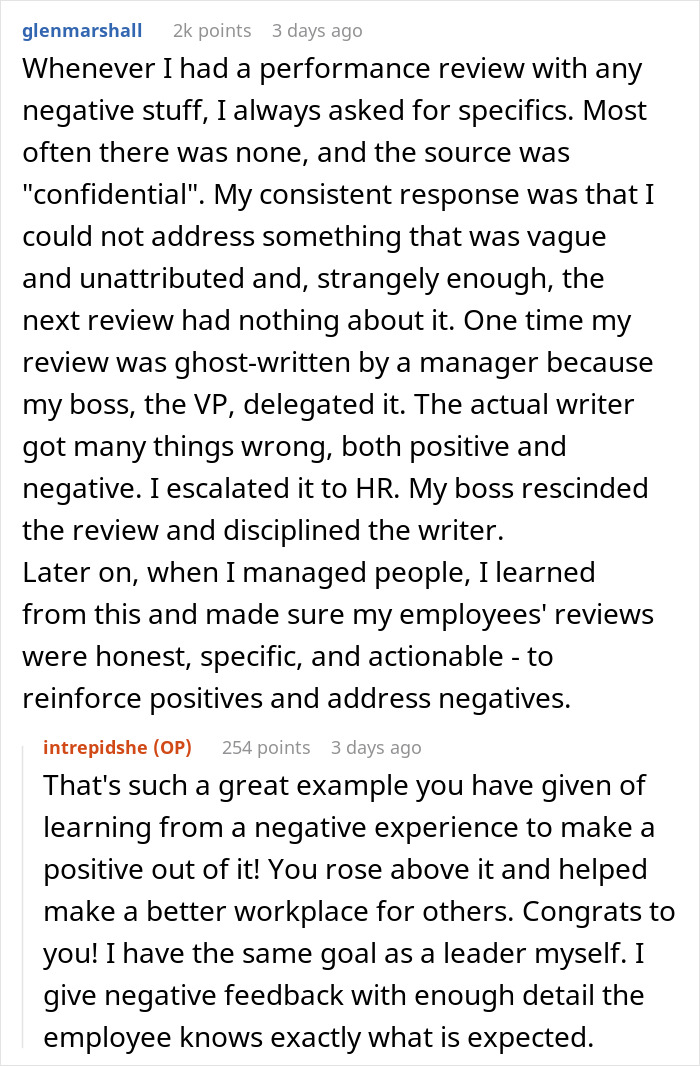
And this one commenter made a good point about providing feedback: “when I managed people, I learned from this and made sure my employees’ reviews were honest, specific, and actionable—to reinforce positives and address negatives.
Speaking of feedback, in his article, a man of many talents, Gerard O’Donovan, explained that there are 7 key principles to giving feedback. In a nutshell, feedback has to be transformational, so everything leading up to the change has to be constructive and effective.
This means that feedback has to be not only specific, but contextual, meaning that it should include specific examples that would lead to specific conclusions and be given at an appropriately relevant time, i.e. as soon as possible because who cares what happened 6 years ago?
But the specificity doesn’t end here as the feedback has to focus on the situation and actions rather than the individual—otherwise it might come off as attacking a person. All of this should lead to positive change, not only because negative consequences should be avoided, but also because that encourages professional growth. And everyone benefits from that.
So, what did you think about this situation? How do you think you would have approached it? Heck, if you have nothing to say, let us know if you learned anything on how to give feedback (whether maliciously or not) in the comment section below!
289Kviews
Share on Facebook
I find it weird how OP was apparently silent for so long and no one asked them for three weeks. Must be a pretty poor office environment that no one gave a damn for that long

They spoke when spoken to, they weren't completely silent.
Load More Replies...
Some people, when given even the smallest amount of authority over others, will let it go straight to their heads. This results in a toxic atmosphere, and those who can't handle authority over others usually show it in their ridiculous demands, and the, I'm right, you're wrong attitude. The BEST way to screw over someone like this is to do EXACTLY what they tell you to do. You will not get in trouble, you were only doing what you were told.
Far far too many times in my life this comes down to a misunderstanding. When we've been able to speak openly and civilly often there was no problem, whatsoever. We laughed, even. I've been mistaken about people and they've been mistaken about me. It happens! Not every time, of course, but often enough I just reject vague feedback. I need receipts and to speak to my accuser, or nothing is changing. And when provided with receipts and proven that I was in the wrong? I apologized genuinely, and resolved to do better (and did). And yes, I have gone asking after who said what and, like OP, it was fake and nad nothing to do with me. Hence my skepticism. We're not talking about me touching people or saying slurs, or abuse or harassment.
I find it weird how OP was apparently silent for so long and no one asked them for three weeks. Must be a pretty poor office environment that no one gave a damn for that long
They spoke when spoken to, they weren't completely silent.
Load More Replies... Some people, when given even the smallest amount of authority over others, will let it go straight to their heads. This results in a toxic atmosphere, and those who can't handle authority over others usually show it in their ridiculous demands, and the, I'm right, you're wrong attitude. The BEST way to screw over someone like this is to do EXACTLY what they tell you to do. You will not get in trouble, you were only doing what you were told.
Far far too many times in my life this comes down to a misunderstanding. When we've been able to speak openly and civilly often there was no problem, whatsoever. We laughed, even. I've been mistaken about people and they've been mistaken about me. It happens! Not every time, of course, but often enough I just reject vague feedback. I need receipts and to speak to my accuser, or nothing is changing. And when provided with receipts and proven that I was in the wrong? I apologized genuinely, and resolved to do better (and did). And yes, I have gone asking after who said what and, like OP, it was fake and nad nothing to do with me. Hence my skepticism. We're not talking about me touching people or saying slurs, or abuse or harassment.

































 No fees, cancel anytime













111
36