Get Premium
Dark mode theme is available exclusively for premium users. Learn more about the benefits of subscribing.
No fees, cancel anytime.

 Dark Mode Ad-Free Browsing Unlimited Content
 Ad-Free Browsing Unlimited Content Dark Mode
Join 1.2 million Panda readers who get the best art, memes, and fun stories every week!
We all seek knowledge. Aristotle said, “All humans by nature desire to know.” However, not everyone pursues knowledge in the same way.
More than a dozen knowledge types exist, including how to bake bread, play a musical instrument, remember historical events, and understand scientific theories, meaning knowledge can take many forms.
Today, we have a list of declarative knowledge and interesting facts to feed your hunger for informational wisdom. Scroll down to find fascinating and strange information about our world, and don’t forget to upvote your favorites!
This post may include affiliate links.
Chess Grandmaster Anna Muzychuk refuses to play in Saudi Arabia and says: "In a few days, I will lose two world titles, back to back." Because I decided not to go to Saudi Arabia. I refuse to play by special rules, to wear abaya, to be accompanied by a man so I can leave the hotel, so I don't feel like a second class person. "I will follow my principles and not compete in the World Fast Chess and Blitz Championship where in just 5 days I could have won more money than dozens of other tournaments combined." This is all very nasty but the sad part is no one seems to care. Bitter feelings but can't go back. "
—Anna Muzychuk
A Chicago teenager named Dorothy Jean Tillman has just become the youngest person in the world to obtain a PHD doctorate at the age of 17. - She took her first university course at the age of 10. - At the age of 14, Dorothy Jean Tillman had obtained an associate diploma, a bachelor''s degree and a master''s degree. Respect This is the kind of image that should be made viral on social networks
I just hope her mutant mind doesn't make her lonely. I'm relatively normal but my father was the nation's leading infrared phenomenologist and he did not play well with humans.
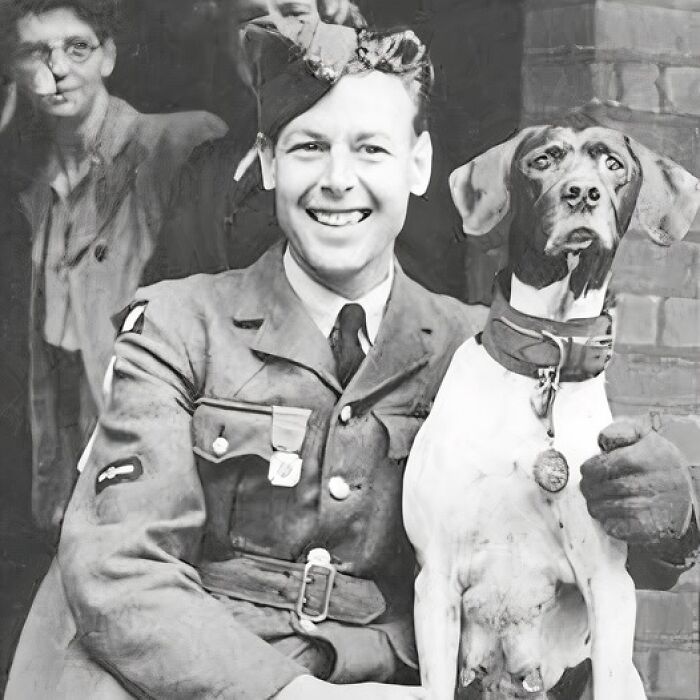
Judy was a special pointer dog who lived on navy ships in the Pacific Ocean. In 1942, the Japanese captured her and put her in a prison camp. There she met a man named Frank Williams, who shared his small bit of rice with her even though he was very hungry too.
Judy made the prisoners feel happier during the tough times. She would bark loudly when dangerous snakes, crocodiles, or even tigers came near the prisoners. When the prisoners had to go on a ship back to Singapore, Frank hid Judy in a rice sack. She stayed super quiet and didn't make a sound, so the guards never knew she was there.
The very next day, their ship was hit by a torpedo! Frank pushed Judy out of a small window to try to save her. There was a big 15-foot drop to the ocean below. Frank escaped too, but was caught again and sent to a new prison camp.
Frank didn't know if Judy survived. But then he heard stories about a dog helping people who were drowning after the ship sank. When Frank got to the new camp, something amazing happened. "I couldn't believe my eyes! As I walked through the gate, a scraggly dog hit me square between the shoulders and knocked me over. I'd never been so glad to see the old girl!"
They spent a whole year together at the camp in Sumatra. "Judy saved my life in so many ways," said Frank. "But the greatest of all was giving me a reason to live. All I had to do was look into those weary, bloodshot eyes and ask myself: 'What would happen to her if I died?' I had to keep going."
When the war ended, Frank smuggled Judy onto a ship going to Liverpool, England. In England, Judy got a special medal called the Dickin Medal, which is like a medal of honor for animals. She got it for being brave and helping prisoners stay hopeful.
Frank also got an award for taking such good care of Judy. For a year after the war, Frank and Judy visited families of prisoners who had died. Frank said that Judy "always provided a comforting presence to the families."
When Judy died at 13 years old, Frank spent two whole months building a beautiful stone memorial for her. It had a special plaque that told Judy's amazing life story.
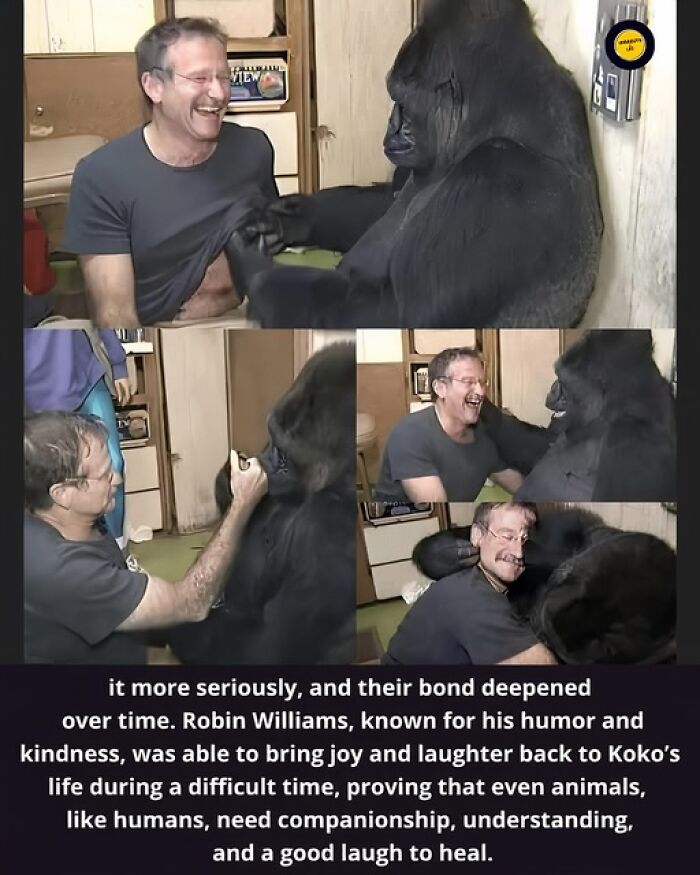
Robin Williams once brought laughter back to a grieving gorilla who had been mourning the loss of his friend for six months. This remarkable story began when American ethologists taught a gorilla named Koko to communicate with humans using sign language. Koko was exceptionally intelligent, but he was going through a deeply difficult period, to the point where biologists feared he might be suffering from severe melancholy.
The researchers wanted to help Koko by finding him a new companion while also studying how he interacted with humans. Since Koko had learned sign language and could communicate with our species, he was the perfect subject to explore whether there were true cognitive boundaries between humans and gorillas. To assist, they reached out to Robin Williams, the renowned comedian, and asked if he would spend time with Koko, interacting with him naturally, as if he were simply a person in need of comfort.
Williams agreed, though he had reservations. He wasn’t an expert on primates and worried he might be too awkward to connect with the gorilla. However, when he met Koko, Williams had an unexpected revelation. By letting the gorilla approach him at his own pace, Williams realized that interacting with Koko felt like engaging with a curious child. Gradually, Koko grew more interested in his visitor, even becoming fascinated by Williams’ glasses, which he referred to as "strange glass eyes."
Soon, Koko began communicating with Williams through sign language, suggesting games and asking surprisingly insightful questions that left the actor stunned. Within minutes, the two were joking, tickling each other, playing, and sharing stories from their lives. The researchers were amazed and asked Koko to describe Williams in one word. The gorilla chose the term "friend." Williams was deeply moved by the encounter, especially when he learned that he had managed to make a gorilla laugh who was on the brink of depression due to loneliness.
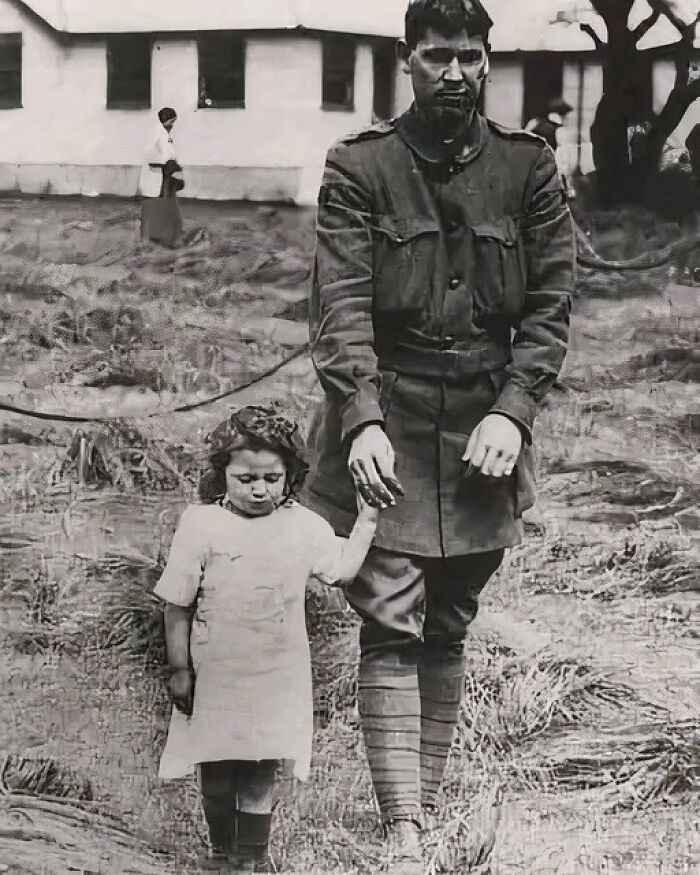
The little girl in this photograph is Ruby Crane. From the young age of 3 years old, she spent her days at St Dunstan’s Rehabilitation Centre in Brighton, Sussex—helping blinded soldiers returning from World War I. Ruby’s father was the head gardener, and as she wandered the grounds, she would take the soldiers by the hand and guide them to their workshops, asking where they wanted to go. She knew they couldn’t see and just wanted to help. Her kindness deeply moved those around her. People sent dolls and toys to thank her for the support she gave to the men and women who had lost their sight. Ruby was so beloved that she was featured on the front page of St Dunstan’s first Annual Report (1915/1916), and later, Flag Day emblems were designed in her honor.
Years later, Ruby recalled:
"I always remember how my little hand seemed so small in their big hands… They were so pleased to have a child come and talk to them. It was something different—away from the monotonous grind of not being able to see things, I think."
Ruby was rewarded with a long life, passing away in 2011 in her late nineties. But her legacy of kindness lives on. ❤️
This is the final photo of Saman Kunan, a 38-year-old former Thai Navy SEAL who gave his life during the daring rescue of twelve boys trapped in a flooded cave in Thailand.
When he learned the boys were running low on oxygen, he made the ultimate choice—leaving his own supply behind to give them a better chance at survival, and setting out to bring more. Tragically, he never made it back.
His bravery and sacrifice helped pave the way for the boys’ eventual rescue—and he is remembered as a true hero.
Our salute to him

So many movies are made about heroes. Mostly about killing people, blowing people up, explosions and combat. Hate, anger, revenge. This was about compassion and love. This is what true heroism is. This was an almost impossible rescue. The estimate was that at least half the kids would die in this attempt. They got EVERY SINGLE ONE out. Shame he'll never know how successful the rescue was. Hundreds of years of study, training, experience, professionalism and empathy went into that rescue. Every single one was saved. Awesome.
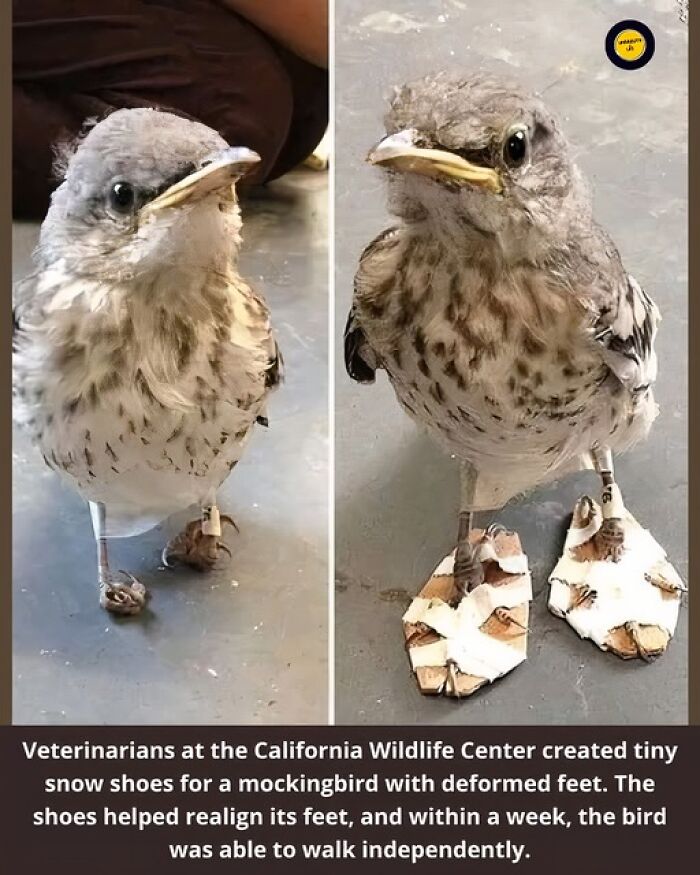
Veterinarians crafted miniature snow shoes for a small mockingbird with deformed feet, recently rescued by the California Wildlife Center. The customized shoes aided in realigning its feet, restoring them to a normal bird's foot shape. Within a week, the bird's feet were successfully corrected, allowing it to walk independently.
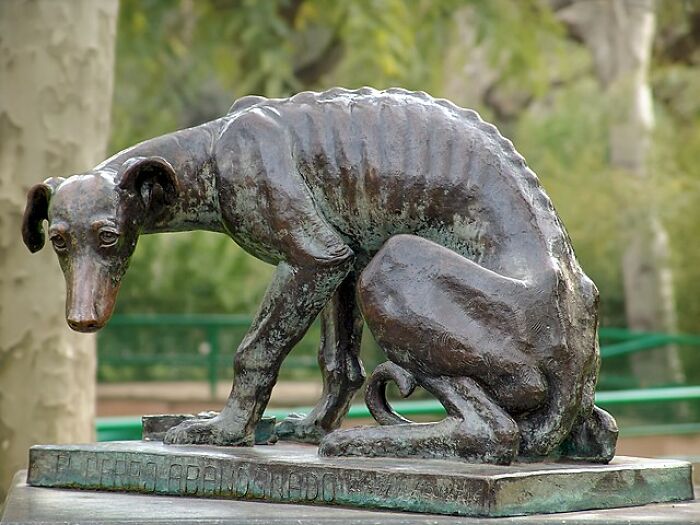
Tucked quietly along a street in Barcelona, there stands a sculpture that stops people in their tracks.
It’s called The Abandoned Dog, created by Catalan artist Artur Aldomà Puig.
No pedestal. No glory. Just a dog—sculpted in stone, sitting alone, waiting.
Its eyes are what pull you in.
Wide. Hopeful. Full of quiet sorrow.
It’s not just a statue—it’s a message.
This sculpture is a tribute to every dog who gave their love, only to be left behind. It speaks for the voiceless. The loyal. The forgotten.
Next to the figure is a poem by the artist himself, etched in metal.
It reads:
“Your race doesn’t matter.
Your name doesn’t matter.
You came into the world
to be my friend.”
It’s not just about dogs. It’s about what we owe to love—the love that comes without judgment, without condition, without limit.
Locals leave flowers by its paws. Children stop to pet it. Visitors kneel to take photos and wipe away tears. It has become a place of memory, and mourning, and quiet promises.
A reminder that loyalty like this should never go unnoticed.
Artur Aldomà Puig didn’t just sculpt a dog.
He sculpted a responsibility.

I might be dumb but is that not bronze instead of stone?!!
Passengers flying first class on British Airways’ Boeing 747s have expressed concerns about a redesign that includes windows in some lavatories. One woman traveling to New York voiced her discomfort over the lack of blinds. A stewardess reportedly responded, “Madam, if someone is clinging to the side of this aircraft at 35,000 feet, they’ve earned the view.

One of the many things that tells us that the world isn't fair is that somebody that stupid can afford to fly first class.
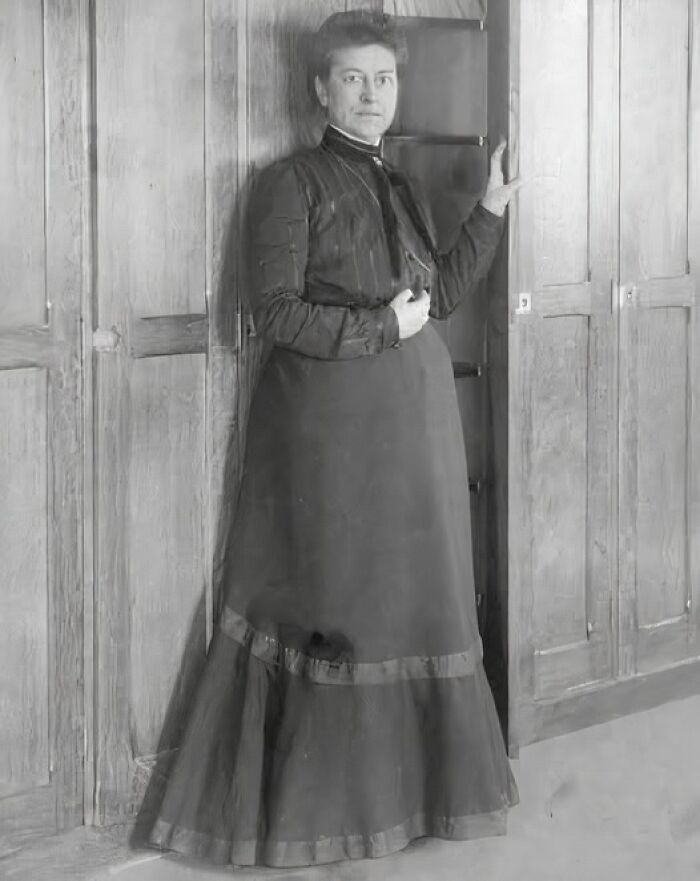
On a cold morning in 1857, in Dundee, Scotland, a girl was born who would one day light up the universe—not with a telescope, but with brilliance. Her name was Williamina Paton Stevens Fleming.
From an early age, Williamina showed a mind far beyond her years. By 14, she was already teaching. But life took an unexpected turn when she married, moved to the United States, and was abandoned—left alone with her child in a foreign land.
With limited options, she took a job as a housekeeper in the home of Edward Pickering, director of the Harvard College Observatory.
Fate works in mysterious ways.
Legend has it that, frustrated with his staff, Pickering once shouted, “My Scottish maid could do better!” What began as sarcasm became a spark of destiny.
In 1881, he gave Williamina a chance—and she stunned everyone. With no formal scientific education, she began analyzing photographs of the night sky with unmatched precision. She became the first of the Harvard Computers—a group of brilliant women behind some of astronomy’s greatest breakthroughs.
Williamina went on to:
Classify over 10,000 stars
Discover 10 novas, 59 nebulae, and 310 variable stars
Create the Harvard Classification System, which laid the foundation for how we categorize stars to this day
She also became the first American woman to be named an honorary member of the Royal Astronomical Society—a historic achievement in a male-dominated field.
Her work didn’t just study the stars. She became one.
Williamina Fleming proved that greatness can come from the most unexpected places. That brilliance doesn’t need permission—and that a determined woman can change the very way we see the universe.
Her story continues to inspire dreamers and trailblazers to this day.
After the devastating earthquake and tsunami in 2011, when the Fukushima nuclear power plant was on the verge of collapse, a small group of people stepped forward – not soldiers, not politicians, but courageous technicians, engineers, and scientists. Many of them were already retired. They volunteered to stay where few wanted to stay: inside the danger.
With destroyed cooling systems and radiation levels thousands of times higher than the legal limit, these men and women risked their lives to prevent the worst. They became known worldwide as the "Fukushima 50."
Equipped with protective suits, they took on tasks no machine could do – pumping seawater into overheated reactors and working amidst the rubble. They knew what was at stake: not just their health, but the fate of an entire country.
What they did was not heroism in the traditional sense. It was quiet courage, deep responsibility, and the will not to look away in the darkest hour. Many of them didn't want recognition—only the hope that their efforts would save lives and prevent the unimaginable.
Their courage will never be forgotten.

These folks also volunteered so that younger people wouldn’t get contaminated with any of the radioactive materials.
My 18-year-old daughter was at Starbucks, alone, the other night. A man came up to her and started talking to her. A barista handed her “an extra hot chocolate someone forgot to pick up.” How grateful I am for people who look out for other people!
Side note: She felt safe and did not remove the lid, but let them know. She said the whole team was watching over her the rest of the time she was there.…
My next door neighbour runs a Kebab shop in the centre of my town. They are open till after the clubs close. They do the same thing. All the silly young girls drunk out of their minds, barely able to stand or talk. With the predatory men just lurking, waiting. My neighbour and his employees, Turkish, Bulgarian, Romanians, all watch out for the girls, making sure they leave with friends or call taxis, or ambulances/police if they are too far gone. Hated immigrants, protecting the foolish English against the predatory English.
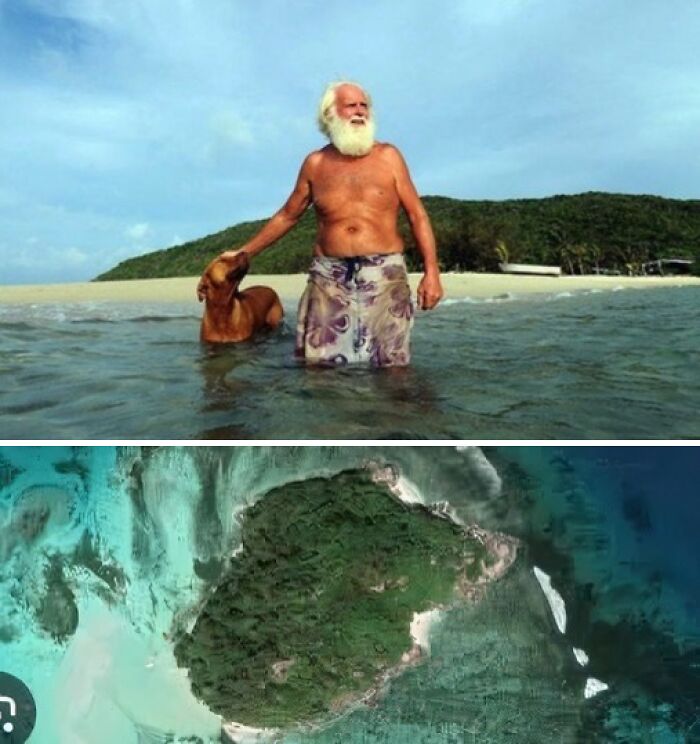
He bought a dead island for 13 thousand dollars, equipped the island with endangered animals, birds and trees. They offered 50 million dollars, he did not sell it and donated it.
In 1962, newspaper editor Brendon Grimshaw bought the uninhabited island of Moyenne in the Seychelles, where no human had set foot for 50 years, for 13 thousand dollars.
He began to live on the island like a real Robinson, taking with him companions from the locals.
His name was "Rene Lafortin".
Brendon and Rene started to equip the island.
Over 39 years, Brendon and Rene planted 16 thousand trees with their own hands and built approximately 5 km of road.
In 1996 he wrote a book about himself and the island called Grain of Sand. A documentary of the same name was made about Grimshaw and the island in 2009.
In 2007, Rene Lafortin died and Brendon was left alone on the island. He was 81 years old.
During his lifetime, he attracted 2000 new bird species to the island and introduced more than a hundred giant tortoises to the world, which were about to become extinct, including the Seychelles.
Thanks to Brendon's efforts, the once deserted island is now home to two-thirds of the Seychelles fauna. An abandoned piece of land turned into a real paradise.
A few years ago, the prince of Saudi Arabia offered Brendon Grimshaw $50 million for the island, which Brendon politely declined.
“I don't want the island to become a favorite vacation spot for the rich.
"Let it be a national park where everyone and animals can live and have fun freely."
He finally achieved his wish. In 2008, the island was indeed declared a "National Park". Grimshaw was the sole resident of the island until his death in July 2012. "Wanting" is not just about saying "I want".
You can achieve results by doing what you can afford, step by step, sometimes for years. Never expect such a thing from children who have been accustomed to being ready since childhood, or do not accustom your children to being so ready so that they can learn to make the world a better place.
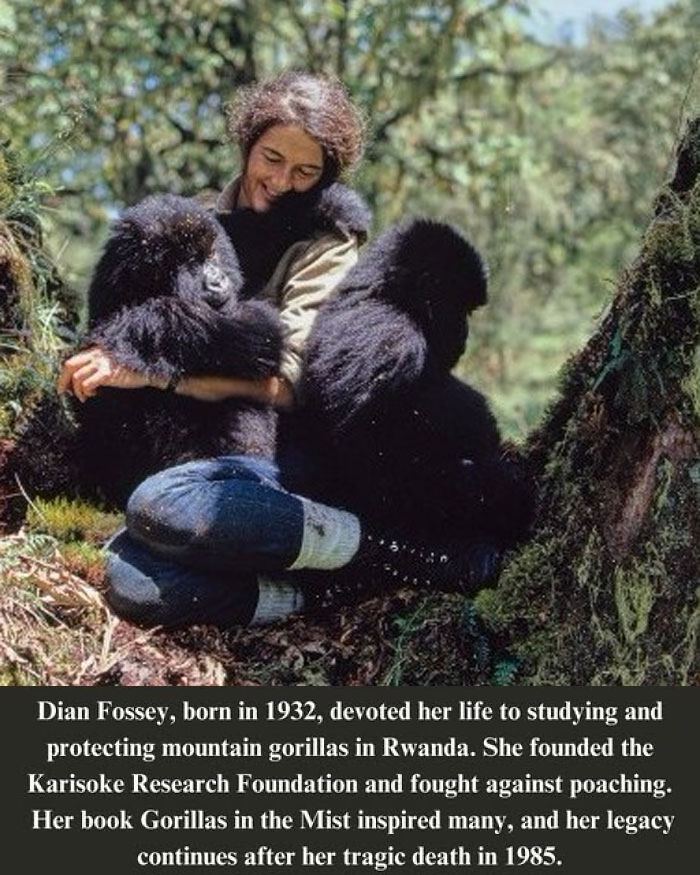
In 1963, at the age of 31, Dian Fossey used her entire life savings and took out a bank loan equivalent to one year's salary to fulfill her lifelong dream of traveling to Africa. After her trip, Fossey -- who was born on this day in 1932 -- was determined to permanently relocate there and dedicate her life to studying the shy and reclusive mountain gorillas, whose population was teetering toward extinction.
Following her first seven-week safari through Kenya, Tanzania, and the Democratic Republic of Congo, Fossey returned to Louisville, Kentucky where she had been working as an occupational therapist. There, she encountered anthropologist Louis Leakey when he was on a lecture tour and he suggested that Fossey start a long-term study of mountain gorillas. Similar to how he helped support Jane Goodall begin her study of chimpanzees in Tanzania, Leakey helped line up funds for Fossey's project and she left to establish the Karisoke Research Foundation in a remote rainforest in Rwanda in 1967.
Fossey ran an extensive study of mountain gorillas for 18 years and was considered the world's leading expert and a fierce protector of these "gentle giants." After one of her favorite gorillas, Digit, was k****d by poachers in 1977, Fossey created the Digit Fund, now the Dian Fossey Gorilla Fund International, to fund anti-poaching efforts. Fossey and her colleagues devoted significant attention to anti-poaching activities, including running poaching patrols, destroying poacher's traps, pressuring local authorities to enforce anti-poaching laws, and helping in the arrest of poachers.
In 1983, she published a book based on her experiences, "Gorillas in the Mist," which became a bestseller and was turned into an Oscar-nominated film starring Sigourney Weaver. Tragically, Fossey was k****d in her cabin in the Virunga Mountains of Rwanda in December 1985. Although the case has never been solved, it is widely believed that she was k****d by a poacher in response to her aggressive anti-poaching efforts.
Dian Fossey left behind an amazing legacy – both one of greater knowledge about these previously poorly understood animals and one of inspiration which has motivated many people to join the fight to save the critically endangered mountain gorillas. As her final diary entry read, "When you realize the value of all life, you dwell less on what is past and concentrate more on the preservation of the future."
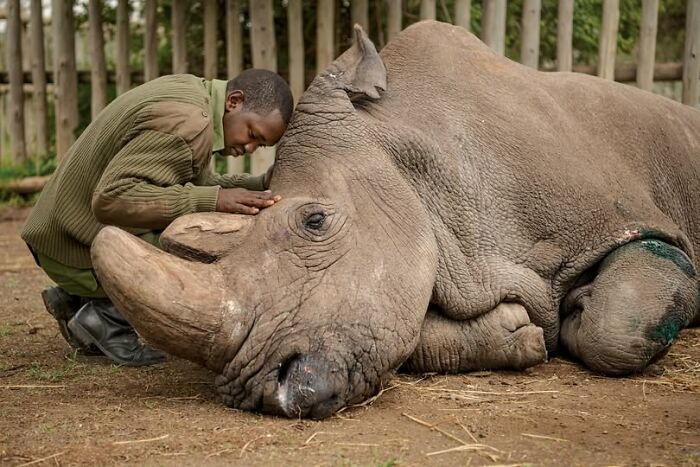
Saying goodbye to a subspecies, the very last male Northern White Rhino.
It survived 55 million years & saw ice ages, earthquakes, meteor strikes & was a testament to innumerable historical changes on the planet. It could not survive humans.
The great beast is now functionally extinct.
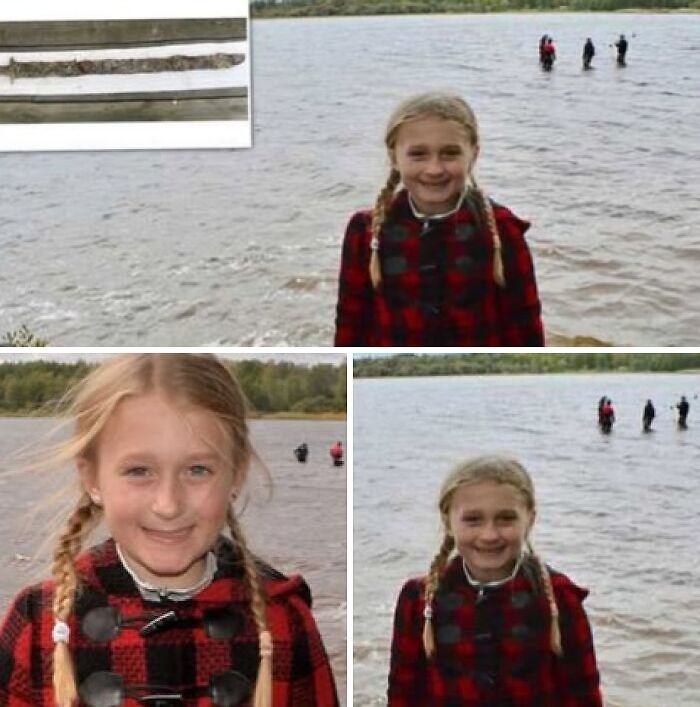
In the myths of King Arthur, the legendary sword Excalibur was gifted by the Lady of the Lake, emerging from the waters to choose its rightful wielder. But in 2018, life imitated legend when an 8-year-old girl named Saga Vanecek pulled an actual ancient sword from a lake—stunning historians and capturing the world’s imagination.
Saga, a Swedish-American girl, was playing in the waters of Lake Vidöstern in southern Sweden, where her family had a summer home. The lake had receded due to a drought, exposing parts of the muddy bottom. As she waded through the shallows, her hand brushed against something long, thin, and sharp.
At first, she thought it was a stick or an old piece of metal, but when she lifted it from the water, she realized it had a hilt and a blade—it was a real sword.
Excitedly, she ran to her father and said, "Daddy, I found a sword!"
What she had discovered was not just any sword—it was a 1,500-year-old relic from the pre-Viking era, dating back to the 5th or 6th century. Experts from the Jönköping County Museum confirmed that the blade was remarkably well-preserved, complete with its wooden scabbard and leather straps.
Swedish media quickly nicknamed her “The Queen of Sweden,” joking that she had fulfilled the Arthurian prophecy. The discovery was so rare that archaeologists searched the lake further and even found other ancient objects nearby, suggesting the site may have been a ritual offering place in ancient times.
Despite the fairy-tale comparisons, Saga took her newfound fame with humility, saying:
"I didn’t want to be a queen. I just wanted to be a scientist or an archaeologist."
The legend of Excalibur may be a myth, but Saga Vanecek’s story is real. A young girl, a hidden lake, and a sword lost in time—sometimes, history has a way of writing its own fairy tales.

"Strange women lyin' in ponds distributin' swords is no basis for a system of government. Supreme executive power derives from a mandate from the masses, not from some farcical aquatic ceremony."
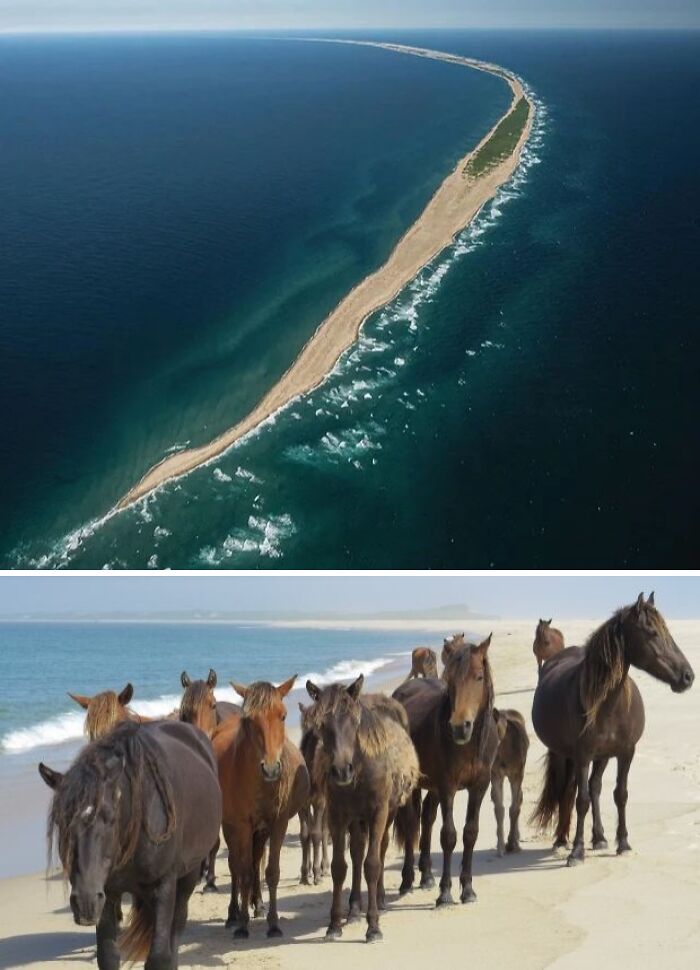
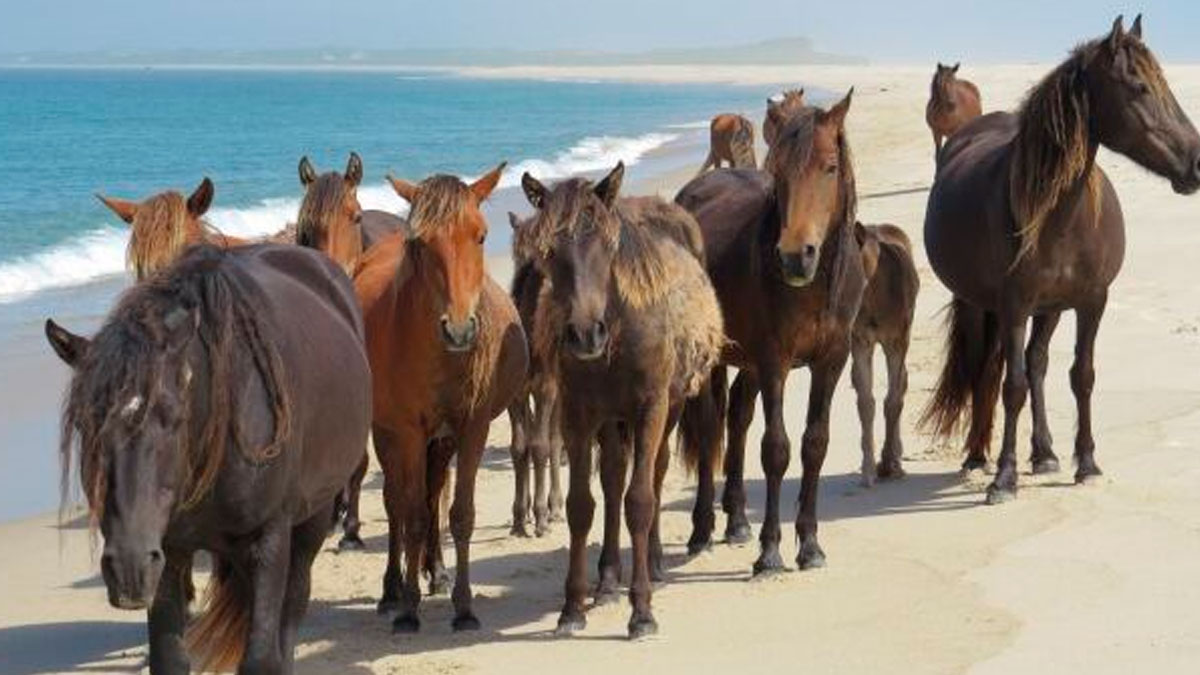
Did you know Sable Island is a narrow, remote sand island located in the Atlantic Ocean, off the coast of Nova Scotia, Canada. Known for its crescent-moon shape, the island is famous for its population of wild horses, which live freely, and its unique ecosystem, which includes various bird species and plants adapted to its windy and arid climate. It's also recognized for its history as a big-movie “cemetery of shipwrecks,” due to the shallow sandbanks surrounding it. Currently, it is a protected nature reserve and an environmental research site.
A fun fact about Sable Island is that it has more wild horses than human inhabitants. These horses, descendants of animals brought in the 18th century, survive in complete freedom and have adapted to the extreme surroundings of the island.
They forgot to mention that it literally changes it's location, wandering around between three ocean streams. It's a massive sandbank and not an island connected to the ocean floor. Due to being located in a fog heavy area and being shallow a lot of ships ran aground due to outdated maps
Barbara Harmer left school at 15 without any qualifications and started working as a hairdresser. After five years of styling hair, she decided to apply to become a trainee air traffic controller at London Gatwick Airport. While at Gatwick, she also chose to study for her A levels, aiming to pursue law, focusing on Geography, English Law, and Constitutional Law. However, she later switched gears and began taking flying lessons after getting a £10,000 bank loan.
Once she earned her private pilot license, she started a two-year distance learning course for her commercial pilot license, which she achieved in 1982. Even after that, her determination was really put to the test when she faced rejection from potential employers. She sent out 100 applications for pilot jobs, and all of them were turned down.
In 1984, after two years on the tarmac, she landed her first pilot job with a small commuter airline. That same year, fortune smiled upon her when she joined British Caledonian Airlines. Things got even better for her in 1987 when British Caledonian Airlines merged with British Airways. She kept flying high, and after four years flying British Airways' DC-10, she was chosen to train as a Concorde pilot, making her the first woman qualified to fly the supersonic aircraft.
By the time Concorde was retired in October 2003, Harmer had spent 10 years as a pilot for regular scheduled services. After Concorde, she transitioned to flying the Boeing 777 Jumbo jet until she voluntarily retired in 2009 to explore new adventures. She had plans to sail her yacht across the Atlantic in 2013, something she was already preparing for.
Sadly, unbeknownst to her, she had developed ovarian cancer, which was slowly taking a toll on her health. By the time it was diagnosed, she had just over a year to live. Captain Harmer, who never had children, passed away in 2011 at the age of 57, leaving behind her husband of 27 years. Her ashes were flown high and scattered over the sea near her home.
Starting from humble beginnings, she climbed to incredible heights. Her legacy continues to inspire women and young people everywhere. With her practical, can-do attitude, she achieved remarkable success in a male-dominated field.
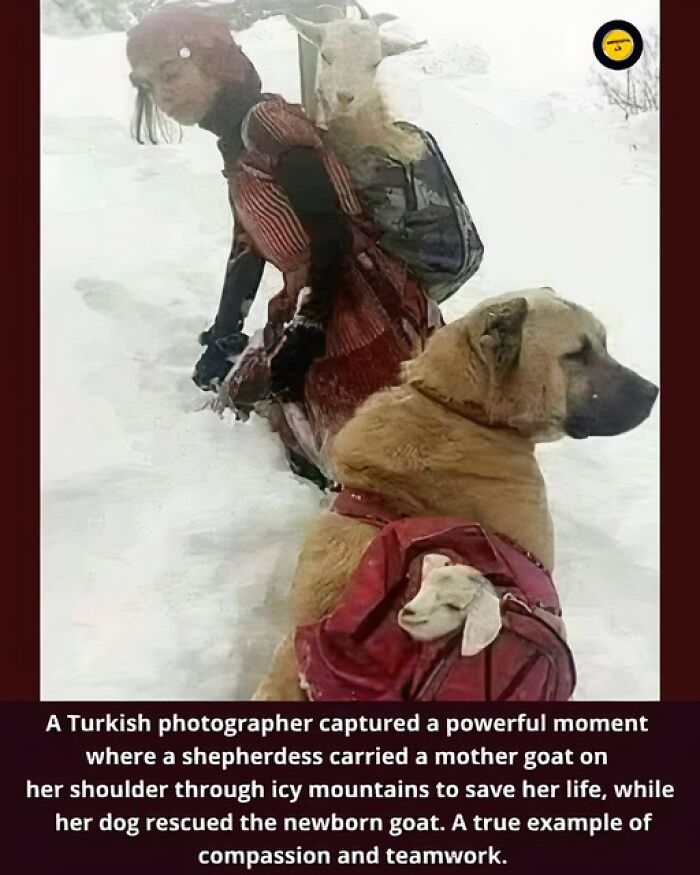
This photo was taken by a Turkish photographer when a goat gave birth to a baby on an icy mountain. To save the life of the goat and the baby, a village girl (shepherdess) carried the mother on her shoulder and the girl's dog saved the newborn goat by carrying her too. This photo is a living example of humanity.
How would a vehicle get up a freezing mountain? How do you know a vehicle could be “offered” to him… buy who? Also, the photographer could have been there for numerous reasons: part of a documentary crew, wildlife photographer, magazine photographer (National Geographic, The New Yorker, The Atlantic), the person who took the photograph didn’t necessarily have to be a “photographer” - it could’ve been someone who was on the mountain doing climate change or wildlife research. Most field research scientists would always be carrying a camera for their work. Or just some random villager took the pic with their phone.
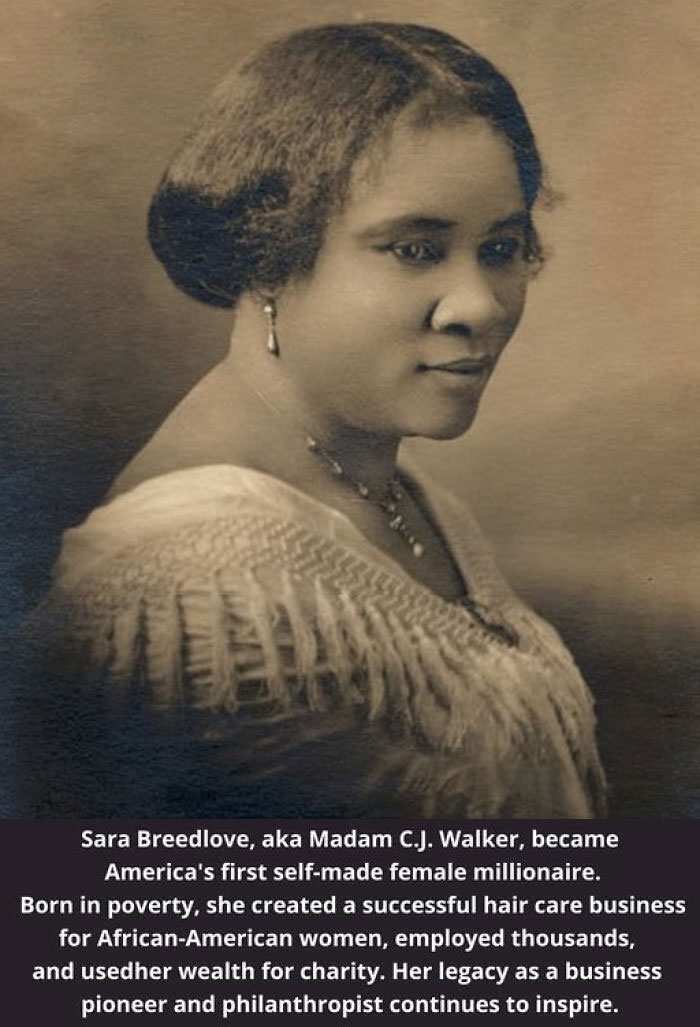
She got married at the age of 14, and at the age of 20, she became a single mother. The first female millionaire who made a fortune with her 10 fingers. She entered the Guinness Book of Records as the first woman to become a millionaire independently, without inherited money.
Sara Breedlove was born in 1867 in the south of the USA, in the state of Louisiana. Her parents, older brothers, and sister were slaves in the cotton fields. But Sara was born free. When she was 7 years old, she lost her parents. After her parents died, she moved in with her sister and her husband. As a child, Sara worked as a housekeeper and did not have time for schooling. She later shared that she only had 3 months of formal education when she attended Sunday school.
She was only 14 when she married Moses McWilliams. She didn't do it because she loved him. The truth was that her sister's husband was a very violent man, and marriage was the only way for Sara to escape from that family. Four years later, Sarah and Moses had a daughter, Alleluia. Two years later, Sarah's husband dies. So Sara became a single mother and a widow at the age of twenty.
In 1888, Sara moved to St. Louis. Her brothers worked there as barbers. She started working in a laundromat and as a cook to pay for her daughter's education in a public school. Sara earned about $1.50 a day.
Like all the workers in the laundry, Sara got sick from chemicals: skin disease, lack of water, and heating in the house made Sara almost lose her hair. Thanks to her brothers, she learned the basics of hair care. A little later, Sara learns about the Eni Malon series of hair products and later meets Eni in person. He starts selling her products on the street.
Still working for Malon, Sara, now at the age of 37, moves to Denver with her daughter and begins to think about her own line of cosmetics for African-American women. After many experiments, she succeeds. He starts building his own business.
In 1906, Sara married Charles J. Walker and later became famous under his surname. Charles becomes her business partner: He does advertising and helps his wife with promotion.
Sara went door to door trying to sell her products, but also to teach women how to care for and style their hair. In the same year, Sara decided to expand her business, so she and her husband traveled around South and East America. Her daughter had grown up and graduated from school, so she helped her mother with all the shipments from Denver.
Two years later, Sara moved to Pittsburgh. The family opens a beauty salon, but also a school that trains people to know everything about hair care so that they can apply Sara's products.
In 1910, Sara moved to Indianapolis, where she opened the headquarters of the company Madam C. J. Walker.
He builds a factory with a laboratory, a hair salon, and a beauty school where he teaches his sales agents. By 1917, Mrs. Walker employed about 20,000 women. Her agents earned from 5 to 15 dollars a day. Sara wanted African-American women to be financially independent, so she encouraged women to open their own businesses and taught them how to handle money.
The richer she became, the more time she spent on charities and giving. She gave lectures, fought against social injustice, and donated money to funds. Before she died, she donated more than 100,000 dollars to the poor and various organizations and social institutions.
In her will, she stated that 2/3 of her future profits should be given to charity. She died at the age of 51. She was considered the richest African-American woman. When she died, her fortune was thought to be between $500,000 and $1 million. During her lifetime, Sara was not a millionaire, only 2 years after her death, her wealth increased, but while she was alive, she hoped that she would be. And not because she needed the money, but because she wanted to do more good deeds.
The tallest tree in Wales, a majestic Douglas Fir, stood proudly at Lake Vyrnwy until it was severely damaged by a storm.
Initially, plans were made to cut down the tree for safety reasons. However, chainsaw artist Simon O’Rourke saw an opportunity to transform the tree into a lasting piece of art.
Instead of removing the tree entirely, O’Rourke carved a stunning sculpture known as “The Giant Hand of Vyrnwy.” This artwork symbolizes the tree’s final attempt to reach for the sky.
Using his own hand as a model, O’Rourke meticulously carved the top of the 50-foot stump, creating a giant hand that appears to be stretching upwards.
The project took about a week to complete, with scaffolding erected around the tree to facilitate the intricate work.
The result is a breathtaking tribute to the once-tallest tree in Wales, turning a potential loss into a symbol of resilience and creativity.
Image credit: Simon O'Rourke
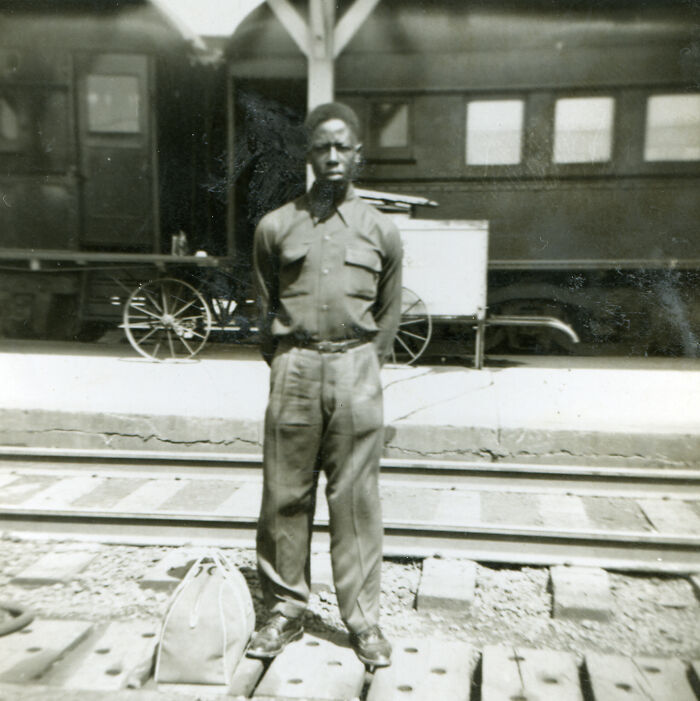
See the young man in this picture? He was 18 years old when it was taken at the train station in Mobile, Alabama, in 1952.
There is $1.50 in his pocket. In that bag by his foot are two changes of clothes. (And if his mama was anything like most other mamas in the South, probably some sandwiches and other snacks.)
He was on his way to Indiana to take a job. He was going to play baseball for the Indy Clowns of the Negro Leagues. Apparently, he was pretty good at it. A couple of years later, he was signed by the Milwaukee Brewers. He played for the Brewers for 2 seasons, then moved across town to the Braves, and later followed them to Atlanta. Eventually, he was the last Negro League player to be on a major league roster.
He still hangs around the baseball world. At the moment, he's the senior vice president of the Atlanta Braves. Even though the team has changed stadiums (twice) since then, his retired number, 44, still hangs on the outfield wall of the old Atlanta-Fulton County Stadium near where he belted a homer to break Babe Ruth's all-time record which he held for 33 years). Remembering "Hammerin' Hank" Aaron, who passed away on 22 January 2021.
Walter Yeo, a sailor in the Royal Navy, became one of the first individuals to undergo advanced plastic surgery after suffering devastating injuries during the 1916 Battle of Jutland. Aboard HMS *Warspite*, Yeo sustained trauma so severe it left him without eyelids, rendering his eyes painfully exposed. His case became a landmark in medical history when he was treated in 1917 by Harold Gillies, a pioneering surgeon who would come to be known as the father of modern plastic surgery.
Gillies introduced revolutionary techniques in facial reconstruction, using a method called the “tubed pedicle” skin graft. This involved transferring living tissue from undamaged parts of the body to the wounded area—a process that was painstaking and experimental at the time. For Yeo, this meant a reconstructed face using one of the first full-thickness skin transplants ever attempted, a medical breakthrough that pushed the boundaries of what was possible in reconstructive care.
Though rudimentary by today’s standards, Yeo’s surgery represented a leap forward in healing the physical and emotional wounds of war. His recovery offered a glimpse of hope to thousands of soldiers disfigured in combat and helped establish Queen’s Hospital in Sidcup as a center for innovation in reconstructive surgery. Walter Yeo’s journey stands as a powerful symbol of human endurance and the transformative potential of medicine in restoring not just appearance, but identity and dignity.
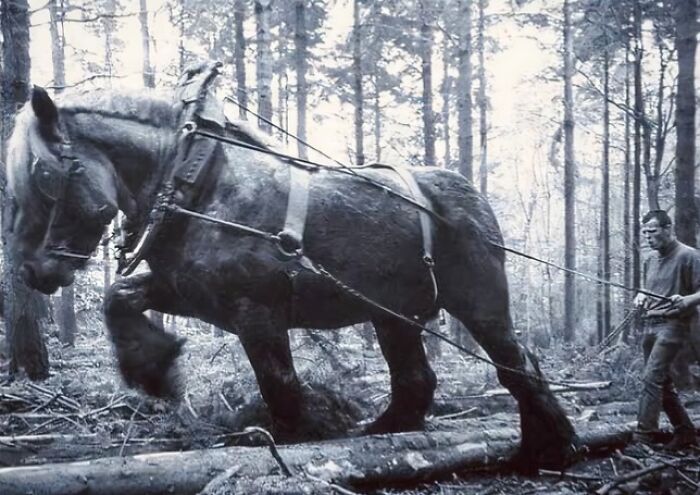
1846 Sampson was born on a farm in Toddington Mills, Bedfordshire, England. Shire horses are known for their size and strength, but Sampson would go on to surpass even the most impressive specimens of his breed. From the outset, he showed the potential to be something extraordinary. His massive frame and gentle demeanor would earn him a place in history as one of the most famous horses in the world.
Sampson, later known as “Mammoth,” grew to a staggering height of 21.2½ hands, making him the tallest horse ever recorded. His size was not just a matter of height, but also sheer mass—he weighed a staggering 3,359 pounds. Despite his immense size, Sampson was known for his docile and friendly nature, a characteristic that endeared him to those who knew him. His temperament was in stark contrast to his imposing presence, and he became a symbol of the strength and grace of Shire horses.
At the height of his fame, Sampson's extraordinary size captured the attention of the world, and he was widely recognized as the largest horse ever recorded. His impressive measurements and gentle personality made him a beloved figure, not only in the world of farming but also among the public. Sampson's legacy lives on as a testament to the incredible power and beauty of Shire horses, marking him as a true giant in the history of equine breeds.
In 1915, Effie Hotchkiss bought a new Harley-Davidson and attached a sidecar to carry her mother, Avis, as a passenger. The pair then set out from Brooklyn to see the Panama Pacific International Exhibition in San Francisco. Avis had instilled confidence in her daughter, and when asked if she had fears about the arduous cross-country journey, Avis replied, “I do not fear breakdowns, for Effie, being a most careful driver, is a good mechanic and does her own repairing with her own tools.” The pair were the first women to cross America by motorbike, at a time when the roads, where they existed, were simply horrendous. After visiting the Pacific Coast, the pair rode back to Brooklyn, for an epic 9,000-mile journey.
In March 1924, Helen Keller wrote a letter that still gives the world goosebumps.
Deaf and blind since infancy, Keller had spent her life redefining what was possible. But one evening, gathered around a radio with her family, she was about to experience something utterly unexpected. The New York Symphony was performing Beethoven’s Ninth Symphony live. Someone in the room suggested she place her hand on the radio receiver to feel the vibrations. What happened next defied reason—and redefined beauty.
With her fingers resting lightly on the diaphragm of the receiver, Keller felt more than vibration. She described the experience as “a sea of sound breaking against the silent shores of my soul.” Through the patterns of trembling and rhythm, she felt the pulse of cornets, the roar of drums, and the silken flow of violins. When the chorus soared into Beethoven’s triumphant “Ode to Joy,” she said it was like hearing “angelic voices rushing in a harmonious flood.” It wasn’t hearing—not in the way we understand it. But it was something deeper. She felt music not just on her fingertips, but in her heart. She recognized joy, sadness, stillness, and power—all without a single note reaching her ears.
And in one of the most poignant passages of her letter, Helen remembered that Beethoven, too, was deaf. She said, “I marveled at the power of his quenchless spirit by which out of his pain he wrought such joy for others.” A century later, that same joy lives on—because she proved that art has no boundary, and the human spirit can sense beauty in ways words can never fully explain
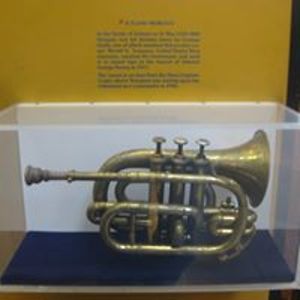
Now I realize why live performances are so fulfilling. I'm feeling all the vibrations from the other instruments.
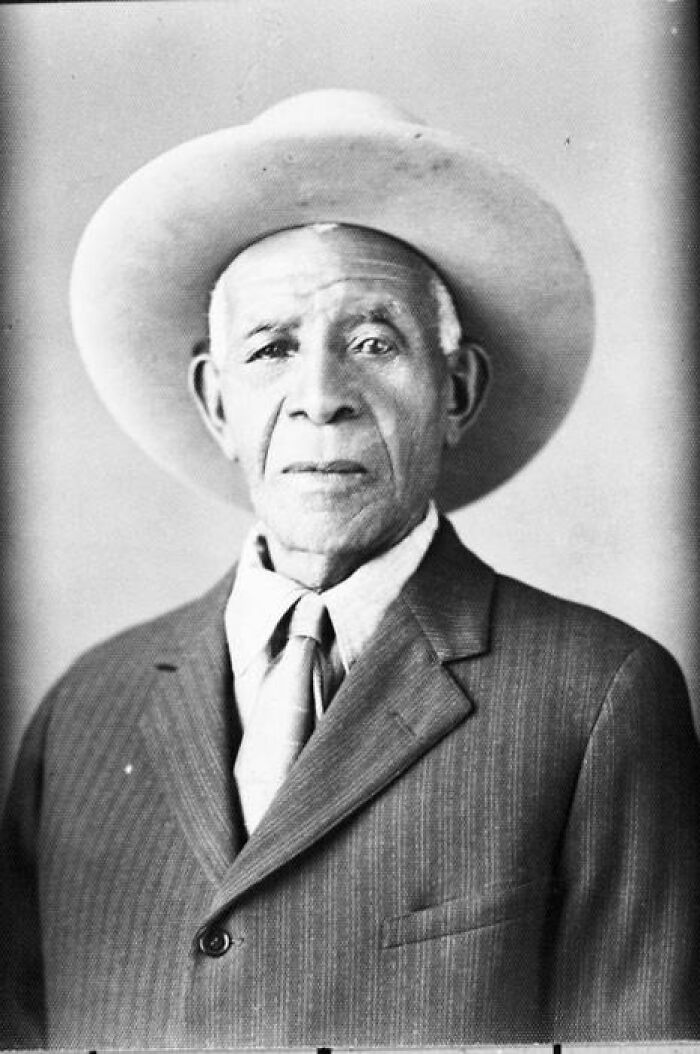
He was born into slavery. He died a millionaire.
And in the space between, Daniel Webster "80 John" Wallace became one of the greatest cowboys the West has ever known.
He came into the world on September 15, 1860, on a plantation in Victoria County, Texas, three months after his mother, Mary Barber, was sold to the O'Daniel family. He grew up on the same land where his parents had toiled.
As a child, Daniel watched the cowboys ride out in the early morning, the rhythm of hooves and the crack of leather branding themselves into his imagination. While other children played in the yard, he sat quietly; listening to stories, watching the men saddle up, dreaming of the day he might ride alongside them.
At fifteen, he ran away. He joined a cattle drive not as a drover, but as a spare hand and horse wrangler. A nobody. But he didn’t stay that way for long. He worked harder, rode faster, and proved himself on the trail, day after punishing day.
Over the years, Wallace worked for the biggest names in the business. He worked for C.C. Slaughter, Andrew B. Robertson, and Clay Mann, riding across Texas under sun and snow, through stampedes, swollen rivers, Comanche raids, and blistering sandstorms.
And as he worked, he earned something rarer than riches: respect.
It was Clay Mann who helped him take the next step. To not just to ride for a brand, but to build one. In 1885, they struck a deal: Wallace would save part of his wages, Mann would provide free pasture, and together they’d build something new. Mann’s cattle brand was an 80, and out on the range, they called him “80 Clay” Mann. Working his herd, Daniel earned his own trail name:
“80 John.”
That same year, Wallace bought his first land. He was just 25. He went back to school. And from then on, education became a core value of the brand he was building.
With his wife Laura by his side, 80 John carved out a ranching empire, installing the area’s first windmill, raising a family, and ensuring that each of his children and grandchildren had a path to college. His legacy was not just in cattle, but in classrooms and church halls, where the Wallace family gave back, quietly and generously.
Three of his four children became teachers. A local school was named in his honor. His ranch became not just a business, but a beacon.
By the time of his death on March 28, 1939, 80 John Wallace had amassed a net worth of over one million dollars, a staggering achievement for a man who began life as property.
But more than his wealth, it was his name that carried weight.
Integrity. Wisdom. Progress. Respect.
He joined the Texas Cattle Raisers Association, attended meetings where few Black cowboys ever stepped foot, and built friendships that crossed color lines and cultural divides. He wasn’t just respected, he was admired, a man other cowboys looked up.
His descendants still live on that land.
The buildings from the original Wallace homestead were moved to the National Ranching Heritage Center at Texas Tech, now a monument to what he built, and how far he rode to build it.
On April 15, 2023, Daniel Webster “80 John” Wallace was inducted into the National Cowboy & Western Heritage Museum’s Hall of Great Westerners. I had the honor of meeting his family that day, and hearing firsthand the stories that shaped his legacy.
His was a story of resilience, grit, and uncommon vision.
A cowboy.
A rancher.
A leader.
A legend.
80 John Wallace didn’t just ride for the brand, he became the brand—a brand built on honor, grit, hard work, intelect, and perseverance, and a brand that is still riding strong.
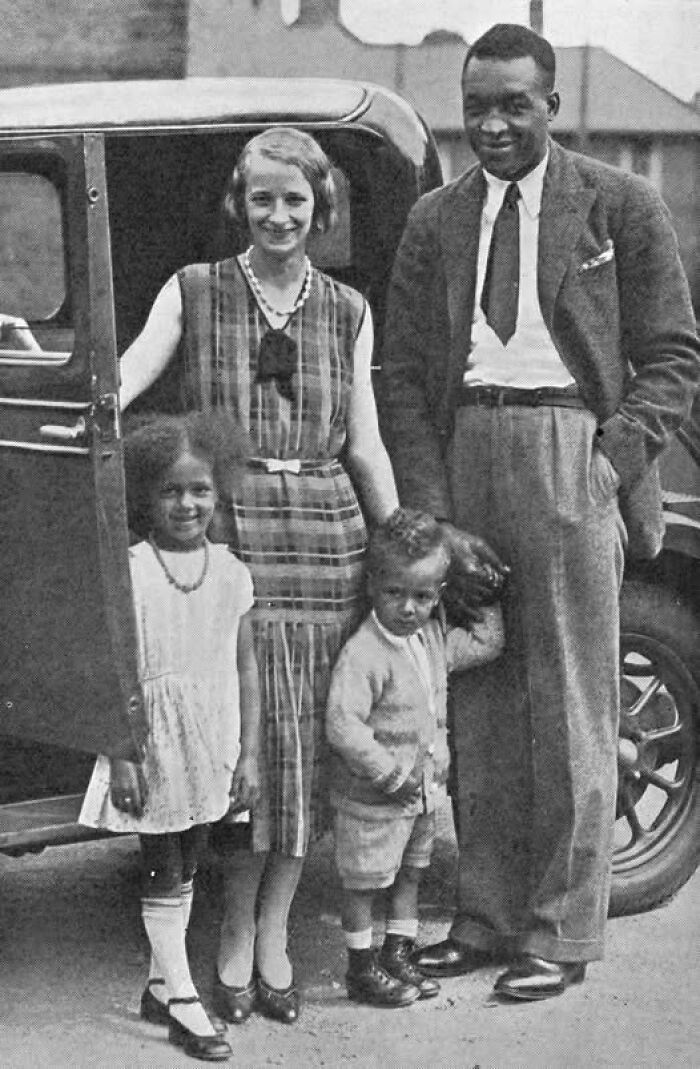
In the 1930s, Larry Gains, a prominent Canadian heavyweight boxing champion, is seen alongside his family in a heartwarming family portrait. Known for his remarkable athleticism and success in the boxing ring, Gains was a trailblazer for Black athletes in Canada and a role model for many aspiring boxers. His career was marked by determination and skill, and he became a symbol of perseverance in a sport that was often challenging for African Canadians to break into during that era.
Gains’ family, featured in this photo, likely played a crucial role in his success, offering support and stability throughout his career. The image highlights not only the personal side of a sports icon but also the strong family bond that helped him through the ups and downs of his athletic journey. Family portraits like this one remind us that behind every public figure is a network of loved ones who contribute to their achievements.
As a boxer, Gains fought during a time when racial discrimination was still prevalent, making his accomplishments even more significant. While the 1930s saw a rising awareness of racial inequality in many facets of society, Gains’ success in the ring helped to challenge stereotypes and break barriers for future Black athletes. His family’s presence in this photo serves as a reminder of the sacrifices and dedication that helped him achieve greatness in the world of boxing.
“When pregnant, the cells of the baby migrate into the mothers bloodstream and then circle back into the baby, it’s called “fetal-maternal microchimerism”.
For 41 weeks, the cells circulate and merge backwards and forwards, and after the baby is born, many of these cells stay in the mother’s body, leaving a permanent imprint in the mothers tissues, bones, brain, and skin, and often stay there for decades. Every single child a mother has afterwards will leave a similar imprint on her body, too.
Even if a pregnancy doesn't go to full term or if you have an abortion, these cells still migrate into your bloodstream.
Research has shown that if a mother's heart is injured, fetal cells will rush to the site of the injury and change into different types of cells that specialize in mending the heart.
The baby helps repair the mother, while the mother builds the baby.
How cool is that?
This is often why certain illnesses vanish while pregnant.
It’s incredible how mothers bodies protect the baby at all costs, and the baby protects & rebuilds the mother back - so that the baby can develop safely and survive.
Think about crazy cravings for a moment. What was the mother deficient in that the baby made them crave?
Studies have also shown cells from a fetus in a mothers brain 18 years after she gave birth. How amazing is that?”
If you’re a mom you know how you can intuitively feel your child even when they are not there….Well, now there is scientific proof that moms carry them for years and years even after they have given birth to them.
I find this to be so very beautiful.
Why does the illustration show the baby's umbilical cord leading to its mouth?!
Why you should always put a coin on a frozen cup of water before storms. It's called the one cup tip. You put a cup of water in your freezer. Freeze it solid and then put a quarter on top of it and leave it in your freezer. That way when you come back after you've been evacuated you can tell if your food went completely bad and just refroze or if it stayed Frozen while you were gone. If the quarter has fallen to the bottom of the cup that means all the food defrosted and you should throw it out. But if the quarter is either on the top or in the middle of the cup then your food may still be ok. It would also be a great idea to leave this in your freezer all the time and if you lose power for any reason you will have this tip to fall back on. If you don't feel good about your food, just throw it out. The main thing is for all to be safe.
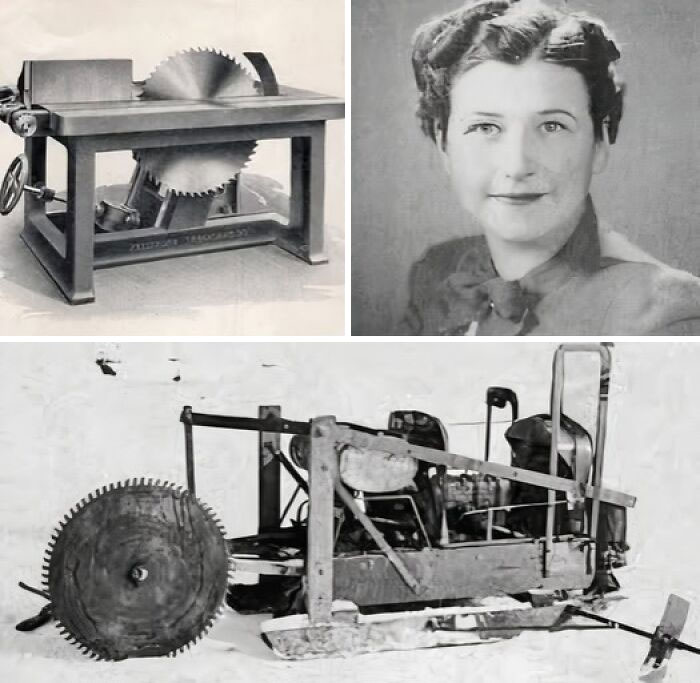
In a quiet town in New England, back in 1810, a woman named Tabitha Babbitt watched as two men worked tirelessly with a large pit saw. One on top and the other below, taking turns to cut wood with a blade that only worked in one direction.
Tabitha, who was a weaver in a community called the Shakers, thought there must be a more efficient way to do this work. Watching the constant motion of her spinning wheel, she came up with an innovative idea. She took a metal disk, made small sharp cuts on it, and attached it to her spinning wheel. When it began to spin, the disk cut the wood in both directions. That’s how the first functional version of the circular saw was born!
Thanks to this idea, the process of cutting wood became much faster and less exhausting. The woodworking industry was forever changed. T
abitha never sought personal recognition or patented her creation. As a member of the Shakers, she believed in community work and humility. Still, her contribution became a lasting legacy.
Today, millions of people around the world use the circular saw, unaware that its origin stems from the ingenuity of a woman with a clear vision and a collaborative spirit.
It's a nice story, but also apparently untrue. Apparently, circular saws are prehistoric, while the modern form seems to have been invented in the 18th century. https://en.wikipedia.org/wiki/Circular_saw#History
Jerry Glover shows a perennial wheatgrass plant's long roots which grow deeper than annual plants' roots. Using perennials, crops that can be harvested more than once without replanting, may be the key for feeding more people while conserving farmland soil.
"Perennial crops can be grown for more than two years alone or alongside annuals, and they can radically improve soil health and support a healthier community of bacteria and fungi underground.
Annuals have to develop roots every year, which means their growing season is much shorter. Perennial roots go deep — some as deep as 10 feet — and they will sustain the plant for many years. Way down there, the roots can capture more groundwater. Those deep, better-established roots also help cycle nutrients in the soil and make them more available to plants".
Jerry Glover

Per Google Search: The annual planting during the Dust Bowl era significantly contributed to the environmental crisis. • The federal government planted 220 million trees to combat soil erosion, which was a major factor in the Dust Bowl. • Poor agricultural practices, such as converting land from livestock to wheat, led to the removal of native prairie grasses that help hold soil in place. • The failure to apply dryland farming methods to prevent wind erosion also played a crucial role in the Dust Bowl.
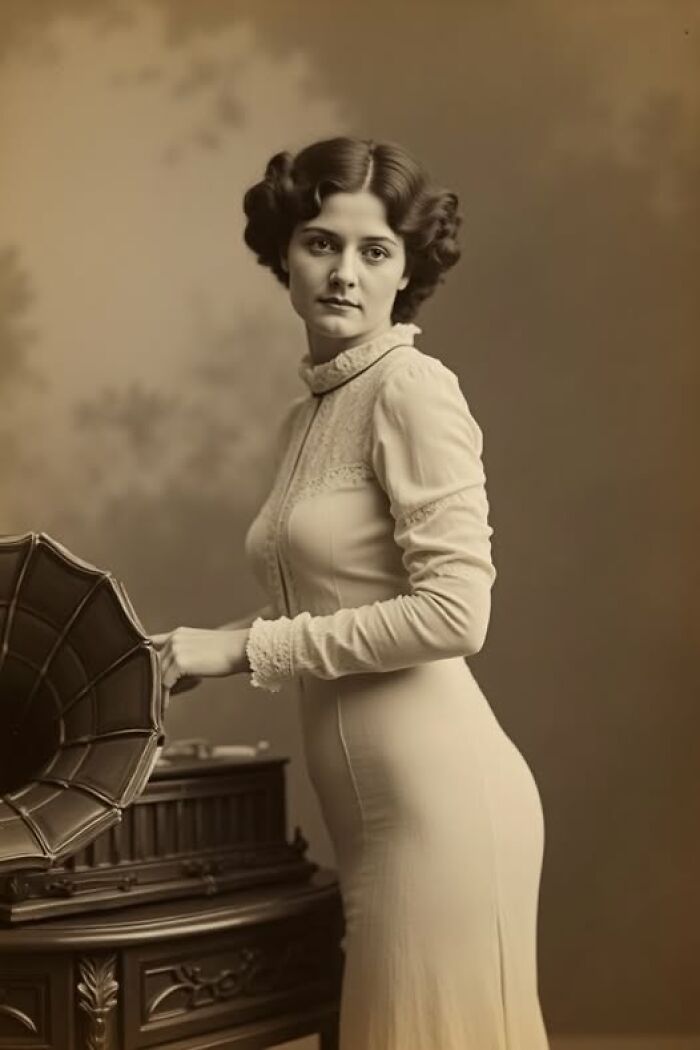
Clara Clemens, born on June 8, 1874, was the only surviving child of the renowned American author Mark Twain (Samuel Clemens) and his wife, Olivia Langdon Clemens.
Raised in a household immersed in literary brilliance, Clara developed a deep appreciation for her father's work, often reading and discussing his writings with him. Their close bond extended beyond the family home, as she frequently accompanied Twain on his travels around the world. This relationship profoundly shaped Clara’s life, influencing her artistic pursuits and her dedication to preserving his legacy.
A gifted musician, Clara trained as a soprano and established herself as a celebrated singer and performer. She made her professional debut in New York City in 1899 and later recorded for the Victrola phonograph, contributing to the evolving musical landscape of her time. Though she achieved recognition in the music world, Clara remained deeply connected to literature, particularly her father’s body of work.
After Mark Twain’s passing, she devoted herself to safeguarding his legacy, ensuring that his literary contributions continued to be honored and remembered. Beyond her artistic endeavors, Clara was committed to charitable causes, with a strong focus on children’s welfare. Her personal writings and letters provided a rare glimpse into the private life of the Clemens family, offering invaluable insights into their world.
Clara lived for many years after her father’s death, passing away on November 19, 1962. Her legacy endures as both a talented artist and a devoted daughter who played a pivotal role in preserving the memory and influence of one of America’s greatest literary figures.
In 1937, 87 years ago, Sylvan Goldman, owner of the Humpty Dumpty supermarket chain in Oklahoma, forever changed the way we shop.
Before his invention, customers used to carry heavy shopping baskets, making shopping difficult. Inspired by a folding chair, Goldman designed a metal frame with wheels that could hold two wire baskets. This ingenious design not only made shopping easier but also allowed customers to buy more items, increasing supermarket sales.
At first, customers were hesitant to use the carts, as they were used to carrying baskets. To overcome this reluctance, Goldman hired people to push the carts around the store and demonstrate how easy they were to use.
Over time, shopping carts became an essential part of the supermarket experience, and today, no store is without them. The shopping cart has evolved from just a practical tool into a retail icon worldwide.
Beyond convenience, the shopping cart has influenced store design and marketing strategies. Supermarkets began reorganizing their spaces, creating wider aisles to accommodate carts and optimize the shopping experience.
This simple invention transformed the way we interact with stores, encouraging more purchases per customer. Goldman’s influence and his shopping cart are still alive today in every grocery store, showing how one innovation can change commerce and daily life.

"Before his invention, customers used to carry heavy shopping baskets." Only for upteen years. This (1937) was fairly contemporaneous with the Piggly Wiggly (1918), which innovated DIY shopping. Previous to that, you'd pay store workers to fetch your food for you. As late as the end of the 1940s, my Dad worked in a grocery store, fetching and delivering food... much the same way as has become common again since coronavirus. All this was right around when supermarkets became a thing (King Kullen, 1930 but mostly after WW2). Before then, you'd get dry goods at the grocer; milk, cheese (and yes, eggs) at the dairy; fruits and veggies at the produce stand; meat at the butcher, bread at the bakery, etc. So carrying your own stuff wasn't so unreasonable. Piggly Wiggly, Humpty Dumpty, King Kullen... lotsa cutesy names, huh?
The bulbous bow, a prominent feature seen on many modern ships, plays a crucial role in enhancing their performance. This protruding bulb located just below the waterline at the front of the ship significantly influences how water flows around. the hull, thereby reducing drag and improving overall efficiency.
The primary advantage of a bulbous bow is its ability to reduce the ship's wave- making resistance. When a ship moves, it generates a bow wave. The bulbous bow creates its own wave system that interacts with the primary bow wave, effectively canceling it out. This interaction minimizes the energy lost to wave creation, allowing the ship to move more efficiently through the water. As a result, ships equipped with bulbous bows enjoy enhanced fuel efficiency and can achieve higher speeds with the same power input. This reduction in fuel consumption not only lowers operational costs but also reduces the ship's environmental footprint.
Another important benefit of the bulbous bow is its impact on stability.
Josephine Cochrane was a pioneering inventor who revolutionized kitchen technology with the invention of the first practical dishwasher. Born in 1839, she was a wealthy socialite who often entertained guests but became increasingly frustrated with her servants breaking her expensive china while washing dishes. Determined to find a better solution, she set out to design a machine that could clean dishes efficiently and safely—and she succeeded.
In 1886, Cochrane patented her dishwasher, which used water pressure and a motor-driven wheel to spray hot water onto dishes arranged in a wire rack. Unlike earlier attempts at dishwashing machines, which relied on manual scrubbing or ineffective designs, Cochrane’s model was functional and reliable. Her innovation garnered attention at the 1893 World’s Columbian Exposition in Chicago, where it won top honors for mechanical construction and durability.
Recognizing its commercial potential, she founded the Garis-Cochrane Manufacturing Company, which initially produced dishwashers for hotels and restaurants before expanding into home kitchens. Over time, her company evolved into what we now know as KitchenAid, a leading name in household appliances. Josephine Cochrane’s vision and ingenuity transformed a tedious household chore into an effortless task, paving the way for modern dishwashing technology. Today, her invention remains a staple in homes worldwide, proving that one determined woman’s frustration can spark an innovation that changes everyday life.

A true hero right here! My kitchen would look like a nasty episode of that show Hoarders if I didn't have a dishwasher becausei HATE doing dishes! 🤣
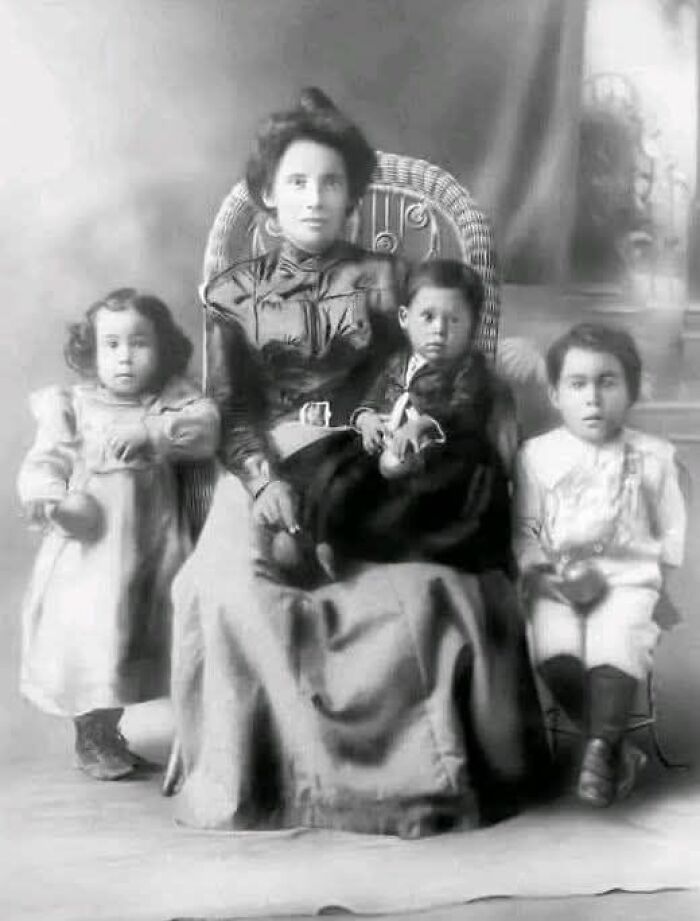
In 1901, a portrait captured Adelaida Cuellar and her three young children—Isabel, Manuel, and Amos—on their modest farm in Kaufman County, Texas. Life on the farm was marked by hardship and long days of labor with little reward, but Adelaida’s resilience and unwavering spirit were already shaping a future far brighter than she could have foreseen. Amidst the daily struggles, her love for cooking stood out—a source of comfort and a quiet promise of what was to come.
By 1926, that promise began to unfold. Adelaida set up a humble stand at the Kaufman County Fair, serving up her homemade chili and tamales. Fairgoers couldn't get enough. When the fair ended, demand continued, prompting her and her twelve children to open a small café. As word spread, the family’s efforts grew into something bigger. In 1940, five of her sons moved the café to Oak Lawn in Dallas, giving it a new name—*El Chico*. The timing was perfect, and the Tex-Mex dishes struck a chord with diners, setting the stage for a growing restaurant business.
Over the decades, *El Chico* blossomed into a Tex-Mex institution, with locations not only across Texas but as far away as Australia and the UAE. Adelaida Cuellar passed away in 1969 at the age of 98, having lived to see her cooking legacy touch countless lives. Thanks to her recipes and the dedication of her family, *El Chico* became more than a restaurant—it became a symbol of determination, tradition, and the irresistible power of a well-cooked meal.
Why does little dude on the far right look like a full grown man?? 🤣🤣
During WWII, workers at the Henry Ford aircraft factory Willow Run built a staggering 8,685 B-24 bombers in three years!
No one had ever manufactured aircraft on such a scale before. At its peak in 1944, it produced a B-24 every hour.
Additional fun fact: Rosie the Riveter worked at this plant.
Fun fact: Production started even before the B-24's design was finalized. Changes followed by the day. This disrupted Production so much, that the management insisted that Consolidated freeze the design, so production could commence undisrupted for the B-24A. And that Consolidated finish development of the "B" version, *before* sending it off to the production line.
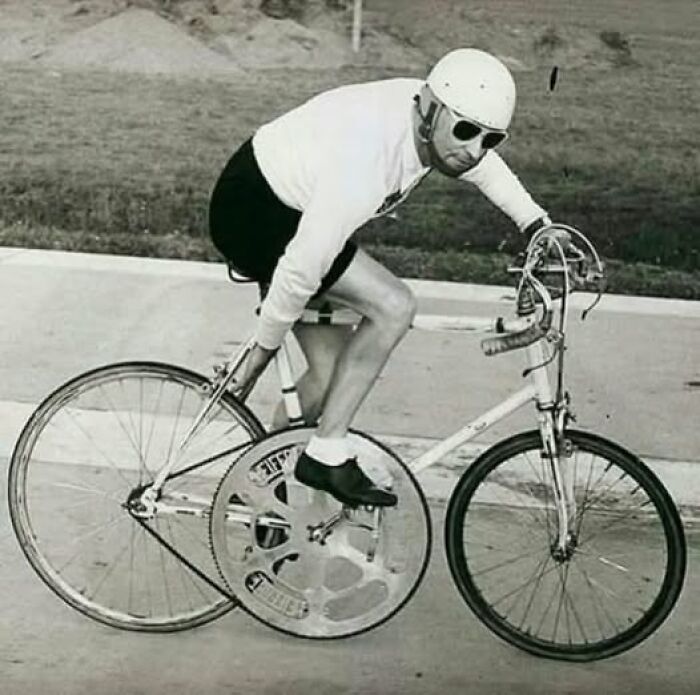
On July 19, 1962, French cyclist José Meiffret reached a speed of 204.73 km/h on a bicycle on a highway in Germany. Pedaling behind a Mercedes-Benz 300SL modified with an aerodynamic fairing, he used a bike equipped with a 130-tooth chainring. During this challenge, he faced strong vibrations and a high risk of an accident, achieving one of the most remarkable feats in the history of speed cycling.
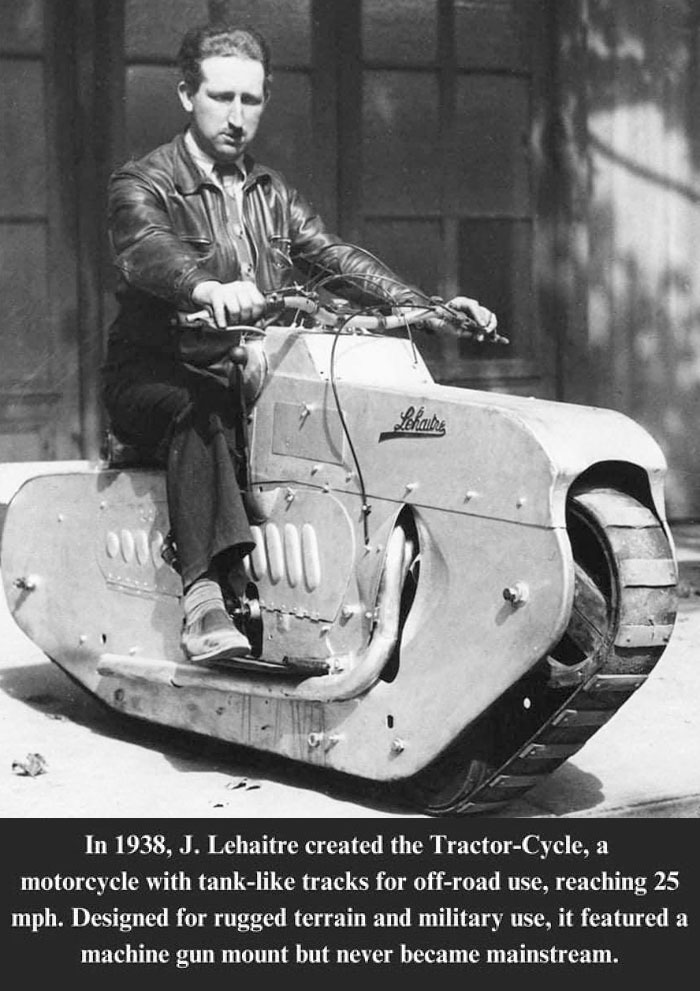
In 1938, French inventor J. Lehaitre unveiled a strikingly unconventional vehicle—the Tractor-Cycle. This innovative machine combined the form of a motorcycle with the function of a tracked vehicle, replacing traditional wheels with a tractor-style transmission belt. The result was a rugged, tank-like bike capable of handling rough and varied terrain with surprising agility.
Capable of reaching speeds up to 25 miles per hour, the Tractor-Cycle was more than a novelty—it was a serious attempt to rethink mobility in harsh environments. Its robust track system gave it excellent off-road capabilities, making it ideal for exploratory missions, remote travel, or potentially even military use. Indeed, the vehicle was designed to accommodate a mounted machine gun, hinting at its possible role in reconnaissance or light combat support.
Though it never entered mass production, the Tractor-Cycle remains a fascinating relic of early 20th-century engineering ambition. It stands as a testament to a time when inventors boldly pushed the boundaries of design in pursuit of vehicles that could conquer land where traditional wheels failed.
40 km/h for the rest of the world, and that's quite impressive for a tracked vehicle at that time
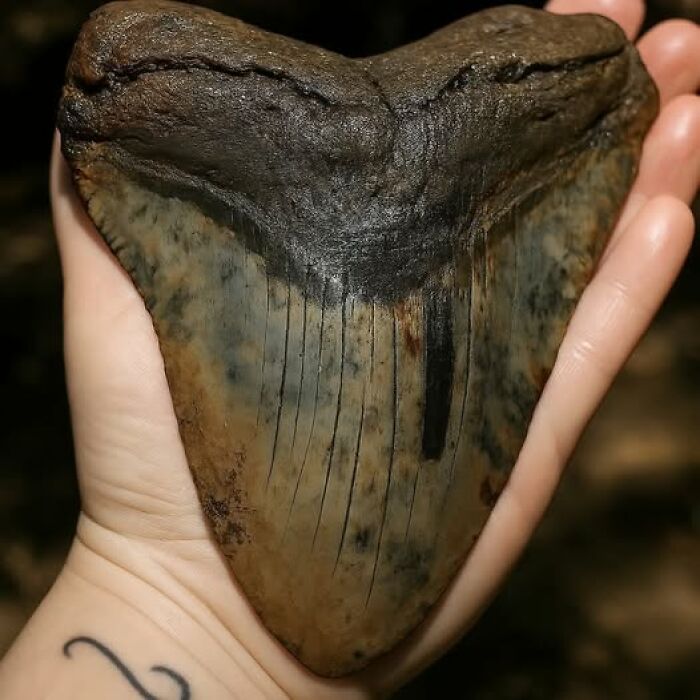
A massive megalodon tooth was recently uncovered along the coast of South Carolina, exciting paleontologists and fossil enthusiasts alike. This impressive find, notable for its extraordinary size, offers a rare glimpse into the prehistoric world of the megalodon—one of the largest predators ever to dominate the oceans.
The megalodon, which lived approximately 23 to 3.6 million years ago, is believed to have grown up to 60 feet long, with teeth exceeding seven inches in length. This particular tooth, likely from one of these colossal sharks, stands as a powerful testament to the immense scale and strength of the species. Fossilized megalodon teeth are highly prized, not only for their size but also for their rarity and their direct link to a legendary apex predator from Earth’s distant past.
South Carolina’s coastline is renowned for its abundant prehistoric fossil deposits, and this discovery further cements the state’s status as a prime location for uncovering ancient remains. As researchers study the tooth, it yields valuable insights into the megalodon’s size, diet, and the marine environment it inhabited millions of years ago. This extraordinary find continues to fuel fascination with extinct marine giants and the primeval oceans they once ruled.
In 1902, a remarkable photograph captured men posing atop a massive log raft along the Columbia River in Oregon. The raft was constructed from large, tree-length logs, all meticulously lashed together using enormous chains to create a floating platform.
This incredible feat of engineering was typical of the lumber industry at the time, where logs were often transported down rivers for processing. The image showcases the scale and strength required to build such a raft, a testament to the hard work and ingenuity of the era.
According to the description on the back of the photo, the raft contained millions of feet of timber—an enormous amount of wood that represented a full year's worth of labor for the camp workers. The value of the raft, once completed, was estimated at $8,000, highlighting the profitability of the logging industry during this period.
The Columbia River, with its swift currents and strategic location, served as a major route for transporting timber, and these massive log rafts were an essential part of the process.
This photograph, preserved by the Multnomah County Library, offers a fascinating glimpse into the early 20th-century logging practices in Oregon. It’s a vivid reminder of the human labor and resourcefulness that drove the lumber industry, and the scale of the operations that transformed the landscape of the Pacific Northwest. The raft, both a product of necessity and a symbol of the era, represents a bygone time when logs were floated across rivers to fuel the growth of America’s industries.

These gigantic log rafts were designed to go into the open ocean and were towed down the coast to southern California. They occasionally broke up, spreading enormous amounts of logs along the beaches of the Pacific coast. Even in my youth, in the 1970s, there were still large driftwood logs that likely came from those rafts. Since they stopped rafting logs this way there is much less driftwood along the coast. It is very different visiting coves and beaches along the Oregon coast now, compared to how it was when I was young.
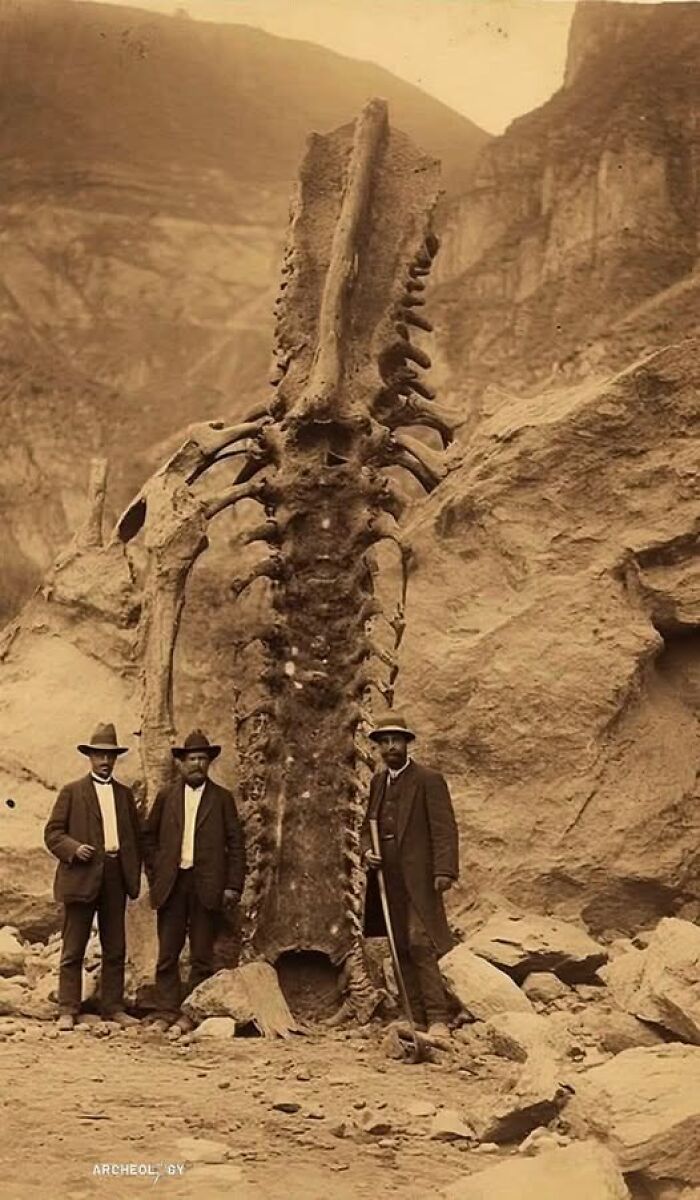
Standing like a fossilized monument between the canyons of the American West, this towering vertebral column belonged to a long-extinct marine giant—most likely a Late Jurassic Sauropod or a colossal Elasmosaur, discovered in the late 19th or early 20th century during the golden age of paleontology. The sepia-toned image captures early fossil hunters beside the massive spine, dwarfed by its size, at a time when the mysteries of prehistoric Earth were just beginning to be unearthed from stone.
In 1947, a defeated German soldier returned home to Frankfurt after the end of World War II, only to find his once-familiar surroundings reduced to rubble. The devastation of the war had torn apart not just the city but his own personal life. His home, once a place of comfort and security, was now a pile of debris, a stark reminder of the destruction that had swept across Europe during the war years.
As he stood amidst the ruins, the soldier's heart sank as he realized that his family was gone. His wife and children, who he had hoped to return to, were no longer there. The uncertainty of their fate left him with a deep sense of loss and grief, compounded by the isolation and despair of post-war Germany. Many families had been separated or torn apart by the war, and for this soldier, the hope of reunion was now a painful memory.
The emotional and physical scars of war were everywhere in Frankfurt and across Germany at the time. People returned to find their homes destroyed, their loved ones lost, and their world upended. For the soldier, like many others, the journey home was not one of joy but of profound sorrow and the harsh reality of rebuilding a life from the ashes of a world that had been forever changed.
Well, this is valid for many countries even before that war - due to somebody who was adored and blindly followed, despite the atrocities he announced in his speeches and book. He was supported by an efficient working propaganda machine, brainwashing otherwise good and normal people. Numerous experiments have proven how people can be manipulated into hating others, the movie "The Wave" showed it, and a live repetition of the Germany during the 1930s is going on in the US. Btw, marketing uses the same principles to lure customers into buying stuff they don't need.
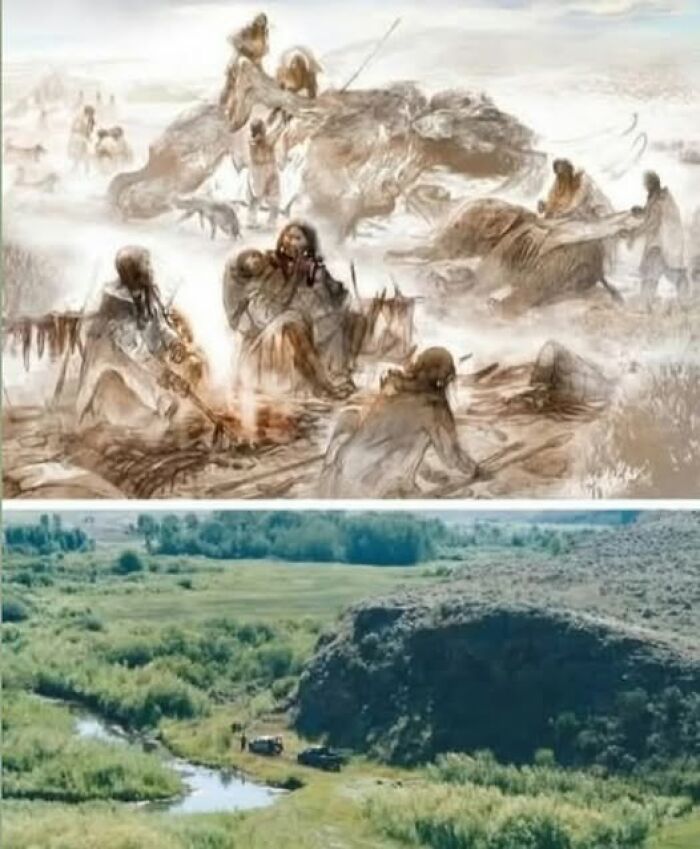
In 1968, the Anzick-1 site in Montana unearthed the remains of an 18-month-old child, buried with a collection of Clovis tools that linked it to one of the earliest known cultures of prehistoric America. Over fifty years later, advanced isotopic analysis has provided new insights into the dietary habits of the Clovis people, offering a fascinating look at their relationship with the megafauna of the Ice Age.
By analyzing the isotopic signatures in the child's bones, researchers were able to trace the mother's diet, revealing a striking revelation: nearly 40% of her diet consisted of mammoth meat, with additional contributions from large animals like elk and bison. The findings also revealed little reliance on smaller animals or plant-based foods.
This discovery paints a vivid picture of how the Clovis people, known for their skilled hunting practices, likely relied on energy-dense megafauna such as mammoths to support their nomadic, hunter-gatherer lifestyle. The study underscores their intimate knowledge of the Ice Age ecosystem and how they adapted to their environment, utilizing large game as a primary source of sustenance. This newfound information sheds light on the sophisticated, strategic practices that sustained the Clovis culture during its time.
In 1965, the Tonka Toys manufacturing plant in Minneapolis, Minnesota, stood as a vibrant symbol of American industry and childhood imagination. Renowned for their rugged, all-steel construction, Tonka trucks had become fixtures in households across the country—emblems of durability, creativity, and hands-on play.
Inside the plant, the assembly line embodied the precision and energy of mid-century American manufacturing. Photographs from the era reveal rows of focused workers, each performing a specific task in the truck-building process. Brightly painted chassis, wheels, and dump beds moved steadily along conveyor belts, slowly transforming into the iconic yellow construction vehicles beloved by generations.
Founded in 1946, Tonka had swiftly risen to become a global leader in toy production. By the mid-1960s, its name was nearly synonymous with American childhood. The Minneapolis factory was more than a site of mass production—it was a place where craftsmanship met mechanical efficiency, where pride and play went hand in hand.
The images of Tonka’s assembly line remain powerful reminders of a time when toys were built to last—and often did. They capture not only the making of toys, but the making of memories that would endure for decades.
TIL. Apparently the next time I talk to my mom I'm going to have to grill her about why my Tonka trucks were so small.
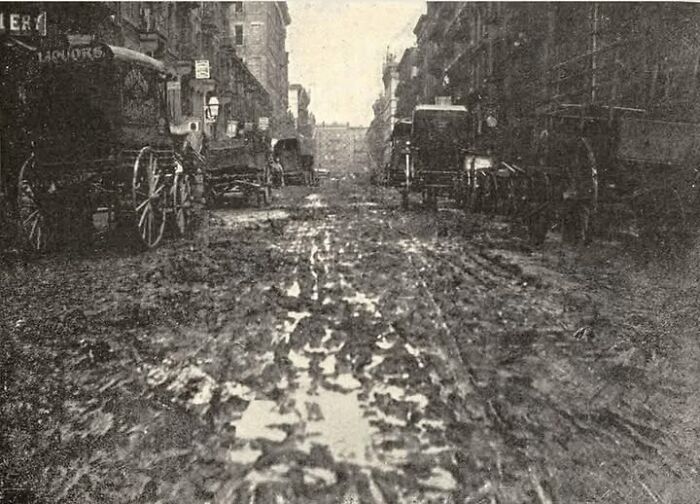
The Horse Manure Problem of 1894 The 15 to 30 pounds of manure produced daily by each beast multiplied by the 150,000+ horses in New York city resulted in more than three million pounds of horse manure per day that somehow needed to be disposed of. That’s not to mention the daily 40,000 gallons of horse urine.
In other words, cities reeked. As Morris says, the “stench was omnipresent.” Here are some fun bits from his article: Urban streets were minefields that needed to be navigated with the greatest care. “Crossing sweepers” stood on street corners; for a fee they would clear a path through the mire for pedestrians. Wet weather turned the streets into swamps and rivers of muck, but dry weather brought little improvement; the manure turned to dust, which was then whipped up by the wind, choking pedestrians and coating buildings.
. . . even when it had been removed from the streets the manure piled up faster than it could be disposed of
. . . early in the century farmers were happy to pay good money for the manure, by the end of the 1800s stable owners had to pay to have it carted off. As a result of this glut . . . vacant lots in cities across America became piled high with manure; in New York these sometimes rose to forty and even sixty feet.
We need to remind ourselves that horse manure is an ideal breeding ground for flies, which spread disease. Morris reports that deadly outbreaks of typhoid and “infant diarrheal diseases can be traced to spikes in the fly population.” Comparing fatalities associated with horse-related accidents in 1916 Chicago versus automobile accidents in 1997, he concludes that people were k**led nearly seven times more often back in the good old days.
The reasons for this are straightforward: . . . horse-drawn vehicles have an engine with a mind of its own. The skittishness of horses added a dangerous level of unpredictability to nineteenth-century transportation. This was particularly true in a bustling urban environment, full of surprises that could shock and spook the animals. Horses often stampeded, but a more common danger came from horses kicking, biting, or trampling bystanders. Children were particularly at risk.
Falls, injuries, and maltreatment also took a toll on the horses themselves. Data cited by Morris indicates that, in 1880, more than 3 dozen dead horses were cleared from New York streets each day (nearly 15,000 a year).

This was the reason why the City govt of NYC in the early 20th century pushed the car heavily and subsidized motorized cabs over horse ones, they wanted a cleaner city. Also this is why the old brownstones in NYC have those high stoops, it was to raise the house and entrances above the manure stench. Also those old ones have on the side of the stairs special grooved for rubbing the bottom of the shoe to clean off manure without damaging the sole.
Did you know that The Titanic Museum in Pigeon Forge, Tennessee, United States, is an attraction dedicated to telling the story of the famous ocean liner RMS Titanic, which sank in 1912 during its maiden voyage.
The museum is designed to resemble the shape of the Titanic, giving visitors an immersive experience. Upon entry, you are often given a boarding pass with the name of a real passenger who was on the Titanic. During the tour, visitors can explore replicas of the ship's cabins, bridge and famous grand staircase.
The museum houses an extensive collection of authentic objects recovered from or related to the Titanic, including furniture, documents and passengers' personal belongings. Additionally, exhibits detail the history of the ship's construction, its tragic sinking, and the personal stories of survivors and victims.
A fun fact about the Titanic Museum is that visitors can experience what the water temperature felt like the night the Titanic sank. There is an interactive exhibit where you can immerse your hand in 32°F (0°C) water, simulating the icy conditions that passengers and crew faced in the North Atlantic, adding a realistic and emotional touch to the experience.
A lot of people drowned simply because they didn't know: If you find yourself underwater in a car, don't panic.
1. Dont waste your energy trying to push the door
2. Do not open the window, the force of the water entering the car will not allow you to get out
3. Take out the head rest
4. Use the steel sharp tip and break the back window that has kick out glass on it.
The car by engineering and design is intended to float in the water and the rear window will always be facing the exit. This could save your life. ...
Is it really by design that the rear window will face upwards or simply the fact that the heaviest part - a massive block of steel - is located at the most front end?
while her husband was away, probably serving in the Royal Navy, she became pregnant with an illegitimate child, whom she drowned shortly after birth. When this was discovered, she was sentenced to death and hanged in the Grassmarket in August 1724, by the hangman John Dalgliesh.
About 30 minutes after she was hanged, a doctor pronounced her dead and her body was taken to Masselburgh by cart. During the journey, her family, on their way to the wake, are said to have heard strange noises coming from the coffin, finding her still alive. Rumour has it that while in Tolbooth Prison, Maggie seduced her hangman and he loosened the rope so that she could survive.
As, under Scots law, her punishment had been carried out, she could not be executed a second time for the same crime (it was only after the sentence of hanging that the words “until dead” were added).
Her “resurrection” was seen to some extent as divine intervention, and so she was allowed to return to her old life. She remarried her husband (since death had separated them) and lived another 40 years.
She became quite famous in Edinburgh and gained the nickname Half-hangit Maggie. There is evidence that she suffered from neck problems and may have even had a broken vertebra, but the details of much of the rest of her life are obscure.
Today there is a pub in the Grassmarket called Maggie Dickson's near the site of her hanging.


Every single entry reads like it was generated by a free tier of some early version of AI.
Maybe this article should be titled " Artificial Intelligence is even worse than other BP authors".

A VERY NICE mix of unusual but encouraging stories -- please do more of these.


It's a real shame that so many of these articles appear to have been written by AI. Now I feel I have to check some things independantly, to simply fact check. It pretty much defeates the purpose of reading the articles on BP.

Lovely true stories, but the AI writing is glaringly apparent and really took away from it.

Unrelated to the article - but does anyone else have the issue that BP overheats their phone and just suck battery? Like really quick, i can watch videos and do other things at the same time and that doesn’t suck my battery dry nearly as fast. Im not technically inclined but from the little i read it said it could be a poorly made java script that runs the site.
I'm on a desktop computer and BP slows everything WAYYYY down, so it doesn't surprise me that it's heating up your phone and sucking the life out of your battery!
Load More Replies...

Really enjoyed these stories. One of the longest reads I've done in a while.
Every single entry reads like it was generated by a free tier of some early version of AI.
Maybe this article should be titled " Artificial Intelligence is even worse than other BP authors".
A VERY NICE mix of unusual but encouraging stories -- please do more of these.
It's a real shame that so many of these articles appear to have been written by AI. Now I feel I have to check some things independantly, to simply fact check. It pretty much defeates the purpose of reading the articles on BP.
Lovely true stories, but the AI writing is glaringly apparent and really took away from it.
Unrelated to the article - but does anyone else have the issue that BP overheats their phone and just suck battery? Like really quick, i can watch videos and do other things at the same time and that doesn’t suck my battery dry nearly as fast. Im not technically inclined but from the little i read it said it could be a poorly made java script that runs the site.
I'm on a desktop computer and BP slows everything WAYYYY down, so it doesn't surprise me that it's heating up your phone and sucking the life out of your battery!
Load More Replies... Really enjoyed these stories. One of the longest reads I've done in a while.




































 No fees, cancel anytime