Get Premium
Dark mode theme is available exclusively for premium users. Learn more about the benefits of subscribing.
No fees, cancel anytime.

 Dark Mode Ad-Free Browsing Unlimited Content
 Ad-Free Browsing Unlimited Content Dark Mode
Join 1.2 million Panda readers who get the best art, memes, and fun stories every week!
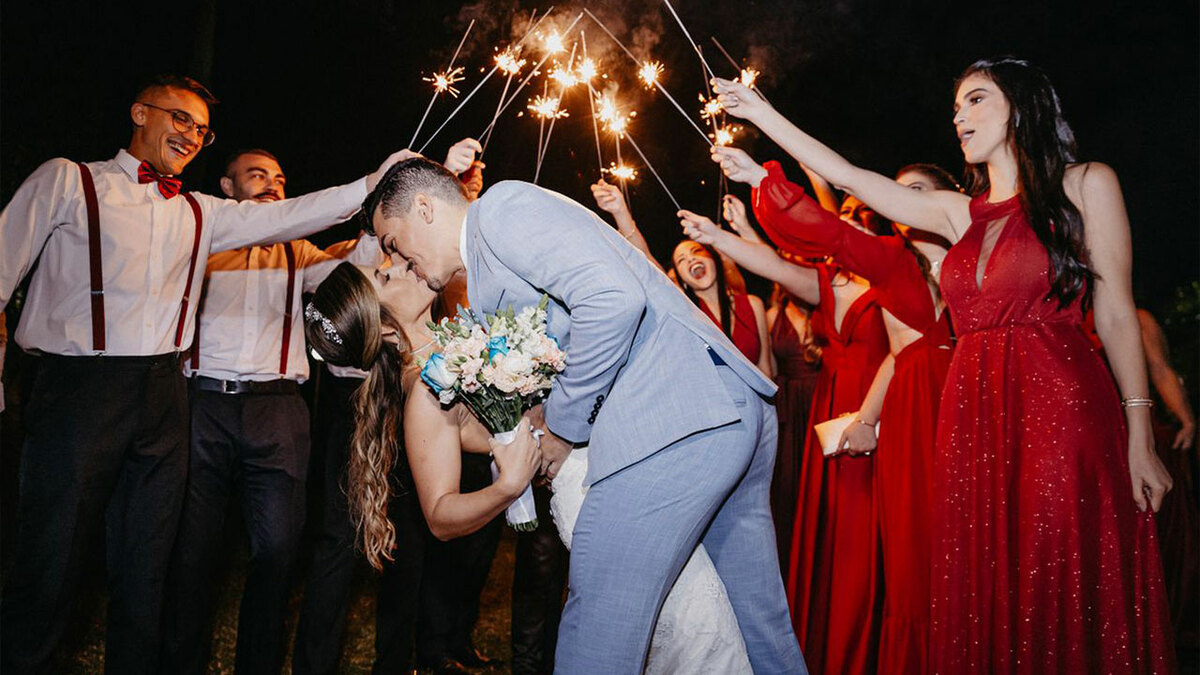
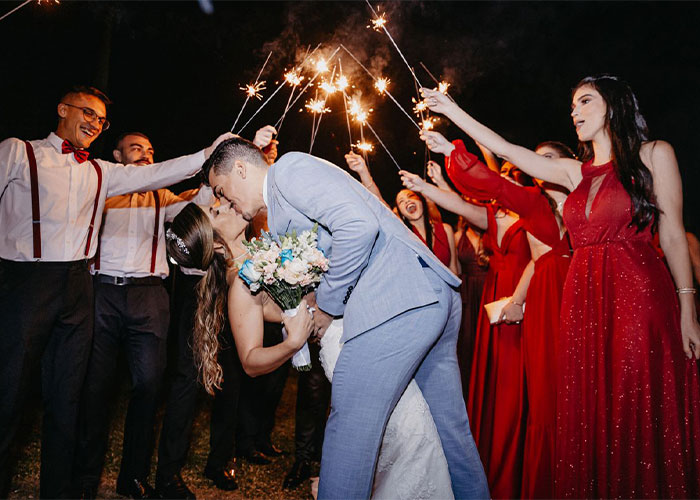
If you think weddings are all about the bride and groom calling the shots… well, in theory, yes. In reality? It’s more like a group project where everyone suddenly has opinions, preferences, and very strong feelings. Sure, it is their big day, but somehow family members, close relatives, and even distant voices find a way to get involved.
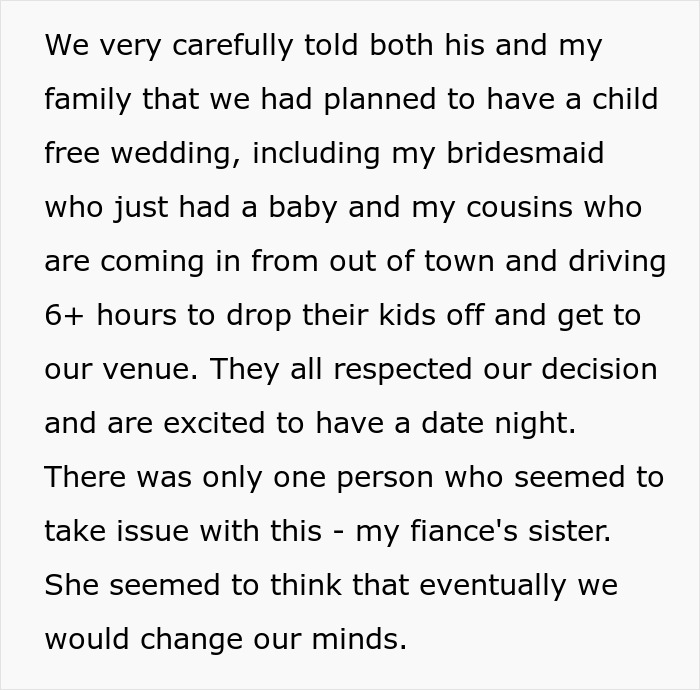
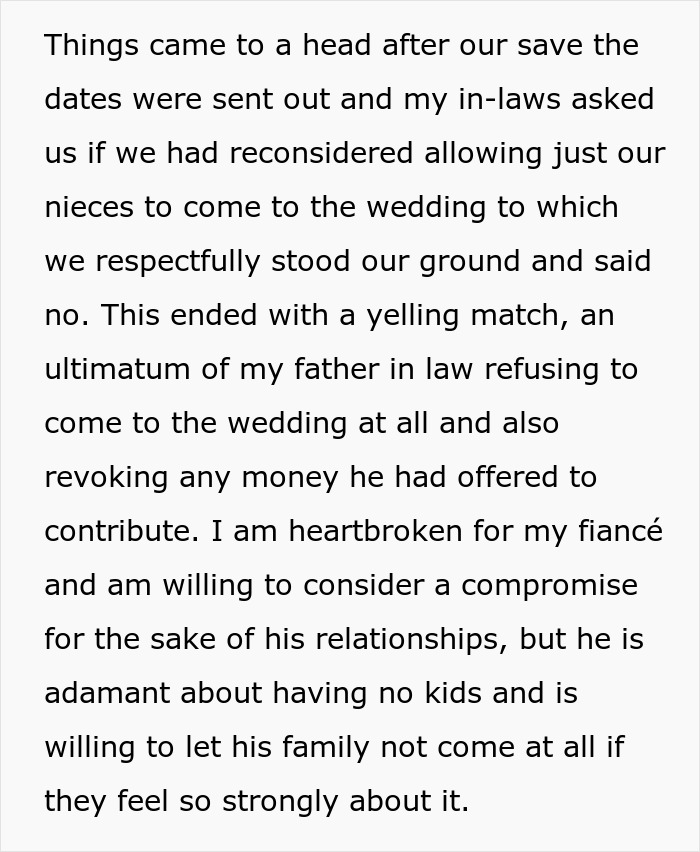
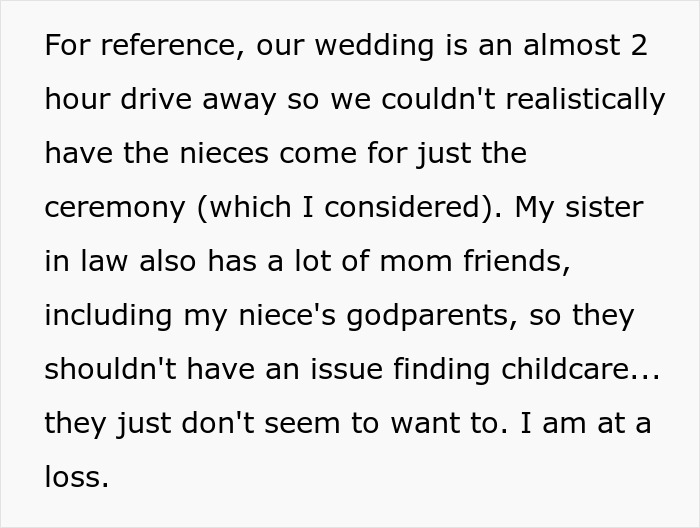
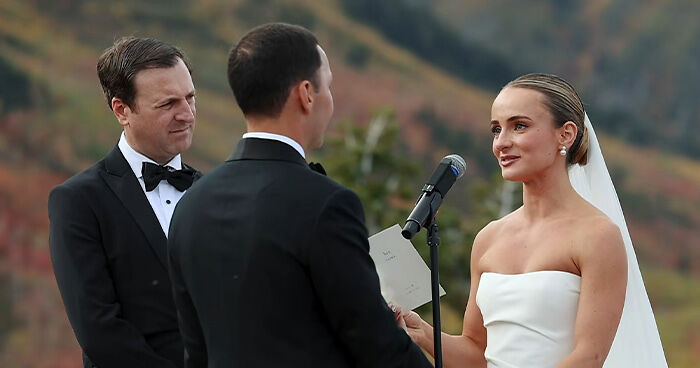
Take this couple, for example. They made a clear, mutual decision to have a child-free wedding—simple, practical, and honestly quite common. But the moment those save-the-dates went out, things took a turn. The groom’s sister wasn’t exactly thrilled, and what started as a disagreement quickly snowballed into full-blown family drama on his side. Keep reading to see how the couple handled the pressure and why they refused to budge.

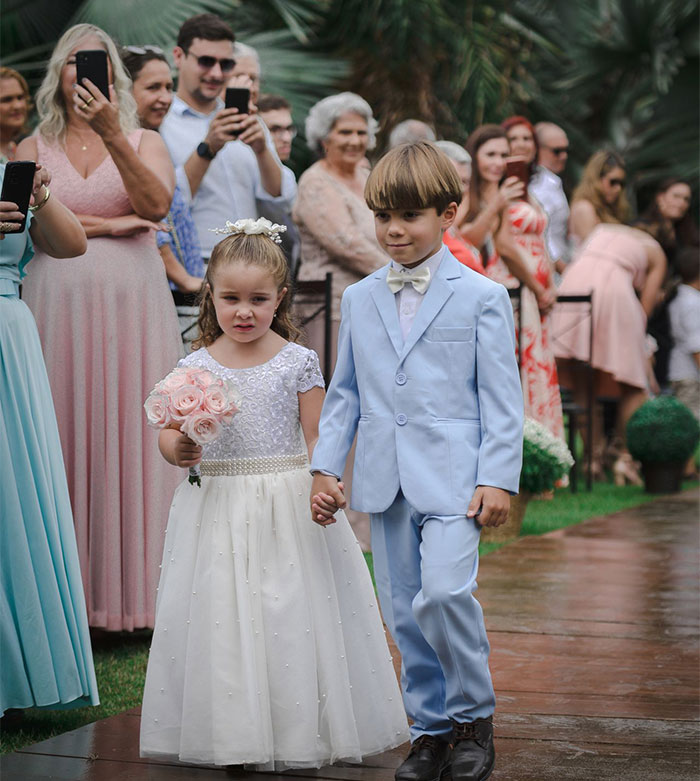
The moment guests see “adults-only” on a wedding invite, the first thought is often—“Oh, they must hate kids.” But let’s be real, that’s rarely the case. Most couples aren’t anti-children; they’re just trying to plan a smooth, stress-free event. A child-free wedding is usually less about feelings toward kids and more about logistics, comfort, and the kind of atmosphere the couple wants to create for their big day.
And this isn’t some rare or controversial choice anymore; it’s quickly becoming the norm. A December 2023 New York Times piece by Hilary Sheinbaum found that of 4,000 couples planning weddings in 2024, 79.5% leaned toward kid-free celebrations. That’s not just a trend; it’s a shift. Couples today are rethinking traditions and choosing what works best for them, rather than sticking to expectations that don’t quite fit their vision (or their budget).
In fact, guest count can have a much bigger impact on a wedding budget than couples might initially realize. Popular planning resources, such as The Budget-Savvy Wedding Planner & Organizer by Jessica Bishop, also emphasize that guest count is one of the biggest factors influencing a wedding’s overall cost. Every additional person means more than just another meal; it can also mean extra invitations, cake, favors, tables, chairs, linens, centerpieces, and sometimes even a larger venue. So, while leaving children off the guest list may seem like a small decision, cutting even a few guests can add up to noticeable savings when you factor in all those costs.
To get a clearer picture, Bored Panda spoke with Raghubir Singh, founder of BMP Weddings, who’s seen every kind of wedding scenario you can imagine. And he gets straight to the point. Singh says, “Weddings are expensive, and venues often charge for children at rates similar to adults.” He adds, “By excluding children, couples can significantly reduce their overall bill or use that budget for other things.”
But money isn’t the only factor; it’s also about the experience guests have. Singh says, “Couples often want their parent-guests to let their hair down and enjoy a night off.” And honestly, that hits. Weddings can be one of the rare occasions where parents get to dress up, relax, and enjoy themselves without constantly being on snack duty or chasing a toddler across the dance floor. “This allows guests to be fully present and stay longer without worrying about bedtime logistics or childcare,” he adds. Basically, it’s a night off that many parents don’t even realize they need until they get it.
Then comes the not-so-glamorous but very real issue: venue logistics. Singh points out, “Some venues have safety hazards like open flames or steep steps, features that make them unsuitable for young children.” And once you picture it, it makes sense; those dreamy candlelit aisles and scenic water backdrops aren’t exactly toddler-proof. He adds, “We’ve booked venues that look stunning but simply aren’t designed with kids in mind.” On top of that, capacity limits mean every guest counts, so couples often have to make tough decisions about who makes the list.
And let’s talk about the ceremony itself; the moment everything builds up to. Singh says, “An adults-only rule prevents interruptions like crying babies and allows for more relaxed, unfiltered speeches or entertainment.” Because while kids are adorable, they’re also unpredictable. One unexpected meltdown during vows or a loud interruption during speeches can shift the entire mood. Couples who go child-free are often just trying to protect those once-in-a-lifetime moments they’ve spent months planning.
Of course, even with clear rules, not everyone plays along. Singh shares, “I have seen guests bring kids to weddings despite clear instructions.” And that’s where things get awkward. “Many venues aren’t equipped to handle children, and couples don’t always arrange babysitters or child-friendly spaces,” he explains. Yet somehow, some guests still expect those arrangements to magically exist. It puts the couple in a tough spot—on a day that’s already packed with pressure.
In the end, Singh keeps it simple and grounded. “It’s the couple’s day, and their choices should be respected.” And really, that’s what it comes down to. Weddings already come with enough opinions, expectations, and moving parts. Respecting a couple’s boundaries (whether it’s about kids, guest lists, or anything else) is the easiest way to show up for them on a day that’s meant to be about their story, not everyone else’s preferences.
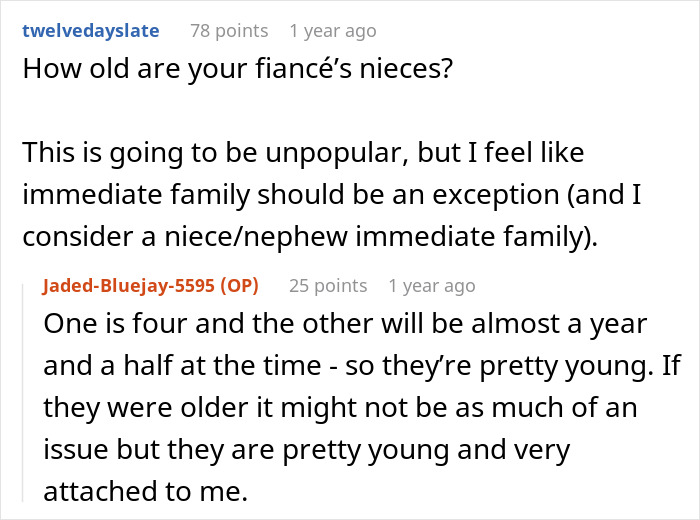
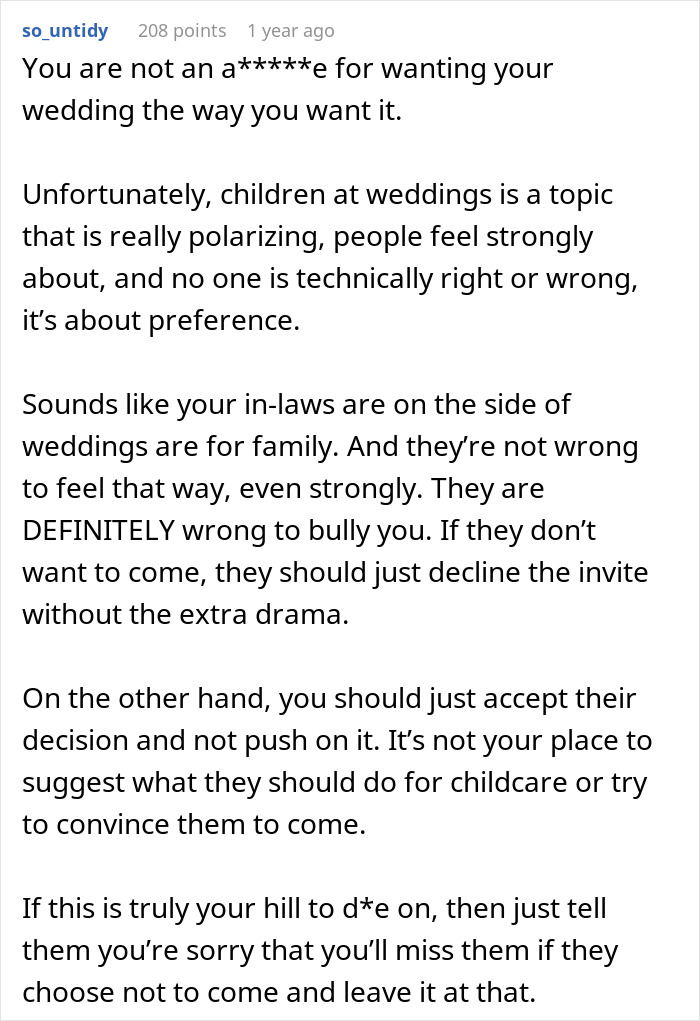
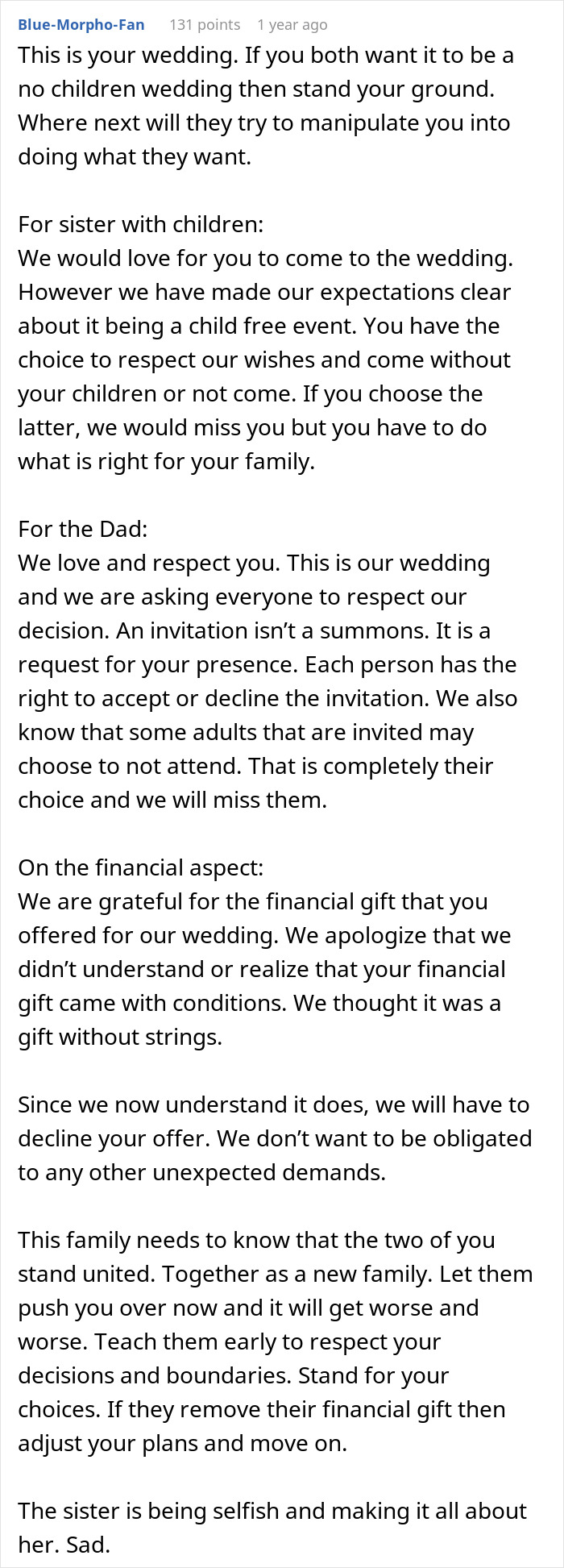
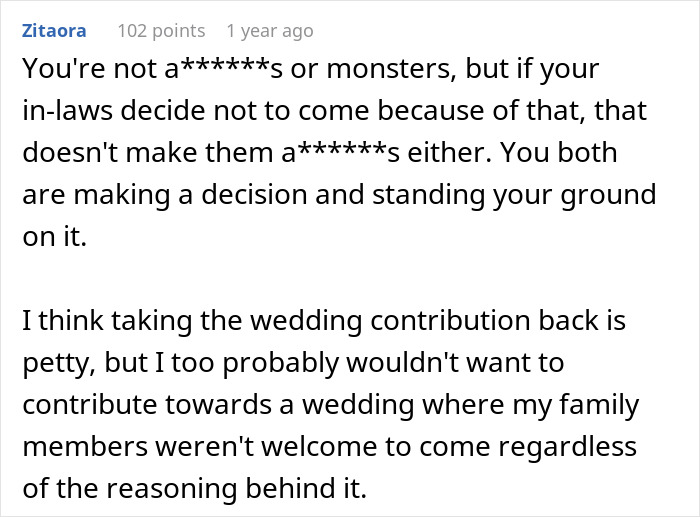
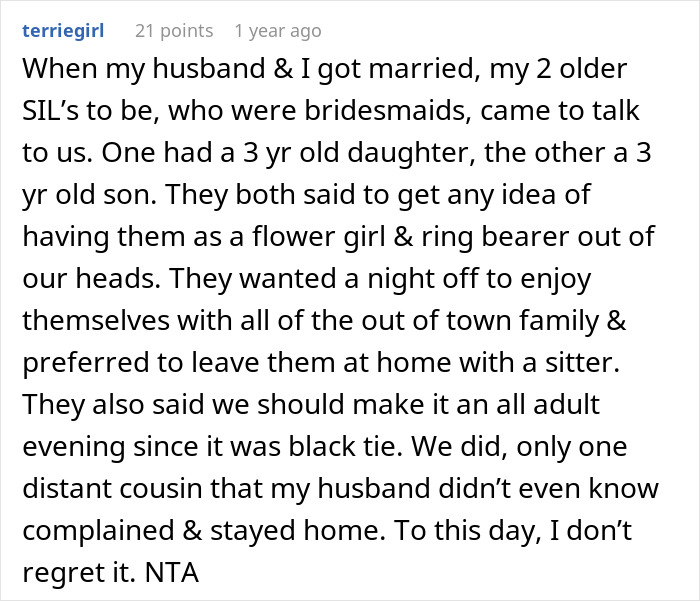
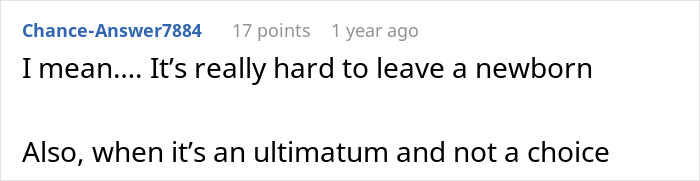
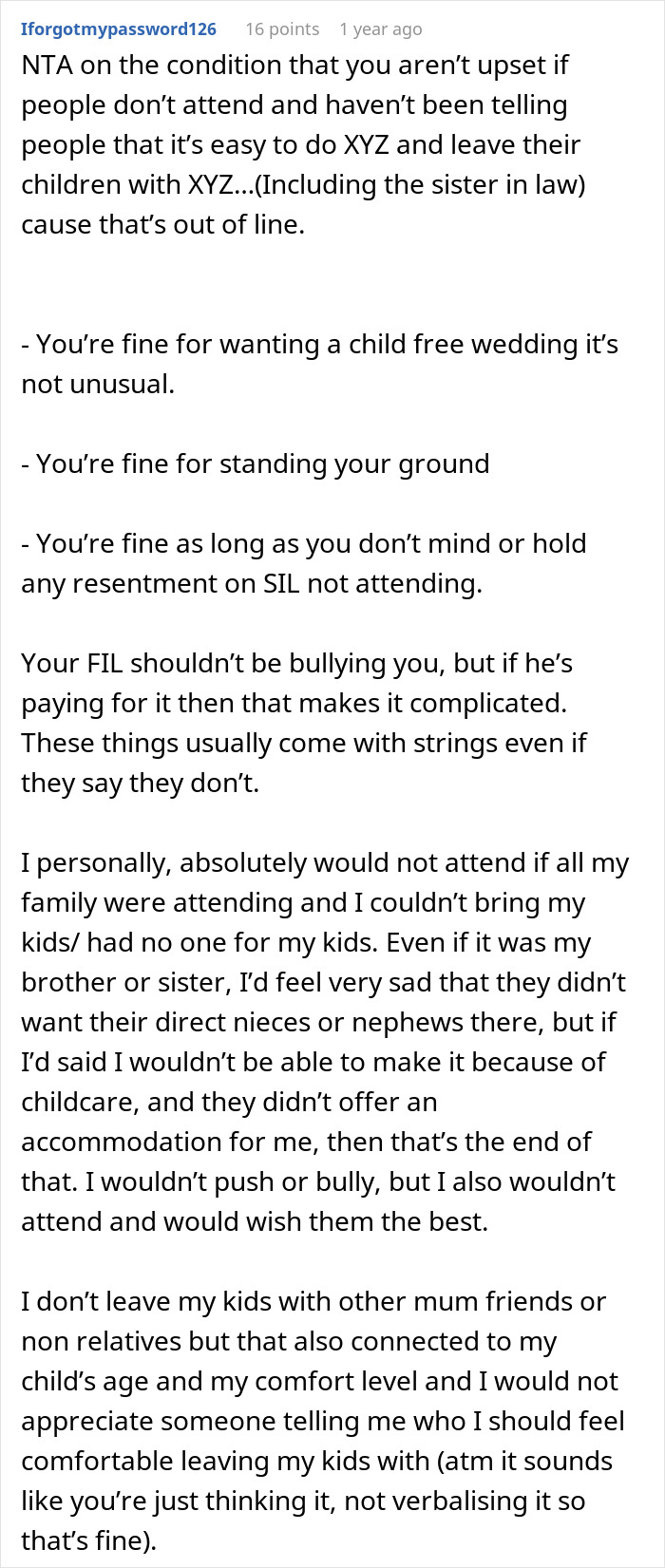
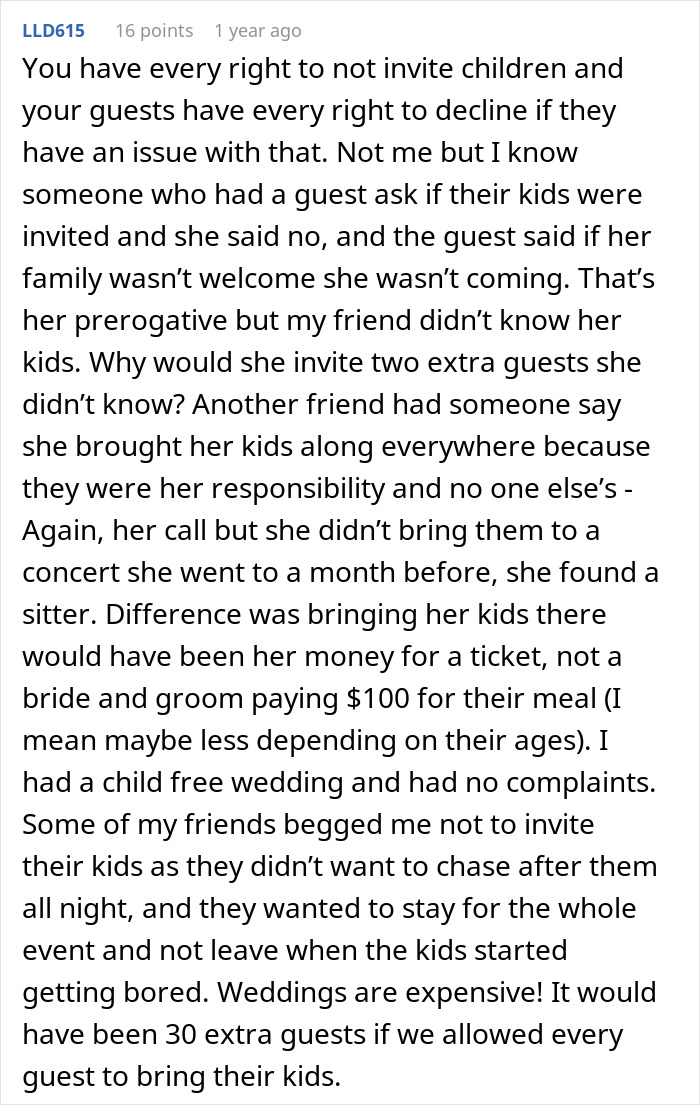
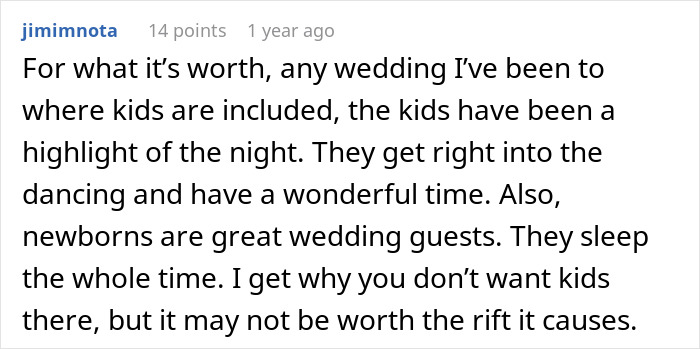
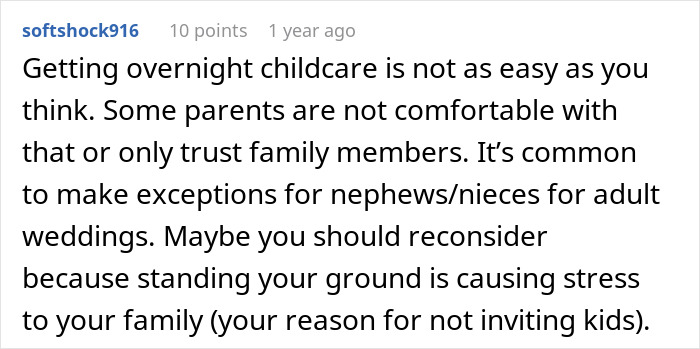
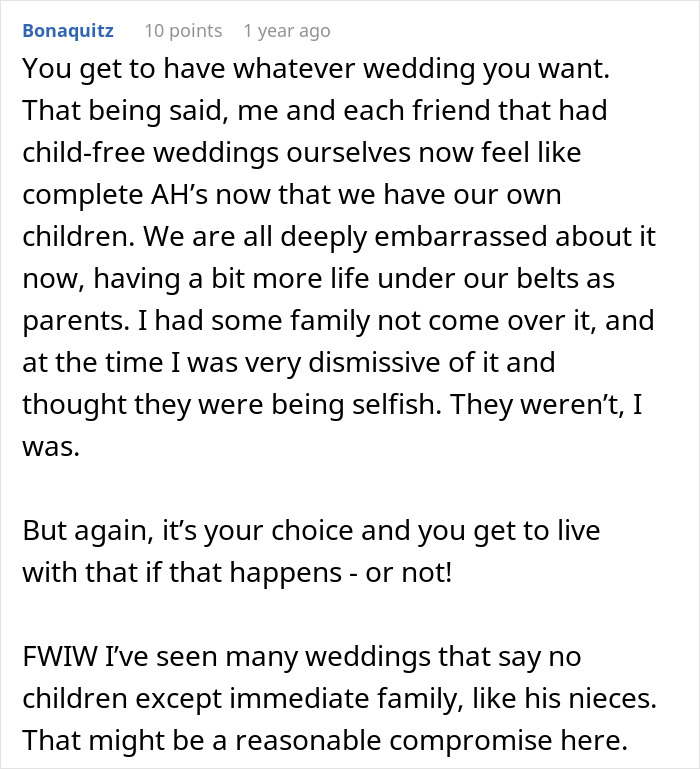
Coming back to this particular case, the couple seems to have been very clear about their decision from the start. It wasn’t last-minute or unclear; it was communicated thoughtfully. Yet the groom’s sister chose not to accept it, turning a simple boundary into a full-blown issue. Creating a fuss and expecting a couple to change their plans for one person feels… a bit unfair, especially when everyone else respected it. At the end of the day, it’s their wedding, their rules. But what do you think: Are child-free weddings reasonable, or should couples always make exceptions for family?







By entering your email and clicking Subscribe, you're agreeing to let us send you customized marketing messages about us and our advertising partners. You are also agreeing to our Privacy Policy.
Thank you! You've successfully subscribed to newsletters!


There's always that one person in the family who thinks the day should belong to everyone, not the people getting married. And then there is the enabler parent who throws in some emotional blackmail too. "Ok, cool, take away the money, we can get loans, and it's a few less people to cater for too."


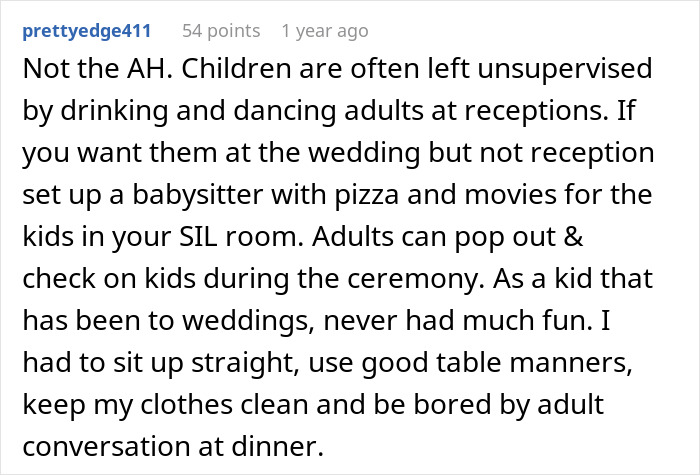
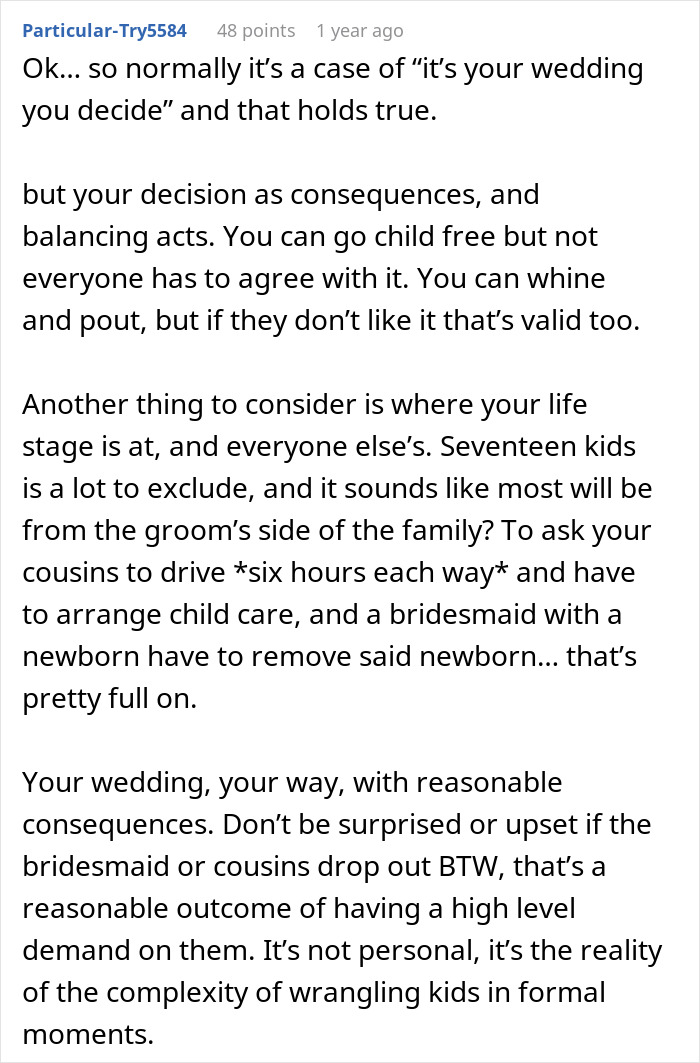
I am 100% in favor of child free weddings. it's the choice of the people getting married who they want there. Now, that said, if someone doesn't want to go or support that wedding because they don't like that they are excluding someone, it is their right. If you don't want to that, you can just compromise to get some babysitters in a close location, or even a separate part of the hotel or something where the wedding is, since you are making people travel for hours to go there, and you want them to go
There's always that one person in the family who thinks the day should belong to everyone, not the people getting married. And then there is the enabler parent who throws in some emotional blackmail too. "Ok, cool, take away the money, we can get loans, and it's a few less people to cater for too."
I am 100% in favor of child free weddings. it's the choice of the people getting married who they want there. Now, that said, if someone doesn't want to go or support that wedding because they don't like that they are excluding someone, it is their right. If you don't want to that, you can just compromise to get some babysitters in a close location, or even a separate part of the hotel or something where the wedding is, since you are making people travel for hours to go there, and you want them to go



























 No fees, cancel anytime





30
13