Get Premium
Dark mode theme is available exclusively for premium users. Learn more about the benefits of subscribing.
No fees, cancel anytime.

 Dark Mode Ad-Free Browsing Unlimited Content
 Ad-Free Browsing Unlimited Content Dark Mode
Join 1.2 million Panda readers who get the best art, memes, and fun stories every week!

There are three letters that carry more weight than almost any other word in the English language. F-A-T. It does not matter if it comes from a colleague, a stranger, a family member, or a 4-year-old. The impact lands the same way every single time, and anyone who has ever been on the receiving end of it knows exactly what that feels like.
One woman found that out at a family birthday party when a toddler with no filter said what he said. In the awkward moments that followed, she didn’t know whether to laugh or cry. And she seemingly chose the wrong path.
More info: Reddit
Image credits: dikushin / Magnific (not the actual photo)
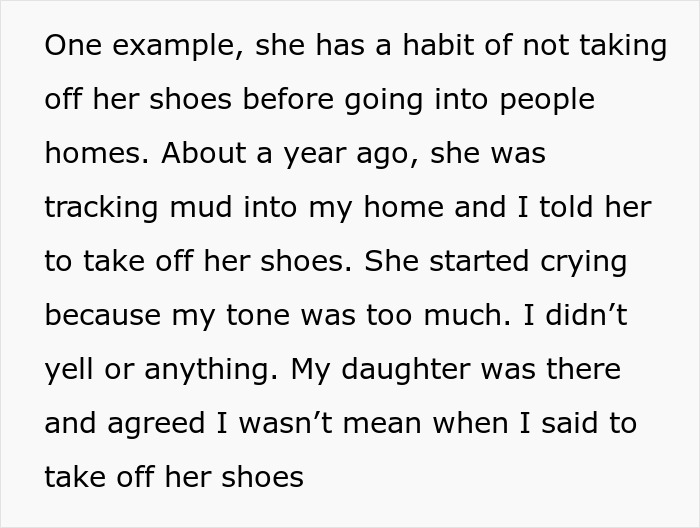
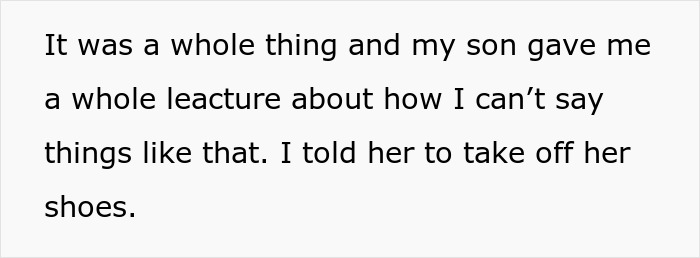
Image credits: Curated Lifestyle / Unsplash (not the actual photo)

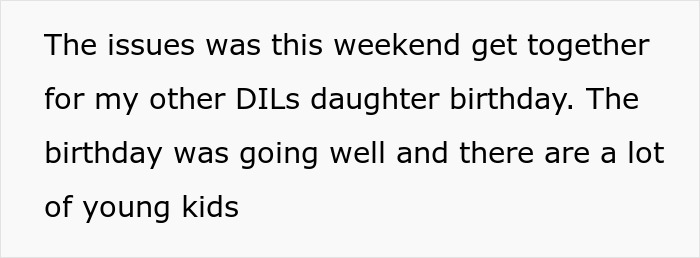
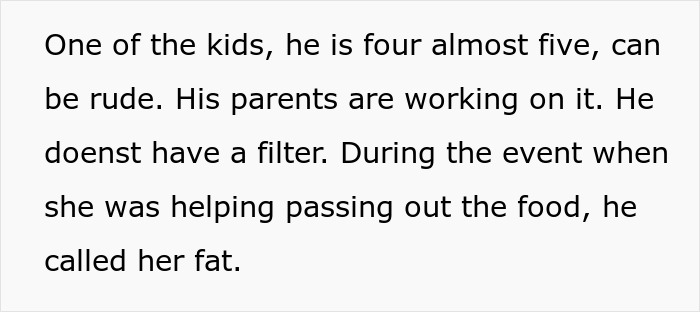
Image credits: freepik / Magnific (not the actual photo)
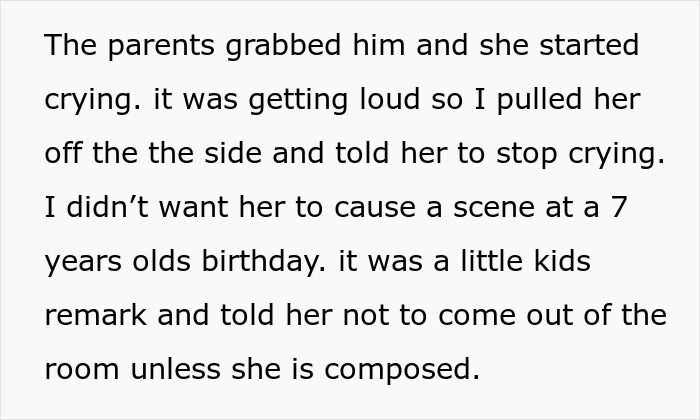
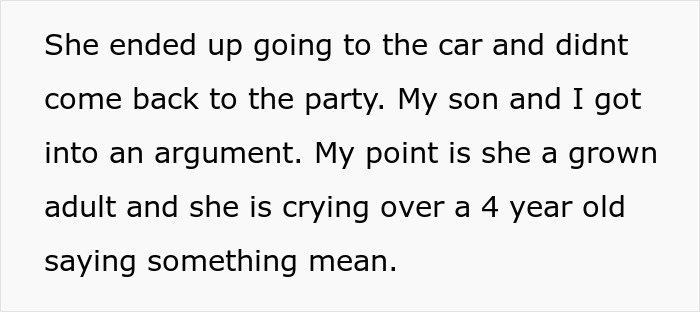

Image credits: Throwaway_Will4940
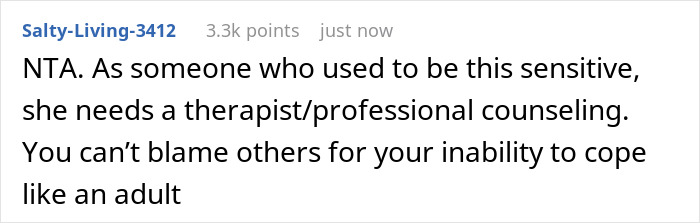
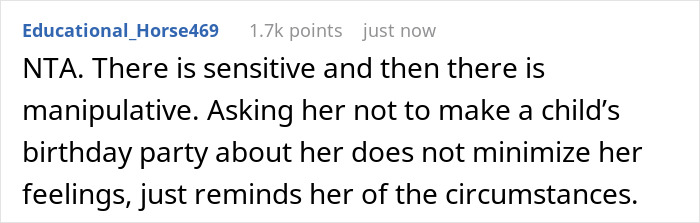
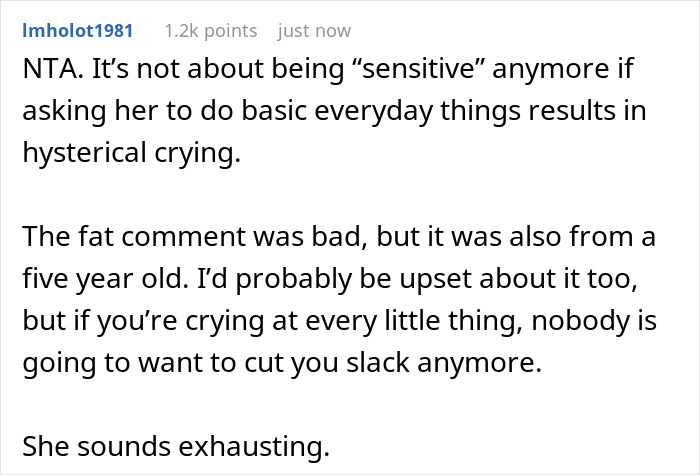
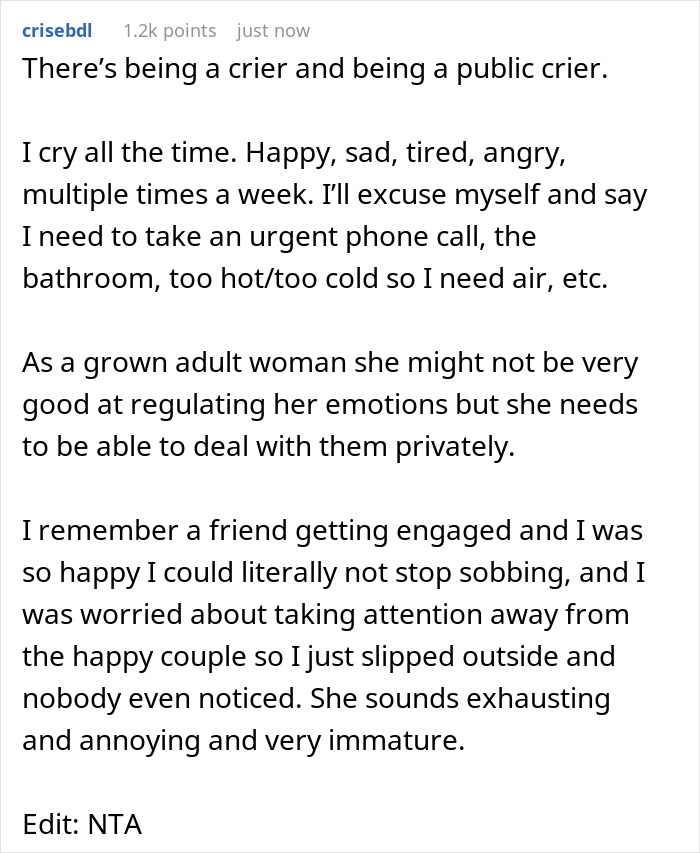
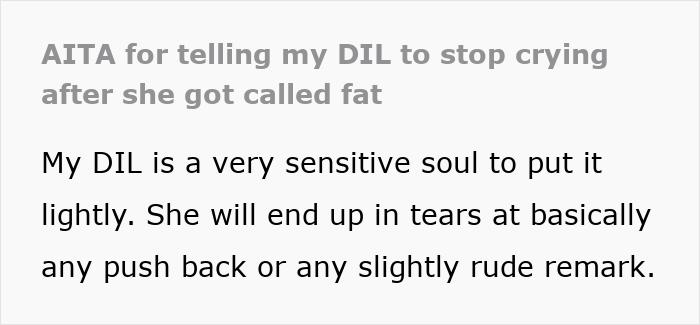
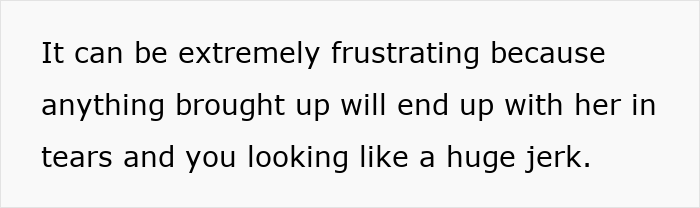
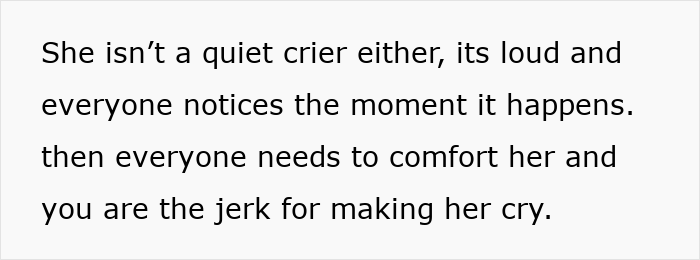
One mother-in-law had a history with her daughter-in-law’s crying. By her own account, the daughter-in-law was an extremely sensitive person who would dissolve into loud, noticeable tears at the slightest pushback, leaving whoever had triggered it looking like the villain of the situation. Even a simple request for her to remove muddy shoes at the door ended in tears, a lecture from her son, and a family debrief about tone.
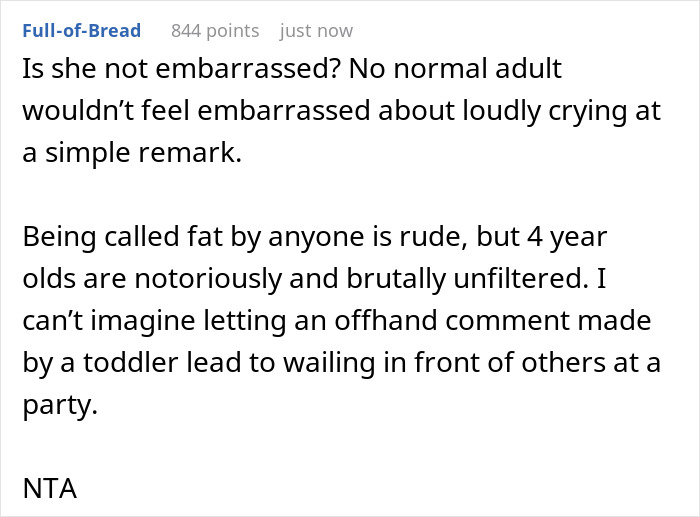
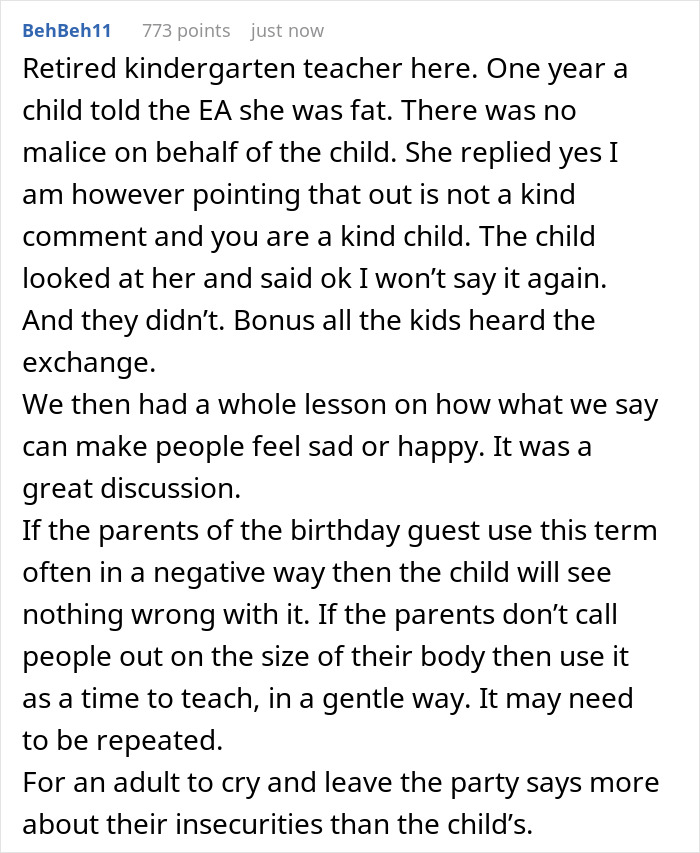
At a kid’s birthday party one weekend, a 4-year-old with a well-documented lack of filter called the daughter-in-law fat while she was helping hand out food. His parents immediately intervened and removed him. She started crying loudly enough that people noticed, and the mother-in-law made a decision. She pulled her aside, told her to stop crying, and said she was not to come back out until she had composed herself.
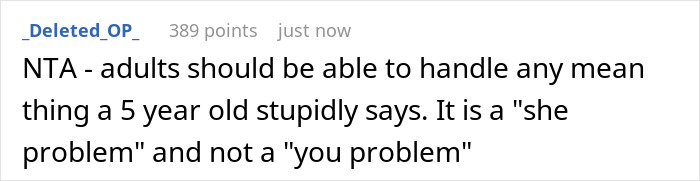
It was a little kid’s remark, the party was for a child, and a scene was the last thing anyone needed. The daughter-in-law went to the car and did not come back. The son confronted his mother and told her to apologize. She wholeheartedly refused.
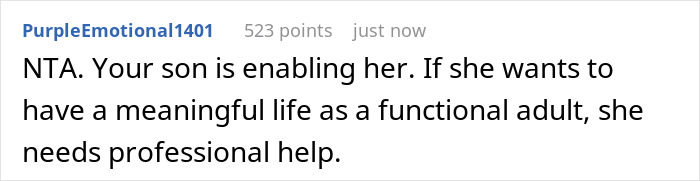
Her position was that a grown adult crying over something a 4-year-old said was an overreaction, and that asking someone to compose themselves at a child’s birthday party was entirely reasonable. The jury is still out on whether she ever apologized, but by the look of things, we’d say the daughter-in-law is still crying in the car.
Image credits: prostock-studio / Magnific (not the actual photo)
Body positivity advocate Sarah Stevens makes an important point about where that comment actually came from. Children do not arrive with opinions about body size. They are taught to observe bodies and comment on them through every compliment and critique they witness being modeled around them. The child was repeating a language he had been handed. So there must be a little more tact here.
Then there is the question of the daughter-in-law’s sensitivity, which the OP clearly sees as a character flaw. Psychologist Elaine Aron coined the term “highly sensitive person,” or HSP, to describe people who process emotional and sensory information more deeply than others. Approximately 15% to 20% of the population falls into this category. It is a neurological trait, so everyone should try to be understanding if this is the case.
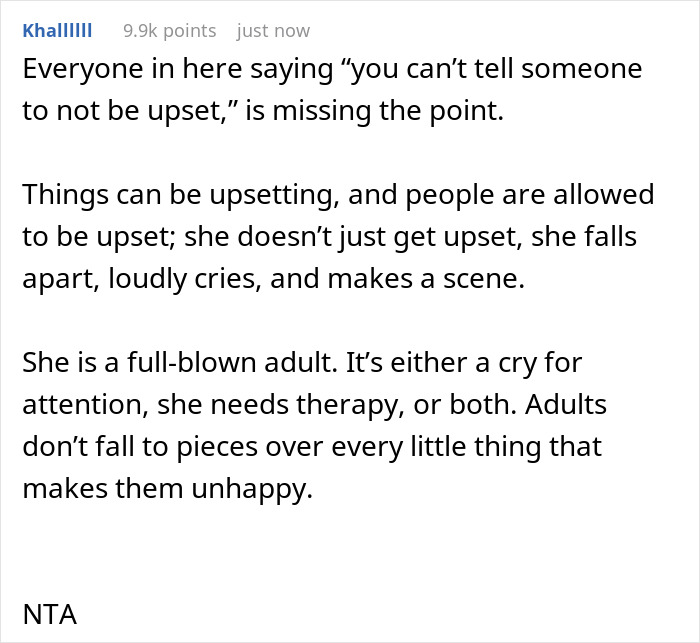
However, there is a documented pattern of attention-seeking behavior in adults that includes being overly emotional or dramatic in public settings. The mother-in-law clearly believes this is what she is dealing with. The difference between genuine emotional distress and performance is usually visible to the people closest to the situation, and notably, the son who knows his wife best is the one asking for an apology.
The OP’s frustration with her daughter-in-law’s sensitivity is understandable on a human level. But frustration does not give anyone the right to police another person’s emotional responses, particularly when that person has just been publicly humiliated. Telling someone to hide their pain until it stops being inconvenient is not composure. It is just a different kind of unkindness.
Do you think the mother-in-law was being fair in her reaction? Tell us how you would have handled it in the comments!

By entering your email and clicking Subscribe, you're agreeing to let us send you customized marketing messages about us and our advertising partners. You are also agreeing to our Privacy Policy.
Thank you! You've successfully subscribed to newsletters!



Same here, and just from reading the title of the article I did not expect to.
Load More Replies...
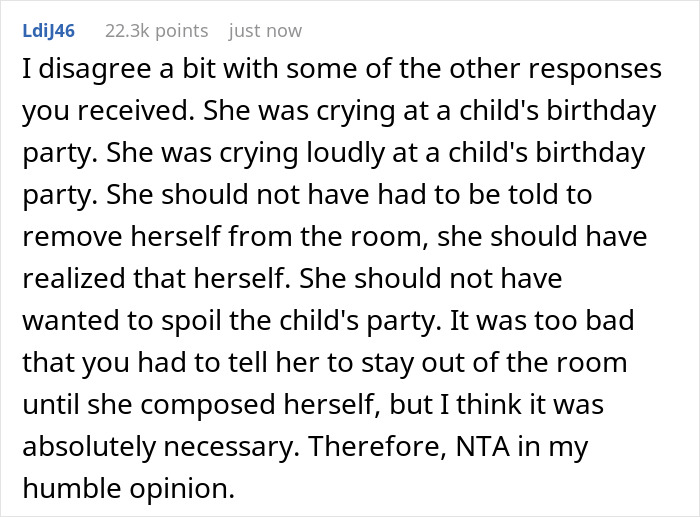
You're entitled to feel however you feel. You're not entitled to express your feelings any way you want, including disrupting a child's birthday party with a tearful tantrum.
Same here, and just from reading the title of the article I did not expect to.
Load More Replies... You're entitled to feel however you feel. You're not entitled to express your feelings any way you want, including disrupting a child's birthday party with a tearful tantrum.




























 No fees, cancel anytime







27
24